Site · Contextual definition
Tyre
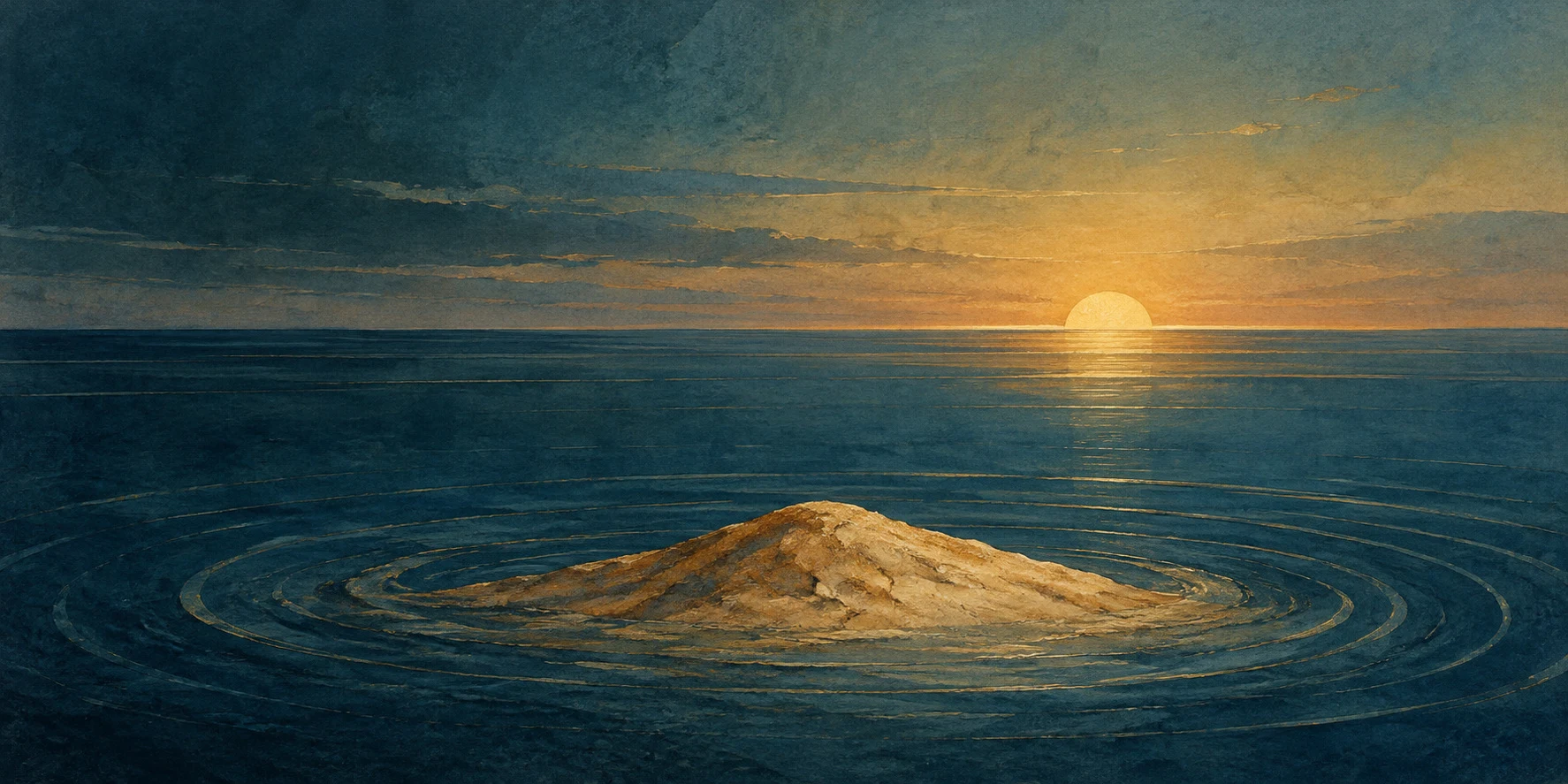
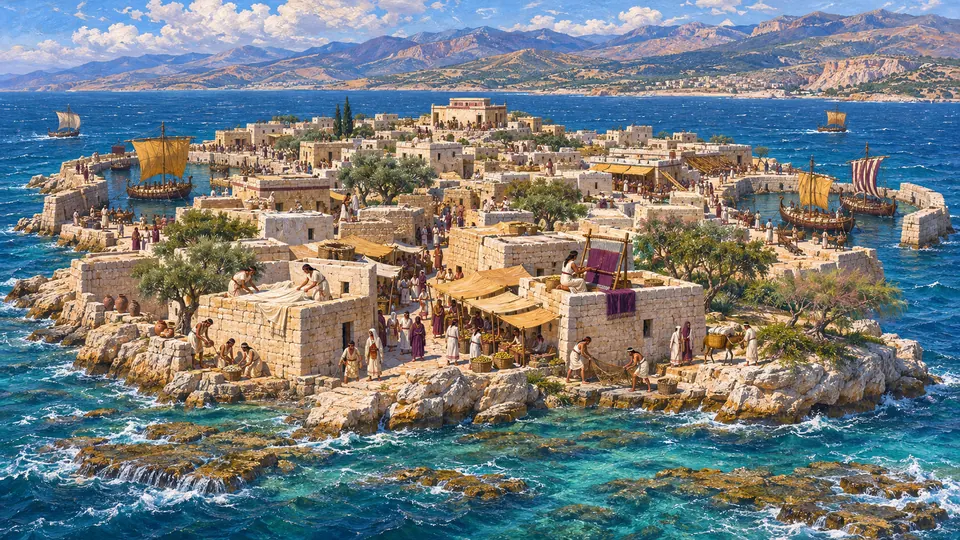
Ancient Tyre stood on an island off the Lebanese coast. Clay letters, Phoenician cremation graves and Roman monuments preserve parts of the city’s history as it grew from island to peninsula.
Estimated reading time: 3 min Published Last reviewed:
Share article
Text
Introduction
Tyre, now Sour in southern Lebanon, grew on an island a short distance from the mainland. The mainland also held settlements and burial grounds. In 332 BCE, a causeway joined the two shores during the siege by Alexander the GreatAlexander the GreatMacedonian king who lived from 356 to 323 BCE and became a hero of stories in different languages and traditions after his death.Glossary · Click to read the explanation. The peninsula that formed around it now includes several phases of the ancient city, while the archaeological area of Al Bass preserves monuments on the former mainland approach. [1][4][5]
Tyre in the letters from Amarna
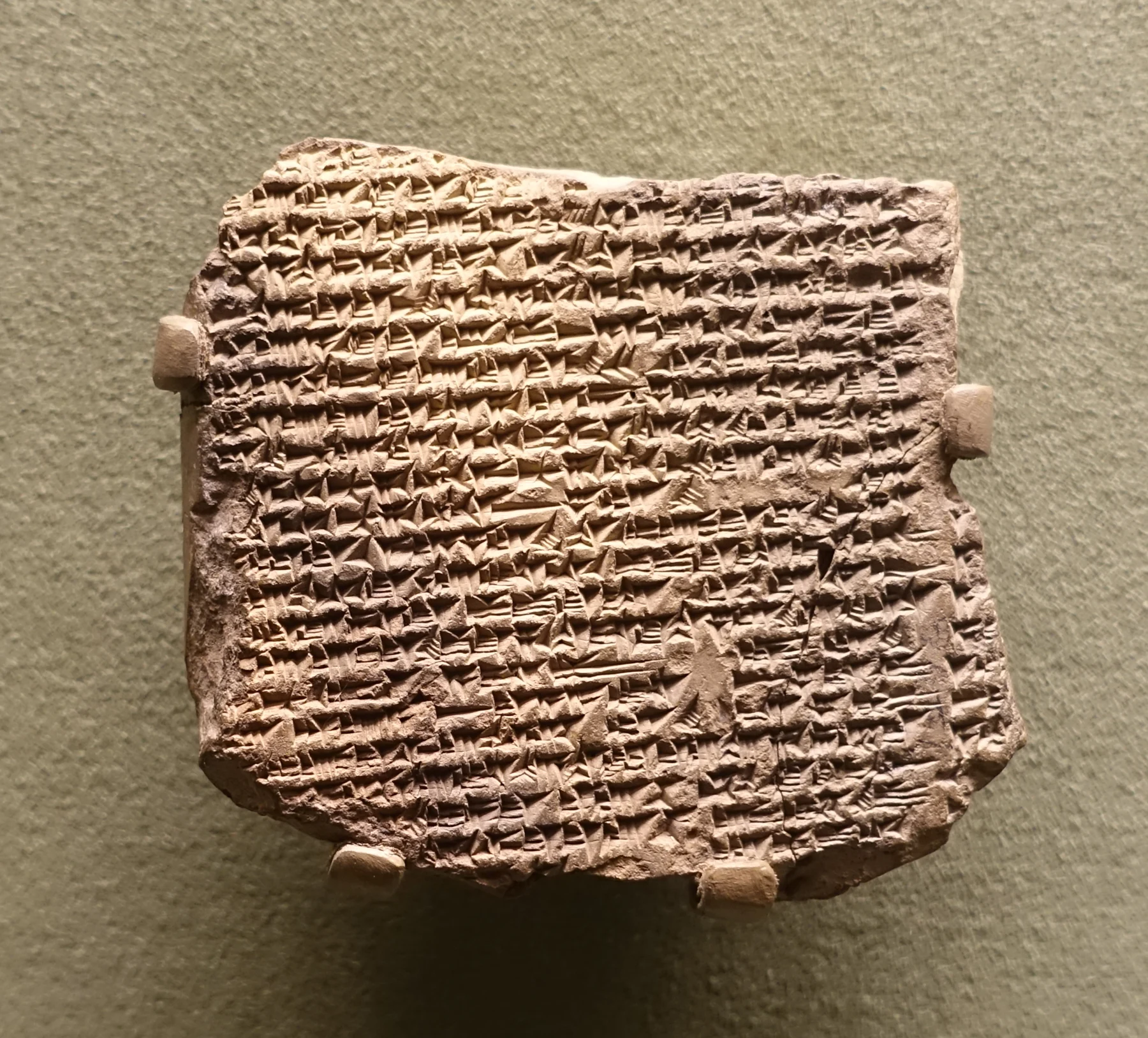
In the fourteenth century BCE, Abi-milkuAbi-milkuAbi-milku was a fourteenth-century BCE ruler of Tyre, known from letters to Egypt’s kingGlossary · Click to read the explanation, ruler of Tyre, wrote to the Egyptian king. One of his surviving letters, now Metropolitan Museum of Art 24.2.12, is a clay tablet from AmarnaAmarna / AkhetatenAmarna is the archaeological site of Akhetaten, Akhenaten’s fourteenth-century BCE capital in Middle Egypt, preserving royal boundary stelae, temples, houses and cemeteries.Glossary · Click to read the explanation in Egypt. A scribe used cuneiformCuneiformWriting with wedge-shaped signs, developed from Mesopotamian recording traditions and used for several languages from the third millennium BCE.Glossary · Click to read the explanation to write it in AkkadianAkkadianAn ancient East Semitic language written in cuneiform from the third millennium BCE; its varieties include Babylonian and Assyrian, and it served in international diplomacy.Glossary · Click to read the explanation, the language of much of the diplomatic correspondence found there. The museum describes a ruler who professed loyalty to the Egyptian king and expected protection in return. [2]
Phoenician burials and the city’s hinterland
At Al Bass, east of the ancient island, excavations documented cremation graves from the end of the tenth to the end of the seventh century BCE. They were set in sand from an older beach, beneath thick layers of Roman and Byzantine date. Some graves held two pottery urns and jugs placed with them. In some areas later burials cut into the earlier deposits. Analysis of the bones showed that paired urns could hold the cremated remains of a single person. [1][3]
Tyre was also a point of departure for Phoenician voyagers in the Mediterranean. The histories of Carthage and Cádiz are traditionally linked to settlers from Tyre. Fieldwork on the island itself has reached Bronze and Iron Age layers in the area known as the acropolis, where the excavation team also found remains of a Roman temple complex. The successive structures give archaeologists evidence of how the same part of the island was used across different periods. [1][5][6]
The causeway and the Roman city
Sediment cores from the peninsula give a physical history of the causeway. Nick Marriner and colleagues found evidence that a shallow sand spit already extended into the channel when Alexander’s forces built the causeway in 332 BCE. The construction changed how sediments accumulated around the link. The connecting strip widened over time until the former island formed part of the modern peninsula. [4][5]
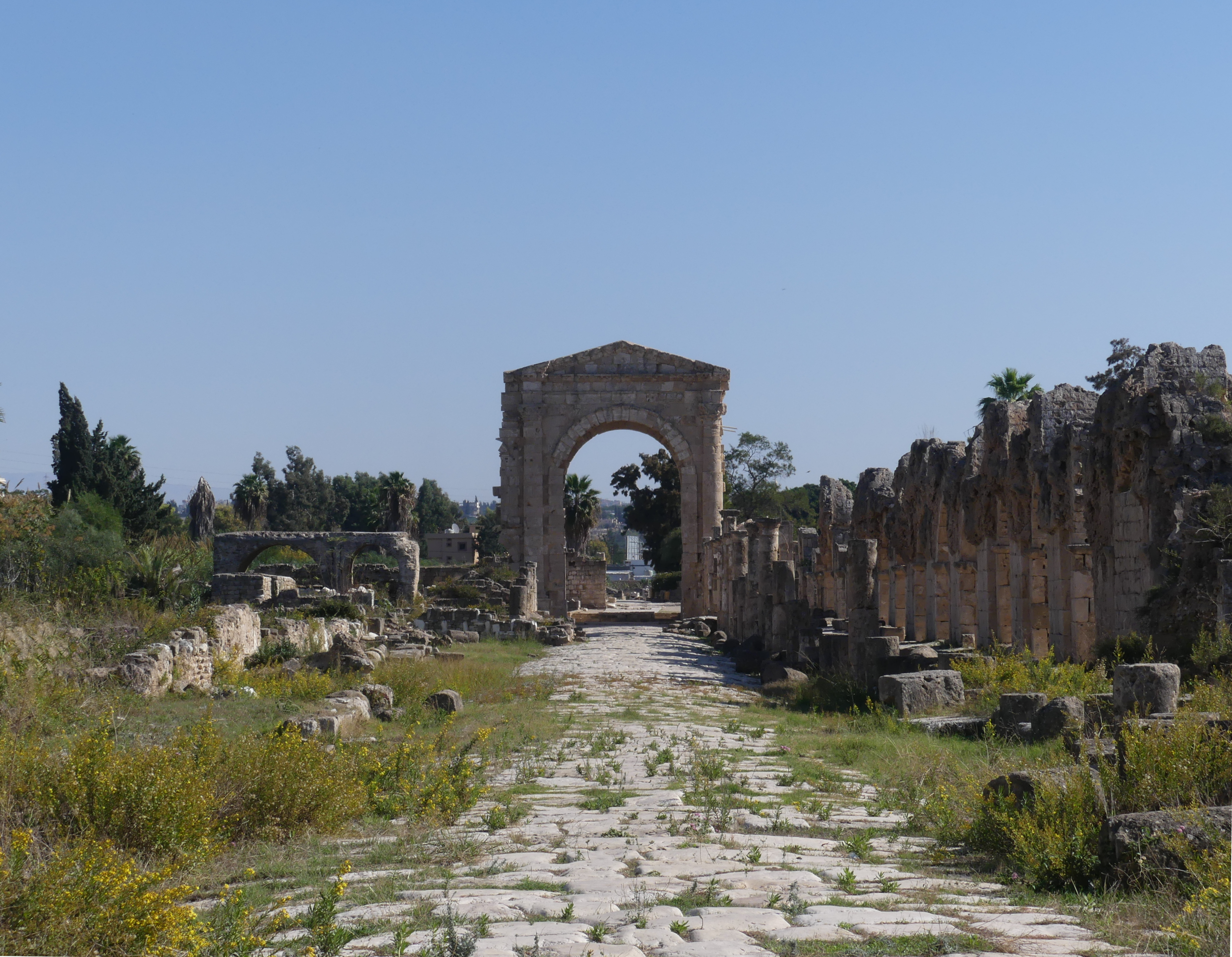
The World Heritage property includes remains on the headland and the mainland sector of Al Bass. On the headland are the remains of Roman baths and a colonnaded road. At Al Bass a monumental road runs between burial areas, past a Roman arch dated to the second century CE. Remains of the aqueduct and the hippodrome are also in this sector. [1][3]
Quick answers
Where was ancient Tyre?
Its main settlement stood on an island off southern Lebanon, with related sites on the mainland. [1][5]
What joined Tyre to the mainland?
A causeway built in 332 BCE took advantage of a shallow sand spit. Sediments subsequently widened the connection. [4]
What can be seen at Al Bass?
The mainland archaeological sector includes burial grounds, a Roman arch, an aqueduct and a hippodrome. [1][3]
References and notes (6)
- UNESCO World Heritage Centre, “Tyre,” World Heritage List 299 Brief synthesis. Phoenician city, causeway and former island, the two sectors of the property, and the monuments at Al Bass and on the headland. Return to the text ↑
- Metropolitan Museum of Art, “Amarna letter: Royal Letter from Abi-milku of Tyre to the king of Egypt,” 24.2.12 Object description and data. Tyre, Amarna, cuneiform and Akkadian, the sender’s loyalty and his expectation of protection. Return to the text ↑
- María Eugenia Aubet, “The Phoenician Cemetery of Tyre,” Near Eastern Archaeology 73 (2010) Printed pp. 144–148, figs. 3–8, especially “The Cemetery and Its Spatial Organization” and the descriptions of paired urns. Return to the text ↑
- Nick Marriner, Christophe Morhange and Samuel Meulé, “Holocene morphogenesis of Alexander the Great’s isthmus at Tyre in Lebanon,” PNAS 104 (2007) Abstract, figs. 1–3 and the discussion of the proto-tombolo. Sediment cores, the sand spit, the 332 BCE causeway and later accretion. Return to the text ↑
- French Ministry of Culture, Archéologie, “Tyre,” Archaeological Mission in Tyre “From island to peninsula” and “Urban development research.” Island and mainland occupation and the history of the coastline. Return to the text ↑
- University of Warsaw, “Tyre: Discovery of a new Roman Temple in the Phoenician port in Lebanon” “The excavations.” The acropolis soundings, Bronze and Iron Age contexts, and the excavated Roman temple complex. Return to the text ↑
Suggest a correction · Suggest a source for this record
Cite this record
IL Archive, «Tyre», https://ilarchive.com/en/sites/tyre
Continue reading
Related readings