Site · Contextual definition
Memphis in Egypt
Near Mit Rahina, the remains of Memphis lie among settlements and fields on the Nile floodplain. Excavated neighbourhoods, the cult of Ptah and the cemeteries at Saqqara show different aspects of the ancient capital.
Estimated reading time: 3 min Published Last reviewed:
Share article
Text
Introduction
Memphis was an ancient capital of Egypt near Mit Rahina, south of present-day Cairo. It stood on the western side of the Nile floodplain near the approach to the Delta. Egyptian sources knew the city by names including Ineb-hedj, “White Wall,” and Mennefer, from which the Greek name Memphis derives. It was an administrative centre in the Old Kingdom in the third millennium BCE and again in several later periods. At different times, royal power was also based in other cities, including Thebes during the New Kingdom and Alexandria in the Ptolemaic period. [1][2]
The city and the changing Nile
The urban remains are scattered among fields and modern buildings. This makes the earlier city difficult to trace on the surface. Pedro Manuel Lourenço Gonçalves analysed sediment from 77 boreholes around Mit Rahina and compared it with the archaeological evidence. His reconstruction places early settlement on groups of sandbanks among branches of the Nile. In this model, by the New Kingdom the eastern channel was the only active branch serving the city, and the mounds on that side were intensively settled. The reconstruction helps explain why remains of different periods come from different parts of the floodplain. [3][4]
Excavations make individual neighbourhoods easier to identify. At Kom el-Fakhry, a cemetery from the First Intermediate Period and remains of a Middle Kingdom settlement have been recorded. At Kom Rabia, the Egypt Exploration Society documented levels belonging to the late Middle Kingdom and the New Kingdom, and published the pottery and other objects. The layers at these mounds give information about occupation beyond the temples and royal buildings. [4][5]
Ptah, the temples and the cemeteries
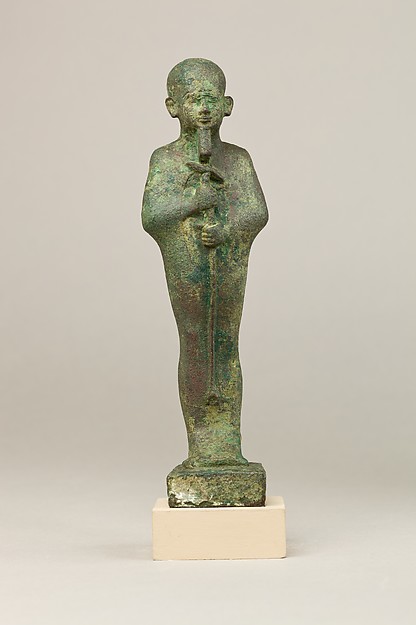
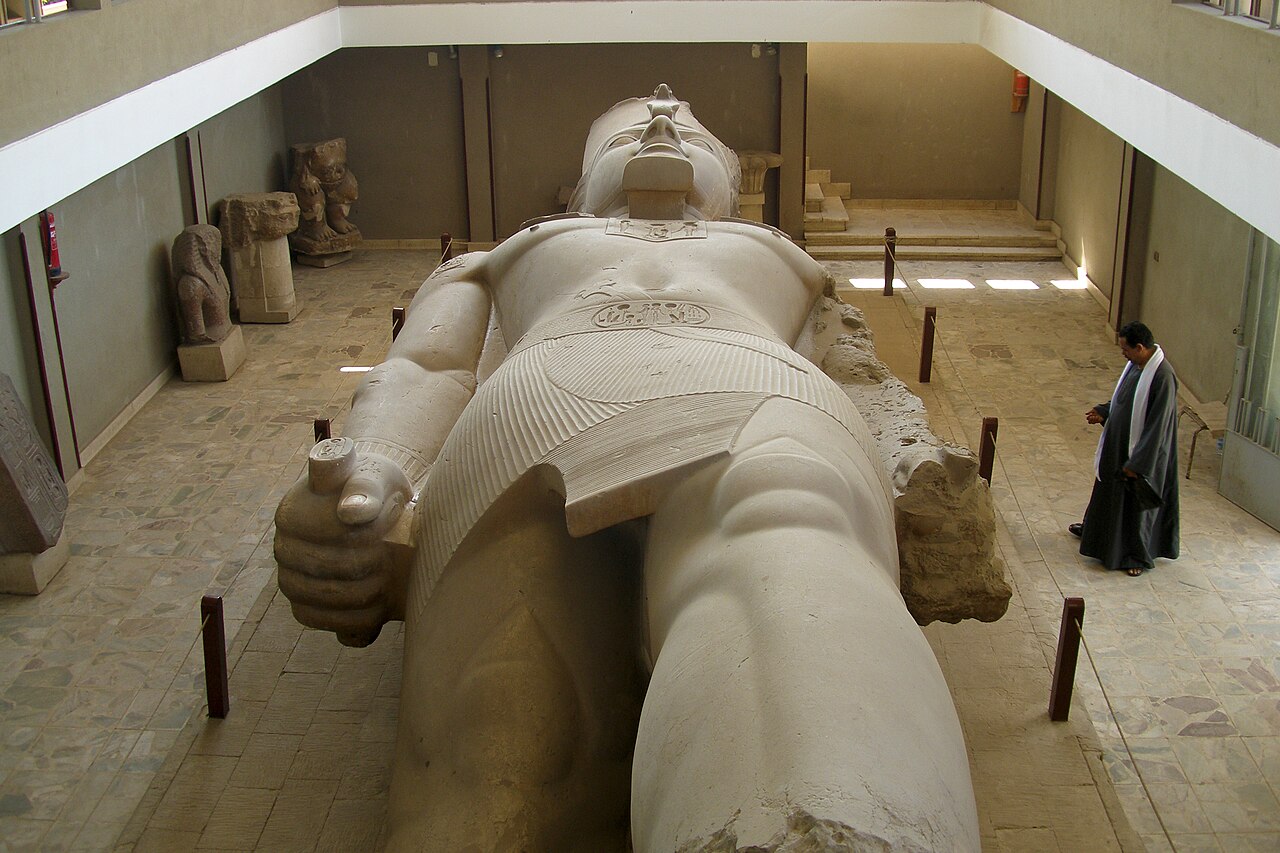
Memphis was a centre of worship of PtahPtahPtah is an Egyptian god associated with Memphis, craftsmanship and creationGlossary · Click to read the explanation, who was associated with craftsmanship and creation. Excavations near his temple at Mit Rahina recovered pink granite and limestone blocks. The Egyptian Ministry of Tourism and Antiquities reports inscriptions with the names of Ramesses II and scenes of the king performing the Sed festival. It identifies the blocks as probable parts of the great temple. The colossal figure of Ramesses II at Mit Rahina is another surviving monument from the reign of that thirteenth-century BCE king. [1][2][6][9]
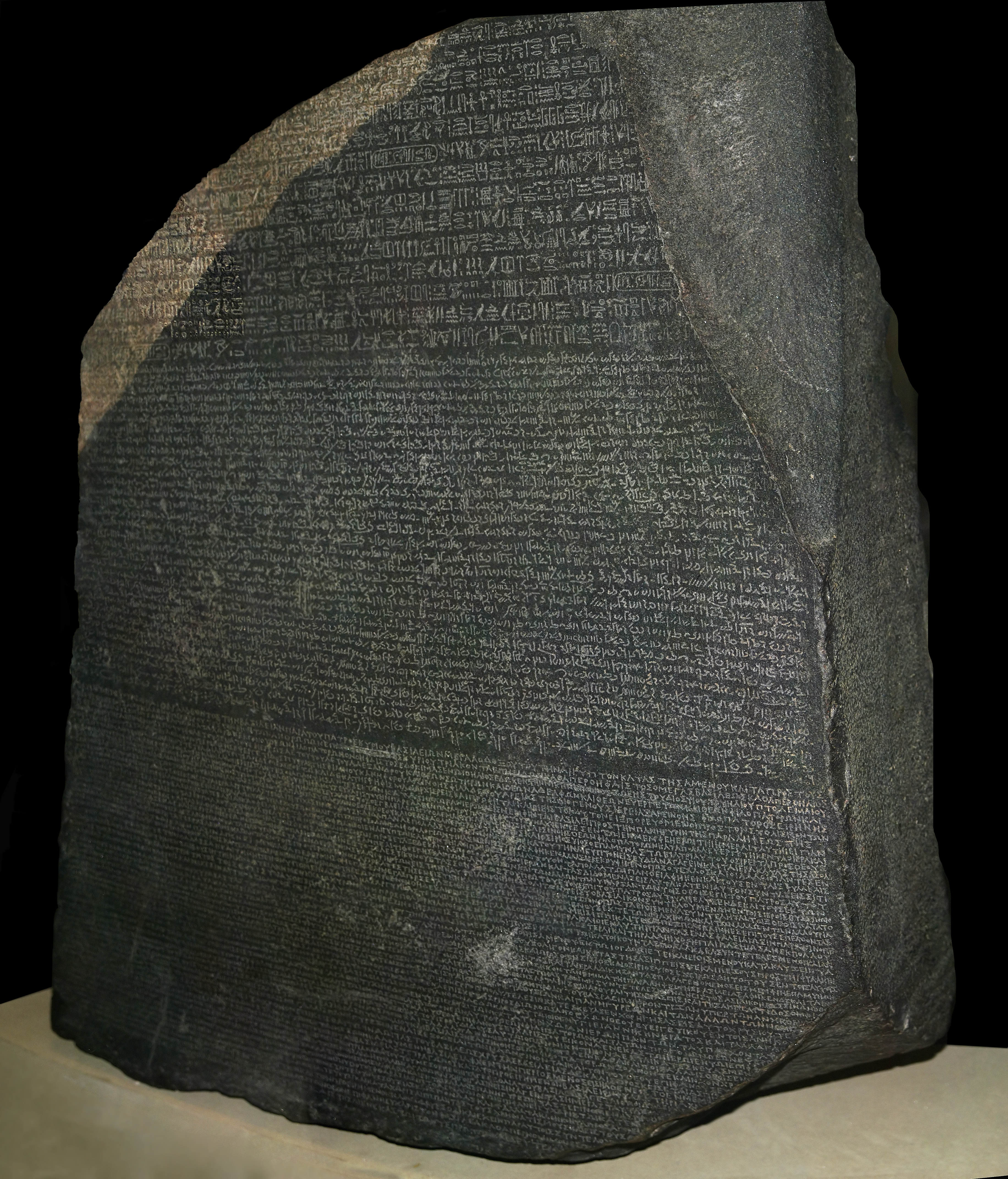
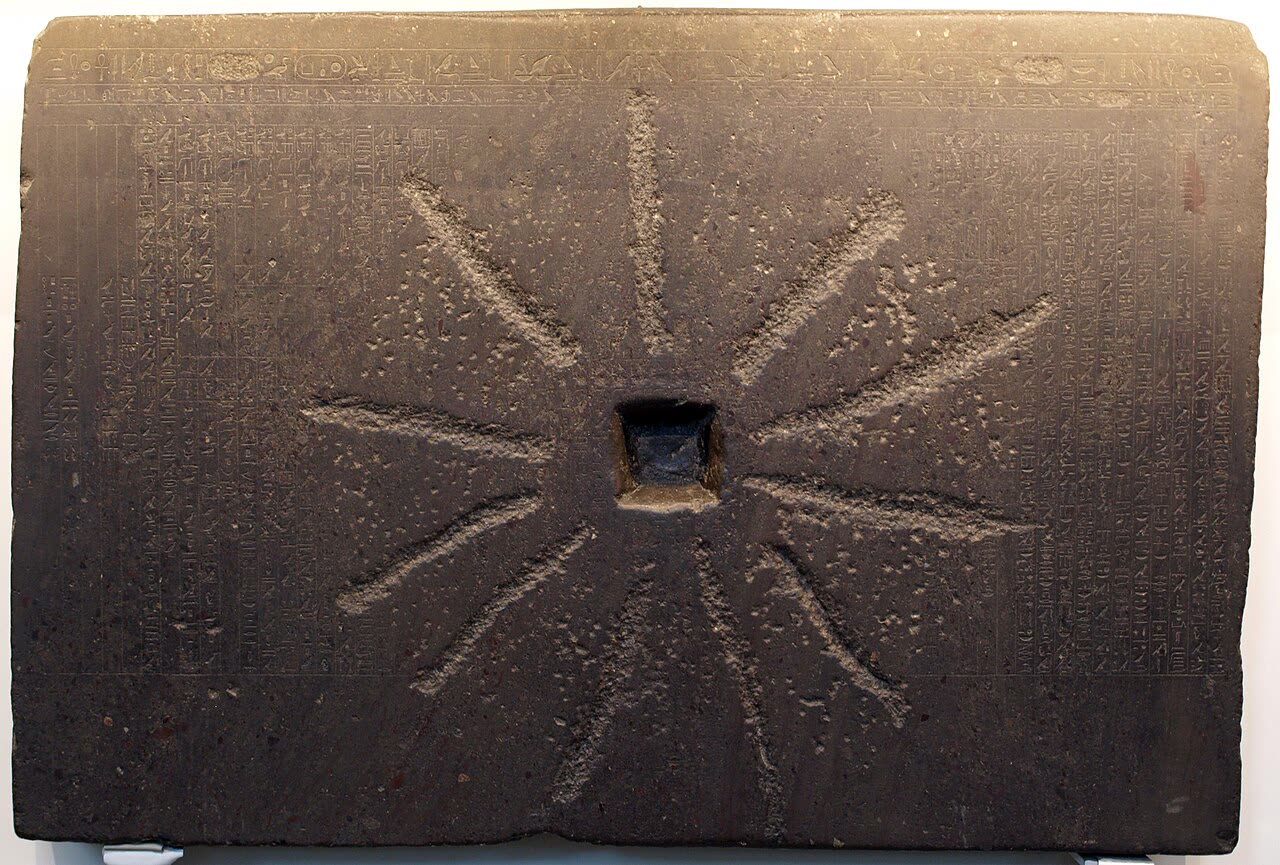
The Shabaka StoneShabaka StoneThe Shabaka Stone (British Museum EA498), inscribed c. 710 BCE, links Ptah, heart, speech, creation, and kingship; its damage, textual readings, and alleged older papyrus remain central questions.Glossary · Click to read the explanation, British Museum EA498, gives a later written account of creation centred on Ptah. The museum dates the inscription to about 710 BCE. The inscription says that Shabaka commissioned a transcription of an older, damaged manuscript. Later reuse wore away part of the stone. Its account of the copying and the wear on the surviving monument are both part of the evidence for the text’s history. [7]
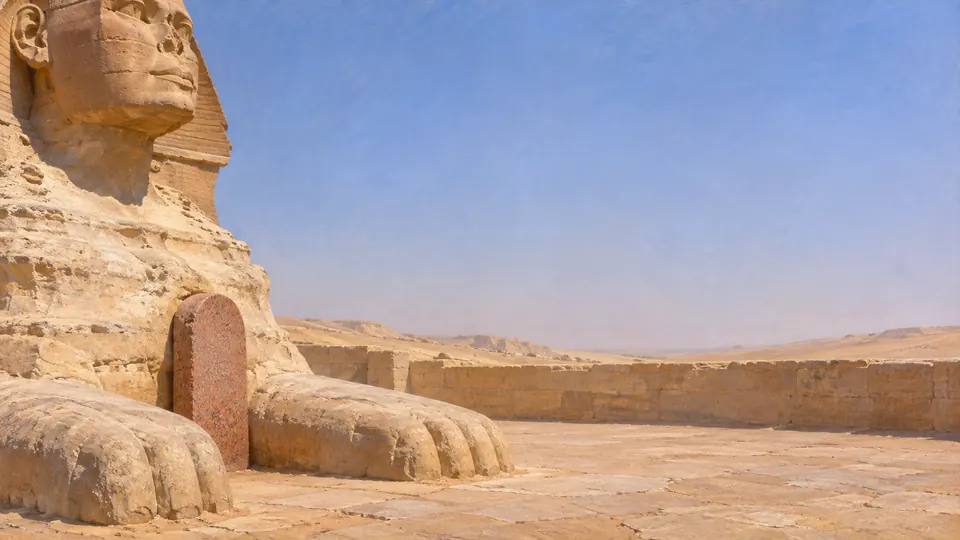
West of the city, Saqqara formed part of the extensive Memphite necropolis. The Step Pyramid of Djoser, the oldest pyramid, stands in the pyramid complex at Saqqara. Saqqara also had a later role in the cult of Apis, the sacred bull associated with Ptah. The bulls were buried in the long corridors of the Serapeum. These sites help connect the life of the city to worship and burial on the desert plateau. [1][8]
Quick answers
Where was Memphis?
It lay near present-day Mit Rahina, south of Cairo, on the western side of the Nile floodplain. [1][2]
Which deity was particularly associated with Memphis?
Ptah was the city’s principal deity and was associated with craftsmanship and creation. [1][2]
How were Memphis and Saqqara connected?
Saqqara formed part of the necropolis west of the city, with royal tombs and the later burials of the Apis bulls. [1][8]
References and notes (9)
- UNESCO World Heritage Centre, “Memphis and its Necropolis – the Pyramid Fields from Giza to Dahshur,” World Heritage List 86 Brief synthesis and criteria (i), (iii) and (vi). Floodplain, different administrative phases, temples, Ramesses II statue and Saqqara. Return to the text ↑
- University College London, Digital Egypt for Universities, “Memphis: background information” Main overview. Ineb-hedj and Mennefer, the city’s position and administrative importance, Ptah and the location of its cemeteries. Return to the text ↑
- Pedro Manuel Lourenço Gonçalves, Landscape and environmental changes at Memphis during the dynastic period in Egypt, University of Cambridge doctoral thesis (2018) Author abstract. Analysis of 77 boreholes, the early sandbank model and the eastern channel during the New Kingdom. Return to the text ↑
- Sphinx Foundation for Archaeology and Research, “Memphis Kom el-Fakhry Archaeological Project” Project overview. Separated archaeological mounds, the First Intermediate Period cemetery and the Middle Kingdom settlement. Return to the text ↑
- Egypt Exploration Society, “The Survey of Memphis” Project description and bibliography, especially Survey of Memphis IV, V, VI, VIII and IX. Kom Rabia occupation levels, pottery and objects. Return to the text ↑
- Egyptian Ministry of Tourism and Antiquities, “Excavations Unveil a Part of the Temple of Ptah in Memphis” Excavation announcement. Inscribed granite and limestone blocks at Mit Rahina, Ramesses II and the Sed festival, and their proposed link to the temple. Return to the text ↑
- British Museum, “The Shabako Stone”, EA498 Object commentary and date. The Memphis findspot, creation account centred on Ptah, the claim of copying an older damaged manuscript and wear from reuse. Return to the text ↑
- Egyptian Ministry of Tourism and Antiquities, “Serapeum” Site description. Apis bulls associated with Ptah of Memphis, the Saqqara burial corridors and the bull burials. Return to the text ↑
- University College London, Digital Egypt for Universities, “Ramesses II Usermaatre-setepenre” Opening chronology and list of major monuments. Thirteenth-century reign and temple buildings at Memphis. Return to the text ↑
Suggest a correction · Suggest a source for this record
Cite this record
IL Archive, «Memphis in Egypt», https://ilarchive.com/en/sites/memphis-egypt
Continue reading
Related readings