Study
Egyptian Creation and Genesis: Primeval Water, the Mound and the Word
An extended study of a topic, with evidence and references.
- Region
- Egypt and the Levant
How did Egyptian texts describe the world’s beginning through water, the mound and speech? Dated witnesses compared with Genesis 1 clarify similarities, differences and possible transmission.
Share article
Text
Introduction
Primordial water, the emergence of dry land, and speech that orders the world: these images appear in Egyptian creation traditions and at the beginning of Genesis, the first book of the TorahTorah / PentateuchGenesis, Exodus, Leviticus, Numbers and Deuteronomy: Mosaic corpus with a compositional history. Torah can also mean teaching or law beyond these five books.Glossary · Click to read the explanation. This study explores the similarities and asks whether they point to Egyptian influence on the HebrewHebrewA Northwest Semitic language in the Canaanite group, with ancient and modern forms.Glossary · Click to read the explanation account or to images circulating among cultures of the ancient Near EastAncient Near EastA historical and geographical term covering Mesopotamia, the Levant and neighbouring ancient societies.Glossary · Click to read the explanation.
We compare Egyptian texts from different periods and religious centres with the opening of Genesis, considering the date and purpose of each piece of evidence. The aim is to understand how these images changed meaning across traditions and to assess proposals of transmission in light of historical contact and the specificity of the similarities.
The beginning of the world in Egypt and Genesis
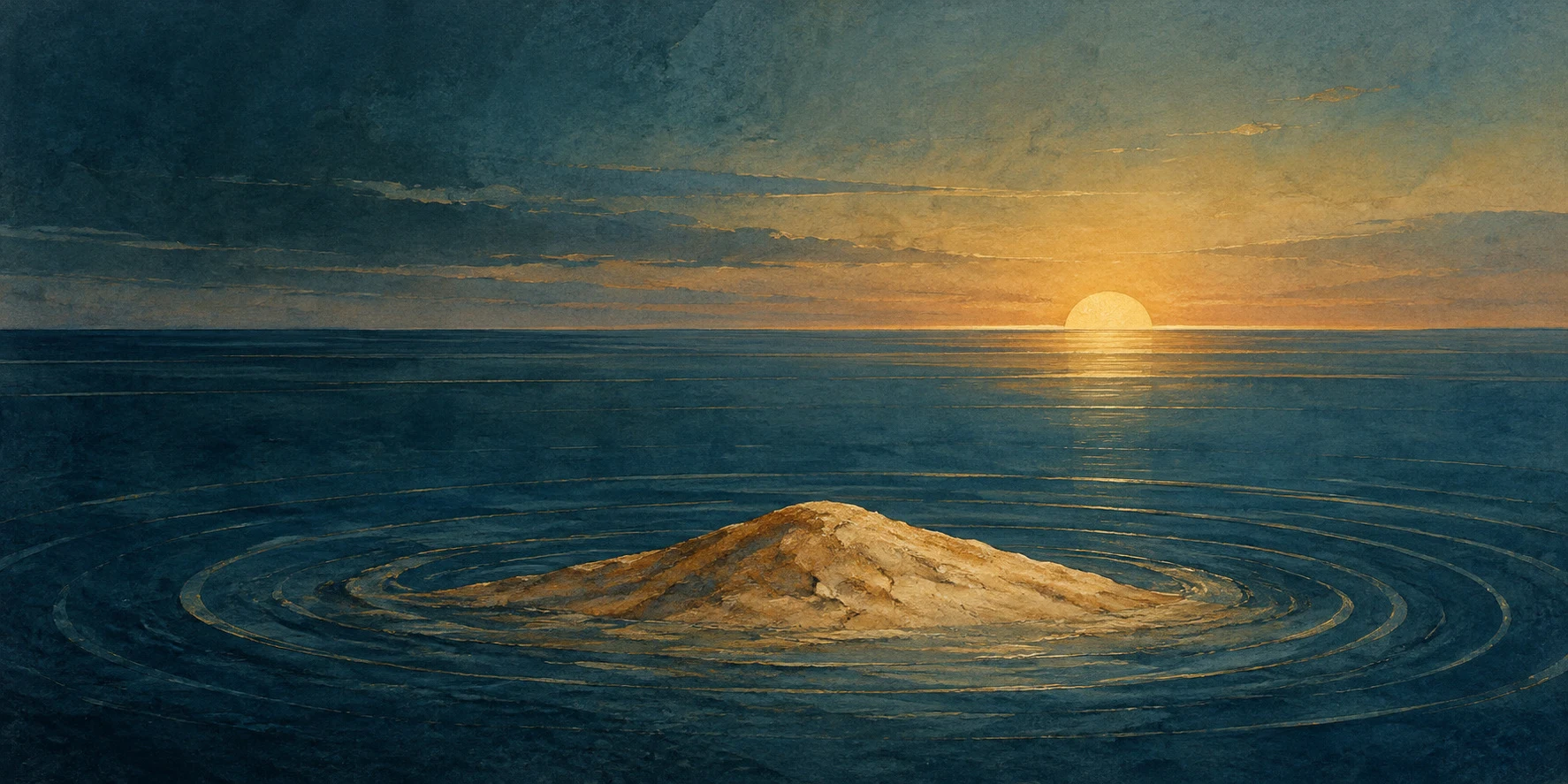
Water and darkness, followed by an ordered world: this image occurs in ancient Egyptian traditions. Genesis also begins with darkness over the deep and waters, followed by divine speech and separation of the world's elements. The resemblance raises a historical question: did Genesis's writer know a particular Egyptian text, or employ images more widespread in the ancient Near East? [1][2][8]
Genesis is the first of the Torah's five books, and its opening chapter is our subject of comparison. The Egyptian witnesses come from different texts, some funerary and others celebrating a deity or city. We will read their statements, date their surviving witnesses, and examine what comparison permits.
Several Egyptian traditions
Egyptian creation images survive across inscriptions, funerary spells, hymns and local traditions. HeliopolisHeliopolis, ancient IunuHeliopolis is the Greek name of Egyptian Iunu, at Matariya in northern present-day CairoGlossary · Click to read the explanation, or Iunu, is prominent in traditions of AtumAtumAtum is an Egyptian creator god associated with HeliopolisGlossary · Click to read the explanation, ReRe, Egyptian sun godRe is the Egyptian sun god, associated with creation, life and renewal of cosmic orderGlossary · Click to read the explanation and the first mound. Khmunu, also known as el-AshmuneinHermopolis, KhemenuHermopolis is an ancient Egyptian city at Ashmunein, called Khemenu in EgyptianGlossary · Click to read the explanation and Hermopolis, is associated with primeval forces and the eight paired deitiesThe Eight in Egyptian creation traditionsThe Eight are four divine pairs describing conditions before the ordered world in Egyptian traditionsGlossary · Click to read the explanation. MemphisMemphis in EgyptMemphis is an ancient Egyptian city near Mit Rahina south of present-day CairoGlossary · Click to read the explanation foregrounds PtahPtahPtah is an Egyptian god associated with Memphis, craftsmanship and creationGlossary · Click to read the explanation's creative role. These are Egyptian cities and religious centers whose traditions interacted and changed. [1]
Arranging texts chronologically helps trace the images. The Pyramid Texts are formulas inscribed inside pyramids of the late Old Kingdom, a period dated by University College London's introduction approximately from 2686 to 2181 BCE. The earliest inscribed example of the corpus survives in UnasUnasUnas was the last king of Egypt’s Fifth Dynasty, in the late third millennium BCEGlossary · Click to read the explanation's pyramid, late in that period; other kings' and queens' pyramids provide further witnesses. [3]
The Coffin Texts preserve material from the Middle Kingdom, approximately 2025–1700 BCE, and other stages. The Book of the DeadEgyptian Book of the DeadModern designation for funerary texts and images aiding the deceased in the next world; spells and their arrangement vary between manuscripts.Glossary · Click to read the explanation is a changing collection of chapters and copies rather than a single official creation story. The university edition of the chapter we will read assembles witnesses from the New Kingdom, approximately 1550–1069 BCE, and a later period. These are dates for witnesses' periods, rather than the birth of every religious image within them. [2][3]
University College London's Digital Egypt therefore distinguishes known traditions from identifying their earliest origin. A connection with a city or collection can be described, while the first place and date of some images remain unknown. Grouping them as Heliopolitan or Hermopolitan theology is a helpful explanatory tool, rather than evidence that they were separate books with fixed boundaries. [1]
Nun, Atum and the first mound
Nun is a name connected with the primeval watery domain preceding the ordered world. In Book of the Dead chapter 17, the deceased speaks through divine identities, followed by comments re-explaining the words. Atum or Re appears in this primeval domain, and Nun is called father of the gods. Water here belongs to a religious language personifying beginnings and occupies a place within divine relationships. [2]
The university edition explains that the chapter has roots in Middle Kingdom Coffin Text spell 335. Material can thus be traced between collections and versions, with each formulation's time remaining important. A phrase in a later copy does not date itself to the pyramid age simply because it concerns beginnings.
Pyramid Text spell 600 offers another image. In James AllenJames P. AllenEgyptologist and Brown professor emeritus, studying ancient Egyptian language, literature and religion, including the Pyramid Texts.Glossary · Click to read the explanation's translation, Atum as the creative Beetle rises and appears as the benben, associated with the first mound at Heliopolis, then brings forth Shu and TefnutShu and TefnutShu and Tefnut are an Egyptian divine pair associated with air and moisture respectivelyGlossary · Click to read the explanation. The image gives the world a beginning connected with a deity's emergence and the first place. [4]
Allen records witnesses of this spell with MerenreMerenre IMerenre I was an Egyptian king of the Sixth Dynasty in the late third millennium BCEGlossary · Click to read the explanation and Pepi IIPepi IIPepi II was an Egyptian king of the Sixth Dynasty in the late third millennium BCEGlossary · Click to read the explanation, kings of the late Old Kingdom. This locates it within the corpus: Unas preserves the earliest example of Pyramid Texts overall, but not necessarily every spell. Spell 600 also belongs to a funerary address seeking strength and protection for king and pyramid. We read its creation image within that ritualRitualAn organised or distinguished practice meaningful to a community; it may leave traces, but its form alone does not reveal an associated doctrine.Glossary · Click to read the explanation purpose. [3][4]
Hermopolitan traditions add the eight paired deities. The university's description of Coffin Text spell 76 lists Nun and Nunet, Heh and Hehet, Kek and Keket, and Tenem and Tenemet. They point to forces or conditions such as watery expanse and darkness. Later versions include AmunAmunEgyptian god associated with Thebes, a major target of Atenist erasure whose cult later regained royal support.Glossary · Click to read the explanation and Amunet in familiar presentations of the eight. Here we used the university's description rather than reading the Egyptian spell directly. [1]
More than one beginning appears: a watery domain, an emerging deity, first dry ground and forces preceding order. These images intersect while each witness retains its wording and context.
Ptah creating through thought and speech
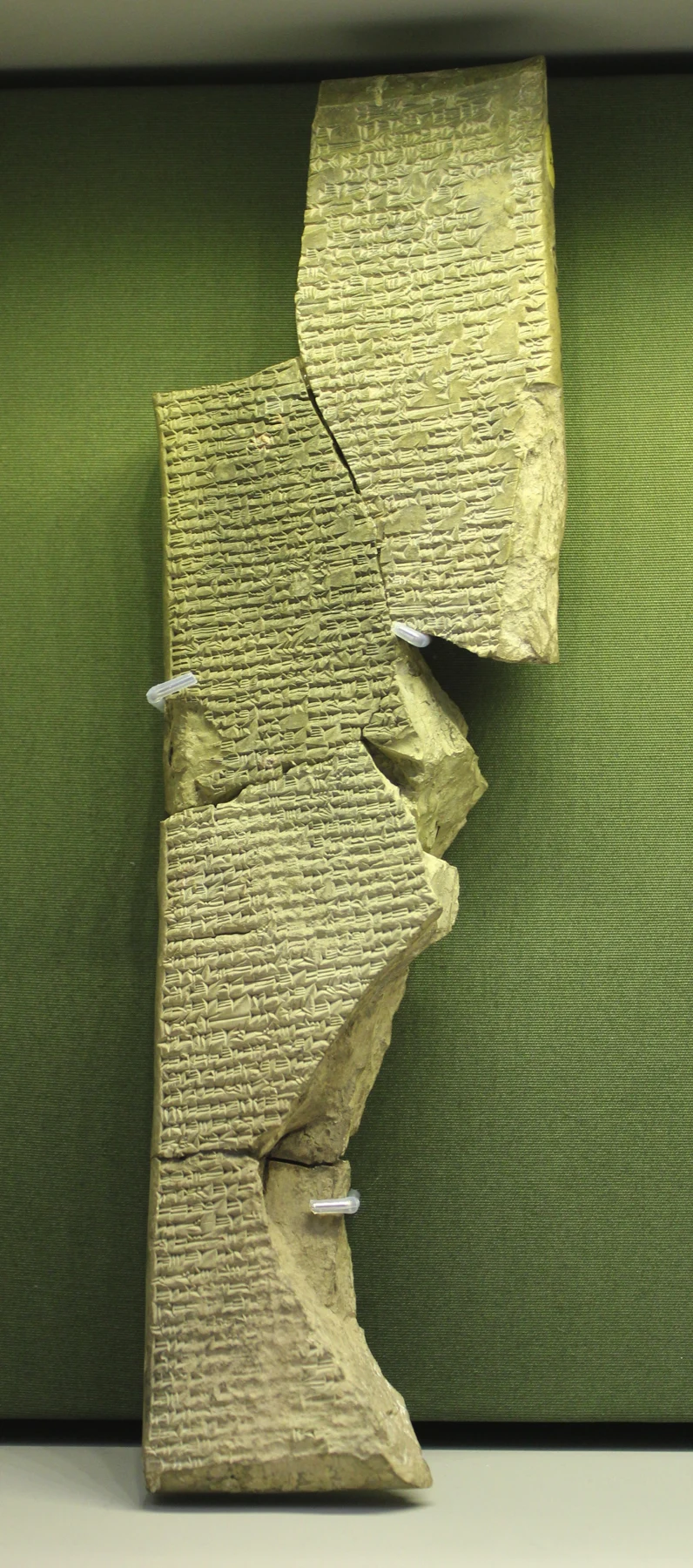
The Shabaka StoneShabaka StoneA Memphite inscription from Shabaka’s reign, about 710 BCE, associating Ptah’s creation with heart and tongue; its ancient-copy claim does not independently date the wording.Glossary · Click to read the explanation takes us to a tradition associated with Memphis. Preserved as British Museum EA498, its catalogue dates it to about 710 BCE under King ShabakaShabakaShabaka was a Kushite king of Egypt’s Twenty-fifth Dynasty in the late eighth century BCEGlossary · Click to read the explanation. The text gives Ptah creative primacy, linking action with heart and tongue: the heart devises and the tongue expresses or commands. [5][13]
Gods, words, crafts and cults appear in a setting emphasizing Ptah and Memphis. Creation is associated with thought and speech in a text also concerning the city's religious and craft world. The longer translation marks damage and restoration; some words are editorial proposals filling gaps in the stone. [6]
The inscription says it copies an ancient text from a decayed papyrus. Some scholars took this as evidence of a much older original. The museum's note instead considers whether claiming antiquity lends authority and observes that the extant formulation is commonly assigned to Shabaka's reign. Elements of the tradition may be older, but their age differs from that of the inscribed formulation. [5]
This distinction matters to Gordon JohnstonGordon H. JohnstonOld Testament scholar at Dallas Theological Seminary, examining biblical literature and its ancient Near Eastern contexts.Glossary · Click to read the explanation's 2008 study. Johnston favors an intentional Egyptian background for Genesis 1, interpreting it as an Israelite polemic against those traditions. He compares water, darkness, speech, dry land and the ordering of living things. [7]
His argument requires weighing two points. It repeatedly treats the Shabaka text as originating in the Old or New Kingdom, while the surviving stone cannot establish that dating according to the museum's assessment. Its comparative table also arranges images from different Egyptian traditions into one sequence. Comparing Egyptian images with Genesis thus differs from establishing one Egyptian text matching its order. Egyptian influence remains a research question with these evidential limits. [5][7]
Water, speech and days in Genesis
Genesis 1 opens with the Hebrew word tehom, the deep or watery abyss. Darkness and water appear before repeated divine speech: let there be. The text proceeds through separation and naming: waters gather, dry land appears, and luminaries are placed on day four. [8]
The structure concludes with six days of work and a seventh on which work ceases and the day is blessed and sanctified. This sacred day, associated with the Sabbath, forms part of the narrative's ending. Comparison therefore includes the ordering of time alongside water, speech and land. [9]
Nun and tehom resemble each other in the image and descriptive role of watery beginnings. The resemblance is not a derivation of one word from the other, and water does not hold identical religious status in both traditions. Similarly, Ptah's creative speech can be compared with divine speech in Genesis by examining what speech does in each text. [1][5][8]
Creation from nothing—bringing the world into existence without prior material—remains a broader interpretive question. Scholars disagree over the syntax of Genesis's opening verses and whether they describe a state present when divine action begins. Nathan ChambersNathan J. ChambersScholar of Genesis interpretation and Christian theology, studying Genesis 1 and creation from nothing.Glossary · Click to read the explanation reviews the disagreement and distinguishes ancient creative-speech formulas from meanings later theology may give them. Jack SassonJack M. SassonHebrew Bible and ancient Near Eastern cultures scholar, Vanderbilt professor emeritus, also specializing in Mari’s archives.Glossary · Click to read the explanation also examines primeval water and sacred time in the text. [10][11]
Differences between the accounts are clear. Egyptian texts may describe several gods emerging from a deity or primeval domain, while the first mound can connect a city or temple with a sacred beginning. In Genesis 1, one God orders the world through successive days; sun and moon become created luminaries regulating days and seasons, and the narrative culminates in sanctifying day seven. Comparison thus reveals how elements are employed alongside their presence. [1][3][5][8][9]
Contact between Egypt and the Levant
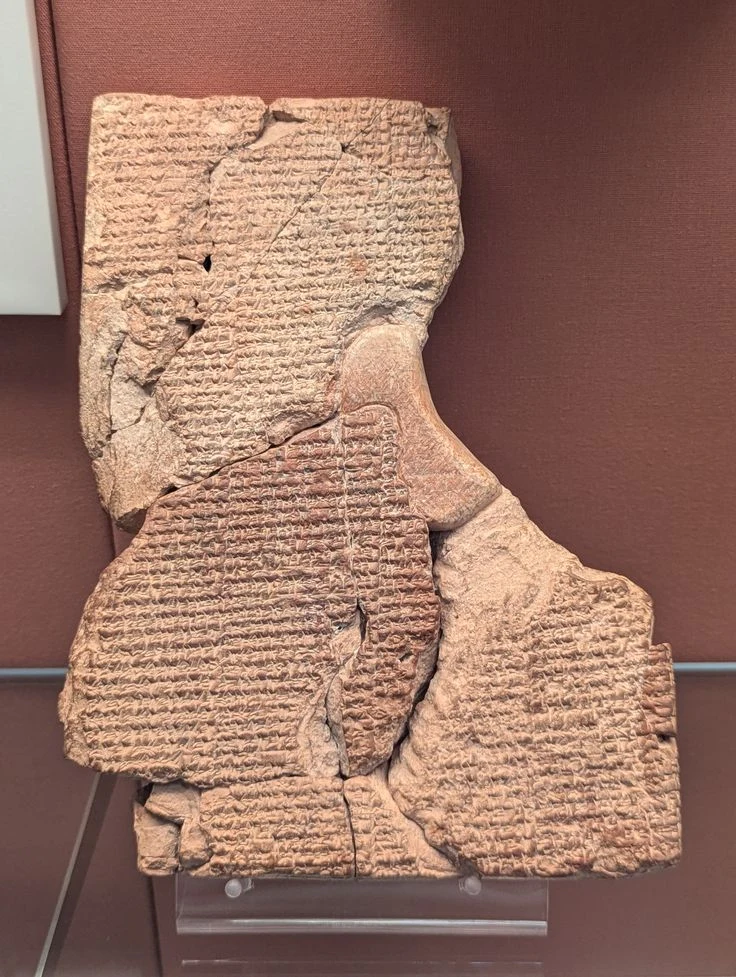
EgyptEgyptEgypt lies mainly in northeastern Africa and includes the Sinai Peninsula in AsiaGlossary · Click to read the explanation and the LevantThe LevantThe Levant is a regional name for lands along the eastern MediterraneanGlossary · Click to read the explanation experienced prolonged political and scribal contact. The AmarnaAmarna / AkhetatenSite of Akhenaten’s capital in Middle Egypt; boundary stelae record successive proclamations and reaffirmation.Glossary · Click to read the explanation letters, clay correspondence between the Egyptian court and regional rulers, are witnesses. The Metropolitan Museum preserves a letter from Abi-milkuAbi-milkuAbi-milku was a fourteenth-century BCE ruler of Tyre, known from letters to Egypt’s kingGlossary · Click to read the explanation, ruler of TyreTyreTyre is a city on the coast of present-day southern Lebanon and an important ancient Phoenician centerGlossary · Click to read the explanation, to Egypt's king, dated approximately 1347–1330 BCE, in the fourteenth century BCE. We checked its catalogue entry rather than reading the cuneiformCuneiformWriting with wedge-shaped signs, developed from Mesopotamian recording traditions and used for several languages from the third millennium BCE.Glossary · Click to read the explanation letter itself. [12]
These letters establish a setting of contact and circulation of writing. Identifying a creation text reaching Genesis's writer requires another witness: what traveled, when, and through what language or intermediary? Diplomatic correspondence alone does not answer those questions.
Levantine and Mesopotamian traditions also knew images of primeval waters, separation, conflict and creation. Egyptian influence is therefore assessed within a wider regional world instead of assuming a single source for every element of Genesis 1. [10][12]
Johnston favors intentional Egyptian influence. Chambers reviews the parallels while emphasizing comparative precision: general elements from several texts do not by themselves trace transmission. Specificity, order and contact evidence require attention. Both offer historical interpretations; none of the witnesses examined here contains a Genesis author's statement identifying the text used. [7][10]
The writer may have known and reshaped several regional images, or some similarities may reflect widespread ancient conceptions of water, land and speech. These remain possibilities to weigh, with no direct transmission document in the material presented.
What does comparison reveal?
Surviving Egyptian witnesses predate the earliest extant Genesis manuscripts and permit study of real similarities in primeval water, emerging land and speech. A manuscript's date nevertheless differs from the formation of its story; material priority alone does not identify a story's source. [3][4][8]
Egyptian–Levantine connections make influence a serious question. Diverse Egyptian texts, differing sequences and the absence of a specified transfer prevent presenting the Shabaka Stone or spell 600 as Genesis 1's demonstrated origin. We have comparable images, scholarly explanatory models and clear limits to what can be established. [1][5][7][10][12]
The comparison's value then emerges in asking what these images mean to their practitioners. In Egypt they may relate to creation renewed each morning or a city's and deity's sacred primacy. Genesis incorporates them into a narrative ordering the world and sanctifying time on the seventh day. This helps us understand possible relationships between images and changes in their meaning within each tradition. [1][5][8][9]
References and notes
- Complete university synthesis of Egyptian creation traditions; not spell 76 itself. UCL Digital Egypt, Egyptian creation traditions, complete webpage Return to the text ↑
- Introduction and Part a §§1–3 read; not the entire chapter. The edition preserves variants and glosses. UCL Digital Egypt, Book of the Dead 17, introduction and Allen Part a §§1–3 Return to the text ↑
- Complete university overview read, not every spell in the corpus. UCL Digital Egypt, Pyramid Texts overview, complete webpage Return to the text ↑
- Printed pp. 219, 265–266 and spell-600 concordance read; p. 265 visually checked, not the whole book. James P. Allen, The Ancient Egyptian Pyramid Texts (2005), spell 600, pp. 219 and 265–266 and concordance Return to the text ↑
- Museum catalogue, dating and curator note checked via indexed text after direct page open failed. British Museum, Shabaka Stone EA498, catalogue and curator note Return to the text ↑
- Full displayed translation and its lacuna marks read; Lichtheim’s entire volume was not read. Miriam Lichtheim translation of the Shabaka Stone, Ancient Egyptian Literature I, pp. 51–55, displayed by Attalus Return to the text ↑
- Entire 17-page article read through OCR of its image-only PDF; Egyptian-source argument attributed to its author. Gordon H. Johnston, “Genesis 1 and Ancient Egyptian Creation Myths,” Bibliotheca Sacra 165 (2008), pp. 178–194 Return to the text ↑
- Complete Hebrew chapter inspected, especially 1:1–21; parallel translation does not settle syntactic debate. Genesis 1, vocalized Hebrew and parallel JPS English Return to the text ↑
- Verses 2:1–3 read in Hebrew and translation; remainder of chapter not re-examined for this study. Genesis 2:1–3, vocalized Hebrew and parallel JPS English Return to the text ↑
- Selected thesis sections read: printed pp. 19–28, 38–42 and 164–166, not the complete dissertation. Nathan J. Chambers, Genesis 1 and Creation Ex Nihilo (Durham PhD, 2017), Egyptian pp. 19–28, method pp. 38–42, syntax pp. 164–166 Return to the text ↑
- Main discussion of primeval water and sacred time and notes 1–9 read; the author’s reading is attributed. Jack M. Sasson, “The Genesis of Time,” main essay and notes 1–9 Return to the text ↑
- Full artifact metadata read; the cuneiform letter itself was not read. Metropolitan Museum of Art, Amarna letter 24.2.12, complete object metadata Return to the text ↑
- The museum’s entire one-page exhibition excerpt read; it is not the complete inscription. British Museum, Shabaka Stone exhibition transcript, one-page excerpt Return to the text ↑
Research history
Substantive changes are retained here. Minor copy edits remain in the internal operational log.
-
Substantive record update
-
Substantive record update
-
Substantive record update
-
Substantive record update
Suggest a correction · Suggest a source for this record
Cite this record
IL Archive, «Egyptian Creation and Genesis: Primeval Water, the Mound and the Word», Edition 5, https://ilarchive.com/en/studies/egyptian-creation-and-primordial-waters
Continue reading