Entity · Contextual definition
Ptah
A reference page linking a name, group, or concept to the materials that discuss it.
At Memphis, Ptah was honoured as a creator and patron of craftspeople. Priestly titles, the Shabaka Stone and funerary figures preserve distinct ways Egyptians pictured his work and sought his protection.
Estimated reading time: 3 min Published Last reviewed:
Share article
Text
Introduction
Ptah was a principal deity of Memphis in ancient Egypt. He was associated with making things and with the people who worked as artisans. Some Egyptian texts describe him creating through thought and speech. A sanctuary at Memphis, inscribed monuments and statues document other settings of his worship. His name also appears in Ptah-Sokar-Osiris, a divine form represented among objects made for the dead. [1][2][5][6][8]
The sanctuary and its craftspeople
At MemphisMemphis in EgyptMemphis is an ancient Egyptian city near Mit Rahina south of present-day CairoGlossary · Click to read the explanation, a title borne by the high priest of Ptah was “greatest of the directors of craftsmen.” The association also appears beyond Memphis. The Global Egyptian Museum identifies Ptah as patron of workshop workers and tomb builders, including at Deir el-Medina. [1][2]
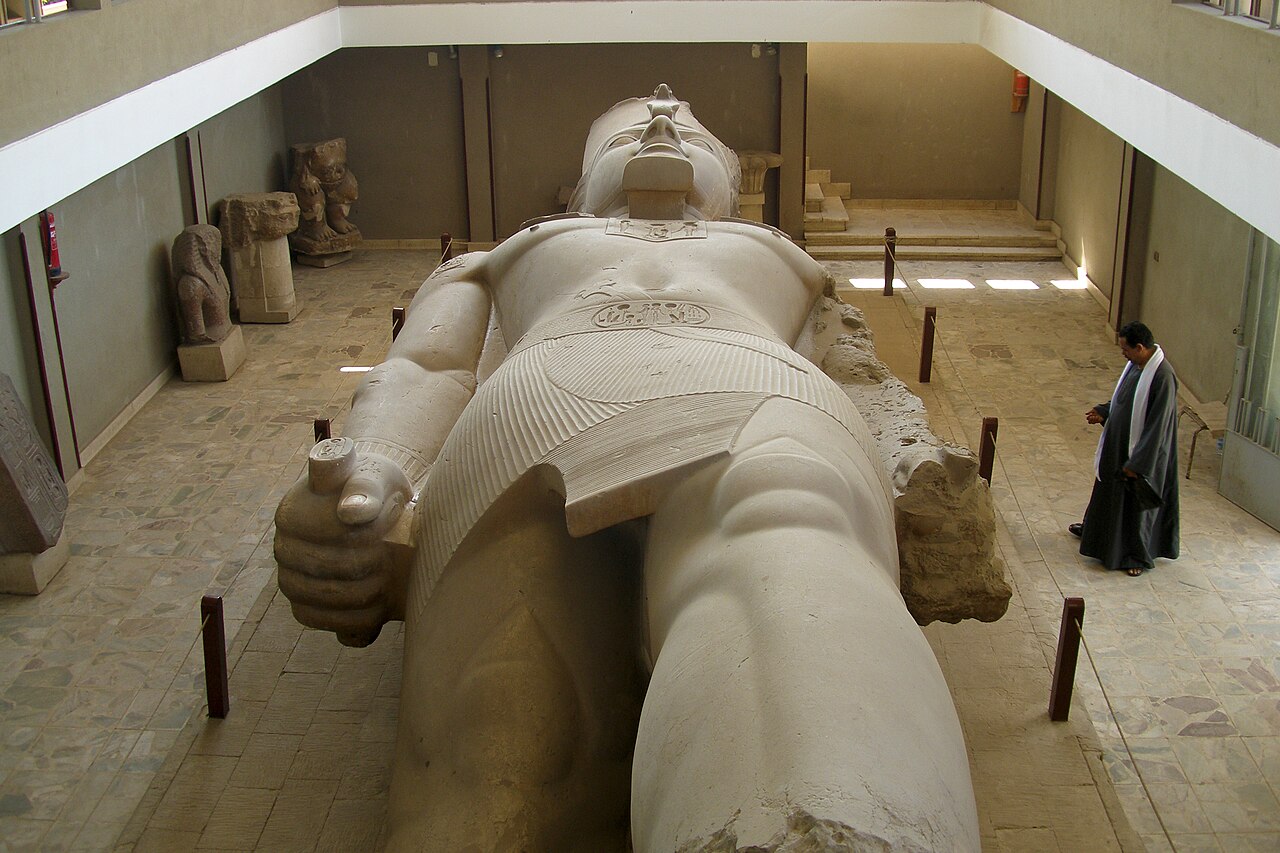
Excavations near the temple site at Mit Rahina recovered inscribed blocks of pink granite and limestone. The Egyptian Ministry of Tourism and Antiquities reports depictions of Ptah, names of Ramesses II and scenes of the king performing the Sed festival. The ministry identifies the blocks as probable parts of the great temple. A lintel attributed to Memphis, Louvre E 25680, shows an offering scene with Ptah standing in a shrine and the lion-headed goddess Sekhmet holding an emblem of Nefertum. In the Memphite grouping of these deities, Sekhmet was Ptah’s consort and Nefertum their son. [2][3][4]
An image and a text of creation
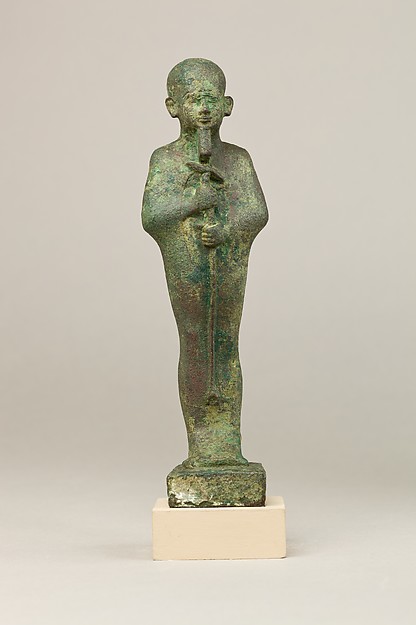
A statuette of copper-based metal in the Met, 04.2.406, depicts Ptah in a close cap, straight beard and garment wrapped around his body. He holds a was sceptre, a sign of dominion. The museum dates the statuette to 664–30 BCE. It also describes a composite sceptre found in other images, joining the signs for life, dominion and stability. [5]
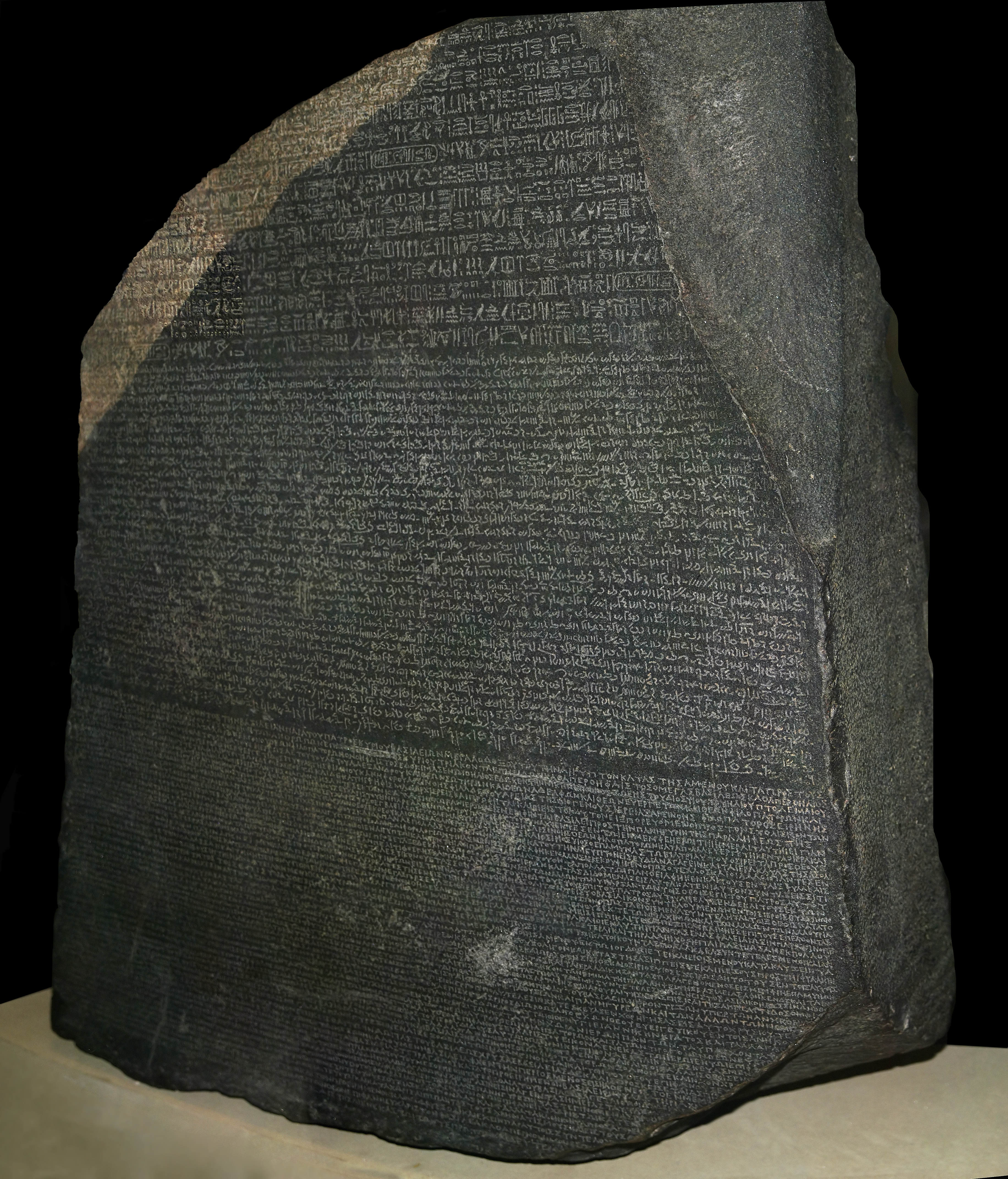
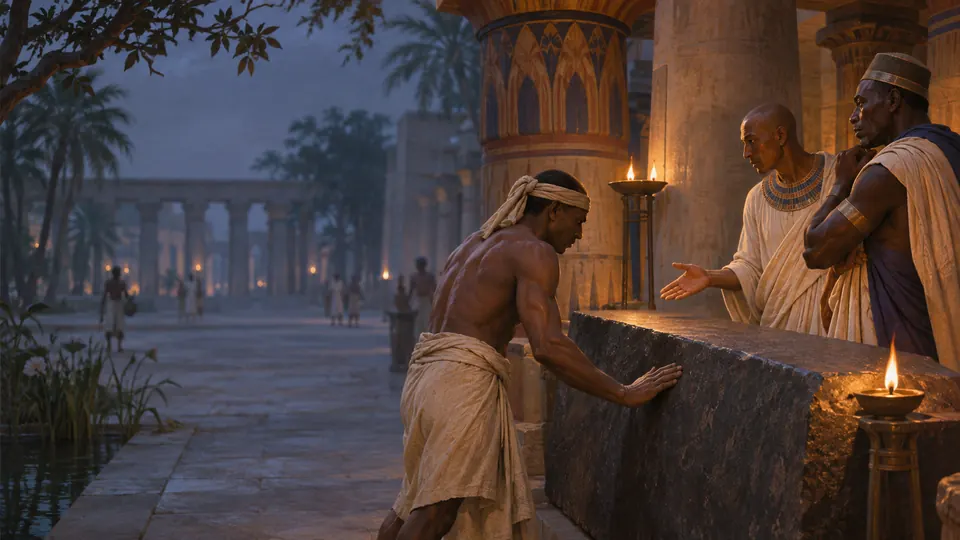
The Shabaka StoneShabaka StoneThe Shabaka Stone (British Museum EA498), inscribed c. 710 BCE, links Ptah, heart, speech, creation, and kingship; its damage, textual readings, and alleged older papyrus remain central questions.Glossary · Click to read the explanation, British Museum EA498, gives a written account of Ptah’s creative work. In the text, the heart devises and the tongue says what the heart has conceived. The account connects this process with the making of deities, food and crafts. The museum dates the inscription to about 710 BCE. Its opening claims that Shabaka had an older damaged text copied. Later reuse as a millstone wore away part of the carving. [6][7]
Ptah in funerary practice
The sacred Apis bull was associated with Ptah. The Global Egyptian Museum describes the burial of the bulls at the Serapeum. A different association appears in the wooden figure of Pakherenkhonsu, Met 28.3.48, excavated at Thebes. In the figure, Ptah is joined with Sokar of the Memphite necropolis and OsirisOsirisOsiris was an ancient Egyptian deity associated with the dead, life after death, renewal, and kingship. His roles appear in changing funerary texts, rituals, and judgment scenes, notably the weighing of the heart.Glossary · Click to read the explanation, ruler of the underworld. The inscription names Pakherenkhonsu, a doorkeeper of the house of Amun, for whom the funerary image was made. [8][9]
Quick answers
Where was Ptah especially worshipped?
The city of Memphis was a principal centre of his worship. [1][2]
Why was Ptah linked with craftspeople?
Egyptian sources present him as a divine craftsman. The title of his high priest at Memphis also refers to the direction of craftsmen. [1][2]
Which text describes Ptah creating through thought and speech?
The Shabaka Stone describes the work of the heart and tongue in creation. [6][7]
References and notes (9)
- University College London, Digital Egypt for Universities, “Memphis: background information” Section on industry and worship. Ptah as principal deity and patron of arts and crafts, and the title of the Memphite high priest. Return to the text ↑
- The Global Egyptian Museum, “Ptah” Glossary entry. Craftspeople at Deir el-Medina, the Memphite grouping with Sekhmet and Nefertum, creation traditions and links with Sokar and Osiris. Return to the text ↑
- Egyptian Ministry of Tourism and Antiquities, “Excavations Unveil a Part of the Temple of Ptah in Memphis” Excavation announcement. Granite and limestone blocks near the temple, depictions of Ptah, names of Ramesses II, and the proposed temple identification. Return to the text ↑
- Musée du Louvre, “relief mural, linteau,” E 25680 Description and provenance. Memphis, an offering scene, Ptah in a shrine and Sekhmet holding an emblem of Nefertum. Return to the text ↑
- Metropolitan Museum of Art, “Ptah,” 04.2.406 Object commentary, inventory and photograph. Copper-based metal statuette dated 664–30 BCE, cap, beard, enveloping garment and was sceptre. Public-domain image. Return to the text ↑
- British Museum, “The Shabako Stone,” EA498 Curatorial commentary and inventory. Date about 710 BCE, claimed older text, creation account and later reuse as a millstone. Return to the text ↑
- British Museum, “Shabaka Stone transcript,” Hieroglyphs: Unlocking Ancient Egypt Translation extract, especially the paragraphs on the heart, tongue, speech and crafts. Return to the text ↑
- Metropolitan Museum of Art, “Ptah-Sokar-Osiris Figure of Pakherenkhonsu,” 28.3.48 Object commentary and excavation context. The combined deity, the inscription for Pakherenkhonsu and the burial at Thebes. Return to the text ↑
- The Global Egyptian Museum, “Apis” Glossary entry. The Apis as the Ba of Ptah and its burial in the Serapeum. Return to the text ↑
Suggest a correction · Suggest a source for this record
Cite this record
IL Archive, «Ptah», https://ilarchive.com/en/entities/ptah
Continue reading
Related readings