The Heart and the Tongue Chapter 1
Ptah’s Act of Creation
The selected lines from the Shabaka Stone describe Ptah giving life through heart and tongue. The excerpt follows what the heart devises into speech and names the crafts, provisions and things created.
SourcesTurn the pages with the arrows, the arrow keys or a swipe.
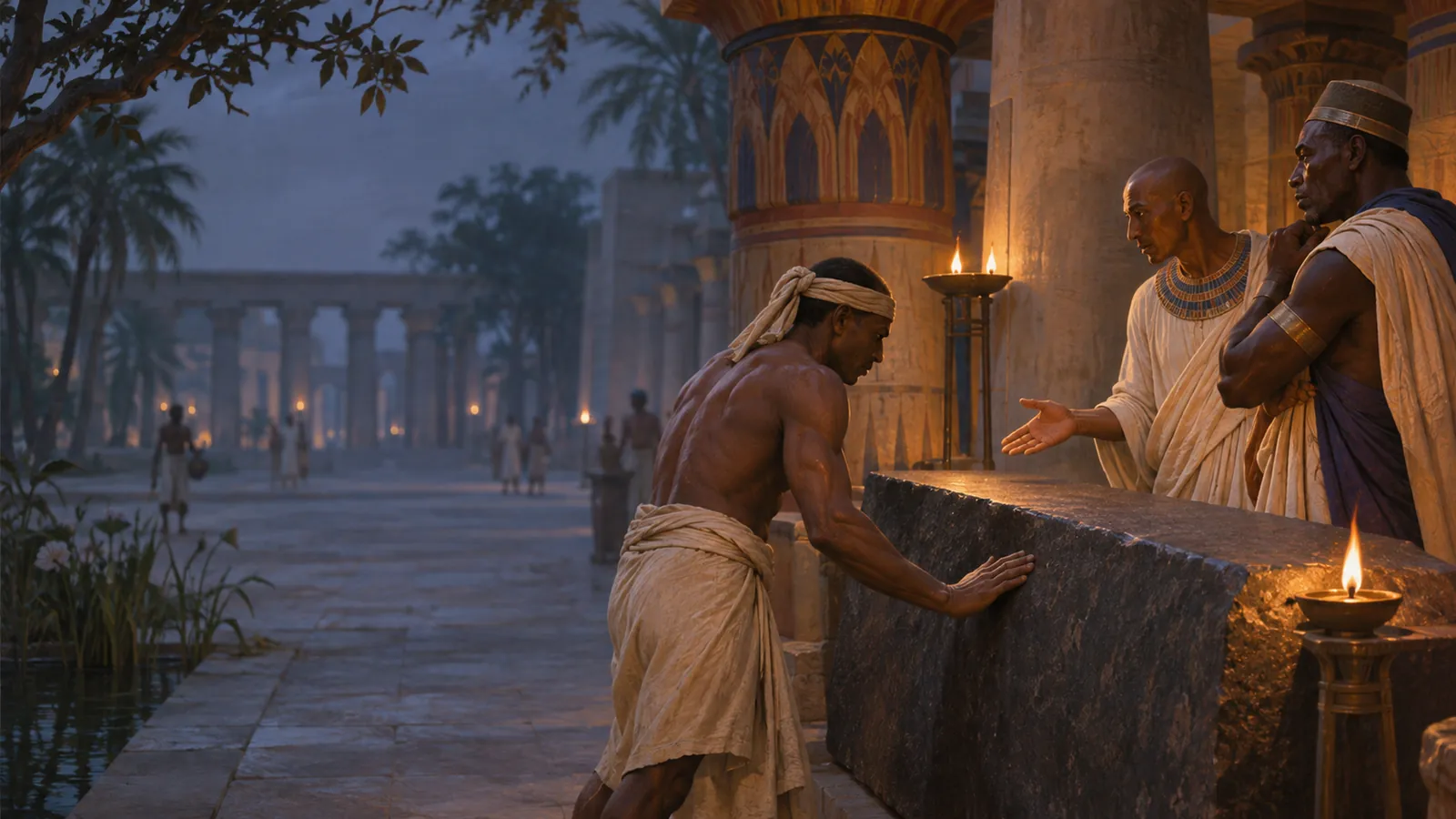
THE HEART AND THE TONGUE
This reading follows an exhibition excerpt from the Shabaka Stone published by the British Museum. It calls Ptah very great and says he gave life to all the gods through the heart and the tongue.
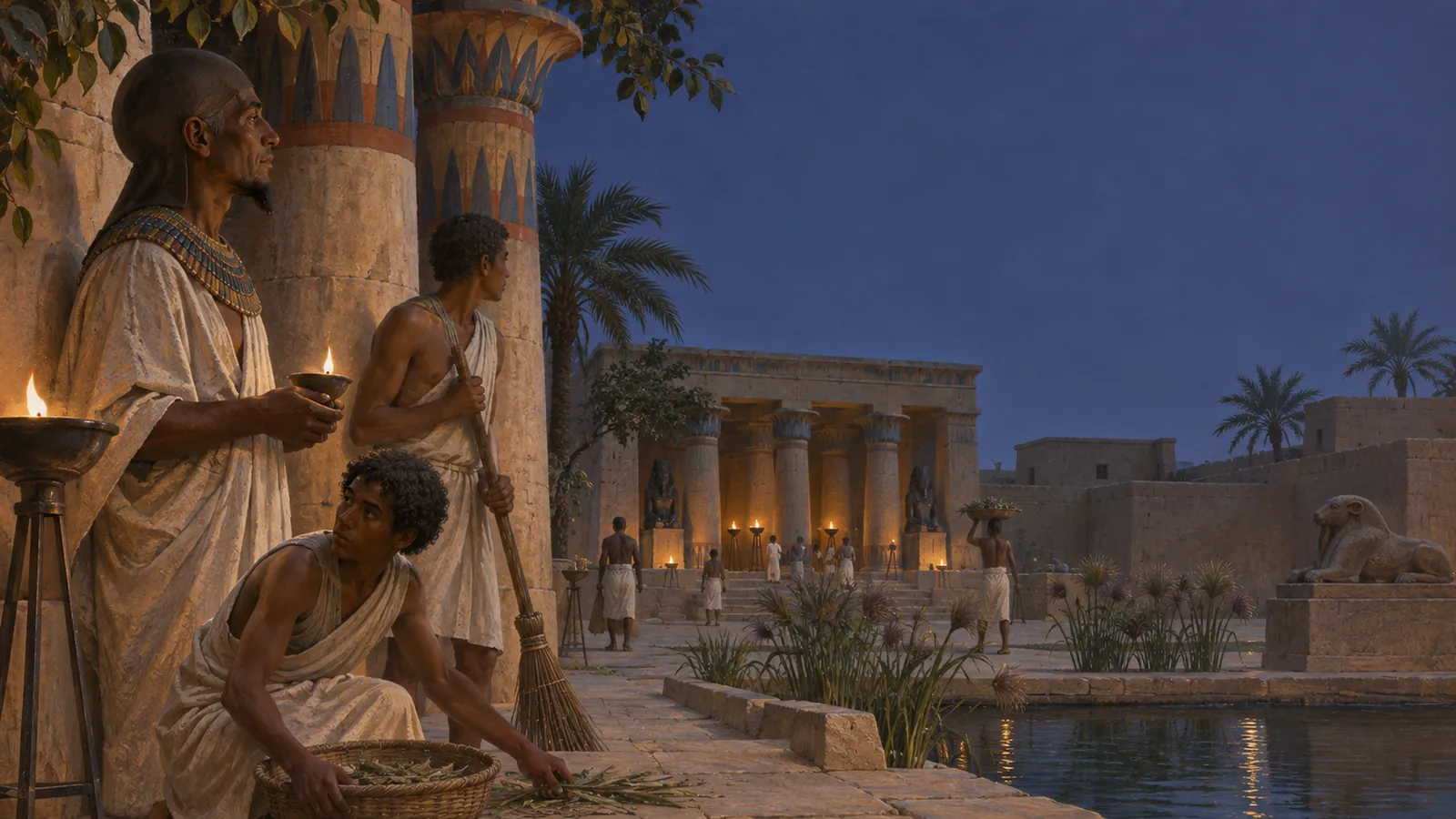
The excerpt sets out three things that report to the heart. It names sight first, then hearing, then breathing.
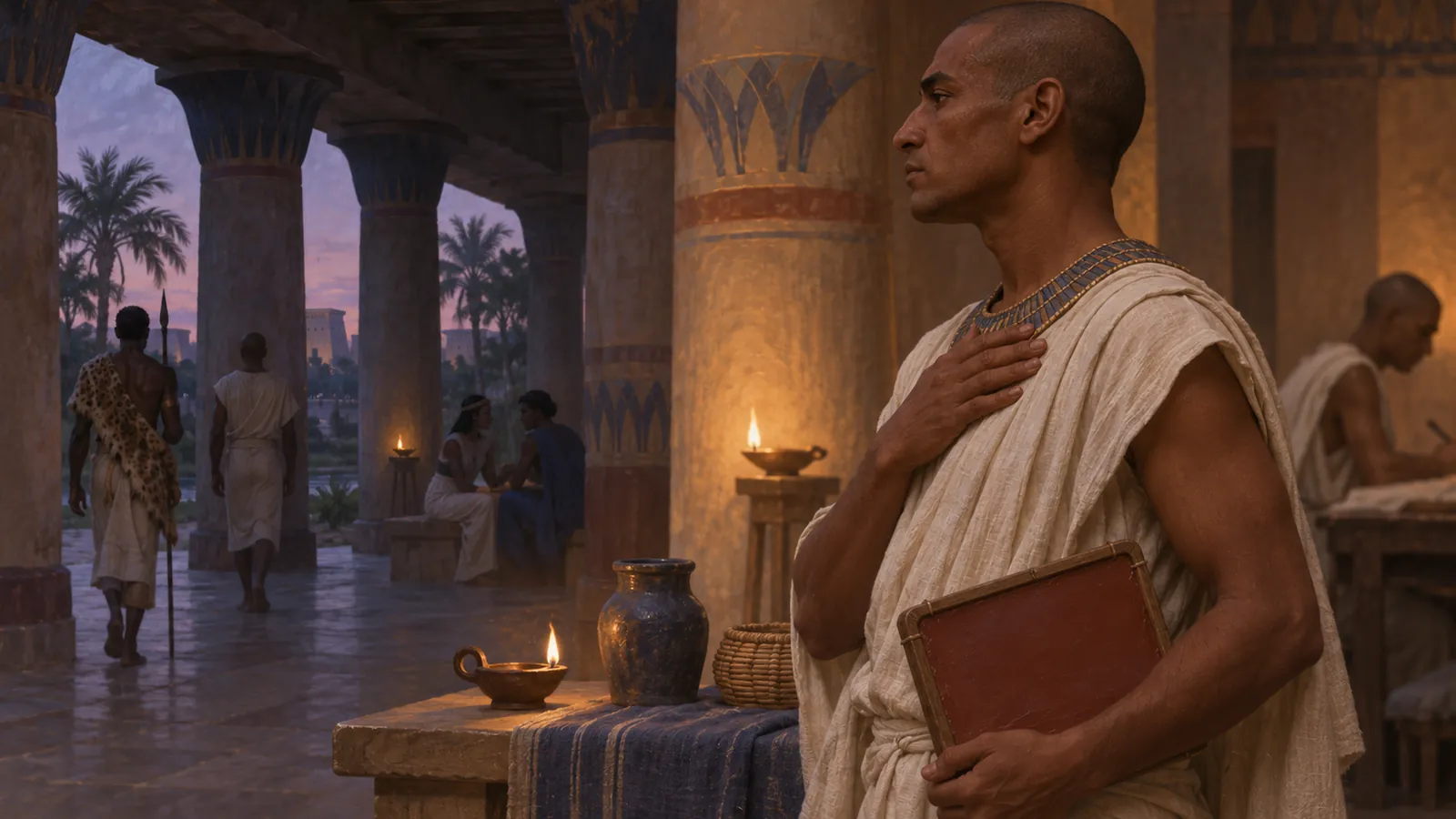
The passage turns from what reaches the heart to what comes from it. The heart, it says, brings forth all understanding.
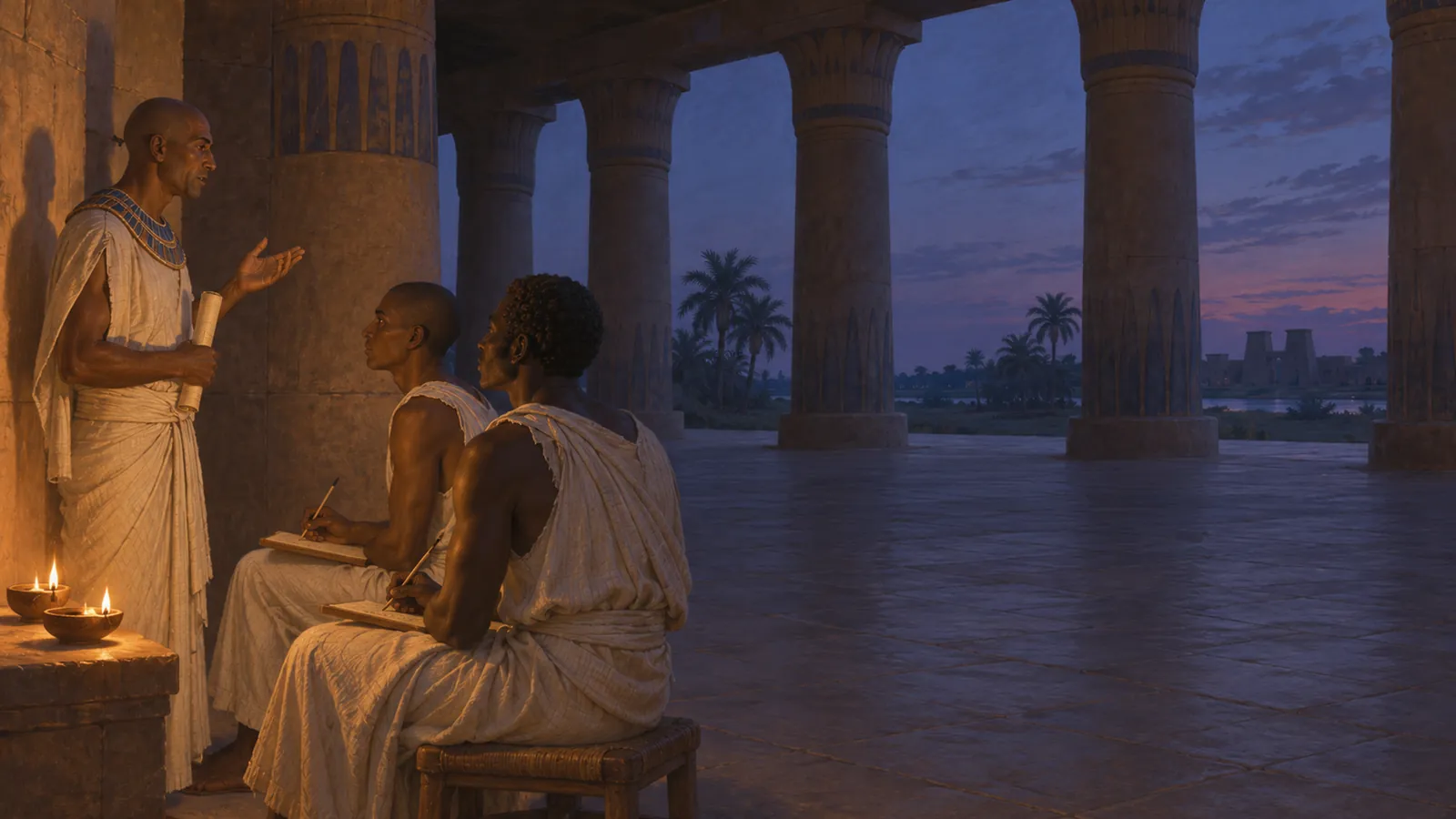
The account then turns to speech. The tongue repeats what the heart has devised, the text says.
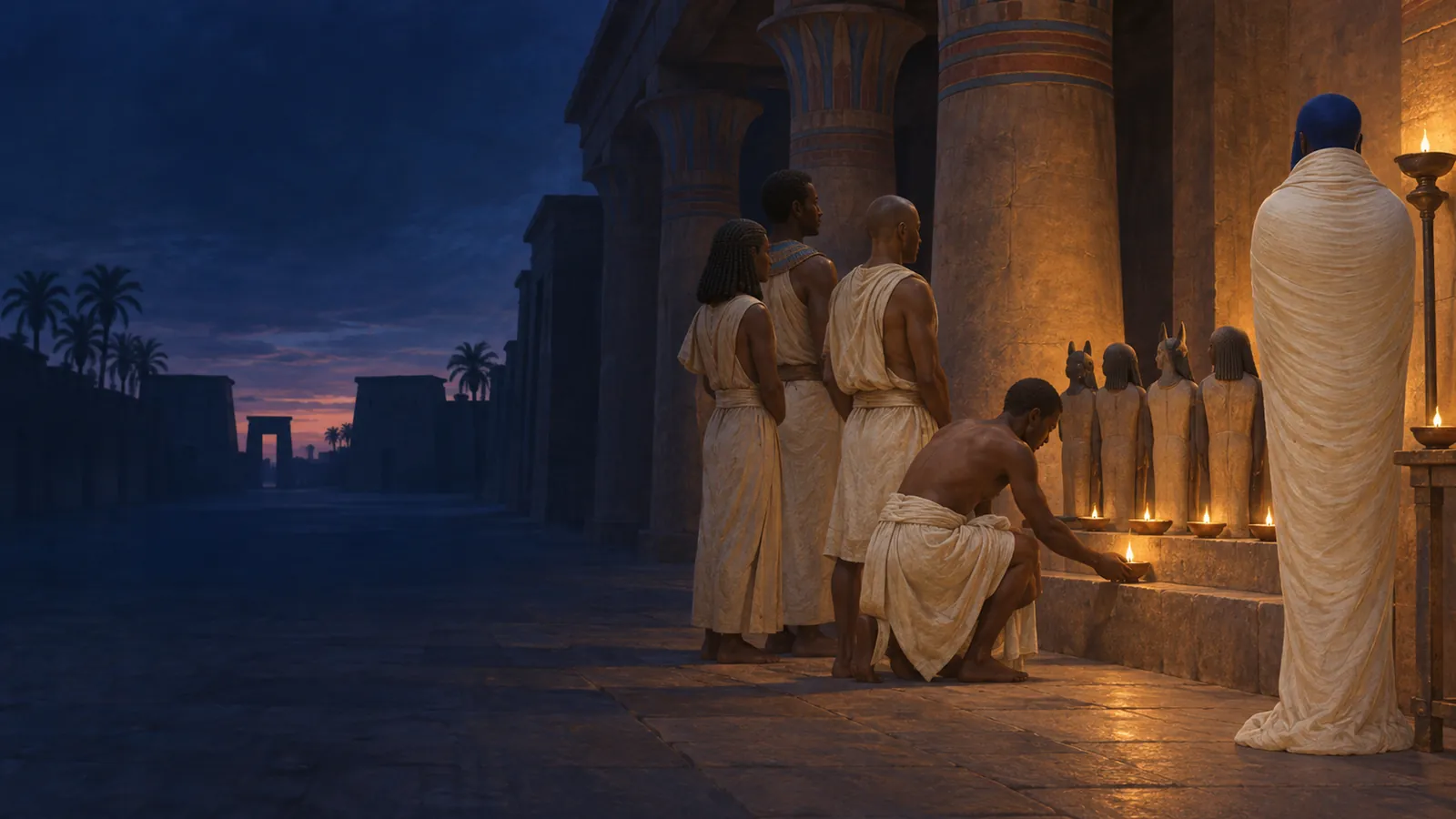
The passage says that all the gods were born in this way, through what the heart devised and the tongue repeated.
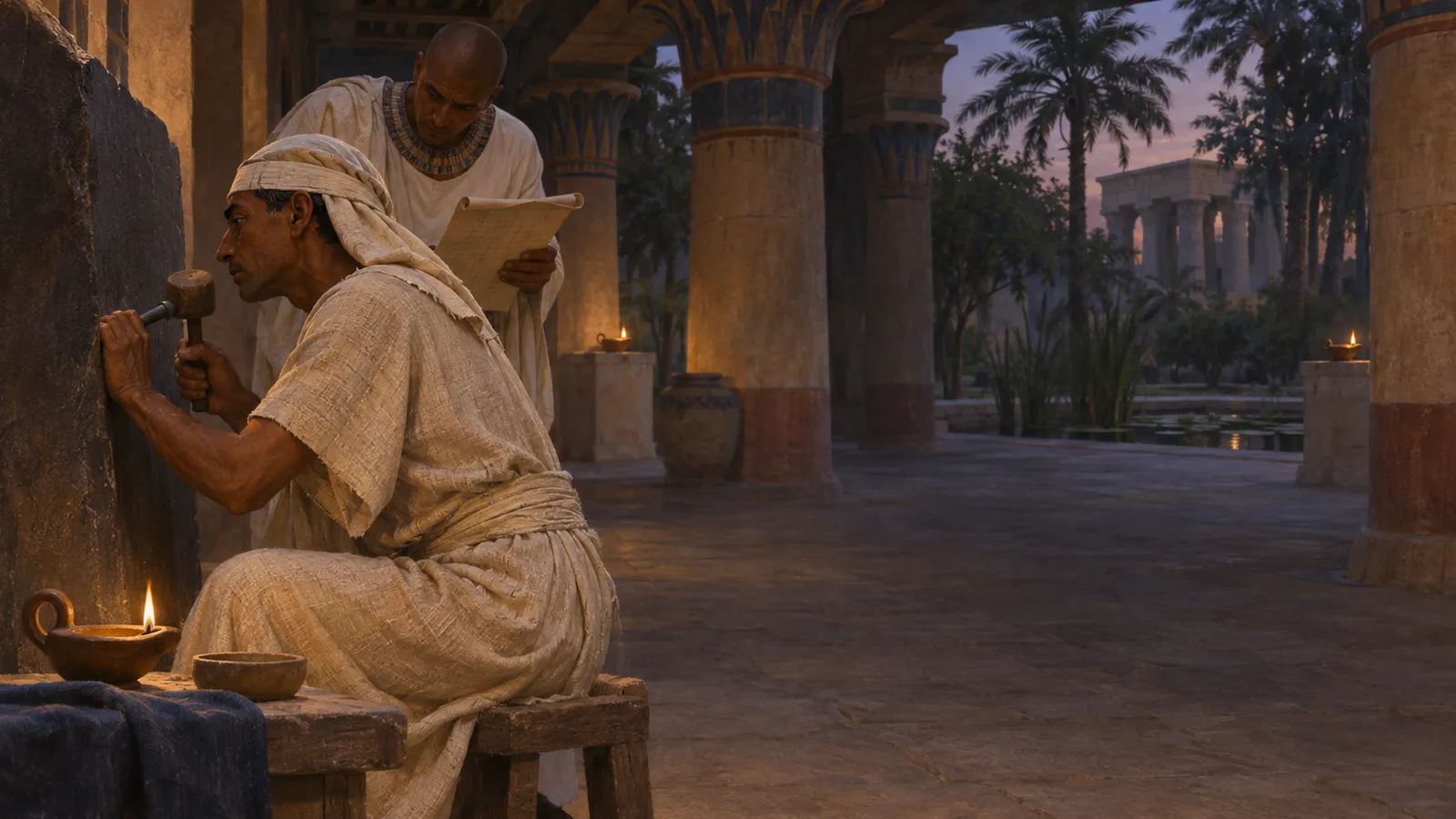
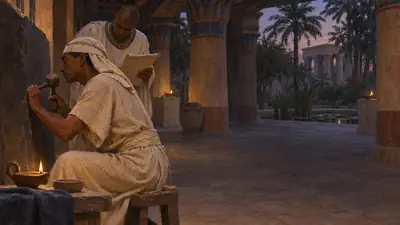
The text speaks of every hieroglyph as divine speech. All such speech, it says, came from what the heart devised and what the tongue commanded.
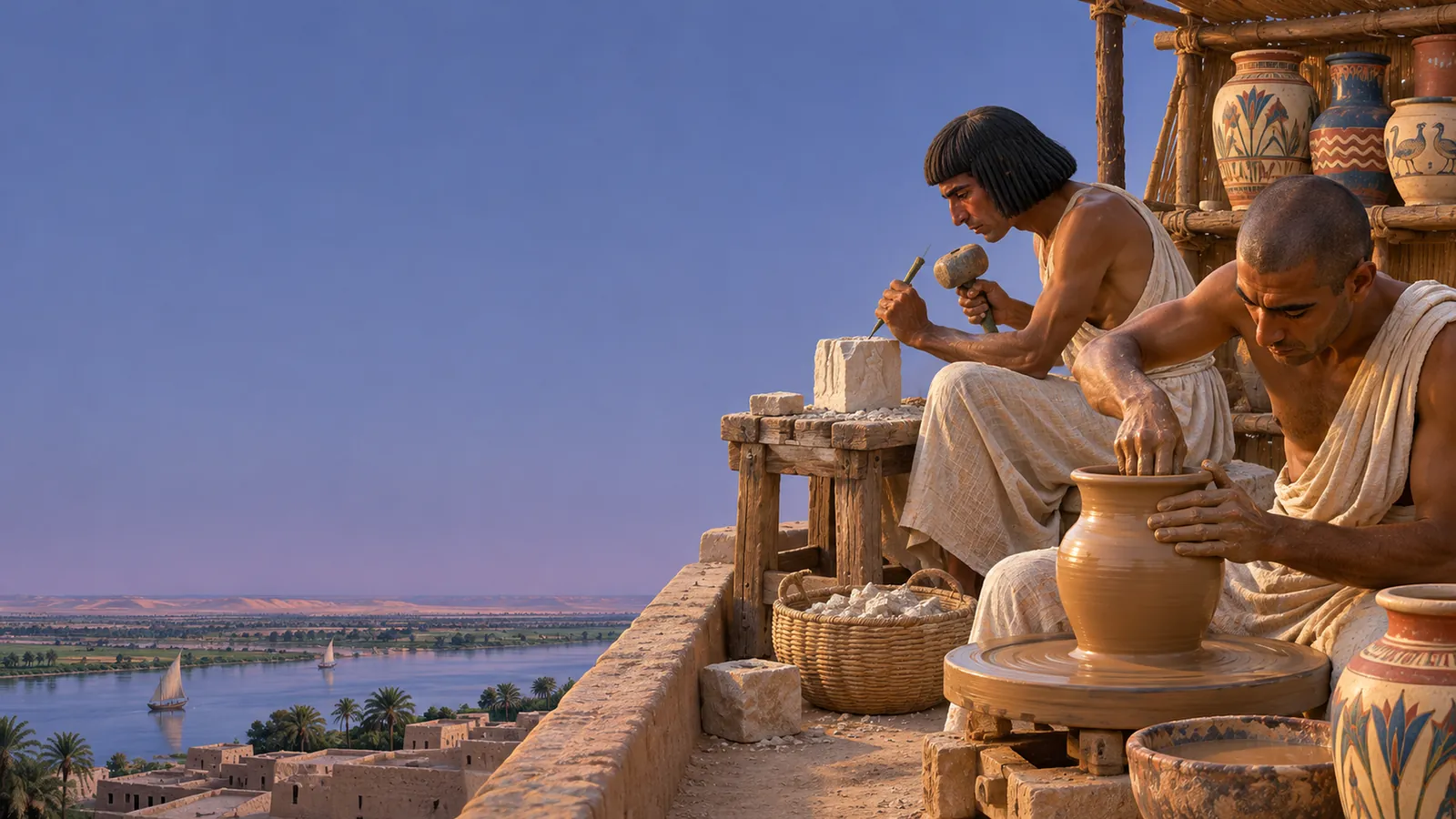
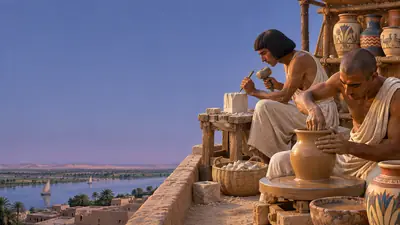
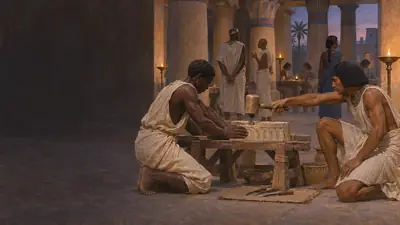
The inscription turns to the world of craft. It says that the command brought all trades into being, and that it brought every art into being as well.
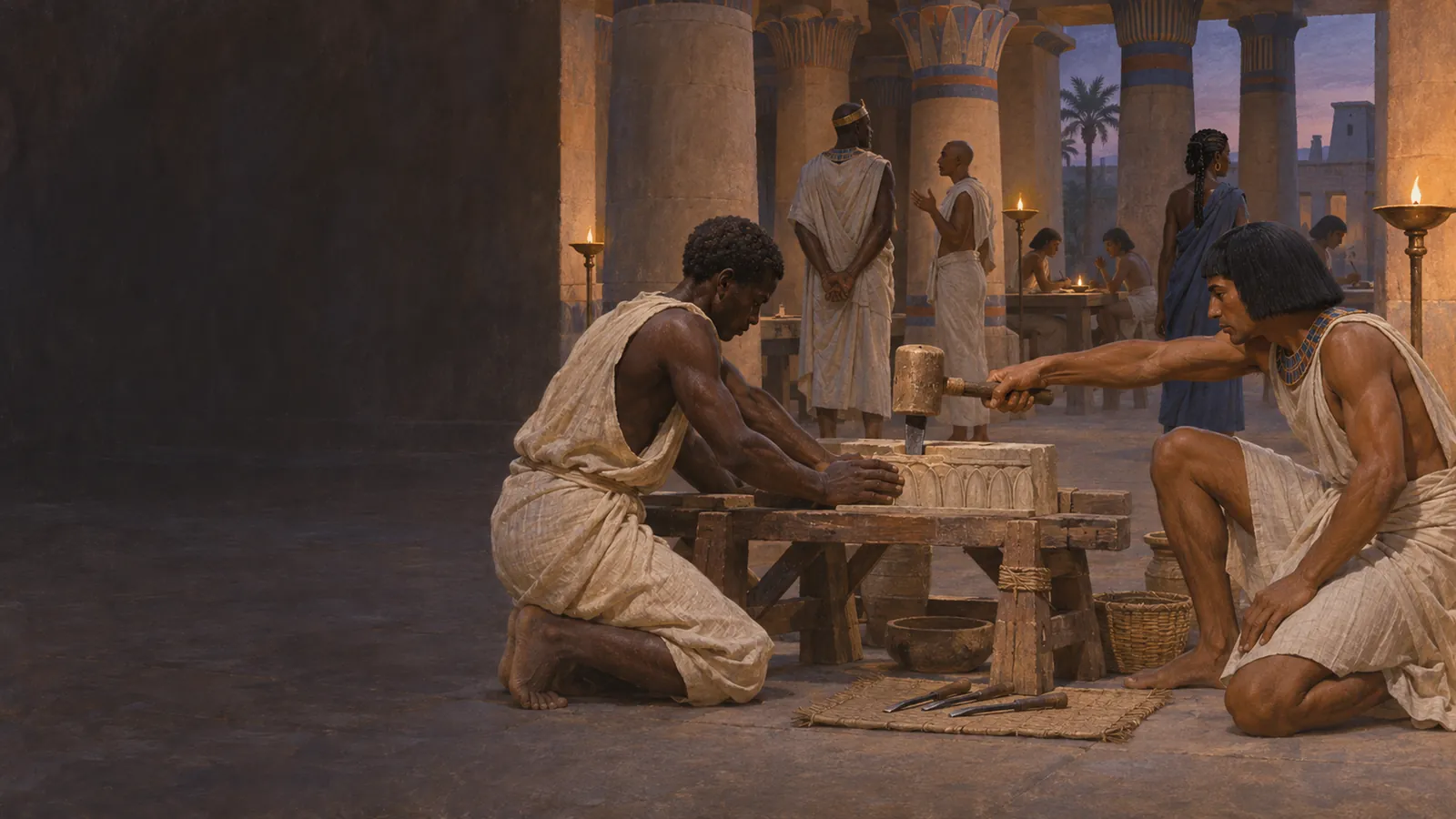
The inscription includes the movements of all the limbs. The heart devises the command and the tongue gives it voice. The text says this command created everything.
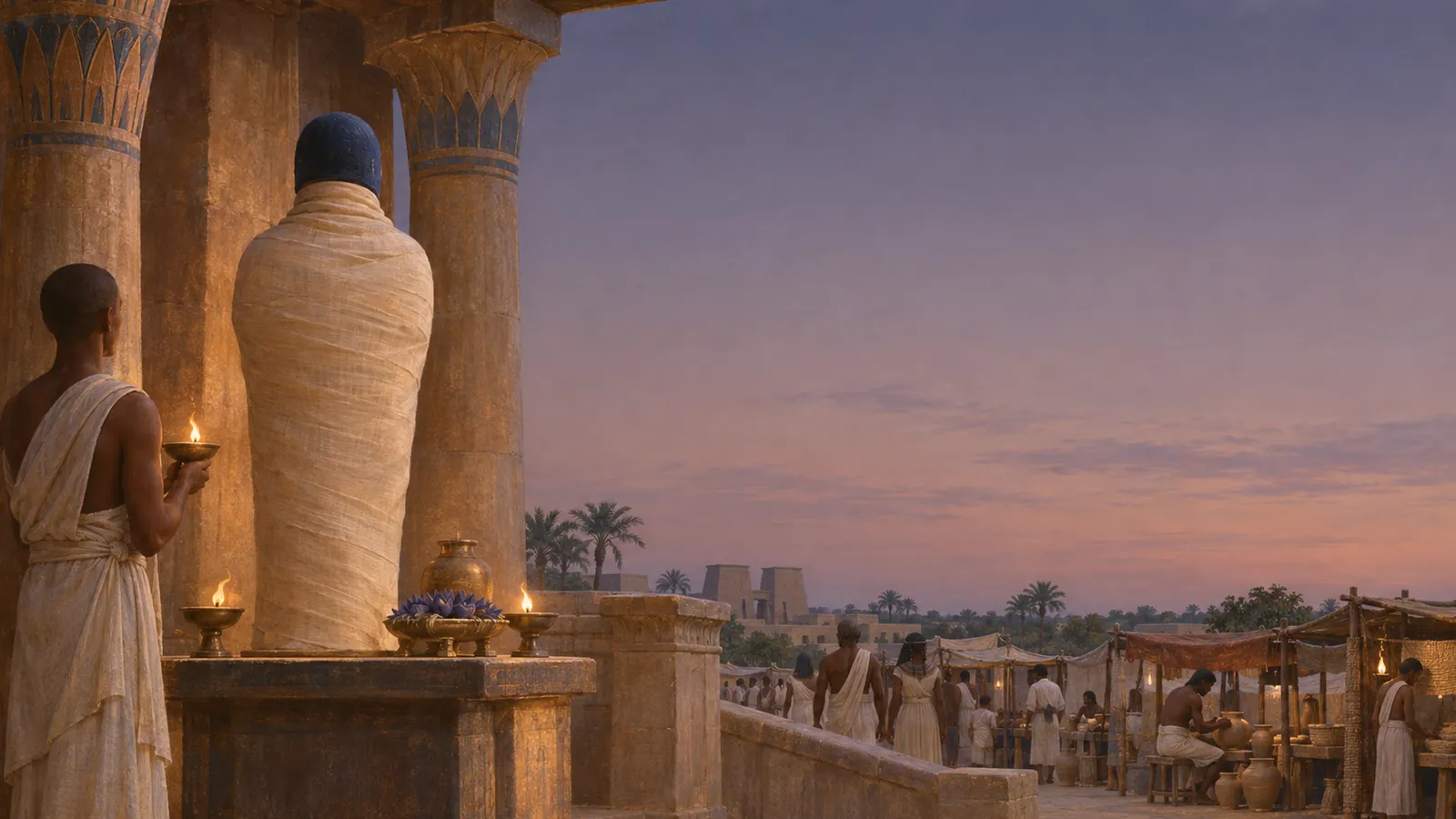
The inscription credits Ptah with making all things in this way. It says that he created the gods, and that everything came forth from them.
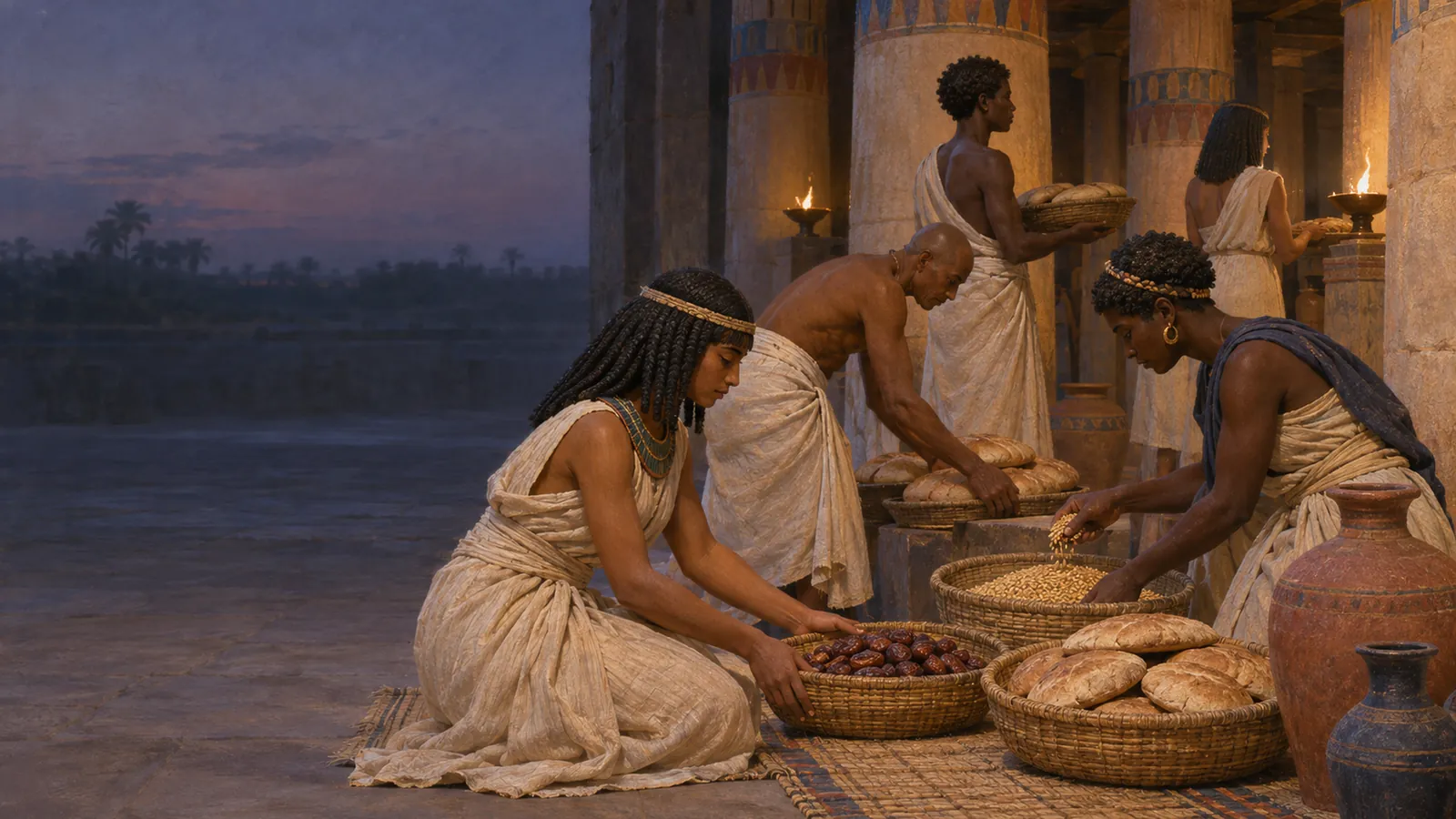
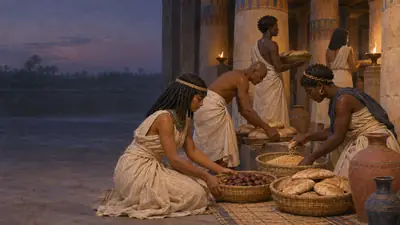
The inscription gives examples of what came forth. It names food, provisions, offerings for the gods and all good things.
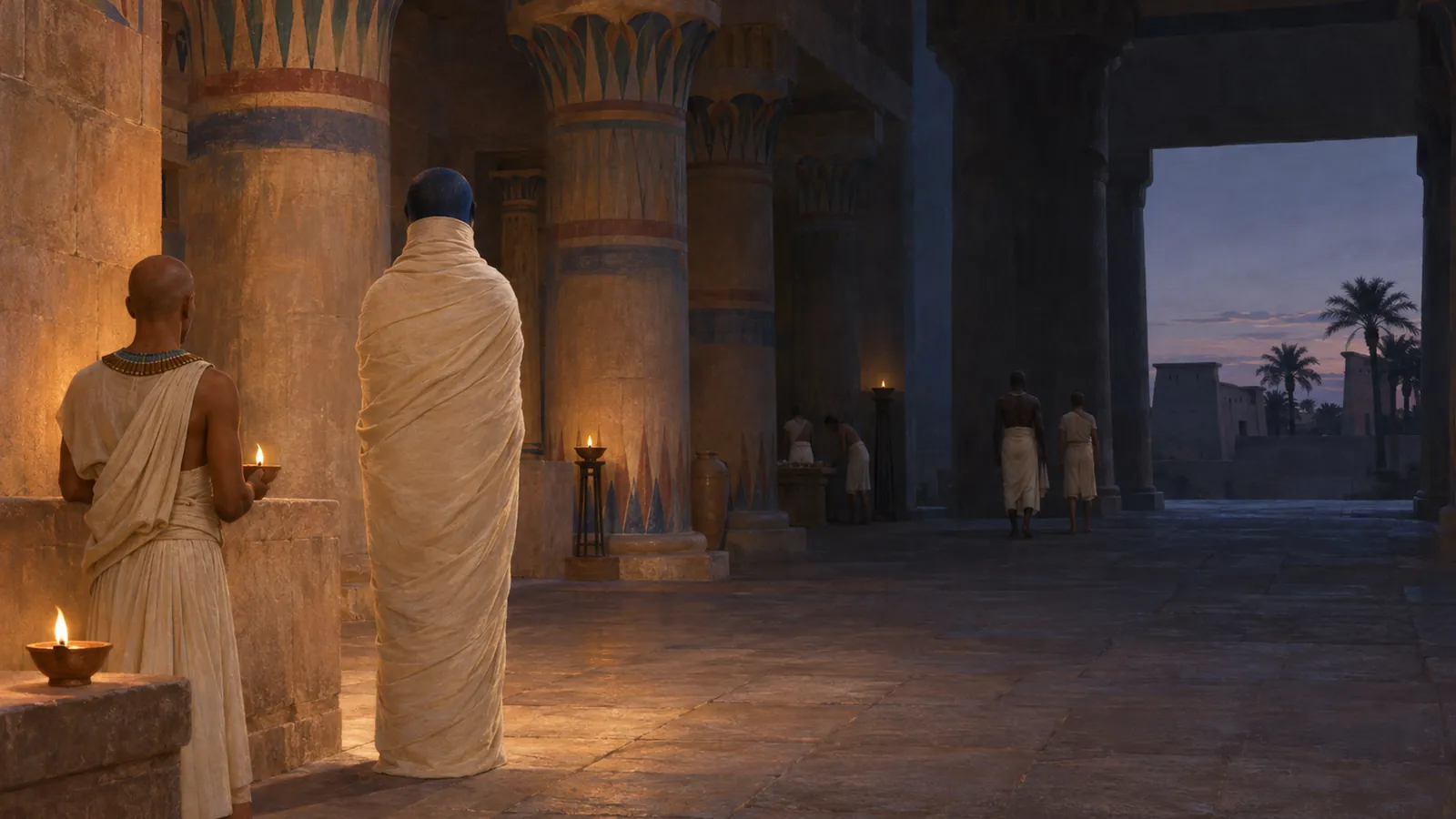
The inscription says that because of this creation Ptah is recognized as the mightiest of the gods. The passage leaves the one who recognizes him unnamed.
AFTER CREATION
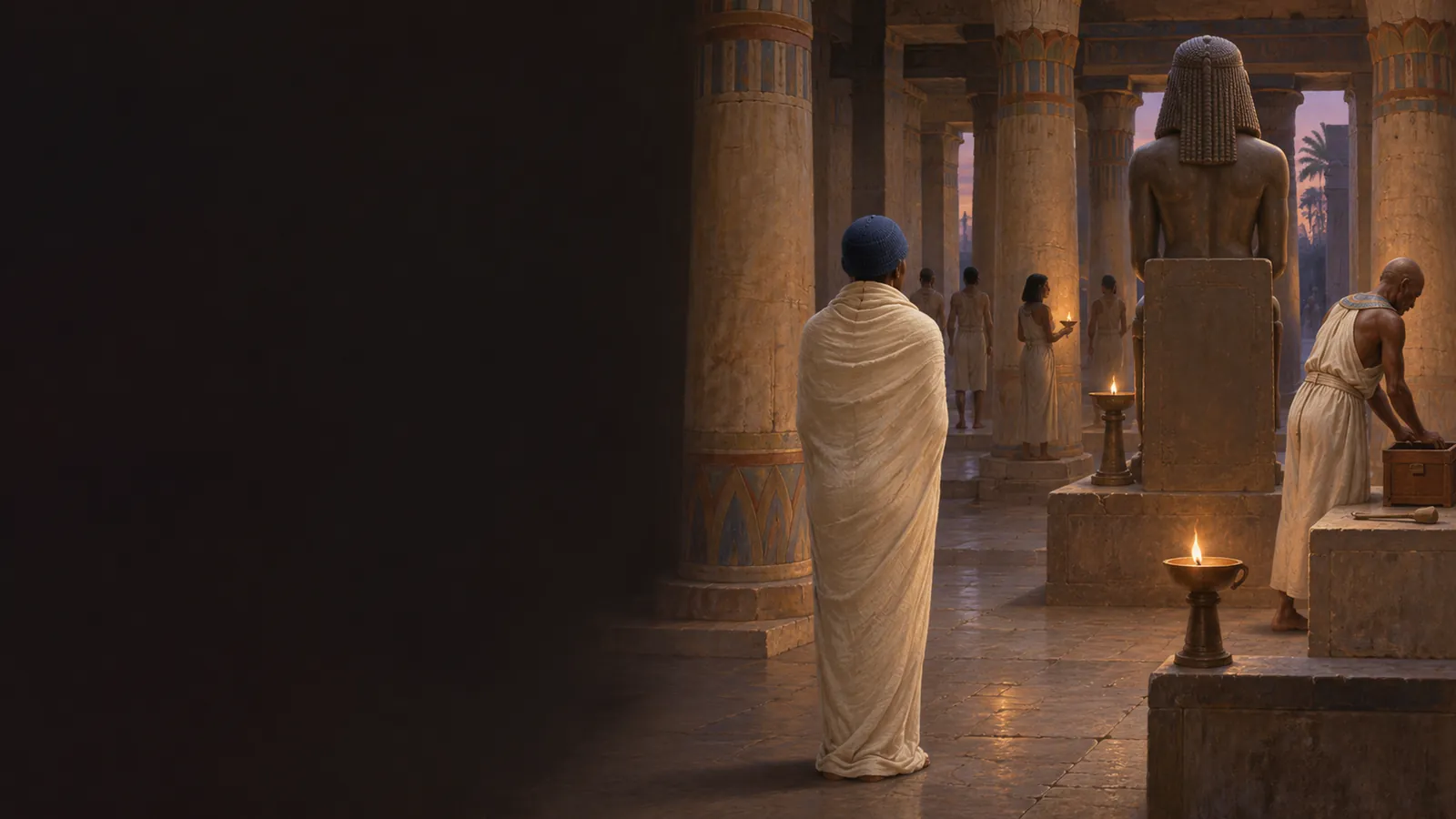
The museum’s selection ends with another statement about Ptah. The inscription says that after he had made all things and all hieroglyphs, he was satisfied.
End of chapter 1
All pages
Sources
The words are paraphrased in the exhibition selection’s order. The handout is a reading of the selected passage from the stone.
Editions consulted
- British Museum, Shabaka Stone exhibition transcript, page 1
- British Museum collection, Shabaka Stone EA498
Ancient lines behind each page
- Page 1: British Museum, Shabaka Stone exhibition transcript (EA498), PDF p. 1, paragraph 1, modern display line 1
- Page 2: British Museum, Shabaka Stone exhibition transcript (EA498), PDF p. 1, paragraph 2, modern display line 2
- Page 3: British Museum, Shabaka Stone exhibition transcript (EA498), PDF p. 1, paragraph 2, modern display line 2
- Page 4: British Museum, Shabaka Stone exhibition transcript (EA498), PDF p. 1, paragraph 2, modern display lines 2–3
- Page 5: British Museum, Shabaka Stone exhibition transcript (EA498), PDF p. 1, paragraph 2, modern display line 3
- Page 6: British Museum, Shabaka Stone exhibition transcript (EA498), PDF p. 1, paragraph 2, modern display lines 3–5
- Page 7: British Museum, Shabaka Stone exhibition transcript (EA498), PDF p. 1, paragraph 3, modern display line 6
- Page 8: British Museum, Shabaka Stone exhibition transcript (EA498), PDF p. 1, paragraph 3, modern display lines 6–7
- Page 9: British Museum, Shabaka Stone exhibition transcript (EA498), PDF p. 1, paragraph 4, modern display line 8
- Page 10: British Museum, Shabaka Stone exhibition transcript (EA498), PDF p. 1, paragraph 4, modern display lines 8–9
- Page 11: British Museum, Shabaka Stone exhibition transcript (EA498), PDF p. 1, paragraph 4, modern display lines 9–10
- Page 12: British Museum, Shabaka Stone exhibition transcript (EA498), PDF p. 1, paragraph 4, modern display line 10
Illustrations made with AI tools by IL Archive; the text is based on the ancient sources (see the sources at the end of each chapter).