Entity · Concept
Ancient Near East
A reference page linking a name, group, or concept to the materials that discuss it.
A changing geographical and historical framework for Mesopotamia, the Levant, Anatolia, Iran and their connections, sometimes including Egypt and neighbouring regions, across diverse periods and sources.
Estimated reading time: 7 min Published Last reviewed:
Share article
Text
Introduction
What joins the cities of the Tigris and Euphrates, the kingdoms of AnatoliaAnatoliaAnatolia is the region occupying the Asian part of present-day TurkeyGlossary · Click to read the explanation, the ports of the LevantThe LevantThe Levant is a regional name for lands along the eastern MediterraneanGlossary · Click to read the explanation, and the centres of the Iranian plateau in historical scholarship? “Ancient Near East” is a framework for studying these societies and their connections, not the name of a single people or a civilization with an unchanging religion. This entry explains the term’s shifting geographical and chronological scope, then follows evidence from cities, writing, trade, power, and religious practice.
For the IL Archive, locating and dating each witness, and identifying its language, must precede comparison: a Ugaritic composition, a Babylonian tablet, and an Assyrian sculpture are not interchangeable testimonies to one belief system, even where genuine historical contacts are demonstrable.
A modern label with changing boundaries
“Ancient Near East” is a modern scholarly designation, not the name used by ancient inhabitants for a single state. It commonly encompasses MesopotamiaMesopotamiaHistorical region associated with the Tigris and Euphrates: Uruk, Ur, Eridu, cuneiform, Sumer, Akkad, Babylon and Assyria, their languages and cults, and the limits of archaeological evidence.Glossary · Click to read the explanation, the LevantThe LevantThe Levant is a regional name for lands along the eastern MediterraneanGlossary · Click to read the explanation, AnatoliaAnatoliaAnatolia is the region occupying the Asian part of present-day TurkeyGlossary · Click to read the explanation, IranIranIran is the modern country containing Shush, ancient SusaGlossary · Click to read the explanation, and connected regions; some studies include Arabia or EgyptEgyptEgypt lies mainly in northeastern Africa and includes the Sinai Peninsula in AsiaGlossary · Click to read the explanation when investigating diplomacy, exchange, and religious history. This usage does not coincide with modern national borders or the meaning of “Middle East” in contemporary news. An early museum guide maps a broad zone of western Asia, from Anatolia to the Iranian plateau, while the exact boundaries depend on the question being asked. [1]
Chronological boundaries also differ. One academic companion to the region’s art covers the Neolithic through the fall of the Achaemenid empire around 330 BCE, whereas the Metropolitan Museum’s departmental collection extends from the eighth millennium BCE into the centuries following Islam’s emergence in the seventh century CE. The emphasis here is on societies before the Hellenistic period, without denying the continuation of many traditions afterward. No single cutoff applies identically to every place. [2] [3]
The word “Near” reflects a European geographic point of view. Accordingly, some institutions use “West Asia” or “West Asia and North Africa” when those descriptions better fit their remit. The University of Chicago’s institute adopted a new, more geographically explicit name in 2023. Such changes do not make every historical use of the older expression invalid, but they underline the need to define it. [4]
Adjacent regions, contrasting environments
This geographical range includes the Tigris–Euphrates alluvial lowlands, where southern agriculture relied on water management, the Anatolian and Zagros highlands, the plains and Mediterranean ports of the Levant, and the margins of deserts and the Gulf. Rainfall, available resources, and routes of movement varied considerably. Rivers alone did not cause cities to emerge: settlement patterns, labour, institutions, exchange, and political choices mattered as well. [1] [5]
SusaSusa, ancient ShushSusa is an archaeological city at Shush in southwestern present-day IranGlossary · Click to read the explanation, at the edge of the Iranian plateau, was closely linked to its Mesopotamian neighbours; its history was nonetheless not simply an offshoot of Sumer. Coastal ports were connected to inland Syria, Anatolia, and maritime routes, while overland networks linked sources of metals and timber with cities lacking those materials. An arrow on a map indicates possible contact; demonstrating the transmission of a particular object or literary form requires dated, contextual evidence. [5]
Overlapping chronologies and political change
Numerous prehistoric farming and village societies preceded writing. In the late fourth millennium BCE UrukUrukAncient city at Warka in southern Iraq, a major urban centre around 3200 BCE that preserved early writing and accounting tablets.Glossary · Click to read the explanation emerged as a large urban centre in southern Mesopotamia, where pictographic administrative records were impressed or drawn on clay. The third millennium then witnessed competing city-states, dynastic rule, and AkkadianAkkadianAn ancient East Semitic language written in cuneiform from the third millennium BCE; its varieties include Babylonian and Assyrian, and it served in international diplomacy.Glossary · Click to read the explanation expansion. This sequence cannot stand in for the distinct trajectories of Syria, Anatolia, and Iran, nor does it establish a single Sumerian path of development. [6]
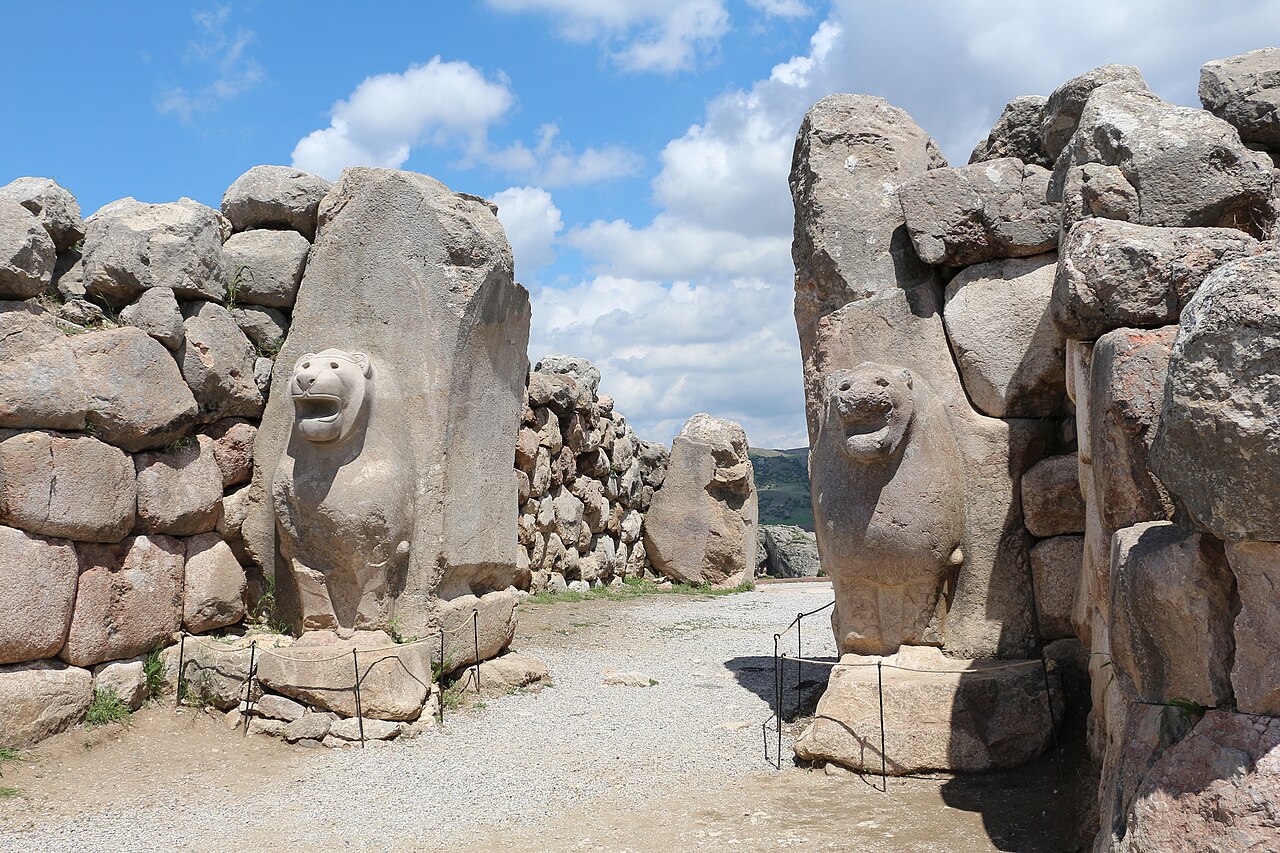
The second millennium BCE brought Babylonian kingdoms and extensive exchange. HattushaHattusha, Hittite capitalHittite capital near Boğazkale in present-day Turkey, preserving witnesses to treaty traditions.Glossary · Click to read the explanation became the seat of HittiteHittitesAncient people and kingdom of Anatolia, dominating much of Anatolia and northern Syria around 1650–1200 BCE.Glossary · Click to read the explanation power in Anatolia. Late Bronze AgeLate Bronze AgeAn archaeological period around 1600–1200 BCE in much of the Near East, with international diplomacy, exchange and religious diversity; its endpoints vary by region.Glossary · Click to read the explanation states exchanged letters, concluded agreements, and fought over territories before major changes around 1200 BCE. The causes and consequences of disruption differed from place to place: Hittite traditions, for example, persisted in northern Syria after the empire fell. [7]
In the first millennium BCE, Assyrian and Babylonian states expanded, followed by the Achaemenid empire, which ruled over a vast territory from the sixth to the late fourth century BCE. Its administration brought together different populations and languages without erasing their local cultures. These dates are signposts, not a universal chronology: a king’s reign is not automatically the date at which a text set in his reign was composed. [8]
Cities and networks of exchange
Letters written by Assyrian merchants in roughly the twentieth to eighteenth centuries BCE offer a relatively direct example. Goods moved between Ashur and trading centres in Anatolia, including Kanesh; tablets preserve correspondence and transactions. These records concern identifiable people and institutions, not everyone in the region participating equally in a single network. [9]
UgaritUgaritAncient city and kingdom at Ras Shamra on the Syrian coast, flourishing between the fourteenth and early twelfth centuries BCE and preserving multilingual archives.Glossary · Click to read the explanation, on the Syrian coast, was a port and kingdom connected with Cyprus, inland Syria, and Anatolia during the fourteenth and thirteenth centuries BCE. Its archives attest to trade, political dealings with the Hittites, and several languages. Imported pottery helps reconstruct the movement of goods but does not, on its own, reveal each owner’s language or religion. The example brings commerce, political pressure, and local adaptation together. [10]
Documents, scripts, and languages
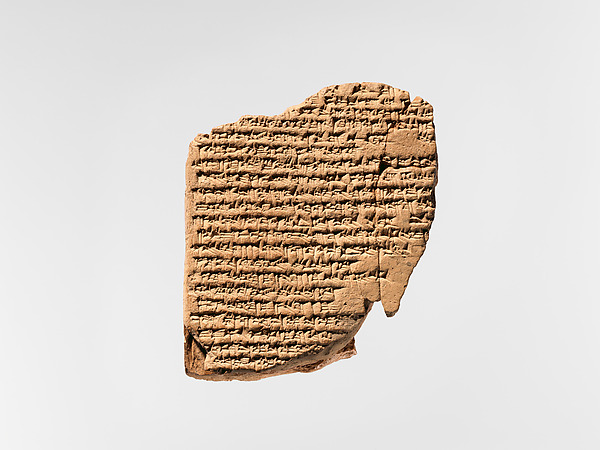
Early Uruk tablets record quantities, rations, and commodities before cuneiformCuneiformWriting with wedge-shaped signs, developed from Mesopotamian recording traditions and used for several languages from the third millennium BCE.Glossary · Click to read the explanation became a means of writing letters, laws, literary works, and religious texts. Signs developed gradually from pictographic shapes toward more abstract and phonetic uses. “Cuneiform” denotes a writing technology, not a single language: it served SumerianSumerian languageAncient language of southern Mesopotamia, clearly attested in third-millennium BCE texts and maintained in learning and ritual after its spoken use declined.Glossary · Click to read the explanation, AkkadianAkkadianAn ancient East Semitic language written in cuneiform from the third millennium BCE; its varieties include Babylonian and Assyrian, and it served in international diplomacy.Glossary · Click to read the explanation, Hittite, and others. [11]
Ugarit’s archive offers another comparison. Alongside Akkadian records and diplomatic documents are literary and other texts in UgariticUgaritic languageAncient Semitic language preserved in Ugarit’s tablets on the Syrian coast, from the fourteenth–twelfth centuries BCE, written in a cuneiform alphabet.Glossary · Click to read the explanation, written with an alphabetic system employing wedge-shaped signs. The Ugaritic alphabetUgaritic alphabetAlphabetic cuneiform system of Late Bronze Age Ugarit, using thirty chiefly consonantal written signs, distinct from Akkadian syllabic cuneiform.Glossary · Click to read the explanation should not be treated merely as a copy of Mesopotamian syllabic cuneiform: the signs are organised differently. Clay preserved texts whose counterparts on less durable writing materials may have vanished. [10]
Government, justice, and everyday life
Royal inscriptions, victory scenes, temples, and palaces articulate power; merchants’ letters, contracts, and distribution records also illuminate work and household concerns. The Babylonian stela associated with HammurabiHammurabiKing of Babylon in Mesopotamia, reigning around 1792–1750 BCE. A celebrated legal text preserved on a stele and cuneiform copies bears his name.Glossary · Click to read the explanation, inscribed around 1750 BCE, is a particularly important legal witness. The Louvre describes its conditional judgements as a body of case law rather than a modern-style legislative code. It reveals an official conception of justice and social categories, but alone cannot establish how every judgement was implemented in practice. [12]
The monument’s later movement illustrates another problem of evidence: originally Babylonian, it was discovered at Susa after having been taken there as booty in a subsequent era. The date and place of production, the findspot, and the moment of transfer are distinct questions. The varied finds from Susa document a long local history and objects moving through exchange and conflict; discovery at a site does not prove manufacture there. [12] [14]
Gods, rites, and changing traditions
These societies did not share a single religion. In Mesopotamia, deities were attached to temples and cities, while their ritualRitualAn organised or distinguished practice meaningful to a community; it may leave traces, but its form alone does not reveal an associated doctrine.Glossary · Click to read the explanation and political standing changed over time. Myths, prayers, statues, and domestic practices reveal different dimensions of worship. The curator Ira Spar describes how the prominence of certain gods shifted with the fortunes of their cities; this does not turn mythological narratives into direct chronicles of political events. [13]
At Ugarit, divine names such as ElElEl is a senior deity in Late Bronze Age Ugaritic texts, portrayed as father of the divine family and a council authority, alongside his consort Athirat. This entry does not cover every linguistic use of El.Glossary · Click to read the explanation and Baal appear in religious literature with its own language and conventions. Comparing this material with witnesses from ancient IsraelAncient IsraelName attested for a population on the Merneptah Stele around 1208 BCE, later for the northern Iron Age kingdom and for broader textual and religious identities; the senses are not identical.Glossary · Click to read the explanation and nearby societies can illuminate names and poetic imagery. Yet a shared designation or motif does not in itself demonstrate that two deities are identical or that a particular text passed from one known source to another. The test begins with the dating, genre, language, and transmission history of each witness. [10] [13]
What can the evidence establish?
A direct witness may be a tablet with a recorded context, an inscription, or a documented archaeological layer. A royal text proclaiming its author’s strength establishes the existence of that claim before it establishes the truth of the events claimed. A scholarly interpretation connects evidence with other materials and its social and political setting, and may be revised. A hypothesis of transmission, where proposed, requires plausible contacts and dated indications beyond resemblance. [5]
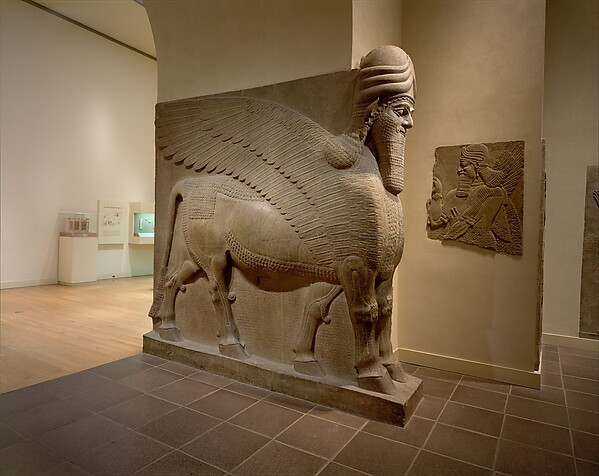
Survival is uneven. Clay tablets endure where many documents on perishable materials do not; some early excavations privileged palaces and wealthy burials. The voices of rulers and major institutions may therefore sound louder than those of other groups. The cover photograph shows a human-headed Assyrian winged bull from Nimrud, now in the Metropolitan Museum (32.143.1, ca. 883–859 BCE). It exemplifies palace art and a protective image in one particular setting, not the whole ancient Near East or a depiction of El. [5] [15]
Why this framework matters to the IL Archive
“Ancient Near East” supplies a map for historical comparison, not a ready-made answer. When studying a divine name, a treaty formula, or an old narrative, we first establish where the witness belongs, when it was recorded, which copy survives, and in what language. Only then can we assess resemblances, differences, and possible routes of contact. This keeps what the evidence states distinct from a researcher’s explanation and from an open hypothesis—and makes connected histories visible without flattening their many societies into one.
References and notes (15)
- Vaughn Emerson Crawford, Prudence Oliver Harper, Oscar White Muscarella and Beatrice Elizabeth Bodenstein, Guide to the Collections: Ancient Near Eastern Art, The Metropolitan Museum of Art, 1966. Printed pp. 3–4 (PDF images 5–6) and preceding map; geography, river valleys and agriculture. Return to the text ↑
- Ann C. Gunter (ed.), A Companion to Ancient Near Eastern Art, Wiley, first online 2018 / copyright 2019. Publisher description only, not the book: art-history scope from the Neolithic to ca. 330 BCE. Return to the text ↑
- The Metropolitan Museum of Art, Ancient Near Eastern Art, departmental collection overview. Opening overview of the collection’s geographic and chronological scope; not a research monograph. Return to the text ↑
- University of Chicago News, “Oriental Institute changes name to the Institute for the Study of Ancient Cultures, West Asia & North Africa,” April 4, 2023. Full news release, specifically the stated reasons and geographical remit. Return to the text ↑
- Joan Aruz, exhibition catalogue essay, “Art of the First Cities,” The Metropolitan Museum of Art, 2003. Read online essay opening and “The Setting”/“The Peoples” sections, including the passage on elite archaeological evidence; not the 540-page catalogue. Return to the text ↑
- Department of Ancient Near Eastern Art, “Uruk: The First City,” The Met, 2003. Complete short essay: Uruk around 3200 BCE, early records and cities. Return to the text ↑
- Department of Ancient Near Eastern Art, “The Hittites,” The Met, 2002. Complete short essay, particularly Hattusha, the Late Bronze Age and post-1200 continuity. Return to the text ↑
- Department of Ancient Near Eastern Art, “The Achaemenid Persian Empire (550–330 B.C.),” The Met, 2004. Historical article text from formation through Darius III; chronological framing. Return to the text ↑
- The Met, Heilbrunn Timeline, “Anatolia and the Caucasus, 2000–1000 B.C.” Overview, Kanesh trading centres, and Anatolian chronology; not every related link. Return to the text ↑
- Department of Ancient Near Eastern Art, “Ugarit,” The Met, 2004. Complete short essay: port, treaties, languages, literary texts and uncertain causes of destruction. Return to the text ↑
- Ira Spar, “The Origins of Writing,” Heilbrunn Timeline, The Met, 2004. Complete short essay on Uruk accounts, pictographs and phonetic use of signs. Return to the text ↑
- Musée du Louvre, “The Code of Hammurabi,” museum essay, with object record SB 8. Entire museum essay (legal cases, royal scene, Susa discovery); cross-checked object record. The Akkadian inscription was not read in full. Return to the text ↑
- Ira Spar, “Mesopotamian Deities,” Heilbrunn Timeline, The Met, 2009. Full online essay on deities, temples and changing prominence; ancient literary passages considered through the curator’s account, not independently collated editions. Return to the text ↑
- Prudence O. Harper, Joan Aruz and Françoise Tallon (eds.), Royal City of Susa, The Met, 1992. Publisher catalogue description and topics only; the 336-page book was not read. Return to the text ↑
- The Metropolitan Museum of Art, “Human-headed winged bull (lamassu),” object 32.143.1. Complete object record: Assyrian, Nimrud/Kalhu, ca. 883–859 BCE, public-domain image and protective function. The image is shown with the entry. Return to the text ↑
Suggest a correction · Suggest a source for this record
Cite this record
IL Archive, «Ancient Near East», https://ilarchive.com/en/entities/ancient-near-east
Continue reading