Site
Hattusha, Hittite capital
Hattusha preserves the fortifications, temples and royal complex of the Hittite capital near Boğazkale. Excavation records also locate fragments of a treaty with Amurru around the Great Temple.
Estimated reading time: 3 min Published Last reviewed:
Share article
Text
Introduction
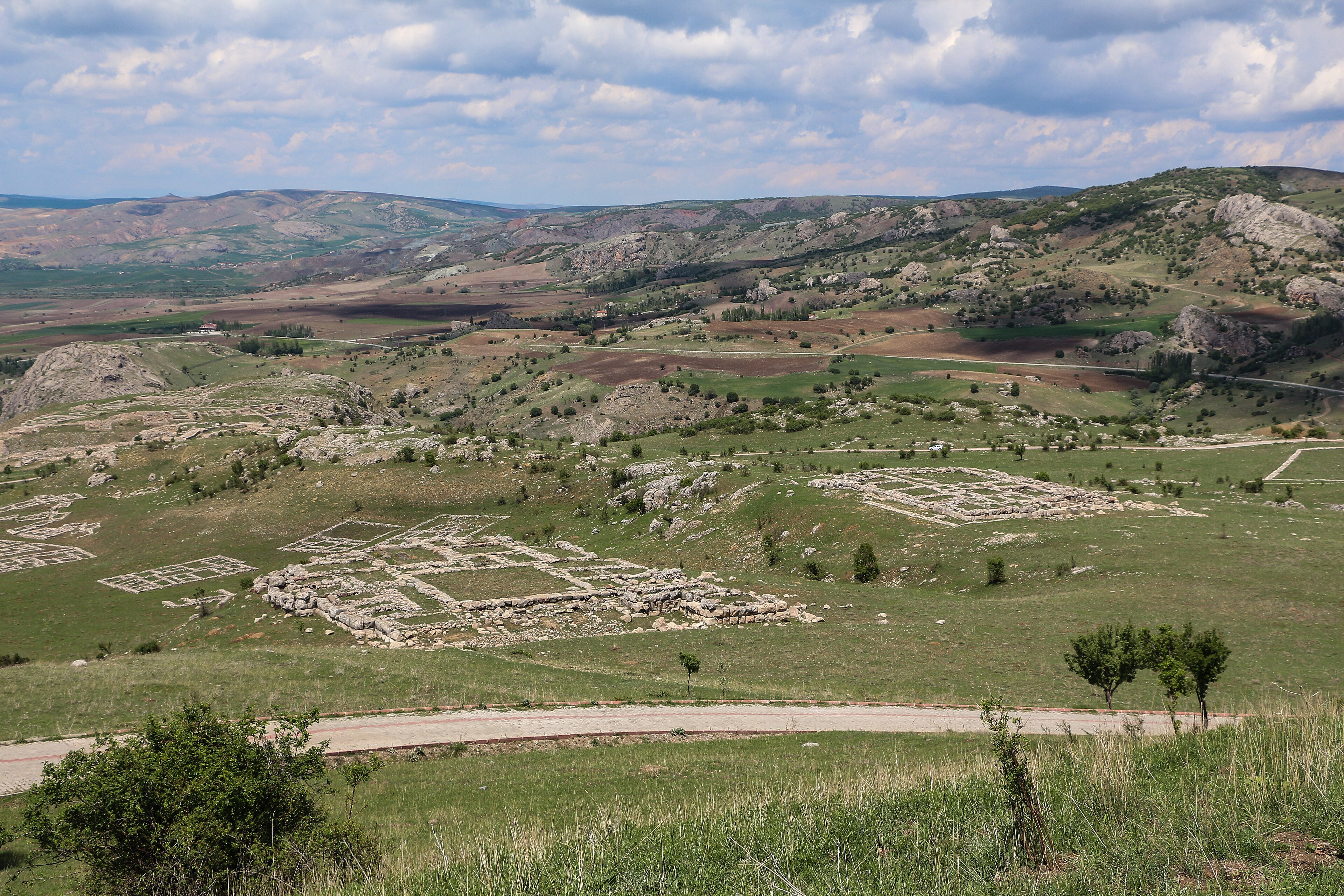
Hattusha occupied a slope above the Budaközü Plain near modern Boğazkale in central AnatoliaAnatoliaAnatolia is the region occupying the Asian part of present-day TurkeyGlossary · Click to read the explanation. Its gates, temples and royal buildings follow the terrain. CuneiformCuneiformWriting with wedge-shaped signs, developed from Mesopotamian recording traditions and used for several languages from the third millennium BCE.Glossary · Click to read the explanation tablets recovered in the city preserve records of government and diplomacy, including witnesses to an agreement between the Hittite king Mursili II and the ruler of Amurru. [1][2][5]
The Lower and Upper Cities
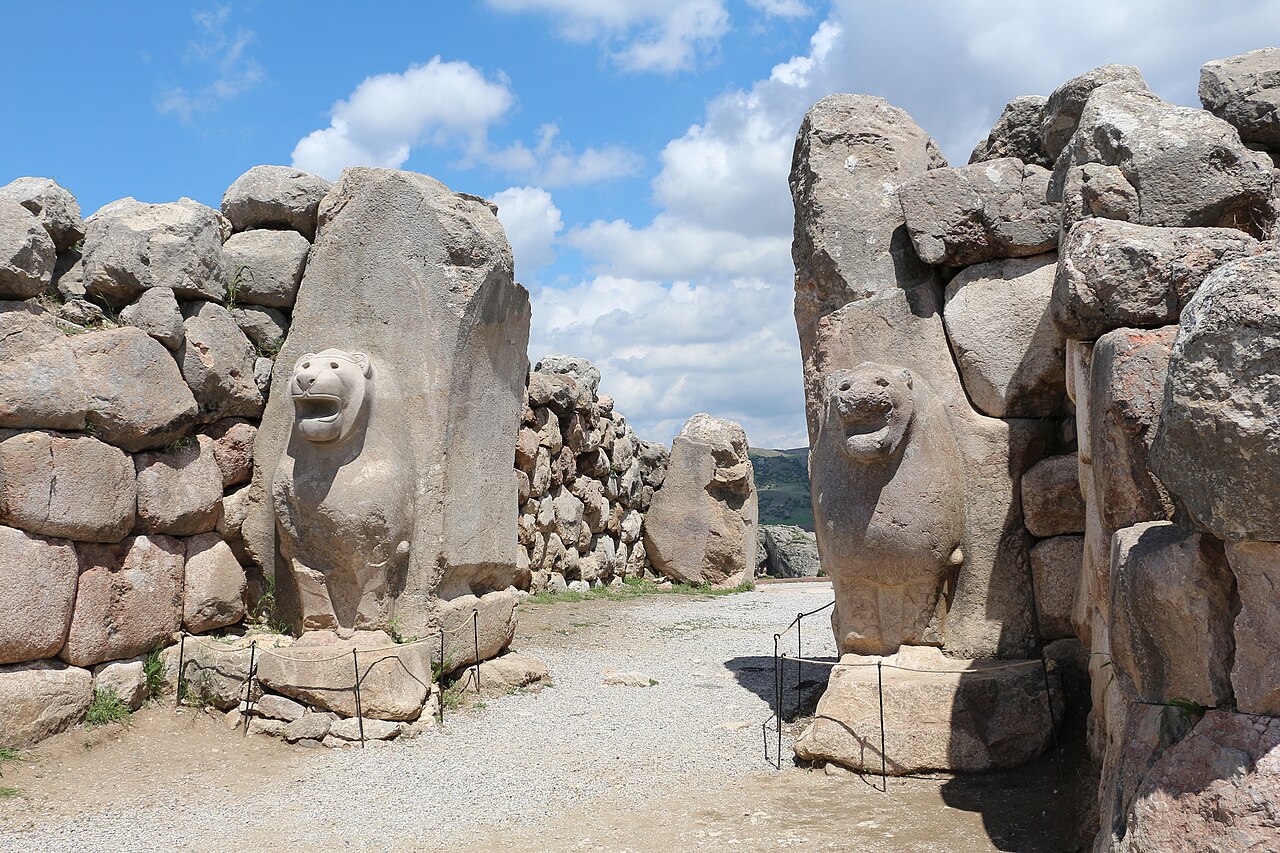
The Kızlarkayası stream separates the northern Lower City from the Upper City to the south. In the Upper City, the Lion Gate and the King’s Gate are part of the fortifications. The Sphinx Gate stands above the artificial embankment at Yerkapı. A tunnel runs underneath the embankment. The German Archaeological Institute’s photographs document modern restoration, including the reconstructed head of the left lion at the Lion Gate. [1][2]
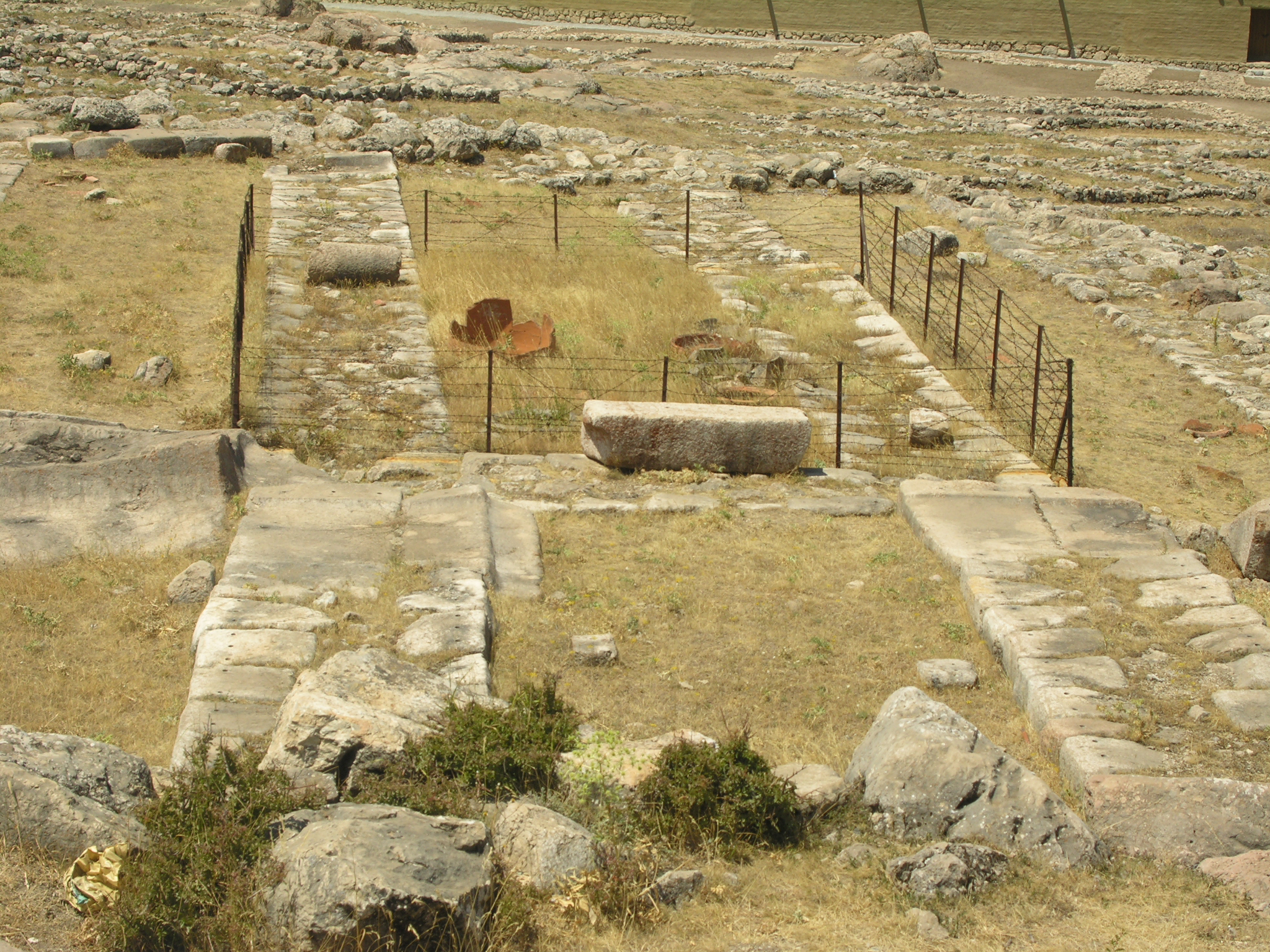
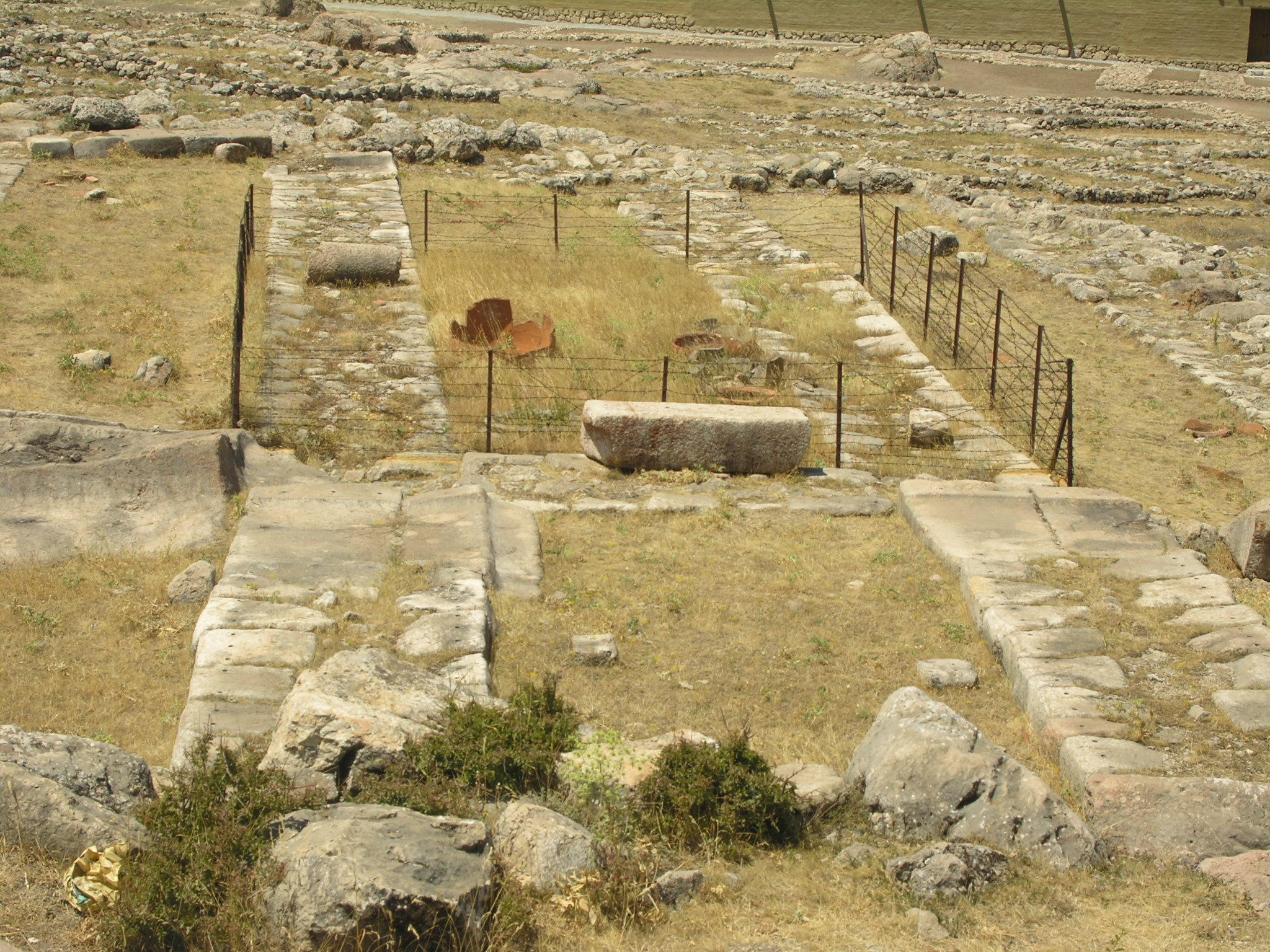
The Great Temple, also called Temple I, stood in the Lower City. The Turkish Ministry of Culture and Tourism identifies it as the sanctuary of the Storm God of Hatti and the Sun Goddess of Arinna. The temple complex included storage rooms, and excavators found large vessels still in place. Tablets recovered on the eastern side provide evidence for an archive there. Beyond the walls, the rock sanctuary of Yazılıkaya has two chambers with reliefs of gods and goddesses as well as images of the Hittite king Tudhaliya IV. [1][3][4]
The palace at Büyükkale
The royal complex occupied the rocky citadel of Büyükkale. Buildings of different sizes opened onto enclosed spaces linked by courts and galleries. The excavations of 2021–2024 examined areas west and north of the upper courtyard. Jörg Becker and Andreas Schachner report denser and more varied Hittite construction there than earlier plans had suggested. Their radiocarbon results suggest that work to expand the royal complex may have begun in the late sixteenth century BCE, alongside the gradual expansion of the Upper City. The excavations also found remains of later Iron Age buildings. [3][6]
A treaty in the temple area
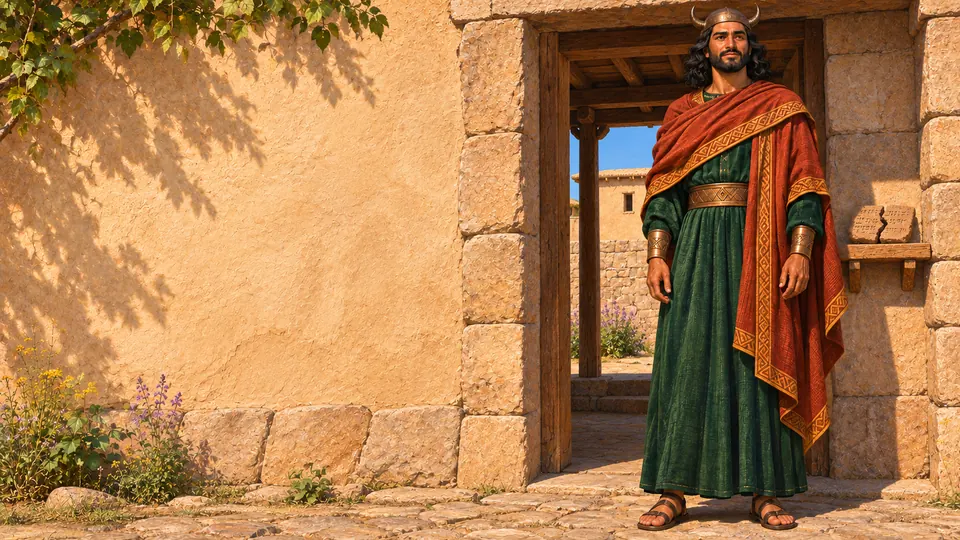
Fragments of the agreement between Mursili IIMursili IIHittite king of the late fourteenth century BCE, party to a loyalty treaty with Amurru’s ruler.Glossary · Click to read the explanation and Tuppi-TeshshupTuppi-TeshshupRuler of Amurru in the late fourteenth century BCE and party to Mursili II’s treaty.Glossary · Click to read the explanation preserve both Hittite and AkkadianAkkadianAn ancient East Semitic language written in cuneiform from the third millennium BCE; its varieties include Babylonian and Assyrian, and it served in international diplomacy.Glossary · Click to read the explanation versions, catalogued as CTH 62. The treaty requires Tuppi-Teshshup to pay tribute at the rate set for his father and grandfather and to provide military support. It also promises the military assistance of the king of Hatti if Amurru is attacked or faces a revolt. The text brings the relationship with Amurru into view through these particular duties. [5]
The catalogue records the findspots of individual fragments. KBo 50.25 was recovered from a channel east of storeroom 10 at Temple I. KBo 50.26 came from older excavation debris in the temple area. Both fragments help reconstruct the agreement. The recorded contexts provide different levels of detail about where the tablets were recovered. [5]
Quick answer
What does Hattusha refer to today? Hattusha is the ancient city, and Boğazkale is the present district in Çorum Province. The excavation literature also uses Boğazköy, the older modern name. [1][2]
References and notes
- UNESCO World Heritage Centre, “Hattusha: the Hittite Capital” Brief synthesis. Topography, Upper and Lower Cities, gates, Yerkapı tunnel, Great Temple location and Yazılıkaya reliefs. Return to the text ↑
- German Archaeological Institute, “Ḫattuša/Boğazköy – Die Hauptstadt des Hethiterreiches” Site introduction and image captions. Boğazkale and Boğazköy, urban layout and reconstruction of the left lion’s head. Return to the text ↑
- Republic of Türkiye, Ministry of Culture and Tourism, “Hattusaş” Description of Büyükkale and the Great Temple. Palace buildings, courts, cults, storage vessels and the eastern tablets. Return to the text ↑
- Andreas Schachner, Ausgrabungen in der Unterstadt von Boğazköy II: Der Große Tempel von Ḫattuša, die Magazine in seinem Umfeld und das sogenannte Südareal (German Archaeological Institute, 2024) Publisher’s abstract. The monumental complex of Temple I and the buildings around it. Return to the text ↑
- Hethitologie Portal Mainz, “Vertrag Muršilis II. mit Tuppi-Teššup von Amurru,” CTH 62, introduction Witness list, B3 and C4. KBo 50.25 and KBo 50.26. Outline, sections VIII and XIV–XVII, on tribute and military obligations. Return to the text ↑
- Jörg Becker and Andreas Schachner, “Boğazköy, Türkei. Ausgrabungen auf Büyükkale, dem Palastareal der hethitischen Hauptstadt Ḫattuša. Die Arbeiten der Jahre 2021 bis 2024,” eForschungsberichte des DAI (2025), Faszikel 2, §§1–23 Publisher’s abstract. Work around the upper courtyard, denser Hittite construction, calibrated evidence on expansion, and Iron Age buildings. Return to the text ↑
Media
Photograph
Architectural remains at Hattusha, Hittite capital in present-day Turkey. Context for the city preserving treaty witnesses, not a tablet or an identified find-room
© UNESCO / Francesco Bandarin · CC BY-SA
License · Image sourceSuggest a correction · Suggest a source for this record
Cite this record
IL Archive, «Hattusha, Hittite capital», https://ilarchive.com/en/sites/hattusha-hittite-capital
Continue reading
Related readings