Entity · Concept
Sumerian language
A reference page linking a name, group, or concept to the materials that discuss it.
Sumerian survives in accounts, poems and school exercises from ancient Mesopotamia. Early tablets show the development of writing, while later bilingual lists show how scribes continued to teach and use the language.
Estimated reading time: 3 min Published Last reviewed:
Share article
Text
Introduction
Sumerian was spoken in southern MesopotamiaMesopotamiaHistorical region associated with the Tigris and Euphrates: Uruk, Ur, Eridu, cuneiform, Sumer, Akkad, Babylon and Assyria, their languages and cults, and the limits of archaeological evidence.Glossary · Click to read the explanation and is preserved chiefly in writing on clay. It is classified as a language isolate. Sumerian tablets record royal acts and literary compositions. Centuries of copying also kept the language in use among scribes and temple specialists after it had ceased to be spoken in ordinary life. The tablets preserve both early uses of writing and later efforts to learn a language inherited from the past. [1][2][5]
From early accounts to readable texts
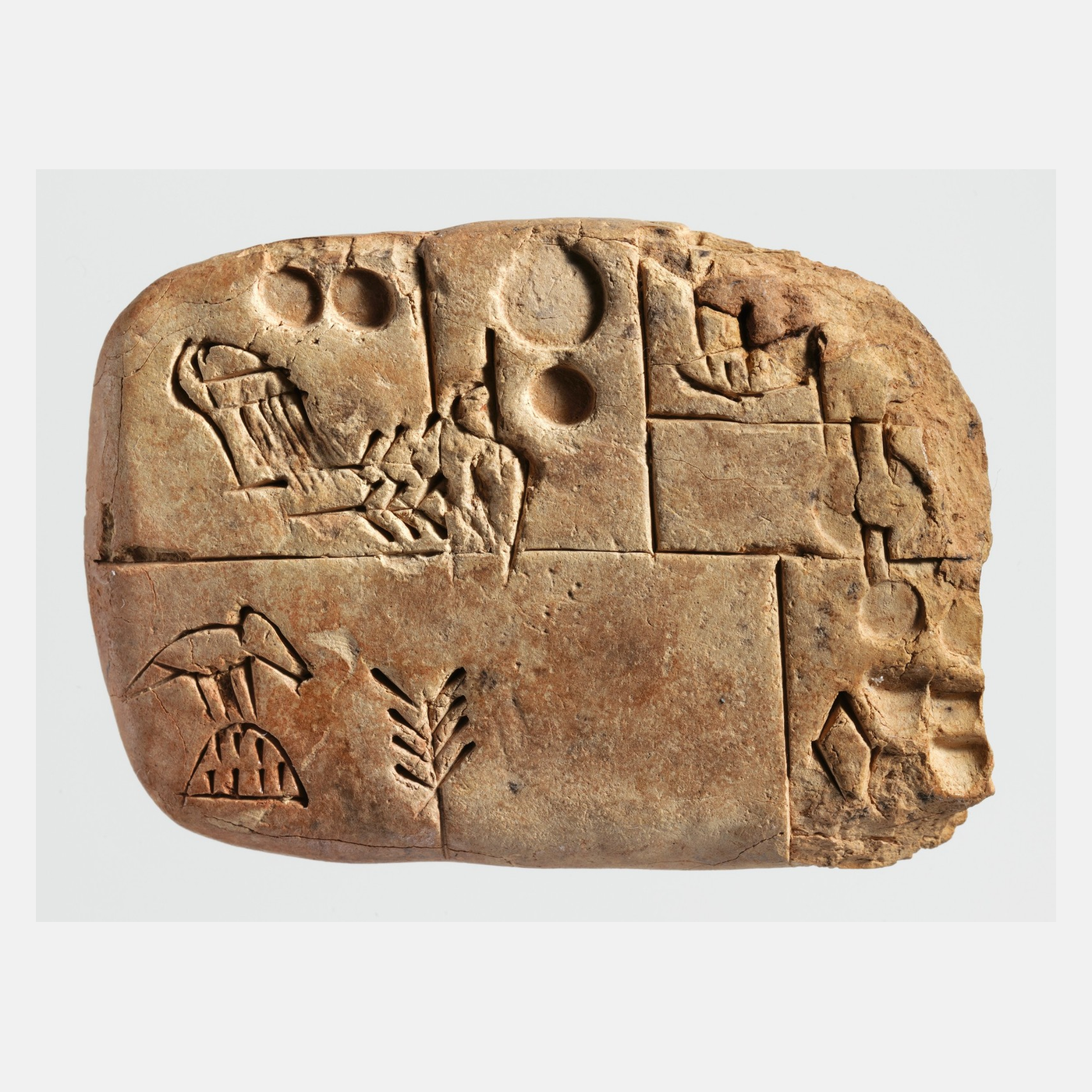
Late fourth-millennium tablets from UrukUrukAncient city at Warka in southern Iraq, a major urban centre around 3200 BCE that preserved early writing and accounting tablets.Glossary · Click to read the explanation record quantities and commodities with numerical and pictorial signs. Later scribes used signs both for whole words and for sounds. Scholars often associate the earliest Uruk tablets with Sumerian. Many individual accounts give too few clues to identify a spoken language securely. [2]
By the middle of the third millennium BCE, texts from places such as Fara and Abu Salabikh preserve a wider range of writing. Abu Salabikh yielded an early copy of the Instructions of Shuruppak, a composition in which a father gives advice to his son. Copies from the Old Babylonian period preserve a longer form of the work. The early and later tablets show how scribes transmitted and reshaped a Sumerian composition over centuries. [3][4]
Writing for administration and instruction
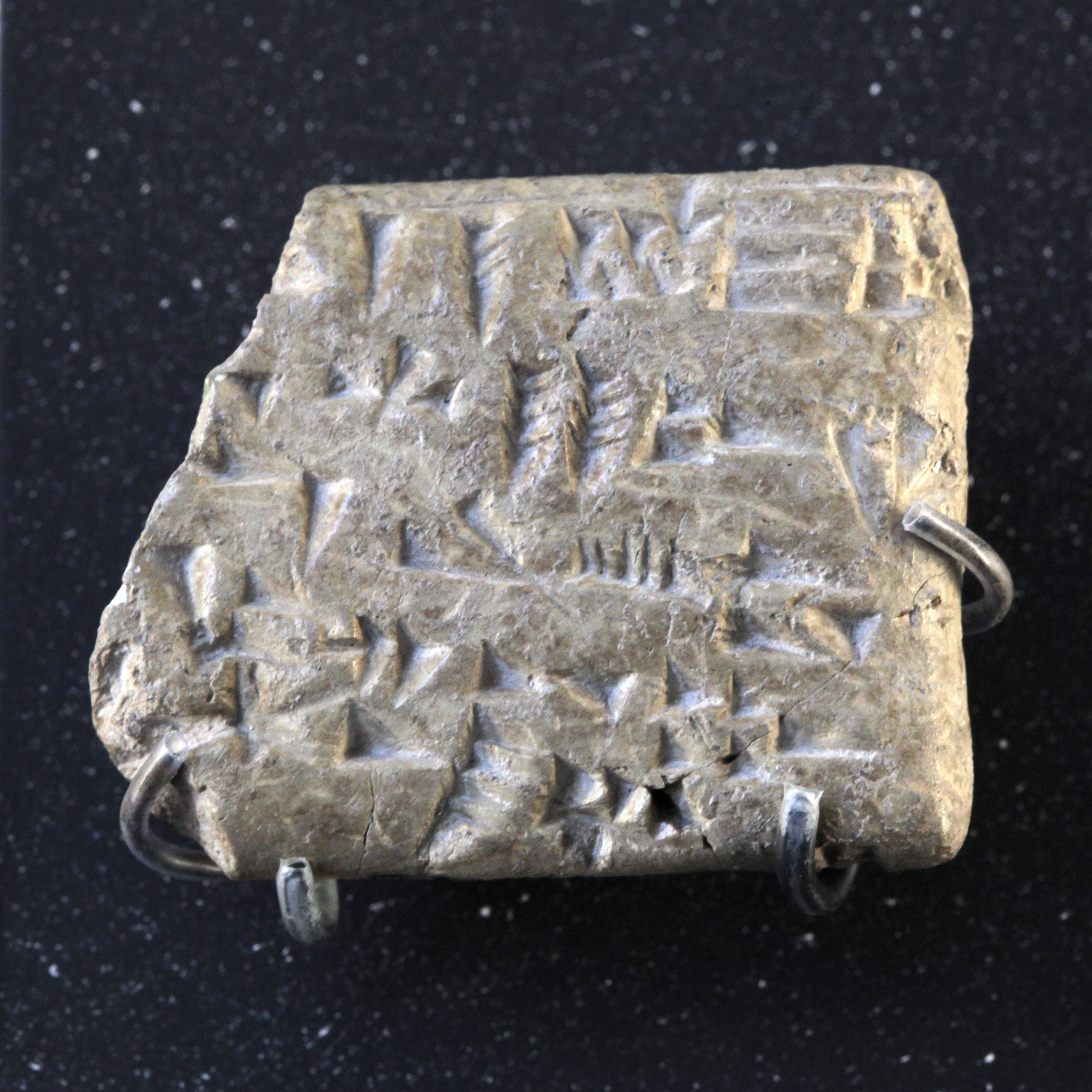
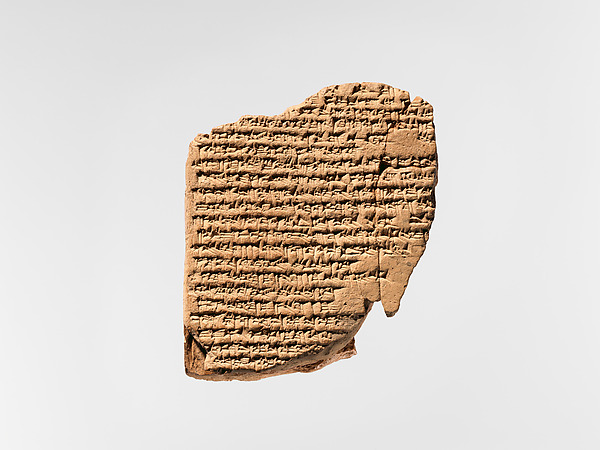
A small Old Babylonian exercise in the Metropolitan Museum of Art, 86.11.251, preserves the name of the deity Urash copied six times. One sign, which can represent a syllable in other texts, stands for the name Urash here. Learners had to recognize how cuneiformCuneiformWriting with wedge-shaped signs, developed from Mesopotamian recording traditions and used for several languages from the third millennium BCE.Glossary · Click to read the explanation signs worked in particular words and passages. [5]
The language in later lists and rituals
The date at which Sumerian ceased to be spoken in ordinary life is debated. Scribes still studied and copied it alongside AkkadianAkkadianAn ancient East Semitic language written in cuneiform from the third millennium BCE; its varieties include Babylonian and Assyrian, and it served in international diplomacy.Glossary · Click to read the explanation. A vocabulary tablet from the series Urra=hubullu, Met 86.11.368, lists terms for food and drink in Sumerian and gives Akkadian equivalents. Such lists show how scholars preserved knowledge of Sumerian words and their uses. [1][6][7]
Sumerian also remained in temple liturgy. Joined pieces in the Met, 86.11.288 and 86.11.557, preserve lamentations in Emesal, a variety of Sumerian used in ritualRitualAn organised or distinguished practice meaningful to a community; it may leave traces, but its form alone does not reveal an associated doctrine.Glossary · Click to read the explanation performance. The museum dates the tablet to the Seleucid or Parthian period. Another Met tablet, 86.11.286a, preserves part of a Sumerian lament with Akkadian translations of many lines. The survival of liturgical texts and word lists gives direct evidence of uses of Sumerian long after its earlier administrative records were written. [1][7][8][9]
Quick answers
Where was Sumerian spoken?
It was spoken in southern Mesopotamia, in what is now southern IraqIraqIraq is a modern country encompassing much of ancient MesopotamiaGlossary · Click to read the explanation. [1]
How was Sumerian written?
Scribes used cuneiform signs for words and sounds, often on clay tablets. [2][5]
What happened to Sumerian after it ceased to be spoken?
Scribes continued to study it and copy texts in it. Bilingual lists and temple lamentations document some of its later uses. [1][7][8][9]
References and notes (9)
- Bram Jagersma, A Descriptive Grammar of Sumerian, Leiden University (2010) Repository abstract. Southern Mesopotamia, Sumerian as a language isolate and its continued scholarly and liturgical use. Return to the text ↑
- Department of Ancient Near Eastern Art, Metropolitan Museum of Art, “The Origins of Writing” Uruk archives and the rebus principle. Commodity signs, the qualified identification of early writing with Sumerian, and word and sound signs. Return to the text ↑
- Walther Sallaberger, “Updating Primeval Wisdom: The Instructions of Šuruppak in Its Early Dynastic and Old Babylonian Contexts” (2018) Sections 1 and 2.1 and the Old Babylonian discussion. Early manuscript from Abu Salabikh, the advice form and the longer Old Babylonian version. Return to the text ↑
- Maurizio Viano, The Reception of Sumerian Literature in the Western Periphery (2016) Introduction, overview of the third and early second millennia BCE. Literary texts from Fara and Abu Salabikh and subsequent scribal transmission. Return to the text ↑
- Metropolitan Museum of Art, “Cuneiform tablet: student exercise tablet,” 86.11.251 Object commentary. The Old Babylonian exercise, six copies of the deity’s name and the use of the two signs. Return to the text ↑
- Piotr Michalowski, “The Life and Death of the Sumerian Language in Comparative Perspective” Opening discussion of the differing estimates for the end of spoken Sumerian and the evaluation of the evidence. Return to the text ↑
- Metropolitan Museum of Art, “Cuneiform tablet: vocabulary of food and drink terms, Urra=hubullu, tablet 23,” 86.11.368 Object commentary and details. Sumerian food and drink terms followed by Akkadian equivalents. Return to the text ↑
- Metropolitan Museum of Art, “Cuneiform tablet: collection of ershemmas (nos. 45, 59, 53),” 86.11.557 Object commentary and date. The two joined fragments, the Emesal variety of Sumerian, and liturgical performance. Return to the text ↑
- Metropolitan Museum of Art, “Cuneiform tablet: a-she-er gi-ta, balag to Innin/Ishtar,” 86.11.286a Object commentary, inventory and image. Part of a Sumerian lament with Akkadian translations of many lines, dated to about the second–first centuries BCE. Return to the text ↑
Suggest a correction · Suggest a source for this record
Cite this record
IL Archive, «Sumerian language», https://ilarchive.com/en/entities/sumerian-language
Continue reading
Related readings