Entity · Concept
Sumerian language
A reference page linking a name, group, or concept to the materials that discuss it.
Ancient language of southern Mesopotamia, clearly attested in third-millennium BCE texts and maintained in learning and ritual after its spoken use declined.
Text
Sumerian is an ancient language of southern MesopotamiaMesopotamiaA historical region associated with the Tigris and Euphrates, home to many societies and civilisations.Glossary · Click to read the explanation, in present-day IraqIraqIraq is a modern country encompassing much of ancient MesopotamiaGlossary · Click to read the explanation. Clear cuneiformCuneiformWriting with wedge-shaped signs, developed from Mesopotamian recording traditions and used for several languages from the third millennium BCE.Glossary · Click to read the explanation texts attest it from the third millennium BCE. It is a language isolate, with no established relationship to another language, unlike AkkadianAkkadianAn ancient East Semitic language written in cuneiform in Mesopotamia.Glossary · Click to read the explanation, which belongs to the Semitic family. [1][2]
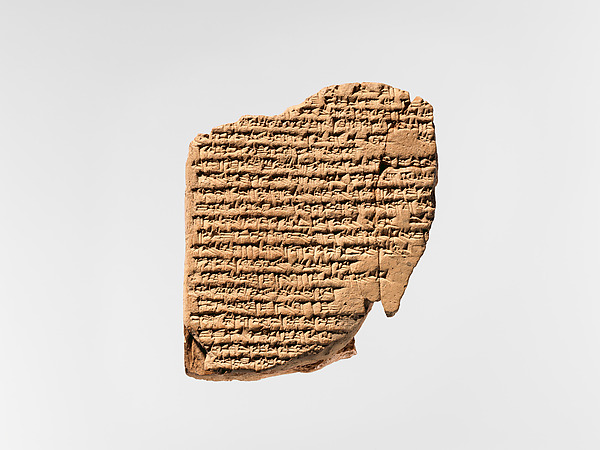
Its spoken use declined over time, but it remained a language of learning, literature and ritualRitualAn organised or distinguished practice meaningful to a community; it may leave traces, but its form alone does not reveal an associated doctrine.Glossary · Click to read the explanation. The pictured tablet from the second–first centuries BCE illustrates this: a Sumerian lament with Akkadian translations accompanying many lines. The witness shows the continued learning of an ancient language many centuries after its everyday use. [3]
References and notes
- Steve Tinney (2018) — The Uses of Writing, Penn Museum Languages section: Sumerian is an isolate and Akkadian Semitic. Return to the text ↑
- Metropolitan Museum — tablet1988.433.3 Description explains clear representation of Sumerian in the first half of the third millennium BCE and the difficulty of assigning earlier signs to a language. Return to the text ↑
- Metropolitan Museum — balag tablet86.11.286a Sumerian lament with lines translated into Akkadian; second–first centuries BCE according to the catalogue. Return to the text ↑
Research history
Substantive changes are retained here. Minor copy edits remain in the internal operational log.
-
Substantive record update
-
Substantive record update
Suggest a correction · Suggest a source for this record
Cite this record
IL Archive, «Sumerian language», Edition 3, https://ilarchive.com/en/entities/sumerian-language