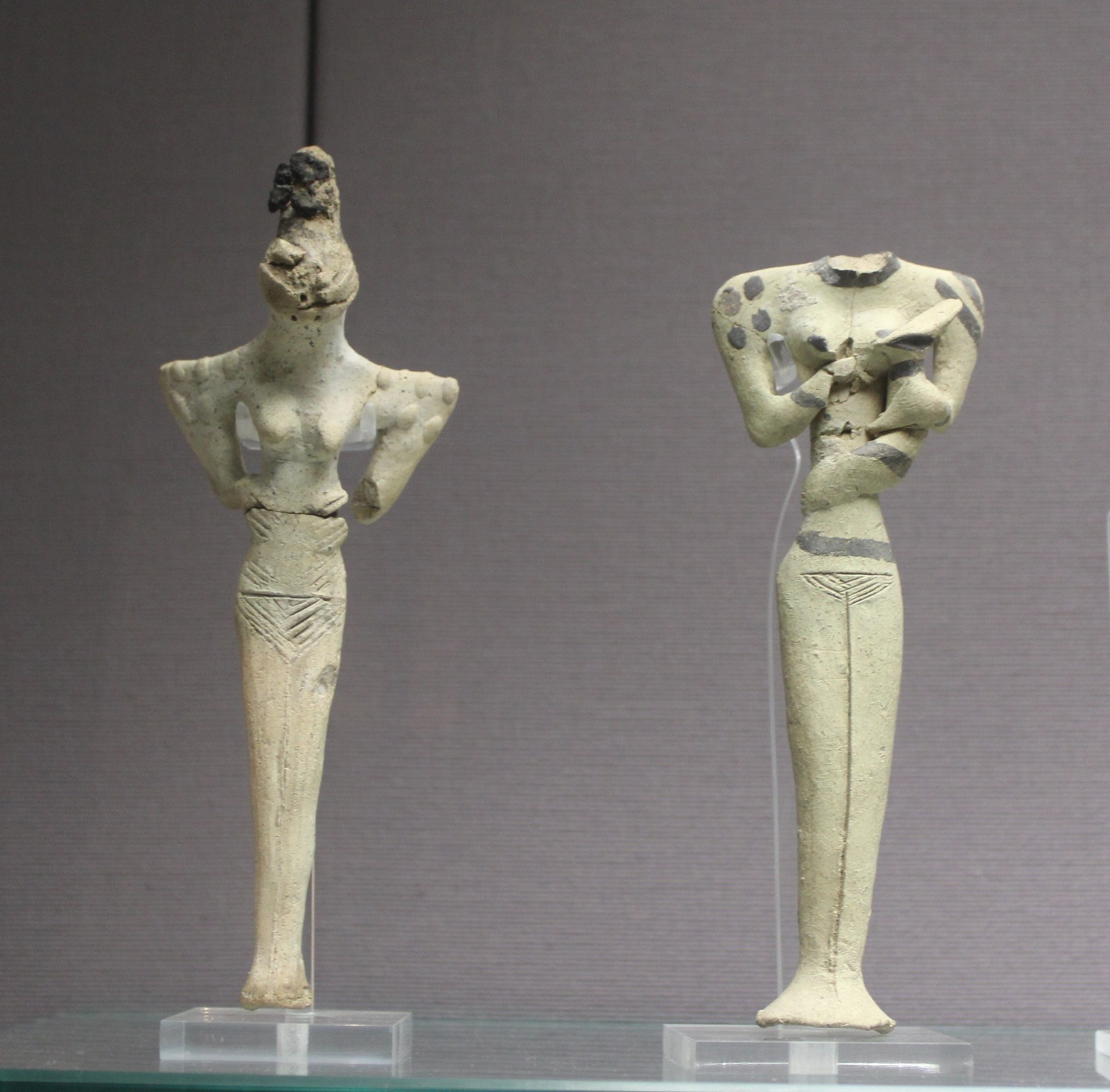
Study
Ubaid Culture: The World Before Sumer’s Cities
An extended study of a topic, with evidence and references.
Pottery, water, houses, networks and Eridu: how can we read the transformations preceding Sumer’s cities without assigning Ubaid communities an unproven language, state or divine names?
Share article
Dates
Dates have distinct roles. The timeline uses creation, composition or historical coverage, rather than publication or discovery dates.
- Historical coverage
- Approximately From 6500 BCE to 3800 BCE
Text
Before UrukUrukAncient city at Warka in southern Iraq, a major urban centre around 3200 BCE that preserved early writing and accounting tablets.Glossary · Click to read the explanation became one of the earliest great cities, and before tablets preserved the names of InannaInanna / IshtarProminent Mesopotamian goddess with a major centre at Uruk, whose parentage and cult traditions vary rather than forming one fixed genealogy.Glossary · Click to read the explanation, EnkiEnkiMesopotamian deity associated with deep fresh water, wisdom and Eridu, known as Ea in Akkadian tradition. The earliest preserved written mention does not date his cult’s origin or identify Ubaid Eridu’s deity.Glossary · Click to read the explanation and EnlilEnlilProminent Mesopotamian god associated with Nippur and Ekur, highly ranked in Early Dynastic texts before the earliest known Anunna attestation.Glossary · Click to read the explanation, southern MesopotamiaMesopotamiaA historical region associated with the Tigris and Euphrates, home to many societies and civilisations.Glossary · Click to read the explanation underwent long transformations in its relationships with land, water, work and place.
Permanent villages, painted pottery, expanding houses and connections reaching the Gulf and distant regions were already part of that world. At some sites, buildings exceeded an ordinary household’s scale and possible functions. Historical cities had yet to take shape, but several conditions that would support their development were emerging.
Today we call this world Ubaid cultureUbaid cultureAn archaeological designation for material traditions originating in southern Mesopotamia with regional diffusion. Broad southern frame c. 6500–3800 BCE; not a known linguistic people, with limits varying by region and phase.Glossary · Click to read the explanation. It predates the texts that let us read its inhabitants’ and deities’ names, so its study must distinguish material evidence from interpretations of that evidence.
What is Ubaid culture?
Ubaid culture is an archaeological designation for material traditions and chronological phases that began in southern Mesopotamia, with some elements subsequently spreading more widely. It is not an ancient people’s documented name, nor does it identify a known language. The designation comes from Tell al-Ubaid near Ur, rather than a document left by these communities.[1]
Its beginning and end were not identical everywhere. A broad southern framework including phase 0 and terminal phase 5 extends approximately from 6500 to 3800 BCE. Some reference works and museum collections use 5500–4000 BCE or other ranges for portions of these traditions; northern Mesopotamia has a shorter sequence.[1][3]
Different dates need not mean that one is correct and all others mistaken. We must first ask: which region, phases and definition of Ubaid? This study’s dates provide a broad approximate frame, not a claim that every site was Ubaid throughout the same interval.
A long sequence, not a single moment
Southern traditions are commonly divided into Ubaid 0, particularly associated with Tell el-Oueili; Ubaid 1, or the EriduEriduAbu Shahrain in southern Iraq, with a long architectural sequence beginning before writing. Associated with Enki in historical times, which does not establish the sacred being’s identity in its earliest layers.Glossary · Click to read the explanation phase; Ubaid 2, associated with Hajji Muhammad; and phases 3 and 4. Some sequences add a terminal fifth phase. These divisions order changes in pottery and architecture; they do not represent separate peoples appearing and disappearing with each number.[1]
“Ubaid communities” is therefore modern shorthand for societies sharing aspects of material culture. It cannot automatically establish a single ethnic identity or language, or the same economy, ritualsRitualAn organised or distinguished practice meaningful to a community; it may leave traces, but its form alone does not reveal an associated doctrine.Glossary · Click to read the explanation and social organization wherever similar pottery occurs.[2]
Southern Iraq before cities
The southern heartland lay in the alluvial plain of present-day southern IraqIraqIraq is a modern country encompassing much of ancient MesopotamiaGlossary · Click to read the explanation. Rivers, marshes, farmland and aquatic resources shaped village distribution and livelihoods. The Lagash project’s overview describes communities drawing on cereals, fish, birds and shellfish across varied floodplain, marsh and Gulf environments.[4]
This landscape was not a fixed map. Watercourses, sedimentation and shorelines changed, and reconstructing them requires geomorphological evidence and local dating. A single outline cannot show where the Gulf lay throughout the Ubaid period, nor can historical Lagash’s irrigation systems be projected onto much earlier villages.[4][10]
Settlement, production and relations between communities were developing, with differences in size and organization. These villages were not simply waiting rooms for cities: they were complete worlds inhabited for many generations.
Water: managing the landscape without assuming an early state
Southern Mesopotamia’s rainfall generally cannot sustain extensive, reliable cultivation on its own. Access to water and its management consequently mattered to farming. General accounts describe Ubaid irrigation agriculture alongside the exploitation of rivers and marine resources.[3]
Yet “irrigation” need not initially mean a vast network run by a centralized state. Water management could include using natural channels and river breaches, subsequently modifying them or digging local canals. Each form must be dated before attributing to it an administrative apparatus for which we lack evidence.
A study of the Eridu region published in September 2026 combines remote sensing, fieldwork and dating of samples from the water landscape. The oldest date among the studied samples falls approximately within 4540–4443 BCE, while other examples of more regular networks belong to later periods. This dates a sample in a particular context, not definitively every canal’s construction, or a mature irrigation system throughout the south from 6500 BCE.[5]
The research makes relationships between water and settlement testable, rather than accepting a ready-made story of a state born to dig canals.
Pottery: a traceable signature, not a complete identity
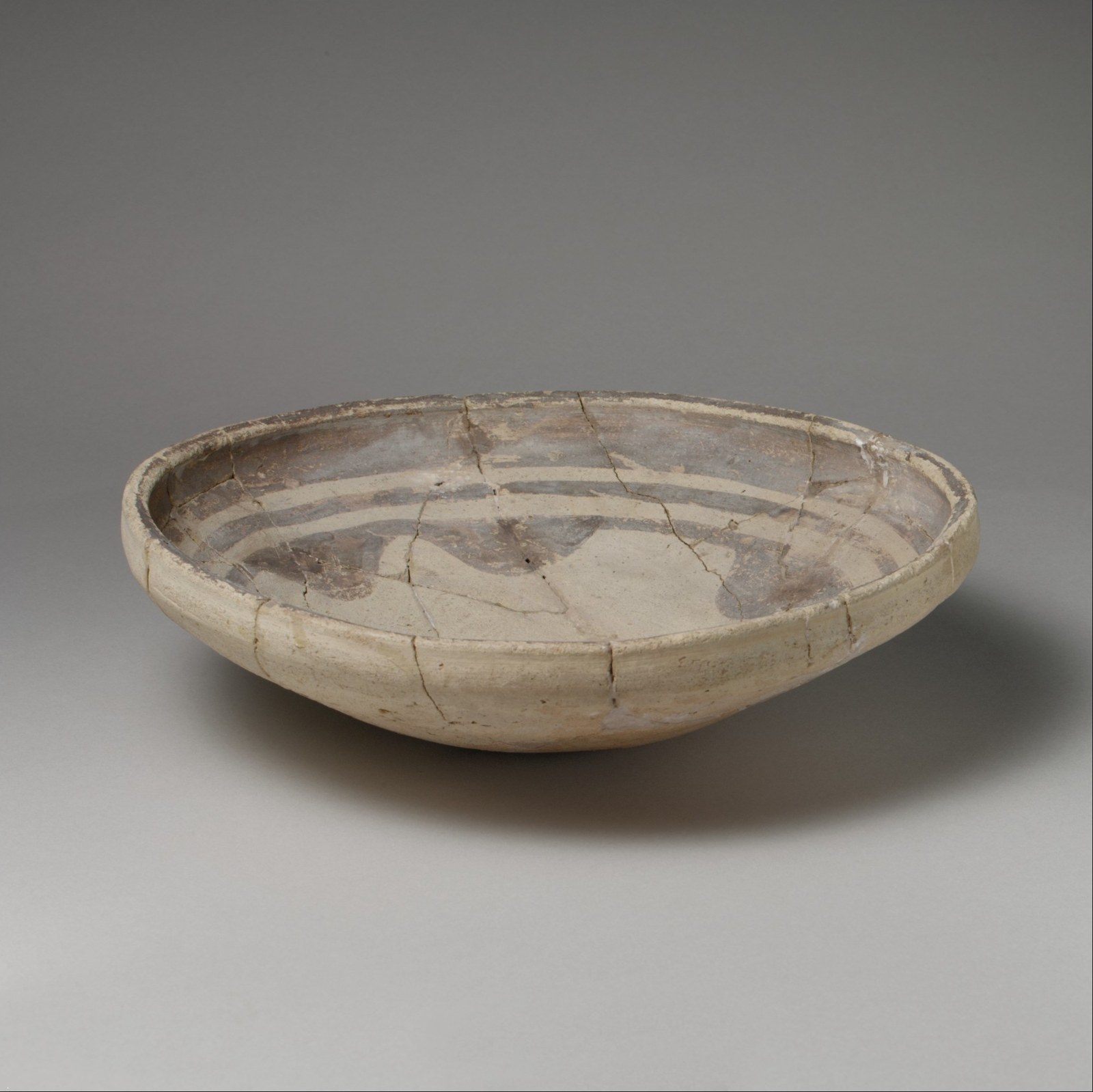
Among the best-known Ubaid objects are pale vessels, sometimes greenish or yellowish, bearing dark bands, lines and geometric designs, occasionally with more complex motifs. Changes in form and decoration help order phases and connect sites, but similarity does not turn every potter into a member of one society.[1][2]
This study’s cover photograph shows a specific Ubaid bowl in the Metropolitan Museum of Art, excavated from grave 136 in Eridu’s cemetery. The museum dates it to the middle of the sixth–fifth millennium BCE. Its documented context matters; it cannot alone stand for all Ubaid pottery.[6]
An industrial style can spread through learning, imitation, exchange and the movement of people. Vessels alone cannot determine whether their arrival elsewhere reflects migration, trade, gifts or local production influenced by another community.
A broad interaction sphere
Ubaid elements extended into parts of northern Mesopotamia, Syria, southeastern AnatoliaAnatoliaAnatolia is the region occupying the Asian part of present-day TurkeyGlossary · Click to read the explanation, southwestern IranIranIran is the modern country containing Shush, ancient SusaGlossary · Click to read the explanation and the Gulf coast. Their presence differs regionally: imported vessels, influenced local traditions or wider combinations of shared practices may be involved.[2][3]
Some researchers therefore describe an interaction sphere connecting diverse communities, rather than a Ubaid empire or one people occupying every site with this pottery. Gil Stein’s analysis emphasizes local identities and economic and social variation within the horizon.[2]
Objects can travel farther than their makers. Techniques can spread without a language or political authority moving with them. This distinction prevents a pottery distribution map from becoming a map of an unproven state.
Distant materials and networks of contact
The southern plain supplied clay, land and water, while certain crafts required materials from elsewhere. Connections formed part of a wider world of exchange, kinship, movement and intermediaries. They need not resemble modern markets or the trade of later kingdoms.
A geochemical study published in 2016 traced obsidian from Syrian, Iraqi and Gulf sites across periods including the Ubaid and other phases. Such analyses identify volcanic sources and routes by which materials became available, but cannot alone identify traders, payment systems or the political organization governing movement.[7]
Ubaid pottery in the Gulf is an important indication of contact, provided the object’s presence is distinguished from proposed explanations of its journey.[3] We need not invent traders serving a unified Ubaid state to recognize that villages were connected.
The house and the architectural language of institutions
Several Ubaid sites contain tripartite plans: a central hall with rooms on either side. Examples and functions vary, and plan alone cannot classify a building. An architectural language serving a house could also serve a structure extending beyond a household.[2]
This suggests an appealing possibility: some later institutions may have borrowed, enlarged and specialized the household model. Jason Ur proposes understanding Mesopotamian institutions and cities partly through transformations of household organization and relationships, rather than the sudden arrival of bureaucracy without antecedents.[8]
This is an interpretive tool, not proof that every temple began as a house or every large house became a temple. Functional changes require evidence of use, contents, spatial arrangements and local history, beyond architectural resemblance.
Were houses equal?
Some sites show differences in house size and possessions without necessarily presenting the royal classes known from later periods. Tell Abada in the Hamrin basin preserved a fifth-millennium BCE Ubaid village with houses, pottery workshops and varied facilities through three occupation levels.[9]
One structure, House A, was larger than others and associated with distinctive objects and features. Researchers discuss whether such differences reflect higher-status households or functions extending beyond them. House size alone makes neither a king nor an inherited system of authority.[2][11]
Status could develop through access to distant resources, organizing work, memories and burials, or collective activities. These possibilities need evidence; they allow more than a choice between perfect equality and a fully stratified state.
Work beyond the household
Some northern sites during the later Ubaid provide large buildings, production and storage activities, and sealing evidence, enabling investigation of organization beyond a single house. A recent study discusses Tell Feres and other examples within a northern framework of roughly 5200–4500 BCE.[11]
But a large Hamrin house, a northern public building and southern Eridu’s sequence cannot simply be combined into a system supposedly present in every Ubaid village. These examples suggest organizational trajectories differing in time and place, rather than a uniform social model.[2]
An institution may emerge when a collective role continues beyond one household: production, storage, assembly or ritual. Such a role still does not conclusively define how a community was governed.
Eridu: continuity of place and limits of interpretation
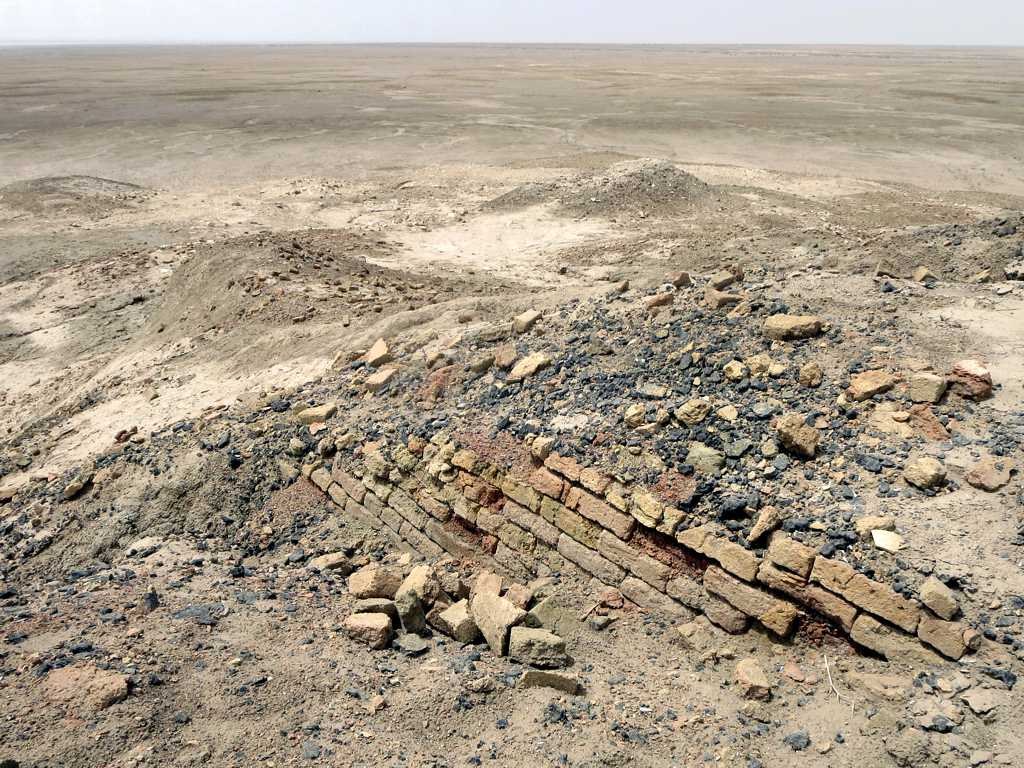
Eridu, or Abu Shahrain, is a key southern site for studying architectural continuity and change. Excavations in the 1940s uncovered a famous sequence of eighteen architectural levels in the “Temple Sounding”, contributing to Ubaid periodization. The modern expedition is re-examining the complex and surrounding landscape.[10]
It is tempting to turn that sequence into a simple story: a small house, then a larger house, then a temple. Yet a structure’s position beneath a later temple does not automatically establish its function. Each level’s installations, finds and use require consideration, including evidence lost or removed by later construction.
The report of the 2022 campaign, published in 2025, particularly investigates the complex, terraces and later architecture. We do not use it to claim that every earlier level was conclusively a house or a temple; that would require more specific analysis than position in the sounding alone.[10]
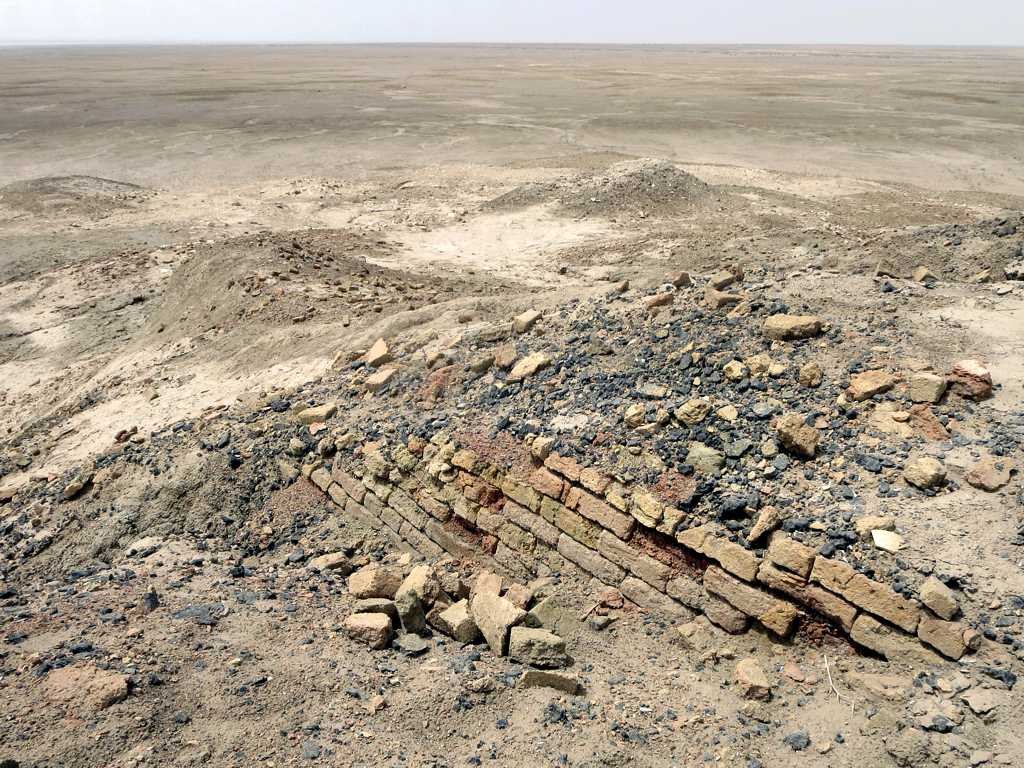
The photograph shows Eridu’s zigguratZigguratElevated temple tower of terraces in historical Mesopotamian architecture. Not every temple platform is a ziggurat; similar elevation does not establish one developmental route for all early structures.Glossary · Click to read the explanation remains from periods later than the Ubaid. It illustrates the place’s continuing importance, not one of its earliest Ubaid buildings.[13]
Can we read Enki’s name in Ubaid Eridu?
Historical Mesopotamian traditions associated Eridu with Enki, the E-AbzuAbzuDeep fresh waters in historical Mesopotamian conceptions, associated with Enki/Ea. The name occurs in E-abzu, “House of the Abzu”. It cannot automatically identify an Ubaid platform or a water basin.Glossary · Click to read the explanation temple and the deep fresh waters of cosmological belief. Knowing that identity from historical texts and architecture does not automatically carry it into every earlier layer at the site.[10]
Sacred significance may have continued, the sacred figure or its interpretation may have changed, or a name may have had an oral history before its earliest surviving written occurrence. These are different possibilities, which Ubaid pottery cannot distinguish.
Two statements must remain separate: Eridu was associated with Enki in historical times, and the sacred being’s identity in its earliest phases is unknown to us. Spatial continuity is significant evidence, but it is not a written divine name.
Seals and tokens: distinguishing things before writing
Seals were used before the Ubaid, but also appear within its traditions, with varied images and practices. A stamp sealStamp sealA carved surface pressed into soft material to leave an impression that may distinguish a person, object or procedure. Unlike a rolled cylinder seal; imagery alone makes it neither writing nor evidence of a creed.Glossary · Click to read the explanation is a carved surface that leaves an impression when pressed into soft material. Depending on context, it may help distinguish a person, object or procedure.[3][12]
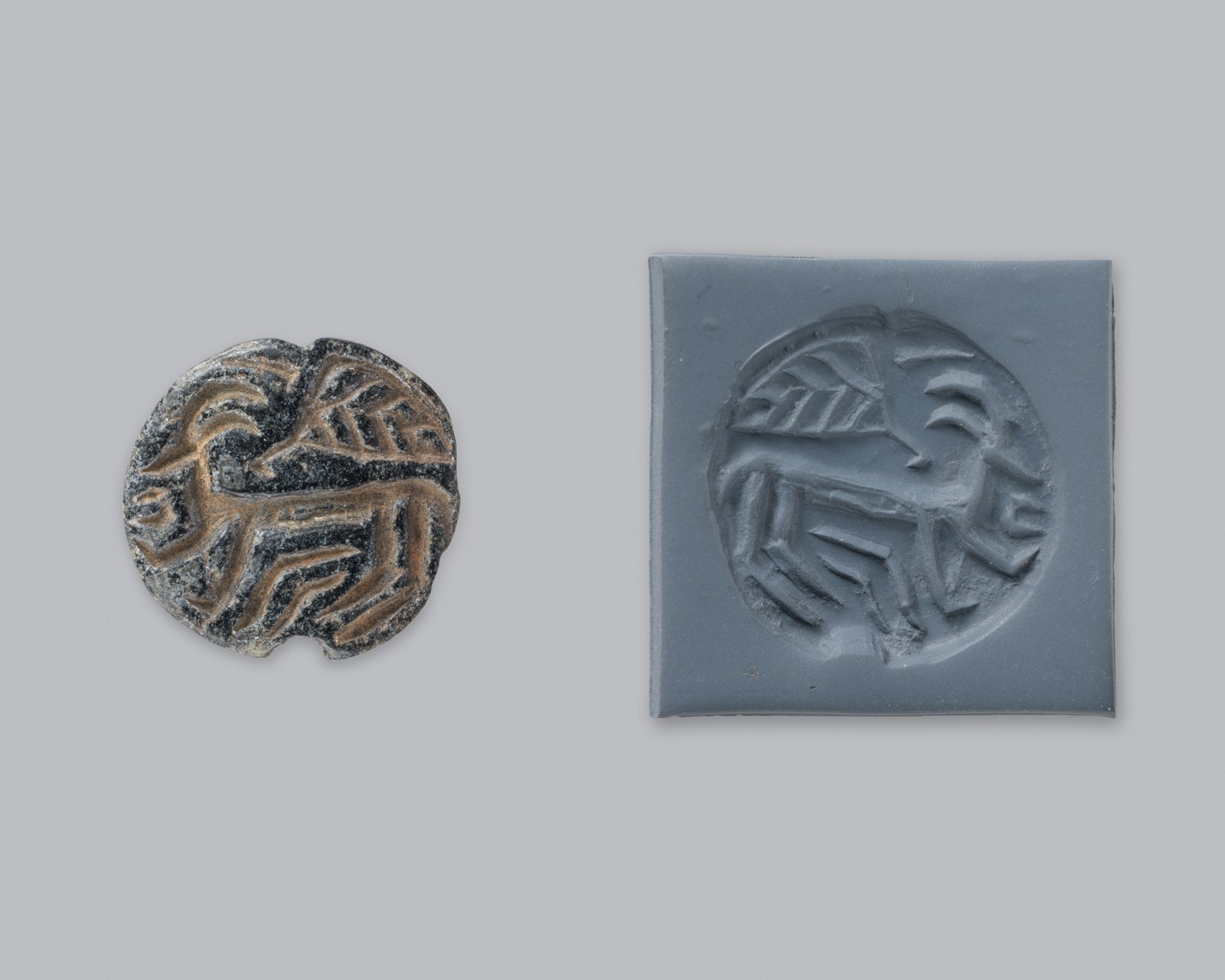
The illustrated Ubaid seal is attributed by the museum to Syria or Anatolia and dated to the sixth–fifth millennium BCE. Beside it is a modern impression clarifying the design, not an ancient tablet. Animal imagery does not reveal its maker’s beliefs or the precise function of every impression.[12]
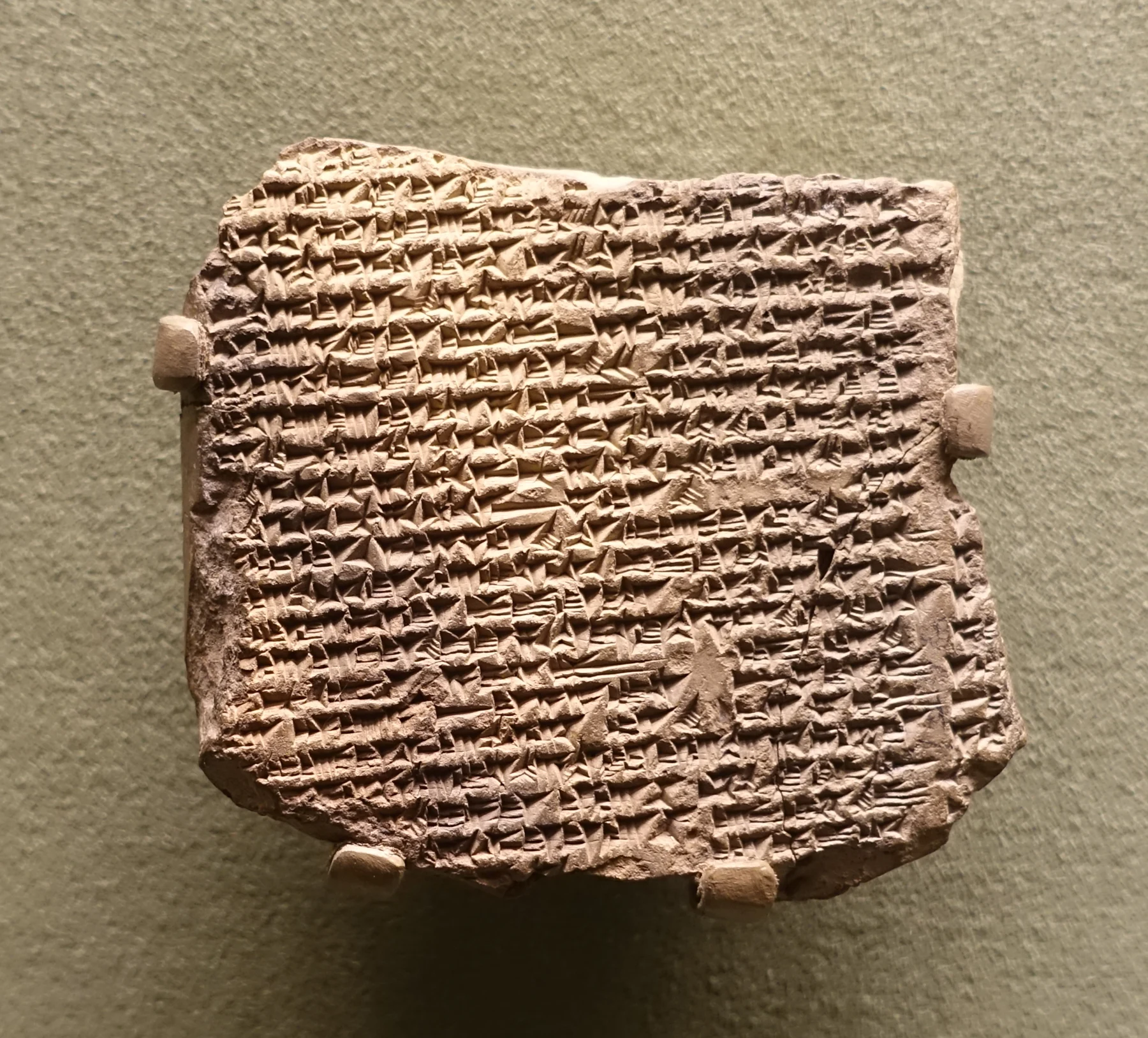
Clay tokensClay tokensSmall clay objects of varied shapes; some supported counting, but Neolithic examples do not establish one accounting system or function for all.Glossary · Click to read the explanation and seals indicate ways of distinguishing and organizing things. Marks alone do not make them writing, nor establish a direct chain from every Ubaid token to every later cuneiformCuneiformWriting with wedge-shaped signs, developed from Mesopotamian recording traditions and used for several languages from the third millennium BCE.Glossary · Click to read the explanation sign.[3]
Was the Ubaid a state? Was it Sumerian?
We lack Ubaid royal names, taxation records or a written apparatus allowing the description of a state as in historical Mesopotamia. Buildings and resources suggest possible inequality and organization, but political classifications depend on definitions of the state and local evidence. The absence of writing does not prove the absence of politics.[2][11]
Nor do we securely know the inhabitants’ language. Population and cultural continuity may connect the Ubaid south with the world in which Sumerian was later written, but pottery and architecture cannot determine language. Ubaid is not simply another name for Sumerian, and our lack of linguistic knowledge does not prove that an earlier form of Sumerian was never spoken.
The sounder approach is to investigate continuity and change, leaving linguistic identity open where no texts answer the question.
Towards Uruk and writing: an uneven transition
During the late fifth and fourth millennia BCE, parts of the south developed features associated with the Uruk period: larger settlements, wider specialization and institutional organization, and changes in recording practices and architecture. Earlier traditions contributed, but the transition was neither a single day nor an identical trajectory everywhere.[1][2][3]
At late-fourth-millennium Uruk, administrative accounts became central to the earliest known written record. Tablets were not solely commodity accounts, however: they also included lists of professions and signs. Writing cannot be reduced to an inevitable next step after an Ubaid seal, or to one purpose.[14]
The emergence of cities and writing needs explanations combining scale, resources, relationships and technologies. No single cause—irrigation, temples or trade—explains the whole history.
The world before the city
Ubaid culture offers a long history preceding written names: villages managing water, unequal houses, specialized crafts, traveling objects, buildings potentially exceeding households, and places rebuilt through generations.
Collective activities may intersect with ritual; ritual may require organization; administration may confer status. These are possibilities and multiple historical paths, not a compulsory ladder by which every house becomes a temple and every village a state.
The Ubaid was more than a footnote before Sumer. It was a world with traditions, communities and differences, whose languages and divine names we cannot read with certainty. In some regions, however, we can examine institutions growing beyond households, the accumulating significance of place, and changing conditions that later supported cities and writing.
Before tablets let us read Enki, Inanna or Enlil, these communities had spent many centuries building a social and material world larger than a single home. That is what archaeology offers: transformations before texts, with a clear distance between the building we see and the name we cannot read.
References and notes
- Robert A. Carter & Graham Philip (2010). Deconstructing the Ubaid. In Beyond the Ubaid, SAOC 63, pp. 1–22. Chicago: Oriental Institute. Chapter pp. 1–3 checked: designation, phases 0–5 and southern frame c. 6500–3800 BCE. Not the entire book. Return to the text ↑
- Gil J. Stein (2010). Local Identities and Interaction Spheres: Modeling Regional Variation in the Ubaid Horizon. In Beyond the Ubaid, SAOC 63, pp. 23–44. Pages 23–28: regional variation, households and interaction. Evidence from different regions is not combined into one uniform society. Return to the text ↑
- Department of Ancient Near Eastern Art (2003). The Ubaid Period (5500–4000 B.C.). The Metropolitan Museum of Art. Full short essay; title range narrower than the broad southern sequence. Used for irrigation, contact, seals and architectural continuity, not linguistic identity. Return to the text ↑
- Lagash Archaeological Project, University of Pennsylvania. Historical Context: Ubaid Period. Ubaid section only: village environments and resources. Later historical Lagash canals and institutions are not attributed to the Ubaid. Return to the text ↑
- Louise Rayne, Michelle de Gruchy, Jaafar Jotheri & Raheem Abdan (2026). Landscape Archaeology of the Eridu Region: Discovering the Irrigation Systems of Ancient Farms. Iraq, First View, 1–20. Online 21 September 2026. DOI: 10.1017/irq.2025.10037. Abstract and relevant canal/sample methods, results and discussion. 4540–4443 BCE dates sample ER3, not every canal’s construction. Publication year 2026 despite DOI numbering. Return to the text ↑
- The Metropolitan Museum of Art. Bowl, Ubaid, mid-sixth–fifth millennium BCE. Eridu cemetery, grave 136. Accession 49.133.2. Object catalogue and Open Access data: provenance, date and accession; image public domain. One object is not generalized. Return to the text ↑
- Lamya Khalidi et al. (2016). The growth of early social networks: New geochemical results of obsidian from the Ubaid to Chalcolithic Period in Syria, Iraq and the Gulf. Journal of Archaeological Science: Reports 9, 743–757. DOI: 10.1016/j.jasrep.2016.06.026. Abstract, highlights and accessible introduction, not the full paper. Samples include non-Ubaid periods; obsidian source does not establish traders or government. Return to the text ↑
- Jason Ur (2014). Households and the Emergence of Cities in Ancient Mesopotamia. Cambridge Archaeological Journal 24(2), 249–268. DOI: 10.1017/S095977431400047X. Author repository abstract and metadata; an interpretive household/institution model, not proof that every temple was a house. Full article not read. Return to the text ↑
- Sabah Abboud Jasim (2021). Tell Abada: An Ubaid Village in Central Mesopotamia. Oriental Institute Publications 147. Chicago. Publisher summary and contents, not the full monograph: village, pottery workshops and three levels. House A details use Stein and the 2025 study. Return to the text ↑
- Philippe Quenet et al. (2025). Archaeological Mission at Eridu: The 2022 Campaign of the University of Strasbourg at Abu Shahrayn. Preliminary Report Part 1: Off-Site Studies and Site 1, the E-Abzu Monumental Complex Reconsidered. Iraq 87, 263–312. DOI: 10.1017/irq.2025.10035. Abstract and selected landscape, sounding, terrace and conclusion passages; eighteen levels. Does not establish every early level as house or temple, or Enki in the Ubaid. Return to the text ↑
- Max Price & Noa Corcoran-Tadd (2025). Livestock and the Transition to the Tributary Mode of Production. Cambridge Archaeological Journal. Online 4 September 2025. Abstract and selected Ubaid section, particularly the north c. 5200–4500 BCE, House A and Tell Feres. Economic framework is interpretive, not uniform across all Ubaid. Return to the text ↑
- The Metropolitan Museum of Art. Stamp seal and modern impression: horned animal and bird. Ubaid, sixth–fifth millennium BCE, Syria or Anatolia. Accession 1984.175.13. Object catalogue and Open Access data. Alternative geographical attribution; impression modern; image public domain. Animal imagery does not establish a creed. Return to the text ↑
- David Stanley (2016). Ziggurat at Eridu. Photograph, 11 April 2016. Wikimedia Commons / Flickr. CC BY 2.0. Image description, credit and license checked; used for site context. Visible architecture later than the Ubaid, not its first temple. Return to the text ↑
- Ira Spar (2004). The Origins of Writing. The Metropolitan Museum of Art. Full short essay: Uruk accounts, profession lists and complex writing origins. Older hypotheses about other sites are not restated as established facts. Return to the text ↑
Suggest a correction · Suggest a source for this record
Cite this record
IL Archive, «Ubaid Culture: The World Before Sumer’s Cities», Edition 1, https://ilarchive.com/en/studies/ubaid-before-sumer-cities
Continue reading