Study
Ubaid Figurines: Why Do Their Faces Look Nonhuman?
An extended study of a topic, with evidence and references.
Elongated heads, slit eyes and a nursing mother: how can we understand Ubaid figurines through artistic tradition, cranial modification and burial without turning a reptilian resemblance into an assumed identity?
Share article
Dates
Dates have distinct roles. The timeline uses creation, composition or historical coverage, rather than publication or discovery dates.
- Historical coverage
- Approximately From 6500 BCE to 3800 BCE
Text
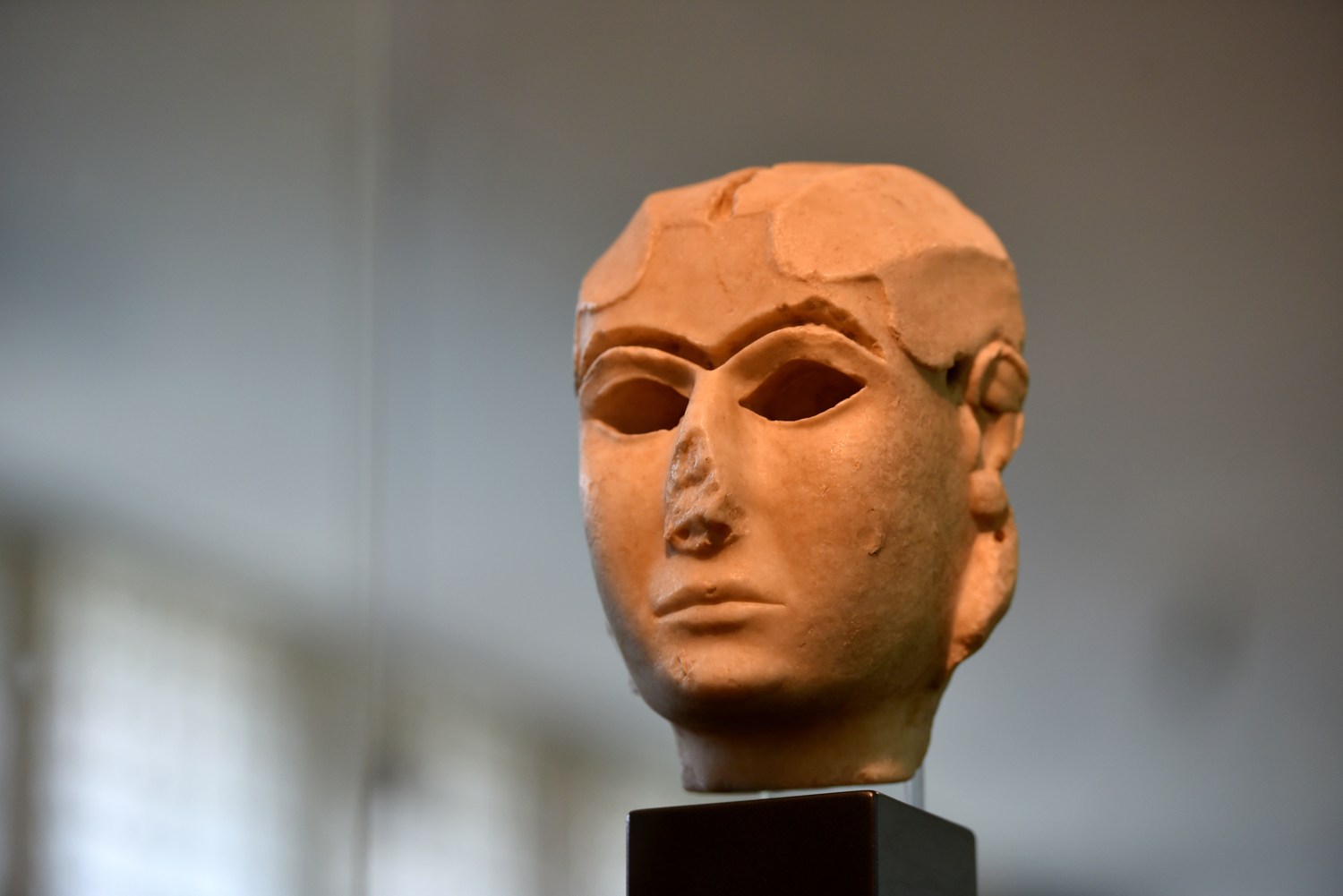
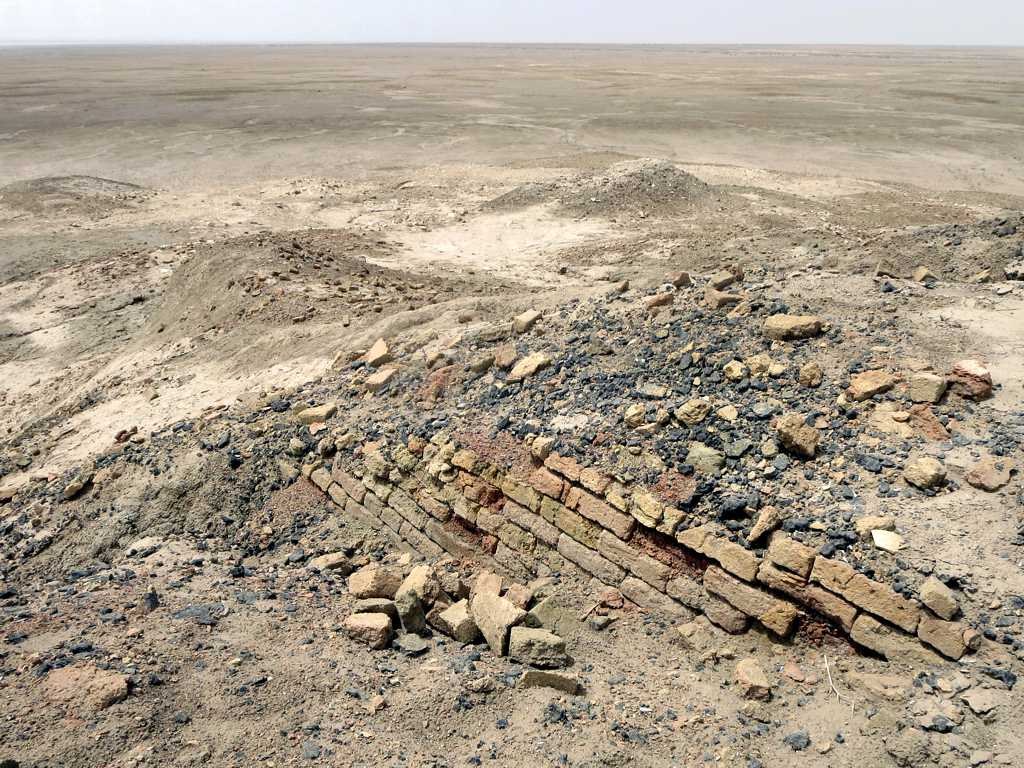
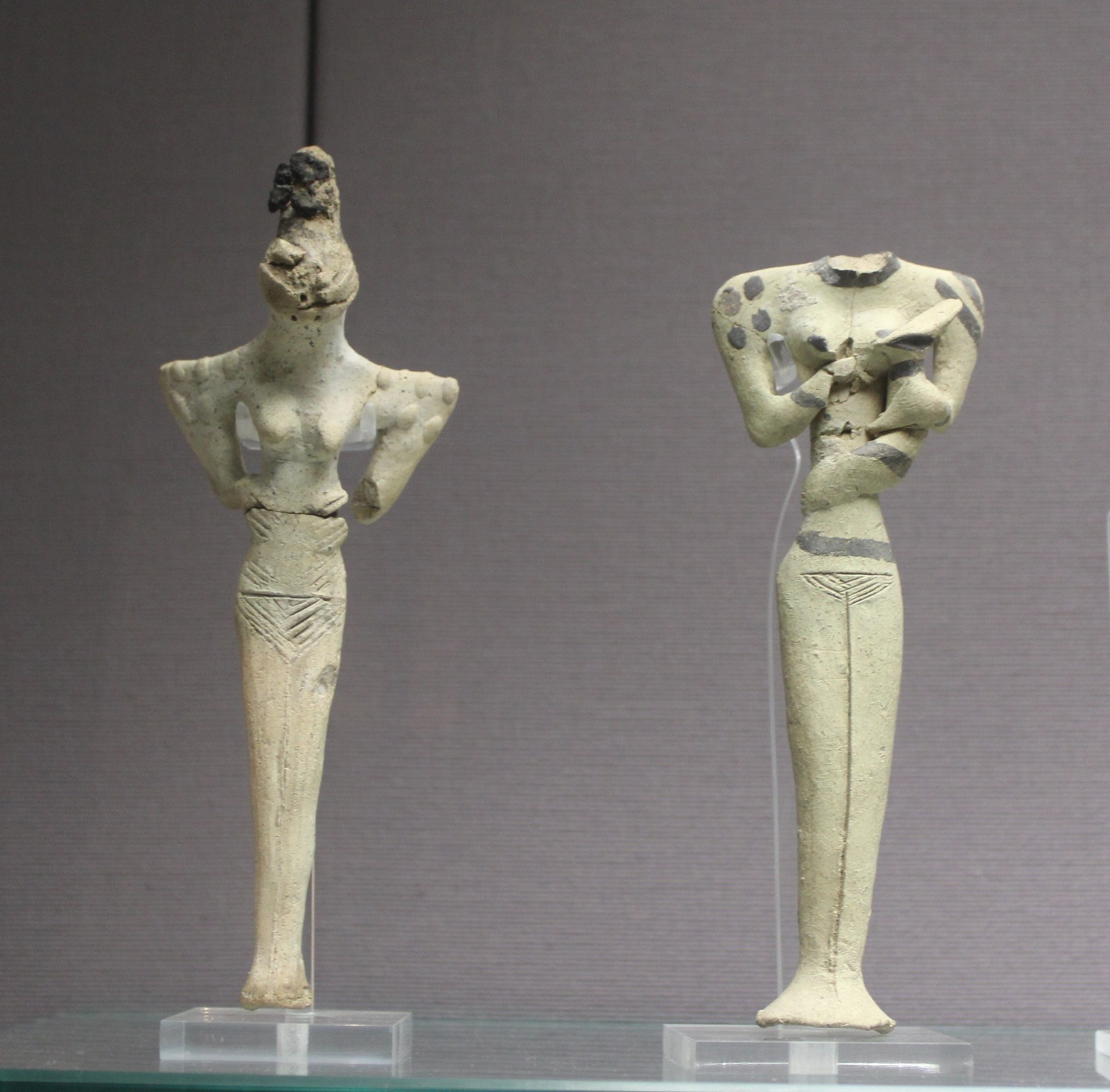
In southern MesopotamiaMesopotamiaA historical region associated with the Tigris and Euphrates, home to many societies and civilisations.Glossary · Click to read the explanation, around seven thousand years ago, people fashioned clay images of the human body that are difficult for a modern viewer to forget: slender bodies, elongated heads, prominent noses and long, slanting eyes. Some figures are female, some male, and some cannot be sexed. Lines, dots and applied clay on certain pieces may represent adornment, clothing or treatment of the body.
These objects entered the literature under labels such as “lizard-like” and “ophidian.” The British Museum describes reptilian features on a piece from Tell al-UbaidUbaid cultureAn archaeological designation for material traditions originating in southern Mesopotamia with regional diffusion. Broad southern frame c. 6500–3800 BCE; not a known linguistic people, with limits varying by region and phase.Glossary · Click to read the explanation and another from EriduEriduAbu Shahrain in southern Iraq, with a long architectural sequence beginning before writing. Associated with Enki in historical times, which does not establish the sacred being’s identity in its earliest layers.Glossary · Click to read the explanation.[1][2] Yet the resemblance raises a question before answering one: did the maker intend to portray a reptile, or was this a cultural way of representing a human or human-like being?
We can see the form. The name and meaning its ancient owner gave it have not reached us.
Which figurines are we discussing?
Ubaid culture is a long archaeological horizon with several phases, not the name of a people whose language and beliefs we can read in their texts. The familiar elongated-headed figurinesFigurineSmall three-dimensional representations of people, animals or other beings. Size and appearance alone do not establish a toy, portrait, ritual object or deity; manufacture, discovery context and use require study.Glossary · Click to read the explanation discussed here are particularly associated with southern Mesopotamia, at sites including Ur, Eridu, Tell al-Ubaid, Tell el-Oueili, Tello and UrukUrukAncient city at Warka in southern Iraq, a major urban centre around 3200 BCE that preserved early writing and accounting tablets.Glossary · Click to read the explanation. Their features should not be generalized to every figurine made in every region during the Ubaid period.[3]
In her 2010 study, Aurelie Daems assembled a sample of 121 published southern figurines with detailed bodily modelling: approximately 79% female, 4% male, and the remainder without identifiable sexual features, partly because of damage or lost body parts. These are proportions within a specific research sample, not a count of all Ubaid figurines known today, nor a census of the population or its roles.[3]
We are therefore examining a tradition of bodily representation covering several categories, rather than one “lizard goddess” reproduced in identical copies.
What makes the face look reptilian?
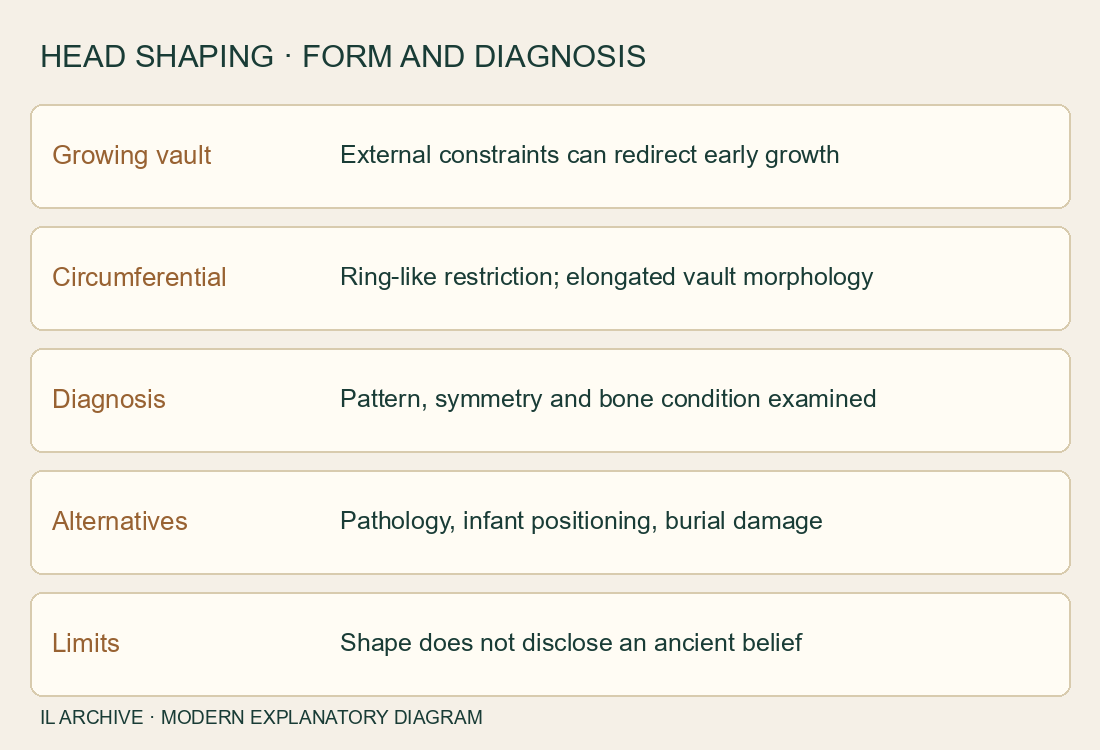
Several features combine: the elongated head or headdress, oval eyes divided by deep slits, a projecting nose, a narrow face, and exaggeration of some bodily proportions. They vary between pieces. Some show applied details of hair or headgear, so the entire upper form cannot be treated as a precise representation of the skull's bone.[1][2][4]
“Reptilian” summarizes a modern visual impression. It does not identify the figure. Moving from “a face resembling a reptile” to “a figurine of a reptile” requires evidence independent of the resemblance.
Was the maker unable to portray a human?
Ellen McAdam's 2024 reassessment of the Ur figurines describes skilled manufacture and varied treatment of clay. It tentatively identifies four forms preceding the better-known figurines from Ubaid 4 graves, including fuller, rounder faces and less angular shoulders. One method was not imposed on every craftsperson or every phase.[4]
This weakens the explanation that all their strangeness results from simple artistic inability. It does not tell us what every maker could produce or intended by every detail. Moreover, the Ur sequence is discontinuous and the excavated areas limited; it should not become a continuous progression of all Ubaid art toward a single form.
Ain Ghazal: comparison and its limits
At Ain GhazalAin GhazalNeolithic site near Amman, Jordan, known for large Pre-Pottery Neolithic plaster statues. Faces and decorated eyes are recognizable, but the figures’ names and religious function remain unresolved.Glossary · Click to read the explanation near Amman, Pre-Pottery NeolithicPre-Pottery NeolithicA regional term for early Neolithic phases in Southwest Asia before the local spread of pottery; it does not imply an absence of settlement, architecture or cereal processing.Glossary · Click to read the explanation communities produced large plaster statues with recognizable faces, noses and eyes. Carol Grissom discusses their construction over reed armatures and the influence of materials and manufacturing techniques on their form.[5]
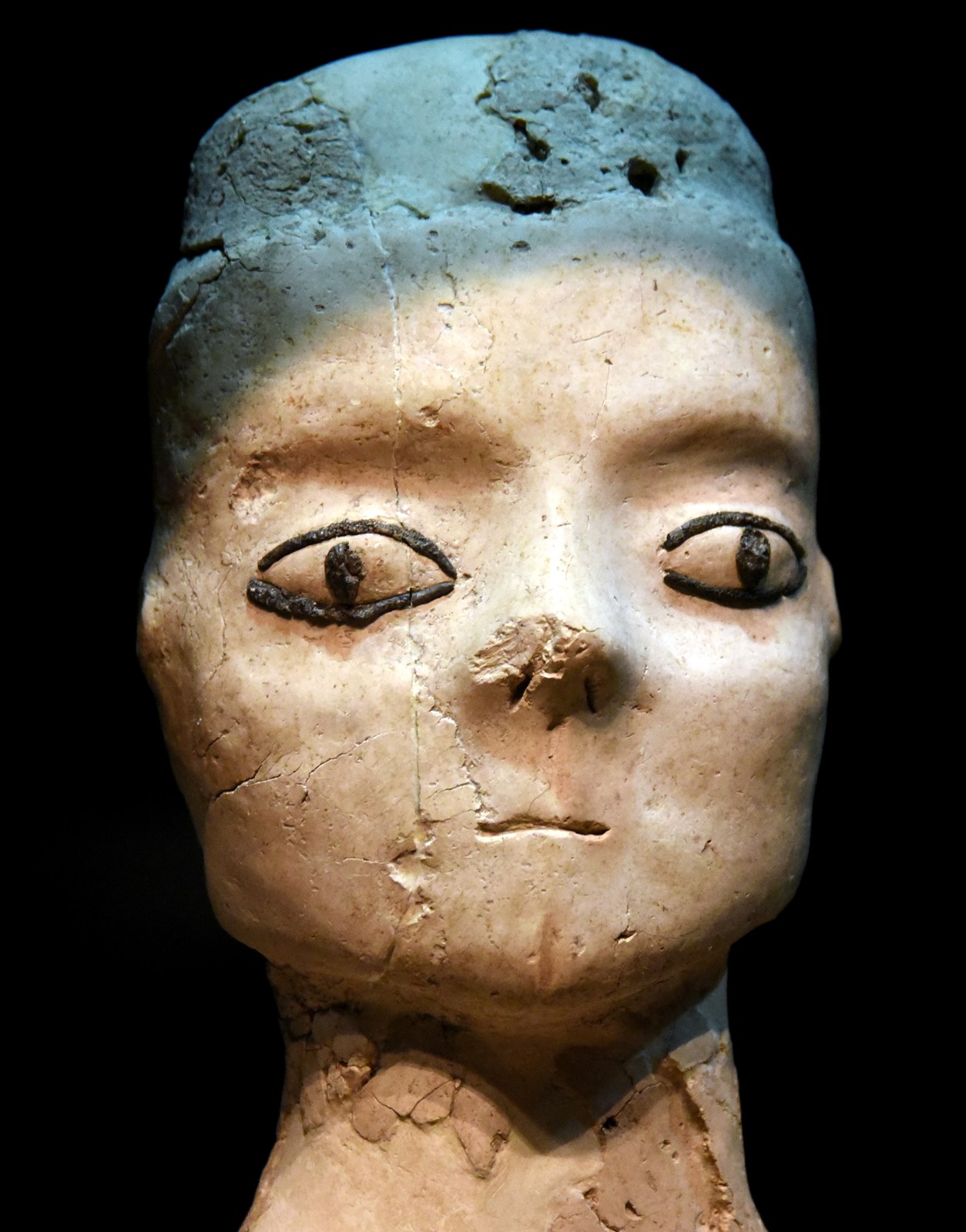
The comparison shows that a clearly human face was represented in the Near East before the most familiar southern Ubaid examples. It is not direct evidence of the skill of a later Ubaid maker working elsewhere. Communities, materials and periods differ; the nearer evidence for variation in Ubaid choices comes from the Ubaid assemblage itself.
A recognizable face at Ain Ghazal also does not settle its subject's identity or religious function. Both naturalism and abstraction can convey more than one meaning.
Does the form have earlier roots?
Some southern figurines have been compared with pieces from the Samarran tradition in central Mesopotamia, including Tell Songor A, Choga Mami and Tell es-Sawwan. There are similarities in head elongation, eyes and decoration, alongside differences in posture and detail. Daems proposes stylistic connections, while McAdam also discusses precedents for later forms.[3][4]
Such comparisons make a sudden appearance without earlier artistic history unconvincing. They do not, by themselves, establish the migration of a particular group, a single origin for every figurine, or the survival of the same meaning across centuries and sites.
Elongated heads and cranial modification
Cranial modificationCranial modificationAlteration of head shape through bodily practices in early childhood, documented in multiple communities. It may relate to affiliation, status or beauty, but an elongated figurine head alone does not prove the subject underwent it.Glossary · Click to read the explanation is documented in ancient communities: the head's shape is altered through bodily treatment during early childhood. Kirsi Lorentz examines Near Eastern evidence and possible connections with affiliation, status and identity, while stressing limited samples and variation in the practice.[6]
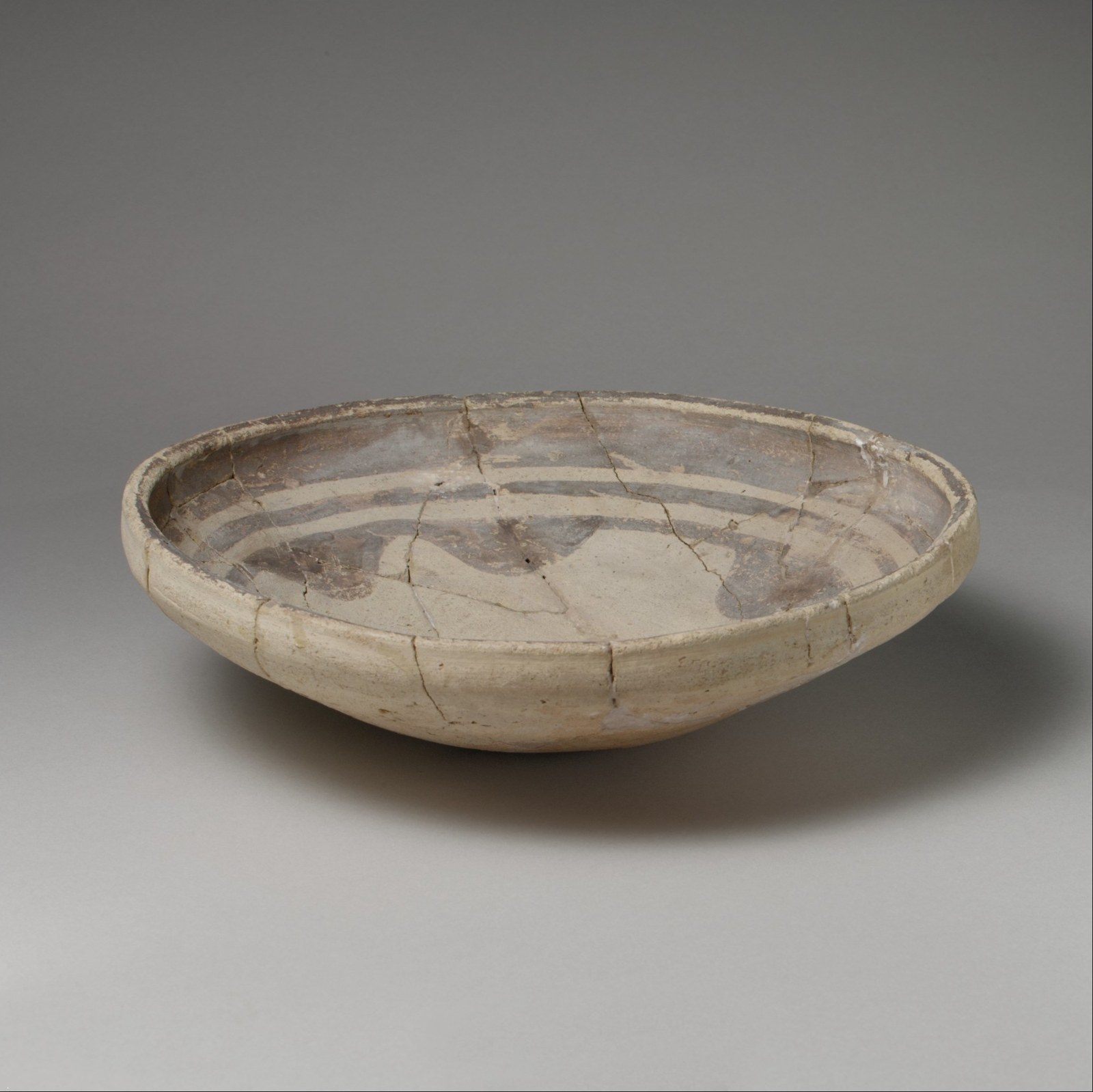
The report of the 2010 season at Tell Zeidan in Syria describes a child's deliberately shaped skull. Its discussion connects this with the elongated heads of southern figurines and an Ubaid sherd depicting a row of dancers whose heads appear elongated.[7]
However, the report's passage brings together human remains from several periods and does not provide a detailed, independent date for the illustrated skull sufficient to assign it automatically to a particular southern phase. Reading the dancers' heads on pottery also remains an interpretation of an image, with a different evidential basis from examination of the skull itself.
The existence of the practice makes a connection with some elongated heads plausible. It does not prove that every figurine depicts a person with a modified skull, or that all Ubaid inhabitants practised it.
What does this hypothesis leave unexplained?
Even if head elongation reflects an actual human appearance, it does not supply a complete explanation for slit eyes, decoration and bodily proportions. A maker might also have introduced stylistic exaggeration, headgear, a hairstyle or other features. Daems additionally discusses masks as a possibility; these are interpretive alternatives, not elements established on every figure.[3]
Why modify the head at all? Affiliation, beauty or inherited status are possible associations, and the function can vary between and within communities. We have no Ubaid text specifying one motive. Emulation of an ancestor or sacred being is conceivable, but does not become more likely merely because a head looks unusual.[6]
We should distinguish a documented bodily practice, a possible interpretation of an artistic representation, and the social or religious meaning we have not yet recovered.
The woman and child
A figurine from Ur portrays a woman holding an infant to her breast. It is held by the British Museum as 122873. The woman's head is missing, but the child's survives and shares the figurines' treatment of face and decoration. McAdam records it as excavation number U15376 from Grave O and discusses its painted manufacture, which differs from another group with applied clay pellets.[4]
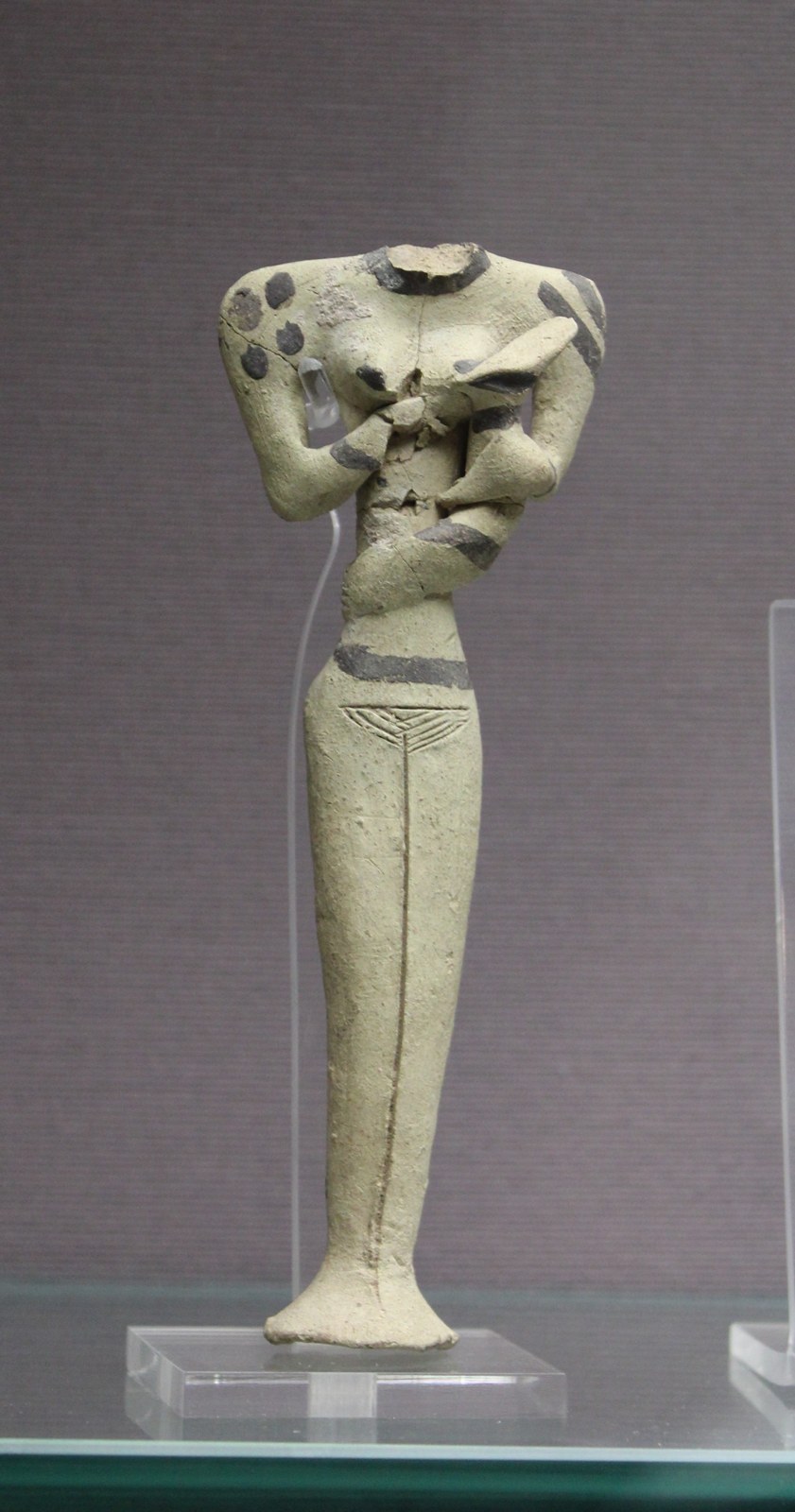
The maternal scene is understandable to us despite some unfamiliar features. It does not prove that the subject is an “ordinary woman,” since motherhood also occurs in religious art. It does, however, weaken a literal reading that reduces the group to depictions of animals or a reptilian species.
Daems records two breastfeeding examples in the assemblage she discusses. The nursing mother should therefore not become the model for all female figurines, or automatic evidence of a mother-goddess cult.[3]
Not only women
Male figurines exist, as do pieces whose sex cannot be identified. Daems describes a male figurine from Grave 68 at Eridu, whose occupant was described as a woman in the excavation report. The figure holds something before its chest, interpreted as a staff or sceptre; its identity and function remain unknown.[3]
It should not be confused with the small Eridu fragment numbered 115357 at the British Museum: the catalogue tentatively describes that separate object as female.[2]
Male and female figures sharing a visual language shift the question from identifying one goddess to investigating a broader representational tradition. Anatomical features on a figurine also do not, on their own, establish its user's sex or social role.
Where were they found?
Context is more useful than facial appearance alone. Was a piece recovered from an intact grave, an occupation layer, the surface, or fill moved long afterwards?
Daems proposes use among the living in earlier phases, followed by the inclusion of some carefully made pieces in later graves. She draws on Tell el-Oueili, Ur and Eridu while explaining that many objects have lost their original contexts.[3]
In 2024, McAdam emphasizes that pieces outside graves often come from secondary contexts, and finds insufficient evidence to establish original domestic use. She also questions the long use of certain fragile types during their owners' lives, suggesting that some were made for selected individuals at burial.[4]
This is a difference in the interpretation of evidence, not simply a change of labels. Neither “household dolls” nor “exclusively temple objects” can be presented as settled fact. Function may differ by type, site and phase.
In graves, but with selected people
Some figurines occur in graves at Ur and Eridu, but not in every grave. Daems reports that Grave 68 was the only one containing a human figurine among 193 excavated Ubaid 4 graves at Eridu. McAdam observes that goods in Ur graves containing figurines do not show an obvious difference in wealth from other graves.[3][4]
Selection is documented; its reason is not. Role, identity or circumstances of death can be considered, but the figurine alone cannot identify these people as priests, healers or leaders.
Daems records no figurines in children's graves in the sample she examined. That weakens a toy interpretation for the studied funerary pieces, but does not exclude every possible play function for every figurine in every period. The Ur reassessment also notes complex burials and poor preservation of bone, requiring caution about age, sex and the association of an object with a specific individual.[3][4]
Were they portraits?
Shared form, and the male figurine accompanying a person described as female, weaken the assumption that every piece directly portrayed the deceased. McAdam considers the consistent imagery more suggestive of idealized figures than individual portraits.[3][4]
Similarity does not exclude portraiture absolutely: much art represents individuals within shared conventions. Nor should the assemblage be reduced to “identical copies.” McAdam stresses that each handmade piece is unique, despite the close formal and technical similarities within certain groups.
Shared conventions might represent a category, identity or desirable body while individual objects carry differences we cannot interpret. These possibilities require stronger context.
Gods, ancestors or other beings?
We have no written names for these figures, no Ubaid text describing their function, and insufficient evidence to identify the entire group as images of one deity. Gods, ancestors and spirits remain possibilities, not conclusions established by an unusual face or a grave context.
Conversely, a human appearance does not make them mere decoration or dolls. Some have documented funerary use and may have held special ritualRitualAn organised or distinguished practice meaningful to a community; it may leave traces, but its form alone does not reveal an associated doctrine.Glossary · Click to read the explanation or social meaning. Identifying that meaning is more difficult than establishing their findspot.[3][4]
A maker could use abstraction for an idealized person, a social identity or a symbolic character, or could portray a superhuman being. Present evidence does not support a simple division in which a naturalistic face is human and an unusual face divine: some differences are chronological, technical and stylistic as well.
An artistic tradition?
Recurring treatments of head, eyes and body, together with earlier precedents and comparisons, support understanding the figurines as a shared artistic tradition. But “style” describes how an image is made; it does not automatically explain its function or meaning.
Bodily representation might convey affiliation, beauty, age or status, and could connect with death or ritual. These meanings need not be separate, and the same form need not retain the same meaning at every site over centuries.
Manufacture, paint, applied elements, breakage and discovery context must therefore be studied alongside the face. McAdam's discussion of differences between painted and pellet figurines reminds us that a single label can conceal different functions.[4]
Why do they not demonstrate reptiles or aliens?
Elongated heads and slanting eyes invite modern viewers to compare them with familiar images from contemporary imagination. Resemblance is not evidence that the maker saw a real reptilian or extraterrestrial being.
Research can follow the region's own history: different types, stylistic comparisons, manufacturing techniques, bodily shaping, nursing and burial. These do not settle every figure's identity, but they offer questions that can be tested without adding an external being unsupported by independent evidence.[3][4][6]
Some figures might have been nonhuman in their makers' mythological or religious understanding. That is a different possibility, which research can discuss; it cannot be transformed into an account of a biological species living among them.
What can we say now?
- Established in the material: southern Ubaid human-shaped figurines include female, male and unsexed figures, elongated heads and slit eyes, and some pieces recovered from graves.
- Probable: recurring conventions and skilled variation reflect shared artistic choices; simple inability does not explain the appearance as a whole. Certain types had special functions, but the reasons for selecting their users remain unknown.
- Possible: some heads could relate to cranial modification, headgear or hairstyles; some figures might represent idealized bodies, social or ritual categories, ancestors or superhuman beings.
- Unproven: depictions of particular gods or literal reptiles. The evidence discussed provides no independent indication of a reptilian species or extraterrestrials.
Their importance extends beyond an unusual face. These figurines show that bodily images before writing could carry conventions and meanings that cannot be reduced to realistic copying. We know something about material, manufacture, distribution and burial; the figure's identity and the meaning of its appearance remain less clear.
The more precise question may therefore be: what did the maker see in this form that made it worth repeating? We have no single answer, but enough evidence to prevent a modern resemblance from becoming an ancient fact. Strangeness does not name the face's owner; it opens the question.
References and notes
- The British Museum. Figurine 116894, registration 1924,0920.155, Tell al-Ubaid. Indexed description and catalogue data: female head/shoulders, incised eyes and elongated head. Broad catalogue range 5900–4000 BCE, not exact dating of every type. Direct page access unavailable; no complete interpretation of religion attributed to it. Return to the text ↑
- The British Museum. Figurine 115357, registration 1919,1011.3942, Eridu. Indexed description/catalogue: fragmentary head and torso, tentatively female. Not the male figure from Grave 68 discussed by Daems. Direct page access unavailable. Return to the text ↑
- Aurelie Daems (2010). A Snake in the Grass: Reassessing the Ever-Intriguing Ophidian Figurines. In Beyond the Ubaid, SAOC 63, pp. 149–161. Introduction, sample, morphology, contexts and conclusion checked in pp. 149–158; not the whole volume. 121 is the sample then published, not today’s total. Domestic use, identity and masks are interpretations, compared with McAdam 2024. Return to the text ↑
- Ellen McAdam (2024). A Gazetteer of Ubaid Figurines from Ur. In Ur 1922–2022, pp. 49–83. British Institute for the Study of Iraq. Pages 49–55 and 79–82 checked: discontinuous context, earlier types, U15376/122873, manufacture and function. Not the complete Ur volume. Funerary manufacture and criticism of domestic use presented as the author’s reading, not fact for every figurine. Return to the text ↑
- Carol A. Grissom (2000). Neolithic Statues from Ain Ghazal: Construction and Form. American Journal of Archaeology 104(1), pp. 25–45. Abstract, introduction and overview, pp. 25–26. Reported radiocarbon figures are uncalibrated and not converted here into exact calendar dates. Different material/community; does not establish every Ubaid maker’s skill or the statues’ religious identity. Return to the text ↑
- Kirsi O. Lorentz (2010). Ubaid Headshaping: Negotiations of Identity through Physical Appearance? In Beyond the Ubaid, SAOC 63, pp. 125–148. Selected discussion and conclusion, pp. 138–142: variation, identity and sample limits. Does not make headshaping a proven explanation for every represented head, a universal population trait, or a single universal motive. Return to the text ↑
- Gil J. Stein (2011). Tell Zeidan: 2010 Field Season. Oriental Institute Annual Report 2010–2011, relevant pp. 135–137 and figures 19, 22. Ceramics/human-remains passages and figures 19/22 captions, pp. 135–137. Multi-period sample; no particular southern phase assigned to the illustrated skull. Elongation on the dancers’ sherd is an image interpretation, not skeletal examination. Return to the text ↑
Suggest a correction · Suggest a source for this record
Cite this record
IL Archive, «Ubaid Figurines: Why Do Their Faces Look Nonhuman?», Edition 1, https://ilarchive.com/en/studies/ubaid-figurines-faces
Continue reading