Site
Ain Ghazal
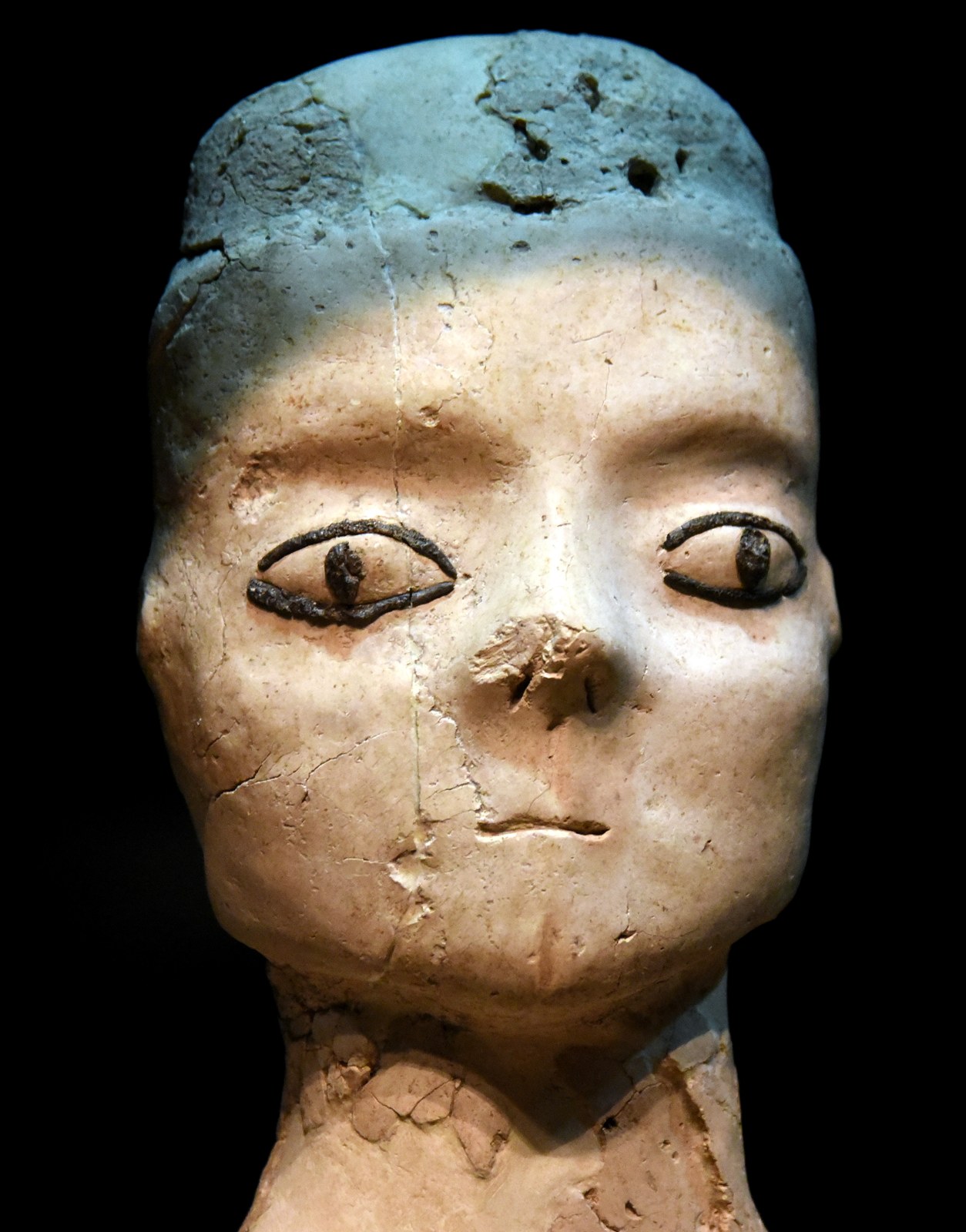
Neolithic site near Amman, Jordan, known for large Pre-Pottery Neolithic plaster statues. Faces and decorated eyes are recognizable, but the figures’ names and religious function remain unresolved.
Text
The constructed body
Plaster statues were built over reed armatures. Grissom examines how material and manufacture affected their form, while a recognizable human appearance cannot establish meaning in a society without explanatory texts.[1]
Limits of comparison
The head photographed at the Jordan Museum is an Ain Ghazal example. Comparing it with UbaidUbaid cultureAn archaeological designation for material traditions originating in southern Mesopotamia with regional diffusion. Broad southern frame c. 6500–3800 BCE; not a known linguistic people, with limits varying by region and phase.Glossary · Click to read the explanation figurinesFigurineSmall three-dimensional representations of people, animals or other beings. Size and appearance alone do not establish a toy, portrait, ritual object or deity; manufacture, discovery context and use require study.Glossary · Click to read the explanation shows different visual languages, not the skill of a particular maker elsewhere or proof that every plaster statue represents a god.
References and notes
- Carol A. Grissom (2000). Neolithic Statues from Ain Ghazal: Construction and Form. American Journal of Archaeology 104(1), pp. 25–45. Abstract, introduction and overview, pp. 25–26. Reported radiocarbon figures are uncalibrated and not converted here into exact calendar dates. Different material/community; does not establish every Ubaid maker’s skill or the statues’ religious identity. Return to the text ↑
Research history
Substantive changes are retained here. Minor copy edits remain in the internal operational log.
-
Substantive record update
Suggest a correction · Suggest a source for this record
Cite this record
IL Archive, «Ain Ghazal», Edition 2, https://ilarchive.com/en/sites/ain-ghazal