Study
From the Embodied God of Ancient Texts to Philosophical Transcendence
An extended study of a topic, with evidence and references.
From Genesis and Exodus to Philo, Maimonides, Augustine, Aquinas, Avicenna and kalām: changing rules for reading body and emotion, with distinct doctrines of incorporeality, immutability and simplicity and diverse schools.
Share article
Text
Two languages for the same God
Biblical narratives describe God walking and descending, possessing a face, hand and back, becoming angry and showing mercy. Classical philosophical theology denies that the divine essenceOusia — essenceGreek term for essence or nature, with meanings changing between authors.Glossary · Click to read the explanation is a body or changes; some thinkers also deny any composition. The distance is considerable, but it was not one transition between two uniform doctrines. Scripture contains different voices, and later schools disagreed over their interpretation. [1] [3] [15] [16]
Historical inquiry asks how the rules for reading these expressions changed, rather than which conception discloses God’s ultimate reality. The texts remained, while relations between narrative, vision and demonstration were reconstructed. “God’s face” and “the first principle” can therefore refer to the same God within a tradition, while permitting different kinds of imagination and inference.
The body in ancient divine worlds
In the ancient Near EastAncient Near EastA historical and geographical term covering Mesopotamia, the Levant and neighbouring ancient societies.Glossary · Click to read the explanation, divine form did not necessarily contradict divinity. Narratives and artifacts present gods speaking, sitting, fighting and generating life, including ElEl at UgaritA deity prominent in West Semitic traditions, especially as head of the divine family in Ugaritic texts.Glossary · Click to read the explanation and BaalBaalStorm god and protagonist of Ugarit’s Baal Cycle; exercises active kingship while El retains importance and authorizes the palace.Glossary · Click to read the explanation in Levantine traditions. Images and temples participated in their presence, but an image alone does not establish how a god’s relationship to it was understood. [7] [38]
Benjamin Sommer proposes that some Mesopotamian and Canaanite traditions imagined divine selfhood extending beyond a single body, allowing multiple manifestations. This scholarly model helps avoid imposing our bounded conception of a body on every period. The photograph below depicts Baal; it does not establish YahwehYahwehThe divine proper name written YHWH in the Hebrew Bible.Glossary · Click to read the explanation’s appearance or a common corporeal doctrine among all biblical authors. [7]
![Baal stele from Ras Shamra, Louvre AO 15775. An example of bodily representation in the ancient Levant, not an image of Yahweh or El. [38]](/media/1522)
Walking and descending before metaphysics
Genesis 3:8 describes humans hearing YahwehYahwehThe divine proper name written YHWH in the Hebrew Bible.Glossary · Click to read the explanation God walking in the garden; Genesis 11:5 has Yahweh descend to inspect the city and tower. The HebrewHebrewA Northwest Semitic language in the Canaanite group, with ancient and modern forms.Glossary · Click to read the explanation language constructs movement and location. A later reader may interpret them figuratively, but that interpretation does not settle the earliest author’s imagination. [1]
Sommer argues that parts of the Hebrew Bible contain genuinely corporeal conceptions of God. This is his thesis, not a consensus covering every verse. The alternatives are not universal literalism and universal metaphor: literary context and the diversity of traditions determine what each passage can establish. [6]
Feet, face and back within a scene
In Exodus 24:9–11, MosesMosesCentral figure in Exodus, Torah traditions and the Qur’an; childhood accounts differ in detail.Glossary · Click to read the explanation, Aaron and their companions see Israel’s God, with a description beneath his feet resembling sapphire pavement and a clear sky. In Exodus 33:18–23, Moses asks to see glory, is shielded by a hand during the passing, and sees the back rather than the face. [2] [3]
These scenes differ from an isolated “hand” meaning power: they combine form, position, concealment and movement. Yet they do not explain divine essence in philosophers’ terminology. Brittany Wilson stresses that biblical theophanies complicate easy divisions between materiality and immateriality. This contemporary interpretive approach must remain distinct from the textual evidence itself. [8]
Throne and vision
Isaiah 6:1–3 presents the LordRabbTitle of lordship, ownership or care by context; applied to God in Lord of worlds.Glossary · Click to read the explanation enthroned, his robe filling the temple, with seraphimSeraphimSix-winged beings in Isaiah 6’s throne vision, associated with praise and purification; not automatically identical to cherubim or every angel.Glossary · Click to read the explanation around him. The narrative locates the vision in Uzziah’s death year; that is the scene’s setting, not independent proof of when every word was composed. The heavenly courtDivine councilA representation of divine beings acting as an assembly with authority and differentiated roles.Glossary · Click to read the explanation is vivid, but is not a metaphysical definition. [4]
Ezekiel 1:26–28 repeatedly qualifies its description through likeness, appearance and glory: a human-like appearance above something resembling a throne. These qualifications maintain distance between vision and its object. They neither erase its visible character nor license converting it directly into a complete theory of God’s body. [5]
Human description does not always imply a body
Divine anthropomorphismDivine anthropomorphismHuman bodily or emotional descriptions of God; not alone proof of corporeal essence.Glossary · Click to read the explanation includes hands, eyes and faces, but also anger and grief. A hand can mean power and a face presence in ordinary usage. Each named organ is therefore not independent proof of material form. [8]
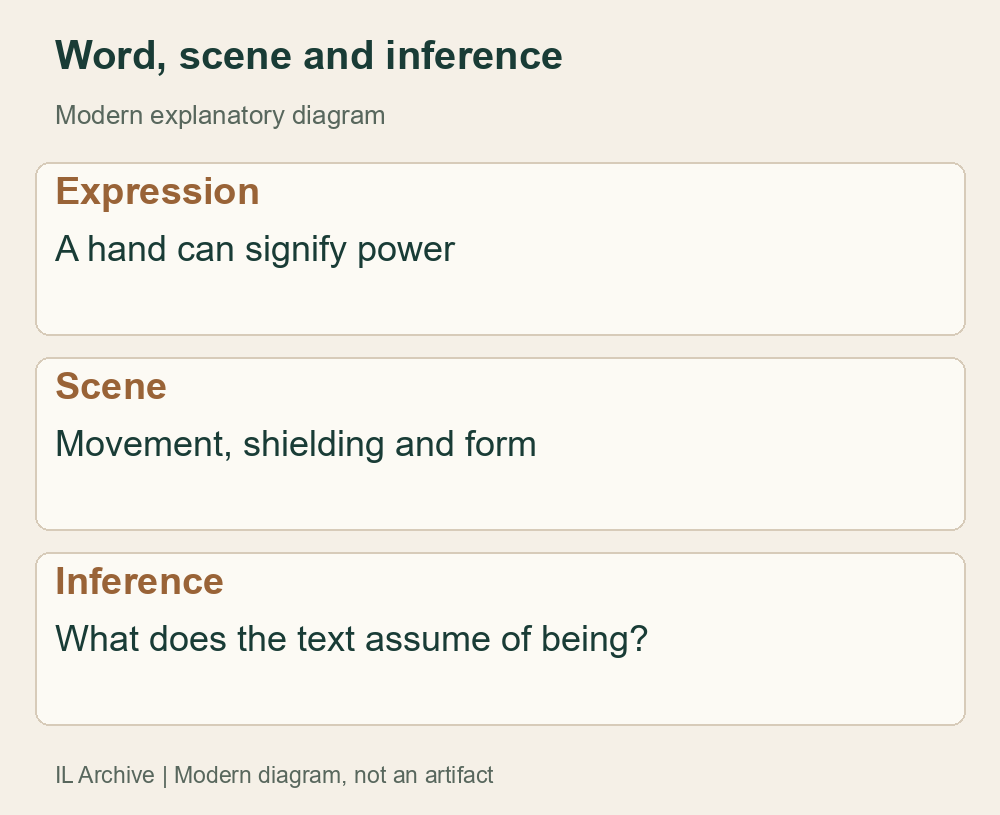
Yet metaphor in one passage cannot establish that every scene was metaphorical from its inception. Expression, scene and inference about being must be distinguished. Historical reading explores possibilities available in a text’s setting; doctrinal reading may begin with incorporealityDivine incorporealityDenial of a material divine body; distinct from image prohibition and simplicity.Glossary · Click to read the explanation and reinterpret the language accordingly. [6]
An image prohibition is not proof of incorporeality
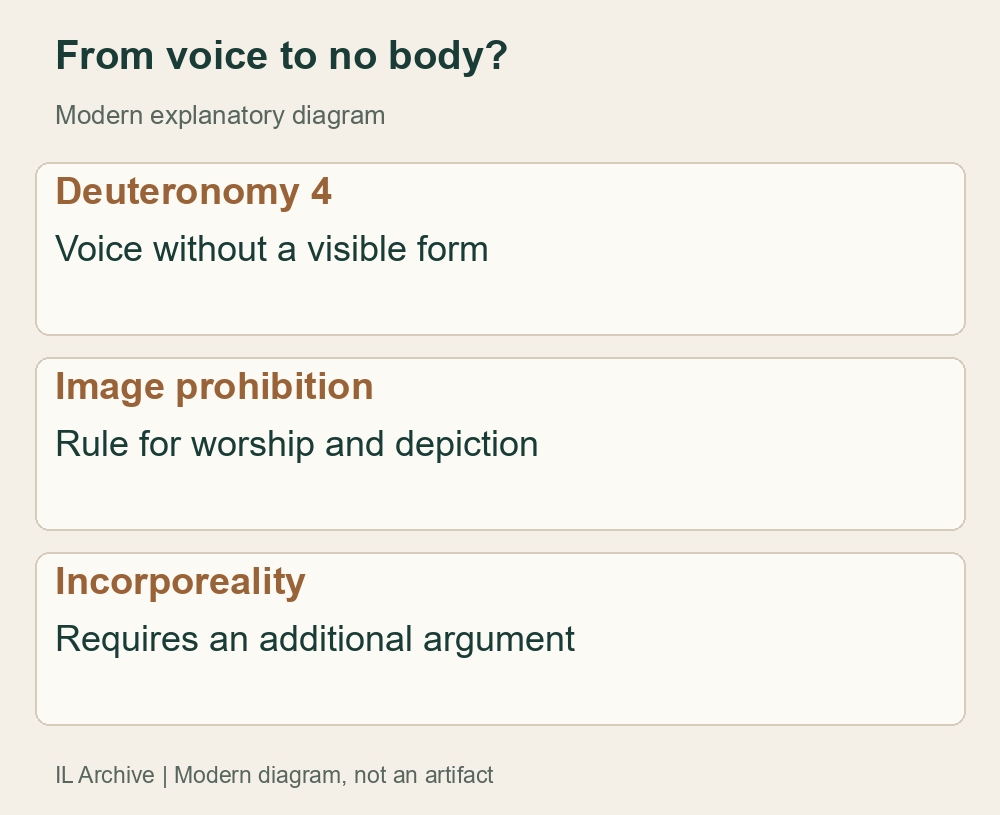
In Deuteronomy 4:12–19, Israel hears a voice but sees no form, and the text prohibits images of humans, animals and heavenly bodies. AniconismAniconismAvoidance of divine images in a particular practice or tradition; not inferred solely from an unidentified artifact.Glossary · Click to read the explanation concerns worship and representation; incorporeality concerns divine essence. The latter does not follow from the former alone. [9]
First Kings 8:27 offers another strand: even the heavens cannot contain God, much less the constructed house. Divine presence exceeds the sanctuary. Scripture thus contains resources for transcendence before philosophical theology, although noncontainment and image prohibition do not automatically constitute simplicity or the impossibility of every form. [10]
Regret and relenting in narrative
Genesis 6:6 presents Yahweh regretting humanity’s creation and grieving. Exodus 32:14 describes him relenting from announced punishment, while Jonah 3:10 relates withheld punishment to NinevehNineveh and KuyunjikNineveh is an ancient Assyrian city near Mosul in northern Iraq; Kuyunjik is one of its archaeological moundsGlossary · Click to read the explanation’s repentance. Relationship to history and response belong to these narratives. [11]
“Regret” should neither be reduced automatically to human cognitive error nor erased by a translation imposing a philosophical doctrine. Historical inquiry asks how responsive language works in each setting. A later theologian locating change in effects rather than essence offers an interpretive solution that must be distinguished from the narrative formulation.
Constancy of promise and immutable essence
First Samuel 15 combines divine regret over making Saul king in verses 11 and 35 with denial that God is a human who regrets in verse 29. In context, the denial concerns the firmness of Saul’s rejection. The tension lies within the chapter, but the statements’ different functions prevent a simple equation. [12]
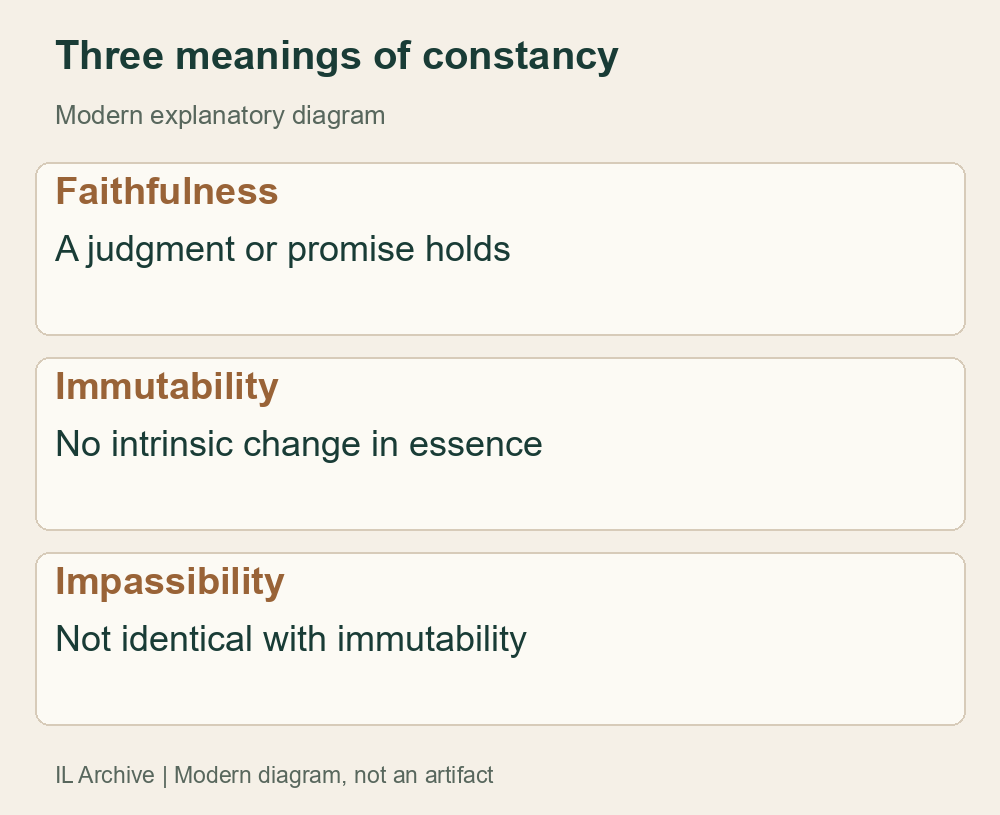
Constancy in judgment or promise is not a doctrine that all intrinsic change is impossible. Immutability and impassibility likewise require distinct definitions and arguments. Theology may seek to combine real responsiveness with stable will, but a statement of constancy alone does not supply every conclusion of later metaphysics. [16]
When the question became one of being
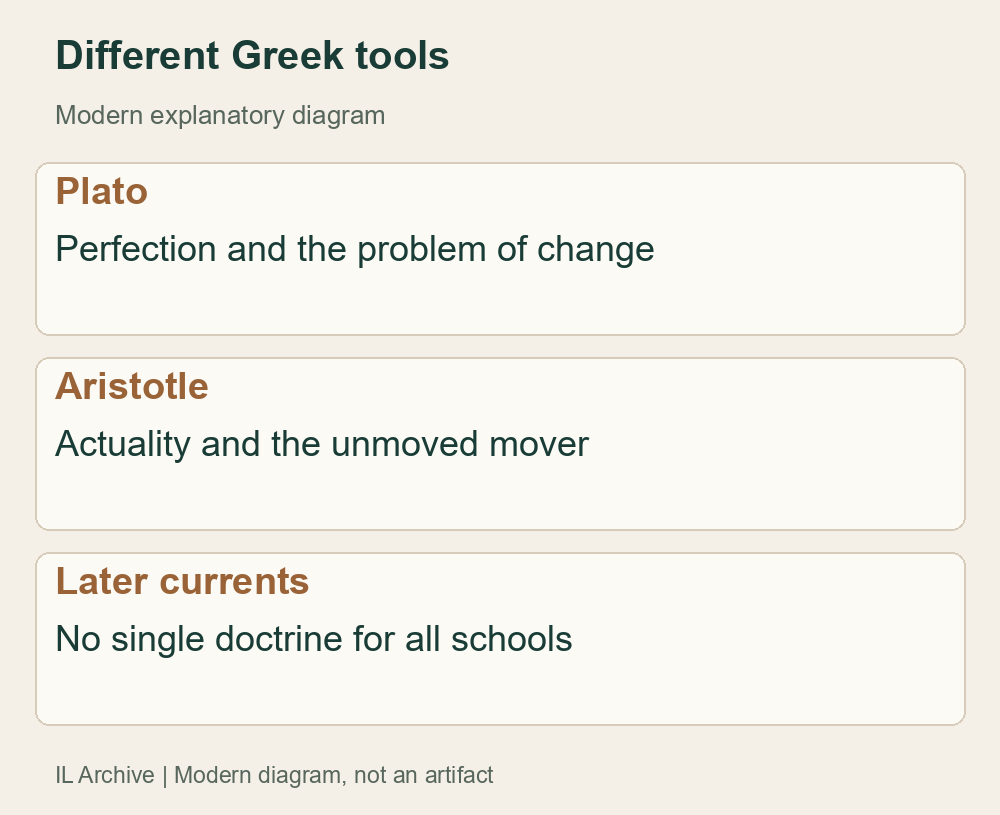
In the Republic, PlatoPlatoGreek philosopher; the Timaeus’s maker differs from later religious conceptions of God.Glossary · Click to read the explanation asks how a perfect god could change: for the better despite perfection, or for the worse? In the Metaphysics, AristotleAristotleGreek philosopher whose concepts of actuality, soul and motion were reinterpreted in later religious traditions.Glossary · Click to read the explanation connects the first principle with actuality and motion requiring no further mover. The question shifts from depicting a scene to conditions of perfection and causation. [13] [14]
These arguments are not ready-made biblical monotheismMonotheismBelief in a single God as the only deity, rather than merely the highest among several gods.Glossary · Click to read the explanation. Plato discusses gods while evaluating poetry and education; Aristotle also considers multiple celestial movers. NeoplatonismNeoplatonismModern label for later Platonic traditions associated with Plotinus, centuries after Philo.Glossary · Click to read the explanation names later currents, distinct from Middle Platonism and Aristotelianism. Religious traditions adopted tools and changed their functions rather than receiving one uniform system. [37]
Three distinct doctrines
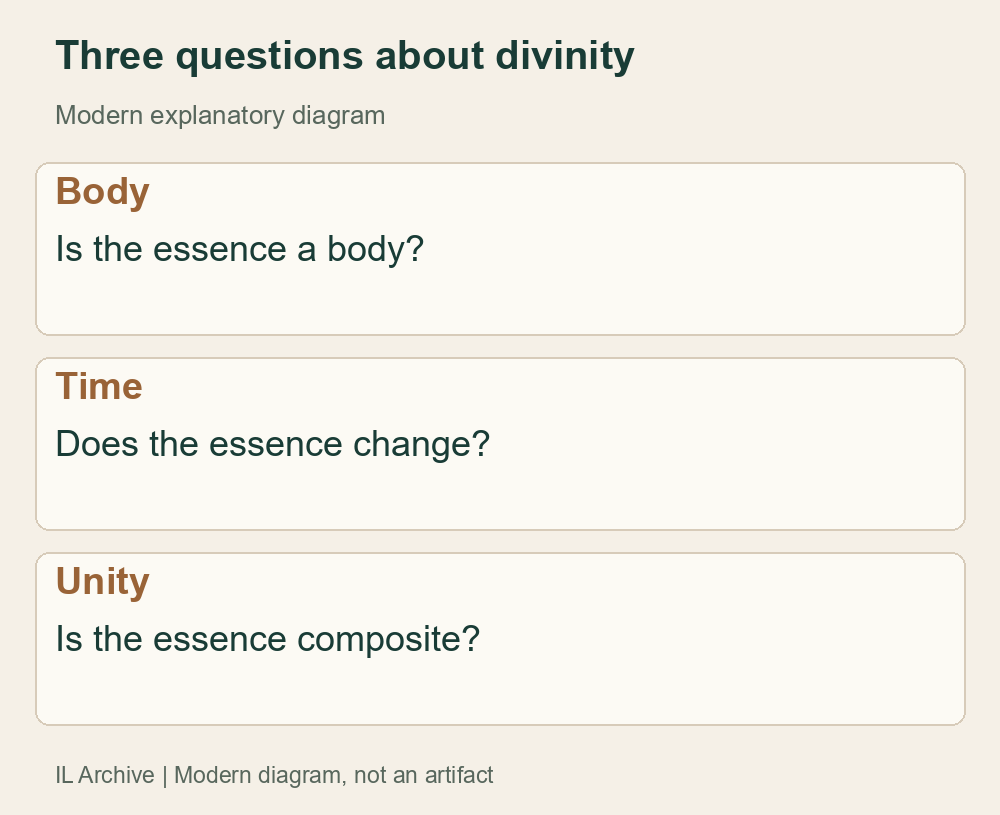
Divine incorporealityDivine incorporealityDenial of a material divine body; distinct from image prohibition and simplicity.Glossary · Click to read the explanation denies a material divine body with organs and dimensions. Strong divine immutabilityDivine immutabilityInquiry into divine change, distinguished from fidelity and impassibility.Glossary · Click to read the explanation excludes transitions between intrinsic states. Divine simplicityDivine simplicityMetaphysical noncomposition, not simply belief in one God.Glossary · Click to read the explanation denies composition, potentially including distinctions between essence and attributes or essence and existence. Simplicity does not mean ease of understanding. [15] [16]
Agreement on incorporeality can coexist with disagreement over attributes, time and passions. Even arguments connecting the three doctrines require premises about actuality, perfection and dependence. They do not all follow from saying “God is one,” nor form one position uniformly accepted in Judaism, Christianity and Islam.
Philo: retaining Torah, changing interpretation
Philo of AlexandriaPhilo of AlexandriaJewish exegete writing Greek in the early Roman period and using philosophical tools to read the law.Glossary · Click to read the explanation lived approximately from the late first century BCE to the mid-first century CE in a Jewish–Greek setting under Roman rule. Reading Greek TorahTorah / PentateuchGenesis, Exodus, Leviticus, Numbers and Deuteronomy: Mosaic corpus with a compositional history. Torah can also mean teaching or law beyond these five books.Glossary · Click to read the explanation associated with the SeptuagintSeptuagintTraditional designation for ancient Greek translations of Jewish scriptures, whose readings sometimes differ from the Hebrew Masoretic Text.Glossary · Click to read the explanation tradition, he combined scriptural authority with philosophical and exegetical tools. Calling him a Neoplatonist in the later historical sense is anachronistic. [18] [37]
In On the Unchangeableness of God, he rejects human organs and passions as descriptions of God and explains differing expressions through educational purposes: readers are addressed in ways encouraging virtue. Scripture is not discarded as mistaken; instructional language is distinguished from precise description of divine nature. [17]
Speaking of what exceeds our language
Saying that scripture addresses humans in their language raises a further question: what can we know of God once sensory meanings are denied? Negative theologyNegative theologySpeaking of God through negating limitations while resisting comprehension of essence.Glossary · Click to read the explanation speaks by excluding limitations: no body, no restriction to time or place. It need not yield an affirmative definition comprehending divine essence. [19]
This differs from interpreting a hand as power or a throne as kingship: those assign figurative meanings rather than merely negate. The methods coexist without being identical. PhiloPhilo of AlexandriaFirst-century CE Alexandrian Jewish author. In Life of Moses he presents Greek translation as inspired; the passage does not explicitly assign a separate room to each translator.Glossary · Click to read the explanation retained educational language; MaimonidesMoses MaimonidesMedieval Jewish thinker; wrote the Guide in Judeo-Arabic and examined incorporeality and attributes.Glossary · Click to read the explanation later subjected words and permissible predicates of essence to stricter analysis. [17] [19]
Maimonides and the analysis of words
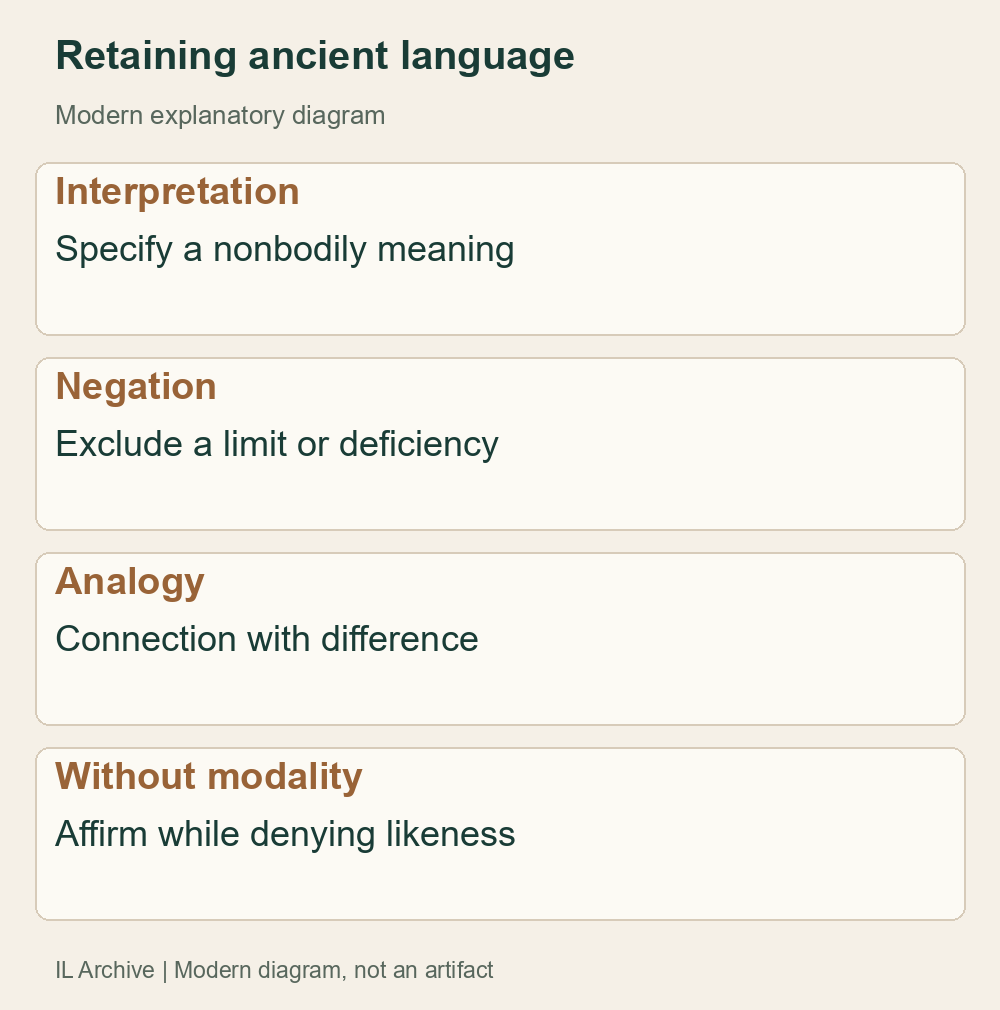
In the twelfth century, Moses MaimonidesMoses MaimonidesMedieval Jewish thinker; wrote the Guide in Judeo-Arabic and examined incorporeality and attributes.Glossary · Click to read the explanation devoted much of the opening of the Guide for the Perplexed to words such as image, face, sitting, standing and descending. He begins by distinguishing physical shape from what may indicate a thing’s nature. The text remains, but its interpretive vocabulary changes. [19]
He does more than soften the image of a heavenly human: he rejects corporeality as doctrinal error. His criticism of readers treating a body as necessary for existence also shows that incorporeal interpretation was not self-evident to everyone. [19]
Negative attributes do not abolish worship
In Guide I.58, Maimonides distinguishes positive descriptions of essence from negations of what is inappropriate to it. Saying that God is not a body removes an error without depicting his essence. Language about divine actions and dealings with creatures remains another field of discourse. [19]
This method limits comprehension, but need not turn God into an idea without human relationships. Its problem is preserving prayer, creation and providence without making divine essence a replica of human psyche and body. Traditions disagreed about how much could still be affirmed after such negations.
Jewish history has no single voice
Maimonides’ philosophy does not represent all Judaism, just as no biblical scene represents every biblical author. Sommer distinguishes different models of divine presence in scriptural layers, without equating resistance to multiple manifestations automatically with denial of a body. [20]
Isaiah’s and Ezekiel’s visions, together with the readers Maimonides criticizes, already show that abstraction did not simply eliminate form. Continued throne and glory imagery requires investigation of each tradition’s uses of vision and interpretation. It does not justify grouping all visionary language into one corporealist doctrine. [4] [5] [19]
Christianity and incarnation
IncarnationChristian incarnationThe Word becoming flesh; distinct from every divine body or sensible manifestation.Glossary · Click to read the explanation complicates the story: John 1:14 says the Word became flesh. Christian history cannot therefore be described as continuous removal of embodiment. The question becomes how to affirm the Son’s real incarnation while denying a bounded body to divine nature. [21]
In a contemporary reading of Luke–Acts, Brittany Wilson argues for visible and corporeal divine presence, rather than assuming incorporeality throughout the New Testament. This is a thesis about particular texts, not an agreement among all scholars or Christians. Sensible manifestation, divine corporeality and the Word’s incarnation in later theology must also be distinguished. [22]
Tertullian and Origen: early differences
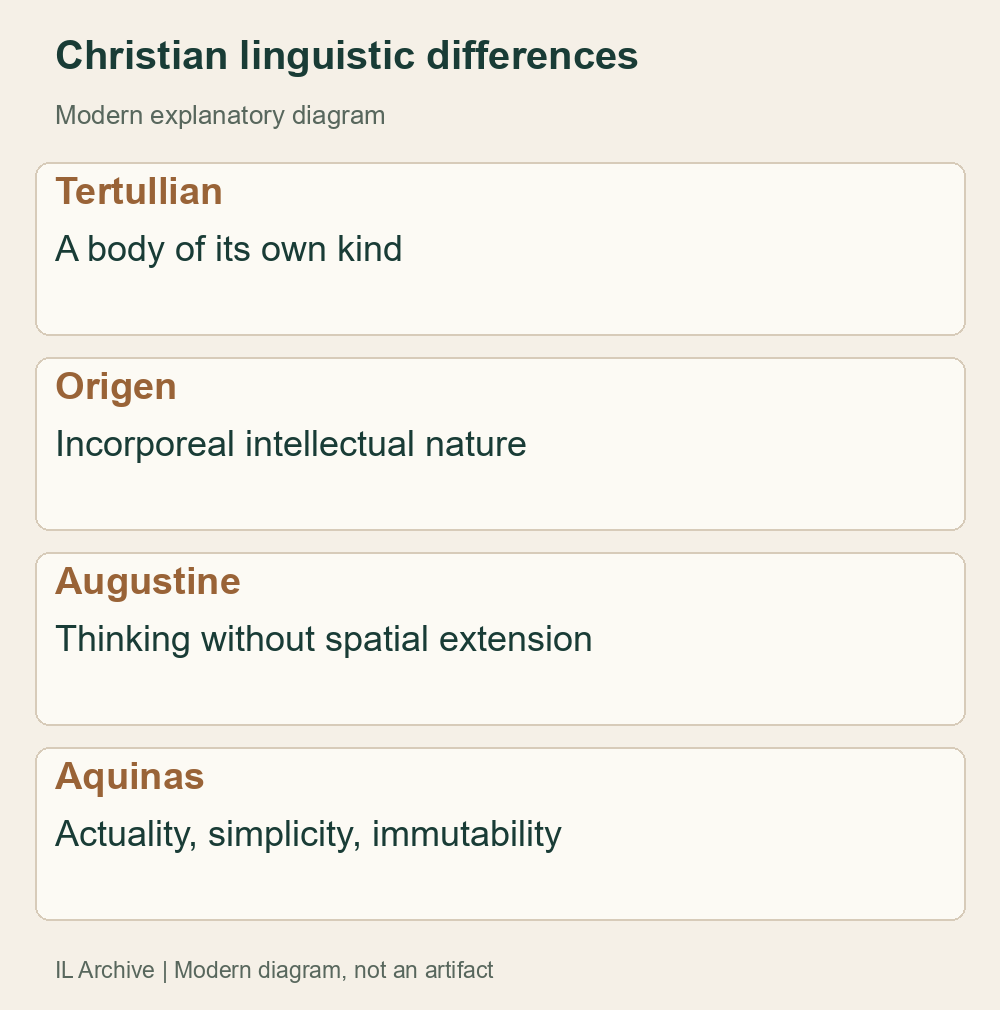
In Against Praxeas 7, TertullianTertullianLatin Christian author of the late second and early third centuries with a distinctive body–spirit vocabulary.Glossary · Click to read the explanation uses bodily language even for divine spirit, calling it a body of its own kind, corpus sui generis. This need not mean human flesh, but its vocabulary differs from incorporeality in later dominant schools. [23]
OrigenOrigenSecond- and third-century Christian exegete; the surviving First Principles argues for an incorporeal God.Glossary · Click to read the explanation, in the surviving text of On First Principles I.1, denies body and magnitude and describes a simple intellectual nature. Much of this work is transmitted through Rufinus’s Latin translation, a qualification that comparison must retain. Early Christianity offers no uniform theory of body and spirit. [24]
Augustine learns to think without extension
In Confessions VII.1, AugustineAugustineFourth- and fifth-century Christian author describing his changing grasp of nonspatial divine presence.Glossary · Click to read the explanation recalls rejecting a human-shaped God while continuing to imagine divine presence as spatially extended. Conceiving anything incorporeal remained difficult. This illustrates the difference between rejecting human form and rejecting all extension. [25]
In VII.9, he links reading books of the Platonists to a change in intellectual tools while retaining their difference from incarnation. Philosophical assistance does not make his God automatically identical with Plotinus’s principle. A reader reconstructs philosophical language within Christian commitment, rather than simply replacing scripture with a Greek book. [25]
Aquinas: rejecting composition
In the thirteenth century, Thomas AquinasThomas AquinasThirteenth-century theologian linking incorporeality, simplicity and immutability through philosophical premises.Glossary · Click to read the explanation connects incorporeality with his first-principle argument. Summa Theologiae I.3 rejects composition of parts and distinguishes God from beings in which essence and existence differ. Simplicity here is a particular account of attributes’ existence, not their absence. [26]
In I.9, immutability follows from pure actuality, simplicity and perfection. These conclusions require the philosophical framework’s premises; an image prohibition cannot establish them. Aquinas also belongs to a world of Greek, Arabic, Jewish and Christian translations and debates, not the endpoint of one identical sequence through every thinker. [27] [35]
How can “wise” retain meaning?
If divine attributes do not exist as human attributes do, does speech about God lose meaning? In I.13.5, Aquinas proposes analogous predication: divine and human wisdom are neither identical nor unrelated uses of one word. [36]
This differs from negation alone and straightforward metaphor. It preserves a connection between creatures and the principle on which they depend while denying equality. Incorporeal theology should therefore not automatically be described as abolishing personality or relationship. The question is how it redefines them, and whether readers find those definitions convincing.
Transcendence and attributes in the Qur’an
The Qur’an declares that nothing is like AllahAllahThe Arabic name for God, used before Islam and in several Arabic-speaking religious traditions.Glossary · Click to read the explanation in 42:11 and denies any equal in 112:4. The first verse also calls him hearing and seeing. Transcendence and attributes stand together in the text before the major systems of Islamic philosophy. [28]
Hand appears in 48:10, two hands in 38:75, face in 55:27 and istiwāʾ over the throne in 20:5. Hadiths including Bukhārī 1145 and 2826 add descent and laughter. Their presence does not decide how to understand them; the interpretive problem is internal, not imported wholesale from Greece. [29] [30]
Interpretation, delegation and affirmation without modality
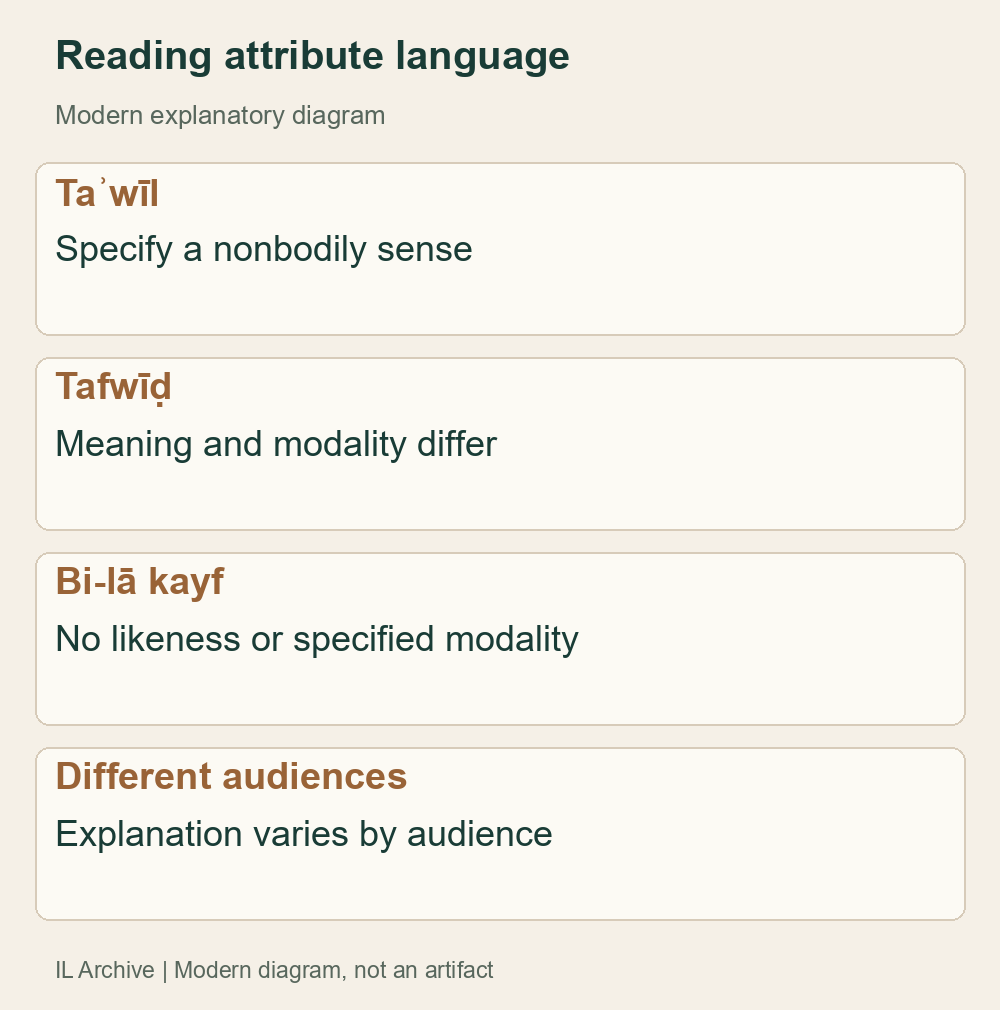
KalāmKalāmIslamic traditions of doctrinal reasoning with diverse approaches to attributes and transcendence.Glossary · Click to read the explanation and exegesis developed differing approaches. Muʿtazilīs stress transcendence, while Ashʿarī and Māturīdī traditions contain varied interpretation and delegation strategies; no large school has one rule for every period and author. Delegating meaning must also be distinguished from delegating modality. [31]
Traditionalist approaches use bi-lā kayfBi-lā kayfAffirming attribute language without specifying modality or creaturely likeness.Glossary · Click to read the explanation to affirm transmitted language while denying likeness and declining to specify how. This does not automatically license human organs, nor is it synonymous with interpreting a hand as power. Methods sometimes overlap, but retaining differences is preferable to claiming a single solution. [32]
Al-Ghazālī and different audiences
Abū Ḥāmid al-GhazālīAl-GhazālīEleventh- and twelfth-century Muslim thinker distinguishing treatments of attributes by audience.Glossary · Click to read the explanation combines denial of corporeality and spatial confinement with attention to exegetical audiences. A specialist’s treatment may pursue figurative interpretation while differing from the explanation suitable for ordinary readers. “Rejection of philosophy” is therefore insufficient to describe all his tools. [33]
Nor should he be treated as AvicennaAvicenna (Ibn Sina)Philosopher in the Arabic Islamic tradition, distinguishing possible from necessary existence in itself.Glossary · Click to read the explanation’s follower in every conclusion. His example exceeds a literalism-versus-reason binary: education, limits of demonstration, textual meaning and the danger of assimilating God to creatures all matter. Islamic disagreement is not merely a choice between a human body and complete abstraction. [31] [33]
Avicenna and necessary existence
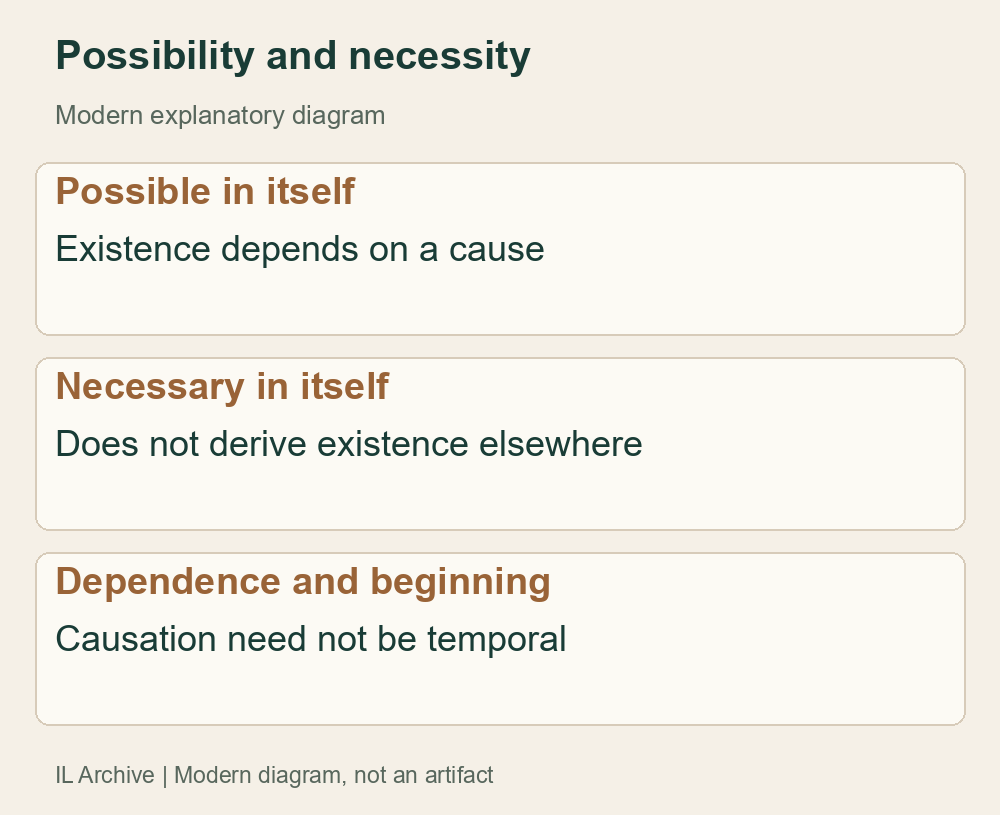
In Avicenna’sAvicenna (Ibn Sina)Philosopher in the Arabic Islamic tradition, distinguishing possible from necessary existence in itself.Glossary · Click to read the explanation tenth- and eleventh-century philosophy, the distinction between what is possible in itself and necessary in itself becomes fundamental. A possible being depends on a cause for existence; the first principle does not derive existence from another. Rejection of composition connects unity with causal independence. [34]
This language differs from asking about a face or throne’s location. It does not say every being is possible, nor turn every causal dependence into a temporal beginning: an existence-causing principle can be discussed even for an effect conceived without a temporal beginning. Reducing the argument to “everything began, so God began it” loses its specificity. [34]
Translations and debates, not one route
Greek tools circulated through translations and commentaries, then were reorganized in Arabic philosophy and Jewish and Christian works. Conceptual transmission was not unchanged copying: creation, revelation, prophecy and attributes posed questions differing from many original Greek texts. [35]
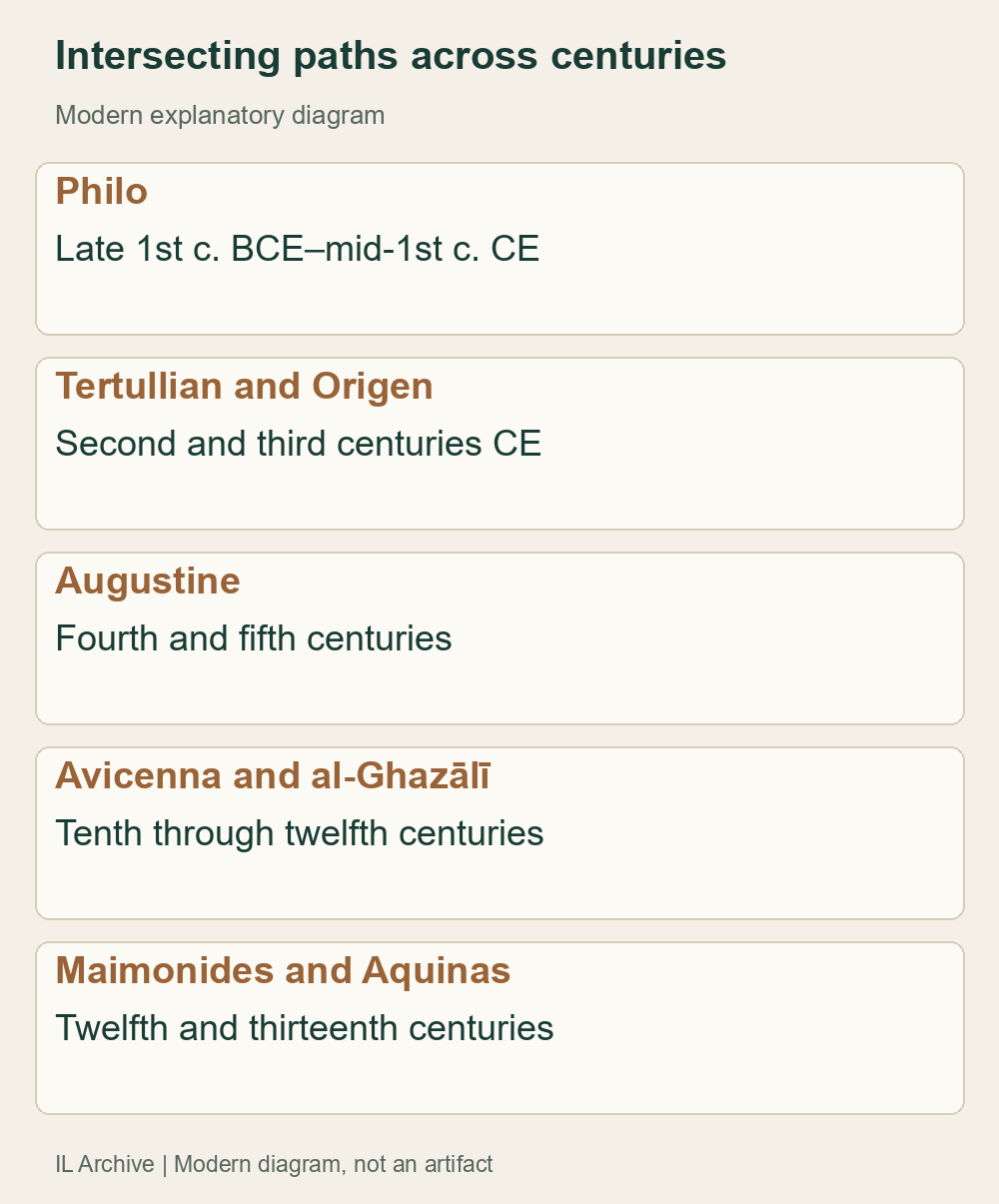
Authors’ chronology also disrupts a uniform story. Philo precedes Neoplatonism; Tertullian and Origen are approximately contemporary but use different vocabularies; Avicenna and al-Ghazālī precede Maimonides and Aquinas. The diagram gives approximate dates of thinkers, not a single date when religions adopted a shared doctrine. [18] [23] [24] [25] [34] [37]
What becomes of hand, face and descent?
An organ may be interpreted through action or authority, descent through an event in the world. Readers may deny a bodily meaning without claiming to comprehend essence, or affirm the text while declining to describe modality. Some Christian readings distinguish sensible manifestation or the Word’s appearance from divine nature; this is a tradition-specific solution, not a universal rule. [17] [19] [23] [26] [32]
These approaches yield different results. Interpretation specifies meaning; delegation leaves something unspecified; analogy affirms relationship with difference; negation excludes limitation. Calling everything “metaphor” conceals the intellectual work producing each method. [36]
What becomes of regret?
A defender of immutability may interpret regret as altered dealings with humans or changed effects, rather than new discovery within divine knowledge. Successive mercy and punishment may be temporal outcomes of a stable will. Aquinas’s reply concerning figurative movement in effects illustrates this type of solution. [27]
It is not an agreed reading of every text or religion. A genuine question remains: how strong is responsiveness without intrinsic change, and must love involve passion? Questions and answers should be presented as debatable positions, without assuming that a changed relationship entails changed essence or that denying it abolishes relationship. [16]
Numerical unity and metaphysical simplicity
MonotheismMonotheismBelief in a single God as the only deity, rather than merely the highest among several gods.Glossary · Click to read the explanation concerns exclusive divinity or worship, depending on definition and context. Simplicity asks about composition within the one being. One can believe in one God while retaining real distinctions among attributes, so strong simplicity does not follow from number alone. [15]
Formulations differ between thinkers. Aquinas’s account should not be imposed on all kalām or Jewish philosophy. Even denying material parts does not settle the relation between essence, knowledge and will. Changes in conceptions of unity form an axis partly independent of changes concerning body and time. [26] [31]
Philosophy matters, but did not invent all transcendence
It would be wrong to deny philosophy’s role: perfection, actuality, necessity and composition reorganized the question. It would also be wrong to say philosophy introduced transcendence into texts that lacked it. Denial of likeness, image prohibition and the temple’s inability to contain God offer distinct contextual resources. [9] [10] [28]
Much philosophical theology reorganizes such resources into general demonstrations about divine nature. Moving from “do not depict God” to “God cannot be a body” requires an additional argument, as does moving from faithfulness to impossibility of change. Greek influence does not erase interpreters’ work transforming its tools. [13] [14] [35]
Not a story of intellectual childhood
Ancient conceptions were not mere naivety awaiting philosophical correction. Form, throne and movement were tools for understanding presence, authority and care within their worlds. We should not impose questions about being that they did not formulate in our vocabulary. [7]
Philosophical conceptions also have costs: how does the immutable know change, and how can prayer, love, incarnation and attributes be understood after excluding composition and passion? These questions do not themselves refute the doctrines, but prevent a story of uncontested triumph. Each system redefines presence and relationship. [16] [21]
What stayed in the text and changed in reading
Hand, face, throne, anger, mercy and encounters remained. What changed were the rules connecting words to divine nature: a possible form in narrative could become action, metaphor, delegated meaning or an attribute without human modality. Body, time and unity did not always change together.
Expressions and interpreters’ positions can be documented in particular texts; connecting them is a historical reconstruction requiring diversity and gaps to be preserved. The historian does not adjudicate that God as reality “changed”: human conceptions and rules of speech changed. The productive question is how traditions retained their scriptures while developing readings compatible with their doctrines, without exhausting debate about the relationship.
References and notes
- Genesis 3:8; 11:5 · KJV (public domain) Specified passages; analytical paraphrase. Return to the text ↑
- Exodus 24:9–11 · KJV (public domain) Specified passages; analytical paraphrase. Return to the text ↑
- Exodus 33:18–23 · KJV (public domain) Specified passages; analytical paraphrase. Return to the text ↑
- Isaiah 6:1–3 · KJV (public domain) Specified passages; analytical paraphrase. Return to the text ↑
- Ezekiel 1:26–28 · KJV (public domain) Specified passages; analytical paraphrase. Return to the text ↑
- Benjamin D. Sommer, The Bodies of God (2009), Introduction, pp. 1–11 Publisher summary; Sommer’s thesis, not a scholarly consensus. Return to the text ↑
- Sommer, The Bodies of God, chapter 1: Fluidity of Divine Embodiment and Selfhood Publisher summary: multiple embodiment and divine selfhood. Return to the text ↑
- Brittany E. Wilson, “God’s Body and the Material Turn”, HTR 117/3 (2024), 607–630 Abstract and bibliography; embodiment and immateriality in theophanies. Return to the text ↑
- Deuteronomy 4:12–19 · KJV (public domain) Specified passages; analytical paraphrase. Return to the text ↑
- 1 Kings 8:27 · KJV (public domain) Specified passages; analytical paraphrase. Return to the text ↑
- Genesis 6:6; Exodus 32:14; Jonah 3:10 · KJV (public domain) Specified passages; analytical paraphrase. Return to the text ↑
- 1 Samuel 15:11, 29, 35 · KJV (public domain) Specified passages; analytical paraphrase. Return to the text ↑
- Plato, Republic II, 380d–383c, trans. Benjamin Jowett Passage on divine perfection and change; poetic and educational context. Return to the text ↑
- Aristotle, Metaphysics XII, chapters 6–9, trans. W. D. Ross Selected passages on actuality, the unmoved mover and the plurality of movers in ch. 8. Return to the text ↑
- William F. Vallicella, “Divine Simplicity”, Stanford Encyclopedia of Philosophy Introduction and §1: classical simplicity and numerical unity. Return to the text ↑
- Brian Leftow, “Immutability”, Stanford Encyclopedia of Philosophy Introduction and §§1–3; immutability and impassibility are distinct. Return to the text ↑
- Philo, On the Unchangeableness of God, §§51–52, 67–69, trans. C. D. Yonge Bodily predicates, passions and accommodation to readers. Return to the text ↑
- Carlos Lévy, “Philo of Alexandria”, Stanford Encyclopedia of Philosophy, Summer 2024 §1.1 for chronology and Jewish–Greek context. Return to the text ↑
- Moses Maimonides, Guide for the Perplexed I.1, I.58, trans. M. Friedländer (1904) Lexicographical chapter list; I.1 and I.58 on image and negative attributes. Return to the text ↑
- Sommer, The Bodies of God, chapter 6: Implications and Afterlife Publisher summary on divergent biblical models; no universal incorporeality inferred. Return to the text ↑
- John 1:14 · KJV (public domain) Specified passages; analytical paraphrase. Return to the text ↑
- Brittany E. Wilson, The Embodied God (2021) Indexed publisher abstract; thesis about Luke–Acts, not all the New Testament. Return to the text ↑
- Tertullian, Against Praxeas, chapters 7 and 14 Corpus sui generis passage; ch. 14 distinguishes the Son’s appearances and invisible divinity. Return to the text ↑
- Origen, On First Principles I.1, §§6–7 Rejection of body and magnitude; transmitted through Rufinus’s Latin version. Return to the text ↑
- Augustine, Confessions VII.1, VII.9 Earlier spatial conception and books of the Platonists; selected passages. Return to the text ↑
- Thomas Aquinas, Summa Theologiae I, question 3, articles 1, 4, 7 No body; essence/existence and composition; selected passages. Return to the text ↑
- Aquinas, Summa Theologiae I, question 9, article 1 Pure actuality, simplicity, perfection and figurative movement in effects. Return to the text ↑
- Qur’an 42:11; 112:4 Both Arabic verses read; transcendence alongside attributes. Return to the text ↑
- Qur’an 48:10; 38:75; 55:27; 20:5 Arabic: hand, two hands, face and istiwāʾ; no single school’s interpretation imposed. Return to the text ↑
- Ṣaḥīḥ al-Bukhārī, nos. 1145 and 2826 Indexed Arabic matn on descent and laughter; direct-page body extraction failed. Return to the text ↑
- Nader El-Bizri, “God: essence and attributes” (2008), pp. 121–140 Publisher summary on diverse theological and exegetical approaches. Return to the text ↑
- Carl Sharif El-Tobgui, Ibn Taymiyya on Reason and Revelation (2020), Glossary: bi-lā kayf Indexed glossary definition: affirmation without specifying modality or human likeness. Return to the text ↑
- “Arabic and Islamic Philosophy of Religion”, Stanford Encyclopedia of Philosophy, Winter 2023 Selected al-Ghazālī passages: no body and interpretation according to audience. Return to the text ↑
- Olga Lizzini, “Ibn Sina’s Metaphysics”, Stanford Encyclopedia of Philosophy Selected necessity/possibility, First Principle and causation passages; dependence need not mean temporal beginning. Return to the text ↑
- Cristina D’Ancona, “Greek Sources in Arabic and Islamic Philosophy”, Stanford Encyclopedia of Philosophy Introduction on translation and successive assimilation of Greek philosophy. Return to the text ↑
- Aquinas, Summa Theologiae I, question 13, article 5 Analogy passage: neither univocal nor purely equivocal naming. Return to the text ↑
- Christian Wildberg, “Neoplatonism”, Stanford Encyclopedia of Philosophy Introduction: modern label for later traditions, not all Platonism. Return to the text ↑
- Musée du Louvre, Stèle du dieu Baal, AO 15775; Jastrow photograph Object catalogue and photograph rights; Baal from Ras Shamra, not Yahweh. Return to the text ↑
Suggest a correction · Suggest a source for this record
Cite this record
IL Archive, «From the Embodied God of Ancient Texts to Philosophical Transcendence», Edition 1, https://ilarchive.com/en/studies/divine-body-transcendence
Continue reading
![Gold coin of Ptolemy II, Alexandria, ca. 261–246 BCE; the illustrated obverse bears Arsinoe II’s head. Context for Hellenistic Egypt, not a portrait of Philo or proof of a Torah translation commission. [24]](/media/1436)