Entity · theological_concept
Divine simplicity
A reference page linking a name, group, or concept to the materials that discuss it.
Metaphysical noncomposition, not simply belief in one God.
Text
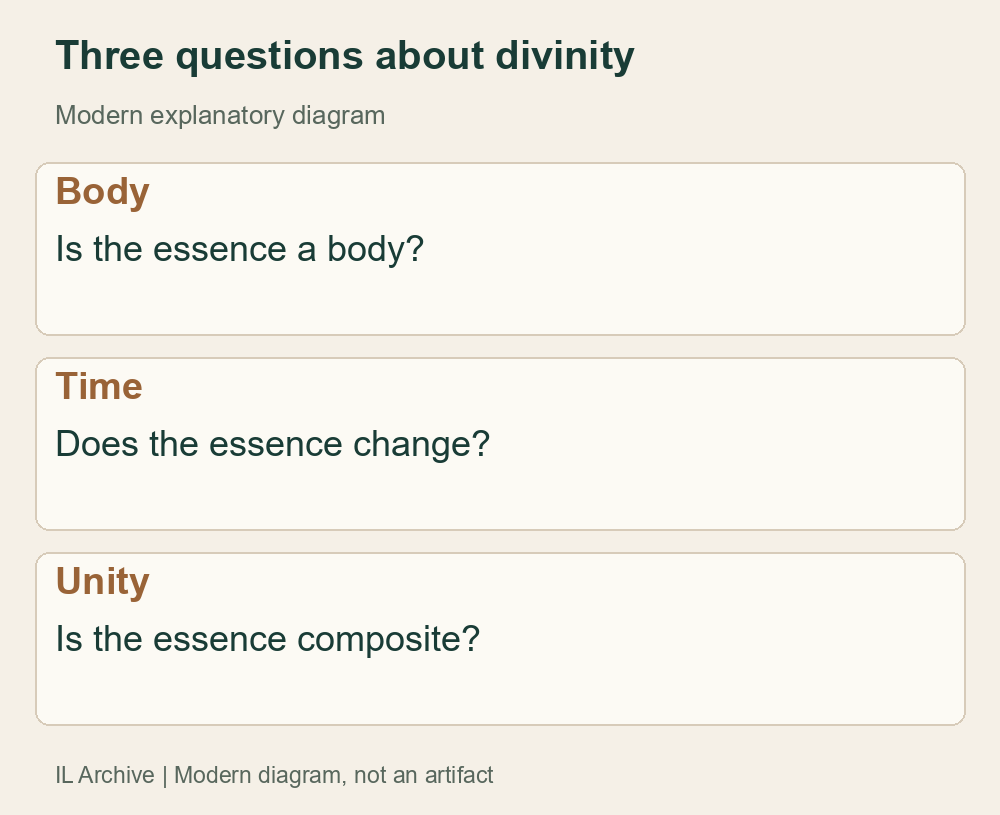
Simplicity means noncomposition, not easy comprehension: divine essenceOusia — essenceGreek term for essence or nature, with meanings changing between authors.Glossary · Click to read the explanation does not depend on constituent components. Formulations differ over the relationship of essence and attributes. [1]
AquinasThomas AquinasThirteenth-century theologian linking incorporeality, simplicity and immutability through philosophical premises.Glossary · Click to read the explanation I.3 denies the distinction of essence and existence in God. This is a particular formulation, not an automatic numerical consequence of unity or every school’s position. [2]
References and notes
- William F. Vallicella, “Divine Simplicity”, Stanford Encyclopedia of Philosophy Introduction and §1: classical simplicity and numerical unity. Return to the text ↑
- Thomas Aquinas, Summa Theologiae I, question 3, articles 1, 4, 7 No body; essence/existence and composition; selected passages. Return to the text ↑
Research history
Substantive changes are retained here. Minor copy edits remain in the internal operational log.
-
Substantive record update
Suggest a correction · Suggest a source for this record
Cite this record
IL Archive, «Divine simplicity», Edition 2, https://ilarchive.com/en/entities/divine-simplicity