Person · Philosopher
Aristotle
Aristotle (384–322 BCE) was a Greek philosopher who studied nature, life and thought. His writings influenced later religious philosophies.
Estimated reading time: 1 min Published Last reviewed:
Share article
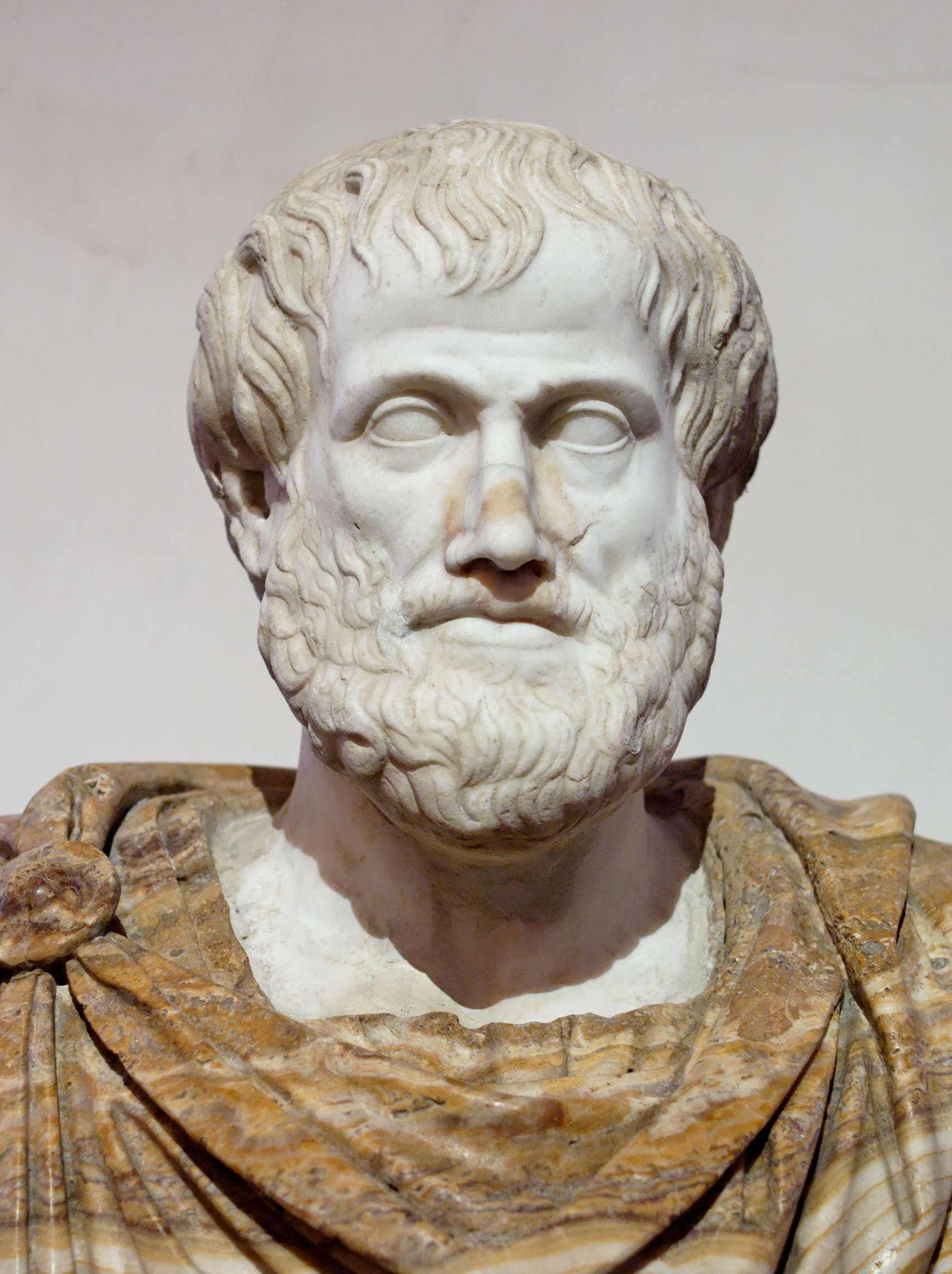
Text
Aristotle (384–322 BCE) was a Greek philosopher who wrote on logic, nature, ethics and other subjects. His works help us trace questions about the source of cosmic motion and the nature of life, and how later readers reinterpreted those questions. [3]
In the Metaphysics, an inquiry into the first principles of being, he discusses the “unmoved moverUnmoved moverAristotle’s principle explaining continuing cosmic motion while remaining itself unmoved and unchanged.Glossary · Click to read the explanation”: a principle explaining cosmic motion, which he regards as eternal, without itself moving. It acts as an end towards which motion is directed, comparable to the way something desired or contemplated moves us. He associates its life with continuous thought. Chapter eight also discusses multiple movers for celestial motions. [1]
In On the Soul he asks what makes a body alive. He calls the soul the “form” of a natural body capable of life: what makes it a living being, rather than its outward shape. His example is the eye: if it were an independent living creature, sight would stand to it as soul. This passage leaves open whether some powers of soul can be separated from the body. [2]
His writings later received extensive attention in Arabic- and Latin-language philosophy, including attempts to reconcile them with religious thought. When studying his influence, we therefore distinguish his own texts from interpretations developed by readers in other periods. [3]
References and notes (3)
- Aristotle, Metaphysics XII, translated by W. D. Ross Selected passages in chapters 6–9; eternal motion, actuality, thought and multiple movers in chapter 8. Return to the text ↑
- Aristotle, On the Soul II, translated by J. A. Smith Book II, chapter 1; soul as form of a natural body capable of life. Return to the text ↑
- Christopher Shields, Aristotle, Stanford Encyclopedia of Philosophy Introduction and sections 1 (life) and 14 (legacy) only; dates 384–322 BCE, fields and reception. The whole entry was not read. Return to the text ↑
Suggest a correction · Suggest a source for this record
Cite this record
IL Archive, «Aristotle», https://ilarchive.com/en/people/aristotle