Entity · theological_concept
Christian incarnation
A reference page linking a name, group, or concept to the materials that discuss it.
The Word becoming flesh; distinct from every divine body or sensible manifestation.
Text
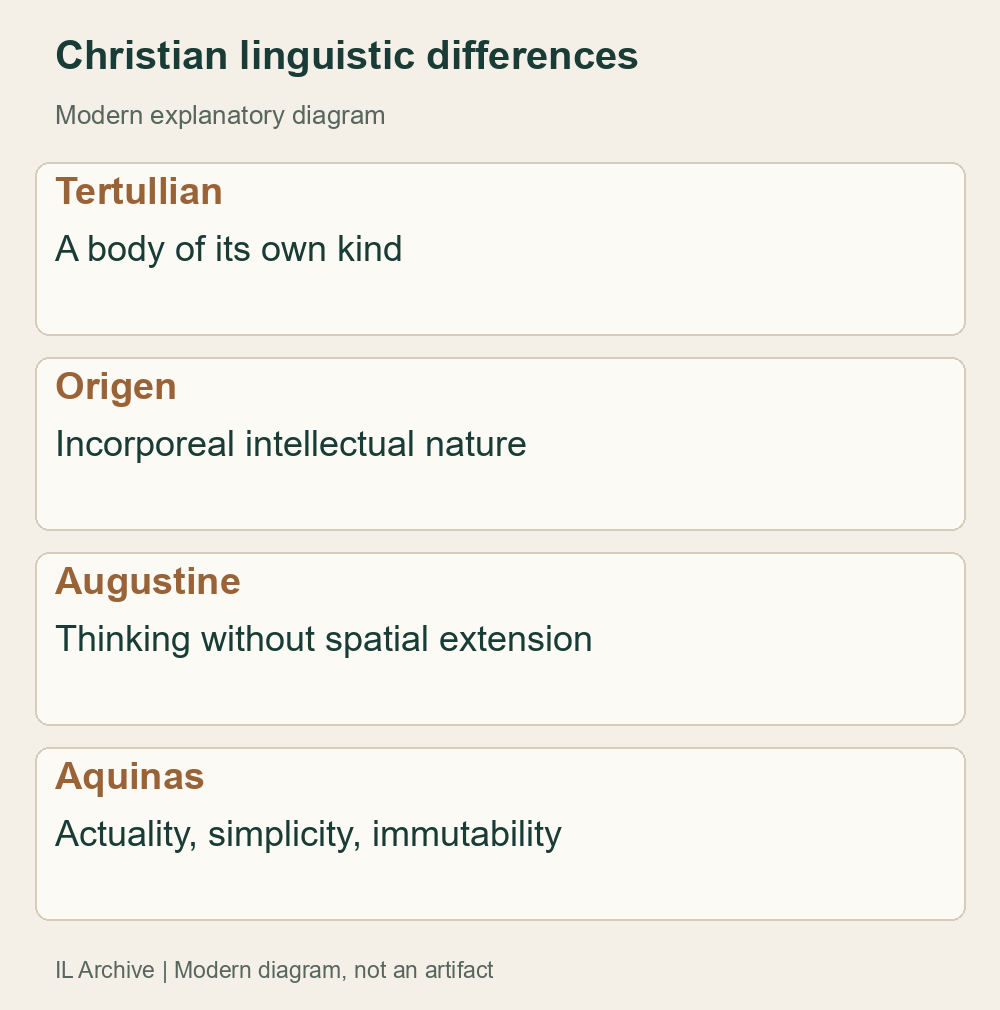
John 1:14 is central to incarnation language. It prevents describing Christian history as one removal of embodiment, while leaving the meaning of divine nature to be examined. [1]
Wilson also offers an embodied reading of Luke–Acts. This particular thesis does not establish that all Christian authors understood manifestation and incarnation identically. [2]
References and notes
- John 1:14 · KJV (public domain) Specified passages; analytical paraphrase. Return to the text ↑
- Brittany E. Wilson, The Embodied God (2021) Indexed publisher abstract; thesis about Luke–Acts, not all the New Testament. Return to the text ↑
Research history
Substantive changes are retained here. Minor copy edits remain in the internal operational log.
-
Substantive record update
Suggest a correction · Suggest a source for this record
Cite this record
IL Archive, «Christian incarnation», Edition 2, https://ilarchive.com/en/entities/incarnation