Entity · Concept
Divine anthropomorphism
A reference page linking a name, group, or concept to the materials that discuss it.
Divine hands, faces and emotions in religious texts: distinguishing figures of speech, visions, historical interpretation and claims of corporeality.
Estimated reading time: 8 min Published Last reviewed:
Share article

Text
Introduction
When a religious text speaks of God's hand or face, anger or appearance, what exactly is being described? This article separates human-shaped language, narrated encounters or visions, and doctrines about divine being. It follows selected passages in the HebrewHebrewA Northwest Semitic language of the Canaanite group, encompassing Iron Age epigraphy, Biblical, Rabbinic, medieval and Modern Hebrew; its scripts and pronunciations changed over time.Glossary · Click to read the explanation Bible, Jewish and Christian interpretation, and the Qur'an and its reception, distinguishing what each source actually says from later arguments about it.
Three levels of the question
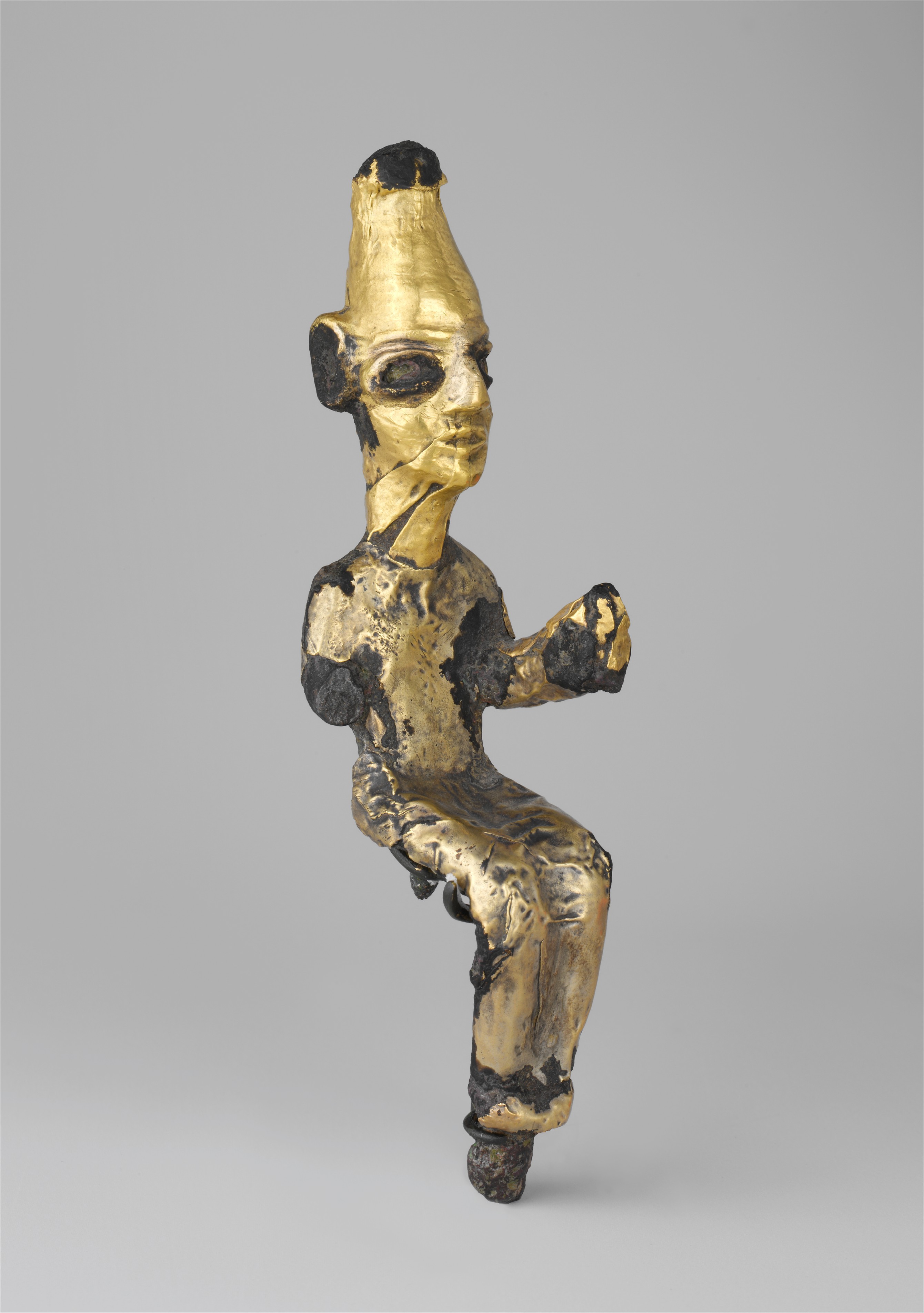
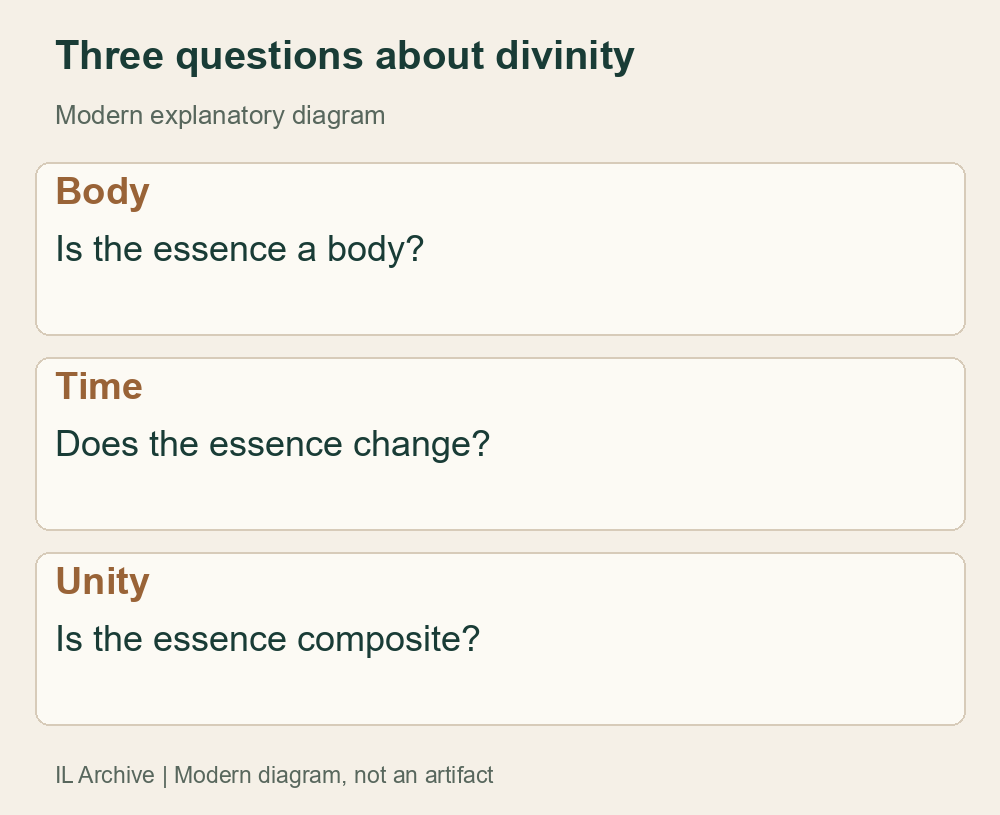
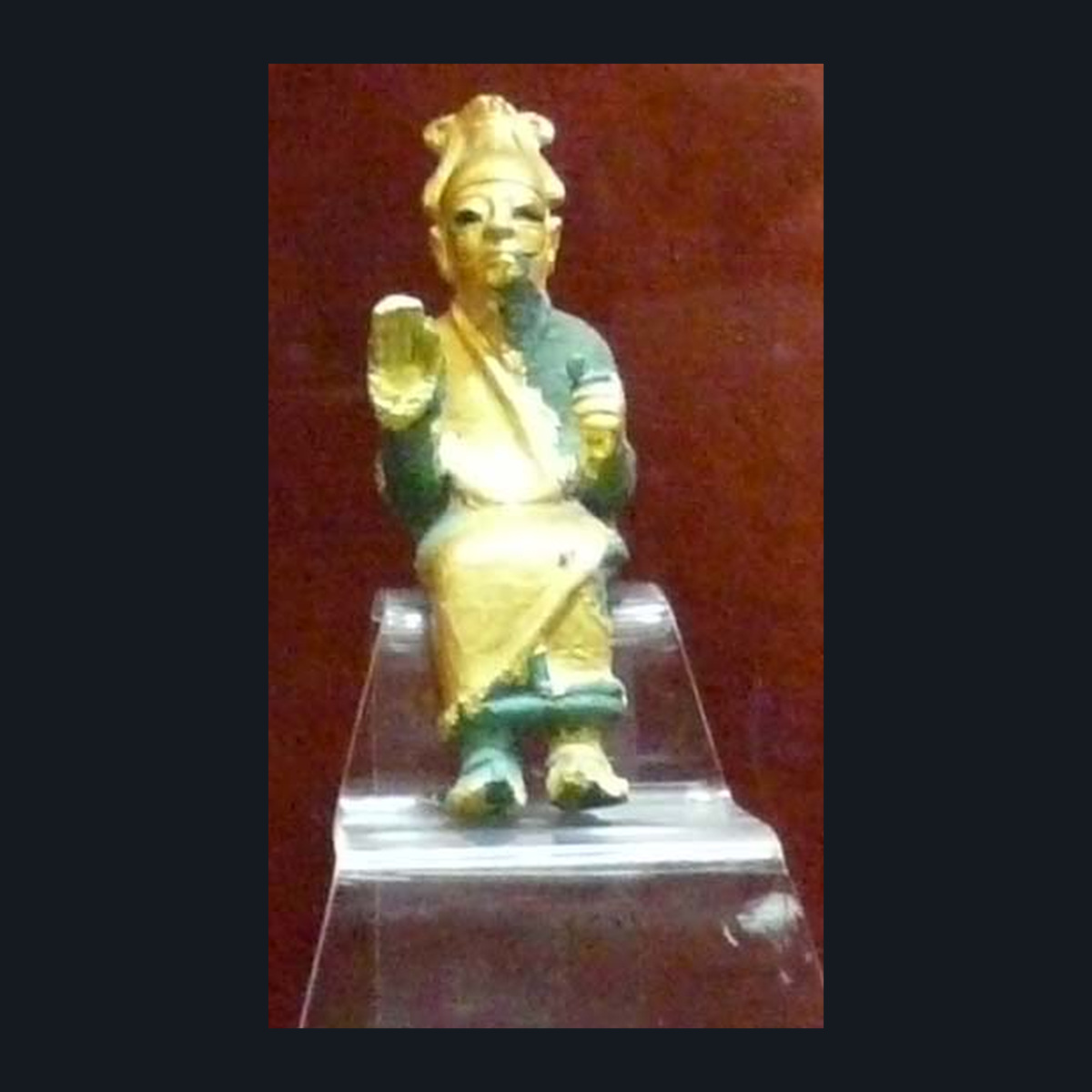
Divine anthropomorphism is the use of human bodily or emotional characteristics for God: a hand, a face, or anger. It is narrower than anthropomorphism in artAnthropomorphismRepresentation of a thing or being with human traits. It describes visible or linguistically attributed features, not by itself a person, ancestor or deity.Glossary · Click to read the explanation, which names the visible shape of a represented being. Crucially, a phrase is not a visionary scene, and neither automatically amounts to the assertion that divine essence is a bounded body. Brittany E. WilsonBrittany E. WilsonNew Testament scholar at Duke University studying bodies and divine manifestation in Luke–Acts.Glossary · Click to read the explanation shows that current scholarship reopens the relation between divine manifestation, embodiment and materiality instead of reducing it to a simple choice between literal and metaphorical wording. [1]
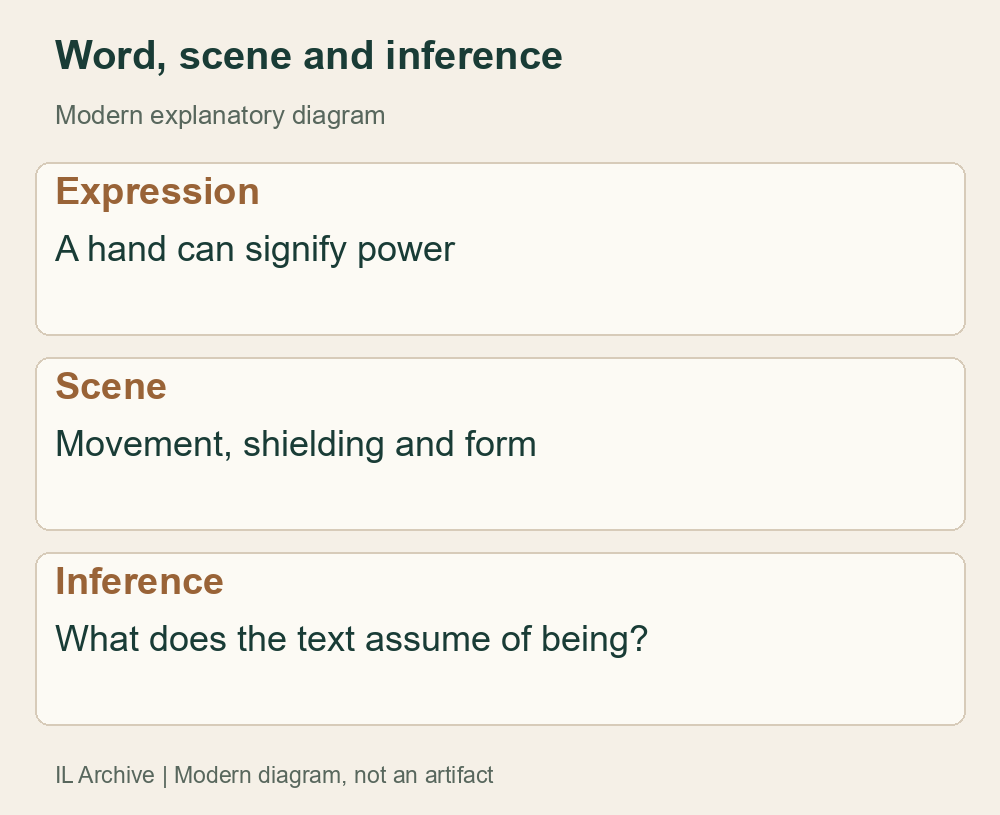
Nor is metaphor the automatic answer to every passage. A hand extended in a poetic statement may express power or action; a vision describing a throne, hair and movement constructs a more elaborate scene. Calling all such scenes mere metaphors can efface their texture; treating every hand as a fixed anatomical organ is equally unwarranted. Philo of AlexandriaPhilo of AlexandriaGreek-writing Jewish interpreter in Roman Alexandria (roughly first century CE), who read the Torah philosophically while defending its practices; his works survive through Greek copying and Armenian translation.Glossary · Click to read the explanation, a Greek-writing Jewish thinker of the first century CE, explained biblical passions and bodily language as instruction suited to readers, while explicitly denying that God possesses human limbs or passions. [2]
Image, hands and emotion in Genesis
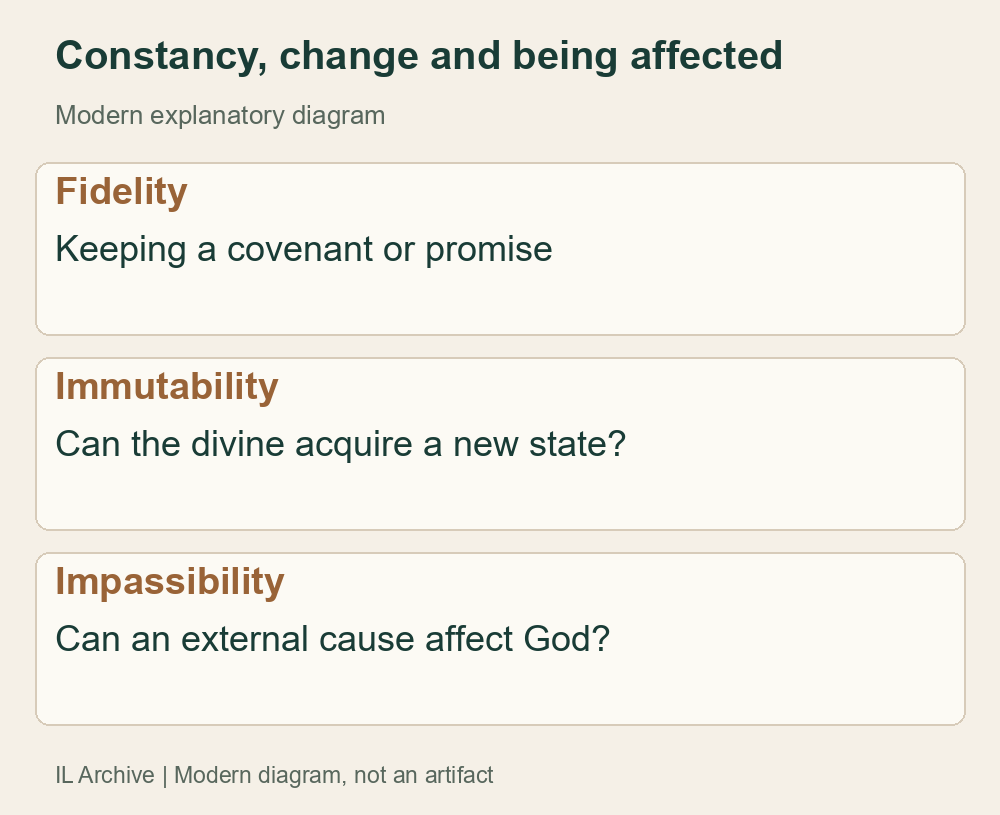
GenesisBook of GenesisHebrew book of the Torah containing Noah’s flood, survival offering and covenant with living creatures.Glossary · Click to read the explanation 1:26–27 says humanity is made in God's image. The statement concerns humanity's relation to its creator and standing in creation; it supplies no detailed anatomical inventory of God. Interpretations of “image” have emphasized resemblance, representation, vocation or intellect in different ways. Genesis 6:6, meanwhile, describes divine grief or regret at the making of humanity, a case often distinguished as anthropopathic, or human-emotional, language. Philo later read that passage through divine immutabilityDivine immutabilityThe philosophical and theological question of whether divine being, knowledge or will can change; distinct from faithfulness, impassibility and timelessness.Glossary · Click to read the explanation. [3]
The two expressions perform different kinds of work within one collection. One articulates human status; the other communicates the gravity of human wrongdoing. Deciding what either implies about an underlying doctrine requires attention to the literary setting and to the period of the interpreter, not the isolated word alone.
Abraham's visitors: appearance or messengers?
GenesisBook of GenesisHebrew book of the Torah containing Noah’s flood, survival offering and covenant with living creatures.Glossary · Click to read the explanation 18 opens with the LORD appearing to Abraham at Mamre; Abraham then sees and welcomes three figures and serves them a meal. The connection between divine presence and the visitors is not expressed as a straightforward identification. Even modern translations note different possible addressees in verse 3. The narrative neither licenses treating all three visitors as God's physical body nor dismissing every relation between them and the appearance. [4]
Later Jewish interpretation identifies the visitors as angels with distinct missions. That belongs to the important history of reception; it should not be silently substituted for the surviving narrative's wording. This is a useful test case for distinguishing source, translation choice and commentarial reading.
Moses and the limits of sight in Exodus
ExodusBook of ExodusTorah book recounting Israel’s departure from Egypt and containing different formulations of seventh-day rest.Glossary · Click to read the explanation 33:11 says the LORD speaks to MosesMosesCentral figure in Exodus, Torah traditions and the Qur’an; childhood accounts differ in detail.Glossary · Click to read the explanation “face to face,” within a description of intimacy and dialogue. But verses 20–23 of the same chapter deny that a human can see the divine face and live, while invoking shielding by the hand and a view from behind. Both statements have to be accounted for; eliminating one removes a tension actually present in the passage. [5]
One reader may understand the face as direct presence. A historian may ask what earlier ideas about bodies, motion and divine accessibility remain in the imagery. Yet one term cannot settle a comprehensive ontology; nor can a later allegorical solution be mistaken for an alteration of Exodus itself.
Throne and likeness in Ezekiel and Daniel
In the vision attributed to EzekielEzekielEzekiel is a priest and prophet in the Hebrew Bible, whose book is associated with the Judean exile in Babylonia in the sixth century BCE.Glossary · Click to read the explanation, chapter 1 speaks of a human-like form above something resembling a throne, surrounded by fire, brilliance and a rainbow-like radiance. Its repeated terms of likeness and appearance are part of how the vision approaches what is seen. It does not read like a recoverable anatomical portrait. [6]
DanielBook of DanielA book combining court tales of wisdom and deliverance with visions of kingdoms and the future, formed in stages.Glossary · Click to read the explanation 7:9–10 presents the Ancient of DaysAncient of DaysAramaic title of the enthroned divine judge in Daniel 7:9–14, associated with white head hair, a fiery throne and books of judgment; the text mentions no beard.Glossary · Click to read the explanation as a seated judge with white clothing and hair compared to wool, amid a fiery throne and heavenly court. These images belong to an Aramaic visionary scene with political and religious meanings, not an eyewitness photograph. Ezekiel and Daniel should not be flattened into one composite “description of God's body” without noting their distinct literary settings. [7]
Did some biblical traditions envisage divine bodies?
In the introduction to The Bodies of God and the World of Ancient Israel, Benjamin D. SommerBenjamin D. SommerHebrew Bible scholar at the Jewish Theological Seminary in New York; author of The Bodies of God and the World of Ancient Israel (2009).Glossary · Click to read the explanation argues that some biblical traditions imagined embodiment, even the possibility of divine presence in multiple bodies. His account also recognizes traditions resisting such fluidity. This is a scholarly reconstruction of differences among ancient authors and communities, not a universal creed for all ancient Jews. Here only the published excerpt of the introduction and the chapter summary were examined, not the full introduction or the complete book. [8]
R. W. L. Moberly critically examines Francesca Stavrakopoulou's anatomical reconstruction of Israel's God. He asks whether the move from ancient bodily terms to a sweeping account of religion and redaction is warranted. Such criticism does not erase bodily wording; it presses the need for arguments beyond a list of examples. These are competing interpretations, not a contest settled by one vivid quotation. [9]
From written passage to painted hand: Dura-Europos
Religious artists could depict divine agency without showing an entire divine person. A hand entering a scene from above is visible in paintings from the third-century synagogue at Dura-Europos, in present-day Syria. Yale dates the enlarged, decorated synagogue to 244/245 CE. Its original murals, discovered in the 1930s, were ultimately installed in the National Museum in Damascus, while Herbert Gute's painted copies went to Yale. A Commons photograph of an Ezekiel scene documents the motif. [10]
The painted hand records an iconographic choice made in one Jewish community; it cannot establish what every Jew believed or prove an anatomical doctrine about God. Because the licensed photograph could not be reproduced here, it has not been passed off as the cover. The cover here is explicitly modern conceptual artwork, not a Dura-Europos artifact.
From Philo to Maimonides: philosophical interpretation
Philo discussed Genesis' account of divine anger and maintained that apparent changes of mind cannot literally apply to an unchangeable God. His approach was more than a casual claim that words are figurative: he connected them to moral pedagogy, fear and love. This is an ancient Jewish philosopher's reading of older texts, not direct evidence of their original authors' intentions.
In the twelfth century Moses MaimonidesMoses MaimonidesJewish jurist, philosopher, and physician (c. 1138–1204). Wrote the Commentary on the Mishnah and Guide in Judeo-Arabic, and the Mishneh Torah in Hebrew; practiced in Egypt.Glossary · Click to read the explanation, in The Guide for the Perplexed I.1, interpreted the divine “image” in relation to intellectual form rather than bodily limbs. In I.26 he invoked the principle that the Torah speaks in human language to make divine existence intelligible. His teaching on divine incorporealityDivine incorporealityThe denial that divine essence is an extended body with parts or spatial occupation; distinct from invisibility and simplicity, with the meaning of body and place varying by school.Glossary · Click to read the explanation should be distinguished from a prohibition on making religious images, which is a different question. [11] [12]
Christianity: incarnation does not remove the question
John 1:14 describes the Word becoming flesh; John 1:18 says that no one has ever seen God. Later Christian debate addresses both claims and the relation of Son and Father, rather than equating every ancient image of God with Christ's incarnation. John's language is a specific witness within early Christianity, not a summary of every Christian tradition at every period. [13]
John Cassian's Conferences 10.3 depicts the monk Serapion struggling when a human-shaped mental image of God is rejected in favor of spiritual interpretation. Cassian calls the opposing opinion an “error,” so his story gives access to a dispute within Egyptian monastic circles around the turn of the fifth century, not an impartial census of all monks' beliefs. [14]
Qur'anic hands and divine incomparability
The Qur'anThe QuranThe central scripture of Islam, consisting of 114 Arabic surahs; its study distinguishes Quranic discourse from manuscript history, reading traditions, and historical inference.Glossary · Click to read the explanation speaks of “the hand of Allah” above the hands of those pledging allegiance (48:10). Its immediate context is a pledge and its binding force, before the later theological debate about how a divine attribute is affirmed or interpreted. The local context alone cannot decide the full later controversy. [15]
Qur'an 42:11 also denies any likeness to God while describing God as hearing and seeing. This juxtaposition became pivotal for Islamic debates over transcendence and attributes. The text also speaks of the MercifulAl-RaḥmānQuranic divine designation co-referring with Allah.Glossary · Click to read the explanation being established over the Throne (20:5); in commenting on it, al-TabariAl-TabariAbbasid-era historian and Qur'anic exegete (c. 839–923 CE). His commentary records competing views on Abraham's son, then favors Isaac.Glossary · Click to read the explanation uses the expression “rose and was exalted” and points back to previously discussed differences. His local gloss should not be mistaken for a complete account of every later theological school. [16] [17]
Interpretive schools and contested labels
Islamic discussion commonly uses the terms tashbīh (likening) and tanzīh (upholding transcendence), and tajsīm when corporeality is at issue. Approaches include interpreting selected terms figuratively, affirming them without assimilation or specification of “how,” and declining to fix an uncertain meaning. These practices were diverse and historically contested. It is inaccurate to label everyone who rejects figurative interpretation a corporealist, or everyone who interprets “hand” non-literally a denier of divine attributes. Mustafa Shah notes the polemical use of such terms in classical debates. [18]
Livnat Holtzman studies traditions about bodily attributes in prophetic reports and their transmission among groups often called traditionalist, across approximately the eighth to fourteenth centuries CE. Her work stresses intellectual setting, social conflict and disagreement within circles of transmitters. Only the book's publisher abstract, not all its chapters, was accessible for this review. The Qur'an, hadith reports and later school formulations need separate treatment even when they share a word. [19]
What historical analysis can establish
Historical analysis can show that scriptural texts use hands, faces, emotions and appearances, and that their interpreters have disagreed about how these descriptions work. It can date a particular source, commentary or painted image, distinguish brief figures of speech from elaborate visions, and compare their social settings. It cannot decide God's actual metaphysical nature from the presence of a word or a painted hand.
For each case the most reliable sequence is: the wording of the witness; its role in context; any described appearance; the historically situated interpreter; the limits of inference. This preserves both the force of ancient religious imagination and the difference between that imagination and later systematic doctrine.
References and notes (19)
- Brittany E. Wilson, “God’s Body and the Material Turn: Divine (Im)Materiality in Biblical Theophanies,” Harvard Theological Review 117/3 (2024), pp. 607–630. Publisher abstract and bibliography only; online 1 October 2024. Return to the text ↑
- Philo of Alexandria, On the Unchangeableness of God (Quod Deus sit immutabilis), §§51–54, 67–69, trans. C. D. Yonge. Sections 51–54 and 67–69 read in Yonge’s English translation; original Greek not collated. Return to the text ↑
- Genesis 1:26–27 and 6:6, displayed Hebrew biblical text with a published English translation, Sefaria. Genesis 1:26–27 and 6:6, visible Hebrew and published English translation, no independent philological collation. Return to the text ↑
- Genesis 18:1–8, Revised JPS translation and its notes, Sefaria; Rashi on Genesis 18:1–2. Genesis 18:1–8 with revised JPS translation notes; selected Rashi comments on 18:1–2. Return to the text ↑
- Exodus 33:11, 18–23, Hebrew text and published JPS translation, Sefaria. Exodus 33:11, 18–23; these specified passages in the displayed text and published translation. Return to the text ↑
- Ezekiel 1:26–28, Hebrew text and published English translation, Sefaria. Ezekiel 1:26–28; displayed Hebrew and published translation, not manuscript collation. Return to the text ↑
- Daniel 7:9–10, displayed Aramaic text and published English translation, Sefaria. Daniel 7:9–10; published translation and visible Aramaic wording, without independent ancient-language expertise or manuscript access. Return to the text ↑
- Benjamin D. Sommer, The Bodies of God and the World of Ancient Israel (Cambridge University Press, 2009), excerpt from introduction (published pp. 1–11) and publisher’s summary of chapter 3. Accessible introduction and published chapter 3 summary only; not the complete book. Return to the text ↑
- R. W. L. Moberly, “Anatomizing God?”, Journal of Theological Studies 75/2 (2024), pp. 273–290. Abstract and accessible visible sections of the critique; inaccessible portions not read. Return to the text ↑
- Yale University Art Gallery, “Synagogue,” Dura-Europos: Excavating Antiquity; Wikimedia Commons, File:Ezekiel 3.jpeg. Yale institutional page and the Commons individual file/license page read; image transfer failed. Return to the text ↑
- Moses Maimonides, The Guide for the Perplexed, Part I, chapter 1, English translation hosted by CCEL. Part I, chapter 1, in a published English translation; Judeo-Arabic original not collated. Return to the text ↑
- Moses Maimonides, The Guide for the Perplexed, Part I, chapter 26, English translation hosted by CCEL. Part I, chapter 26, read in published English translation; no original-language collation. Return to the text ↑
- Gospel of John 1:14–18, New Revised Standard Version Updated Edition, BibleGateway. John 1:14–18 in the published NRSVUE; no extended reproduction of copyrighted wording. Return to the text ↑
- John Cassian, Conferences, book 10, chapter 3, English translation hosted by CCEL. Conferences 10, chapter 3 in displayed English translation; Latin not collated. Return to the text ↑
- Qur’an, al-Fath 48:10, Arabic text and English translation published on Quran.com. Al-Fath 48:10, displayed Arabic and English translations; no qirāʾāt or manuscript study. Return to the text ↑
- Qur’an, ash-Shura 42:11, Arabic text and English translation published on Quran.com. Ash-Shura 42:11; displayed Arabic and published English translation. Return to the text ↑
- Al-Tabari, Jamiʿ al-bayān, commentary on Ta-Ha 20:5, Arabic excerpt at Quran.com. Al-Tabari commentary on Ta-Ha 20:5, displayed Arabic excerpt only; not the full commentary. Return to the text ↑
- Mustafa Shah, “Tanzīh and Tashbīh in Classical Islamic Theological Thought,” Oxford Bibliographies (2018), accessible introductory entry. Accessible reference-entry introduction only; restricted bibliography not treated as read. Return to the text ↑
- Livnat Holtzman, Anthropomorphism in Islam: The Challenge of Traditionalism (700–1350), Edinburgh University Press (2018). Publisher abstract only; book chapters not read. Return to the text ↑
Suggest a correction · Suggest a source for this record
Cite this record
IL Archive, «Divine anthropomorphism», https://ilarchive.com/en/entities/divine-anthropomorphism
Continue reading