Entity · theological_concept
Divine anthropomorphism
A reference page linking a name, group, or concept to the materials that discuss it.
Human bodily or emotional descriptions of God; not alone proof of corporeal essence.
Text
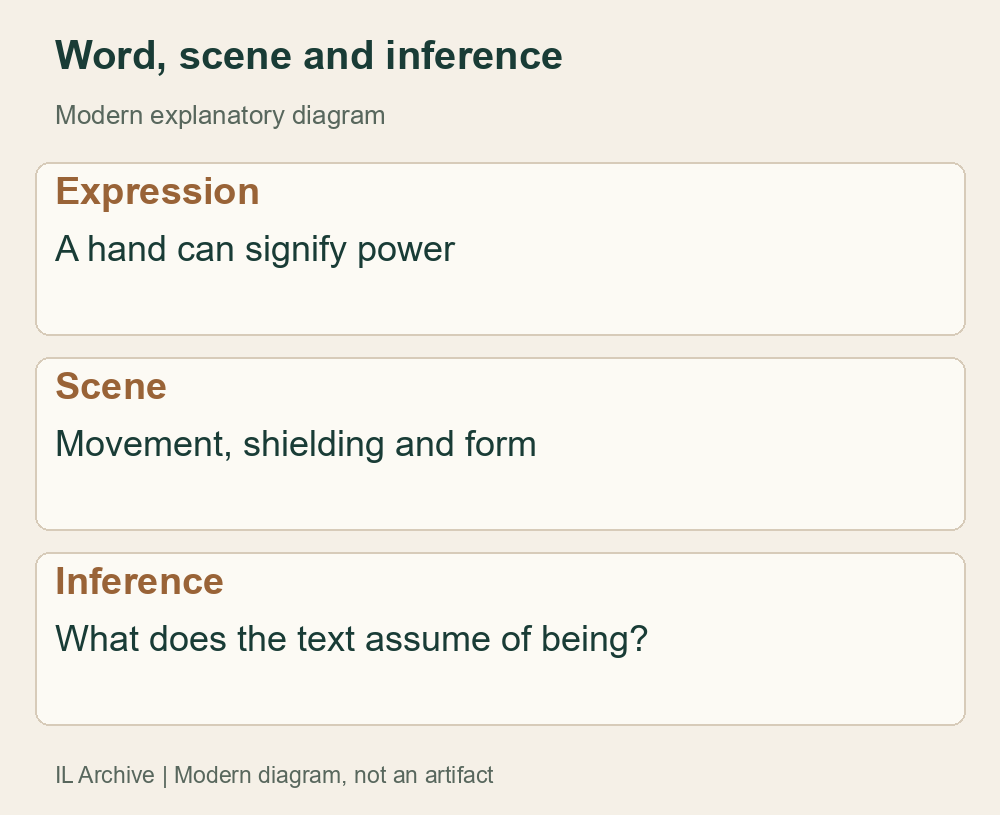
This includes hand, face, anger and grief. Figurative usage, a visible appearance and a doctrine of essenceOusia — essenceGreek term for essence or nature, with meanings changing between authors.Glossary · Click to read the explanation require distinction; evidential value depends on context. [1]
PhiloPhilo of AlexandriaFirst-century CE Alexandrian Jewish author. In Life of Moses he presents Greek translation as inspired; the passage does not explicitly assign a separate room to each translator.Glossary · Click to read the explanation explains some expressions through educational function while rejecting human organs in God. This contextual entry is distinct from human form in archaeological art. [2]
References and notes
- Brittany E. Wilson, “God’s Body and the Material Turn”, HTR 117/3 (2024), 607–630 Abstract and bibliography; embodiment and immateriality in theophanies. Return to the text ↑
- Philo, On the Unchangeableness of God, §§51–52, 67–69, trans. C. D. Yonge Bodily predicates, passions and accommodation to readers. Return to the text ↑
Research history
Substantive changes are retained here. Minor copy edits remain in the internal operational log.
-
Substantive record update
Suggest a correction · Suggest a source for this record
Cite this record
IL Archive, «Divine anthropomorphism», Edition 2, https://ilarchive.com/en/entities/divine-anthropomorphism