Entity · theological_concept
Divine incorporeality
A reference page linking a name, group, or concept to the materials that discuss it.
Denial of a material divine body; distinct from image prohibition and simplicity.
Text
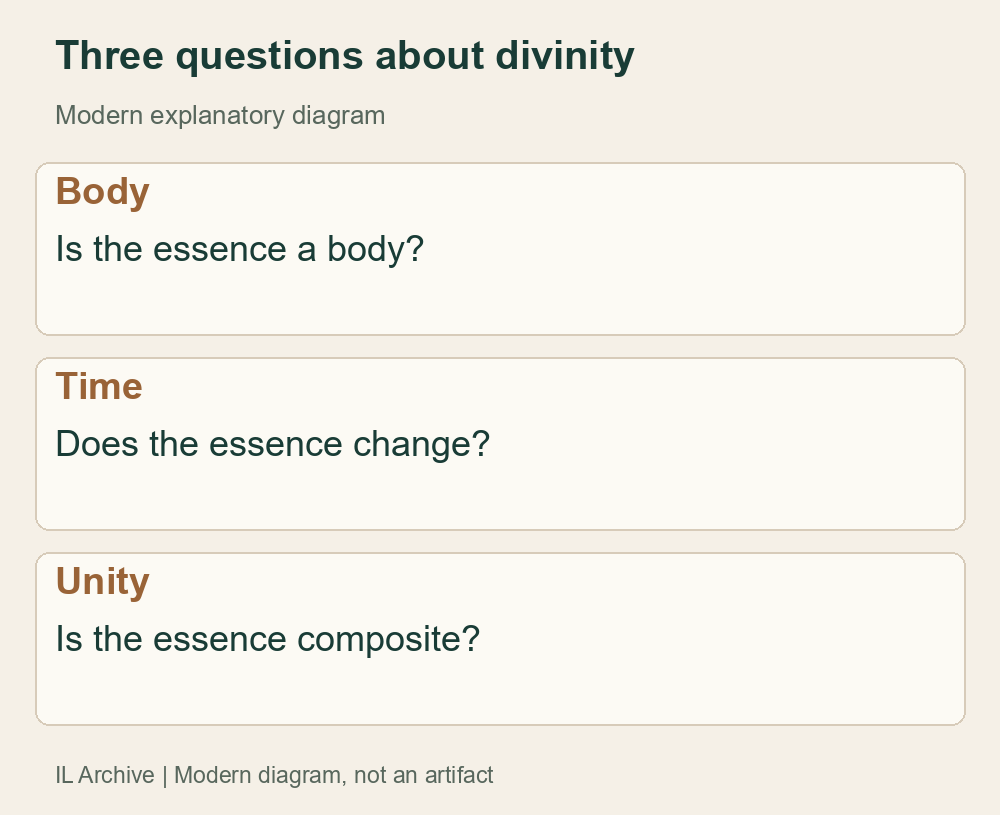
This doctrine excludes body, organs and dimensions as the constitution of divine essenceOusia — essenceGreek term for essence or nature, with meanings changing between authors.Glossary · Click to read the explanation. AquinasThomas AquinasThirteenth-century theologian linking incorporeality, simplicity and immutability through philosophical premises.Glossary · Click to read the explanation argues for it in Summa I.3; exegetes reconsider bodily language in their scriptures. [1]
Not seeing a form at one event does not entail this doctrine; it also does not alone establish identity of all attributes with essence. The diagram distinguishes axes without depicting God.
References and notes
- Thomas Aquinas, Summa Theologiae I, question 3, articles 1, 4, 7 No body; essence/existence and composition; selected passages. Return to the text ↑
Research history
Substantive changes are retained here. Minor copy edits remain in the internal operational log.
-
Substantive record update
Suggest a correction · Suggest a source for this record
Cite this record
IL Archive, «Divine incorporeality», Edition 2, https://ilarchive.com/en/entities/divine-incorporeality