Person
Moses
Moses in Exodus, the Torah and the Qur’an: childhood, prophecy and law; differences among narratives; Sargon’s birth story; composition and manuscript dates; and the limits of archaeological evidence for the historical person.
Estimated reading time: 11 min Published Last reviewed:
Share article

Text
Introduction
Moses (HebrewHebrewA Northwest Semitic language of the Canaanite group, encompassing Iron Age epigraphy, Biblical, Rabbinic, medieval and Modern Hebrew; its scripts and pronunciations changed over time.Glossary · Click to read the explanation Moshe, Qur'anic Arabic Mūsā) is a foundational figure in Israelite narratives and in the religious traditions that inherited them: he leads the exodus from Egypt, mediates the law, and appears in the Qur'an as a messenger confronting Pharaoh. Establishing what texts say about him, however, is different from demonstrating the biography of a person who lived at a datable moment. This account reads the narratives in context, asks what manuscripts and inscriptions actually attest, and traces changes in the portrayal of Moses across traditions.
The story of an infant placed in a container beside a river deserves particular care because it resembles an element of the birth legend of Sargon of Akkad. Comparing the words, characters and dates of the witnesses helps distinguish a shared narrative pattern from proof of borrowing or of a historical event.
Who is Moses in the sources?
The Book of ExodusBook of ExodusTorah book recounting Israel’s departure from Egypt and containing different formulations of seventh-day rest.Glossary · Click to read the explanation, the second book of the Torah or PentateuchTorah / PentateuchThe first five books of the Jewish and Christian Bible: Genesis, Exodus, Leviticus, Numbers and Deuteronomy. They combine narrative and law from creation to Moses’ death; in Jewish usage, “Torah” can also encompass a wider body of authoritative teaching.Glossary · Click to read the explanation, introduces Moses as a child of a Levite family in Egypt and then as a prophet, leader, and mediator of the covenant between Israel's God and the community. His narrative career extends across Exodus, Leviticus, Numbers and Deuteronomy. AaronAaron, priest in the biblical narrativeMoses’s brother and a priest in biblical narrative; Leviticus 16 assigns him sanctuary purification and confession over the living goat.Glossary · Click to read the explanation appears as his brother, spokesman and priest; the story ends with Moses' death in Moab before the Jordan is crossed, with Joshua as successor. Pharaoh's identity, the mountain of revelation and several stops on the journey cannot all be securely located in history or geography. [3] [4]
Within the story, Pharaoh's daughter explains the Hebrew name Moshe (מֹשֶׁה) through a verb meaning that she “drew him out” of the water (Exodus 2:10). Scholars have also examined a possible connection with elements of Egyptian names formed from a root associated with birth, but the precise form and path of the name are disputed. In 2025 Aaron Adair proposed a different Egyptian derivation that implies a relatively late arrival of the name in the narrative; this is a scholarly hypothesis, not an established consensus. A linguistic similarity cannot date or establish the life of the bearer. [1] [13]
The child's birth and rescue in Exodus
In Exodus 1:22 Pharaoh orders Hebrew male infants to be cast into the river. Moses' mother hides him for three months, then places him in a small vessel of papyrus coated with pitch and sets it among the reeds at the riverbank; the text does not describe a boat drifting far downstream. His sister watches, Pharaoh's daughter sees the child and takes pity on him, and the sister offers to find a Hebrew nurse—who turns out to be the child's own mother. Once he is grown, he becomes the daughter of Pharaoh's adopted son. [1]
Exodus 2:3 contains the following Hebrew phrase, read here from an edited online text rather than attributed to any particular ancient manuscript:
The phrase specifies where the vessel is placed. It also matters that mother, sister and Pharaoh's daughter remain distinct agents in the narrative; merging their actions with details from other tellings distorts the comparison before it begins. [1]
From Midian to the exodus and covenant
Exodus 2 recounts Moses killing an Egyptian who was striking a Hebrew and fleeing to MidianMidianMidian names a region and peoples in northwestern Arabia. Oasis archaeology and textual traditions distinguish the place’s history from hypotheses about the transmission of Yahweh worship.Glossary · Click to read the explanation, a designation for peoples and an area around the northwestern Arabian region rather than a precisely bounded modern state. He becomes connected to the family of a Midianite priest and marries Zipporah. In Exodus 3 the burning bush summons him to confront Pharaoh in Egypt. The narrative gives the divine answer about a name as “Ehyeh asher ehyeh” (אֶהְיֶה אֲשֶׁר אֶהְיֶה), translated in different ways as “I am who I am” or “I will be what I will be.” The following chapters make AaronAaron, priest in the biblical narrativeMoses’s brother and a priest in biblical narrative; Leviticus 16 assigns him sanctuary purification and confession over the living goat.Glossary · Click to read the explanation Moses' helper in speaking. [2]
Exodus portrays a confrontation involving plagues, the Israelites' departure and their passage through the waters in chapters 12–15. Following the wilderness journey, they reach SinaiSinai: peninsula and biblical mountainSinai is a peninsula in eastern Egypt; in the Torah the name also denotes the mountain of revelation to MosesGlossary · Click to read the explanation, where chapters 19–24 describe the covenant, the commandments and laws governing communal life. Chapters 32–34 recount the golden calf, Moses' intercession and the restoration of the relationship; chapters 35–40 describe construction of the tabernacle. This is the sequence of the received biblical narrative, not a verified contemporary record of events. [3]
Moses' role as mediator of law becomes clearer when two versions of the commandments are compared. Exodus 20:8–11 grounds Sabbath observance in creation and rest on the seventh day; Deuteronomy 5:12–15 also associates it with remembering slavery and liberation from Egypt and extending rest to servants. These differently worded rationales show that the legal tradition has more than one formulation. Attribution of the law to Moses inside the narrative does not in itself prove that he wrote every line of the Pentateuch. [5] [6]
Moses in the Qur'an: a related story with different details
The Qur'anThe QuranThe central scripture of Islam, consisting of 114 Arabic surahs; its study distinguishes Quranic discourse from manuscript history, reading traditions, and historical inference.Glossary · Click to read the explanation mentions Moses repeatedly, not as a single continuous biography but in passages shaped by questions of prophecy, tyranny and faith. In al-Qaṣaṣ 28:7–13 his mother is inspired to nurse him and, when fearful, to cast him into the water, with a promise that he will be returned. Pharaoh's household retrieves him. His sister watches and identifies a household able to nurse him when other nurses have been refused. Crucially, the woman arguing that the child should be spared is Pharaoh's wife, not the daughter found in Exodus 2. [10] [12]
Al-Qaṣaṣ 28:9 says in Arabic:
Ṭā Hā 20:39, moreover, explicitly refers to a chest (tābūt) being put into the water and cast ashore. Both Qur'anic passages must therefore be read together: it is inaccurate either to say the Qur'an never mentions a container or to equate all its details with Exodus 2. Verse 20:39 specifies neither the chest's material nor its coating. Across Ṭā Hā 20 and other passages, Moses is a messenger sent to Pharaoh, supported by signs and by Aaron; al-Aʿrāf 7 includes the tablets, while al-Kahf 18:60–82 tells a further journey of learning. Each passage has its own narrative function. [11] [12]
Sargon: parallels and discriminating details
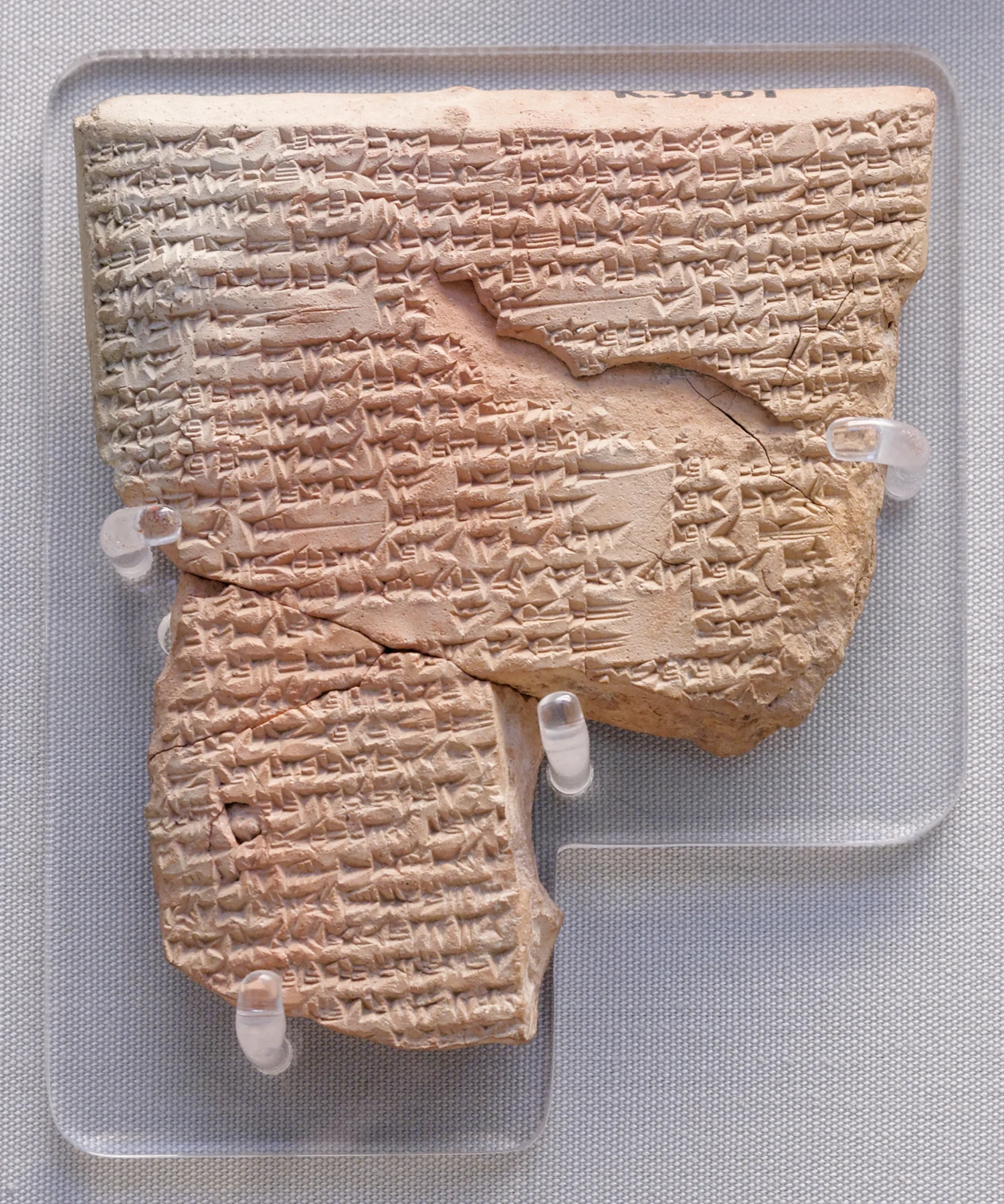
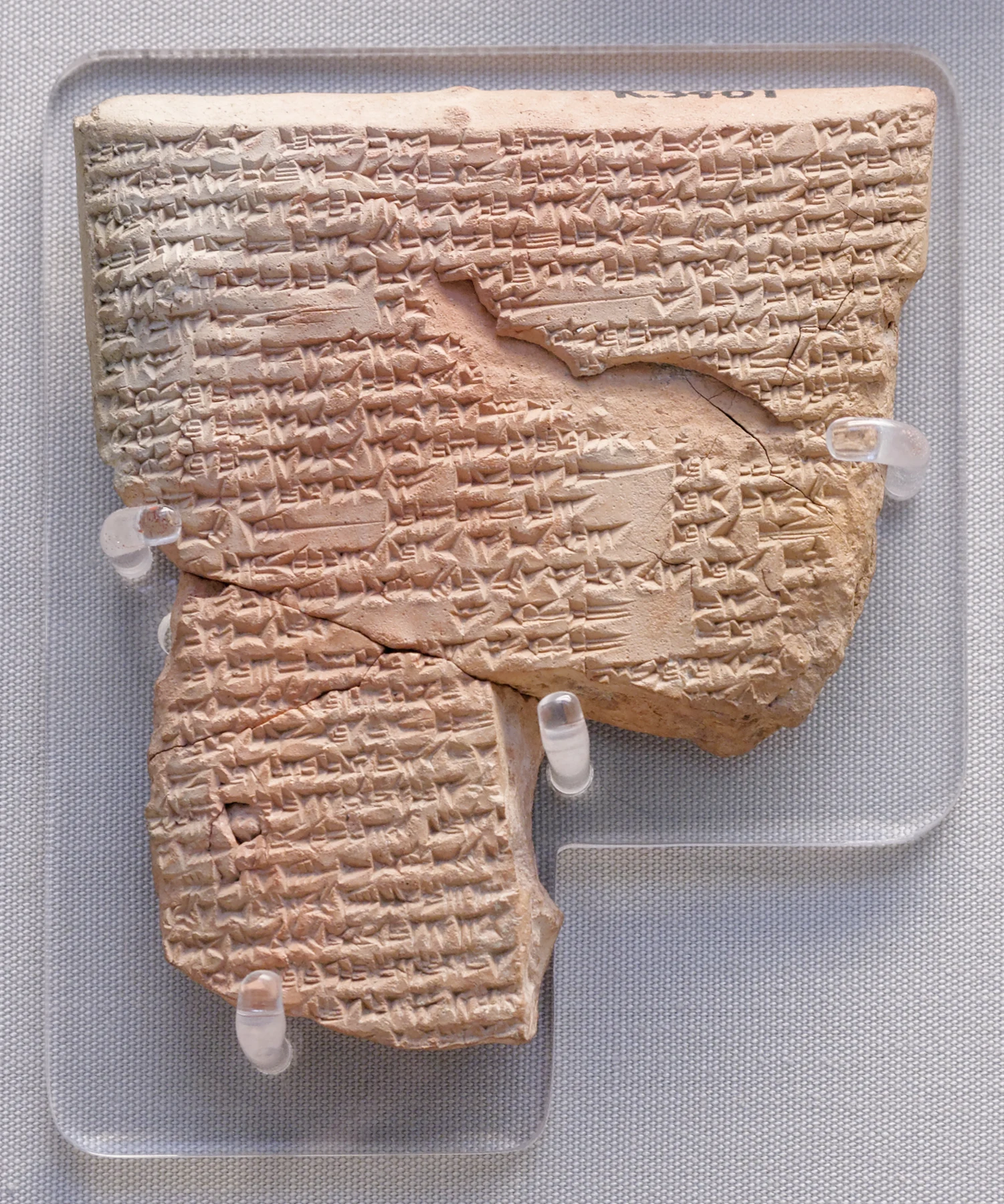
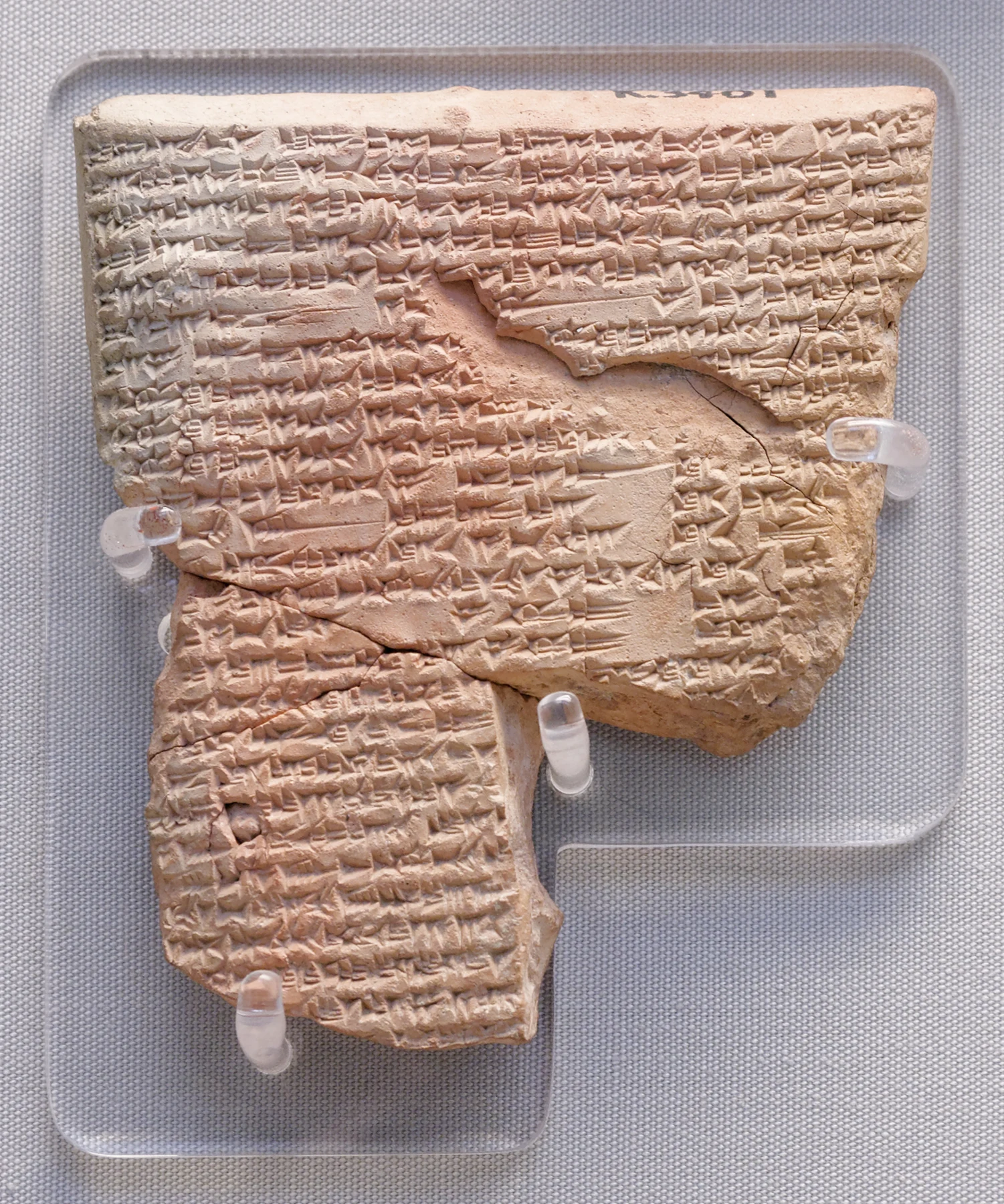
Sargon of AkkadSargon of AkkadSargon of Akkad was a historical third-millennium BCE ruler and founder of the Akkadian dynasty; royal accounts of his campaigns must be distinguished from later stories of his birth and rise.Glossary · Click to read the explanation was a Mesopotamian king of the third millennium BCE; his lifetime is not the date of the later writings about his birth. The Birth Legend of SargonSargon Birth LegendAn Akkadian pseudo-autobiography of Sargon’s concealed birth, basket rescue and rise to kingship; its manuscripts are late and the date of composition disputed.Glossary · Click to read the explanation speaks in the king's voice of a mother concealing her pregnancy, a reed vessel waterproofed with bitumen, and a river bringing the child to AqqiAqqi in Sargon’s birth storyAqqi is the irrigator who finds the child in the river and adopts him in Sargon of Akkad’s birth storyGlossary · Click to read the explanation, a water-drawer who raises him, before Sargon rises to kingship. The K.3401Sargon birth tablet K.3401Akkadian clay tablet from Nineveh preserving Sargon’s birth story in the Neo-Assyrian period, many centuries after the king’s lifetime.Glossary · Click to read the explanation fragment shown below is a much later Neo-Assyrian witness from NinevehNineveh and KuyunjikNineveh is an ancient Assyrian city near Mosul in northern Iraq; Kuyunjik is one of its archaeological moundsGlossary · Click to read the explanation, in the milieu of AshurbanipalAshurbanipalAshurbanipal was an Assyrian king of the seventh century BCE, reigning about 668–631 BCEGlossary · Click to read the explanation's seventh-century BCE library, now held by the British Museum. It is a fragment associated with further textual joins, not a biography from Sargon's own age. [8] [9]
In an English translation published by Joan Goodnick Westenholz in 1997 and reproduced in a secondary account, the mother says, “She set me in a wicker basket.” This is a quotation of a modern English translation encountered through that account, not our own collation of the tablet's AkkadianAkkadianAn ancient East Semitic language written in cuneiform from the third millennium BCE; its varieties include Babylonian and Assyrian, and it served in international diplomacy.Glossary · Click to read the explanation signs; its English wording must not be assigned uncritically to every separate fragment. [9]
The narratives share a vulnerable infant, a protected vessel, a river and rescue. But the movement of the vessel and identity of the rescuer differ: Aqqi is a water-drawer who adopts Sargon, whereas Moses' sister, mother and Pharaoh's daughter intervene, and Moses' eventual role is liberator and covenant mediator rather than dynastic founder. The parallels invite study of a literary motifLiterary motifA narrative or imagistic element recurring within or across stories; its role and context matter, and repetition alone cannot prove borrowing.Glossary · Click to read the explanation of rescued infancy in the ancient Near EastAncient Near EastModern scholarly label for ancient societies of Mesopotamia, the Levant, Anatolia and Iran, sometimes extending to Egypt and other neighbours depending on the study; not one civilization or religion.Glossary · Click to read the explanation. Establishing specific borrowing would also require evidence about contact, wording and textual chronology, not just plot resemblance. [9] [6]
Four chronologies that must remain separate
- Time within the narrated events: attempts to place a hypothetical exodus in the second millennium BCE differ. Some use biblical calculations or the name Raamses in Exodus 1:11. They do not furnish a verified date for Moses or a secure identification of Pharaoh. [18]
- Time of an independent Egyptian witness: around 1208–1207 BCE the Merneptah SteleMerneptah SteleAn Egyptian royal victory inscription of c. 1208 BCE on the reverse of a monument of Amenhotep III; it contains the earliest widely accepted external attestation of the name Israel.Glossary · Click to read the explanation names a group called Israel in Canaan but does not mention Moses or a mass departure from Egypt. [7]
- Time of composition and editing: scholars study multiple traditions and strata in the Pentateuch within the first millennium BCE. Many place an advanced or final formation of Exodus during or after the Babylonian exileBabylonian exileJudean deportations to Babylonia and the kingdom’s collapse in the early sixth century BCE; several phases, not everyone removed or returned at once.Glossary · Click to read the explanation, in the sixth or fifth century BCE or later; the limits of sources and models of compilation remain disputed. The Neo-Assyrian Sargon witness likewise belongs to the first millennium although the king lived in the third. [6] [8]
- Time of surviving copies and subsequent reception: witnesses include pre-Christian-era Exodus fragments from Qumran and later fragments of the Song of the Sea from the seventh or eighth century CE. These are dates of surviving copies, not necessarily of original composition. The Qur'an belongs to a seventh-century CE setting, followed by histories of recording, interpretation and copying distinct from Moses' time inside its narrative. [14] [12]
Why is the Pentateuch's composition debated?
The ascription of the Torah to Moses is important to its reception history. Historical study of composition, however, examines internal evidence: duplicated accounts, differences in divine naming and in legal formulations, alternations between narrative and priestly styles, and the account of Moses' death in Deuteronomy 34. The Documentary HypothesisDocumentary hypothesisA hypothesis explaining the formation of the Torah through the combination of previously independent literary works. Its classical form distinguishes four sources, Yahwistic, Elohistic, Deuteronomic and Priestly (J, E, D and P); modern versions differ over their extent, dates and manner of combination.Glossary · Click to read the explanation explains some of this through the combination of written sources, whereas supplementary models propose successive additions to an expanding text. A comparatively broad conclusion is that its literary history is complex; neither the precise boundaries of J, E and P nor their dates are settled for all specialists. [6] [19]
Qumran manuscripts and Hebrew, Greek and Samaritan textual traditions likewise remind us that these writings circulated in several textual forms. A fragment preserving Exodus 15 does not establish that the sea episode occurred when that fragment was copied, or that every Pentateuchal book was composed at once. Religious interpretations of scriptural authority are a separate question from the physical dating of manuscripts. [14]
What can historical evidence establish?
No known contemporary Egyptian document identifies the Moses of the Exodus story by name and verifies his career, and there is no independent archaeological record that matches all the details of the large collective journey as narrated. The Merneptah Stele confirms the name Israel in Canaan by the late thirteenth century BCE, but says nothing about that population's departure from Egypt. Archaeological and textual research notes that contact, labour and movement between Egypt and the LevantThe LevantThe Levant is a regional name for lands along the eastern MediterraneanGlossary · Click to read the explanation may help explain features of cultural memory without documenting one particular individual or every narrated event. [7] [18]
Some scholars treat the exodus primarily as a foundational story shaped in Israelite settings, with no historically recoverable large-scale event; others regard memories of smaller groups connected with Egypt as plausible ingredients in later tradition. The strength of each proposal depends on which evidence it explains, not on Moses' theological importance. The measured conclusion is that we can identify texts telling his story and date some of their physical witnesses, but available independent evidence cannot establish a detailed historical biography or conclusively exclude a person behind the traditions. [18] [19]
Moses in later reception
Later readers made Moses an exemplar suited to changing questions. In Antiquities of the Jews, written by the first-century CE Jewish historian JosephusFlavius JosephusFirst-century Jewish historian who retold older narratives, including Abraham’s test, in Jewish Antiquities.Glossary · Click to read the explanation, the childhood account adds a scene in which the infant is crowned by Pharaoh and throws the crown down. This is a later narrative addition to Exodus 2, not independent Egyptian testimony to the infant's conduct. In Christianity, Moses appears with Elijah at Jesus' transfiguration (Matthew 17:1–3), while Hebrews 3:1–6 compares Moses' faithful service with the position of Christ. [15] [16] [17]
Islamic exegesis expands the understanding of Moses' encounters with Pharaoh and the meaning of faith by reading Qur'anic verses alongside later reports; details in those commentaries must not automatically be called Qur'anic wording. Artistic representations, whether Renaissance sculptures or contemporary illustration, document how later generations imagined him, not his physical appearance in an undetermined historical period. This article's cover is a newly generated modern interpretive image evoking river and law, not an ancient object or archaeological reconstruction. The Sargon tablet photograph above documents a comparative text, not Moses. [12] [8]
Conclusion
Moses has a well-defined identity within the traditions of exodus, law and the Qur'an, but a textual figure is not synonymous with a historically verified biography. The Hebrew and Qur'anic narratives both describe the saving of an infant from an oppressed family, while differing on important points, especially the woman in Pharaoh's household. Sargon's story reveals a wider literary pattern, not a demonstrable chain of copying. The strongest reading preserves each witness, its date and its limits, and states clearly what can be established and what remains open. [1] [10] [9] [18]
References and notes (19)
- Book of Exodus, Hebrew text with historical English translation, Mechon Mamre; the birth-and-rescue story and naming. Exodus 2:1–10, with reference to 1:22 Return to the text ↑
- Exodus in the Mechon Mamre Hebrew text and English translation; call at the bush and the divine-name formula. Exodus 3:1–15; contextual references to 2:11–25 and 4:10–17 Return to the text ↑
- Society for Old Testament Study (SOTS), “Exodus,” scholarly overview of the book’s sections, Moses and law. “Contents” section: Exodus 1–40 Return to the text ↑
- Deuteronomy 34, Hebrew and historical English translation, Mechon Mamre; Moses’ death and succession. Deuteronomy 34:1–12 Return to the text ↑
- Deuteronomy 5, Hebrew text, Mechon Mamre; comparing the Sabbath rationale with Exodus 20. Deuteronomy 5:12–15; compare Exodus 20:8–11 Return to the text ↑
- Society for Old Testament Study, “Exodus,” account of composition and documentary versus supplementary models. “Date and authorship” section Return to the text ↑
- Biblical Archaeology Society Library, “The Merneptah Stela: Israel Enters History,” explanation of the Egyptian inscription and the reference to Israel in Canaan. Inscription’s Israel reference, c. 1208 BCE; secondary explanation Return to the text ↑
- British Museum, object record K.3401, Nineveh; catalogue description of the Neo-Assyrian Sargon tablet (accessible catalogue metadata). Object K.3401 catalogue fields; no cuneiform collation Return to the text ↑
- Claire Sulos, “The Neo-Assyrian Birth Legend” (2023; updated 2026), secondary reproduction of lines 1–14 from Joan Goodnick Westenholz’s English translation in Legends of the Kings of Akkade (1997); not firsthand Akkadian collation. Lines 1–14 in the secondary English reproduction: basket, bitumen and Aqqi Return to the text ↑
- Qur’an, Sūrat al-Qaṣaṣ, Arabic passage describing the child’s rescue and Pharaoh’s wife; compared with Exodus. Al-Qaṣaṣ 28:7–13, especially 28:9 Return to the text ↑
- Qur’an, Ṭā Hā 20:39, Arabic passage explicitly mentioning the chest, water and riverbank. Ṭā Hā 20:39; contextual cross-references to al-Aʿrāf 7 and al-Kahf 18:60–82 Return to the text ↑
- Brannon Wheeler, “Moses,” Oxford Bibliographies in Islamic Studies (2011); accessible introduction and bibliographic overview, not the listed works. Published introduction only Return to the text ↑
- Aaron Adair, “The Name of Moses in an Egyptian Context—A Hypothetical Etymology,” Scandinavian Journal of the Old Testament 39/1 (2025), pp. 60–78; author abstract and publisher metadata only; a proposal, not consensus. Abstract only; pages 60–78 not read Return to the text ↑
- Israel Museum, Jerusalem, “Piecing Together the Past: Ancient Fragments of the Song of the Sea,” 2010 exhibition description: Qumran Exodus 15 and the Ashkar-Gilson and London fragments; indexed exhibition text, not direct inspection of manuscript images. Exhibition description: Exodus 15 fragment, late first century BCE, and seventh/eighth-century CE scroll Return to the text ↑
- Flavius Josephus, Antiquities of the Jews, Book II, chapter 9, historical English translation by William Whiston, hosted at the University of Chicago; the crown episode. Book II, chapter 9, sections 6–7 (site numbering) Return to the text ↑
- Gospel of Matthew 17:1–3, public-domain King James Version; transfiguration and appearance of Moses and Elijah. Matthew 17:1–3 Return to the text ↑
- Hebrews 3:1–6, public-domain King James Version; theological comparison involving Moses. Hebrews 3:1–6 Return to the text ↑
- Raik Heckl, “Deep is the well of the past: Reconsidering the origins of the Exodus motif in its cultural context,” Verbum et Ecclesia 34/2 (2013); open abstract, introduction and comparative discussion on Merneptah and competing dates. Abstract, introduction and dating examples, not the entire study Return to the text ↑
- Thomas B. Dozeman, “Book of Exodus,” Oxford Bibliographies in Biblical Studies (2010); published introduction on structure and complex composition; other sections restricted. Public introduction only Return to the text ↑
Suggest a correction · Suggest a source for this record
Cite this record
IL Archive, «Moses», https://ilarchive.com/en/people/moses
Continue reading