Entity · Region
Midian
A reference page linking a name, group, or concept to the materials that discuss it.
- Names
- Midian
Midian names a region and peoples in northwestern Arabia. Oasis archaeology and textual traditions distinguish the place’s history from hypotheses about the transmission of Yahweh worship.
Estimated reading time: 8 min Published Last reviewed:
Share article
Text
Introduction
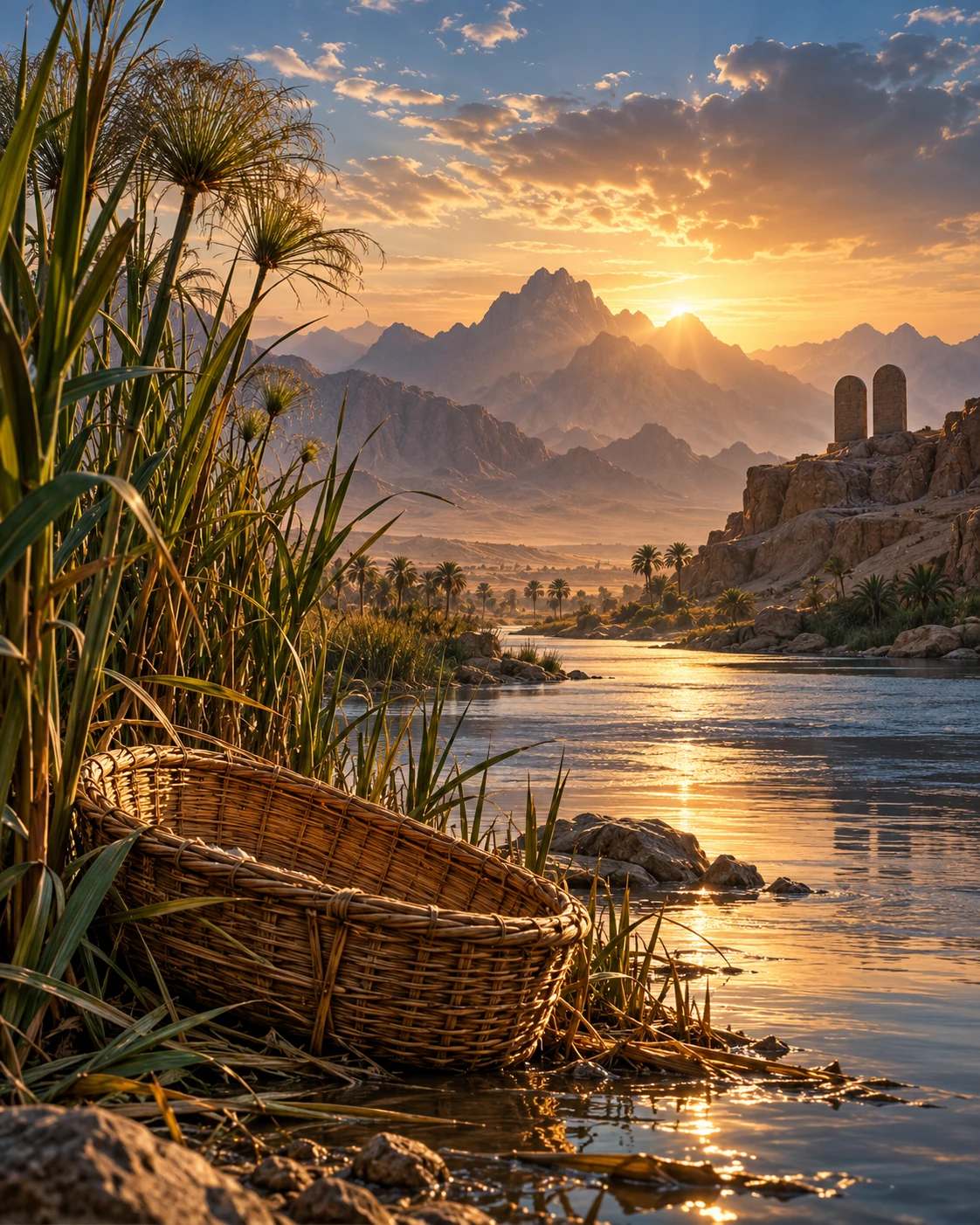
Midian names both a region and peoples in ancient texts, associated with northwestern Arabia. Its history is not exhausted by MosesMosesCentral figure in Exodus, Torah traditions and the Qur’an; childhood accounts differ in detail.Glossary · Click to read the explanation’s encounter with a priest: genealogies, trade stories, warfare, oasis archaeology and later geographical traditions preserve different pictures. Distinguishing these witnesses also clarifies what Midian can—and cannot—tell us about the beginnings of YahwehYahwehThe proper name of Israel’s deity, written יהוה (YHWH), the Tetragrammaton. Its exact ancient pronunciation is not directly preserved; texts and inscriptions witness its history.Glossary · Click to read the explanation worship. [5]
A name, a region and an oasis
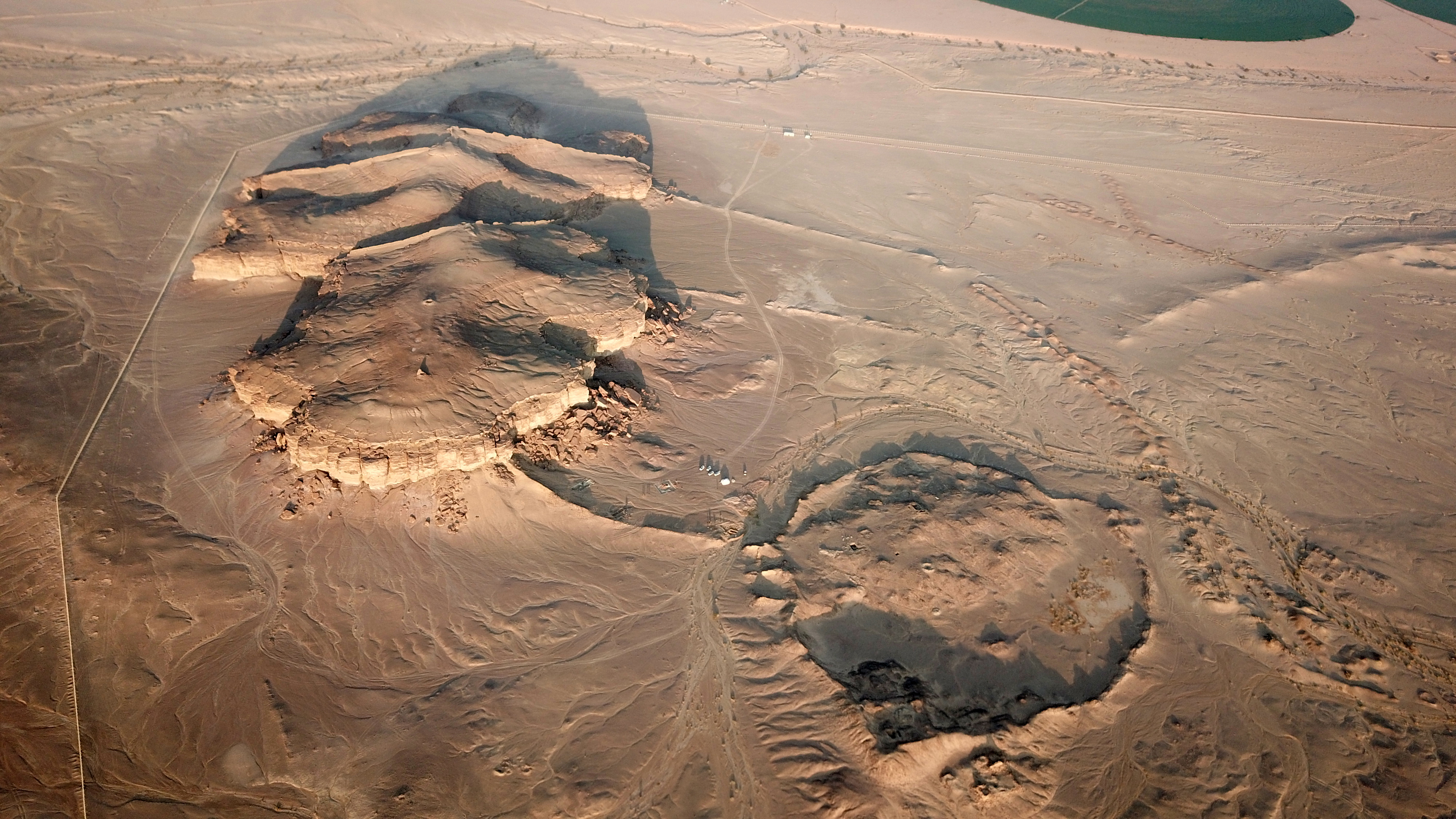
The geographical core lies east of the Gulf of Aqaba, south of Edom, in present-day northwestern Saudi Arabia. Yet “Midian” need not designate the same territorial or social unit in every period. A people’s range, a regional name and an urban centre are not interchangeable. Al-Badʿ is securely identifiable with Islamic Madyan through medieval itineraries; its identification with classical Madiama is probable. Neither conclusion independently identifies a Bronze Age capital or fixes the borders of biblical Midian. [5]
The archaeological mission’s regional account describes cereal-growing settlement in the first half of the seventh millennium BCE and a stone village late in the fourth millennium, separated by a substantial gap in the evidence. First-millennium BCE habitation and later Nabataean-Roman settlement belong to further episodes, not one uninterrupted “Midianite civilization.” Water, agriculture, movement between oases and caravan connections help explain the setting better than an opposition between wholly nomadic and wholly urban populations. [19]
Charloux and colleagues’ excavated evidence sharpens the distinction. At Rudayda South, a charcoal date points to the eighth–sixth centuries BCE, but the lower deposit contains mixed material, including an older painted sherd. Such a sherd cannot date the whole settlement to the Late Bronze AgeLate Bronze AgeAn archaeological period around 1600–1200 BCE in much of the Near East, with international diplomacy, exchange and religious diversity; its endpoints vary by region.Glossary · Click to read the explanation. Their conclusion emphasizes how little occupation is yet documented at al-Badʿ at the end of the second millennium BCE. Its later prosperity must not be projected backwards. [5]
Pottery and a chronology of different witnesses
Qurayyah, another oasis in the region, was a production centre for painted pottery once called “Midianite pottery.” Material and technological analyses support local manufacture and exports, not a one-to-one equation between pots, ethnicity and religion. The 2026 study distinguishes seven successive Qurayyah Painted Ware assemblages: QPW is not one short-lived archaeological horizon. Its production and circulation demonstrate skilled settled crafts and regional connections alongside mobile populations. [6]
The following sequence separates objects, narratives and surviving copies; it is not a succession of proven stages in the spread of a religion:
- Late seventeenth–fifteenth centuries BCE: QPW 1–2 at Qurayyah; fifteenth–fourteenth centuries: QPW 3. QPW 4, the familiar later painted manufacture, is placed in the thirteenth–eleventh centuries; further assemblages continue into and beyond the sixth century BCE. These are archaeological ranges, not dates for Moses. [6]
- Fourteenth century BCE: the Soleb inscription under Amenhotep III. Thirteenth century: the related Amarah-West list under Ramesses II. The monuments survive, but their lists may reuse earlier models; two occurrences need not be two independent reports. [10][11]
- Narrative time: Abraham, Joseph and Moses precede Israel’s monarchy in the biblical story; Gideon belongs to the judges’ period. These relative settings do not supply independently verified calendar dates for their Midianite encounters. [1][12][14]
- Composition and revision: the southern poems are disputed. Leuenberger accepts an early-monarchic core of Judges 5, around the tenth–ninth centuries BCE, whereas the later datings he discusses include about 700–450 BCE and a post-exilic addition of 5:4–5. An older tradition, a poem’s composition and its insertion into a book are separate hypotheses, not one date. [11]
- Surviving transmission: Qumran’s manuscript collection spans roughly the third century BCE to the first century CE; not every cited passage survives in every manuscript. The complete Leningrad Bible is medieval, approximately 1008–1010 CE. Neither date is the date of the narrated events. [16][17]
Midian beyond the Moses story
Genesis 25:1–6 makes Midian a son of Abraham and Keturah and names his descendants. This is a genealogical presentation of relationships, not a population census. Genesis 37:25–28 places Midianite traders and Ishmaelites in Joseph’s sale story; verse 36 has “Medanites” in the HebrewHebrewA Northwest Semitic language of the Canaanite group, encompassing Iron Age epigraphy, Biblical, Rabbinic, medieval and Modern Hebrew; its scripts and pronunciations changed over time.Glossary · Click to read the explanation spelling. The overlapping labels caution against treating every narrative name as a neatly bounded modern ethnicity. [12]
Numbers gives a hostile portrayal. Chapter 25 moves from Moabite women and Baal of Peor to the Midianite woman Cozbi and a command against Midian. Chapter 31 narrates a punitive war, names five Midianite kings, and describes killings, captives and plunder. These are ideological war narratives, not neutral inventories of an entire people’s religion or proof of its total historical disappearance. [13]
In Judges 6–8, Midian, Amalek and “people of the East” devastate crops with their herds and camps; Gideon pursues the Midianite kings Zebah and Zalmunna across the Jordan. This narrative geography reaches beyond a single Arabian oasis. The account combines mobile raiding forces, rulers and valuable booty rather than a simple picture of isolated desert pastoralists. [14]
The QurʾānThe QuranThe central scripture of Islam, consisting of 114 Arabic surahs; its study distinguishes Quranic discourse from manuscript history, reading traditions, and historical inference.Glossary · Click to read the explanation gives Madyan a further role: in 11:84–90, the prophet Shuʿayb calls its people to worship God and use honest measures and weights. This is a later religious portrayal, not contemporary Bronze Age economic documentation. It belongs to the name’s reception history and should not be collapsed into the biblical priest’s biography. [15]
Moses, Jethro and the Kenites
The Book of ExodusBook of ExodusTorah book recounting Israel’s departure from Egypt and containing different formulations of seventh-day rest.Glossary · Click to read the explanation, part of the Torah, recounts how MosesMosesCentral figure in Exodus, Torah traditions and the Qur’an; childhood accounts differ in detail.Glossary · Click to read the explanation fled Pharaoh to Midian and married Zipporah. The daughters’ father is Reuel in Exodus 2; Exodus 3 calls Moses’s father-in-law Jethro, priest of Midian. While tending his flock, Moses reaches Horeb, the mountain of divine appearance in the narrative. These variations should be stated, not silently flattened into a securely reconstructed family tree. [1][2]
In Exodus 18 Jethro hears of deliverance from Egypt, blesses YahwehYahwehThe proper name of Israel’s deity, written יהוה (YHWH), the Tetragrammaton. Its exact ancient pronunciation is not directly preserved; texts and inscriptions witness its history.Glossary · Click to read the explanation, Israel’s god, and offers sacrifices. The opening of 18:11 reads, with cantillation and vowel points omitted: עתה ידעתי כי גדול יהוה מכל האלהים — “Now I know that Yahweh is greater than all the gods.” This is a short excerpt; the difficult remainder of the verse is not quoted or silently repaired. In 18:12 Aaron and Israel’s elders share a meal with Jethro before God. The final narrative therefore presents recognition and ritualRitualAn organised or distinguished practice meaningful to a community; it may leave traces, but its form alone does not reveal an associated doctrine.Glossary · Click to read the explanation fellowship; it does not explicitly describe Jethro teaching Moses a previously unknown cult. [3][18]
The Midianite-Kenite hypothesis proposes that Yahweh worship reached Israel through southern groups, including Midianites or Kenites. Judges 1:16 connects Moses’s father-in-law with Kenites who settle with Judah, and 4:11 names Hobab in that connection. These passages explain the “Kenite” component of the Midianite-Kenite hypothesis: contact through a southern related group could have mediated worship. They do not license treating “Kenite” and “Midianite” as universally identical names. Nor does the absence of an explicit teaching scene disprove every possible earlier relationship: a proposed older tradition must nevertheless be argued for separately from the extant story. [14]
Southern poetry and the Egyptian name
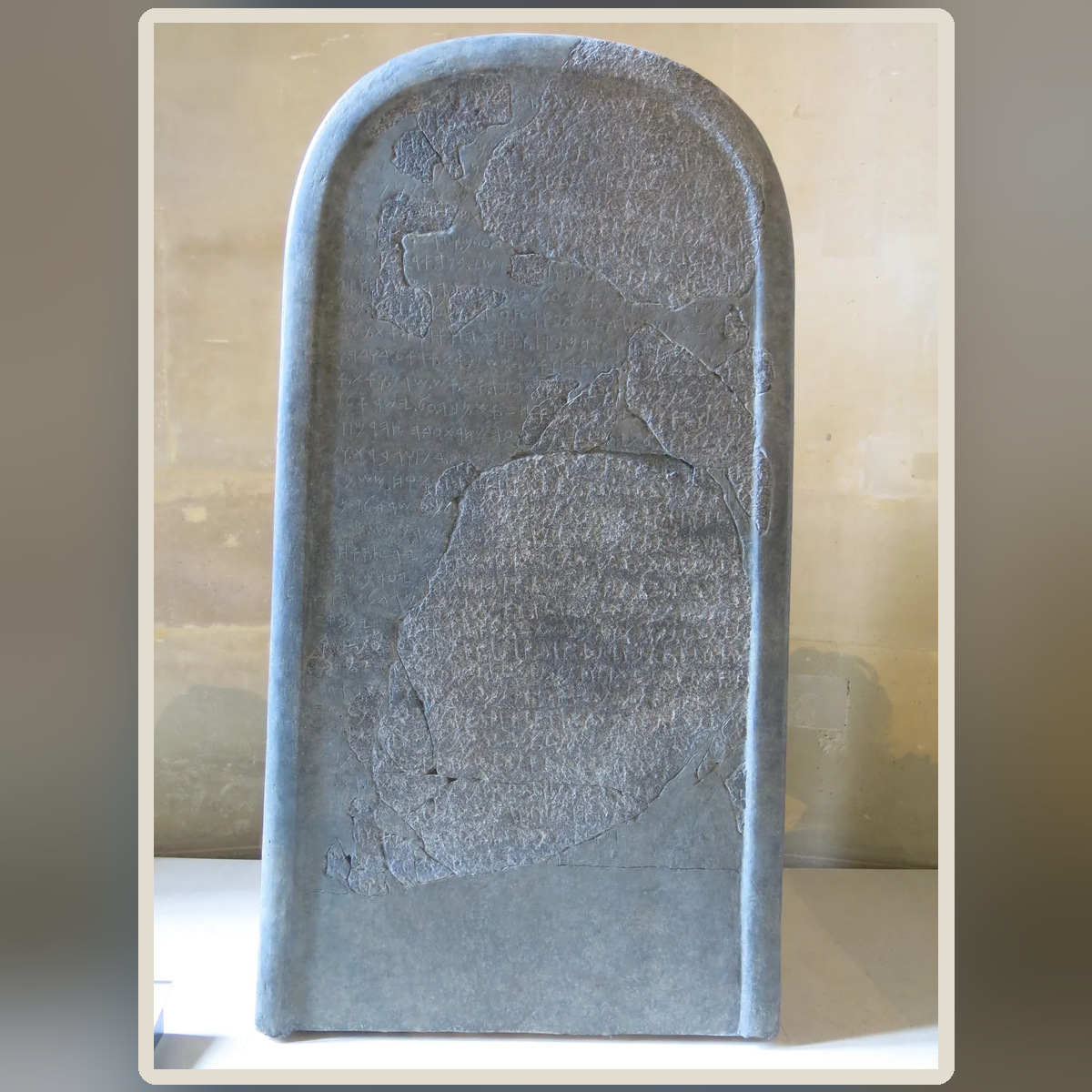
Judges 5:4 begins יהוה בצאתך משעיר — “Yahweh, when you went out from Seir.” The verse continues with a march from Edom, earthquake and rain; 5:5 adds SinaiSinai: peninsula and biblical mountainSinai is a peninsula in eastern Egypt; in the Torah the name also denotes the mountain of revelation to MosesGlossary · Click to read the explanation. This is a divine-warrior appearance, not an itinerary followed by a migrating congregation. Deuteronomy 33:2 brings together Sinai, Seir and Paran. Habakkuk 3:3 names Teman and Paran, while Midian’s tents tremble in 3:7: Midian there is not explicitly the point from which the god departs. [7][8][9][18]
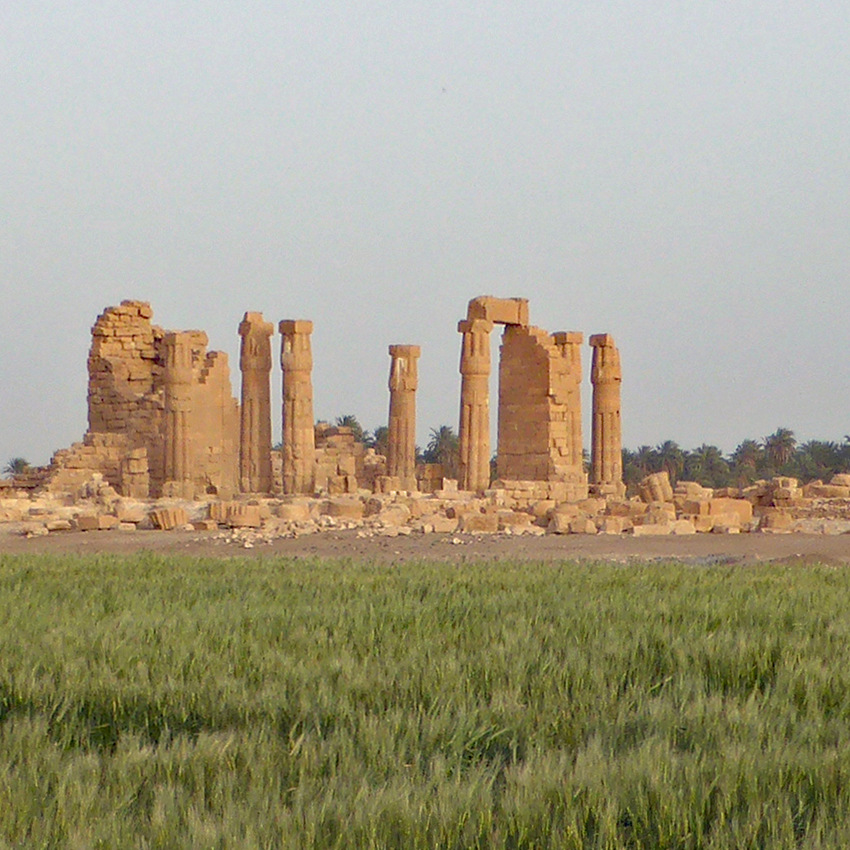
The Egyptian witness is much earlier than the surviving biblical manuscripts. In the temple of Amenhotep III at Soleb, now in Sudan, column IV N4 contains the designation conventionally transliterated tꜣ šꜣsw Y-h-w: “Shasu-land: Y-h-w.” This follows Adrom and Müller’s published transcription, not a new reading of the stone. “ShasuShasuEgyptian designation for mobile pastoral populations of the Late Bronze Age; associated lists contain a name rendered Y-h-w. It identifies neither one unified people nor a certain connection with Yahweh.Glossary · Click to read the explanation” is an Egyptian designation for mobile groups, not simply another word for Midianites. The related Ramesside witness is at Amarah-West. The often printed form yhwꜣ involves conventions of Egyptian transcription; the similarity to Hebrew YHWH is significant, but the inscription does not say “Midian,” identify Israelites or describe a rite. [10]
Weighing the southern-origin hypothesis
The strongest case is cumulative, not a deduction from Jethro alone. Leuenberger combines the Egyptian name and its possible Seir setting with the southern poems and the later “Yahweh of Teman” inscriptions at Kuntillet ʿAjrudKuntillet ʿAjrudA Sinai site with blessings invoking Yahweh of Samaria/Teman and “his asherah” around 800 BCE; inscriptions illuminate religion and writing, while the site’s function and imagery remain debated.Glossary · Click to read the explanation, around 800 BCE. Together they make a southern association worth explaining; they do not directly name its first transmitters. [11]
Adrom and Müller’s objection targets the Egyptian inference: uncertain list order and location, and uncertainty whether the name denotes a region, group or deity, prevent the equation from proving a southern cult. Leuenberger replies that Seir remains the best geographical identification even without functioning as a heading for the whole list. The disagreement is therefore about the steps between a written name and a reconstructed religious geography, not about whether an Egyptian inscription exists. [10][11]
Poetic dating creates another limit. Several poems can preserve a shared traditionShared traditionAn explanatory model in which several texts draw on circulating stories or imagery; it proves neither direct copying nor a particular lost original on its own.Glossary · Click to read the explanation, but literary borrowingLiterary borrowingUse of verbal or narrative material from an earlier text or tradition in a later work, distinguishing evidence of transfer from mere resemblance.Glossary · Click to read the explanation means they cannot automatically be counted as independent early witnesses. Conversely, late editing does not by itself prove that every underlying motif was invented late. Fleming’s distinction between a god’s place of appearance and the homeland of worshippers remains important here. [4][11]
The evidence considered here supports a graded conclusion: a southern association of Yahweh has a stronger cumulative basis than a specific claim that Jethro or a single Midianite migration introduced his worship to Israel. The latter requires an unattested transmission mechanism and firmer chronological links. Archaeology establishes regional manufacture, exchange and changing settlement; it does not presently identify a distinct “Midianite Yahweh cult.” Midian is thus an essential context for the question, not its settled answer. [4][5][6][10][11]
References and notes (19)
- Hebrew Bible, Exodus; Hebrew text and English translation at Mechon-Mamre. 2:15–22: flight to Midian, Reuel and Zipporah; biblical narrative, not a contemporary event record. Return to the text ↑
- Hebrew Bible, Exodus; Mechon-Mamre. 3:1–6: Jethro, priest of Midian, Horeb and the divine appearance. Return to the text ↑
- Hebrew Bible, Exodus; Mechon-Mamre. 18:1–12, especially 10–12: Jethro’s blessing and offerings after hearing about the Exodus. Return to the text ↑
- Daniel E. Fleming, Yahweh before Israel: Glimpses of History in a Divine Name, Cambridge University Press, 2020. Introduction, pp. 3–6 in the publisher’s excerpt: variants of the hypothesis, lack of consensus, and distinction between divine appearance and worshippers’ home. Not a reading of the whole book. Return to the text ↑
- Guillaume Charloux, Samer Ahmed Sahlah and Waleed Ali Badaiwi, “Madian revealed? Assessing the history and archaeology of the oasis of al-Badʿ in northwestern Arabia,” Semitica et Classica 14 (2021), pp. 97–141. Relevant geographical, excavation and concluding passages in the article itself: pp. 97–98, 106–111, 124–125, 129–130, 133. These replace the earlier abstract-only basis; not all pages of the article were read. Return to the text ↑
- Marta Luciani et al., “Creating a brand. Genesis, transformation and diffusion of Qurayyah Painted Ware,” PLOS One 21(8) (2026), e0351296. Abstract, §1.1, §§5.1–5.5 and the opening six paragraphs of conclusion §7: local production and comparative results. A pottery label does not establish religious identity. §1.1 and the conclusion reread; Fig. 2 visually checked for QPW 1–7 dates. Numbers designate ceramic assemblages, not populations. Return to the text ↑
- Hebrew Bible, Judges; Mechon-Mamre. 5:4–5: Seir and Edom in verse 4; Sinai in verse 5. Return to the text ↑
- Hebrew Bible, Deuteronomy; Mechon-Mamre. 33:2: Sinai, Seir and Paran. Return to the text ↑
- Hebrew Bible, Habakkuk; Mechon-Mamre. 3:3 and 3:7: Teman and Paran first; Midian in verse 7. Return to the text ↑
- Faried Adrom and Matthias Müller, “The Tetragrammaton in Egyptian Sources – Facts and Fiction,” in The Origins of Yahwism (2017), pp. 93–113. pp. 96–99: Soleb column IV N4, transcription and Amarah table; pp. 110–113: designation, geography and transmission of lists. These passages read in author-posted full text; no independent epigraphic autopsy or whole-chapter reading. Return to the text ↑
- Martin Leuenberger, “YHWH’s Provenance from the South: A New Evaluation of the Arguments pro and contra,” in The Origins of Yahwism (2017). pp. 168–175: Egyptian evidence, Seir, Teman, poetry and contrasting dates. Displayed page text read, not the platform’s AI description. Pfeiffer’s position is reported through Leuenberger’s discussion; no claim to reading Pfeiffer’s book. Return to the text ↑
- Hebrew Bible, Genesis; Masoretic text at Sefaria, with English translation for comparison. 25:1–6; 37:25–28, 36. Relevant texts read; 37:36 spells “Medanites,” not silently harmonized with “Midianites.” Return to the text ↑
- Hebrew Bible, Numbers; Sefaria. 25:1–3, 6–18; 31:1–12, 15–18. Hostility, warfare and captivity passages read, not verification of every narrated detail. Return to the text ↑
- Hebrew Bible, Judges; Sefaria. 1:16; 4:11; 6:1–6; 8:4–12, 22–28. Kenites, Hobab, Midianite raids, pursuit and booty; no universal ethnic equation of the names. Return to the text ↑
- Qurʾān, Sūrat Hūd; Arabic text at Quran.com. 11:84–90; verse 84 and displayed context 85–90 read with Mustafa Khattab’s translation. The displayed Ibn Kathir commentary was not used to reconstruct Bronze Age history. Return to the text ↑
- Princeton Geniza Project, RNL Yevr. I B 19: description and colophon. Description and dating: approximately 1008–1010 CE; colophon transcription inspected, not the entire biblical manuscript. Return to the text ↑
- Library of Congress, “The Qumran Library,” Scrolls from the Dead Sea exhibition. Opening paragraphs: collection’s date range, kinds of texts and multiplicity of copies; not a date for every individual witness. Return to the text ↑
- Hebrew Bible, Exodus 18:11 and Judges 5:4; “Miqra according to the Masorah” at Sefaria. Hebrew compared with the JPS English translation; excerpts are the openings of the two verses, without vowels or cantillation, with short editorial translations. No restored words or claim to collating all manuscripts. Judges wording also compared with Leuenberger p. 174. Return to the text ↑
- Al-Badʿ Archaeological Mission, Orient & Méditerranée: “al-Badʿ, ancient Madyan (presumed Midian),” project account. Early settlement, first millennium, Nabataeans and Madyan identification sections, French and English account; inconsistent 26/30 ha figures between versions not used. Return to the text ↑
Suggest a correction · Suggest a source for this record
Cite this record
IL Archive, «Midian», https://ilarchive.com/en/entities/midian
Continue reading