Entity · Concept
Shared tradition
A reference page linking a name, group, or concept to the materials that discuss it.
A method for evaluating texts that inherit imagery or narrative from circulating traditions, distinguishing borrowing from shared settings and independent convergence through the divine-council example.
Estimated reading time: 6 min Published Last reviewed:
Share article

Text
Introduction
Shared tradition is one possible explanation for similarities among two or more texts: images, stories, or forms of expression may derive from circulating earlier material or a connected cultural setting without one surviving work necessarily having been copied from another. This entry explains how to test that proposal against direct borrowing and independent resemblance, using heavenly-council scenes from UgaritUgaritAncient city and kingdom at Ras Shamra on the Syrian coast, flourishing between the fourteenth and early twelfth centuries BCE and preserving multilingual archives.Glossary · Click to read the explanation and the HebrewHebrewA Northwest Semitic language of the Canaanite group, encompassing Iron Age epigraphy, Biblical, Rabbinic, medieval and Modern Hebrew; its scripts and pronunciations changed over time.Glossary · Click to read the explanation Bible. Ellen WhiteEllen White, divine-council scholarHebrew Bible scholar, born in 1978 according to her publisher, author of Yahweh’s Council: Its Structure and Membership (2014).Glossary · Click to read the explanation's warning against imposing a ready-made Ugaritic scheme on every Hebrew scene is a starting point for comparison, not a verdict in advance. [1]
Reading guide
- Meaning and limits of “shared tradition”.
- Competing explanations for resemblance.
- Criteria for testing connections and direction.
- Ugaritic evidence: the Baal CycleBaal CycleA group of Late Bronze Age Ugaritic religious texts recounting Baal’s conflicts, relationships with the gods and the building of his palace.Glossary · Click to read the explanation and assembly.
- Hebrew scenes and their separate functions.
- Why textual variants matter.
- A substantive scholarly disagreement.
- Confidence levels and unresolved questions.
What does shared tradition mean?
“Tradition” need not mean one identifiable ancient book. It may consist of an orally circulated account, a poetic formula, an image of kingship and the court, or customary ways of telling a religious scene. Two communities may use this repertoire differently; a writer may rearrange inherited material or even challenge it. The observable existence of similar elements must therefore be kept separate from the claim that the texts used a particular common source. The first is a description; the second is an explanation requiring additional evidence.
Samuel SandmelSamuel SandmelSamuel Sandmel (1911–1979): American Jewish rabbi and scholar of the New Testament and Hellenistic Judaism, author of “Parallelomania” (1962) and works on early Christianity and Jewish–Christian understanding.Glossary · Click to read the explanation warned against “parallelomaniaParallelomaniaOverstating textual or conceptual parallels and inferring historical dependence without adequate contextual, chronological, or transmission evidence; not a rejection of comparison.Glossary · Click to read the explanation”: overstating similarities and then presuming literary dependenceLiterary dependenceA historical relation in which a text was composed using another text or version; similarity alone cannot establish its direction.Glossary · Click to read the explanation and a direction of borrowing without sufficient argument. He was not denying that influence exists; he was urging care in demonstrating it. [2]
Four explanations that must remain distinct
A later composition may directly use and recast an earlier work, amounting to borrowing or adaptation. Alternatively, two texts may descend from an older written source or oral transmissionOral transmissionThe passing-on of words, narratives or knowledge through hearing, performance and learning, sometimes alongside writing; degrees of stability vary with genre, setting and controls.Glossary · Click to read the explanation that is no longer fully recoverable. They may also employ a shared repertoire of forms, vocabulary, and narrative expectations available within a cultural region without relying on one identifiable original. Finally, a broad resemblance can arise independently when societies reach for recurrent images of royalty, justice, conflict, and death.
These are not mutually exclusive boxes: borrowing, oral circulation, and reinterpretation may occur in a single text's history. Evidence for borrowing thus depends not simply on the number of similar items but on their specificity, sequence, rarity, and surrounding differences. Critical editions of the Baal Cycle, including Volume I edited by Mark S. SmithMark S. SmithScholar of the Hebrew Bible and Ugaritic religion whose work examines the divine family and biblical monotheism.Glossary · Click to read the explanation, help establish the textual witnesses before comparisons with other literature are made. [3]
How can transmission be tested?
Comparison begins by reading each witness within its own setting, rather than extracting two matching phrases. Relevant questions include language, literary genre, the scene's function, possible dates of composition, and the dates of surviving physical copies. The date of a copied tablet does not automatically establish when its story originated; nor does the era in which a story is set establish when its account was written.
The next step is to compare details. Are there several unusual actions in the same sequence? Can shared wording be verified in the relevant languages, or has a modern translation manufactured the resemblance? Do contact networks and circulating genres make communication plausible? Are there intermediary witnesses or transformations of the motif? A documented route strengthens a case but is not a universal precondition for influence. Conversely, gaps in the evidence cannot be filled by presenting an invented “lost original” as a fact.
Ugarit: genuine evidence in a specific setting
Ancient UgaritUgaritAncient city and kingdom at Ras Shamra on the Syrian coast, flourishing between the fourteenth and early twelfth centuries BCE and preserving multilingual archives.Glossary · Click to read the explanation at Ras Shamra on the Syrian coast preserved literary tablets from the Late Bronze AgeLate Bronze AgeAn archaeological period around 1600–1200 BCE in much of the Near East, with international diplomacy, exchange and religious diversity; its endpoints vary by region.Glossary · Click to read the explanation. The Baal CycleBaal CycleA group of Late Bronze Age Ugaritic religious texts recounting Baal’s conflicts, relationships with the gods and the building of his palace.Glossary · Click to read the explanation offers a complex divine world: ElElEl is a senior deity in Late Bronze Age Ugaritic texts, portrayed as father of the divine family and a council authority, alongside his consort Athirat. This entry does not cover every linguistic use of El.Glossary · Click to read the explanation has senior authority, BaalBaalUgaritic storm god and warrior king who defeats Yamm, builds his palace with El’s consent and confronts Mot. References to El and Dagan as fathers do not define a single genealogy.Glossary · Click to read the explanation is the storm god in conflict with Yamm, and divine messengers, decisions, and negotiations form parts of the narrative. A Metropolitan Museum of Art essay recounts Yamm's envoys addressing the assembly, El's response, and Baal's resistance. This museum synthesis draws on published scholarship; detailed identification of Ugaritic lines would require consulting the critical text editions. [4]
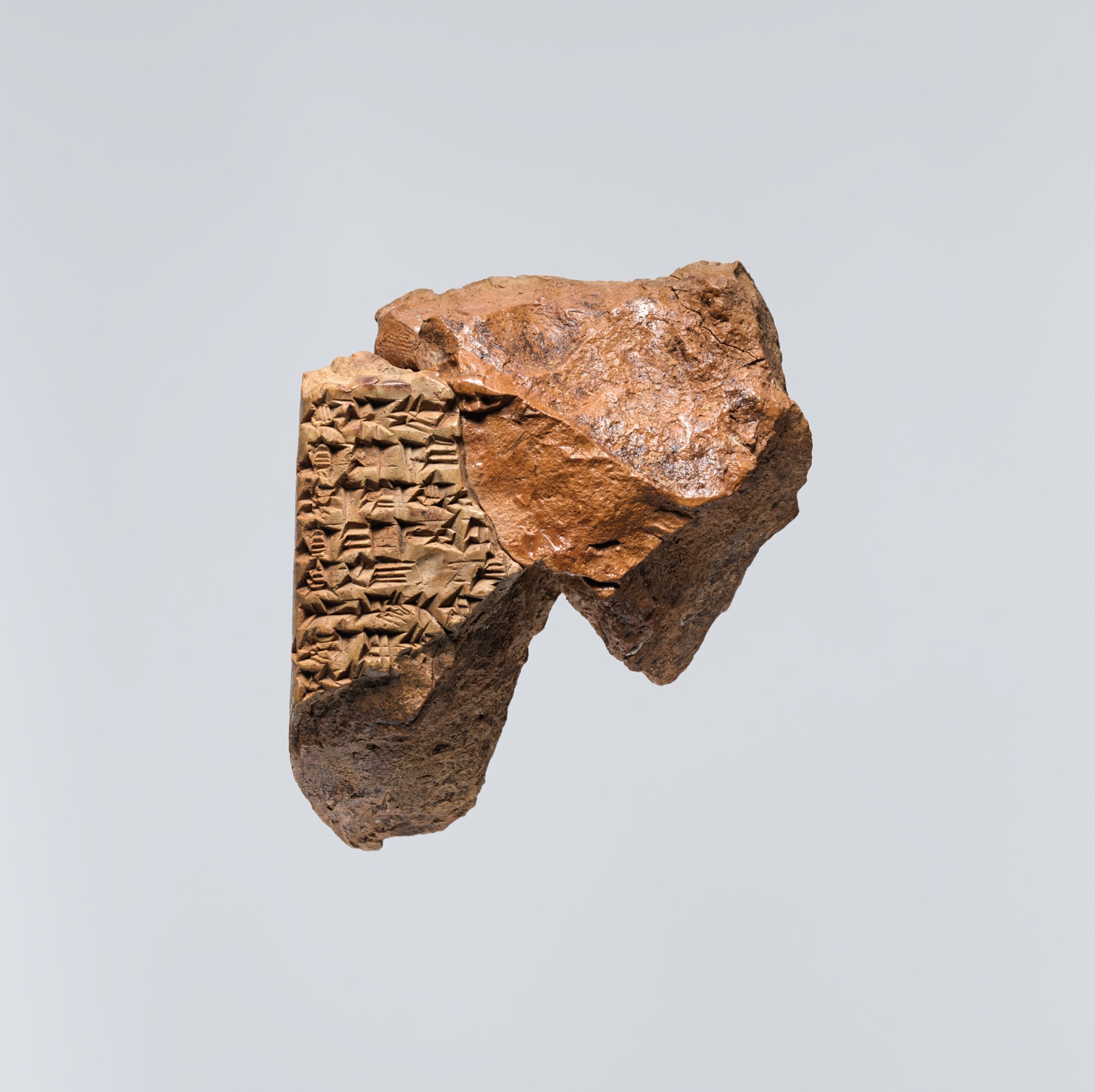
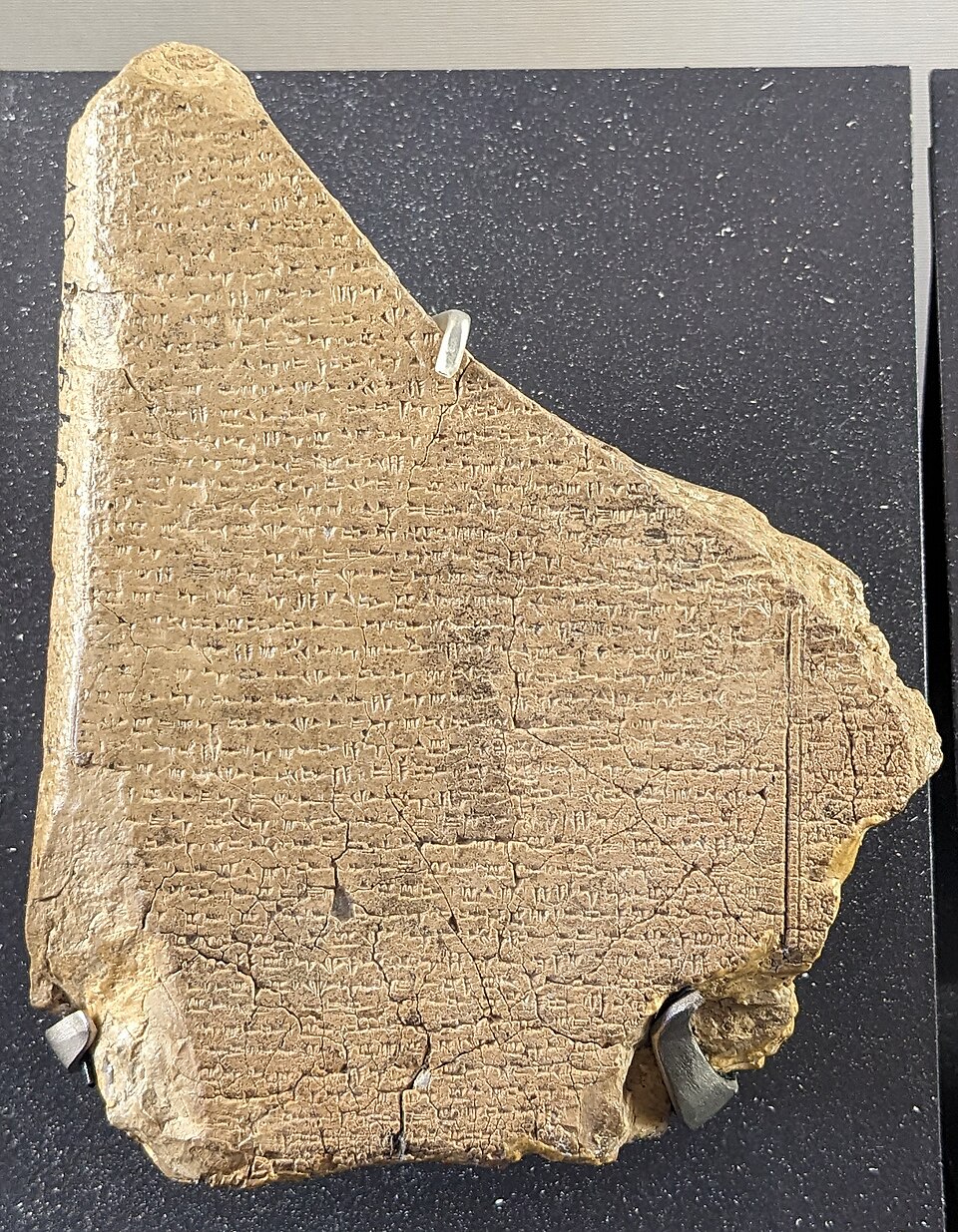
The cover of this entry is a modern metaphorical illustration of traditions branching; it portrays no historical occurrence. One real object whose identity was independently checked is Louvre tablet AO 16640: the museum describes it as an incomplete Ugaritic-cuneiform fragment of the Baal Cycle from Ras Shamra, broadly dated to about 1400–1200 BCE. The material object attests to an Ugaritic text open to archaeological study, but it does not in itself prove that a Hebrew author copied its lines or that a specific scene discussed here survives on it. [5]
Hebrew scenes: a throne and judgment, not identical characters
In the Books of KingsBooks of KingsBiblical books narrating the kingdoms' history, including the campaign against Mesha in 2 Kings 3.Glossary · Click to read the explanation, Micaiah son of Imlah's vision (1 Kings 22:19–23) places YahwehYahwehThe proper name of Israel’s deity, written יהוה (YHWH), the Tetragrammaton. Its exact ancient pronunciation is not directly preserved; texts and inscriptions witness its history.Glossary · Click to read the explanation enthroned with the heavenly hostHeavenly HostA heavenly group whose meaning varies: celestial bodies in some texts, attendants around the throne deliberating in 1 Kings 22.Glossary · Click to read the explanation standing on either side. A question about luring Ahab is put to the assembly, and a spirit volunteers for a mission. Throne, heavenly attendants, and commissioning belong here to a prophetic pronouncement of judgment on a king. This is a paraphrase of the passage, not a verbatim quotation from a modern translation. [6]
By contrast, the Book of PsalmsBook of PsalmsCollection of ancient Hebrew poems and prayers; Leviathan has different roles in Psalms 74 and 104.Glossary · Click to read the explanation, Psalm 82, depicts God standing in a divine assembly and judging beings accused of unjust rule; its speech urges justice for the poor and orphan. Its judicial purpose differs from the mission assigned to the spirit in Kings. The Hebrew wording concerning God and the “assembly of El” remains subject to interpretation. Similarity alone cannot identify every participant or equate the figures in the two biblical scenes with specific Ugaritic gods or named angels. [7]
Deuteronomy shows why witnesses and variants matter
At Deuteronomy 32:8 the Masoretic Hebrew reads “sons of Israel,” while the Qumran witness 4QDeutj has “sons of God”; Greek witnesses present forms rendered “sons of God” or “angels of God.” The Book of DeuteronomyBook of DeuteronomyTorah book presenting commandments in Moses’ discourse and grounding Sabbath rest in slavery and liberation from Egypt.Glossary · Click to read the explanation places this allocation of nations within a poem, and comparison with heavenly councils must identify which reading is in view. Emanuel Tov argues that “sons of Israel” reflects a scribal change that softened an older portrayal of multiple divine beings. That is Tov's textual-critical interpretation, not a statement by the ancient manuscript about the intentions of its scribe. The comparison here rests on Tov’s published presentation of the textual witnesses rather than on a new examination of the Qumran fragment. [8]
A real disagreement about what counts as a council
White objects to beginning with a model built from Ugarit and seeking it in every Hebrew passage. Her criteria for a “Council of Yahweh” scene include Yahweh's presiding role, producing a narrower selection of passages. In a 2016 review, Heath Dewrell questions the effects of those criteria: they exclude Psalm 82 and Deuteronomy 32, although he sees these as important evidence for diverse biblical council ideas. The dispute is about sampling and classification, not proof of a specific transmission chain from a Ugaritic tablet to a Hebrew verse. [9]
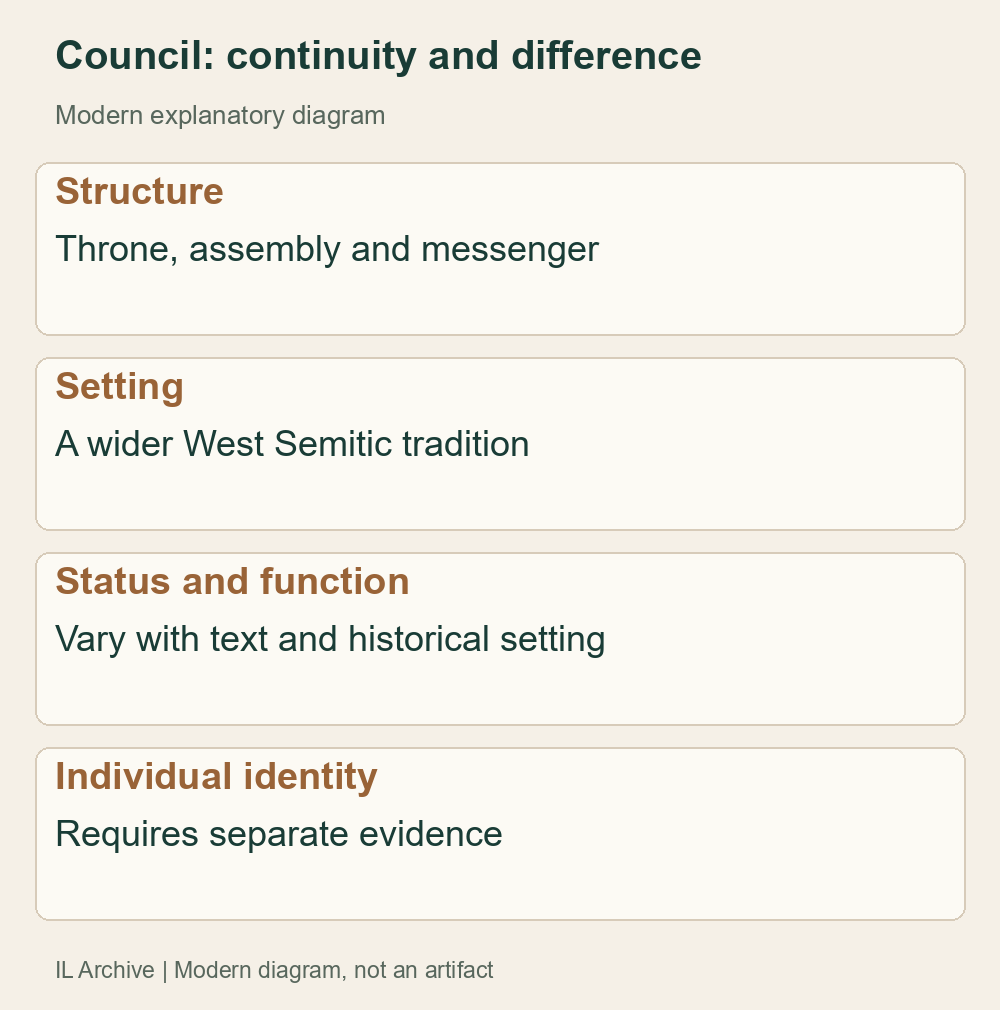
This modern explanatory diagram distinguishes a recurrent throne–assembly–messenger pattern from each text's cast, functions, and ranking. Structural resemblance does not show that a particular Ugaritic god necessarily became a particular angel, or that a biblical writer handled a specific Ugaritic tablet.
Methodological conclusion and confidence
It is firmly supported that Ugaritic and biblical texts contain comparable images of a heavenly assembly, and that differences of genre, setting, language, and function are evidence to explain rather than obstacles to suppress. The claim that these scenes draw on a wider regional repertoire is a plausible historical interpretation, constrained by the surviving record. A single lost written prototype or a particular direct act of copying requires further support.
A responsible account should specify, for every comparison, what was actually observed, what was inferred, what alternative remains, and which new evidence would change the assessment. “Shared tradition” then becomes a testable research explanation, not a convenient name for a lost source invoked whenever texts resemble one another.
References and notes (9)
- Ellen White, Yahweh’s Council: Its Structure and Membership, Mohr Siebeck, 2014, publisher preview. Chapter 1, §§1.1–1.2, printed pp. 1–4 (PDF pp. 17–20), against projecting a Ugaritic model onto Hebrew sources; not the whole book. Return to the text ↑
- Samuel Sandmel, “Parallelomania,” Journal of Biblical Literature 81/1 (1962), pp. 1–13. Journal metadata on JSTOR and the opening passage in a separate web transcription; the publisher’s full 13 pages were not accessed. Return to the text ↑
- Mark S. Smith, The Ugaritic Baal Cycle, Volume I, Brill, print publication 1994. Publisher description and table of contents only, notably introduction and KTU 1.1–1.2; not the restricted commentary. Return to the text ↑
- Ira Spar, “The Gods and Goddesses of Canaan,” Metropolitan Museum of Art, April 2009. The museum essay was read in full, especially the Ugarit overview and Yamm’s envoys in the divine assembly. Return to the text ↑
- Musée du Louvre, object record AO 16640 / cl010141442, “tablette,” Baal Cycle. Entire museum object entry: accession, findspot, script, date, and fragmentary condition; no independent epigraphic reading of the tablet. Return to the text ↑
- 1 Kings 22:19–23, Hebrew and English text, Sefaria. Verses 19–23 and narrative setting; summarized rather than reproducing a copyrighted translation or performing independent textual criticism. Return to the text ↑
- Psalm 82:1–8, Hebrew and modern JPS English translation on Sefaria. Verses 1–8, divine assembly, demand for justice, and the phrase “assembly of El”; interpretations of Yahweh’s position remain debated. Return to the text ↑
- Emanuel Tov, “The Sons of Israel or God? – Deuteronomy 32:8,” TheTorah.com, 2023 (updated 2026). Complete web essay and notes, Deut 32:8–9 in MT, 4QDeutj and Septuagint; not a physical inspection of 4QDeutj or the full critical apparatus. Return to the text ↑
- Heath D. Dewrell, review of Ellen White’s Yahweh’s Council, Biblical Interpretation 24/1 (2016), pp. 118–120. The review’s pp. 118–120 displayed on ResearchGate, especially its critique of excluding Psalm 82 and Deut 32; not White’s full book. Return to the text ↑
Suggest a correction · Suggest a source for this record
Cite this record
IL Archive, «Shared tradition», https://ilarchive.com/en/entities/shared-tradition
Continue reading