Entity · Concept
Aniconism
A reference page linking a name, group, or concept to the materials that discuss it.
Aniconism marks divine presence without a central figural cult image in a specific context. An image-free practice differs from an explicit prohibition; neither follows simply from an unidentified statue.
Estimated reading time: 5 min Published Last reviewed:
Share article
Text
Introduction
Aniconism describes ways of making a deity present in religious practice without placing a figural divine image at the centre of worship. Yet a standing stone, an empty throne and a written prohibition are not interchangeable evidence. The key questions are whether the absence of an image reflects an actual cultic choice, an explicit rule, or simply the limitations of what has survived archaeologically.
The problem is particularly clear with ElElEl is a senior deity in Late Bronze Age Ugaritic texts, portrayed as father of the divine family and a council authority, alongside his consort Athirat. This entry does not cover every linguistic use of El.Glossary · Click to read the explanation at UgaritUgaritAncient city and kingdom at Ras Shamra on the Syrian coast, flourishing between the fourteenth and early twelfth centuries BCE and preserving multilingual archives.Glossary · Click to read the explanation. His prominence in the texts does not in itself identify a statue, and the Metropolitan Museum's discussion warns that uncertain attribution must not be mistaken for proof that images of El were forbidden.[1]
What aniconism means
“Image” here does not mean every drawing or ornament; the issue is a representation of a deity in a religious setting. A community might depict humans or animals, or use sacred symbols, without treating an anthropomorphic or zoomorphic figure as the central cult image. Milette Gaifman proposes studying aniconism as the marking of divine presence without figural depiction rather than assuming it is an inevitably primitive stage before image-making.[2]
Researchers distinguish de facto aniconism in a particular practice, perhaps centred on an uncarved stone, from programmatic aniconism, an articulated rejection of divine images. Iconoclasm is the destruction or attack on images that exist; it may accompany a prohibition but is not identical to it. This analytical distinction is associated with Tryggve N. D. MettingerTryggve N. D. MettingerTryggve N. D. Mettinger (1940–2023) was a Swedish Old Testament scholar and professor of Old Testament exegesis at Lund from 1978 to 2003.Glossary · Click to read the explanation and subsequent discussion; the same scheme must not be imposed mechanically on every society.[3]
Missing evidence is not a ban
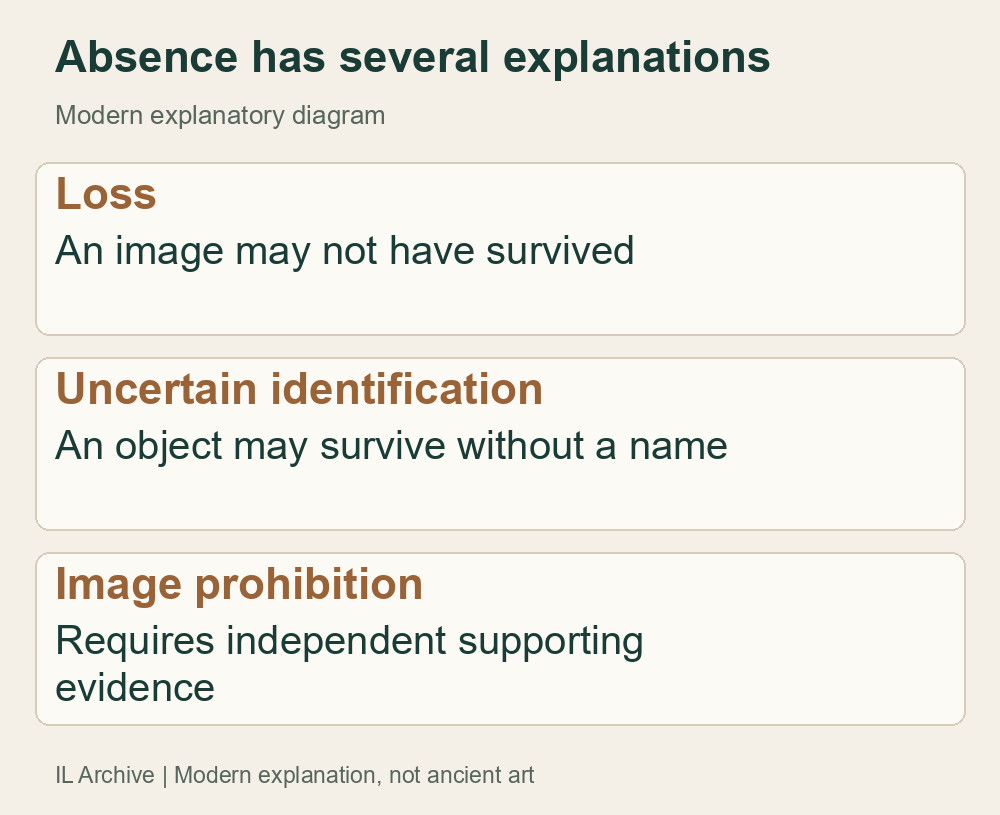
There are several possible reasons why no confidently identified statue is known: none may have been made in that setting; objects may have been lost, destroyed or not yet excavated; or a surviving figure may lack an inscription naming its subject. Establishing a prohibition requires independent evidence such as explicit normative writing or polemic, dated and attributed to a particular group. “No securely identified image of El has been found” does not imply “El was forbidden to be depicted.” The first describes the limits of a surviving record; the second makes a historical claim about behaviour.[1][3]
Standing stones and empty thrones
Possible non-figural markers include upright stones, sometimes called maṣṣebôt in HebrewHebrewA Northwest Semitic language of the Canaanite group, encompassing Iron Age epigraphy, Biblical, Rabbinic, medieval and Modern Hebrew; its scripts and pronunciations changed over time.Glossary · Click to read the explanation texts, and sacred spaces symbolised by an unoccupied throne. A stone does not announce its purpose by its shape alone: it may mark a boundary, commemorate a person or event, support a structure, or have a cultic role. Standing-stone practices are attested in the LevantThe LevantThe Levant is a regional name for lands along the eastern MediterraneanGlossary · Click to read the explanation, but identifying any one stone as the representation of a particular god requires its archaeological context.[4]
At the ancient Judahite sanctuary at Tel Arad in the Negev, the inner shrine provides a persuasive cultic setting for standing stones. Their precise divine referents nevertheless remain debated, and the case alone cannot prove that all worship of YahwehYahwehThe proper name of Israel’s deity, written יהוה (YHWH), the Tetragrammaton. Its exact ancient pronunciation is not directly preserved; texts and inscriptions witness its history.Glossary · Click to read the explanation was image-free. In some Phoenician contexts an empty throne may signify an unseen divine presence; in others, a throne may simply have lost the statue it once supported. An unoccupied seat is not self-interpreting.[4]
Ugarit and El: texts versus objects
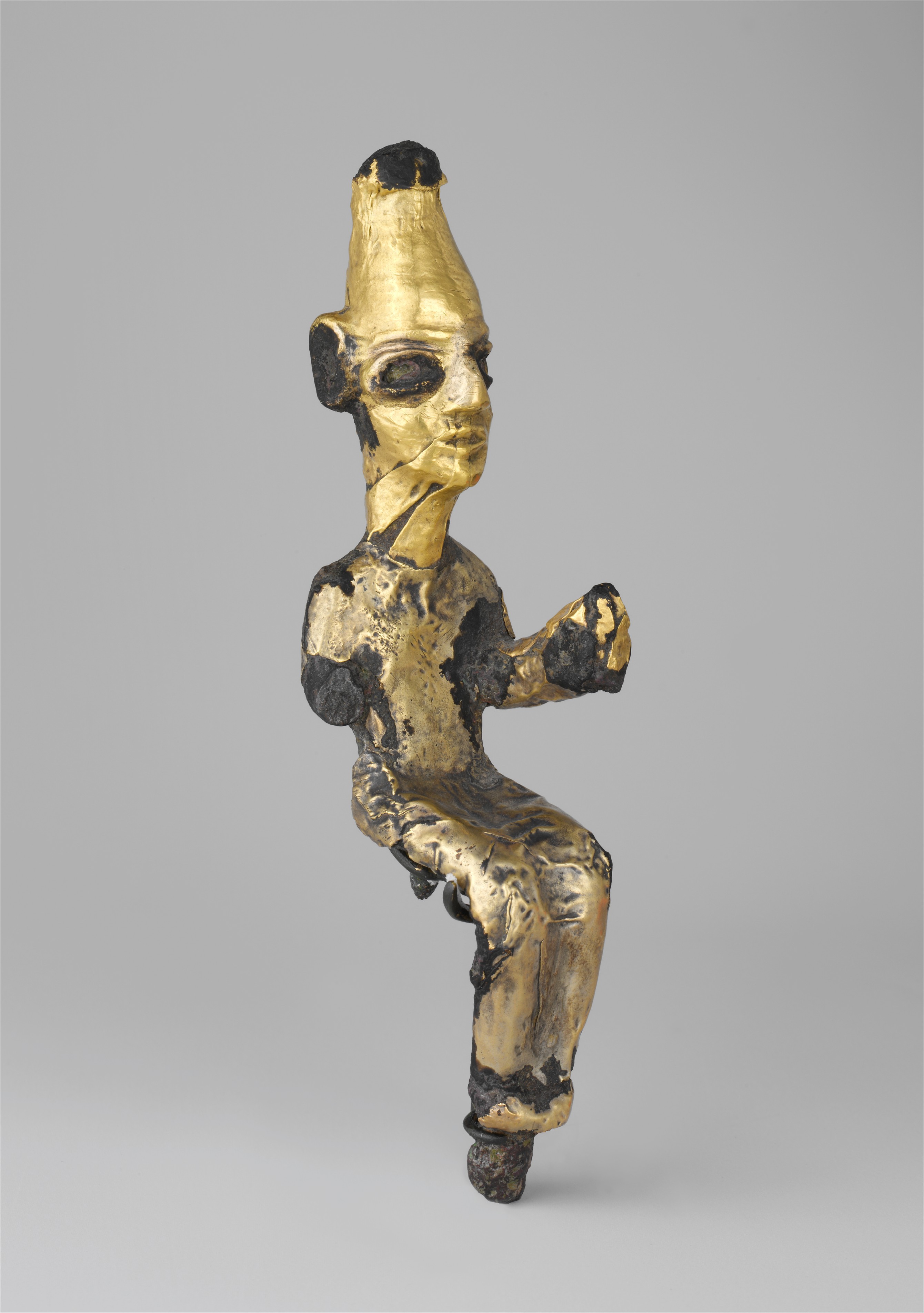
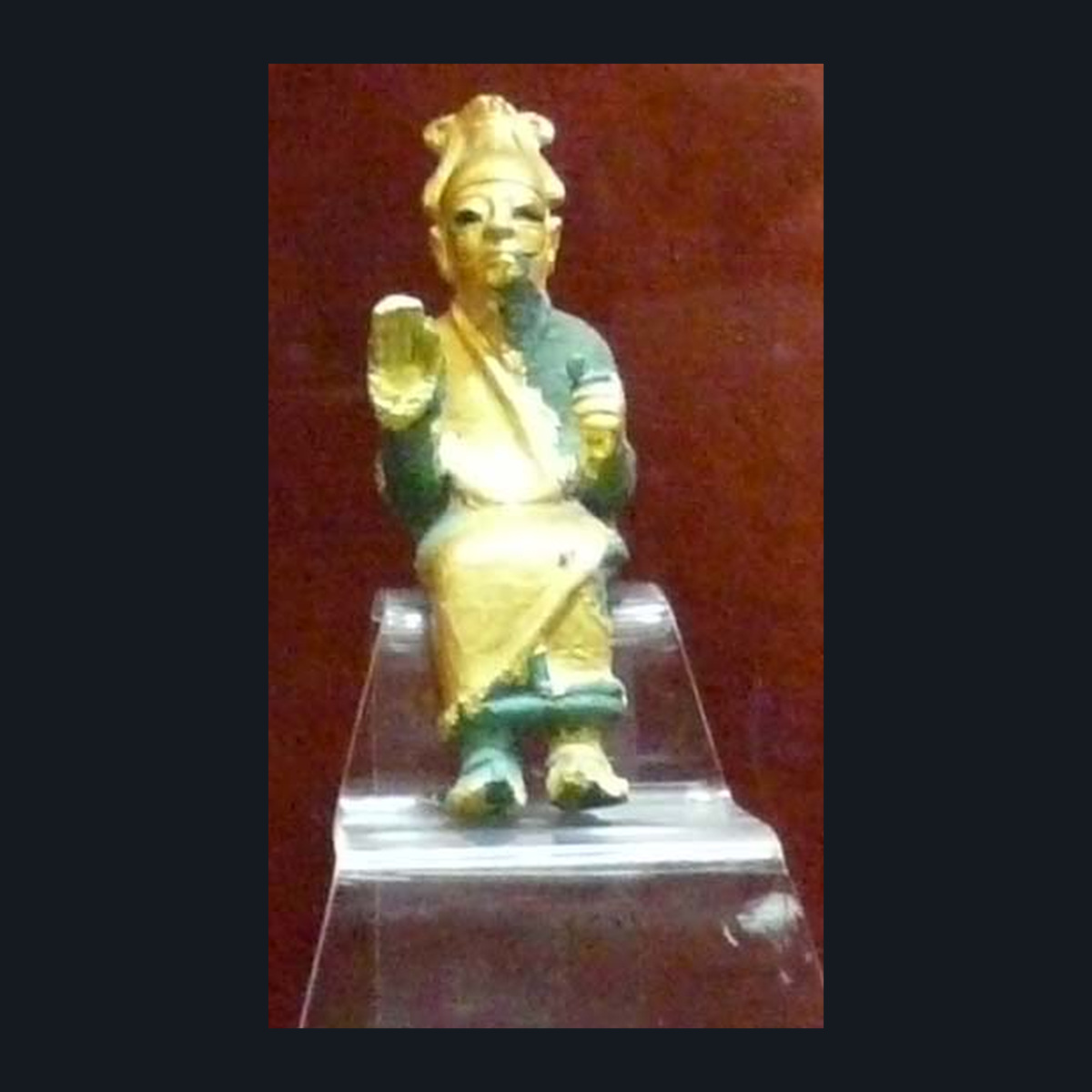
Ugaritic literature presents El as an eminent elder deity and father of the gods, but a literary description is not an inscribed label attached to a statue. In the Metropolitan Museum's overview, Ira Spar notes that small seated and crowned figures have repeatedly been identified with El; discoveries also leave open that some represent an unidentified deity or a deified king. The overview does not report a securely dedicated temple of El among those identifiable from its evidence.[1]
A separate museum catalogue describes a gold-foil-covered bronze “Enthroned deity”, dated approximately to the fourteenth–thirteenth centuries BCE, accession 32.161.45. It suggests that seated divine figures of this kind likely depict El. This is an iconographic attribution, not an inscription bearing his name; the object page does not identify it as a statue excavated from El's temple at Ugarit. Its qualified suggestion should be read alongside the broader caution of the museum essay. Canaanite divine figurinesFigurineA small shaped object depicting a human, animal or abbreviated form, in clay, stone or another medium. Its form alone does not establish its use; manufacture, handling traces and find context matter.Glossary · Click to read the explanation disprove a blanket claim that no deities were depicted in the region, without identifying every figure.[5]
Biblical prohibitions and their limits
In DeuteronomyBook of DeuteronomyTorah book presenting commandments in Moses’ discourse and grounding Sabbath rest in slavery and liberation from Egypt.Glossary · Click to read the explanation 4:12 and 15–19, the injunction against making an image is tied to the claim that Israel heard a voice but saw no form at Horeb. The Decalogue in Exodus likewise forbids the production and worship of images; the verse numbers differ between some editions. These are textual witnesses to articulated norms in the forms in which they survive, not direct archaeological proof that every inhabitant of Israel and Judah followed such norms at every date.[6]
Biblical passages also give standing stones different meanings. Genesis 28:18–22 narrates Jacob raising a stone and anointing it at Bethel, while Deuteronomy 16:22 rejects the setting up of a cultic pillar. This contrast does not license treating a literary episode as the excavation history of a specific place, but it does caution against reading all the texts as a single, unchanging voice about ritualRitualAn organised or distinguished practice meaningful to a community; it may leave traces, but its form alone does not reveal an associated doctrine.Glossary · Click to read the explanation.[7]
Was Yahwistic worship originally aniconic?
Scholars disagree. Mettinger traced a possible development from West Semitic non-figural monuments to programmatic rejection of images. S. I. Kang and Thomas RömerThomas RömerScholar of Hebrew Bible history and composition, holding the Biblical Milieux chair at the Collège de France.Glossary · Click to read the explanation, despite differences of emphasis, argue that archaeological imagery and biblical polemic resist a simple narrative of an absolute ban from the beginning; they connect the development of explicit prohibitions to the literary and religious changes surrounding and following the Babylonian exileBabylonian exileJudean deportations to Babylonia and the kingdom’s collapse in the early sixth century BCE; several phases, not everyone removed or returned at once.Glossary · Click to read the explanation. The proposed existence of a cult statue of Yahweh in the First Temple is a debated historical inference, not an archaeologically recovered object bearing a certain identification.[3][8]
A normative passage is evidence for its writers' rhetoric, while a figure or seal supplies material evidence about the setting in which it was used. Connecting the two requires argument. Non-figural symbols need not exclude other representational practices: in MesopotamiaMesopotamiaHistorical region associated with the Tigris and Euphrates: Uruk, Ur, Eridu, cuneiform, Sumer, Akkad, Babylon and Assyria, their languages and cults, and the limits of archaeological evidence.Glossary · Click to read the explanation, the solar disc and anthropomorphic depictions could both be associated with the god ShamashShamashMesopotamian god of the sun and justice, shown before Hammurabi on an eighteenth-century BCE stele preserved in the Louvre.Glossary · Click to read the explanation. Modes of divine representation could coexist within a single tradition.[9]
A responsible test
An investigation must specify which deity, which place and which period are at issue; distinguish figural cult images from symbols or monuments; date the relevant texts; and assess the actual extent and biases of the archaeological sample. Only then can it ask whether the evidence points to an image-free practice, an explicit prohibition, or an unresolved case. Used this way, “aniconism” is a context-bound historical description, not an all-purpose judgement about an entire people or religion.[2][10]
References and notes (10)
- Ira Spar, “The Gods and Goddesses of Canaan,” Heilbrunn Timeline of Art History, Metropolitan Museum of Art, 1 April 2009. El paragraph: uncertain identification of seated figures, possibly an unknown deity or deified king. Return to the text ↑
- Milette Gaifman, “Aniconism: Definitions, Examples and Comparative Perspectives,” Religion 47, no. 3 (2017), pp. 335–352; only the accessible abstract and opening discussion were checked, not all pages. Abstract and opening discussion introducing divine presence without figural representation; not a complete reading of pp. 335–352. Return to the text ↑
- S. I. Kang, “In Search of the Origins of Israelite Aniconism,” Acta Theologica 38/1 (2018), pp. 84–98; discusses Mettinger’s de facto/programmatic distinction critically; Mettinger’s 1995 book was not read in full. Abstract, sections 1–3 and concluding summary; esp. §3 on standing stones and limits of generalizing from archaeology. Return to the text ↑
- Thomas Römer, “Biblical Aniconism? Representing the Gods of Ancient Israel and Judah,” in When Children Draw Gods (Springer, 2023), pp. 385–395; also Kang (2018), §3. Sections “Should One Set Aniconism and Iconism in Opposition?” and “Iconism and Aniconism”: functions of stelae, Arad and empty thrones. Return to the text ↑
- Metropolitan Museum of Art, “Enthroned deity,” accession 32.161.45, bronze and gold foil, Levant, ca. 14th–13th centuries BCE. Object description, date, medium; “likely represent El” is a typological suggestion, not an inscribed identification or proven Ugaritic findspot. Return to the text ↑
- Deuteronomy 4:12, 15–19; Exodus 20, prohibition on images. Checked in Mechon-Mamre’s published English text, not independently collated against the Hebrew. Deuteronomy 4:12–19; Exodus 20 at https://www.mechon-mamre.org/e/et/et0220.htm (image command numbered 3–4 here, often 4–5 elsewhere). Return to the text ↑
- Genesis 28:18–22 and Deuteronomy 16:22, English Bible text at Mechon-Mamre; literary episodes do not independently date archaeological sites. Genesis 28:18–22 at the cited link; Deut 16:22 at https://www.mechon-mamre.org/e/et/et0516.htm . Return to the text ↑
- Thomas Römer (2023), “Evidence for Images of Yhwh” and “The Rise of Judaism and the Rise of Aniconism”; Kang (2018), §§2–4. Their historical reconstructions differ and do not constitute identification of a recovered First Temple statue. Named Römer sections and Kang’s conclusion; interpretive debate over dating prohibitions and cult statues, not a named surviving object. Return to the text ↑
- Thomas Römer (2023), section “Iconism and Aniconism,” discussing Shamash represented by a solar disc and human form, and Phoenician empty thrones. Paragraphs on Shamash’s solar disc and empty thrones; analogy, not evidence of direct transmission to Ugarit or Israel. Return to the text ↑
- Milette Gaifman (2017), accessible abstract and introductory discussion on the risks of equating disparate aniconic traditions or treating them as stages of religious development. Abstract and opening paragraphs only; not a full reading of pp. 335–352. Return to the text ↑
Suggest a correction · Suggest a source for this record
Cite this record
IL Archive, «Aniconism», https://ilarchive.com/en/entities/aniconism
Continue reading