Person · Philosopher
Plato
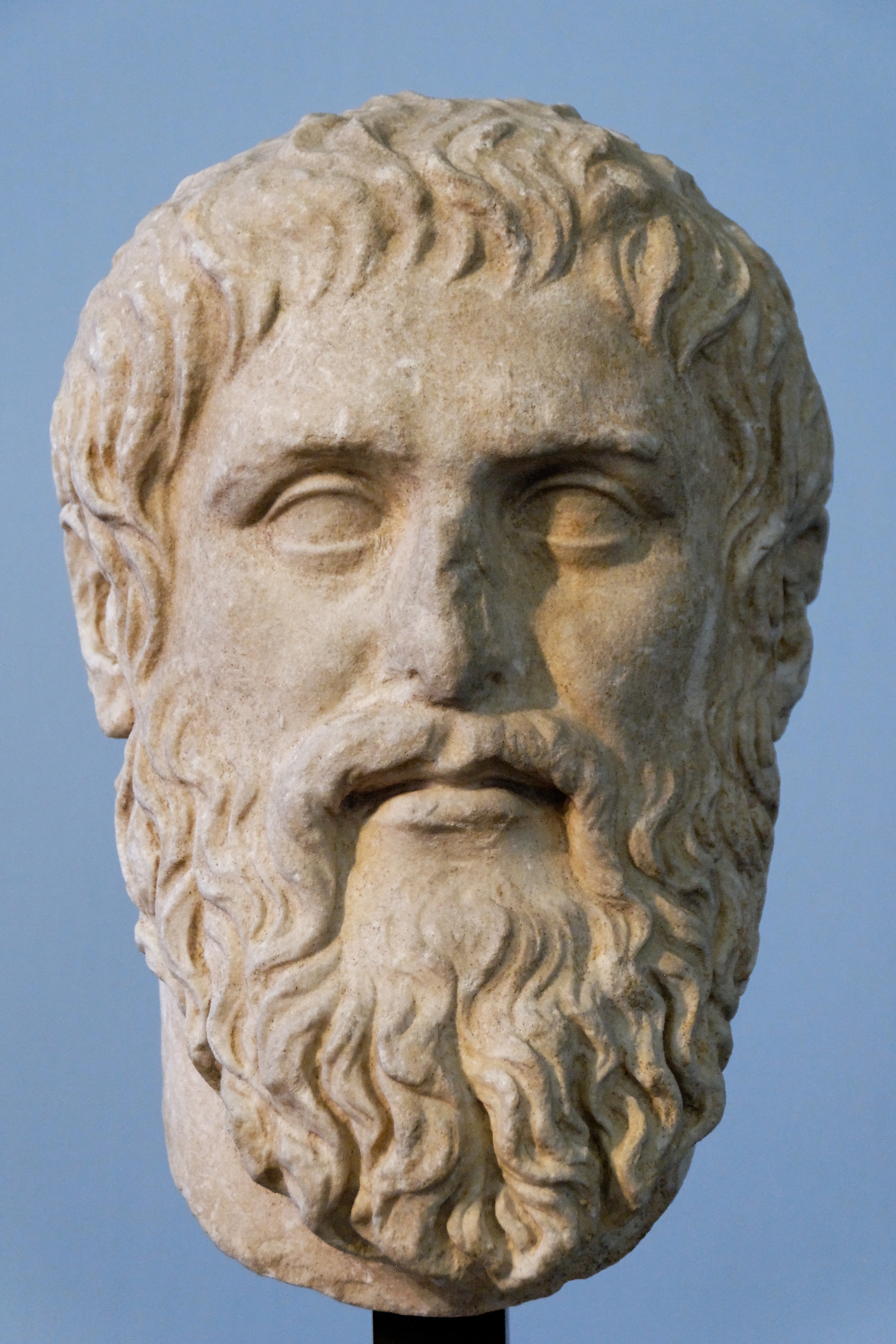
Plato (approximately 427–347 BCE) was a Greek philosopher who explored goodness, justice and cosmic order through philosophical dialogues.
Estimated reading time: 1 min Published Last reviewed:
Share article
Text
Plato (approximately 427–347 BCE) was a Greek philosopher whose dialogues explore goodness, justice, knowledge and the nature of the world. His texts help the Archive trace a philosophical account of divinity and cosmic order in the fourth century BCE. His life dates are approximate, and ancient sources differ over them. [3]
Book two of the Republic, a dialogue about justice and the organization of the city, makes goodness and perfection criteria for the stories about gods taught to the young. It excludes divine deception and change for the worse. This argument belongs to a discussion of education and the formation of citizens; it does not describe the beliefs of all Greeks. [1]
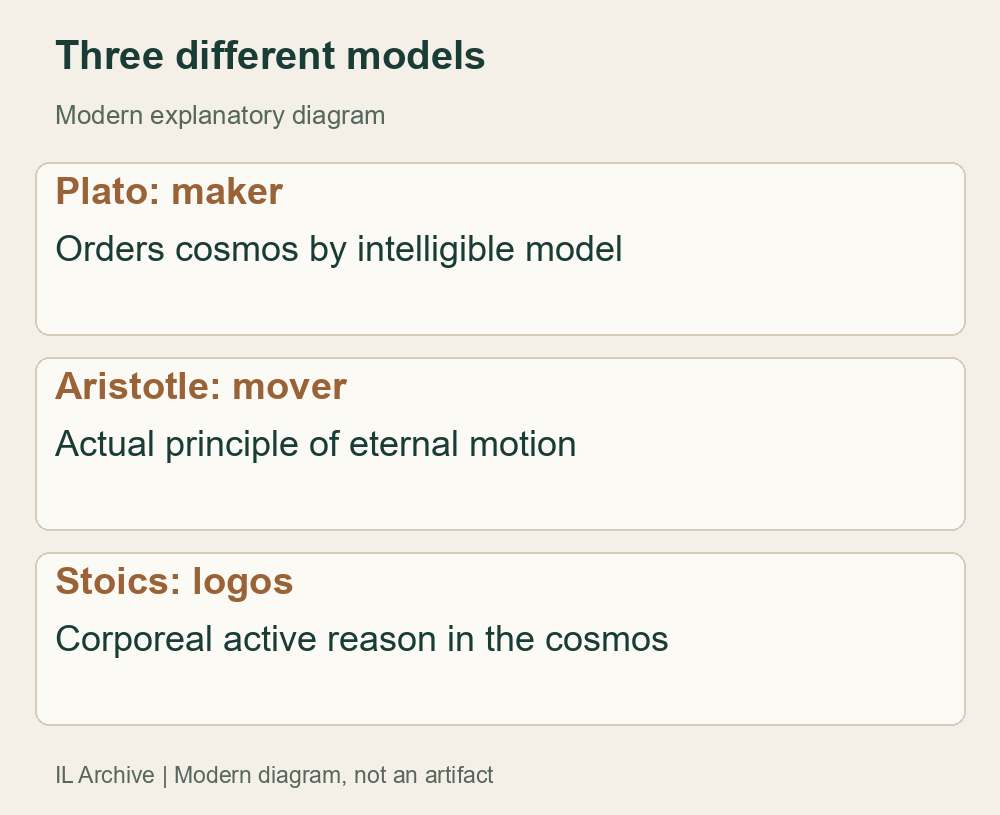
The Timaeus explains cosmic order through a good craftsman following an unchanging model grasped by reason. This maker is known as the demiurgeDemiurgeThe good craftsman through whom Plato explains cosmic order in the Timaeus, following an unchanging model grasped by reason.Glossary · Click to read the explanation. The text presents a movement from disorder to order; identifying it with a doctrine of matter’s creation from nothing requires further argument. We read it to understand its own account before comparing later religious interpretations. [2]
References and notes (3)
- Plato, Republic II, translated by Benjamin Jowett Book II, 380–383; goodness, perfection and rejection of divine transformation. Return to the text ↑
- Plato, Timaeus, translated by Benjamin Jowett 27d–30b; good maker, intelligible model and ordering disorder. Return to the text ↑
- Plato, Internet Encyclopedia of Philosophy Introduction and section 1a (birth) only; traditional dates approximately 428/427–348/347 BCE, not certainty about an individual year. Return to the text ↑
Suggest a correction · Suggest a source for this record
Cite this record
IL Archive, «Plato», https://ilarchive.com/en/people/plato
Continue reading