Entity · Concept
Demiurge
A reference page linking a name, group, or concept to the materials that discuss it.
The good craftsman through whom Plato explains cosmic order in the Timaeus, following an unchanging model grasped by reason.
Last reviewed:
Text
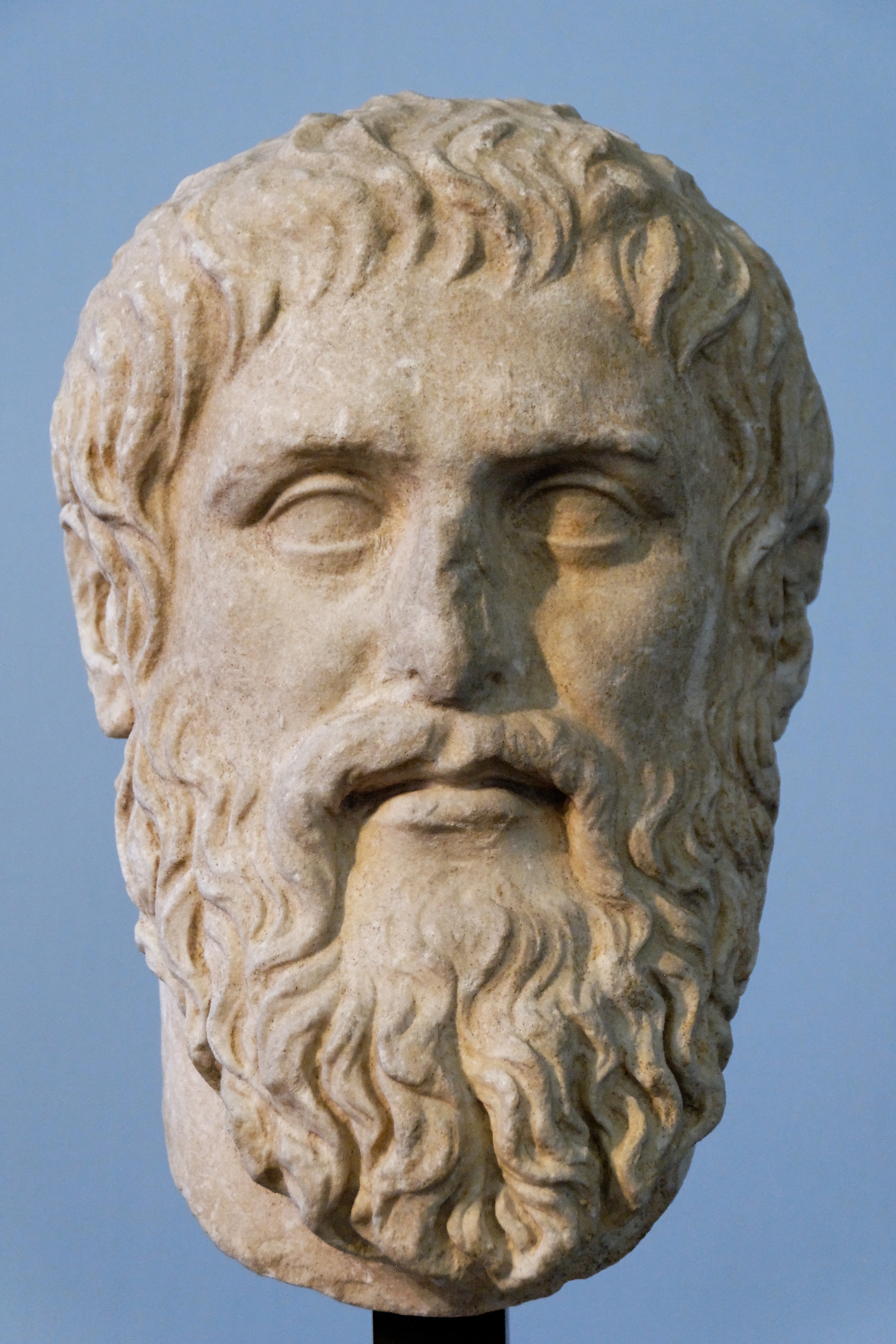
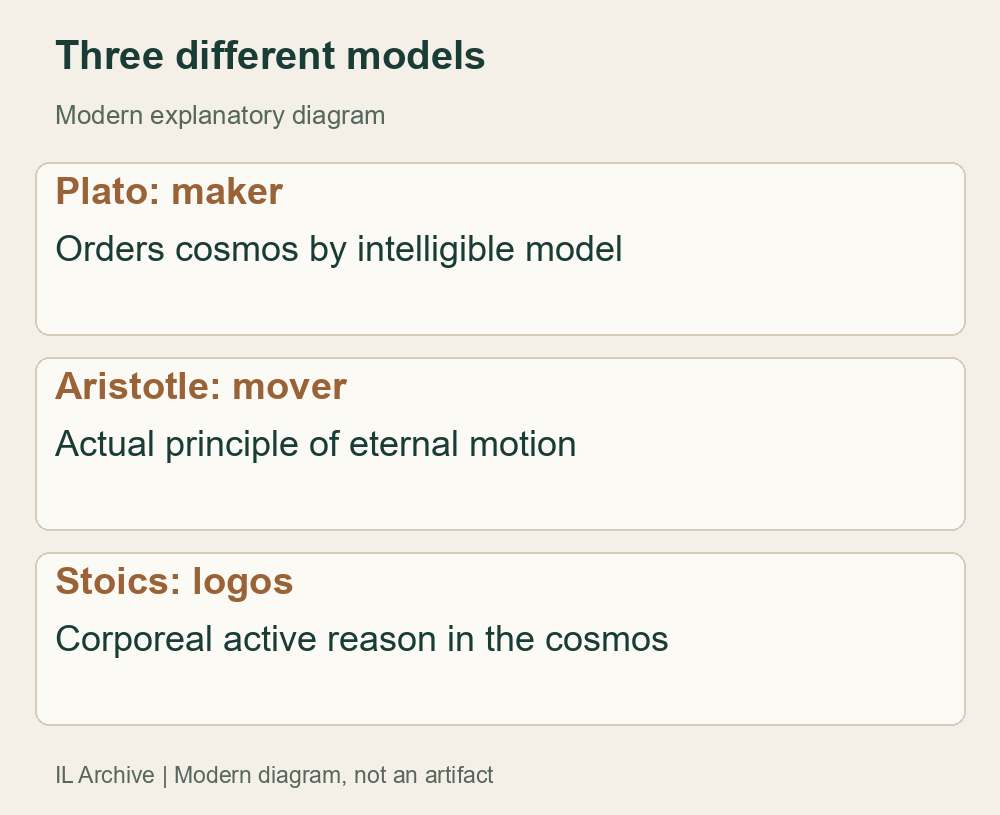
The demiurge, or “craftsman”, is the organizer of the world in the Timaeus by PlatoPlatoPlato (approximately 427–347 BCE) was a Greek philosopher who explored goodness, justice and cosmic order through philosophical dialogues.Glossary · Click to read the explanation, the Greek philosopher of the fourth century BCE. The text calls him good: he wants things to be as good as possible and brings order out of disorder. [1]
He looks to an “intelligible model”, an unchanging pattern grasped by reason, and makes the perceptible world resemble it. The image explains cosmic order through craft performed according to a model. Its question is how the world became ordered and beautiful; this passage alone does not establish the creation of matter from nothing. [1]
Interpreters disagree over whether the making describes an event in the past or presents, through a story, principles that always underlie the world. That dispute remains open. This entry concerns the Timaeus’s maker. In other traditions, in different historical settings, the identity and role attached to the name must be examined in their own texts. [2]
References and notes (2)
- Plato, Timaeus, translated by Benjamin Jowett 27d–30b; good maker, intelligible model and ordering disorder. Return to the text ↑
- Plato’s Timaeus, Stanford Encyclopedia of Philosophy Sections 2 (literal and metaphorical readings) and 4 (status of the account) only. Return to the text ↑
Suggest a correction · Suggest a source for this record
Cite this record
IL Archive, «Demiurge», https://ilarchive.com/en/entities/demiurge
Continue reading