Person · philosopher_or_theologian
Tertullian
Latin Christian author of the late second and early third centuries with a distinctive body–spirit vocabulary.
Metadata
These are descriptive fields, not conclusions.
- Edition
- 2
Text
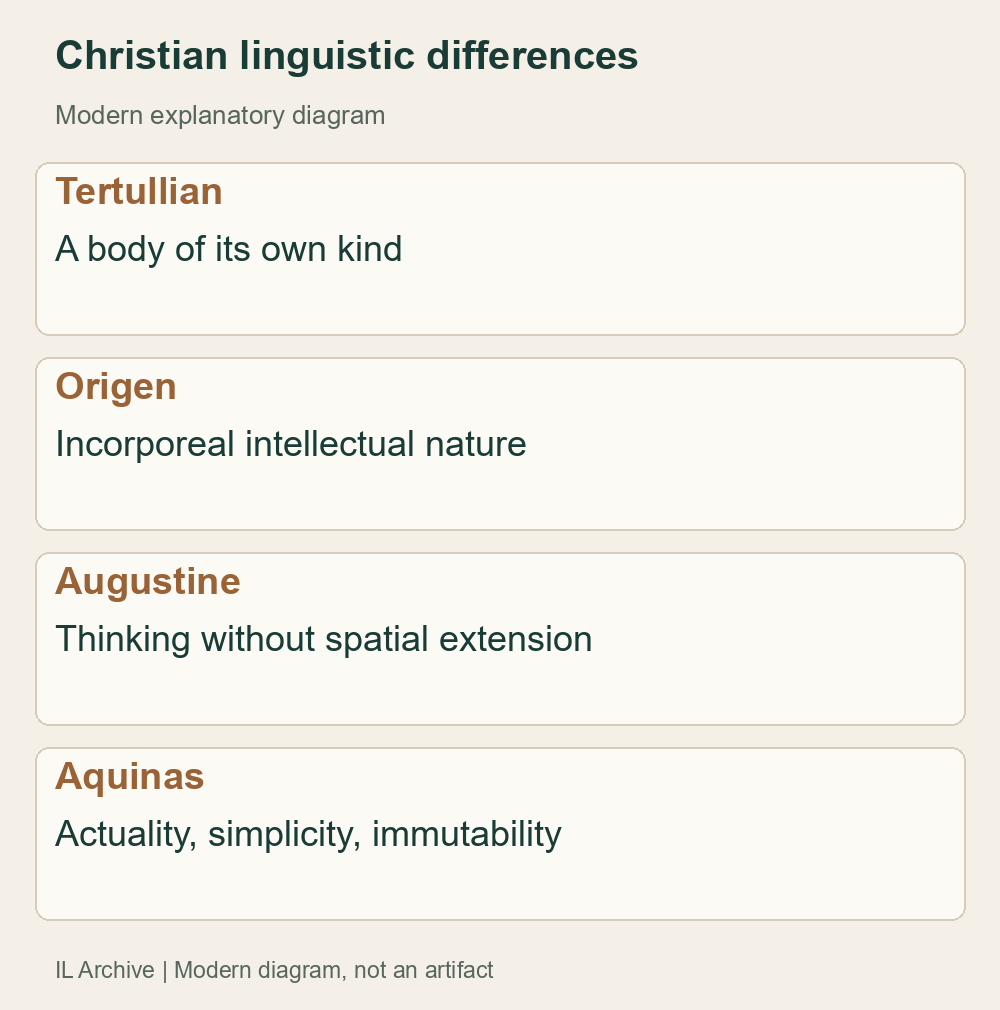
Against Praxeas 7 speaks of divine spirit as a body of its own kind. Read it within the argument concerning the Word’s reality and distinction, not as human anatomy. [1]
This vocabulary differs from OrigenOrigenSecond- and third-century Christian exegete; the surviving First Principles argues for an incorporeal God.Glossary · Click to read the explanation’s or AquinasThomas AquinasThirteenth-century theologian linking incorporeality, simplicity and immutability through philosophical premises.Glossary · Click to read the explanation’s incorporealityDivine incorporealityDenial of a material divine body; distinct from image prohibition and simplicity.Glossary · Click to read the explanation. The associated image is a modern conceptual comparison, not a documented historical likeness.
References and notes
- Tertullian, Against Praxeas, chapters 7 and 14 Corpus sui generis passage; ch. 14 distinguishes the Son’s appearances and invisible divinity. Return to the text ↑
Research history
Substantive changes are retained here. Minor copy edits remain in the internal operational log.
-
Substantive record update
Suggest a correction · Suggest a source for this record
Cite this record
IL Archive, «Tertullian», Edition 2, https://ilarchive.com/en/people/tertullian