The Instruction of Ptahhotep Chapter 1
The Listening Son
*The vizier’s words* Before the lesson begins, Isesi reminds the vizier that no one is born wise. Ptahhotep speaks of a woman working at a grindstone, a guest at a meal and a petitioner waiting to be heard. The examples take his son from the court to the fields and back again. In his closing words, Ptahhotep imagines listeners teaching their children. Centuries later, the copyist reaches the end of the roll.
SourcesTurn the pages with the arrows, the arrow keys or a swipe.

THE ROLL
In the Middle Kingdom, an Egyptian scribe copied a work set in the much older reign of King Isesi. Black and red ink carry the words on papyrus.

THE VIZIER
At the court of Isesi, the vizier Ptahhotep asks the king’s leave to train a successor. The teaching calls that successor a staff for his old age.

Ptahhotep describes the cost of age in small details. He can scarcely hear, his bones ache, and yesterday slips from his memory. He asks for a successor to support him.

Isesi tells him to teach the son the speech of earlier generations. Someone who learns to listen can become an example to others. Wisdom will have to be learned.

GOOD COUNSEL
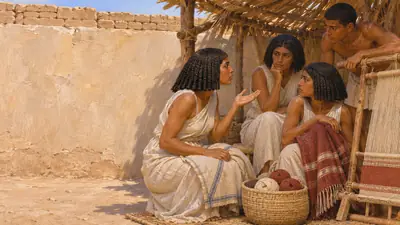
Ptahhotep begins by asking his son to seek advice from people of every rank. A woman grinding grain may offer words as rare as a fine green stone.

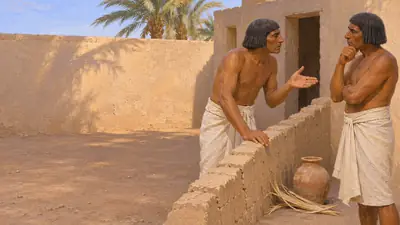
In the hearing, a man with rank raised his voice. Ptahhotep told his son to lower his hands and let the other man’s words show what he was like.
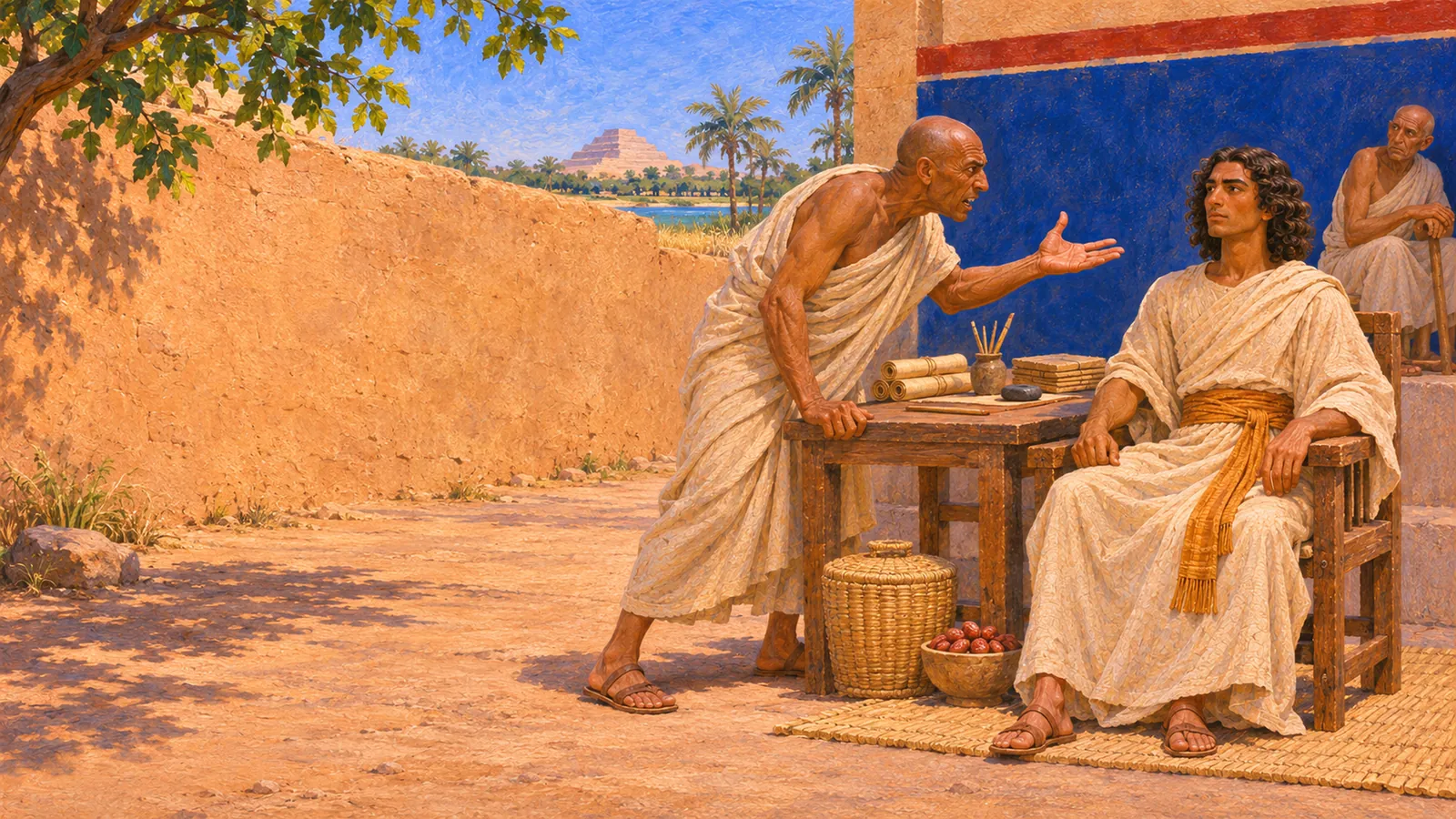
When a man of your own rank speaks in anger, said the father, give the judges a chance to hear him. They will notice who kept his temper.

What if a man of little means quarrels with you? The vizier warned his son against using his rank to take out his anger on him.

A steward can bend a decision for a little gain, said Ptahhotep. The right measure will outlast the gain. He called that lasting order Ma’at.

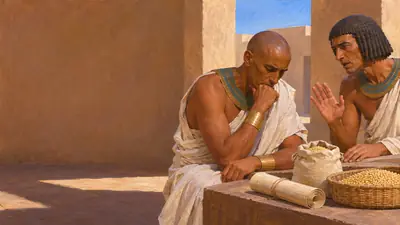
A man thinks a scheme will fill his grain measure. In his father’s examples, such plans leave the schemer without even a loaf of bread.

At a high official’s table, let your host offer what he chooses. Ptahhotep tells his son to accept his portion and wait for his turn to speak.
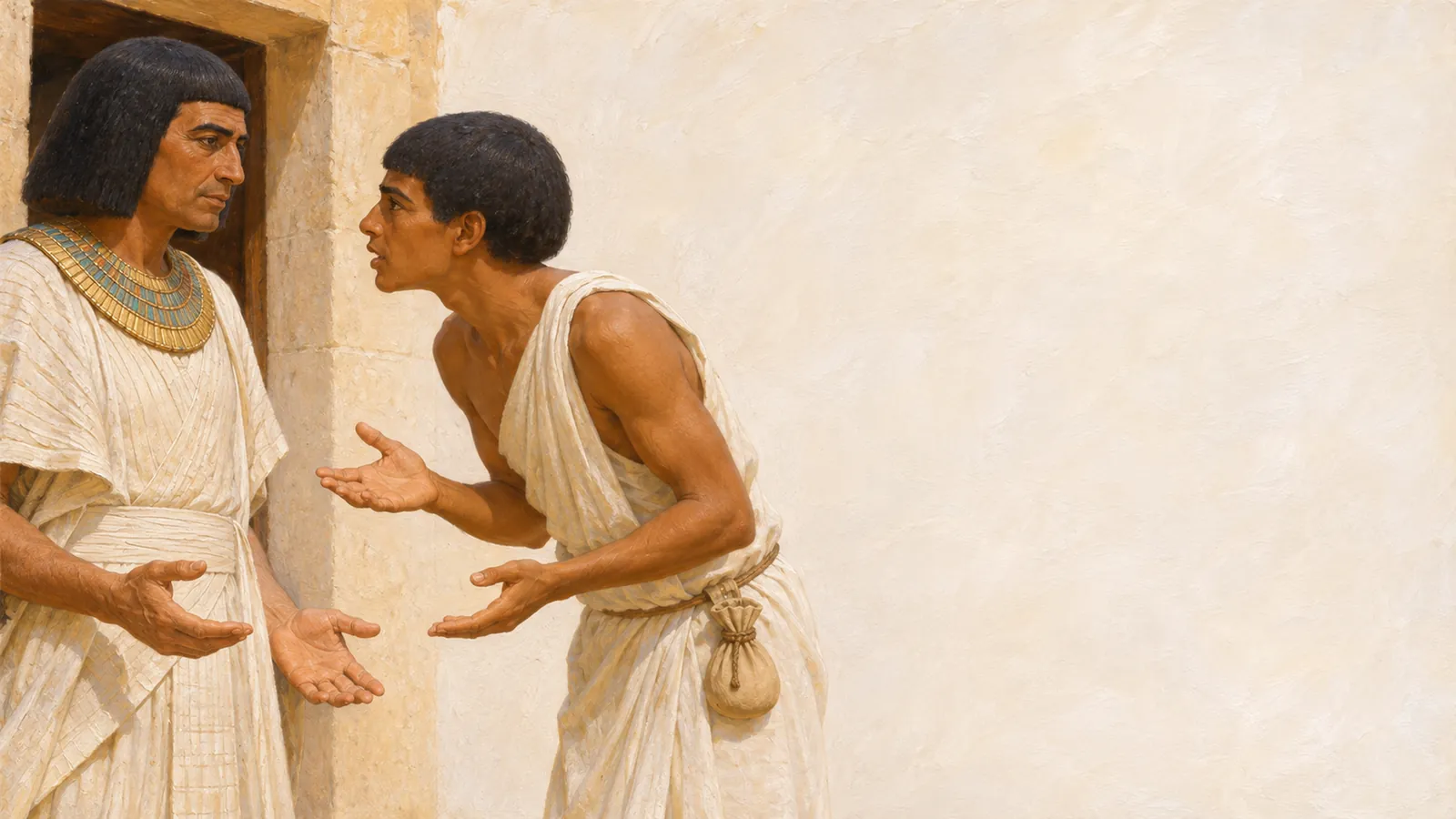
If you carry words between officials, keep to the message you were entrusted with. Adding an insult could turn two people against each other.

If your crop comes in well, let it stand without boasting before your neighbor. Ptahhotep says the same of having a family. Each household has its own fortunes.

A prosperous man may once have had very little. The father tells his son to judge him by what he has made of his life.

See to your household, said Ptahhotep, but leave part of the day for what gladdens your heart. Wealth alone can leave a man cheerless.

The old vizier pictured a son who takes good care of his household. He spoke of the father’s affection, and of the worry when a child turns away from his counsel.

Wait in the place assigned to you in the palace antechamber. Pushing to the front will gain you little, Ptahhotep tells his son.

People will trust a man who can govern his own appetites, the vizier says. Before he leads his neighbors, they have to find him dependable.

A messenger should report his business clearly and without hesitation. In council, give the account you came to give, says Ptahhotep.

When a large task is placed in your hands, think beyond today. Ptahhotep reminds his son that the consequences may only appear later.

The man has come to tell you how he was wronged. Let him finish, says the father. Even if you cannot grant his request, give him a full hearing.

In Ptahhotep’s world, a visitor owed restraint to the household that welcomed him. The father warns that abusing such trust can end a friendship.

Ptahhotep calls greed an illness. It sets relatives against each other and separates wives from husbands. He would rather leave his son a name for dealing fairly.

When provisions are divided, keep to your share. A little given willingly to a relative, says the father, can settle a quarrel.

Speaking of marriage in his time, the vizier asks a husband to see that his wife has food, clothing, and reason for joy in their house.

Share what you have with friends, Ptahhotep says. We plan for tomorrow without knowing when our turn will come to need a friend.
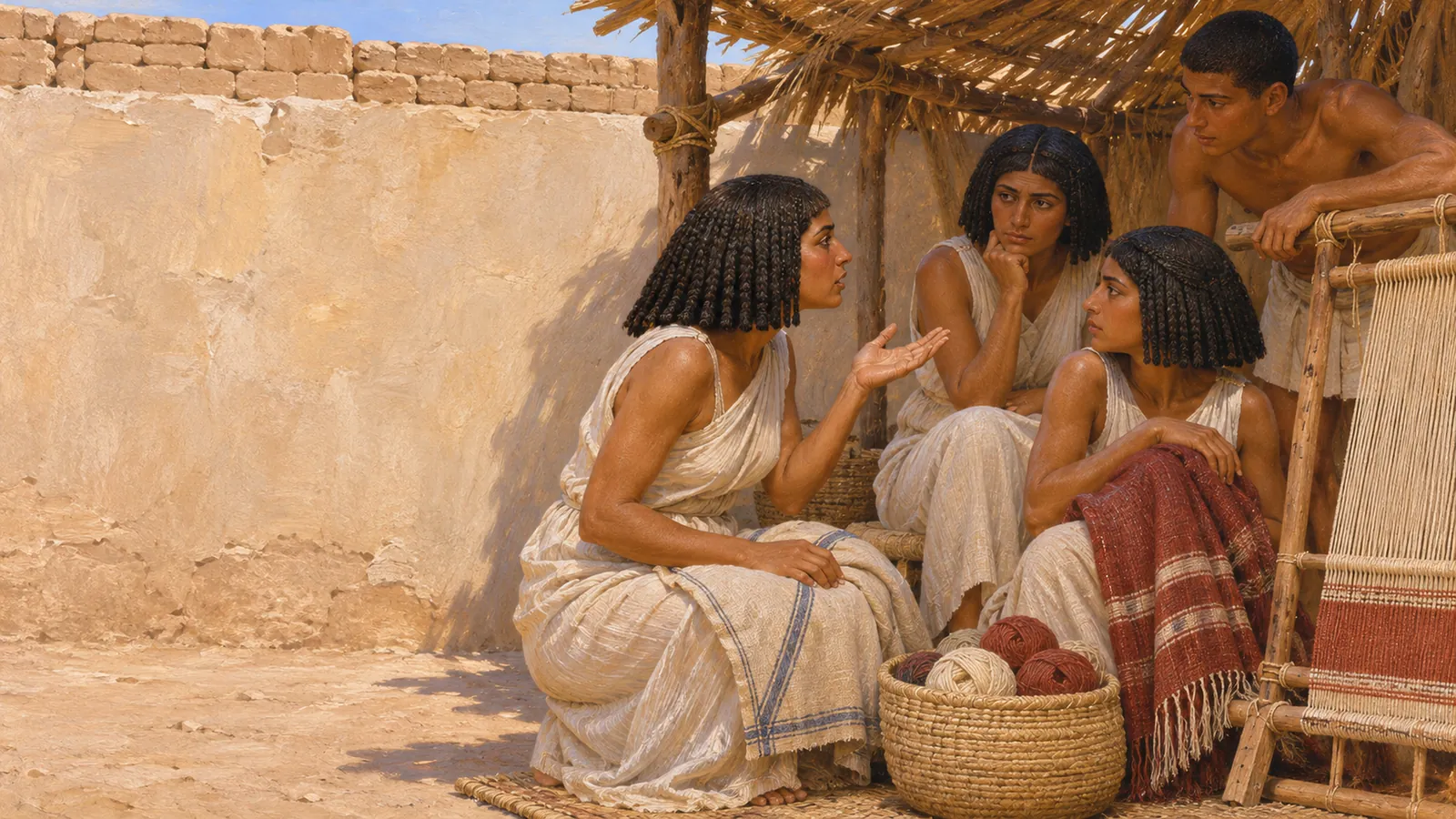
In council, what you choose to repeat matters. Someone passes on a hurtful account. Ptahhotep asks his son to speak from what he has seen for himself.
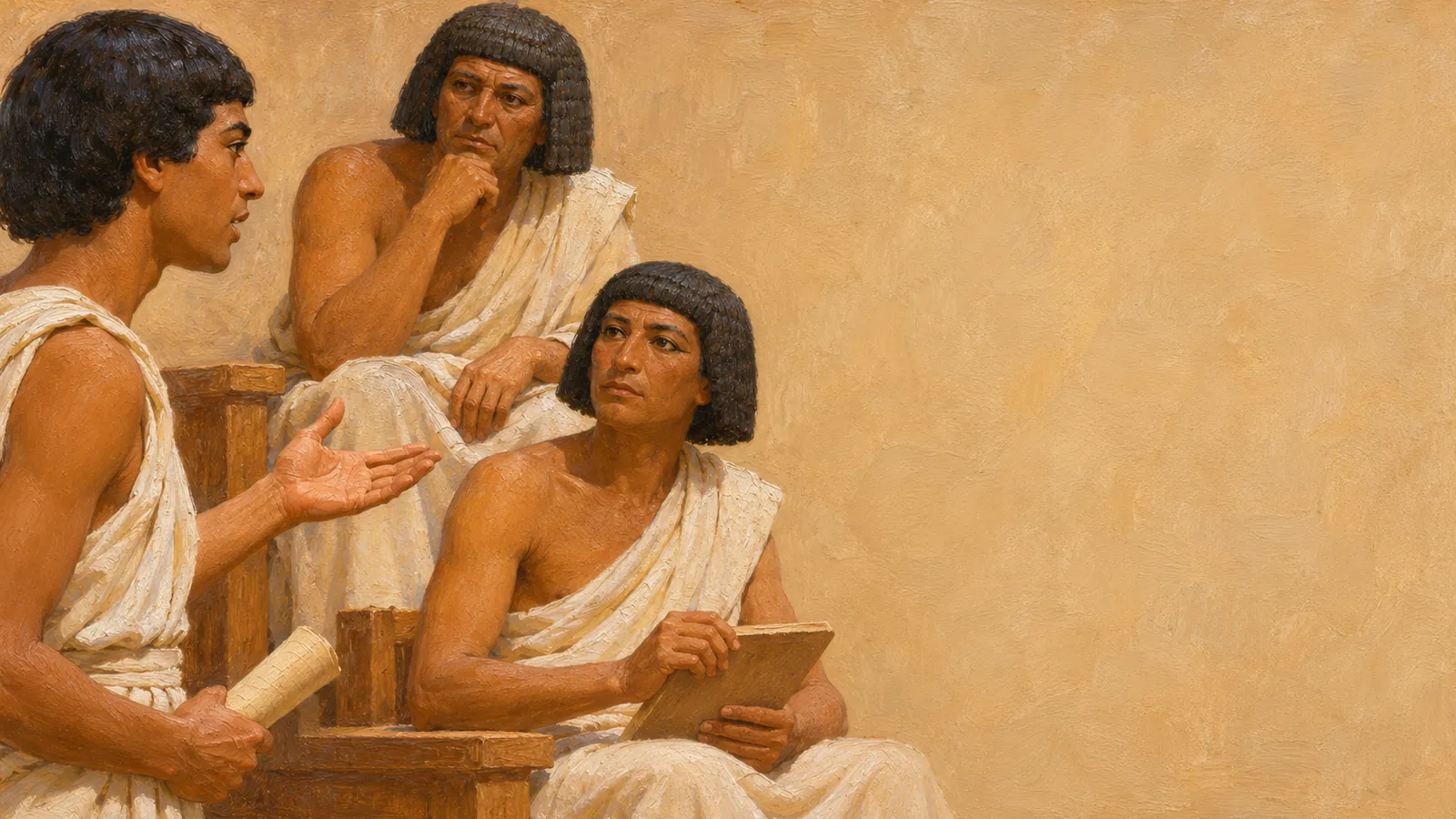
Speaking before the council is a craft of its own, said Ptahhotep. Wait until you have something useful to offer the people who are listening.

Speak gently if you have authority, the father tells his son. When a man is fuming, take a moment to steady yourself before you answer.

When an official is burdened and angry, the vizier advises giving him room. He may be ready to speak again once his anger passes.

Give a superior advice that will really help with his task. The vizier describes how an official who listens can in turn support the person who helped him.

At a hearing, the judge should keep an even course, the father says. If he leans to one side, people will judge his conduct in turn.

Ptahhotep pauses over a misdeed. In one reading of his difficult words, a judge can weigh a man’s honesty before deciding whether to let the matter go.
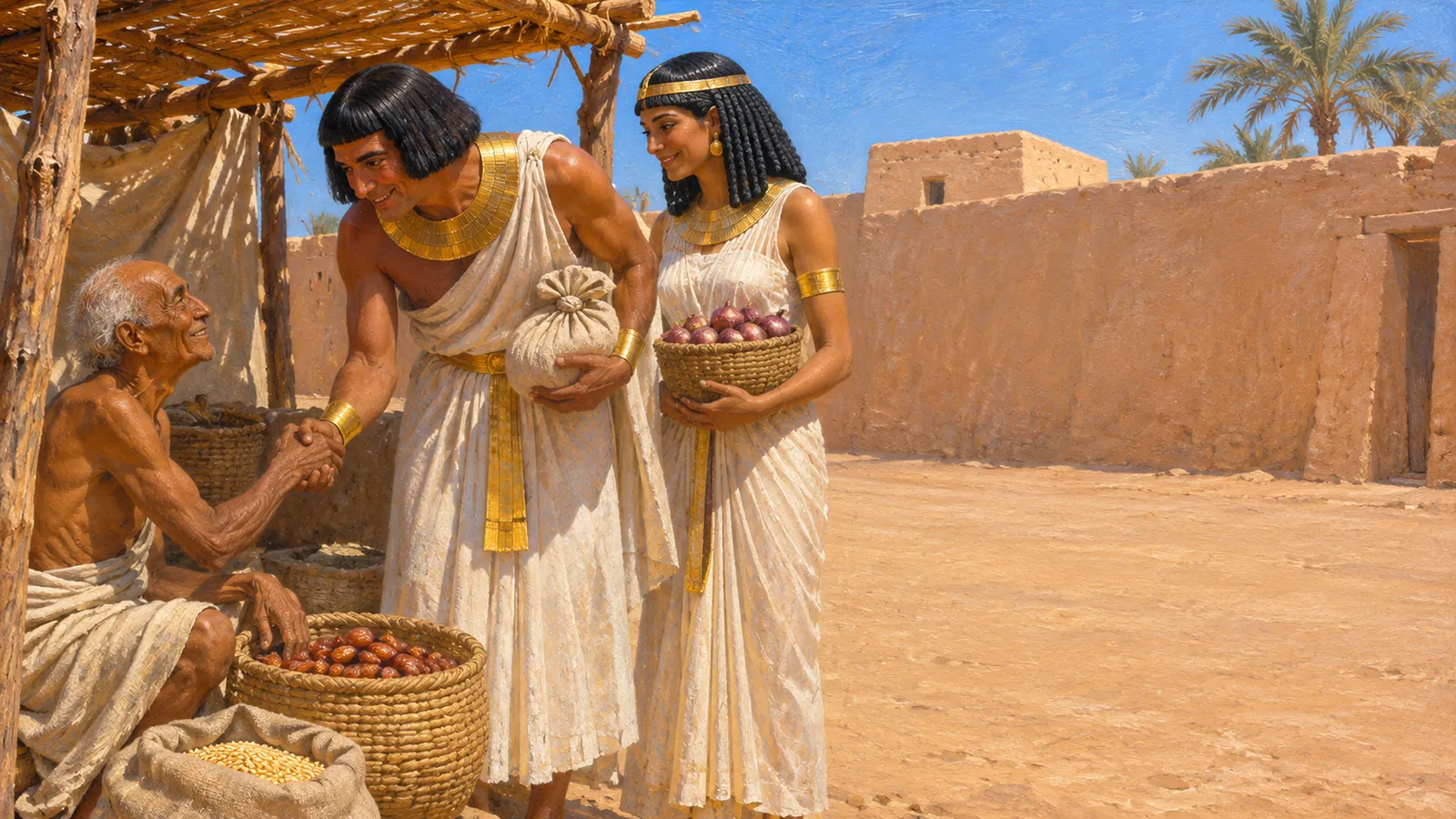
If you grow wealthy in a town that knew you when you were poor, remember that your good fortune can change, says the father.
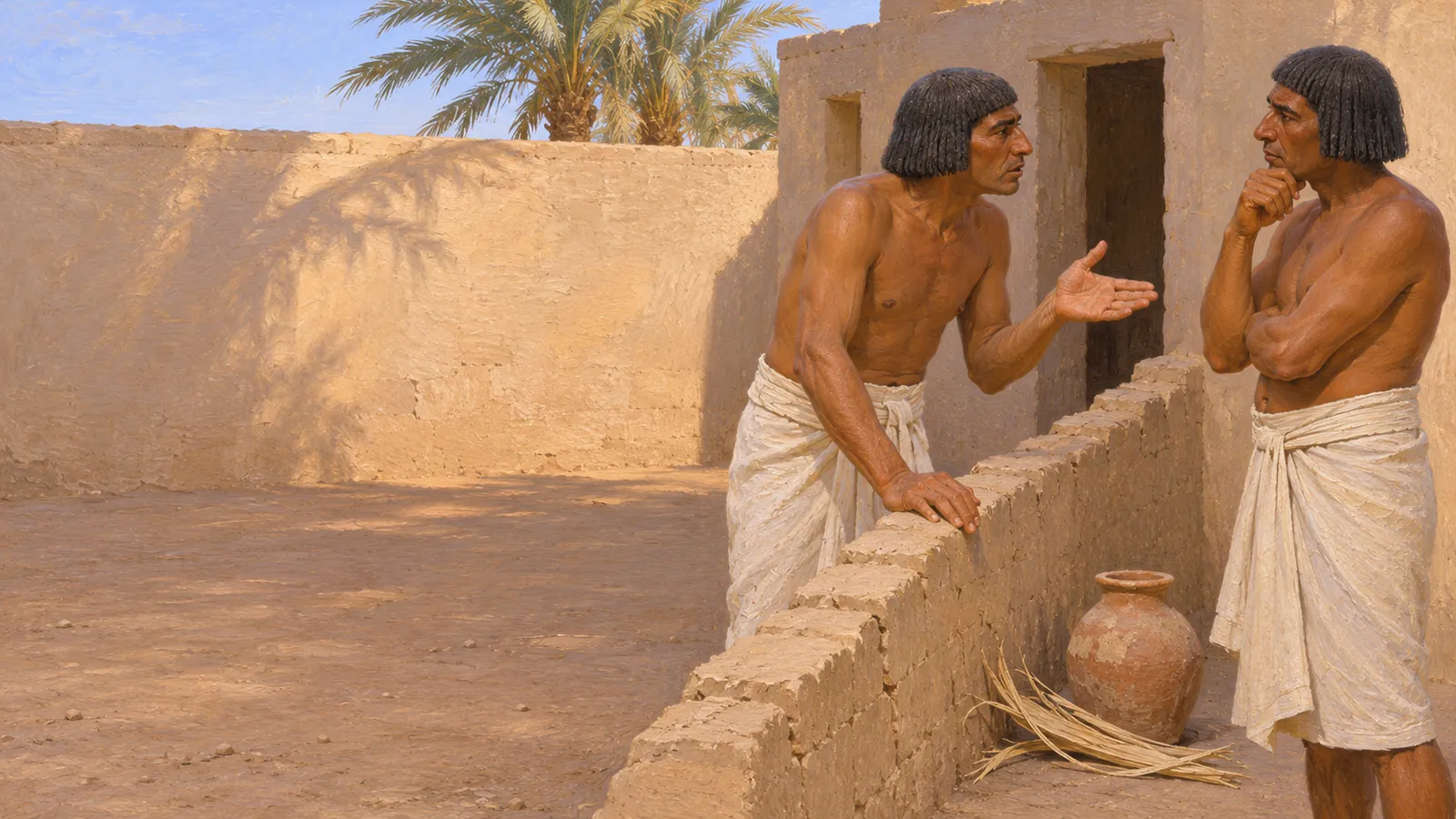
The vizier speaks of deference at the palace and restraint among neighbors. Meddling with the possessions next door will bring trouble back to your own house.

At this point the papyrus preserves a brief warning about conduct in intimate matters. The Egyptian is difficult, and readers of the manuscript differ about its precise sense.

To learn what a friend is like, speak with him yourself. If he surprises you with a careless word, keep your composure and listen a little longer.

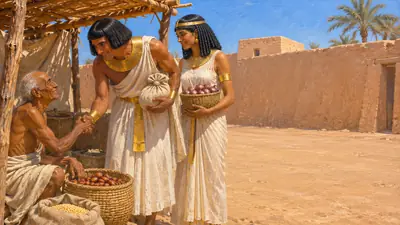
Grain handed out will leave the storehouse for good. Ptahhotep tells his son that a generous act may be remembered after he has left office.

Remember the people who help you, says the father. He compares friends to a watered field, something worth tending more than a pile of goods.

A ruling in the ancient court could carry a punishment. The vizier warns that punishing someone without cause can turn a person who came for justice into an enemy.

His last numbered saying imagines a cheerful woman known in her town. Give her a welcome and let her enjoy the meal, says the old vizier.

HEARING
At the end of the sayings, Ptahhotep turns from particular disputes to what makes advice last. People keep good words alive by using them and telling them to someone else.

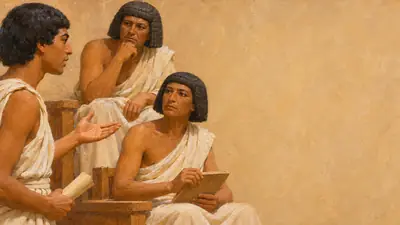
Listen closely enough to learn what is useful, Ptahhotep tells his son. When the time comes to speak, the person who has listened can in turn be worth hearing.

The father imagines someone who refuses to hear. He mistakes good advice for an insult and repeats his mistakes. Ptahhotep has his son consider what that habit looks like to others.

One day the learner will be a teacher. Children can repeat what they hear and remember what they see. Ptahhotep asks his son to make his conduct worthy of being followed.

The father wants the son’s deeds to surpass what he was taught. In the court of Isesi that will mean acting with good judgment where others can see it.

Ptahhotep wishes his son years of life. In the teaching he says he himself lived to one hundred and ten, a measure of honored old age in the story.

At the end of the papyrus, a copyist says the teaching has reached its close as he found it in writing. The words about passing on a lesson survived in that act of copying.
End of chapter 1
All pages









































Sources
Thebes is linked for the probable origin of the surviving Prisse Papyrus at Dra Abu el-Naga on the west bank. The IFAO digital edition reproduces Prisse’s varying accounts of acquiring it.
Editions consulted
- BnF manuscript catalogue, Prisse Papyrus, Egyptien 183–194: , with [the first sheet of Ptahhotep, Egyptien 186, on Gallica](https://gallica.bnf.fr/ark:/12148/btv1b8304609v).
- Le papyrus Prisse, joint IFAO, BnF and Sorbonne digital edition: , transliteration, translations and facsimile.
- Teaching of Ptahhotep, University College London: , textual edition and English gloss.
- Nederhof and Myers, Prisse transcription after Zába: , St Andrews, 2009–2010.
- Miriam Lichtheim, Ancient Egyptian Literature, University of California Press: , vol. I, pp. 61–80 in the original pagination. Maxim numbering follows this edition.
- Ptahhotep in the Thesaurus Linguae Aegyptiae: , transcribed text and German translation.
- Nederhof’s interlinear English translation with Prisse line numbers: , St Andrews.
- Françoise Lacombe-Unal, Le prologue de Ptahhotep: , BIFAO 99, pp. 283–297.
- BnF and Biblissima, Prisse manuscript sequence: , including the nine sheets assigned to Ptahhotep.
Ancient lines behind each page
- Page 1: BnF Egyptien 186–194; joint Prisse manuscript introduction
See source notes for which details are attested. - Page 2: Prisse, prologue, col. 4 to col. 5 l. 3; Lichtheim I, pp. 63–64
See source notes for which details are attested. - Page 3: Prisse col. 4 to col. 5 l. 3; UCL §1
See source notes for which details are attested. - Page 4: Prisse col. 5 ll. 4–6; UCL §2
See source notes for which details are attested. - Page 5: Prisse, maxim 1; Lichtheim I, pp. 64–73
See source notes for which details are attested. - Page 6: Prisse, maxim 2; Lichtheim I, pp. 64–73
See source notes for which details are attested. - Page 7: Prisse, maxim 3; Lichtheim I, pp. 64–73
See source notes for which details are attested. - Page 8: Prisse, maxim 4; Lichtheim I, pp. 64–73
See source notes for which details are attested. - Page 9: Prisse, maxim 5; Lichtheim I, pp. 64–73
See source notes for which details are attested. - Page 10: Prisse, maxim 6; Lichtheim I, pp. 64–73
See source notes for which details are attested. - Page 11: Prisse, maxim 7; Lichtheim I, pp. 64–73
See source notes for which details are attested. - Page 12: Prisse, maxim 8; Lichtheim I, pp. 64–73
See source notes for which details are attested. - Page 13: Prisse, maxim 9; Lichtheim I, pp. 64–73
See source notes for which details are attested. - Page 14: Prisse, maxim 10; Lichtheim I, pp. 64–73
See source notes for which details are attested. - Page 15: Prisse, maxim 11; Lichtheim I, pp. 64–73
See source notes for which details are attested. - Page 16: Prisse, maxim 12; Lichtheim I, pp. 64–73
See source notes for which details are attested. - Page 17: Prisse, maxim 13; Lichtheim I, pp. 64–73
See source notes for which details are attested. - Page 18: Prisse, maxim 14; Lichtheim I, pp. 64–73
See source notes for which details are attested. - Page 19: Prisse, maxim 15; Lichtheim I, pp. 64–73
See source notes for which details are attested. - Page 20: Prisse, maxim 16; Lichtheim I, pp. 64–73
See source notes for which details are attested. - Page 21: Prisse, maxim 17; Lichtheim I, pp. 64–73
See source notes for which details are attested. - Page 22: Prisse, maxim 18; Lichtheim I, pp. 64–73
See source notes for which details are attested. - Page 23: Prisse, maxim 19; Lichtheim I, pp. 64–73
See source notes for which details are attested. - Page 24: Prisse, maxim 20; Lichtheim I, pp. 64–73
See source notes for which details are attested. - Page 25: Prisse, maxim 21; Lichtheim I, pp. 64–73
See source notes for which details are attested. - Page 26: Prisse, maxim 22; Lichtheim I, pp. 64–73
See source notes for which details are attested. - Page 27: Prisse, maxim 23; Lichtheim I, pp. 64–73
See source notes for which details are attested. - Page 28: Prisse, maxim 24; Lichtheim I, pp. 64–73
See source notes for which details are attested. - Page 29: Prisse, maxim 25; Lichtheim I, pp. 64–73
See source notes for which details are attested. - Page 30: Prisse, maxim 26; Lichtheim I, pp. 64–73
See source notes for which details are attested. - Page 31: Prisse, maxim 27; Lichtheim I, pp. 64–73
See source notes for which details are attested. - Page 32: Prisse, maxim 28; Lichtheim I, pp. 64–73
See source notes for which details are attested. - Page 33: Prisse, maxim 29; Lichtheim I, pp. 64–73
See source notes for which details are attested. - Page 34: Prisse, maxim 30; Lichtheim I, pp. 64–73
See source notes for which details are attested. - Page 35: Prisse, maxim 31; Lichtheim I, pp. 64–73
See source notes for which details are attested. - Page 36: Prisse, maxim 32; Lichtheim I, pp. 64–73
See source notes for which details are attested. - Page 37: Prisse, maxim 33; Lichtheim I, pp. 64–73
See source notes for which details are attested. - Page 38: Prisse, maxim 34; Lichtheim I, pp. 64–73
See source notes for which details are attested. - Page 39: Prisse, maxim 35; Lichtheim I, pp. 64–73
See source notes for which details are attested. - Page 40: Prisse, maxim 36; Lichtheim I, pp. 64–73
See source notes for which details are attested. - Page 41: Prisse, maxim 37; Lichtheim I, pp. 64–73
See source notes for which details are attested. - Page 42: Prisse col. 15 l. 8 to col. 16 l. 2; UCL §41
See source notes for which details are attested. - Page 43: Prisse col. 16 ll. 3–13; UCL §42
See source notes for which details are attested. - Page 44: Prisse col. 17 ll. 4–9; UCL §44
See source notes for which details are attested. - Page 45: Prisse col. 17 l. 10 to col. 18 l. 12; UCL §45
See source notes for which details are attested. - Page 46: Prisse col. 19 ll. 3–8; UCL §47
See source notes for which details are attested. - Page 47: Prisse col. 19 ll. 3–8; UCL §47; Lichtheim I, epilogue
See source notes for which details are attested. - Page 48: Prisse col. 19 l. 9; joint manuscript edition
See source notes for which details are attested.
Illustrations made with AI tools by IL Archive; the text is based on the ancient sources (see the sources at the end of each chapter).