Person
Alexander the Great
Alexander extended Macedonian rule across much of the Persian Empire. An inscription, coins and a Babylonian diary document his reign and death. Later writers gave him new roles in their own traditions.
Estimated reading time: 3 min Published Last reviewed:
Share article
Text
Introduction
Alexander the Great was the son of Philip II of Macedon. He lived from 356 to 323 BCE and became king in 336 BCE. His campaigns extended from the eastern Mediterranean through the lands of the Achaemenid Persian Empire as far as the Indus region. A dedication from Priene and a Babylonian diary are among the records that place his reign in specific cities. Coins and literary works continued to reshape his image after his death. [1][2][3][4][5][6]
A Macedonian king in Asia and Egypt
Alexander crossed the Hellespont into Asia in 334 BCE. A Greek inscription from Priene on the coast of Asia Minor says that King Alexander dedicated the temple to Athena Polias. The inscription gives his royal title and names the goddess. It documents the king’s public role in one community during the years of the campaigns. [4][5]
Alexander entered Egypt in 332 BCE. AlexandriaAlexandria (Egypt)Alexandria is a city on Egypt’s Mediterranean coast, founded by Alexander the Great in 331 BCE and an important center of trade and culture.Glossary · Click to read the explanation on Egypt’s Mediterranean coast dates its foundation to 331 BCE. Egyptian royal titulary also included Alexander as pharaoh. In 331 BCE he also visited the oracle of Amun at the oasis of Siwa. [3][4]
The death in Babylon and the successor kingdoms
Alexander died in BabylonBabylonBabylon is an ancient city in central present-day Iraq, south of BaghdadGlossary · Click to read the explanation in 323 BCE. A Babylonian astronomical diary briefly records the death of the king alongside observations of the sky and weather. The diary belongs to a tradition of dated records kept by Babylonian scribes, and gives a contemporary witness to an event that later Greek and Roman authors recounted at greater length. [3][6]
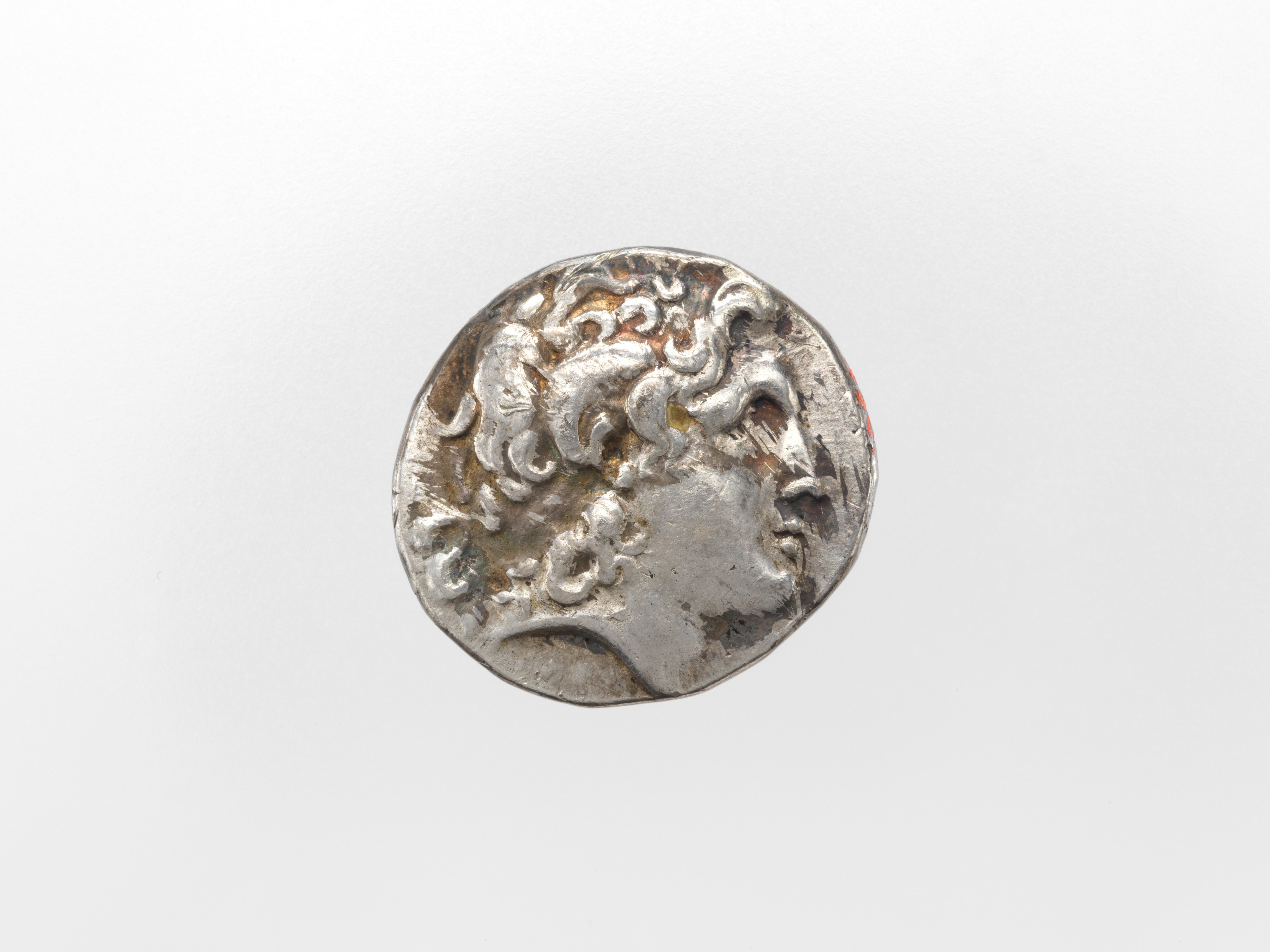
His commanders went on to rule separate kingdoms. Their coins show different ways of using Alexander’s name and image. A silver coin struck at Susa under Seleucus still bears Alexander’s name, with Heracles on one face and seated ZeusZeusZeus is the sky god and leading deity in many Greek traditions. In the Iliad he presides over divine gatherings while others can still speak and object.Glossary · Click to read the explanation on the other. Both figures had appeared on silver coins issued in Alexander’s lifetime. A different coin, minted under Lysimachus between 297 and 281 BCE, shows a posthumous portrait of Alexander with a ram’s horn. [2][3][7]
Alexander in later stories
Alexander became a character in later literary traditions, including SyriacSyriacAn Aramaic literary language rooted in Edessa, first attested in non-Christian inscriptions and later prominent in Christian writing, scholarship, translation and liturgy.Glossary · Click to read the explanation literature. The Syriac writings include a version of the Greek Alexander Romance and a separate Christian legend. Identifying him with Dhul Qarnayn or portraying him as a Christian in later literature concerns the history of interpreting stories, rather than establishing the historical king’s religion. Syriac collections also preserve poems and sayings associated with Alexander. [1]
Quick answers
When was Alexander king?
He took the Macedonian throne in 336 BCE and died in Babylon in 323 BCE. [4][6]
Which Egyptian city bears his name?
Alexandria on the Mediterranean coast dates its foundation to 331 BCE. [4]
Who issued the coin with the ram’s horn?
It was issued under Lysimachus after Alexander’s death. Its portrait shows Alexander. [2]
References and notes (7)
- Sebastian P. Brock, “Alexander Cycle,” Gorgias Encyclopedic Dictionary of the Syriac Heritage Entries 1–3 and 4–9. The Romance, independent Christian legend, poems, other Syriac traditions. Return to the text ↑
- Metropolitan Museum of Art, “Silver tetradrachm of Lysimachos,” 05.44.430 Object description and date. The posthumous portrait of Alexander with a ram’s horn, and the date of the coin. Return to the text ↑
- Metropolitan Museum of Art, Pergamon and the Hellenistic Kingdoms of the Ancient World, exhibition galleries (2016) Opening and “Alexander the Great and His World.” Alexander’s dates, the extent of the campaigns and the successor dynasties. Return to the text ↑
- Digital Egypt, University College London, “Alexander the Great” Opening chronology and Egyptian titulary. Accession, crossing into Asia, entry into Egypt, Siwa, Alexandria and the death in Babylon. Return to the text ↑
- Packard Humanities Institute, Searchable Greek Inscriptions, Priene 145 Greek text and record data. The dedication of the temple of Athena Polias by King Alexander. Return to the text ↑
- Jona Lendering, “A Contemporary Account of the Death of Alexander,” translation of Astronomical Diary −322 A Entries for the second month of 323 BCE, especially the entry on the twenty-ninth. The death notice and the adjacent weather observations. Return to the text ↑
- Metropolitan Museum of Art, “Tetradrachm of Alexander the Great,” 1978.93.21 Object description. The Seleucid-era coin from the mint at Susa, its inscription, and the imagery established during Alexander’s reign. Return to the text ↑
Suggest a correction · Suggest a source for this record
Cite this record
IL Archive, «Alexander the Great», https://ilarchive.com/en/people/alexander-the-great
Continue reading