Entity · Person
Ptolemy II Philadelphus
A reference page linking a name, group, or concept to the materials that discuss it.
- Names
- Ptolemy II Philadelphus · Πτολεμαῖος Βʹ Φιλάδελφος
- Timeline
- From 282 BCE to 246 BCE
- Region
- Ptolemaic Egypt — Alexandria
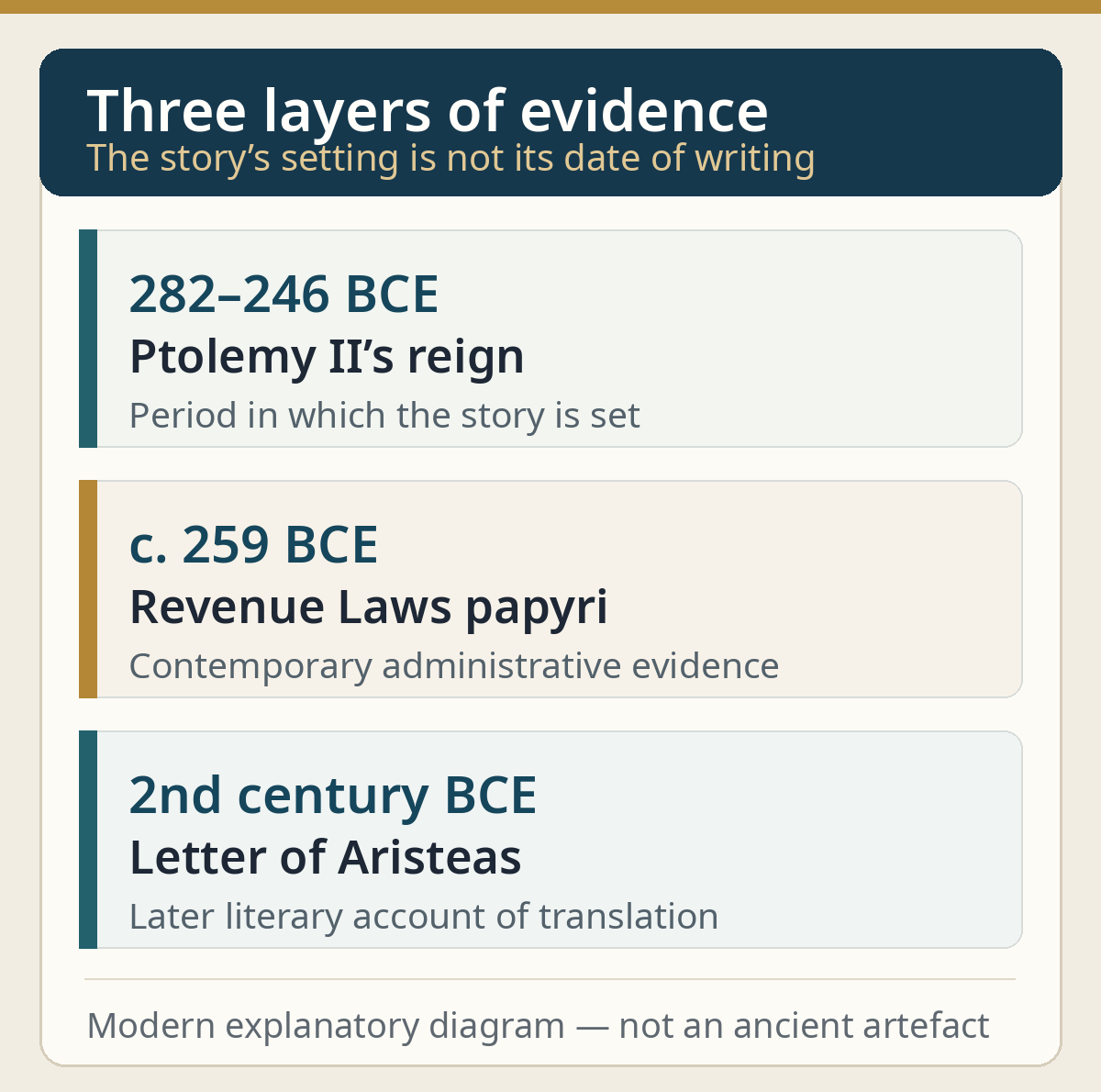
Ptolemy II Philadelphus ruled Ptolemaic Egypt c. 282–246 BCE. The later Letter of Aristeas credits him with commissioning the Greek translation of the Torah; the entry shows the limits of proving this royal sponsorship.
Estimated reading time: 7 min Published Last reviewed:
Share article
Text
Introduction
Ptolemy II Philadelphus ruled the Macedonian dynasty established in EgyptEgyptEgypt lies mainly in northeastern Africa and includes the Sinai Peninsula in AsiaGlossary · Click to read the explanation after Alexander. His sole reign is conventionally dated to approximately 282–246 BCE; it saw extensive maritime, architectural and cultural activity.[1] This entry asks not only who the king was, but how evidence produced during his lifetime differs from later accounts about him.
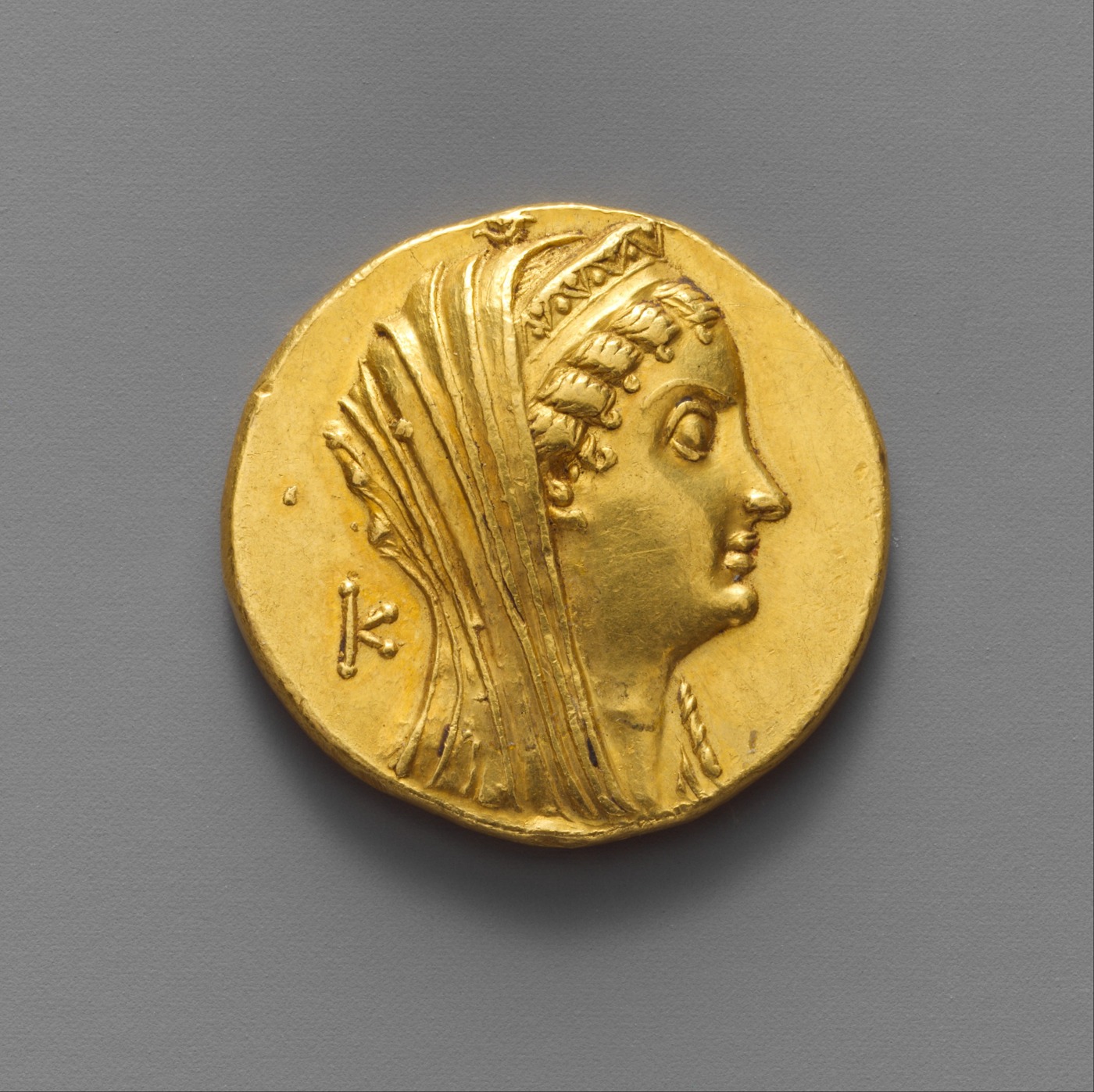
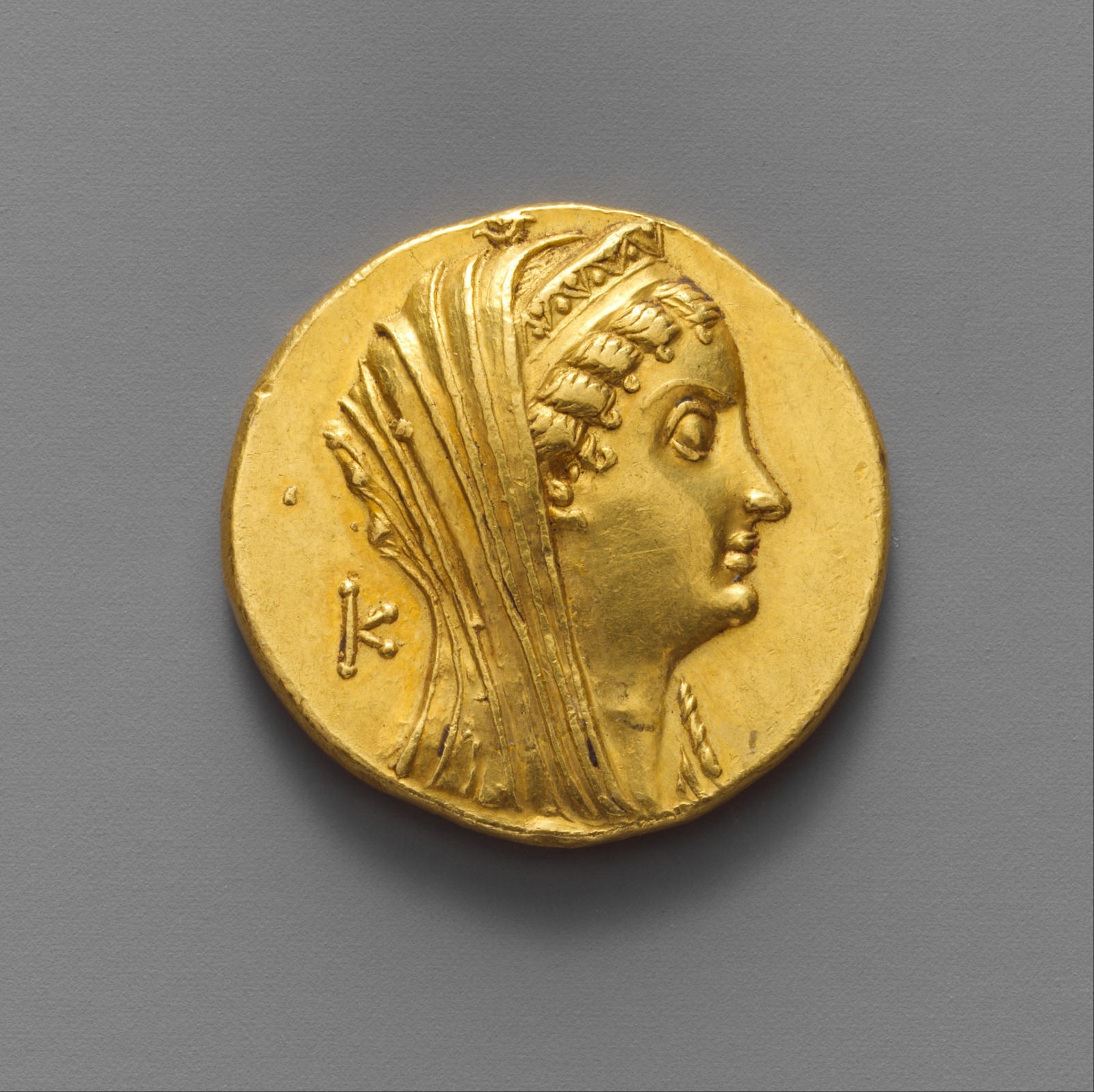
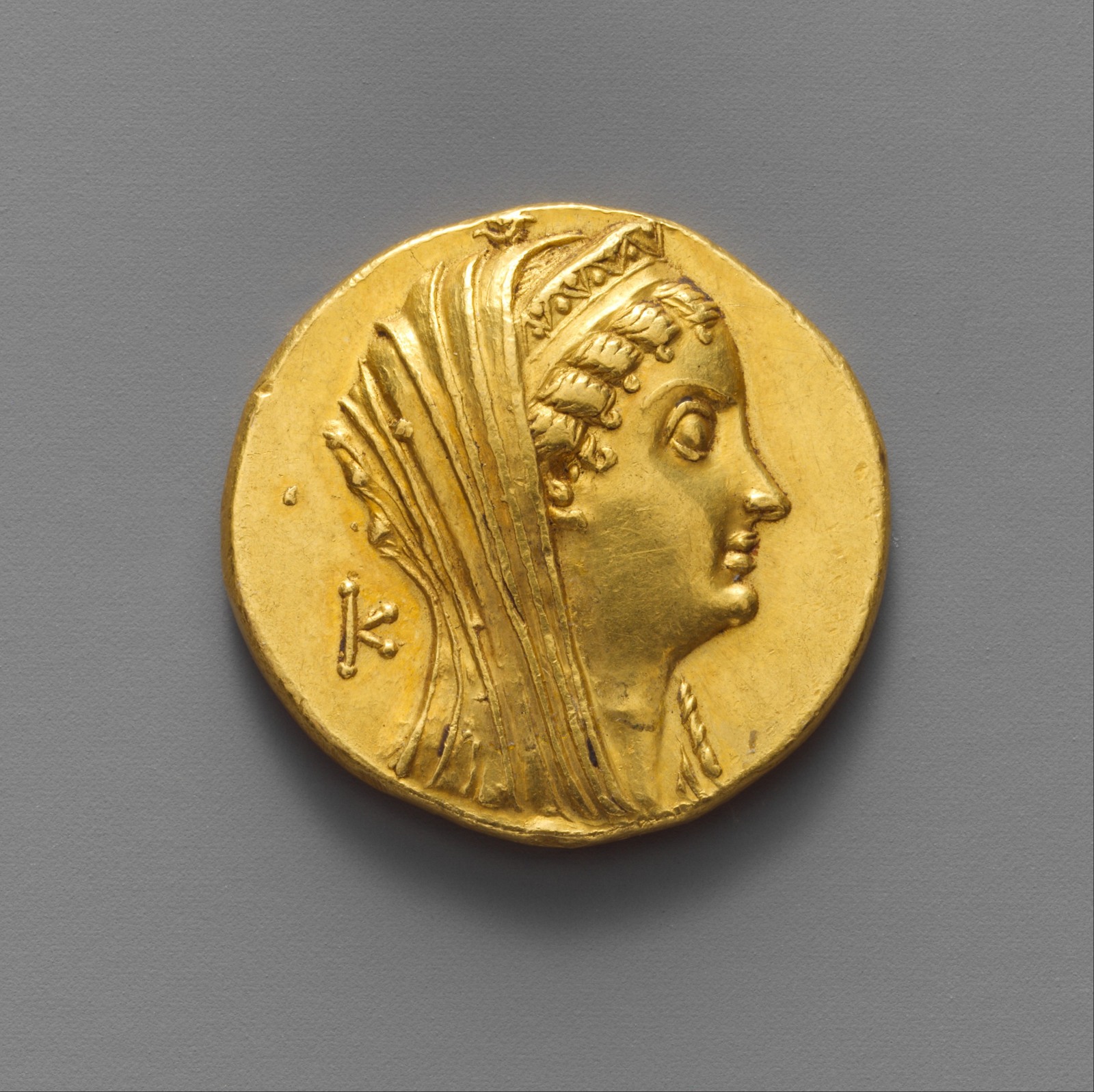
He is particularly associated with the Greek translation of Jewish law in the Letter of AristeasLetter of AristeasGreek Alexandrian Jewish composition, probably second century BCE, portraying the translation of Mosaic Law under Ptolemy II. A literary witness to the reception of the Septuagint, not contemporary minutes or an account of Torah composition.Glossary · Click to read the explanation. That text is a later literary narrative, not a contemporary royal order.[2] The ancient coin retained as this entry’s cover was issued under Ptolemy II but portrays his sister and consort Arsinoe II, not the king.[3]
From a Macedonian dynasty to the Egyptian throne
Ptolemy was the son of Ptolemy I, one of the successors of Alexander the GreatAlexander the GreatMacedonian king who lived from 356 to 323 BCE and became a hero of stories in different languages and traditions after his death.Glossary · Click to read the explanation, and Berenice I. His reign marks a phase in the consolidation of the Ptolemaic dynastyPtolemaic dynasty in EgyptDynasty of Macedonian origin ruling Egypt as kings from 305 to 30 BCE, amid Greek and Egyptian traditions.Glossary · Click to read the explanation in Egypt, rather than a direct continuation of Alexander’s own reign. Chronologies distinguish the period of co-rule with his father, around 285/284 BCE, from sole rule after his father’s death. Accordingly, the years 282–246 BCE here indicate sole kingship, not his birth or first involvement in government.[1]
The contemporary Greek poet TheocritusTheocritusTheocritus was a Greek poet of the third century BCE. His fifteenth Idyll describes an Adonis festival in Alexandria.Glossary · Click to read the explanation celebrated him in Idyll 17. He praises the king’s parents, situates his birth on Cos and portrays dynastic legitimacy in terms of heroes and gods. The poem is direct evidence of the rhetoric of royal praise; it is not independent proof of divine ancestry or of unchallenged control over every land named in its panegyric.[4]
Arsinoe II, royal marriage and images of authority
Ptolemy’s first marriage was to Arsinoe I; he later married his sister Arsinoe IIArsinoe IIThird-century BCE Ptolemaic queen, sister-wife of Ptolemy II, represented on royal coinage.Glossary · Click to read the explanation, herself a figure with a previous political career in Macedonia. Evidence produced during their rule shows how this union became part of the dynasty’s public representation. Stefano Caneva examines this changing dynastic message in contemporary documents. His study also cautions against treating Arsinoe merely as an appendage to her brother rather than an actor with political and symbolic standing.[5]
A statue base from Egyptian Thebes, catalogued as Chicago OI 10518, combines Egyptian-language formulations presenting Arsinoe as the king’s sister and wife with divine epithets; its short Greek inscription names Arsinoe Philadelphos. We consulted a published translation of the inscription, not a fresh reading of its hieroglyphs. The object documents royal cultic representation, not the literal historical truth of the religious titles it uses.[6]
Rival kingdoms, warfare and the sea
The dynasty competed over Syria and the eastern Mediterranean, and Ptolemy II’s reign included wars with neighbouring Hellenistic powers. Theocritus’ account of vast territory is a political encomium: it cannot establish permanent, uncontested frontiers everywhere he lists. The king also supported a chain of Red Sea ports and trade connecting Egypt with Arabia and Indian Ocean routes, as summarized in UCL’s institutional overview.[1][4]
The Pithom Stela, Cairo CG 22183, provides Egyptian royal language joining the king to AtumAtumAtum is an Egyptian creator god associated with HeliopolisGlossary · Click to read the explanation, works at a temple, the movement of boats and a canal in eastern Egypt, and a depiction of Arsinoe in its upper register. It is dated approximately to 264 BCE. Portions of the text are damaged or disputed; the canal’s course and even the chronological interpretation of details relating to Arsinoe have been debated. Its translated phrases must not be mistaken for a precisely surveyed map.[7]
Finance and the limits of economic reconstruction
The so-called Revenue Laws papyri, associated with about 259 BCE, reveal fiscal regulations concerning taxation, selected monopolies including oil production and banking, and contracting with private operators. Jean Bingen points out that the corpus comprises roughly seven or eight ordinances on two related but distinct rolls: it is not a surviving blueprint of the entire Egyptian economy. Only his published chapter abstract was accessible for this particular assessment; we did not read the original rolls or the chapter in full.[8]
The royal administration drew on Nile agriculture and trading networks, but neither private interests nor temples nor regional differences vanished. These documents do not by themselves prove that the crown owned all production, or that each rule was enforced uniformly throughout Egypt.[8]
Alexandria, learning and public ceremony
AlexandriaAlexandria (Egypt)Alexandria is a city on Egypt’s Mediterranean coast, founded by Alexander the Great in 331 BCE and an important center of trade and culture.Glossary · Click to read the explanation flourished as a centre of port activity, monarchy and learning. UCL credits the reign with completion of the lighthouse and other construction, while treating the question of whether Ptolemy I or II chiefly sponsored the Mouseion and its library as uncertain. It would therefore overstate the record to assign their sole foundation to this king or assume he possessed every book in the known world.[1]
Theocritus’ Idyll 15 stages a literary visit to an AdonisAdonis: death and return in differing narrativesA Greek mythic figure associated with Aphrodite, lament, and the Adonia; ancient sources diverge on his birth, death, divided residence, and ritual return.Glossary · Click to read the explanation celebration at the Ptolemaic palace. The scene conveys how Greek verse represented urban space, festival and royal patronage; it is not an administrative transcript. Nor should the city totals and territorial claims in Idyll 17 be recycled as audited demographic or geographic statistics.[9][4]
The king in the Greek Torah translation story
In the Letter of AristeasLetter of AristeasGreek Alexandrian Jewish composition, probably second century BCE, portraying the translation of Mosaic Law under Ptolemy II. A literary witness to the reception of the Septuagint, not contemporary minutes or an account of Torah composition.Glossary · Click to read the explanation, the king wants Jewish law incorporated into his library. Demetrius of Phalerum proposes translation, while a letter to the JerusalemJerusalemJerusalem is a city of religious importance in Judaism, Christianity and IslamGlossary · Click to read the explanation high priest Eleazar asks for six elders from each of twelve tribes—seventy-two translators. The narrative places royal decrees, emancipation of Jewish captives and gifts for the Temple in its protagonist’s mouth. Sections 9–11 and 28–40 attest what this narrative says, not authenticated decrees independently verified to have left the royal chancery.[10]
Sections 301–312 place the translators’ work near Pharos, claim completion in seventy-two days and describe public reading and approval of the result. These details serve the narrative’s account of translation authority. Repetition of “seventy-two” does not independently establish the production history of all the Greek books later grouped as the SeptuagintSeptuagintA name for the varied ancient Greek translations and writings associated with Jewish scripture; beginning with the Torah, the texts differ across books and manuscripts.Glossary · Click to read the explanation.[11]
Dating a translation and dating the story about it
Scholars generally situate the Greek translation of the Torah within Jewish communities of Ptolemaic Egypt in the third century BCE. That is a historical estimate for a translated text; it does not certify each royal conversation and embassy described in the Letter. Sylvie Honigman’s Oxford reference abstract reports a prevailing second-century BCE date for the Letter itself, later than Ptolemy II. We accessed the abstract, not the entire reference article.[12]
Francis Borchardt further points to problems with the librarian and court as cast in the narrative, and to its use of phrases from the Greek Torah itself. These are historical and literary reasons to question its dramatic detail, not grounds for denying that Greek translation arose in Ptolemaic Egypt.[13]
Max Leventhal argues that the Letter’s descriptions of royal gifts and Jerusalem also express anxieties about the politics of empire and cultural production, rather than simply celebrating harmonious patronage. This is Leventhal’s explicitly argued literary interpretation, not a newly recovered contemporary account of the king’s intentions. The existence of an early Greek translation, the possibility of royal assistance, and proof of a particular royal commission are distinct propositions; the evidence does not grant them equal certainty.[2]
The coin: a useful image with a specific limit
The original gold coin was issued in Alexandria during the king’s reign, approximately 261–246 BCE, and is catalogued by the Metropolitan Museum of Art as 30.115.23. Its obverse depicts veiled Arsinoe IIArsinoe IIThird-century BCE Ptolemaic queen, sister-wife of Ptolemy II, represented on royal coinage.Glossary · Click to read the explanation; its reverse bears double cornucopiae. It is genuine evidence for Ptolemaic dynastic imagery, not a portrait of Ptolemy II and not material evidence of a Torah translation order. The original licensed image and existing asset identifier have been preserved with this identification clearly stated in all three captions.[3]
What the sources allow us to conclude
Contemporary inscriptions, coins, fiscal texts and encomiastic poetry illuminate different aspects of this reign: administration, royal religion and the creation of prestige. The later Letter of Aristeas also illuminates how a Jewish Alexandrian author represented the status of Greek Jewish Scripture. Good historical reading keeps these kinds of source separate while allowing them to illuminate one another. The king’s history should neither be reduced to the legend of translation nor reconstructed as though literary praise were a neutral state archive.
References and notes (13)
- University College London, Digital Egypt for Universities (2002). Ptolemy II Philadelphos. Entry gives sole reign 282–246 BCE and Alexandrian cultural context; it does not document a royal Torah-translation order. Return to the text ↑
- Max Leventhal (2022). Envisioning the Art of Empire in the Letter of Aristeas. The Cambridge Classical Journal 68, pp.164–180. doi:10.1017/S175027052200001X. Introduction and note 4: literary narrator, Alexandrian Jewish author and second-century BCE dating. Other sections not used to establish translation history. Return to the text ↑
- The Metropolitan Museum of Art. Gold oktadrachm of Ptolemy II Philadelphos, 30.115.23 / object 253074. Alexandria c.261–246 BCE; portrait of Arsinoe II. Museum identity, date and rights; not translation evidence. Return to the text ↑
- Theocritus, Idyll 17, “The Panegyric of Ptolemy”; Greek text and J. M. Edmonds’s English translation, Theoi Classical Texts Library. Idyll 17, English translation of lines 1–137; birth, ancestry and territories interpreted as panegyric. Return to the text ↑
- Stefano Caneva (2024), “« Theoi Adelphoi ». Ptolémée II, Arsinoé II et la fondation du mariage endogamique dynastique,” in Frères et sœurs dans l’Antiquité gréco-romaine, University of Padua repository. University repository abstract ONLY; linked PDF and full chapter NOT read. Return to the text ↑
- Statue base of Arsinoe II, Chicago OI 10518 (270–246 BCE), Emily Teeter’s English translation reproduced by Attalus, “Statue of Arsinoe II.” Full webpage introduction and English translation of numbered passages 1–5 and Greek addendum; hieroglyphs not independently read. Return to the text ↑
- Pithom Stele, Cairo CG 22183, c. 264 BCE; English translation at Attalus based on Édouard Naville (1903) and later scholarship. Catalog description and selected English translation sections [1]–[14]; neither hieroglyphs nor entire remaining text checked. Return to the text ↑
- Jean Bingen (2007), “The Revenue Laws Papyrus: Greek Tradition and Hellenistic Adaptation,” chapter 13 in Hellenistic Egypt, pp. 157–188, Edinburgh University Press / Oxford Academic. Published abstract ONLY: 7–8 ordinances, two rolls, c. 259 BCE, taxes/monopolies; pp. 157–188 are publication range, NOT pages read. Return to the text ↑
- Theocritus, Idyll 15, “The Women at the Adonis Festival,” introductory account at Theoi Classical Texts Library. Idyll 15 introduction and description of the palace scene only; the full poem was not analysed line by line. Return to the text ↑
- Letter of Aristeas to Philocrates, R. H. Charles’s 1913 English translation, Part I at Attalus. Charles translation §§9–11 and 28–40; Greek original and purported royal documents not independently examined. Return to the text ↑
- Letter of Aristeas, English translation by R. H. Charles (1913), Part II at Attalus. Paragraphs §§301–312 concerning Pharos, translators’ work and community reception; English translation only. Return to the text ↑
- Sylvie Honigman, “Aristeas, Letter of,” Oxford Classical Dictionary, published 2015 and updated 2021. Publisher abstract ONLY; majority dating to the 2nd century BCE; article full text NOT read. Return to the text ↑
- Francis Borchardt (2025), “Letter of Aristeas: The LXX Translation Universalized the Torah’s Wisdom,” TheTorah.com. Article opening and “The Story According to Aristeas” and “But Is It Historical?”; endnotes and remaining sections not fully reviewed. Return to the text ↑
Suggest a correction · Suggest a source for this record
Cite this record
IL Archive, «Ptolemy II Philadelphus», https://ilarchive.com/en/entities/ptolemy-ii
Continue reading