Site · City
Ugarit
- Region
- The Levant
Ancient city and kingdom at Ras Shamra on the Syrian coast, flourishing between the fourteenth and early twelfth centuries BCE and preserving multilingual archives.
Text
Ugarit was an ancient city and kingdom at Ras Shamra on the Syrian coast. It reached its height between the fourteenth and early twelfth centuries BCE, during the Late Bronze AgeLate Bronze AgeAn archaeological period conventionally around 1600–1200 BCE in much of the Near East, with regional variation.Glossary · Click to read the explanation. The site itself is older, so the history of the city and its archives is distinguished from the beginnings of settlement there. [1][3]
Its tablets preserve administrative and economic documents, and literary and religious texts, in several languages including UgariticUgaritic languageAncient Semitic language preserved in Ugarit’s tablets on the Syrian coast, from the fourteenth–twelfth centuries BCE, written in a cuneiform alphabet.Glossary · Click to read the explanation and AkkadianAkkadianAn ancient East Semitic language written in cuneiform in Mesopotamia.Glossary · Click to read the explanation. Religious texts provide important evidence for ElEl at UgaritA deity prominent in West Semitic traditions, especially as head of the divine family in Ugaritic texts.Glossary · Click to read the explanation, head of the divine family, and for BaalBaalStorm god and protagonist of Ugarit’s Baal Cycle; exercises active kingship while El retains importance and authorizes the palace.Glossary · Click to read the explanation and other gods. These witnesses are read in their own period and setting before comparison with neighbouring traditions. [2][3]
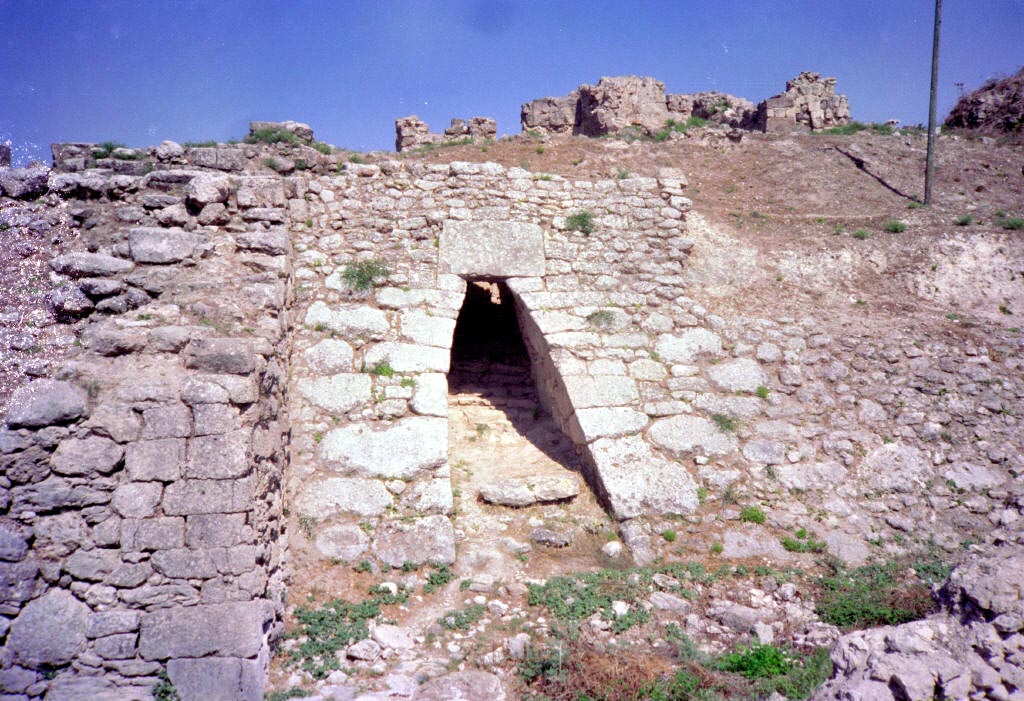
The modern photograph of the site’s entrance was taken in 1989. It shows surviving archaeological remains at Ras Shamra, while the texts discussed belong to the ancient archives.
References and notes
- Ministère de la Culture, Ugarit–Ras Shamra Archaeological project page: site, city, kingdom and Late Bronze Age archives. Return to the text ↑
- Heath D. Dewrell & Andrew M. Garbarino, Names of God in the Hebrew Bible, Oxford Bibliographies (2023) Available introduction: El as common noun or proper name, and Elohim and Yahweh. The cited literature was not read in full. Return to the text ↑
- Department of Ancient Near Eastern Art (2004) — Ugarit, Metropolitan Museum of Art City, fourteenth–twelfth-century BCE archives, multilingual writing and document types. Return to the text ↑
Research history
Substantive changes are retained here. Minor copy edits remain in the internal operational log.
-
Substantive record update
-
Substantive record update
-
Substantive record update
Suggest a correction · Suggest a source for this record
Cite this record
IL Archive, «Ugarit», Edition 4, https://ilarchive.com/en/sites/ugarit