Entity · Person
Urtenu and his house
A reference page linking a name, group, or concept to the materials that discuss it.
- Region
- Tell Ras Shamra (Ugarit), Syrian Mediterranean coast
Urtenu, of Late Bronze Age Ugarit’s elite, is credited with a house and an archive of correspondence, trade and ritual tablets. The house attribution is strong; his exact office and the texts’ authorship are unsettled.
Estimated reading time: 6 min Published Last reviewed:
Share article
Text
Introduction
Who was Urtenu, and why has his name become associated with hundreds of tablets from UgaritUgaritAncient city and kingdom at Ras Shamra on the Syrian coast, flourishing between the fourteenth and early twelfth centuries BCE and preserving multilingual archives.Glossary · Click to read the explanation? This entry brings together the evidence for the man and the house excavated at Tell Ras Shamra on the Syrian coast during the last decades of the Late Bronze AgeLate Bronze AgeAn archaeological period around 1600–1200 BCE in much of the Near East, with international diplomacy, exchange and religious diversity; its endpoints vary by region.Glossary · Click to read the explanation. It traces the identification of the archive's associated owner, what the documents reveal about correspondence, trade, and domestic life, and the point at which archaeological evidence gives way to interpretation.
A court-connected figure, not a king
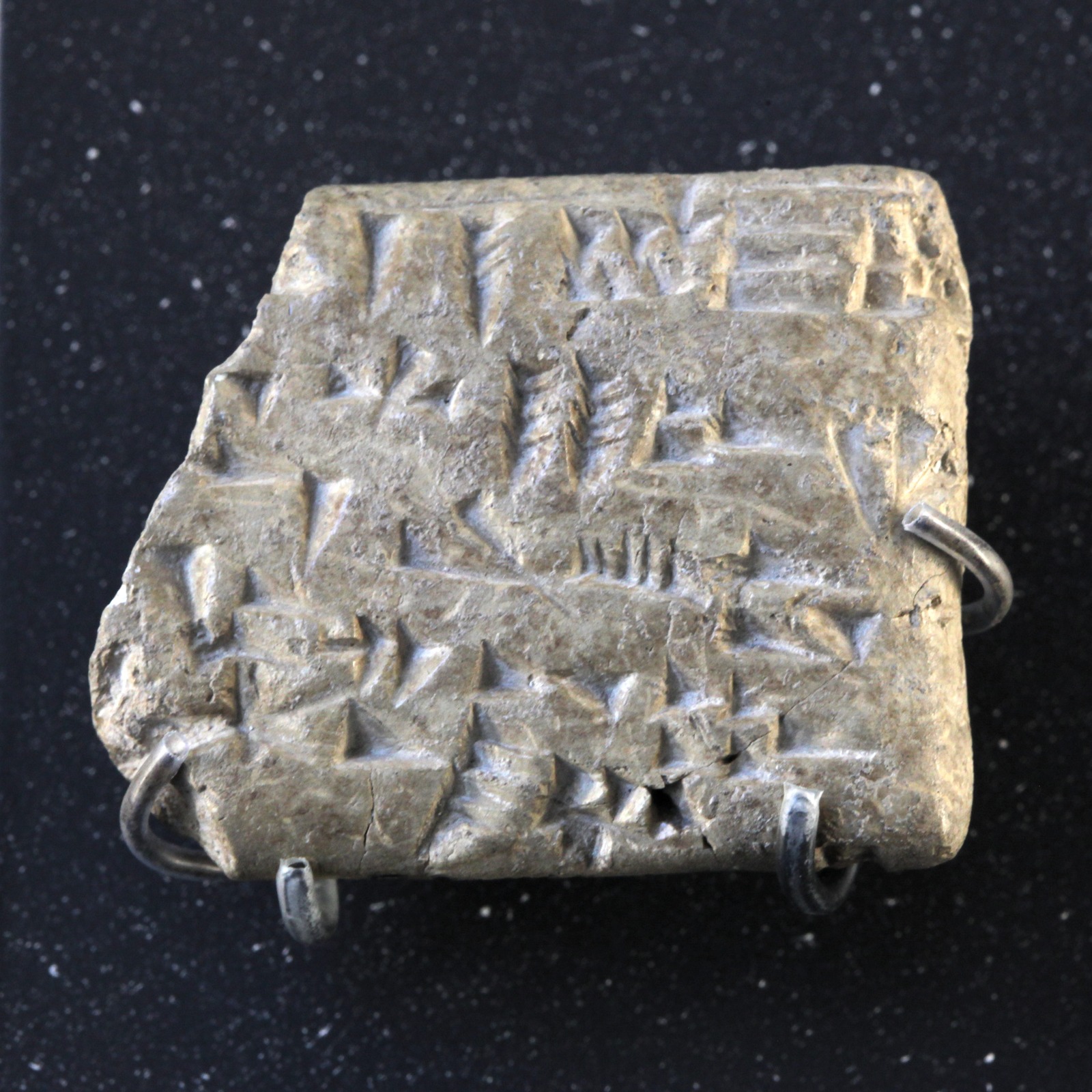
Urtenu, also transcribed Urtēnu or Ourtenou, belonged to Ugarit's elite around the late thirteenth and early twelfth centuries BCE. Letters and administrative records connect him with affairs of the royal court and substantial commercial activity. Identifying him as a prominent person in court circles is safer than assigning him one precisely established official title. Scholars have suggested links with the queen's household administration, but reconstructing his exact duties depends on the reading of dispersed correspondence. The historical person should also be distinguished from the archaeological residence subsequently named after him. [1]
The house and the successive discoveries
The so-called House of Urtenu stood in the south-central sector of the ancient city, outside the royal palace. Written material was already known from the area, but the discovery in 1973 of approximately one hundred tablets in spoil associated with modern military works redirected archaeological investigation. Finds followed in 1986, 1988, and 1992; during the 1994 season, hundreds more were recovered from excavated portions of the residence. Archaeologist Marguerite Yon reported more than five hundred texts associated with the area as the record stood in 1995. This was an excavation-stage count, not a final inventory of every fragment ever discovered. [2]
The building had connected rooms organised around an interior courtyard and was relatively extensive and architecturally complex compared with many Ugaritic houses. Habitation spaces and a burial installation were identified alongside groups of tablets. Material recovered from the 1973 spoil did not have the secure stratigraphic context of a controlled excavation, a limitation that matters when reconstructing its original storage locations. [2]
How was the archive attributed to Urtenu?
The attribution is more substantial than a name found incidentally in a building. Earlier letters were addressed to Urtenu. The protective incantation RS 92.2014 ends by identifying the person meant to benefit from its protection. In the letter RS 92.2005, a son writes to his father, whose name is damaged at the beginning but preserves its ending. A further letter, RS 34.134, identifies Urtenu's son as ʿAziltu, supporting the restoration of the father's name. Pierre Bordreuil and Dennis Pardee regarded the convergence of these clues as strong grounds for associating Urtenu with the archive; the finds of 1994 supported this identification. [3]
These links concern the owner or household associated with the documents, not the authorship of every tablet. A residence could store letters intended for other officials and copies produced by different scribes.
Storage spaces and archaeological uncertainties
Yon's excavation report places many tablets in room 2135 in the southeastern part of the building. Holes in the wall and the distribution of fallen tablets underlie the proposal that some were kept on wooden shelves. The shelving is an archaeological reconstruction, not surviving furniture. Other tablets lay in the northern area, where the modern military installation had disturbed the deposits. Philip Boyes notes that a fall from an upper floor remains a possibility rather than an established fact, and that publication of the excavated architecture has lagged behind editions of the texts. [4]
The contents and their writing systems
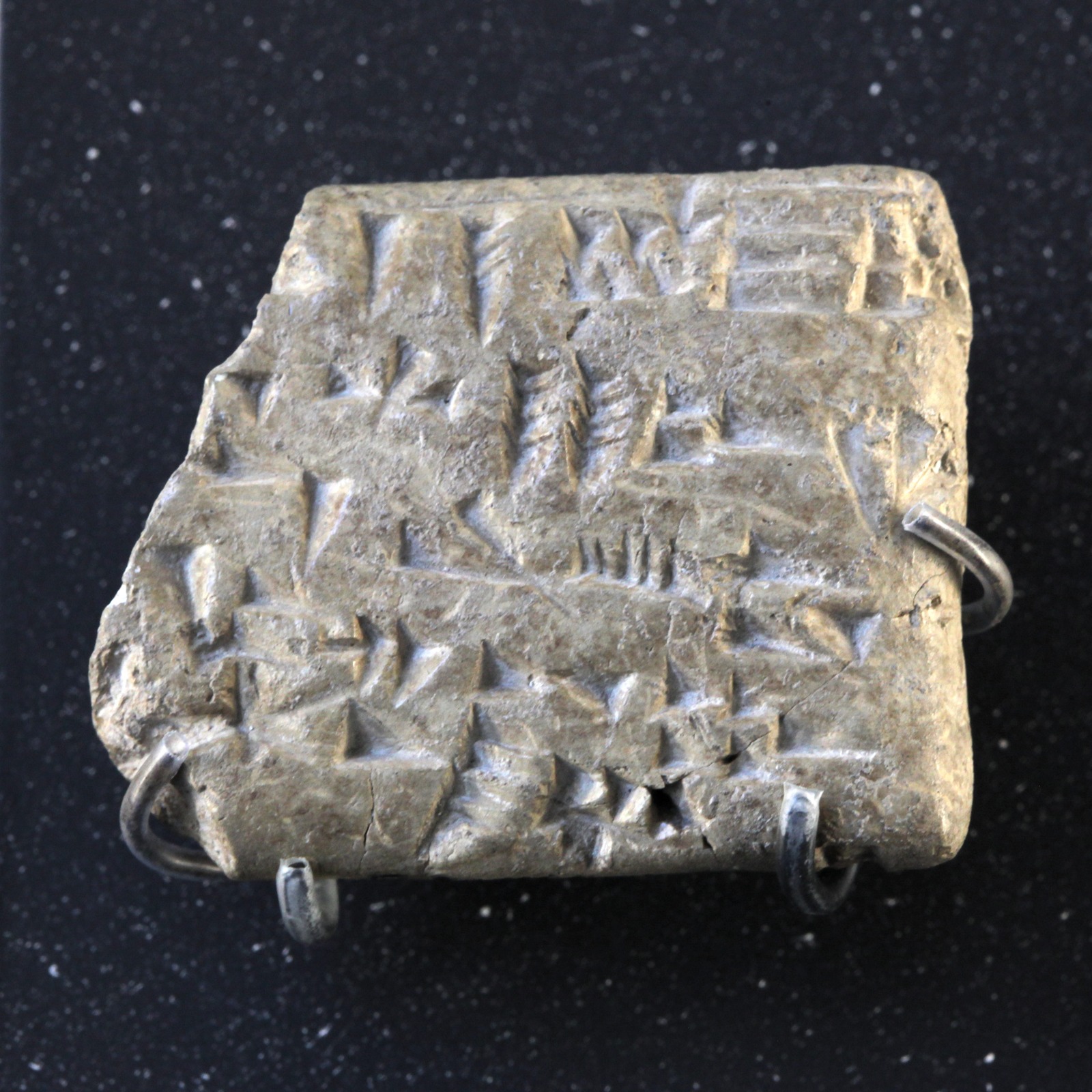
Diplomatic and administrative correspondence appears alongside commercial accounts, lexical and educational lists, literary fragments, and ritualRitualAn organised or distinguished practice meaningful to a community; it may leave traces, but its form alone does not reveal an associated doctrine.Glossary · Click to read the explanation compositions. Tablets in syllabic cuneiformCuneiformWriting with wedge-shaped signs, developed from Mesopotamian recording traditions and used for several languages from the third millennium BCE.Glossary · Click to read the explanation AkkadianAkkadianAn ancient East Semitic language written in cuneiform from the third millennium BCE; its varieties include Babylonian and Assyrian, and it served in international diplomacy.Glossary · Click to read the explanation predominated, while other texts used the alphabetic cuneiformUgaritic alphabetAlphabetic cuneiform system of Late Bronze Age Ugarit, using thirty chiefly consonantal written signs, distinct from Akkadian syllabic cuneiform.Glossary · Click to read the explanation UgariticUgaritic alphabetAlphabetic cuneiform system of Late Bronze Age Ugarit, using thirty chiefly consonantal written signs, distinct from Akkadian syllabic cuneiform.Glossary · Click to read the explanation script. The assemblage therefore cannot be treated as a single religious book or a monolingual archive. Its variety reflects the work of scribes in a city that maintained exchanges with neighbouring courts. [4]
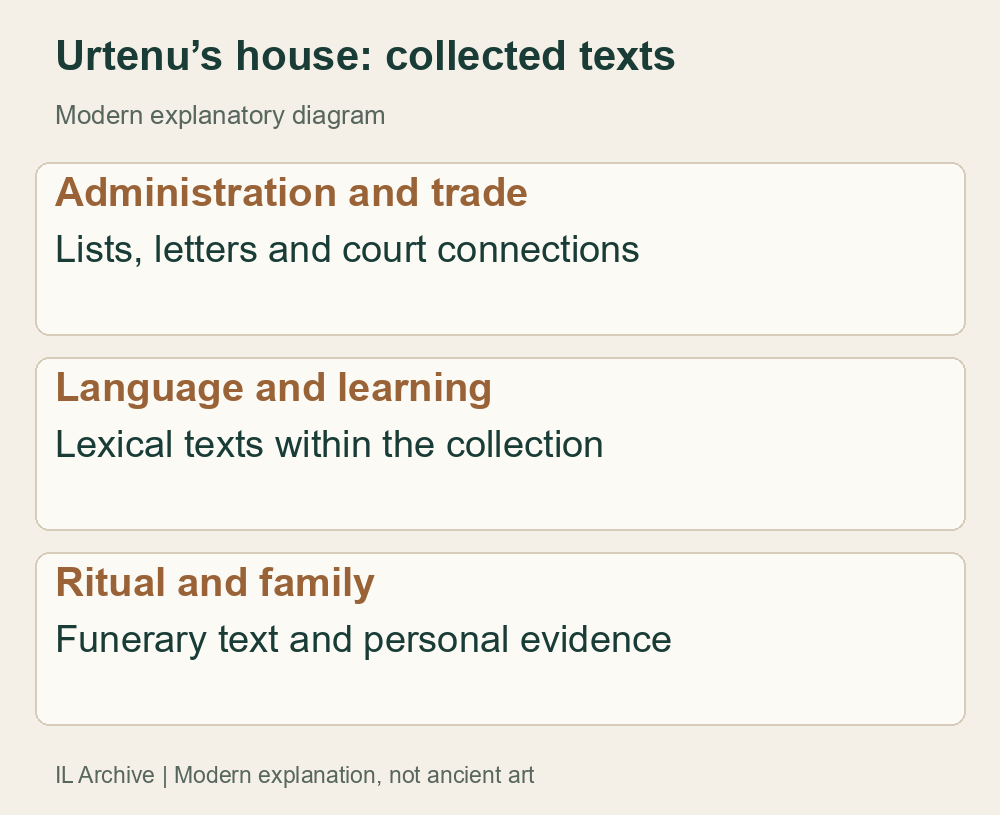
The figure above is a modern, simplified editorial grouping of attested document types, not a complete numerical census or a reconstruction of the excavated floor plan.
Administration, trade, and international networks
Florence Malbran-Labat and Carole Roche study documents concerning the management of horses and other equids, and the house's place within the palace economy. They note the unusually dense correspondence relating to the king, queen, and the official called the sākinu. Its networks reached the Hittite sphere, particularly Carchemish, and encompassed long-distance trade. The presence of royal business and commercial records within the same residence shows that modern distinctions between a “state archive” and a “private archive” do not always fit Late Bronze Age Ugarit. [5]
This does not establish that Urtenu composed every message or exercised independent royal power. “House” and “archive” are scholarly designations for a body of material associated through its find context.
Ritual texts and scribal learning
The incantation bearing Urtenu's name shows that protective practices were among the concerns represented in the household's tablets. Lexical and literary material also speaks to the study of scribal training. Yet a protective text naming one person cannot by itself reconstruct all his personal beliefs, and educational materials do not turn every room into a formal school. The collection should not be confused with other Ugaritic tablet groups dominated by cultic literature: not every myth or god listGod ListsTexts collecting divine names for preservation, teaching and classification, with varying theological organization.Glossary · Click to read the explanation from Ugarit belonged to this house. [3][4]
Subsequent volumes of the Ras Shamra–Ougarit publication series, including editions of alphabetic texts discovered in 1994–2002, expanded the available corpus. A publisher's catalogue summary, however, is not a substitute for reading the individual tablet editions and their signs. [6]
Dates, document counts, and limits of inference
The appearance of historically identifiable rulers and correspondents anchors much of this documentation to the kingdom's final period. A 2008 study places the relevant texts broadly in c. 1225–1185 BCE, within its stated chronological framework. Those are approximate dates for documents and their political setting, not birth and death dates for Urtenu. The assemblage numbered over five hundred texts according to the 1995 account, and roughly six hundred tablets and fragments by a count made in 2001; the figures record different stages of discovery and classification. [5]
The house's importance lies in the possibility of studying writing alongside domestic architecture and comparing personal networks with royal administration and commerce. Interpretation remains constrained by fragmentary preservation, modern disturbance, and uneven publication. Neither every text found in the residence nor a modern genre diagram can stand in for direct evidence of its owner's personal practices or the original locations of the tablets.
References and notes (6)
- Pierre Bordreuil and Florence Malbran-Labat, “Les archives de la maison d’Ourtenou,” Comptes rendus de l’Académie des Inscriptions et Belles-Lettres 139/2 (1995): 443–451, doi:10.3406/crai.1995.15480. Pp. 443–444 read in the online transcription; pp. 445–451 not claimed read. Return to the text ↑
- Marguerite Yon, “La maison d’Ourtenou dans le quartier sud d’Ougarit (fouilles 1994),” Comptes rendus 139/2 (1995): 427–443, doi:10.3406/crai.1995.15479. Printed pp. 427 and 439 in the Persée transcription: finds, room 2135, proposed shelving, courtyard, and counts; not the whole article. Return to the text ↑
- Pierre Bordreuil and Dennis Pardee, “L’épigraphie ougaritique : 1973–1993,” in Le pays d’Ougarit autour de 1200 av. J.-C., Ras Shamra–Ougarit XI (1995), pp. 27–32; excavation mission PDF. Concluding pp. 31–32 on RS 92.2014, RS 92.2005, and RS 34.134; the remainder of RSO XI was not read. Return to the text ↑
- Philip J. Boyes, Script and Society: The Social Context of Writing Practices in Late Bronze Age Ugarit (Oxbow, 2021), ch. 6, “The contexts of writing at Ugarit,” pp. 138–139. The House of Urtenu passage, printed pp. 138–139 (PDF pp. 149–150), covering room 2135 and the tablet assemblage; not the entire book. Return to the text ↑
- Florence Malbran-Labat and Carole Roche, “Bordereaux de la Maison d’Ourtenou (Urtēnu): la gestion des équidés et la place de cette maison dans l’économie palatiale,” in Ougarit au Bronze moyen et au Bronze récent, TMO 47 (2008), pp. 243–275. Printed p. 243 only: published abstract, dating/count notes, approximately 600 tablets/fragments by 2001; pp. 244–275 not read. Return to the text ↑
- Pierre Bordreuil, Dennis Pardee and Robert Hawley, Une bibliothèque au sud de la ville III: Textes 1994–2002 en cunéiforme alphabétique de la Maison d’Ourtenou, Ras Shamra–Ougarit XVIII (2012), publisher catalogue. Publisher catalogue entry and abstract only; not the book or tablet editions. Return to the text ↑
Suggest a correction · Suggest a source for this record
Cite this record
IL Archive, «Urtenu and his house», https://ilarchive.com/en/entities/urtenu
Continue reading