Artifact
Elephantine temple-rebuilding petition
An object record bringing together its image, metadata, rights, and context.
- Timeline
- 407 BCE
An Aramaic papyrus kept in Berlin, dated 25 November 407 BCE, in which Jedaniah and Elephantine’s priests petition to rebuild Yaho’s temple; the evidence from 402 BCE for rebuilding is inconclusive.
Estimated reading time: 8 min Published Last reviewed:
Share article
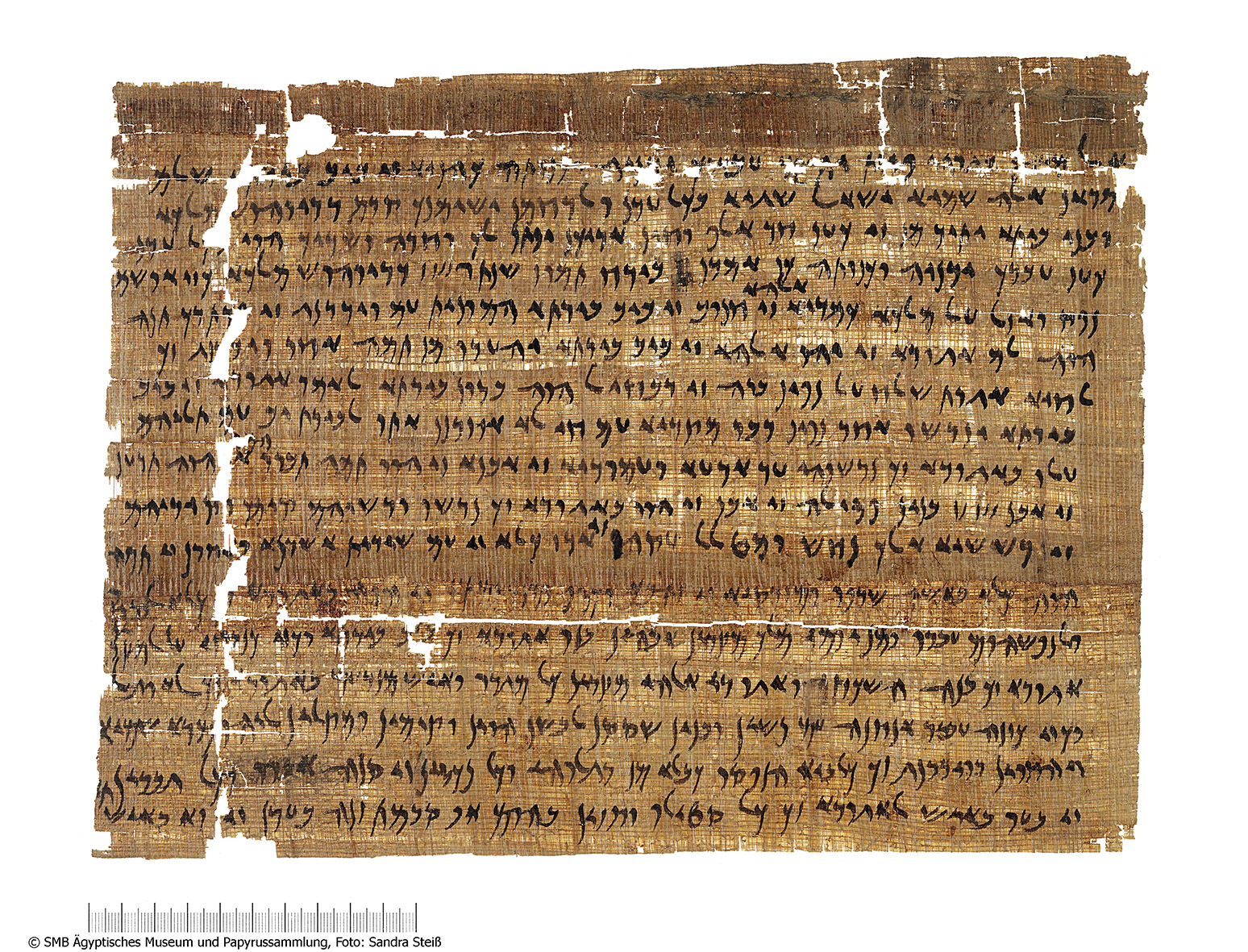
Photograph
Sandra Steiß / Staatliche Museen zu Berlin, Ägyptisches Museum und Papyrussammlung · CC BY-SA
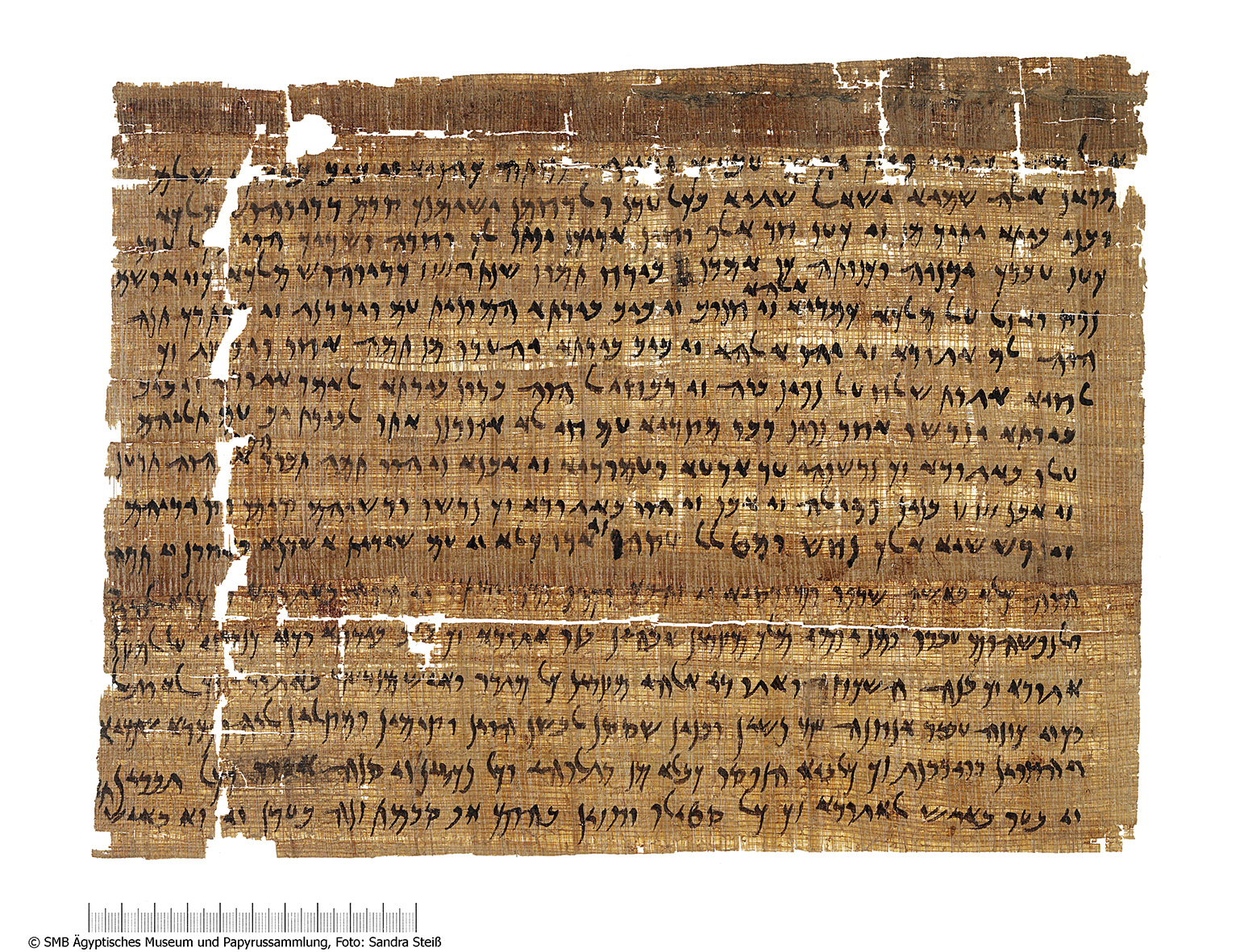
Recto of Berlin papyrus P.13495, the Elephantine temple-rebuilding petition. Photograph of the original object; the verso is shown below
License · Related reference · Image source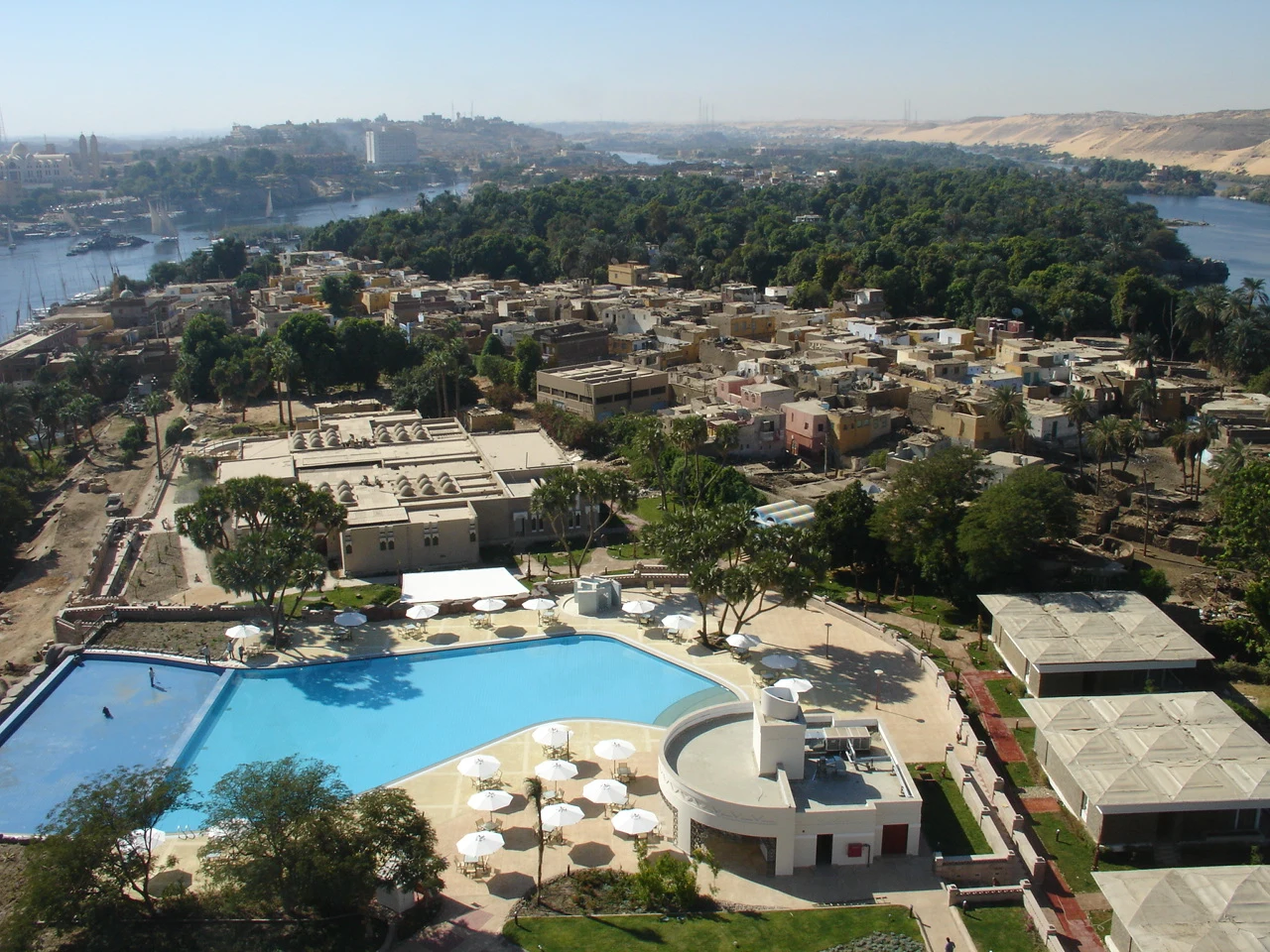
Photograph
Zureks / Wikimedia Commons / CC BY-SA 3.0
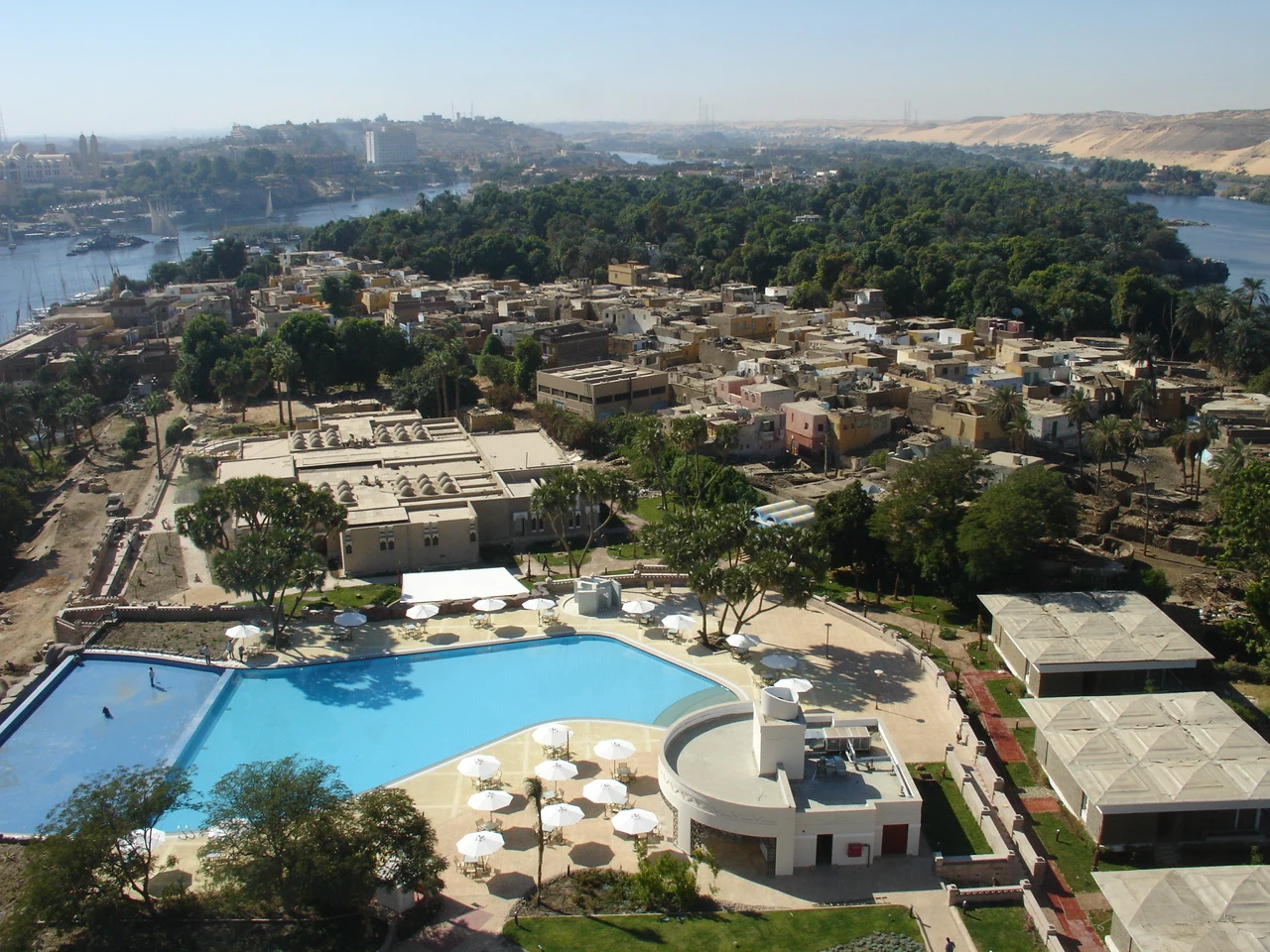
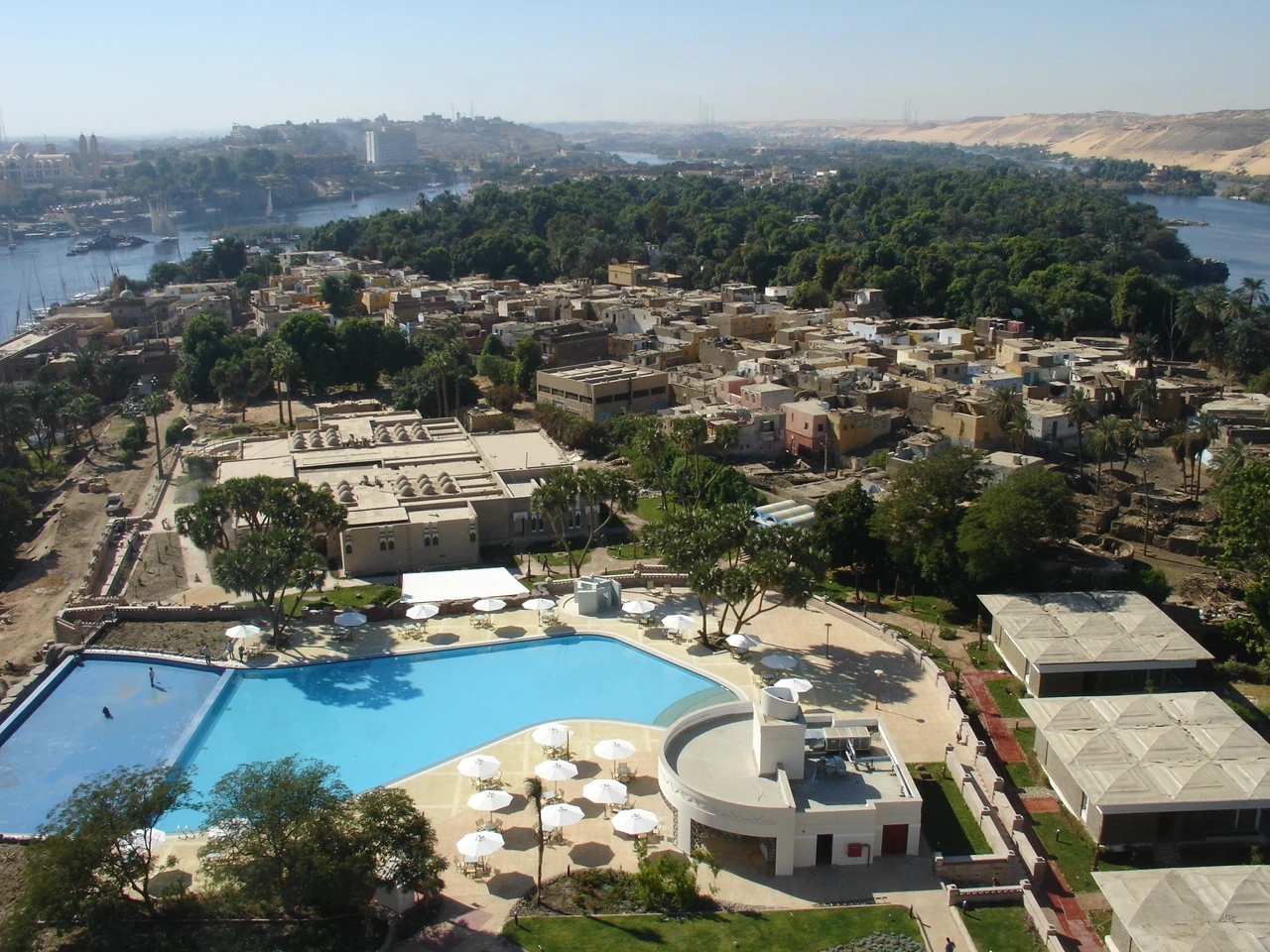
Modern view of Elephantine Island and the Nile near Aswan; geographical context, not the remains of Yaho’s temple
License · Image source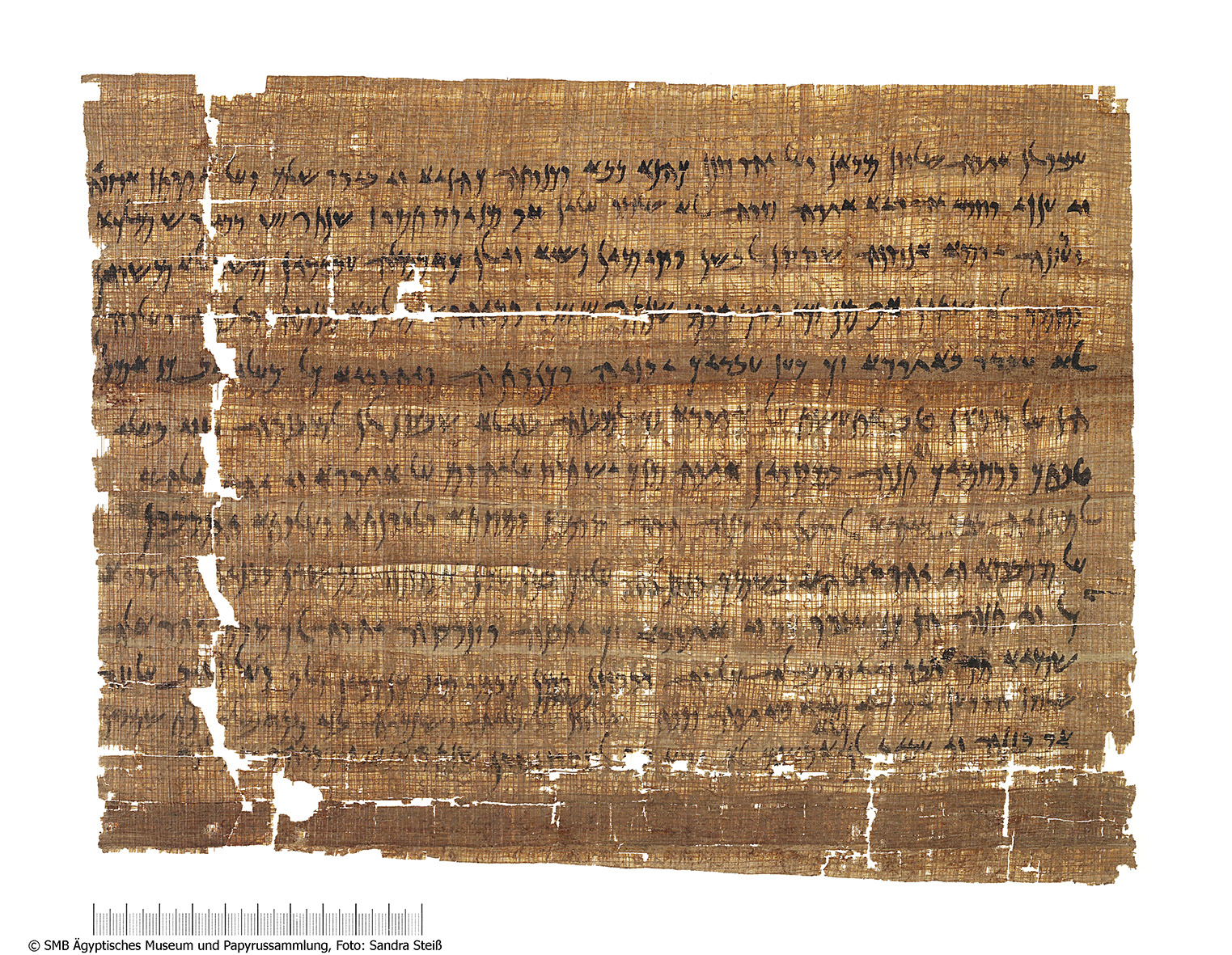
Photograph
Sandra Steiß / Staatliche Museen zu Berlin, Ägyptisches Museum und Papyrussammlung · CC BY-SA
Verso of Berlin papyrus P.13495, the other side of the same object. The photograph shows the surviving papyrus without reconstruction of its gaps
License · Related reference · Image sourceObject details
- Title
- Elephantine temple-rebuilding petition
- Timeline
- 407 BCE
- Rights
- CC BY-SA
Text
Introduction
This is a particular papyrus from the archive of a Judaean community at Elephantine (Yeb)Elephantine / YebElephantine / Yeb, near Aswan at the Nile’s First Cataract, preserves a long-lived Egyptian town, temples of Khnum and Satet, and Persian-period garrisons. Aramaic papyri document several communities, including Judeans and Yaho’s temple, whose rebuilding was sought in 407 BCE; claims and archaeological interpretations must be distinguished.Glossary · Click to read the explanation, an island in the Nile near Aswan, not merely a story about its temple. On 25 November 407 BCE, the priest JedaniahJedaniah, priest at ElephantineAn Elephantine priest named with his colleagues in the temple-rebuilding petition of 407 BCE.Glossary · Click to read the explanation and his colleagues addressed a petition to BagohiBagohi, governor of YehudGovernor of Persian-period Yehud, addressed by the Elephantine priests in 407 BCE.Glossary · Click to read the explanation, governor of the Persian province of Yehud, seeking intervention so that the temple of the god Yaho could be rebuilt following its destruction. The document preserves the petitioners’ version of events and their request. To determine what happened to the temple thereafter, it must be read alongside a response memorandum and independent documents.[1][2]
The physical object: which petition survives?
The papyrus now held by Berlin’s Egyptian Museum and Papyrus Collection bears the inventory number P.13495, the edition reference TAD A4.7, and the older designation Cowley 30. It is written in black carbon ink in Imperial AramaicAramaicNorthwest Semitic language varieties documented since the early first millennium BCE, including Old and Imperial Aramaic, Syriac, Jewish dialects, and living Neo-Aramaic forms.Glossary · Click to read the explanation, with 17 lines on the recto and 13 on the verso, and measures approximately 24.6 × 32 cm. It was excavated at Elephantine in 1906–1907 and is housed in Berlin. The Elephantine research project describes it as a “copy of a petition,” while scholars also discuss it as the earlier draft in a sequence of correspondence. The surviving sheet does not prove that this very physical copy was sent to Bagohi.[1][2][4]
It must not be confused with Cairo JdE 43465 / TAD A4.8, a second, revised version of the petition kept in Cairo. Lutz Doering regards the latter as a corrected draft, perhaps closer to the version actually dispatched. Nor is it the earlier Elephantine “Passover letter,” which concerns a different document and question.[4][5]
From diplomatic greeting to a request for intervention
The petition opens in the formal language of administration. The published Aramaic transcription begins as follows, at recto line R1:[3]
That is, “To our lord Bagohi, governor of Yehud.” Jedaniah and his fellow priests in the fortress of Yeb are then named, and favor before King Darius II is invoked for their addressee. “Yehud” is the Persian province around JerusalemJerusalemJerusalem is a city of religious importance in Judaism, Christianity and IslamGlossary · Click to read the explanation, not the island in Egypt. The letter combines imperial diplomatic conventions with an appeal over a local calamity.[1][3]
According to the petitioners, the temple was destroyed in Tammuz of the fourteenth year of Darius II, approximately June–July 410 BCE. They accuse priests of the Egyptian god KhnumKhnumEgyptian god represented with a ram’s head; his priests appear in the Elephantine petition’s account of the 410 BCE destruction.Glossary · Click to read the explanation of acting with the Persian official Vidranga to instigate the attack, carried out by a force led by his son Naphaina. Their account describes smashed columns and five stone gateways, burned doors with bronze fittings and a cedar roof, and the removal of gold and silver vessels. This is the testimony of a party seeking redress: the text establishes that these accusations were made, but does not independently establish every detail, the opponents’ account, or their motives.[1]
The petitioners further claim that their ancestors built the temple before Cambyses conquered Egypt in 525 BCE, and that it was spared at that time while Egyptian temples were damaged. This is an assertion in a persuasive petition about the antiquity of their claim, not a surviving foundation record that independently dates the building. The letter also reports earlier appeals to Bagohi, to the high priest and leading men in Jerusalem, and to other Judaeans without receiving a response to those letters. The petitioners say they put on sackcloth, fasted, abstained from oil and wine, and ceased making offerings at their temple.[1][4]
At verso lines V4–V5 the document names the discontinued offerings. In James Moore’s DEAPS transcription, the short phrase is:[3]
This means “grain offering, frankincense, and burnt offering.” The letter [נ] in “frankincense” is an editorial restoration in this transcription, not a character demonstrably intact on the papyrus; the Elephantine project prints the word without brackets in its transcription. These were offerings said to have stopped and which the petitioners sought to restore, not simply private prayers.[1][3]
The appeal itself is explicit in verso line V6:[1][3]
In an approximate rendering: “If it seems good to our lord, let attention be given to rebuilding that temple, since they do not permit us to rebuild it.” It reports a request, not a completed building project. The priests seek a supportive letter from the governor to those exercising authority in Egypt. They promise that grain offerings, incense, and burnt offerings will again be offered on Yaho’s altar in the governor’s name, and that the community will pray for him. They also refer to writing to Delaiah and Shelemiah, sons of Sanballat, in SamariaSamaria: city and regionAncient city and administrative region; the city’s site is at Sebastia, northwest of Nablus in the West Bank.Glossary · Click to read the explanation: an attempt to secure support through more than one administrative channel.[1]
Five dates, five different kinds of evidence
- Before 525 BCE: the alleged time of the temple’s establishment, according to the petitioners, not a separately documented construction date.
- Around summer 410 BCE: the destruction reported by the letter, in the fourteenth year of Darius II.
- 25 November 407 BCE: the date written in the Berlin petition, the twentieth of Marheshvan in Darius II’s seventeenth year; not the dates of the destruction or the rebuilding.
- After the petition: the dossier contains a memorandum of officials’ response and a further proposed undertaking; the precise sequence of every negotiation is not fully preserved.
- 13 December 402 BCE: a house-sale contract uses Yaho’s temple as a boundary marker, a later witness of a different documentary kind.[1][6][7][8]
The memorandum and the restriction on sacrifice
The dossier does not end with the absence of replies to the earlier letters. Another Berlin papyrus, P.13497 / TAD A4.9 (Cowley 32), is a “memorandum of what Bagohi and Delaiah said.” It gives a formula that could be presented to Arsames, the official in Egypt, in support of rebuilding the altar-house on its former site. But at recto lines R9–R10 the offerings it specifies are limited to:[6]
That is, “And let the grain offering and frankincense be presented upon [the altar]”; “altar” is supplied from the next line. Burnt offerings—explicitly requested in the petition—are missing. The memorandum is thus strong evidence for conditional support for rebuilding and non-animal offerings. It is neither permission for every sacrifice nor a record that construction was completed. It records the substance of words attributed to officials, not an extant formal letter bearing Bagohi’s own seal.[6]
A further damaged draft from Cairo, JdE 43467 / TAD A4.10, reinforces the distinction. Its writers offer to abstain from burnt offerings of sheep, cattle, and goats, while retaining incense and grain offerings; silver and barley are also proposed. Since the papyrus is damaged and some words have been restored, not every expression can be treated as an executed legal condition. It is an offer under negotiation, not a receipt for payment or conclusive proof that an agreement was carried out.[7]
Was the temple actually rebuilt?
An independent witness deserves special weight: a house-sale contract in the Brooklyn Museum, 47.218.94 / TAD B3.12, dated 13 December 402 BCE. It calls the sellers servants of Yaho and, at recto lines R18–R19, locates “the temple of YHW” to the west of the property, with “the king’s street” between them. Using the temple as a boundary marker some eight years after the reported destruction makes its continued or renewed physical presence plausible. That evidence is stronger than another repetition of an earlier hope. But a place-name might also have survived at the site of a demolished sanctuary. The sale does not describe building work, date its completion, or document later sacrificial practice. Rebuilding is therefore a reasonable—and to some scholars persuasive—inference, not an unequivocally recorded fact.[8][10]
The evidence must distinguish the appeal of 407 BCE, the memorandum’s conditional administrative support, and the temple’s possible condition years later. Treating any one as proof of the others erases crucial differences between documentary genres.[6][8][10]
What the papyrus reveals—and cannot establish—about Elephantine
The letter speaks for priests and Judaeans living in a fortress in Persian-ruled Egypt. It attests worship of a deity written יהו (Yaho/Yahu) in Aramaic, related to the name YahwehYahwehThe proper name of Israel’s deity, written יהוה (YHWH), the Tetragrammaton. Its exact ancient pronunciation is not directly preserved; texts and inscriptions witness its history.Glossary · Click to read the explanation in Judaean tradition, at an altar where grain offerings, incense and burnt offerings were made. Appeals to YehudYehud in the Persian periodYehud names the region around Jerusalem under Achaemenid Persian rule, from the sixth to the fourth century BCE.Glossary · Click to read the explanation and Samaria show political and religious connections beyond the island; they do not establish permanent cultic or administrative subordination to any single center. Likewise, calling the deity “God of Heaven” when addressing a governor fits a wider imperial register and, by itself, cannot define the writer’s entire theology.[1][4][9]
One politically purposeful petition cannot establish a uniform creed for all Elephantine residents, still less for every Jew under Persian rule. Other documents from Elephantine attest a more complex social and religious world, examined by Gard Granerød. Suggested explanations of the conflict in terms of particular animal sacrifices or ownership of the temple site remain hypotheses to be tested against other evidence, rather than facts explicitly recorded by this petition. The papyrus is valuable precisely as a witness to how a local community appealed to authority and negotiated its place of worship—provided its assertions are not mistaken for the outcome.[1][9]
Images and consultation of the original
The cover shows the recto of Berlin papyrus P.13495 itself; photographs of both recto and verso appear below, credited to Sandra Steiß and the Berlin museums. Consult Berlin’s catalog entry for P.13495 and the Wikimedia Commons file pages for the recto and verso. Both photographs are licensed CC BY-SA 4.0 and included unmodified and uncropped. The inherited contextual photograph retained among this page’s media shows modern Elephantine and the Nile; it does not depict the papyrus or identifiable ruins of Yaho’s temple. Keeping those identities distinct is essential.[2]
References and notes (10)
- Elephantine papyri project, Lisa Cleath and James D. Moore (metadata) and Verena Lepper, Berlin Papyrus P.13495: edited Aramaic transcription and translation, TAD A4.7 (Cowley 30); the petitioners’ account, not independent testimony about their opponents. TAD A4.7; recto R1–R17, verso V1–V13; metadata and dating Return to the text ↑
- Staatliche Museen zu Berlin, Egyptian Museum and Papyrus Collection, catalog entry for P.13495: physical description, measurements, dating and photographs. P.13495; inventory, 24.6 × 32 cm and date 25 November 407 BCE Return to the text ↑
- James D. Moore, DEAPS digital edition of “Pap. Ber. P. 13495,” including the alternative TAD edition; consulted for the quoted Aramaic and editorial restoration, not a fresh decipherment of the papyrus. R1; V4–V6; restored [נ] at V4; page record updated 18 October 2026 Return to the text ↑
- Lutz Doering, Ancient Jewish Letters and the Beginnings of Christian Epistolography (Mohr Siebeck, 2012), chapter 2; the petition drafts, diplomatic opening and prior correspondence. Printed pp. 41–42 (PDF preview pp. 56–57) Return to the text ↑
- Elephantine project, Cairo papyrus JdE 43465, TAD A4.8: the second version of the petition, a distinct physical manuscript. Object metadata; R1–R26 and V1–V3, especially R1–R5 and R21–R26 Return to the text ↑
- Elephantine project, Berlin Papyrus P.13497, TAD A4.9 (Cowley 32): memorandum recording the position attributed to Bagohi and Delaiah on rebuilding the altar-house and offerings. Memorandum R1–R11, especially R8–R11; document type “memorandum” Return to the text ↑
- Elephantine project, Cairo Papyrus JdE 43467, TAD A4.10, “Offer of Payment for reconstruction of temple”; damaged document with restorations affecting the proposed offerings and payment. R1–R14, especially R8–R14; description of damage and restorations Return to the text ↑
- Elephantine project, Brooklyn Museum house-sale contract 47.218.94, TAD B3.12 (Kraeling 12), a distinct Aramaic deed dated 13 December 402 BCE; the temple and king’s street as boundary markers. Object record; R1–R2 and R17–R20 (especially R18–R19) Return to the text ↑
- Gard Granerød, “Multi-Dimensional Yahwism: The Case of the Persian Period Judaean Community in Elephantine,” The Ancient Near East Today, October 2016; complete online scholarly essay. Complete online essay, sections on the garrison community, cult and documentary range Return to the text ↑
- Posen Library, “Request about the Rebuilding of the Elephantine Temple,” editorial introduction, dated 407 BCE: response and uncertainty over rebuilding; the full hosted translation is access-restricted and was not read. Public “About This Entry” only, displayed lines 33–48; not the full translation Return to the text ↑
Archive records may be reviewed and refined as better evidence or sources become available. Suggest a correction
Suggest a correction · Suggest a source for this record
Cite this record
IL Archive, «Elephantine temple-rebuilding petition», https://ilarchive.com/en/artifacts/elephantine-temple-petition
Continue reading