Entity
Khnum
A reference page linking a name, group, or concept to the materials that discuss it.
Egyptian god represented with a ram’s head; his priests appear in the Elephantine petition’s account of the 410 BCE destruction.
Last reviewed:
Text
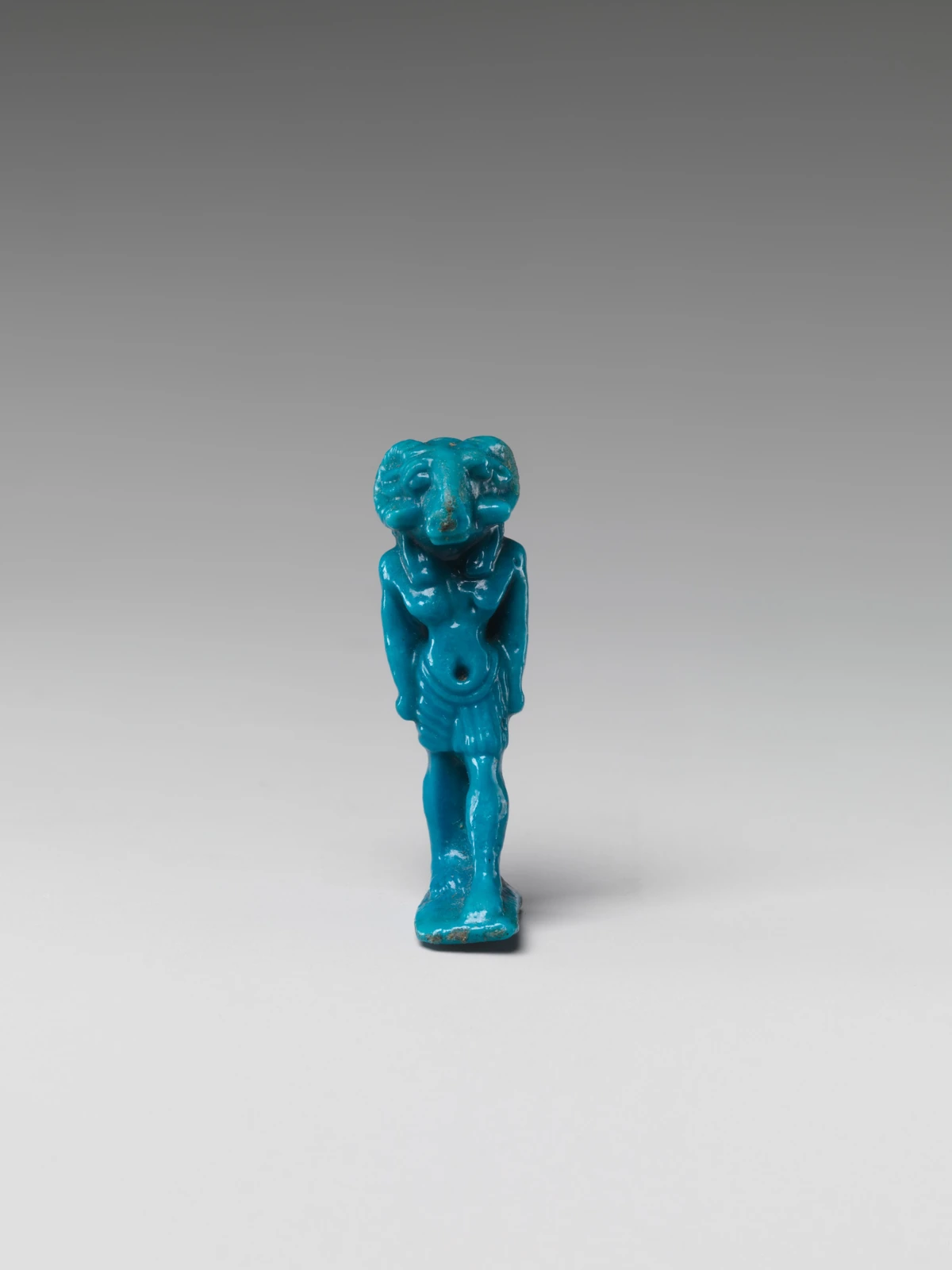
Khnum is an Egyptian god represented with a ram's head. The ElephantineElephantine / YebElephantine / Yeb, near Aswan at the Nile’s First Cataract, preserves a long-lived Egyptian town, temples of Khnum and Satet, and Persian-period garrisons. Aramaic papyri document several communities, including Judeans and Yaho’s temple, whose rebuilding was sought in 407 BCE; claims and archaeological interpretations must be distinguished.Glossary · Click to read the explanation priests' petition of 407 BCE assigns his priests a role, alongside local military authority, in destroying Yaho's temple in 410. This is the petitioners' account of their opponents.[1]
The pictured amulet comes from Thebes and dates to the Ptolemaic Period, 332–30 BCE. It illustrates his form, not an Elephantine temple object or the conflict.[2]
References and notes
- Temple-rebuilding petition, TAD A4.7, translated by K. C. Hanson. Lines 1–30; senders, addressee and their contacts. Return to the text ↑
- Metropolitan Museum, Amulet of Khnum, 26.7.884. Faience; Thebes, Asasif; Ptolemaic Period, 332–30 BCE. Return to the text ↑
Suggest a correction · Suggest a source for this record
Cite this record
IL Archive, «Khnum», https://ilarchive.com/en/entities/khnum-egyptian-god