Site
Elephantine / Yeb
Elephantine / Yeb is an archaeological island off Aswan. Aramaic papyri document communities including Judeans, Yaho’s temple and the dispute over its rebuilding in 407 BCE, as distinct from archaeological inference.
Estimated reading time: 7 min Published Last reviewed:
Share article
Text
Introduction
Elephantine is an archaeological island in the Nile opposite Aswan, with a history far longer than the Aramaic papyri for which it is famous. This entry examines the Egyptian town, its temples and everyday life, and then the Persian-period garrison records and Yaho's sanctuary, distinguishing documentary claims from excavation evidence and modern interpretation.
Location, names, and functions
The island lies in Upper Egypt at the northern end of the Nile's First Cataract, across from Aswan, known in ancient sources as Syene. Egyptian sources use a name conventionally rendered Abu (Ꜣbw); documents in AramaicAramaicNorthwest Semitic language varieties documented since the early first millennium BCE, including Old and Imperial Aramaic, Syriac, Jewish dialects, and living Neo-Aramaic forms.Glossary · Click to read the explanation call the place Yeb, while Elephantine is the Greek name. These names reflect languages and periods, not an unchanging population. The position gave the settlement a role in monitoring river traffic and trade with Nubia to the south.[2]
The Egyptian town and its archaeological landscape
Research by the German Archaeological Institute dates settlement on the island to approximately 3300 BCE. Fortifications, houses, administrative buildings, sanctuaries, and burials belong to successive Egyptian phases. Archaeology distinguishes the fortified early-dynastic nucleus from later residential expansion and changing sacred precincts rather than treating the town as a fixed plan. The place remained important through Pharaonic and Graeco-Roman periods and continued to be used in subsequent centuries.[2][4]
Major institutions include the temple of KhnumKhnumEgyptian god represented with a ram’s head; his priests appear in the Elephantine petition’s account of the 410 BCE destruction.Glossary · Click to read the explanation, an Egyptian god associated locally with inundation and creation, and the sanctuary of Satet, connected with the southern frontier and the Nile, alongside a Nilometer and domestic remains. These Egyptian precincts must not be conflated with Yaho's temple merely because they stood nearby. Work in the eastern town continues to investigate early fortifications and craft installations dating long before Persian rule.[3][5][15]
The garrison, its people, and its documents
In the fifth century BCE, under Achaemenid rule, Elephantine and Syene were home to military groups and Egyptian, Judean, Aramean, and other families. Some wrote Imperial Aramaic on papyrus and pottery; the island's wider history also survives through Egyptian evidence and excavated architecture. Letters, petitions, accounts, house deeds, marriage contracts, and manumission records illuminate property, labour, and kinship, not just worship.[4][6]
For example, a marriage contract in the Brooklyn Museum, dated 449 BCE, records an agreement between Ananiah son of Azariah, associated with Yaho's service, and Meshullam concerning his daughter Tamut from Syene. It details goods, separation clauses, inheritance, and her son. The text's identification of Tamut as a female servant in a dependent legal position should be taken seriously, but it cannot characterize every woman on the island. The Aramaic Ahiqar papyrus, preserving a story of a sage at the Assyrian court and wisdom sayings, attests literary circulation as well. The Assyrian kings in the narrative belong to its fictional historical setting, not the date when the surviving Persian-period manuscript was copied; accounting texts also survive on reused layers of papyrus.[6][7]
Yaho's temple and the events of 410–407 BCE
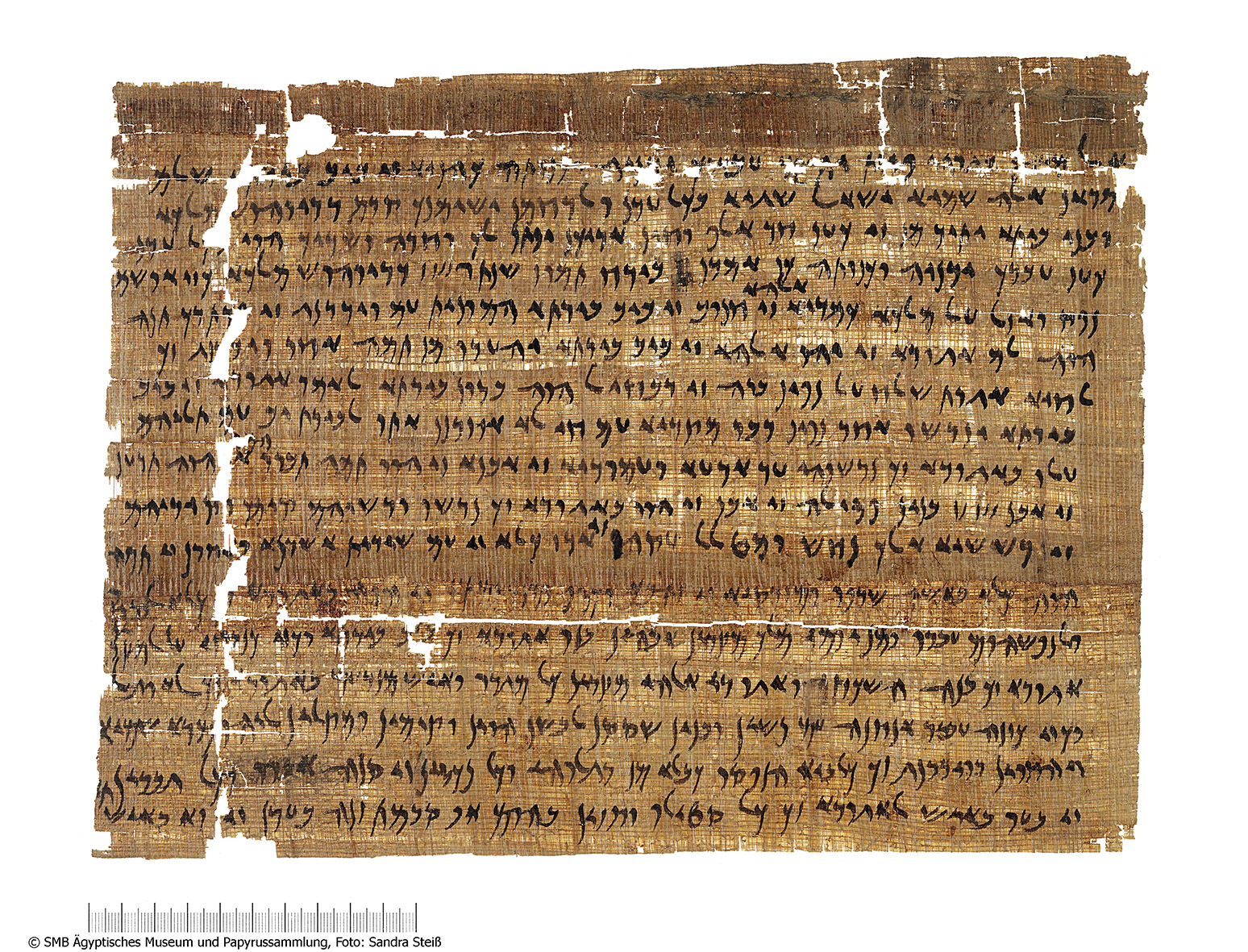
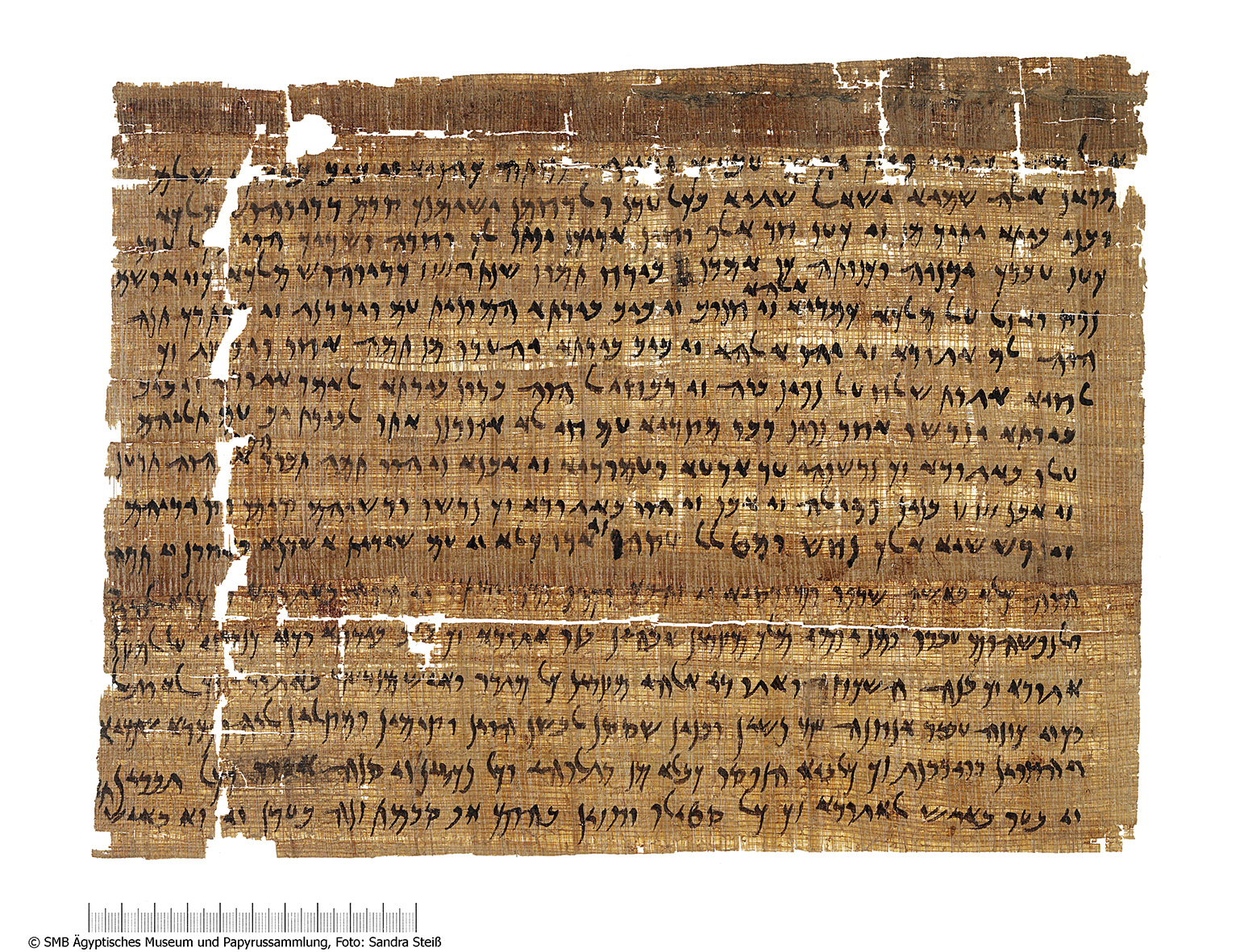
Community documents refer to a temple of YHW or Yaho, a divine name commonly connected by scholars with YahwehYahwehThe proper name of Israel’s deity, written יהוה (YHWH), the Tetragrammaton. Its exact ancient pronunciation is not directly preserved; texts and inscriptions witness its history.Glossary · Click to read the explanation in HebrewHebrewA Northwest Semitic language of the Canaanite group, encompassing Iron Age epigraphy, Biblical, Rabbinic, medieval and Modern Hebrew; its scripts and pronunciations changed over time.Glossary · Click to read the explanation traditions. The spelling in the Aramaic dossier must nevertheless be distinguished from other forms of the name and from later doctrinal statements. A petition of 407 BCE was addressed to BagohiBagohi, governor of YehudGovernor of Persian-period Yehud, addressed by the Elephantine priests in 407 BCE.Glossary · Click to read the explanation, Persian governor of Yehud, by YedaniahJedaniah, priest at ElephantineAn Elephantine priest named with his colleagues in the temple-rebuilding petition of 407 BCE.Glossary · Click to read the explanation and his fellow priests at Yeb. Its textual designation is TAD A4.7 / Cowley 30, and the actual object is Berlin papyrus P.13495. The published text covers seventeen lines on the recto and thirteen on the verso.[1]
According to the petitioners, Khnum's priests cooperated with the Persian official Vidranga and his son Naphaina, a garrison commander, to destroy the sanctuary in Tammuz of Darius II's fourteenth regnal year, approximately 410 BCE, while governor Arsames was absent. Their account describes broken pillars and doors, burning, stolen vessels, family mourning, and an interruption in offerings. But the document is an appeal seeking political support, not independent testimony about every Egyptian resident's intentions or every cause of the dispute. It claims the temple already stood before Cambyses entered Egypt in 525 BCE: this is the petitioners' retrospective assertion of antiquity, not an independently established construction date.[1]
A parallel draft survives as TAD A4.8 / Cowley 31, Cairo papyrus JdE 43465. The two formulations should neither be collapsed into a single physical document nor mistaken for separate destructions. The petitioners also report approaching priests in JerusalemJerusalemJerusalem is a city of religious importance in Judaism, Christianity and IslamGlossary · Click to read the explanation and sending a copy to sons of Sanballat in SamariaSamaria: city and regionAncient city and administrative region; the city’s site is at Sebastia, northwest of Nablus in the West Bank.Glossary · Click to read the explanation.[1][9]
The response and what it does not prove
The evidence does not end with the petition. Berlin papyrus P.13497, TAD A4.9 / Cowley 32, is a memorandum reporting what Bagohi and Delaiah said. It envisages restoration at the former site and grain offerings and incense. The published Aramaic line 9 preserves the short phrase:[10]
In context, this means “and they shall present the grain offering and incense.” This is a translation of the short published Aramaic phrase, not a quotation of the whole memorandum. Animal burnt offerings are not mentioned there; silence is not, by itself, an explicit general prohibition. The memorandum records a favourable instruction or recommendation, not an eyewitness report that construction was completed.[10]
A separate draft, TAD A4.10 / Cowley 33, Cairo papyrus JdE 43467, offers a conditional undertaking by five men that, if the temple were rebuilt, no sheep, cattle, or goats would be made into burnt offerings there: incense and grain offerings would continue, and silver and barley would be provided. Parts of its wording are damaged or restored in the edition. It strengthens the case for negotiations over sacrificial practice, without establishing either the sole cause of the compromise or that the sanctuary reopened.[11]
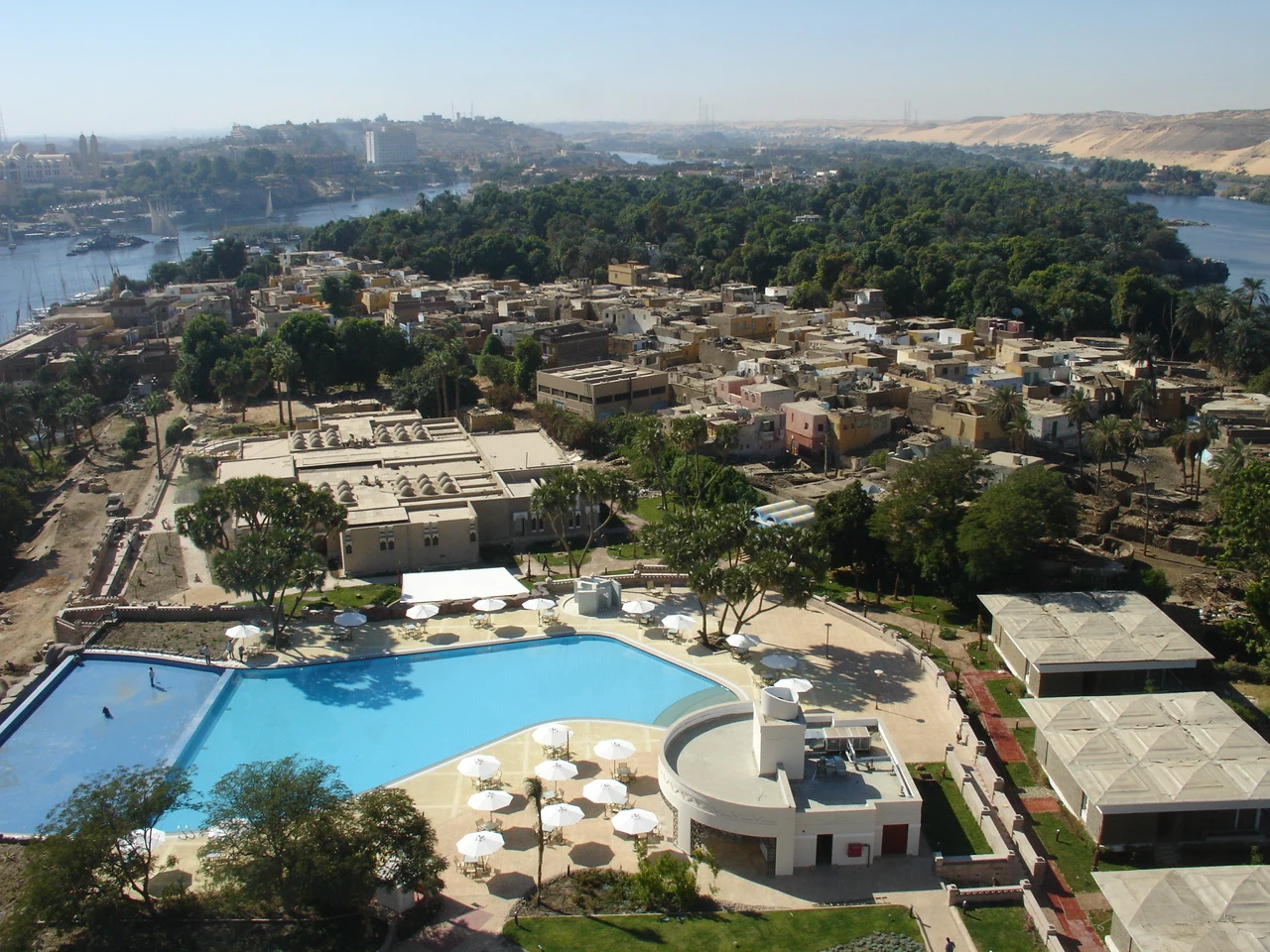
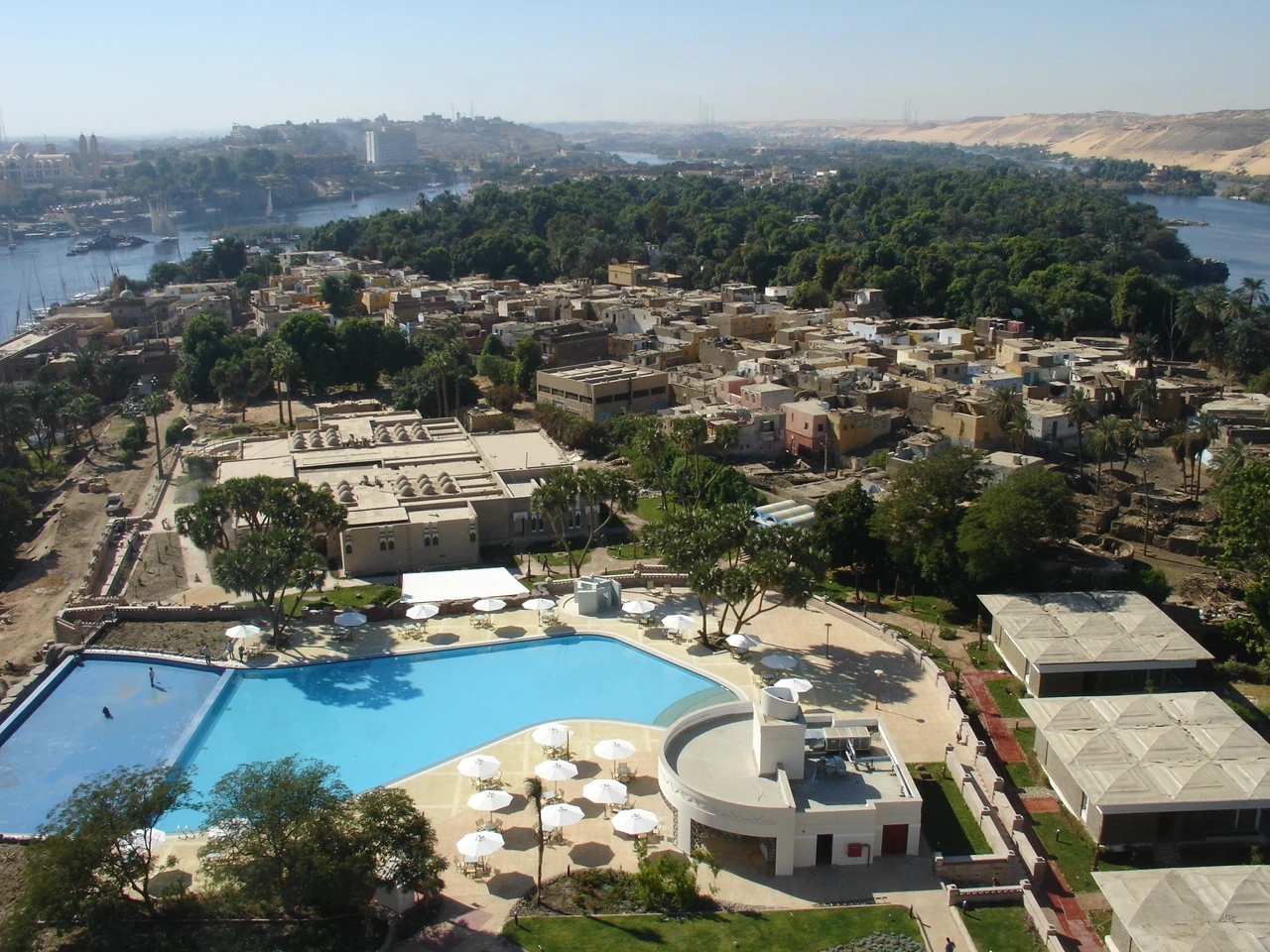
Excavations have also related the community's quarter to enclosure walls and the street between the area attributed to Yaho's temple and the Khnum precinct. Cornelius von Pilgrim proposed an archaeological identification of the sanctuary's location, while revising attributions of particular walls as stratigraphic work progressed. He suggested a possible dispute over encroachment on the street, explicitly acknowledging the lack of direct archaeological proof of that explanation. Locating a structure, explaining its destruction, and interpreting a modern panoramic photograph are three different matters.[4]
Calendar, worship, and multiple divine names
A damaged Aramaic letter from Hananiah to Yedaniah, TAD A4.1 / Cowley 21, Berlin papyrus P.13464, dating to around 419–418 BCE, addresses calendrical matters, Nisan, and leaven. It is traditionally called the “Passover Letter.” Yet much is missing, published translations reconstruct festival names and particular days, and even the object catalogue questions that conventional designation. Restored lines alone cannot prove that every detail of later Passover observance was already practised at Yeb.[8]
Another record, a contribution list designated TAD C3.15 / Cowley 22, names women and men giving silver for YHW and then assigns totals to YHW, Eshem-Bethel, and Anat-Bethel. Proposed dates include about 419 or 400 BCE. These entries support a religious environment in which multiple divine names mattered; they do not automatically reproduce later forms of monotheismMonotheismBelief that only one God possesses divinity in its fullest sense. Historically distinct from exclusively worshipping one deity without denying others; its theological forms vary.Glossary · Click to read the explanation. Karel van der Toorn interprets the names as distinct gods within Yaho's religious orbit, also drawing on Amherst Papyrus 63. But the list cannot tell us what each donor believed individually, nor settle the location of images or a single universally accepted theology. Anat-Bethel should not automatically be equated with every occurrence of AnatAnatAnat is an ancient Near Eastern goddess attested at Mari, Ugarit and in Egypt. In Ugaritic narratives she is a warrior, Baal’s ally and a mourner for him; her roles vary by tradition and context.Glossary · Click to read the explanation in other cultures.[12][13][14]
A short chronology and the limits of the evidence
- About 3300 BCE onward: settlement beginnings, followed by successive Egyptian fortifications and institutions; approximate archaeological dating, not a papyrus date.[2][4]
- 525 BCE: Cambyses' conquest of Egypt; the claim that Yaho's temple preceded it is a retrospective statement in the petition of 407 BCE.[1]
- 449 BCE: marriage agreement involving Ananiah and Tamut, a Persian-period family document.[6]
- About 419–418 BCE: composition of Hananiah's calendrical letter, damaged and editorially restored.[8]
- About 410 BCE: destruction of the temple as related in a petition written approximately three years later.[1]
- 407 BCE: rebuilding petition and parallel draft; the memorandum and conditional offer belong to this dossier, without every document's dating or implementation being certain.[1][9][10][11]
- Late fifth century BCE: disputed approximate date for the contribution register; it does not assign a belief system to every inhabitant.[12]
- 1906–1907 CE and afterwards: excavation, collection, and modern publication of papyri; dates of recovery and editorial study, not of ancient composition.[8][13]
Elephantine is best understood through its different layers: a long-lived Egyptian settlement, a multi-community frontier environment, and Aramaic archives of particular groups. Taken together, documents and archaeology describe some institutions and conflicts in detail; neither a petition nor a reconstructed reading should stand for the island's entire history.
References and notes (15)
- Petition by Yedaniah and the priests to Bagohi (407 BCE), in the Elephantine project edition and editorial translation; the petitioners’ account, not neutral testimony about their adversaries. TAD A4.7; Cowley 30; Pap. Berlin P.13495, recto 1–17; verso 1–13. Return to the text ↑
- German Archaeological Institute, Elephantine project: position, settlement history, functions, and institutional fieldwork. DAI, Elephantine, project overview, introductory paragraphs and project metadata. Return to the text ↑
- Egyptian Ministry of Tourism and Antiquities, Elephantine site description: Khnum, Satet, Nilometer, and museum. Egyptian Ministry of Tourism and Antiquities, Elephantine, site description, paragraphs 1–2. Return to the text ↑
- Cornelius von Pilgrim, “On the Archaeological Background of the Aramaic Papyri from Elephantine in the Light of Recent Fieldwork,” chapter in Elephantine Revisited: stratigraphy, precincts, revised wall identifications, and a hypothetical street dispute. Cornelius von Pilgrim, “On the Archaeological Background of the Aramaic Papyri from Elephantine in the Light of Recent Fieldwork,” Elephantine Revisited, chapter 1, printed pp. 1–15 (PDF pp. 1–15, zero-based 0–14). Return to the text ↑
- Peter Kopp, excavation report for Elephantine’s eastern town (2023–24 fieldwork, published 2026); only the publisher’s abstract consulted. Peter Kopp, “Elephantine, Ägypten. Grabungen in der Oststadt,” eForschungsberichte des DAI (2026), abstract only; published 26 May 2026. Return to the text ↑
- Aramaic marriage agreement concerning Ananiah and Tamut, 449 BCE: edition and English editorial translation; a specific legal transaction, not universal practice. TAD B3.3; Kraeling 2; Brooklyn Museum 47.218.89 (+ fragments), recto 1–15, verso 1–2; published edition and translation. Return to the text ↑
- Elephantine Aramaic Ahiqar manuscript and palimpsest accounts; catalogue description and opening sample, not the entire multi-plate manuscript. TAD C1.1 / C3.7; Pap. Berlin P.13446 A–H, K–L, catalogue summary and opening fragments of plates A–B; not complete multi-plate edition. Return to the text ↑
- Incomplete calendrical letter of Hananiah, traditionally called the “Passover Letter”; object metadata, edited lines, restorations, and catalogue’s warning about the title. TAD A4.1; Cowley 21; Pap. Berlin P.13464, recto 1–6; verso 1–4; incomplete; object catalogue, editorial edition and English translation. Return to the text ↑
- Parallel rebuilding petition draft, Cairo papyrus; relevant recto and verso lines and editorial translation compared with TAD A4.7. TAD A4.8; Cowley 31; Pap. Cairo EM JdE 43465; recto 1–26; verso 1–3, edition and translation. Return to the text ↑
- Aramaic memorandum of Bagohi and Delaiah, edited and translated; grain and incense occur in recto line 9, without an express universal ban on animal offerings. TAD A4.9; Cowley 32; Pap. Berlin P.13497, recto 1–11, especially lines 1, 8–11. Return to the text ↑
- Conditional offer to fund restoration and forgo animal burnt offerings, including editorial restorations; no proof that rebuilding took place. TAD A4.10; Cowley 33; Pap. Cairo EM JdE 43467, recto 1–14, especially lines 7–14. Return to the text ↑
- Contribution register, including allocations to three divine names; excerpt and curator’s description in Posen Library, not a full reading of the printed edition. TAD C3.15; Cowley 22; Porten & Yardeni, Textbook of Aramaic Documents from Ancient Egypt, III (1993), via Bezalel Porten’s permitted excerpt in Posen Library; summary columns and col. VII, lines 126–128. Return to the text ↑
- Karel van der Toorn, “The Religion of the Elephantine Jews,” in Torah, Temple, Land (2021): temple communities, textual sources, ritual names, and the author’s interpretive claims. Karel van der Toorn, “The Religion of the Elephantine Jews,” in Torah, Temple, Land (Mohr Siebeck, 2021), printed pp. 79–89 (PDF pp. 88–98; zero-based 87–97), sections 1–3, esp. pp. 80–81, 86–88. Return to the text ↑
- Karel van der Toorn, “Eshem-Bethel and Herem-Bethel: New Evidence from Amherst Papyrus 63,” ZAW 128/4 (2016): discussion of the contribution list and interpretation of divine names; repository proof consulted. Karel van der Toorn, “Eshem-Bethel and Herem-Bethel: New Evidence from Amherst Papyrus 63,” ZAW 128/4 (2016), pp. 668–680; university-repository proof, PDF pp. 4–8 (zero-based 3–7), especially opening argument. Return to the text ↑
- DAI Cairo, 3 September 2026 announcement on the 54th field season; news summary only, not the full excavation report. DAI Cairo, announcement “Our final report on the 54th field season at Elephantine (2025/2026) is now out!”, 3 September 2026, news summary only. Return to the text ↑
Suggest a correction · Suggest a source for this record
Cite this record
IL Archive, «Elephantine / Yeb», https://ilarchive.com/en/sites/elephantine
Continue reading
Related readings