Amanirenas against Rome Chapter 1
From Meroe to Samos
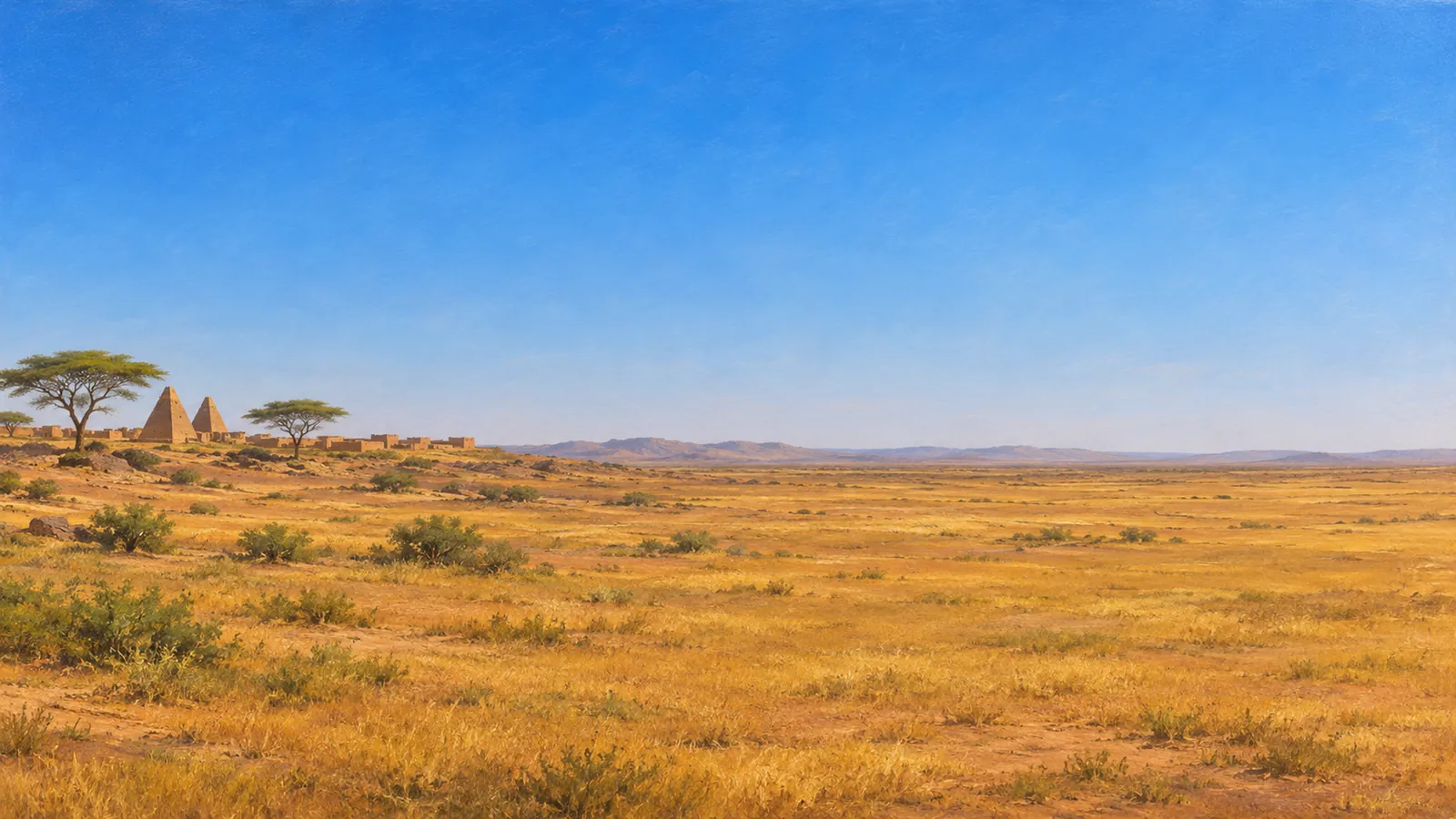
From Aswan to Napata, people on both sides of the border bear the costs of war. An embassy from Kush sails to Samos. Later finds at Meroë, Hamadab and Qasr Ibrim give the landscape a voice of its own.
SourcesTurn the pages with the arrows, the arrow keys or a swipe.
AMANIRENAS AGAINST ROME
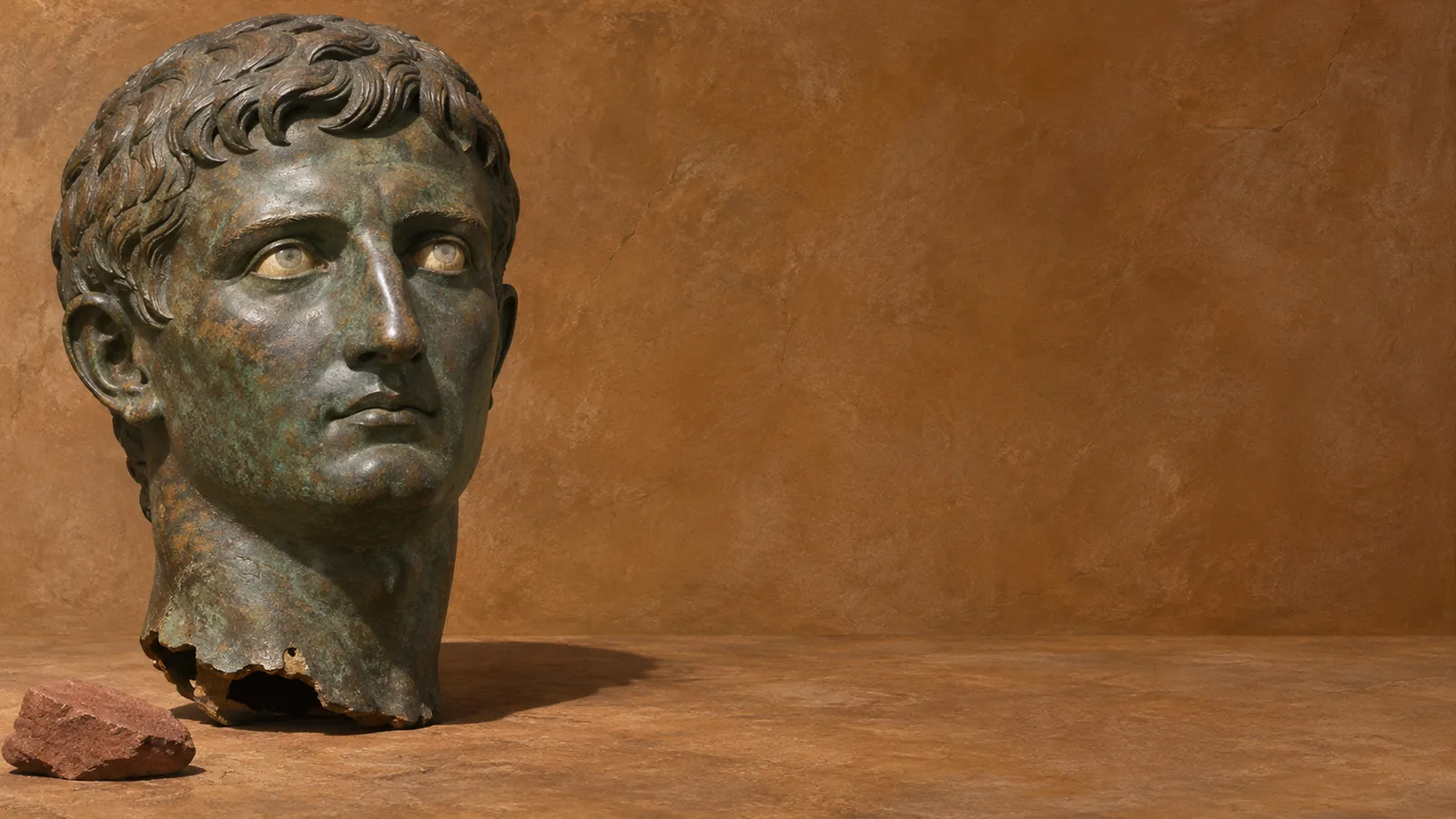
One is a bronze face, the other an inscribed stone. Both survive from the time a queen of Kush and the ruler of Rome faced each other on the Nile.
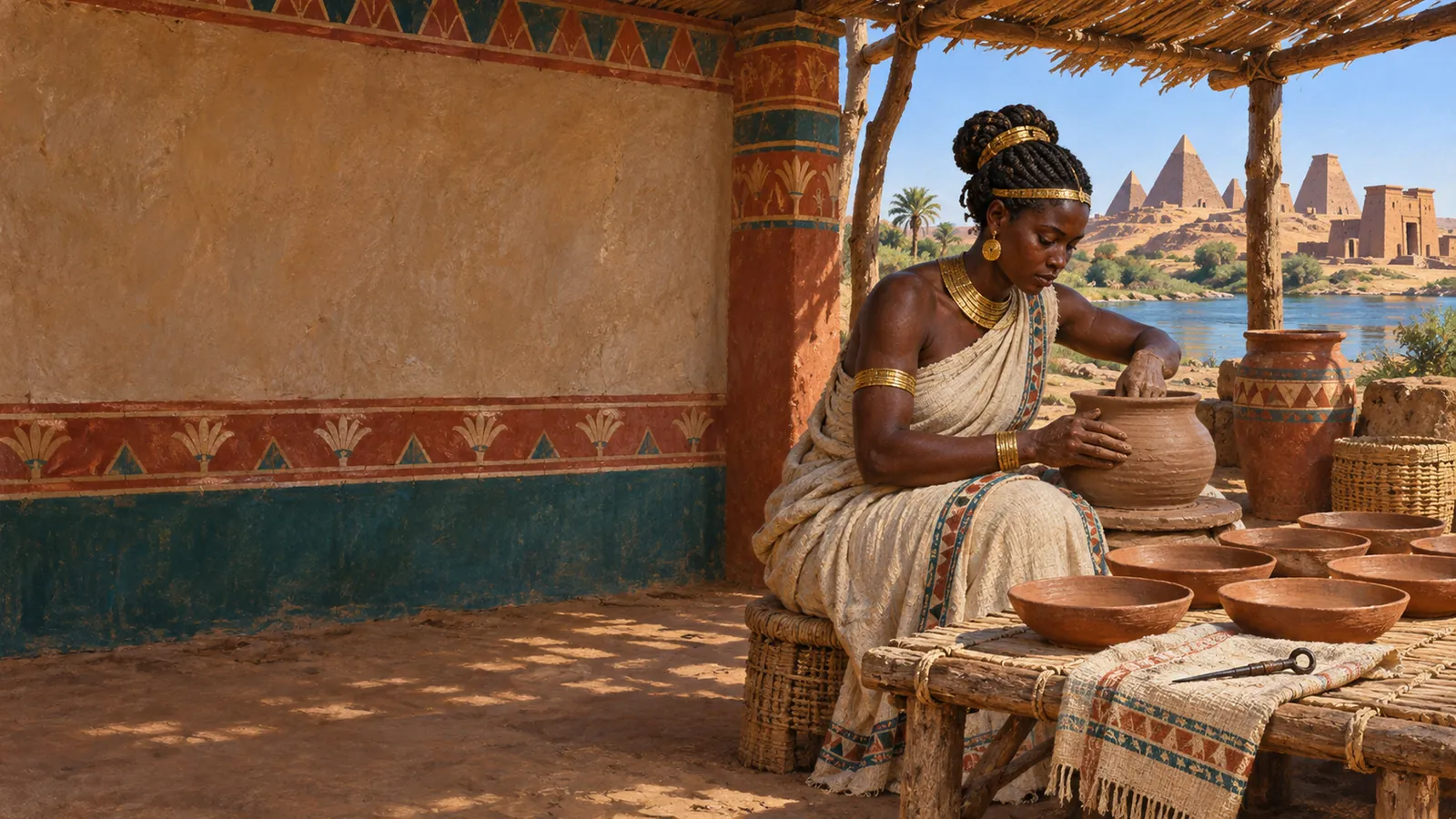
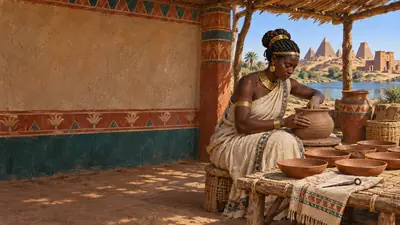
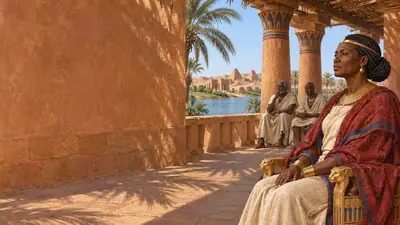
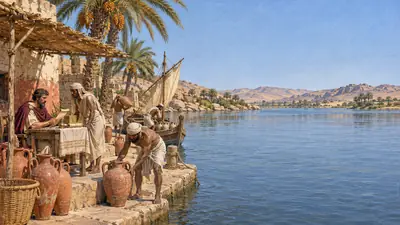
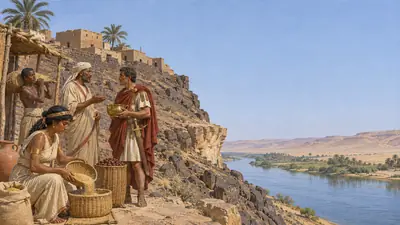
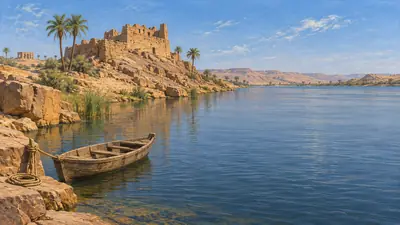
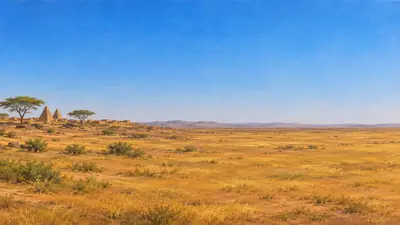
Meroë lies upriver in what is now Sudan. Caravans and boats supply the royal city. Its workshops make fine cloth, pottery and metalwork. Egypt has just come under Rome.
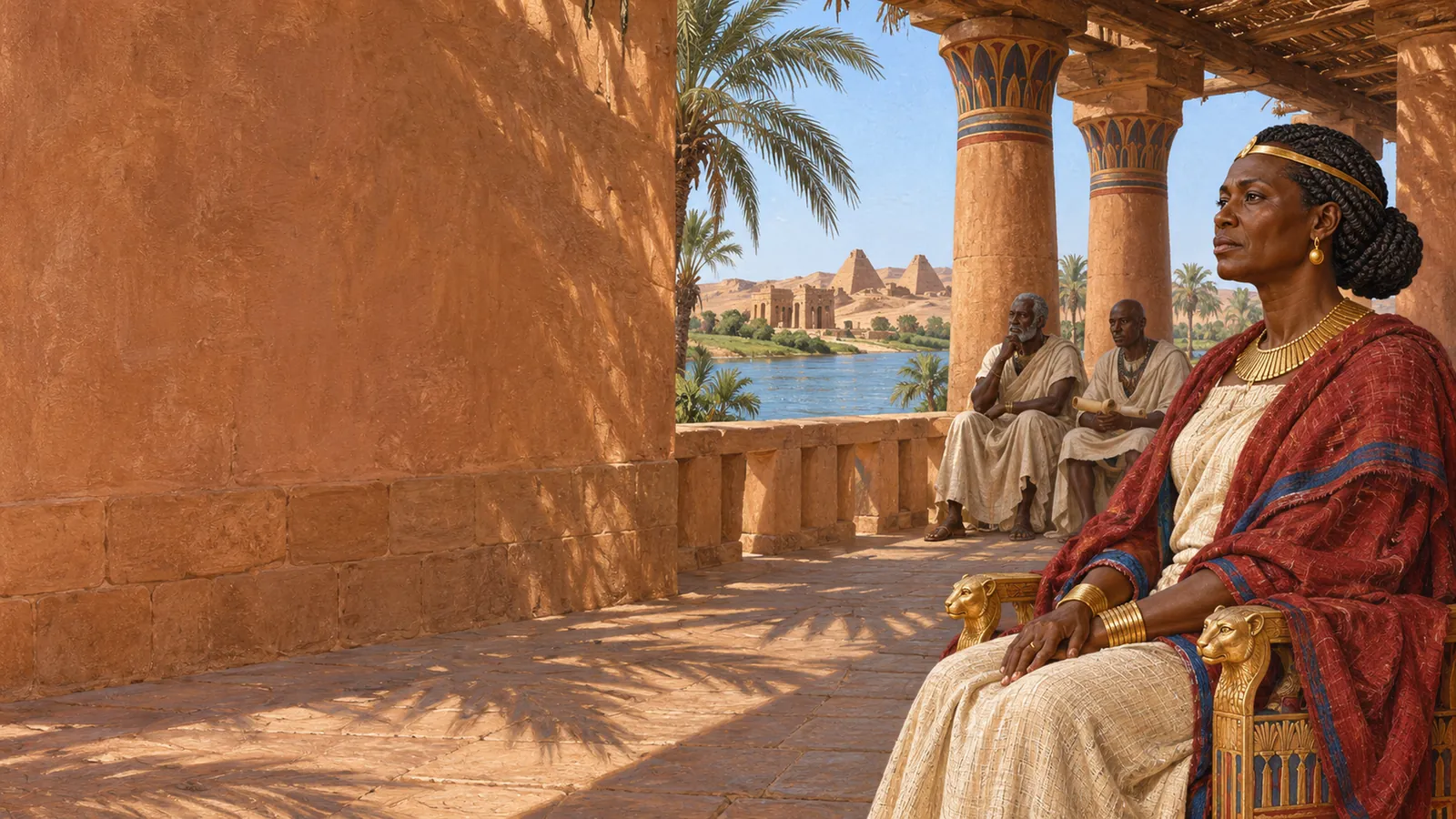
Strabo calls the queen Kandake, a royal title. He says she was blind in one eye. The stela at Hamadab supports her usual identification as Amanirenas.
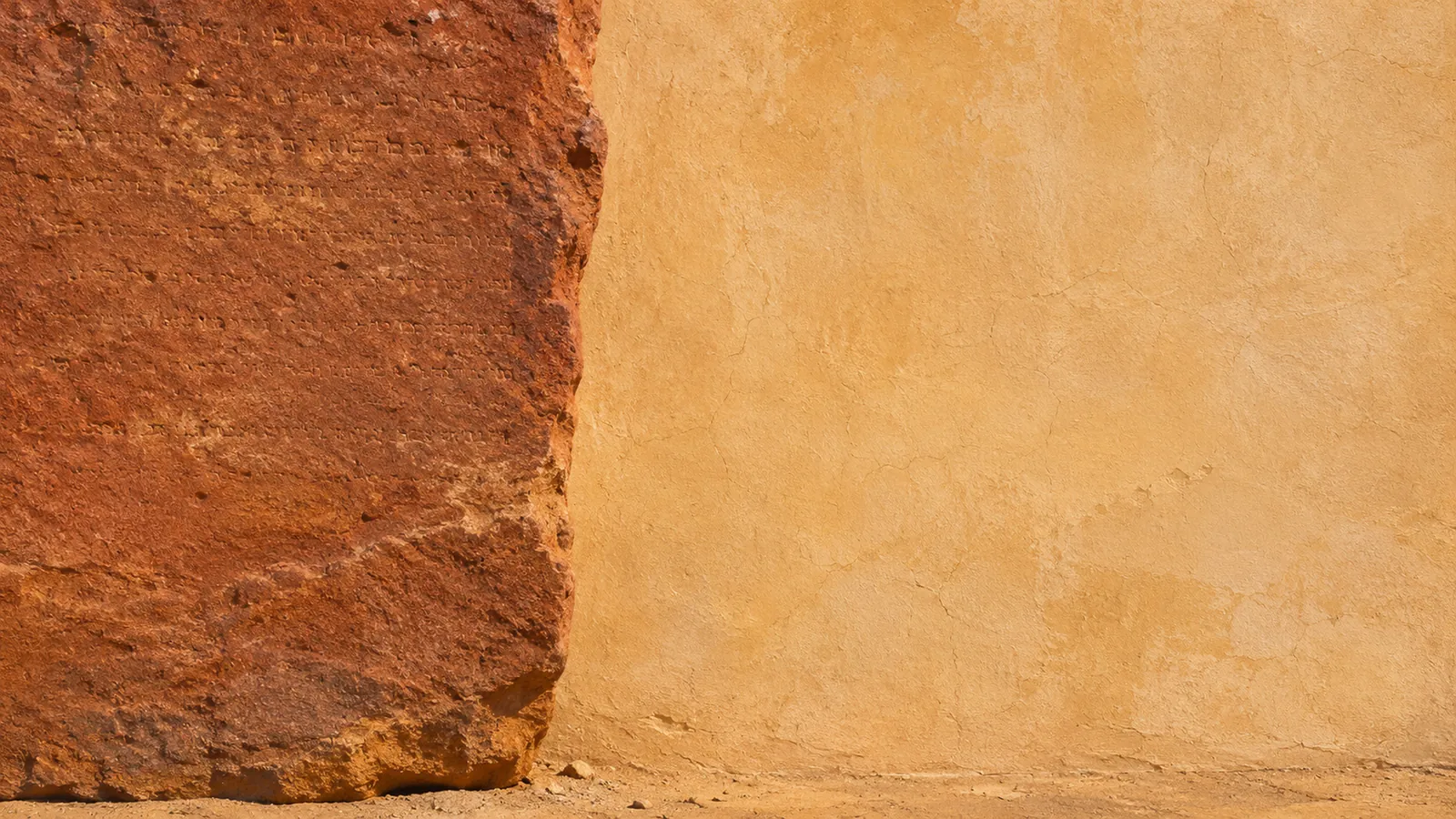
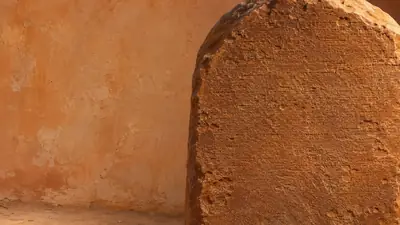
The inscribed stone names Amanirenas and Akinidad. Readers can pick out royal names and titles even where the surrounding lines remain difficult. The text puts both figures on the Kushite side of this story.
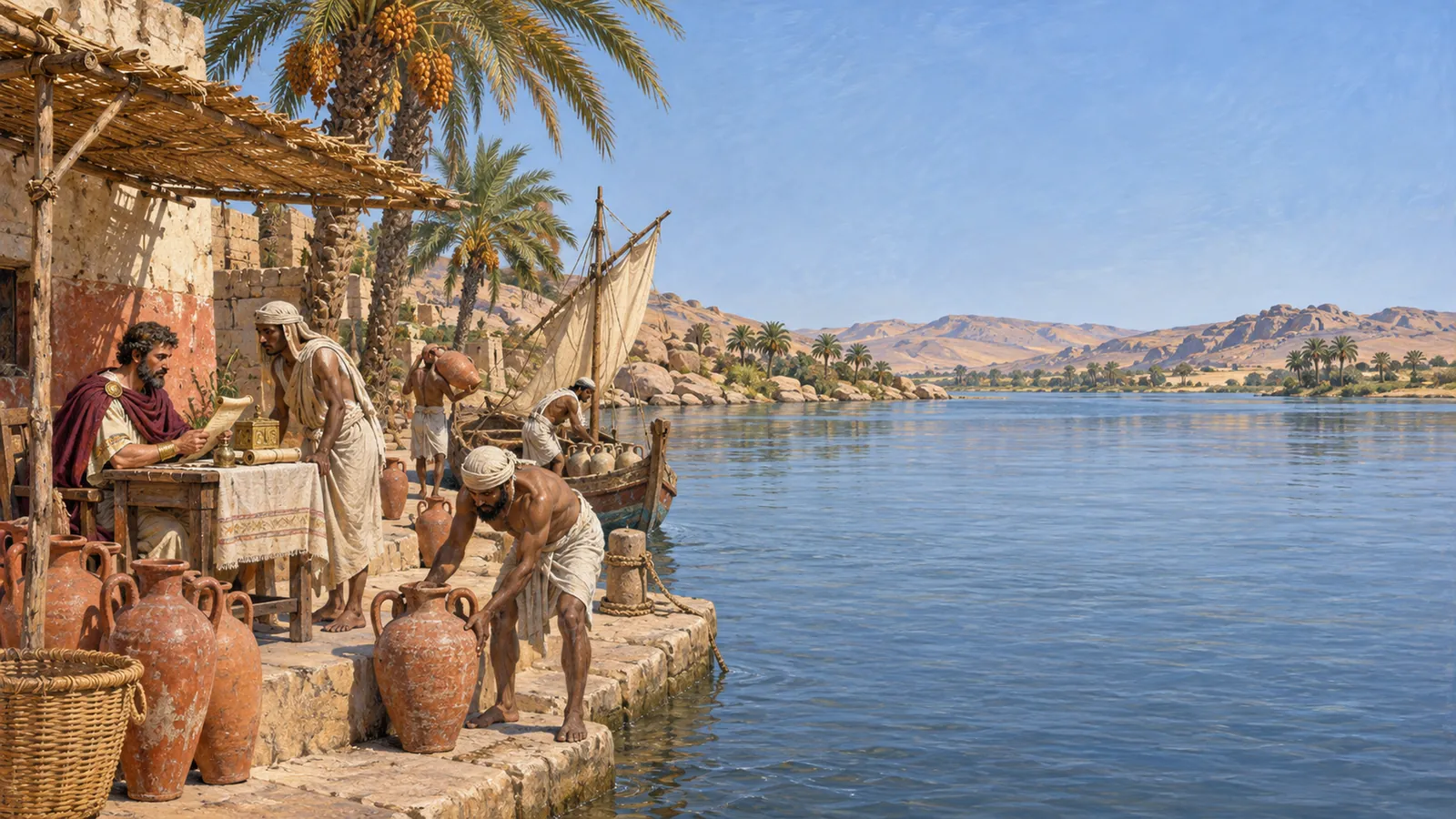
Augustus took Egypt in 30 BCE. Rome administered cities and collected taxes along the lower Nile. At the southern edge of Egypt, people’s routes already crossed the frontier.
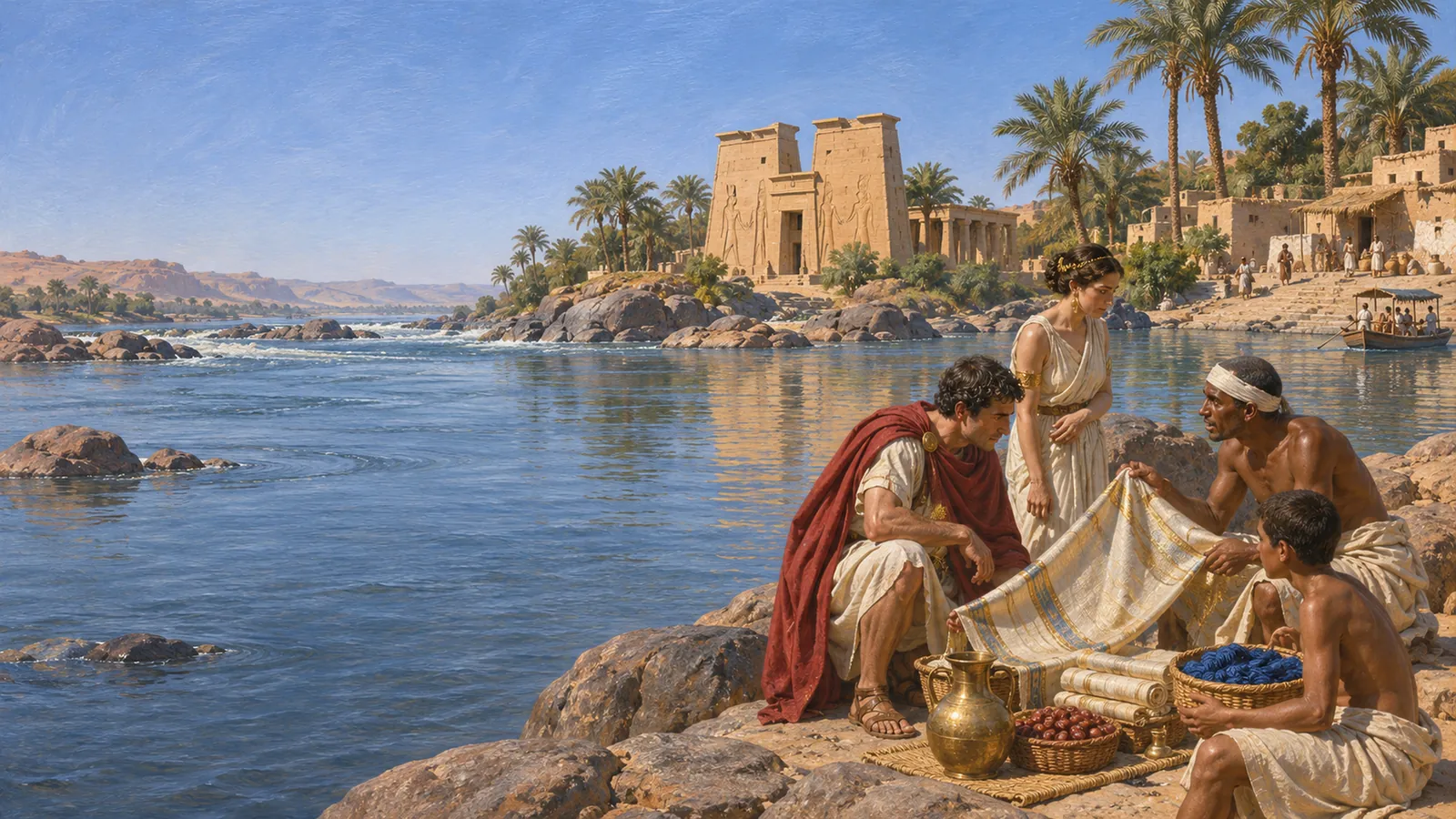
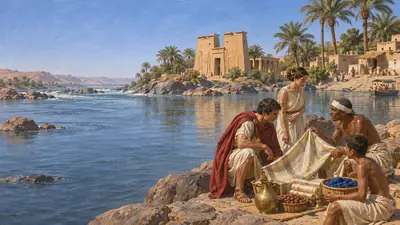
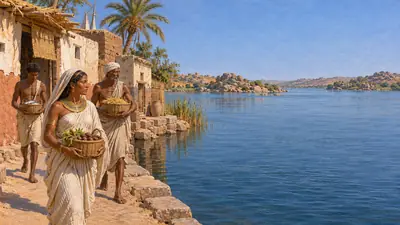
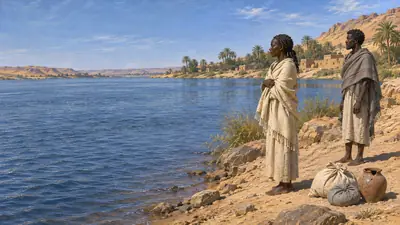
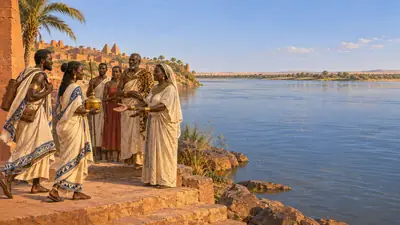
At Aswan, dark granite outcrops break the river into channels. The island of Elephantine lies by the town, and Philae lies a little farther upstream. Strabo names all three when he describes the fighting.
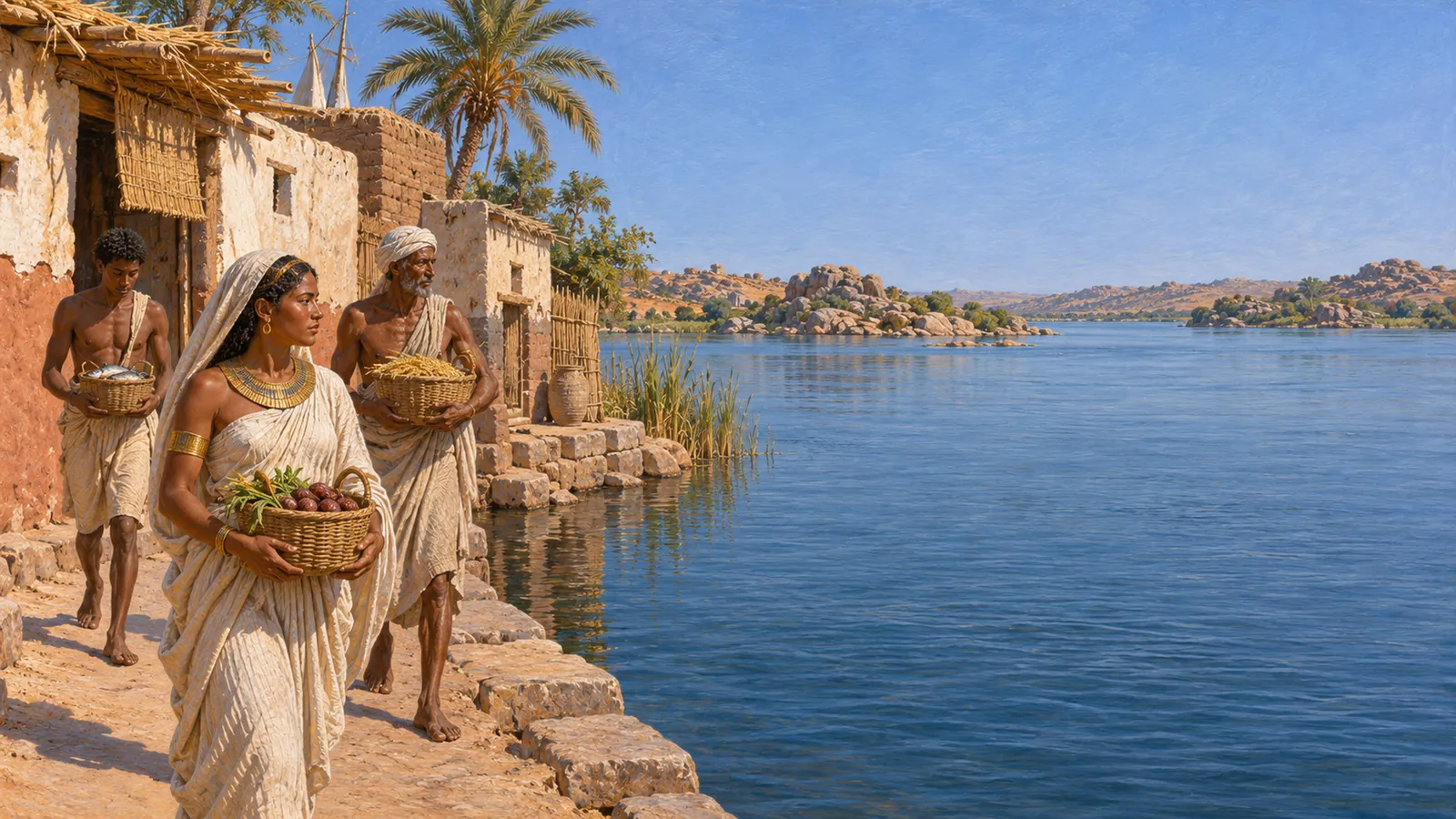
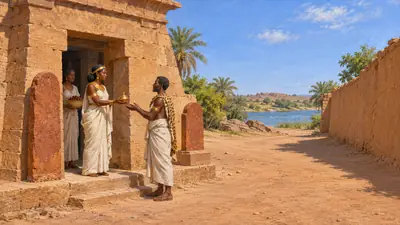
These are places to load baskets, catch a ferry and go home. Strabo names the towns, with little to say about the families who live along the water.
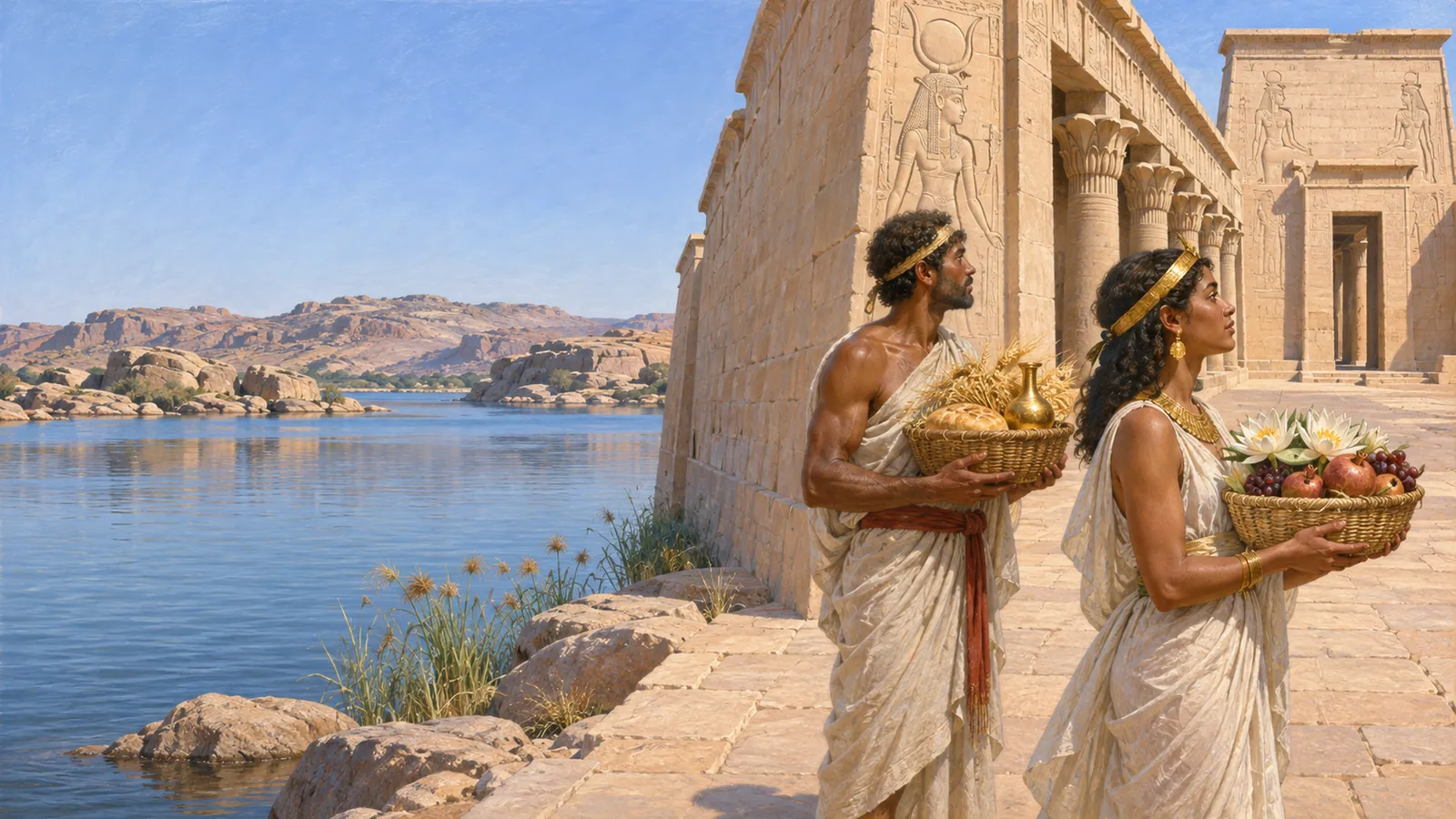
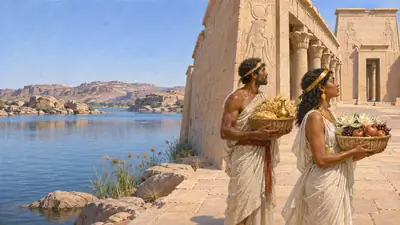
The sanctuary of Isis draws people to Philae, near the frontier. Worship on the island continues while governments and armies change around it.
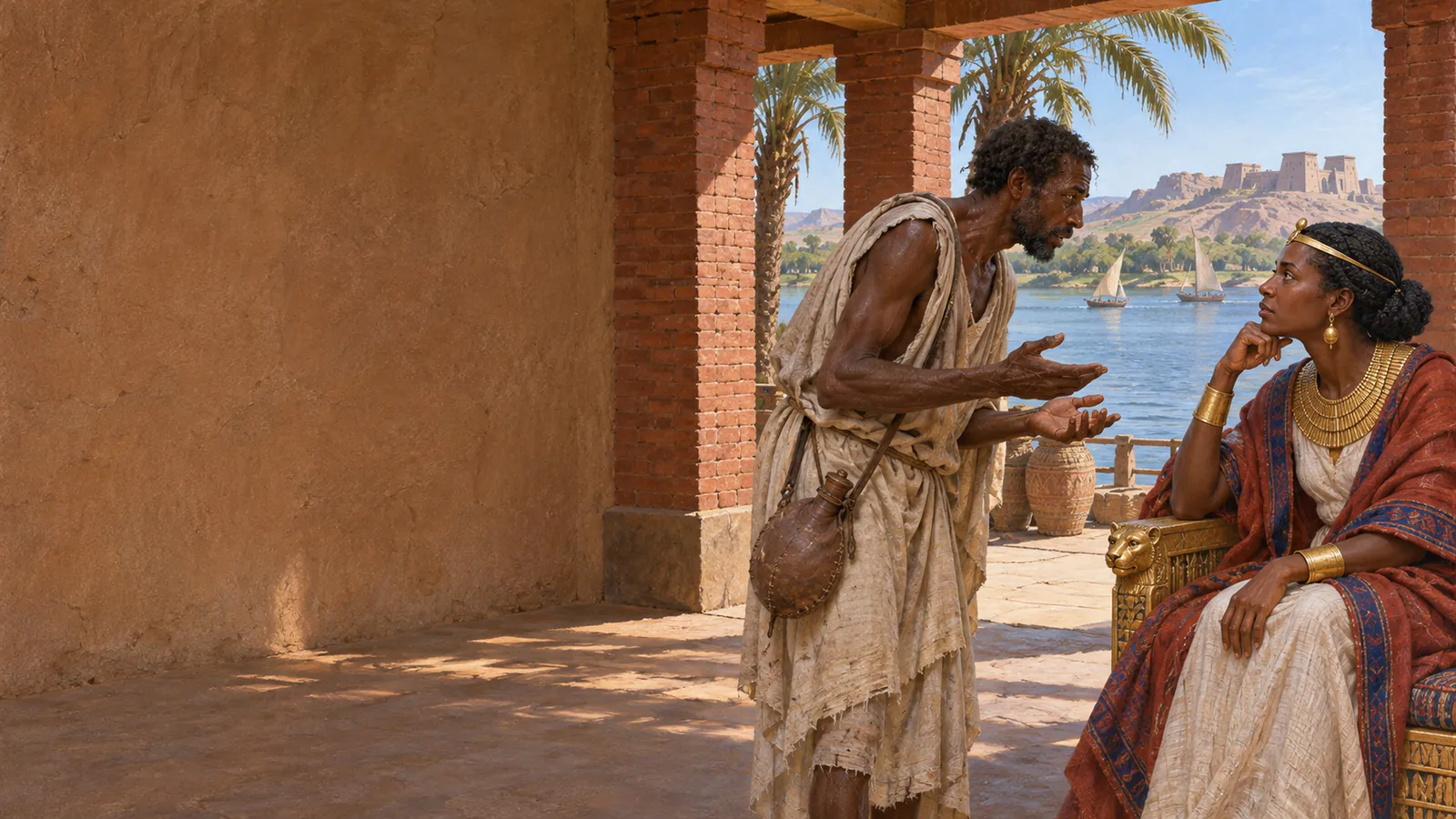
Around 25 or 24 BCE, Kushite forces took Aswan, Elephantine and Philae. Roman troops were away, says Strabo. He adds that part of the population was taken captive.
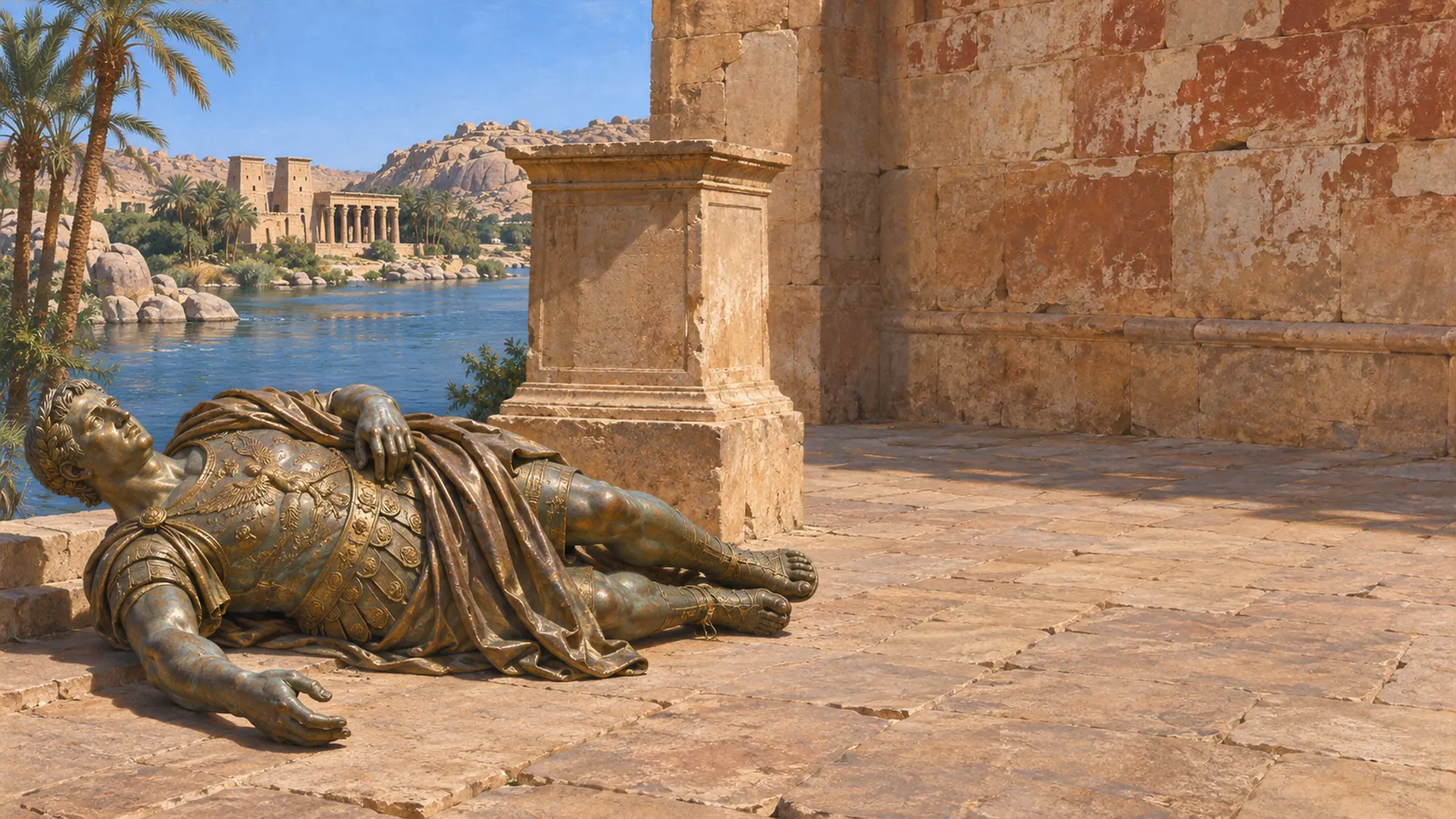
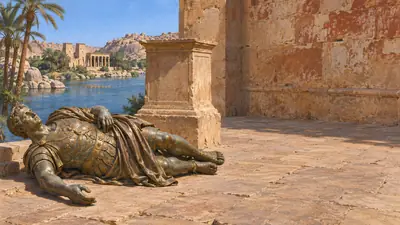
Strabo also says the Kushite forces pulled down images of Augustus. A ruler far away had been made present by his statues. When those figures fell, the public spaces where they stood looked different.
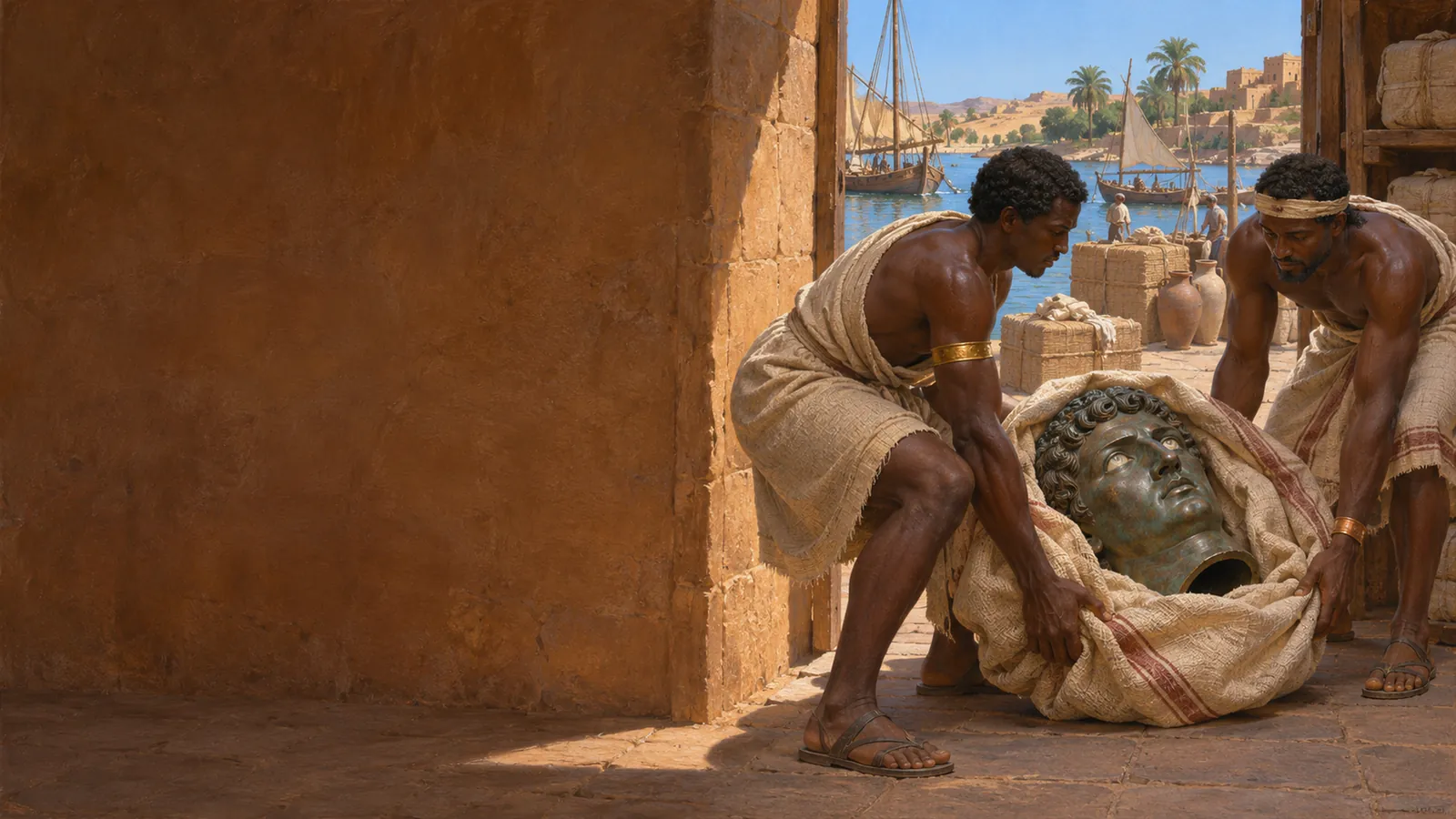
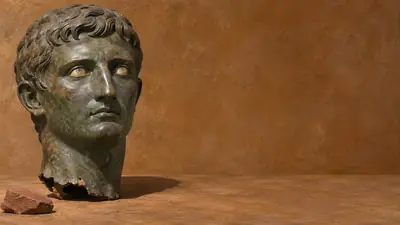
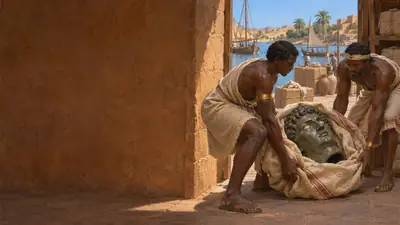
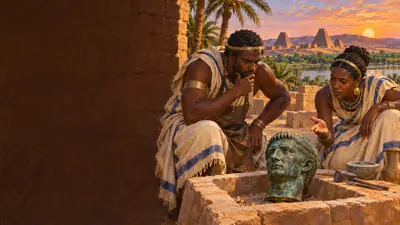
One statue may have supplied the bronze head later found in Meroë. The picture imagines the object arriving in Kush. The find itself establishes where the bronze ended up, centuries before anyone unearthed it.
WAR ON THE NILE
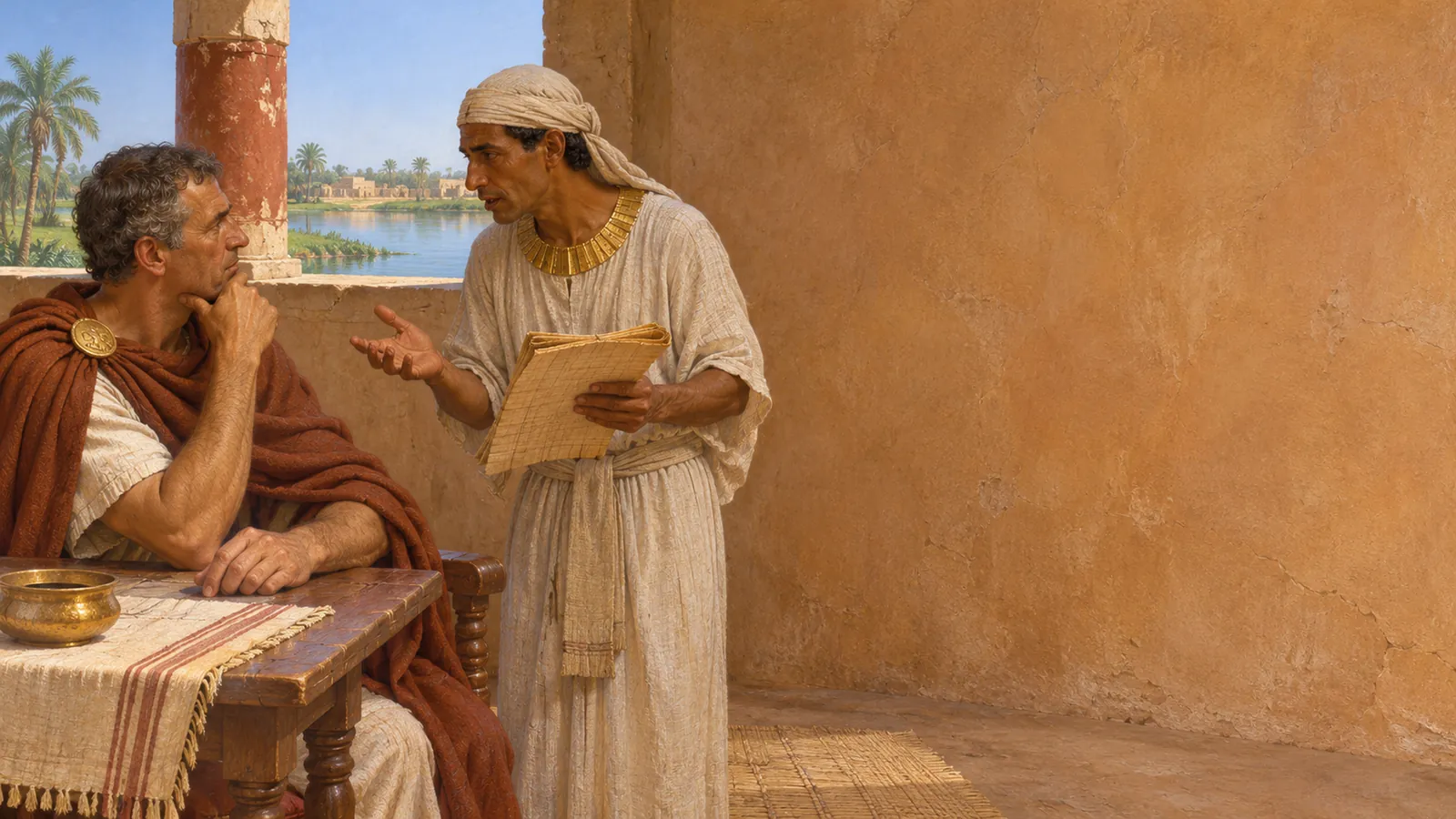
Petronius, the Roman prefect of Egypt, moved south. In the Greek account, his intervention turns a conflict near the cataract into a campaign far up the Nile. First, he asks for an explanation.
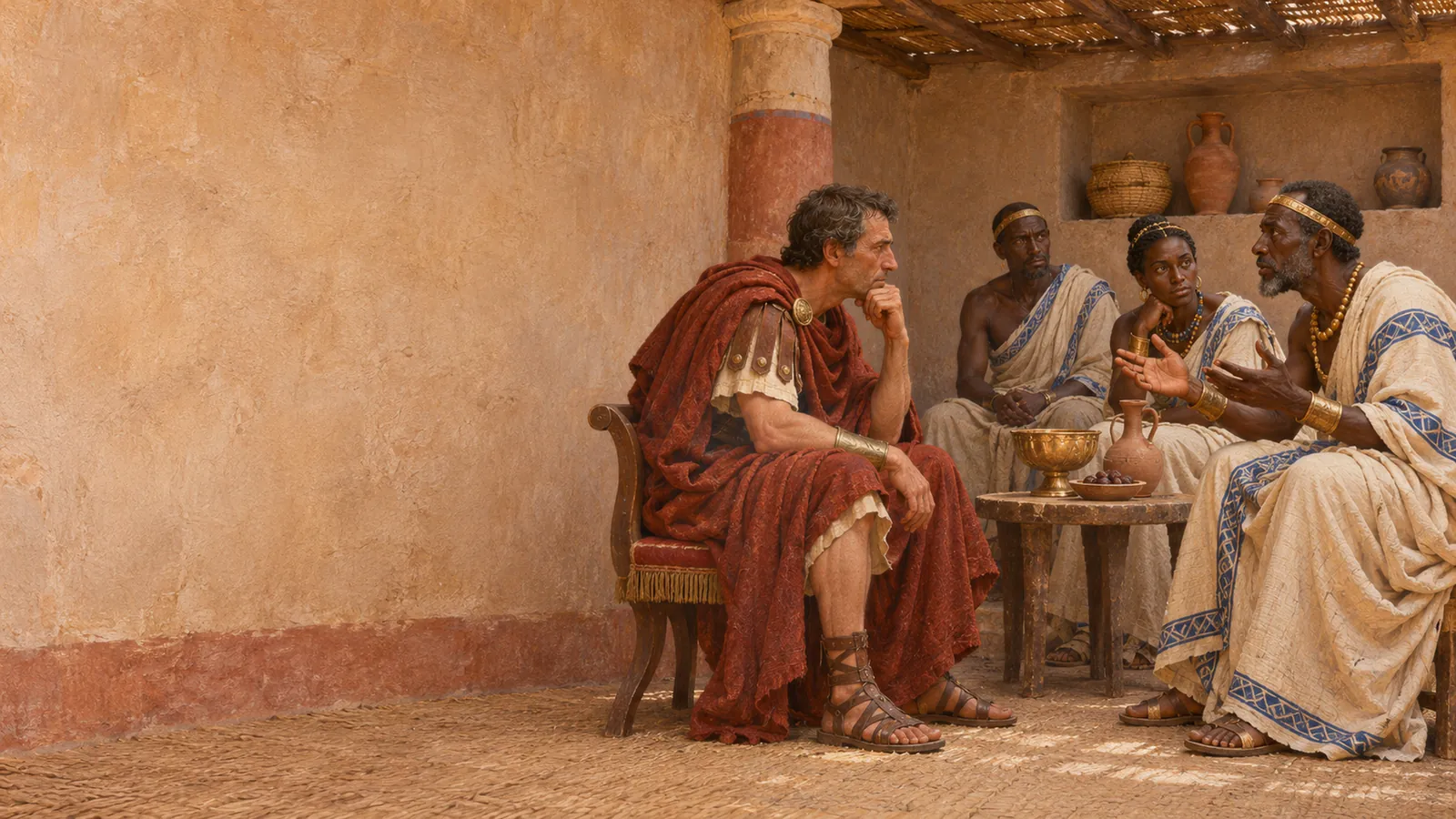
At Pselchis, Kushite delegates said that border officials had wronged them. Strabo preserves this answer in his account of the Roman campaign. We rarely hear the Kushite complaint.
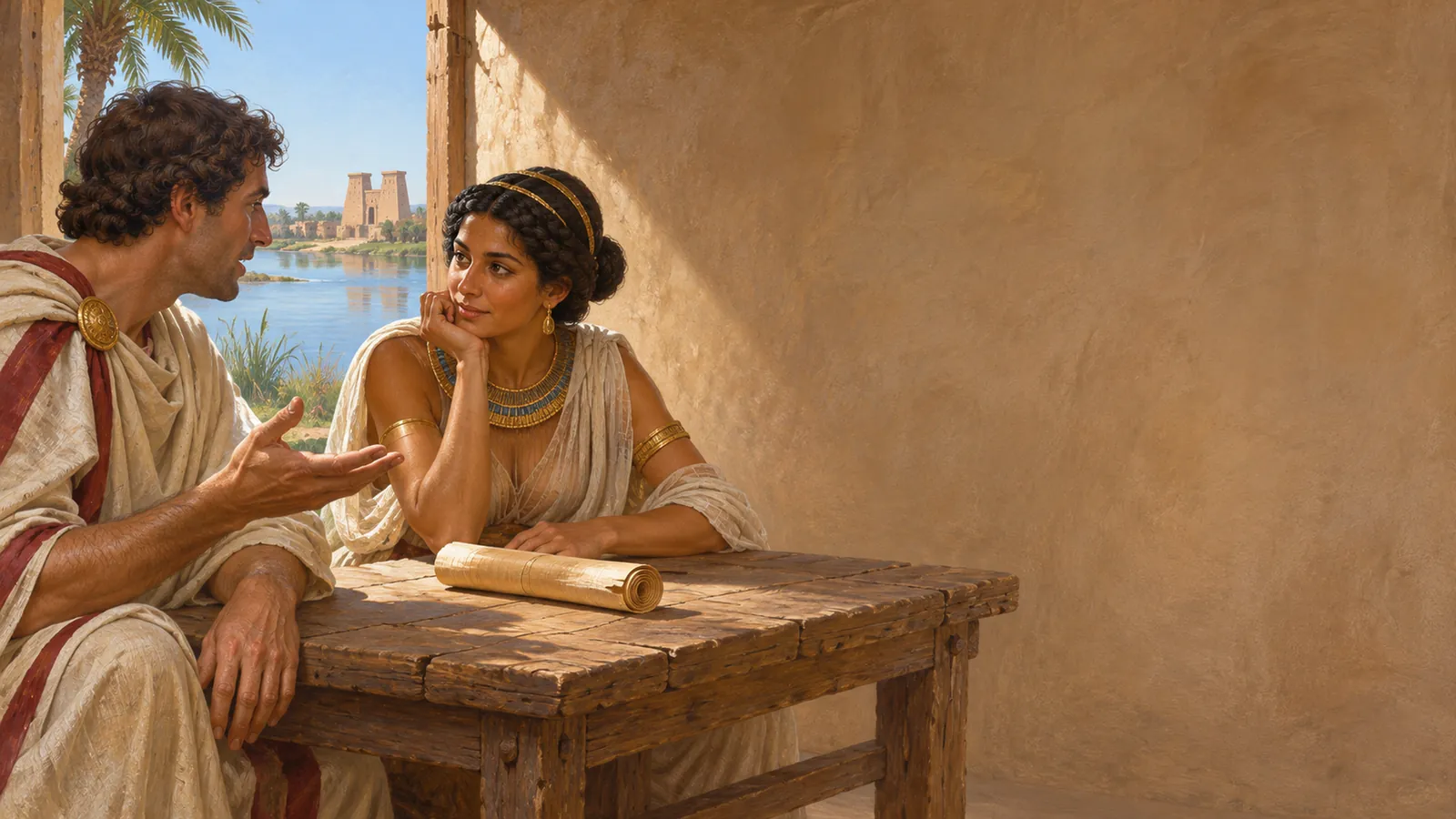
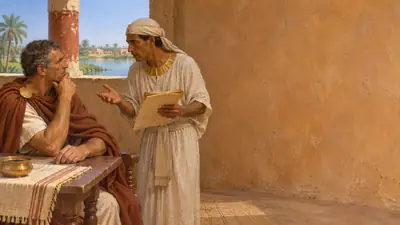
The Kushite delegation asked for three days to consider the demands. Those days passed without an agreement. We have neither a transcript of the meeting nor a list of the complaints the delegation brought.
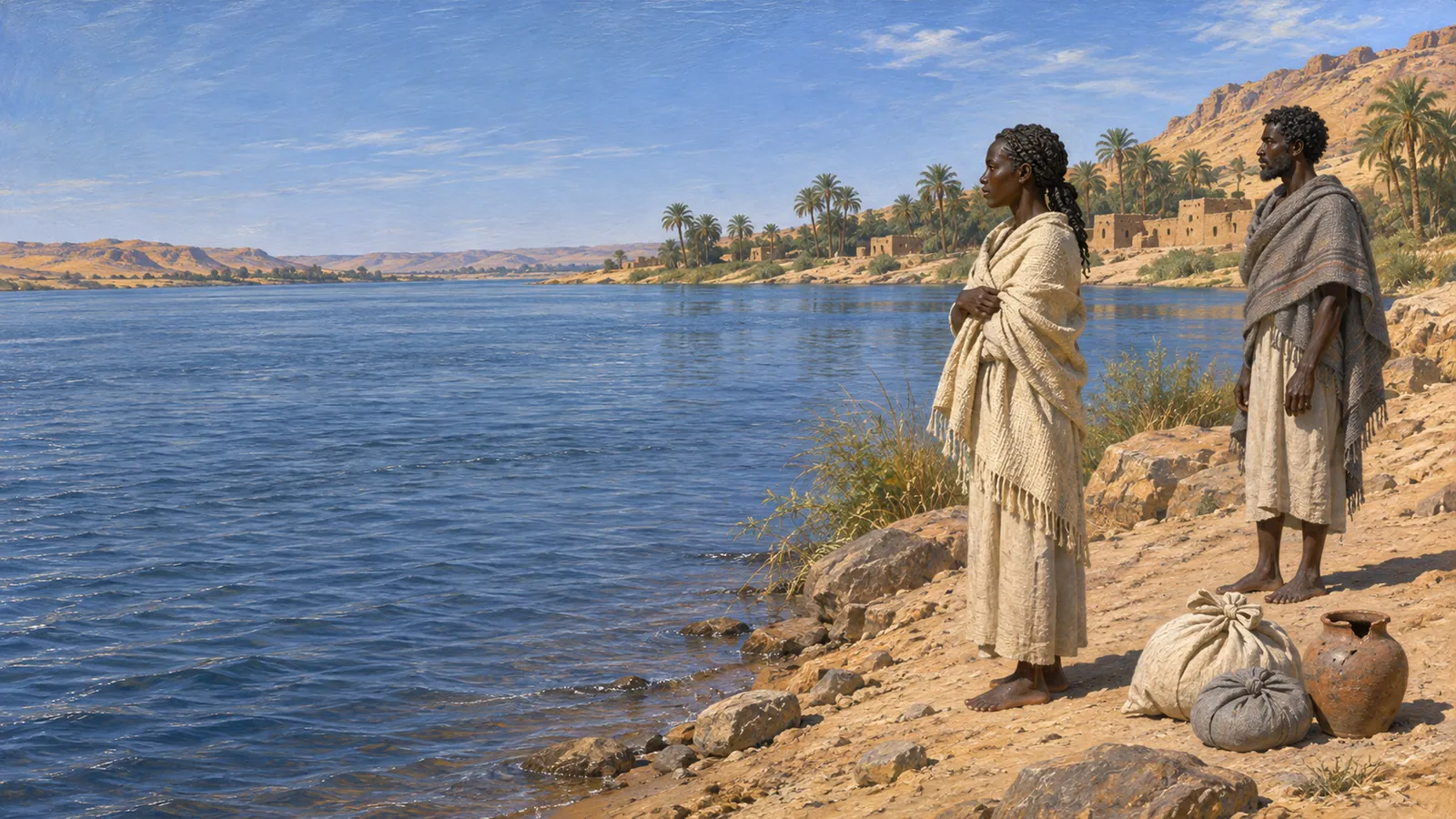
Fighting followed at Pselchis. Strabo says Kushite commanders were captured and sent to Alexandria. On both sides of the border, people were taken from their homes. Their names mostly went unrecorded.
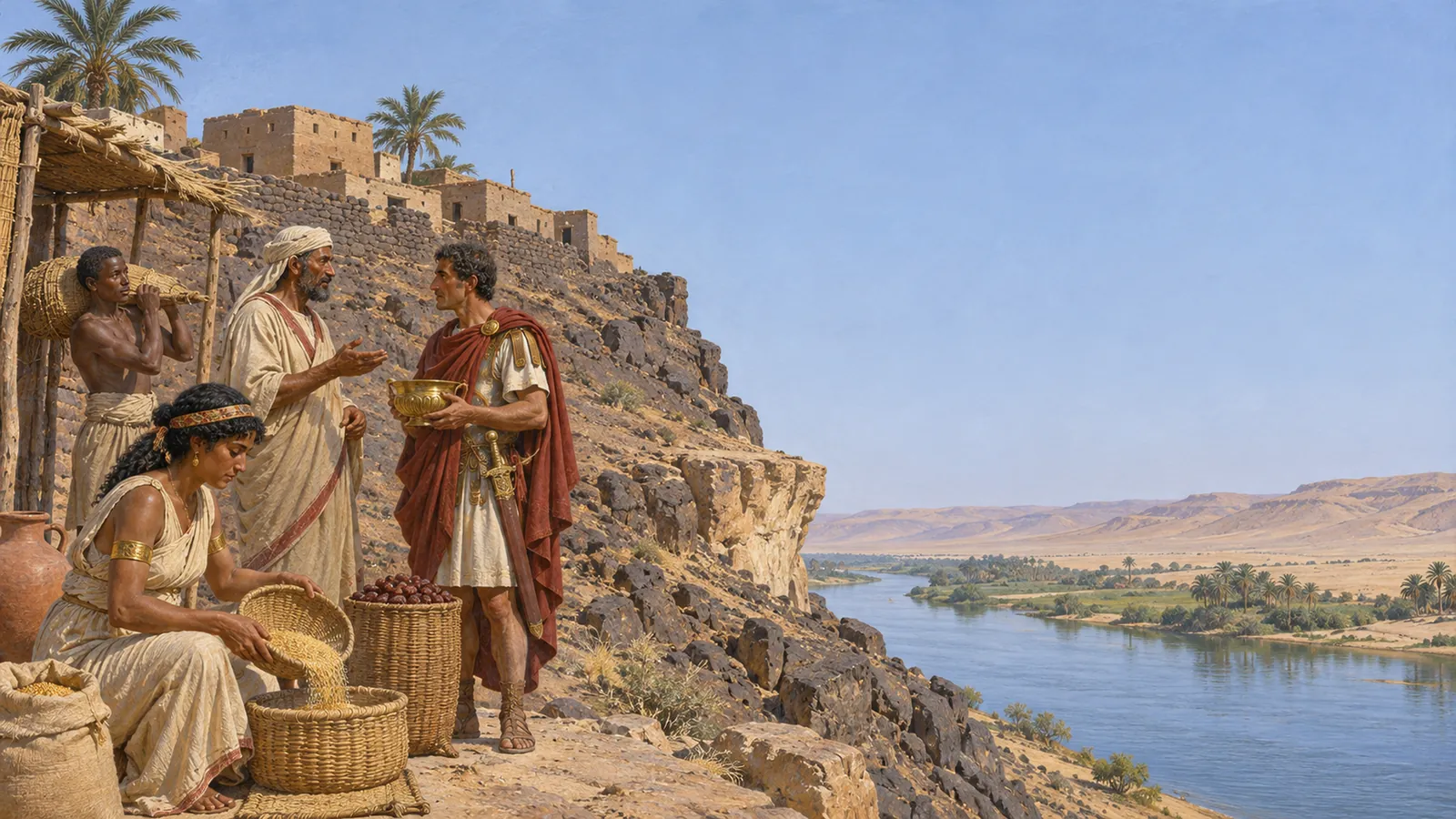
The Romans reached Premnis. The ancient name is linked to Qasr Ibrim, where a high bluff overlooks the Nile. The surviving site bears evidence of a short Roman occupation and a much longer history.
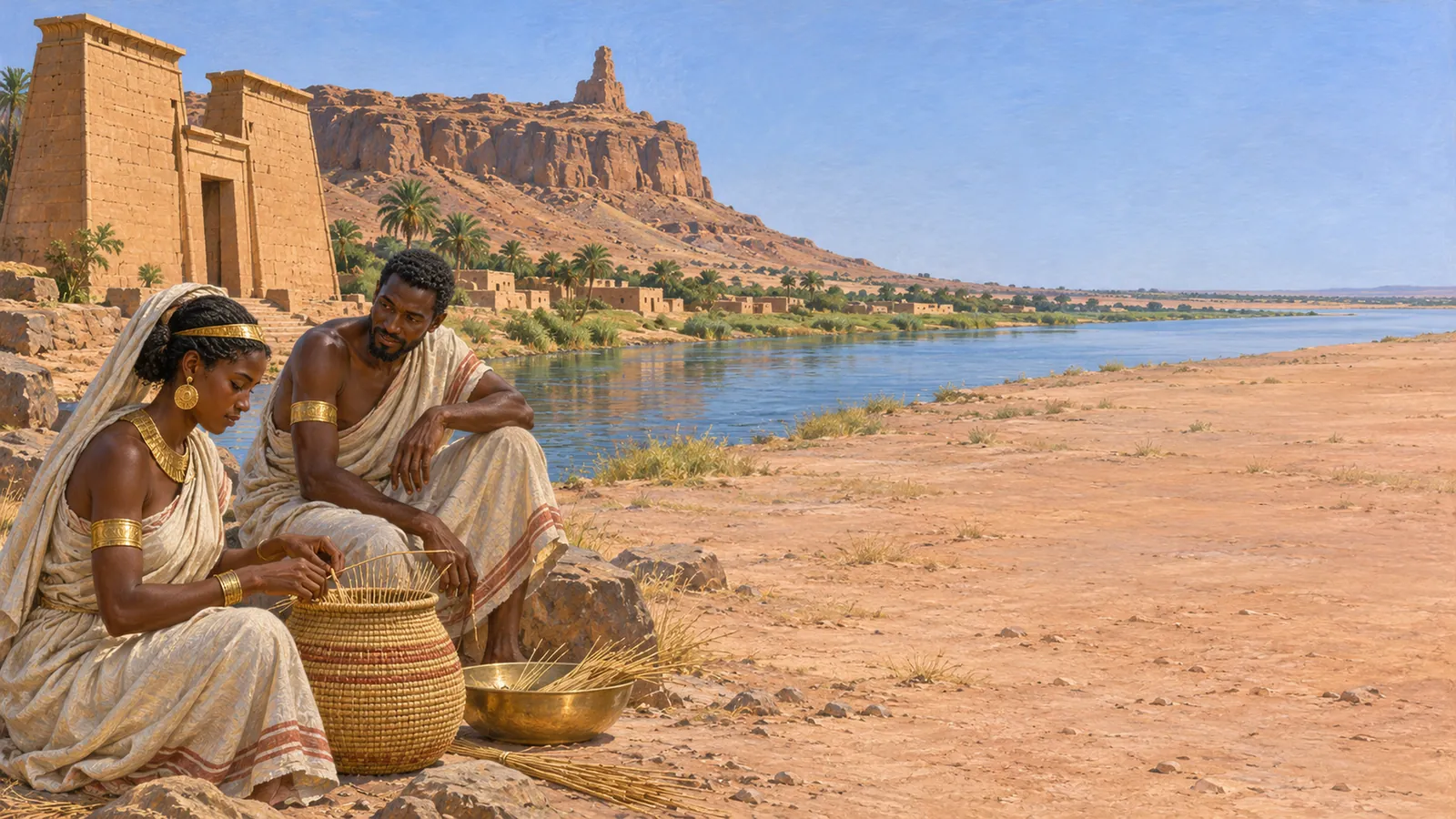
Farther south, Napata lies by the rocky mass of Jebel Barkal. Its sanctuaries had mattered to the kings of Kush for generations. Strabo places a royal residence here and says the queen was nearby.
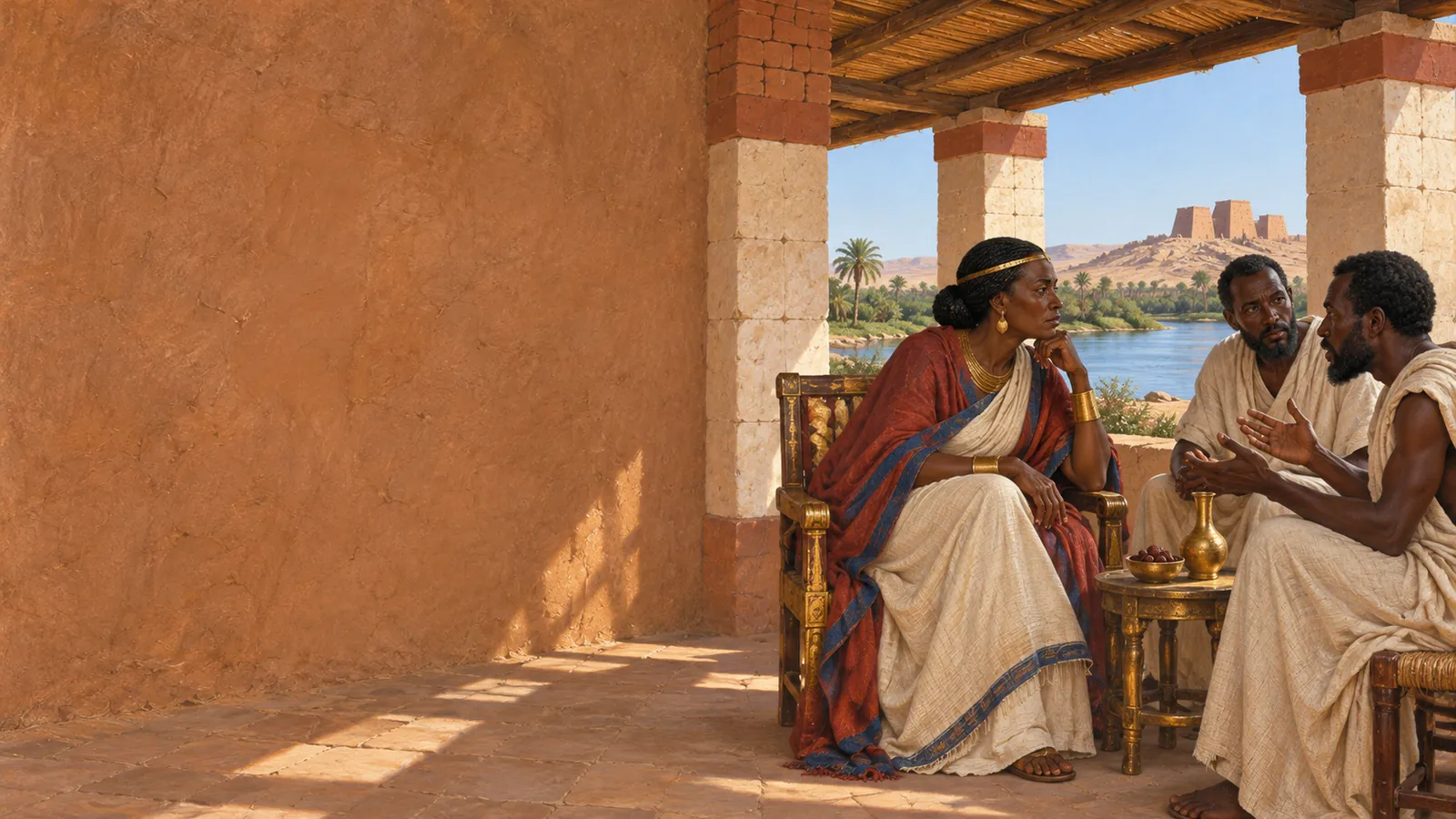
The queen sent envoys before the attack on Napata. She offered to return the people and statues carried away from Aswan. Strabo preserves the offer and adds that the prefect went on against the city.
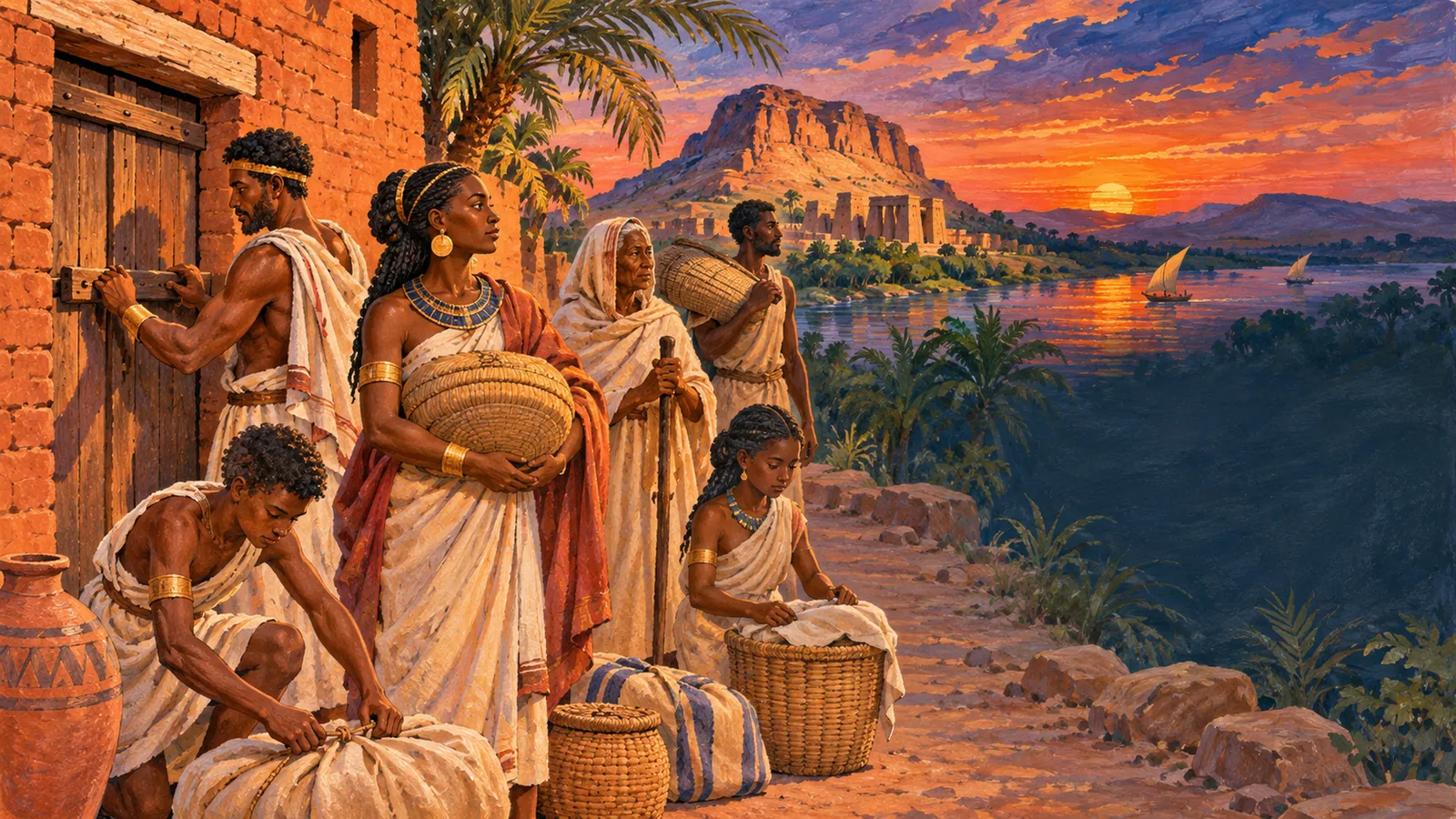
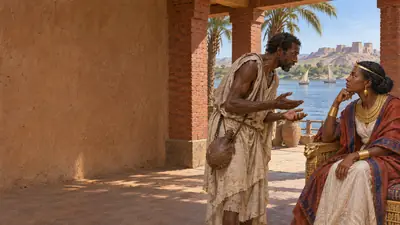
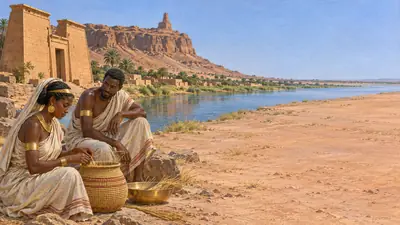
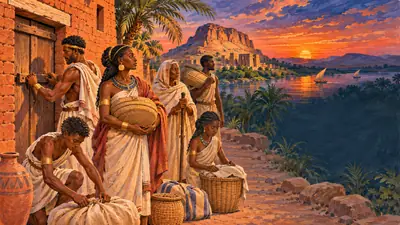
Strabo says Petronius took and destroyed Napata. The queen’s son escaped. Some townspeople were enslaved. The scene imagines a household about to leave its home.
Petronius withdrew north and left a Roman garrison at Premnis. Strabo has much to say about what the Romans took with them. At the fort itself, archaeologists can examine things left behind.
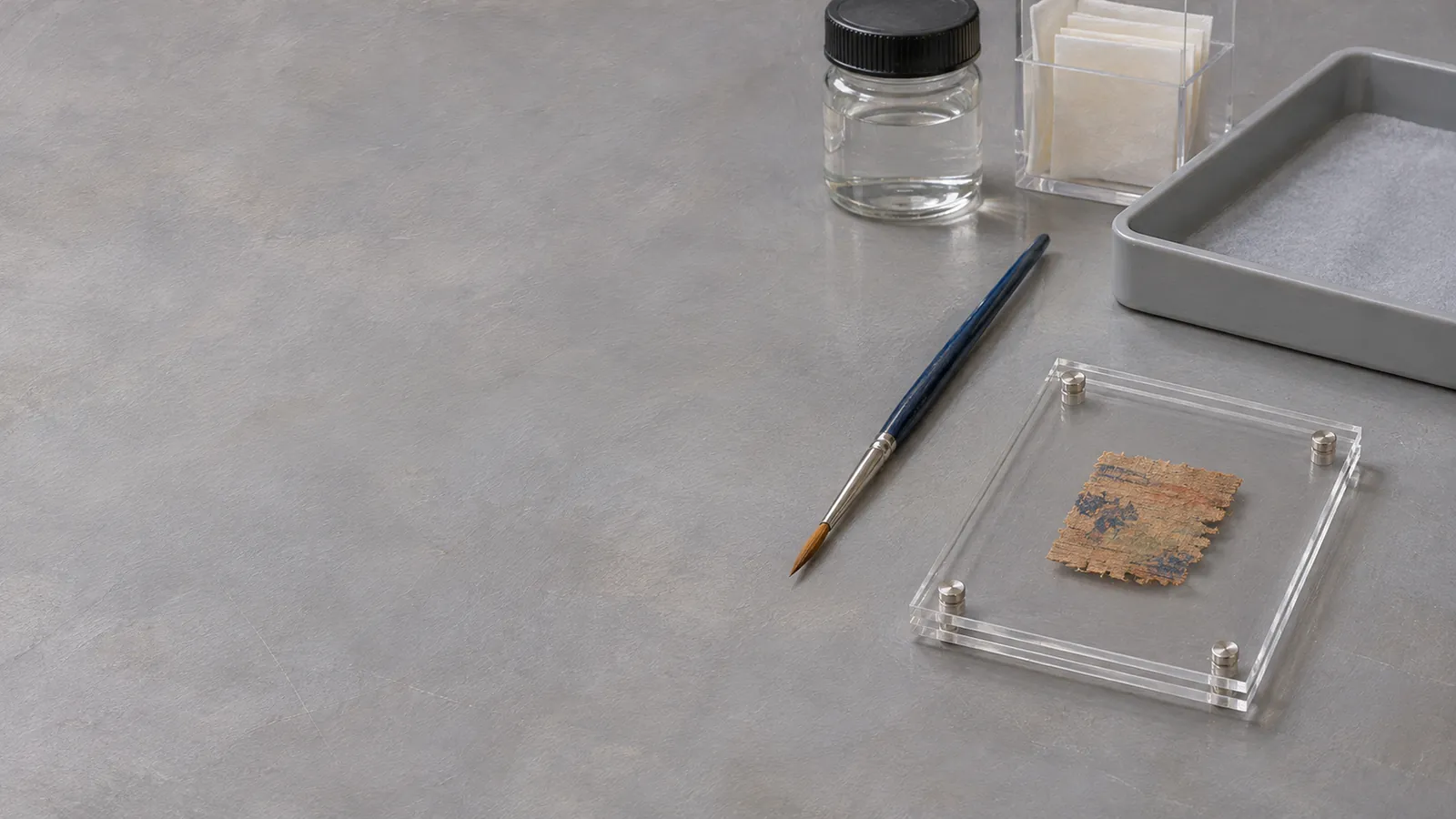
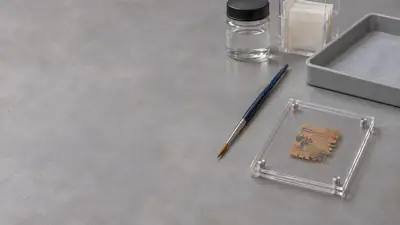
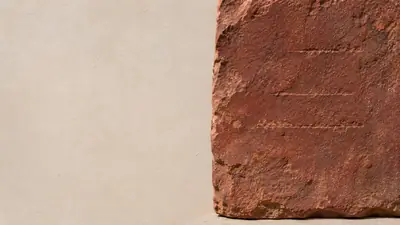
Written fragments from the excavation at Qasr Ibrim include lists of soldiers. They bring a brief occupation into view from the ground itself, alongside the route and campaigns described by the Greek writer.
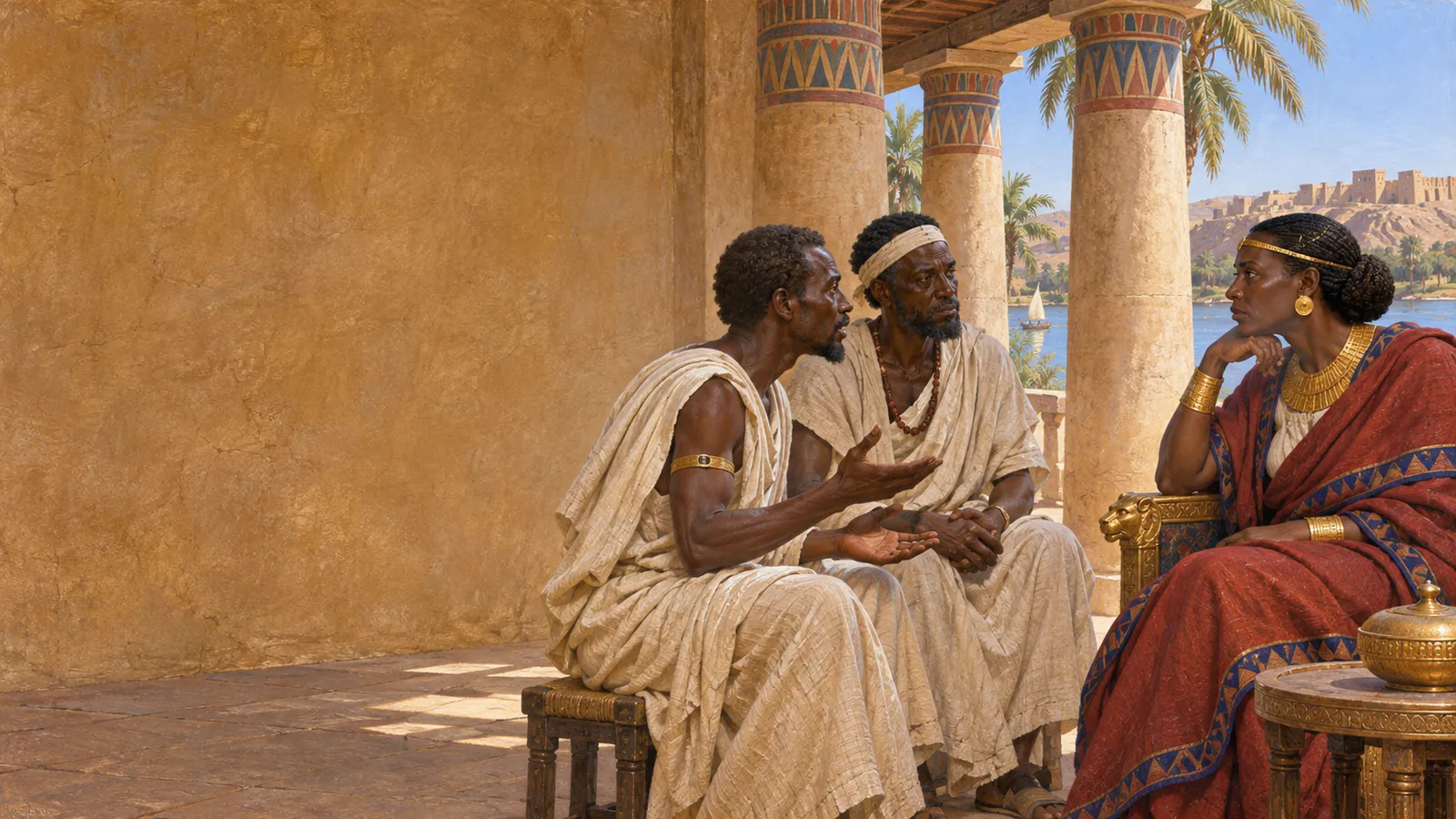
The queen returned to Premnis. Petronius came to the fort and met another Kushite delegation. The first offer had failed. Now the talks would reach Augustus.
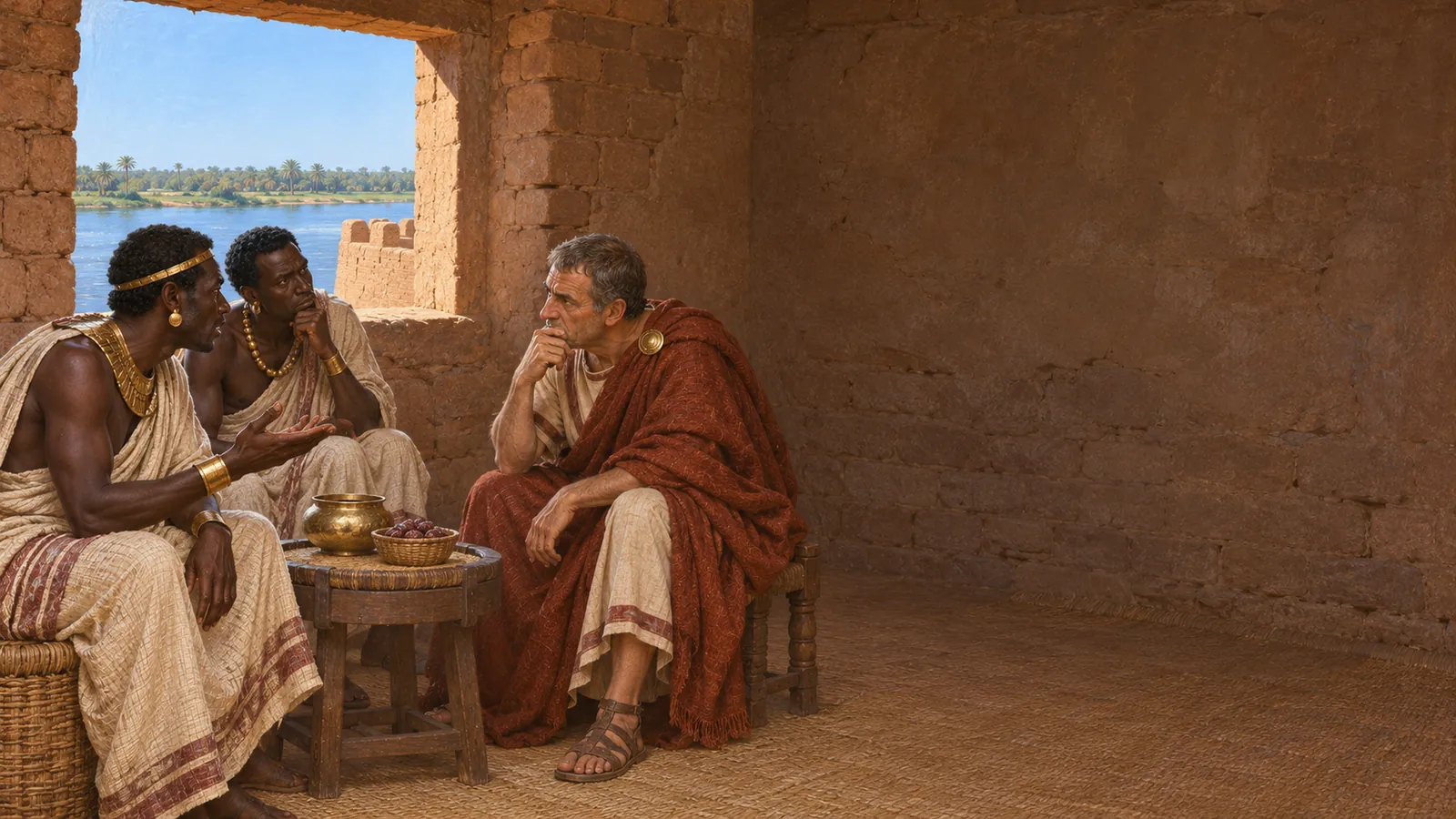
Petronius told the envoys to go to Augustus. They asked where to find him. Strabo says the prefect provided escorts for the journey beyond the Nile.
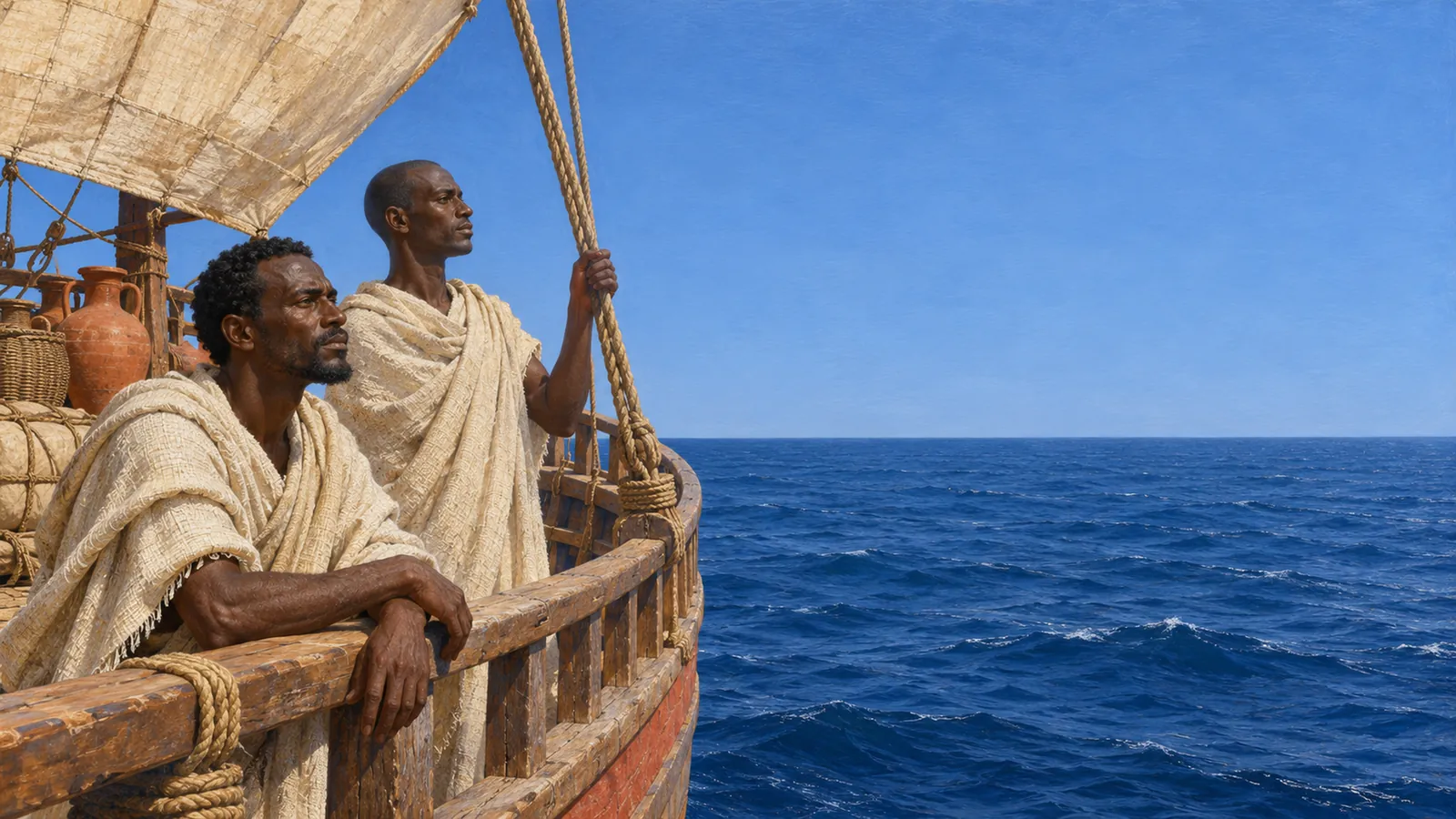
ACROSS THE SEA
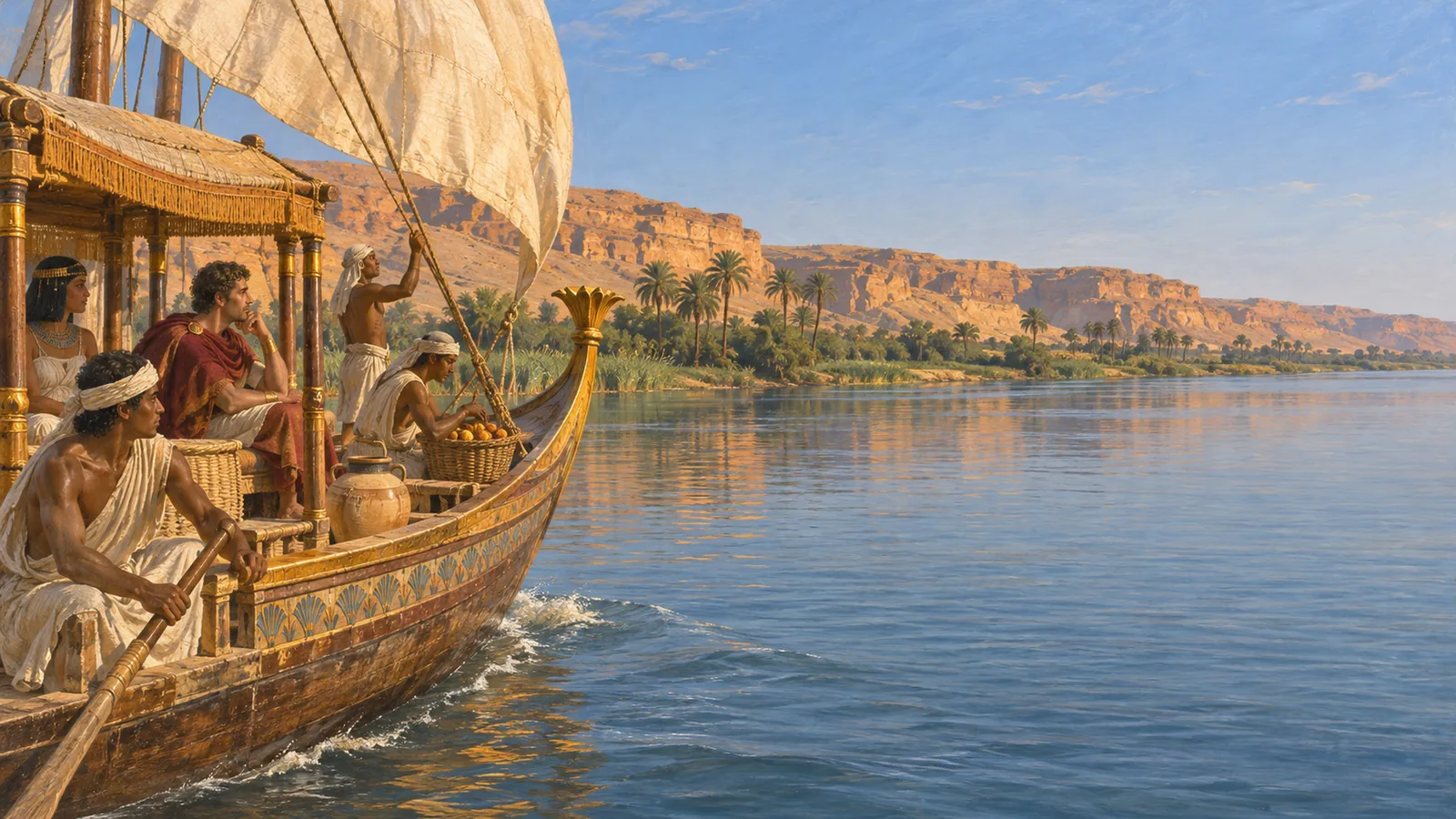
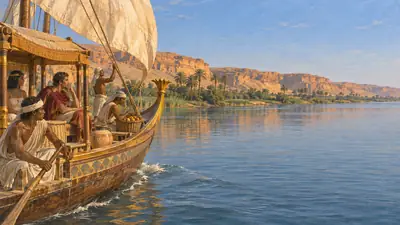
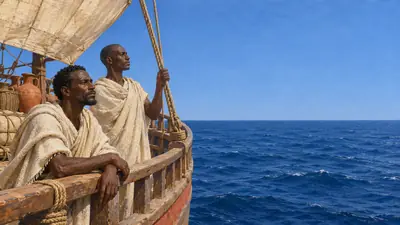
When they reached the Mediterranean, the envoys had to continue by sea. The writer gives their destination and says little about the voyage. The wooden ship and its passengers are imagined here.
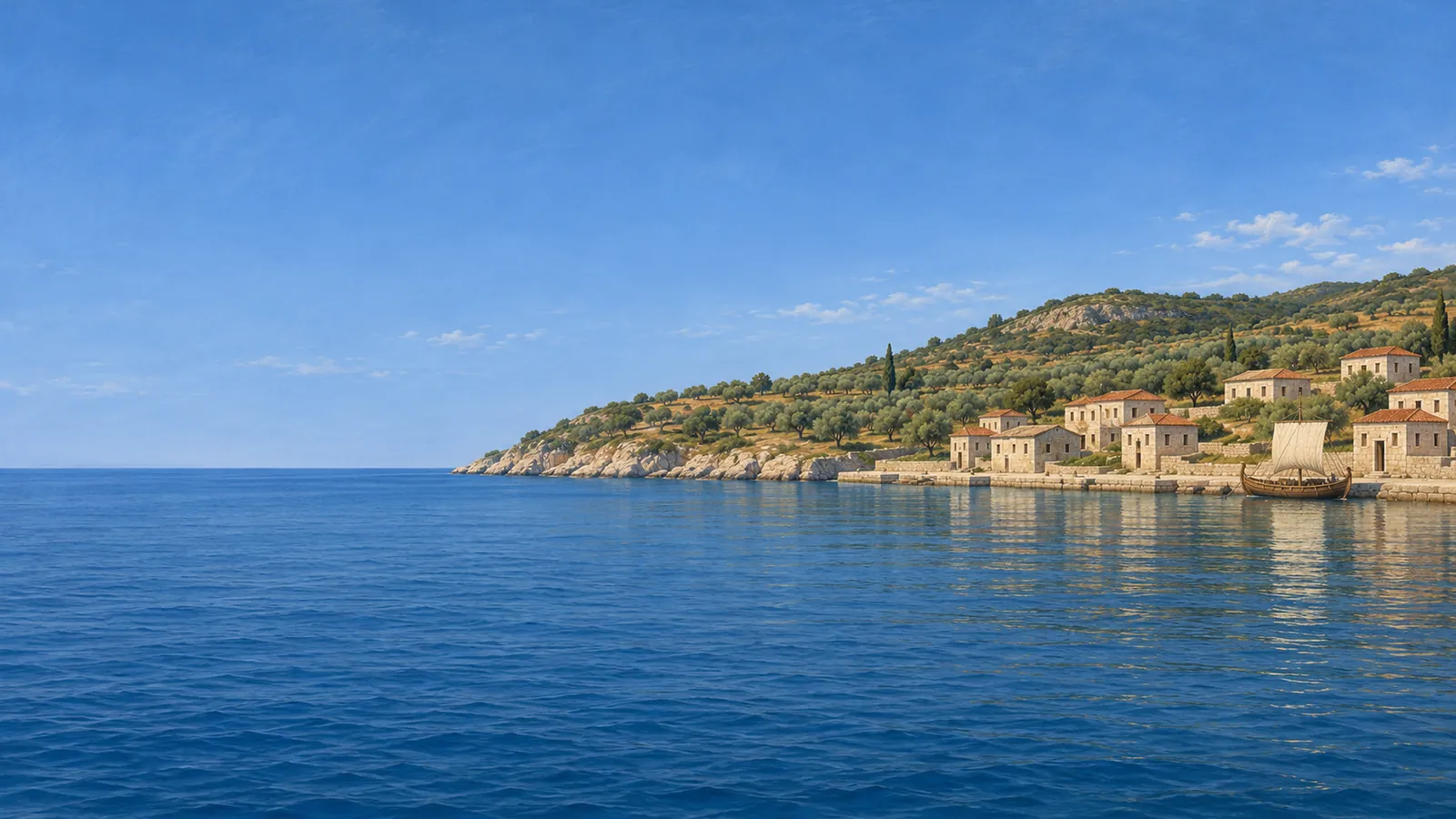
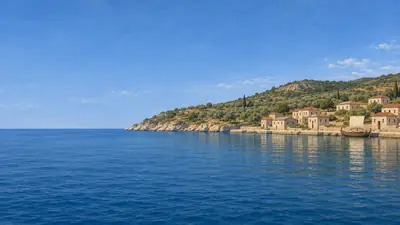
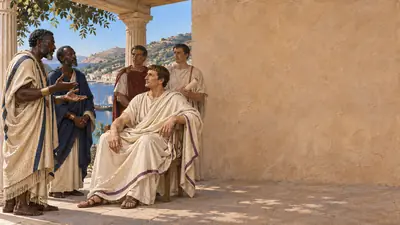
The envoys arrived at Samos, a Greek island in the Aegean. Augustus was spending time there before continuing east. Cassius Dio separately records one of the emperor’s winter stays on Samos in these years.
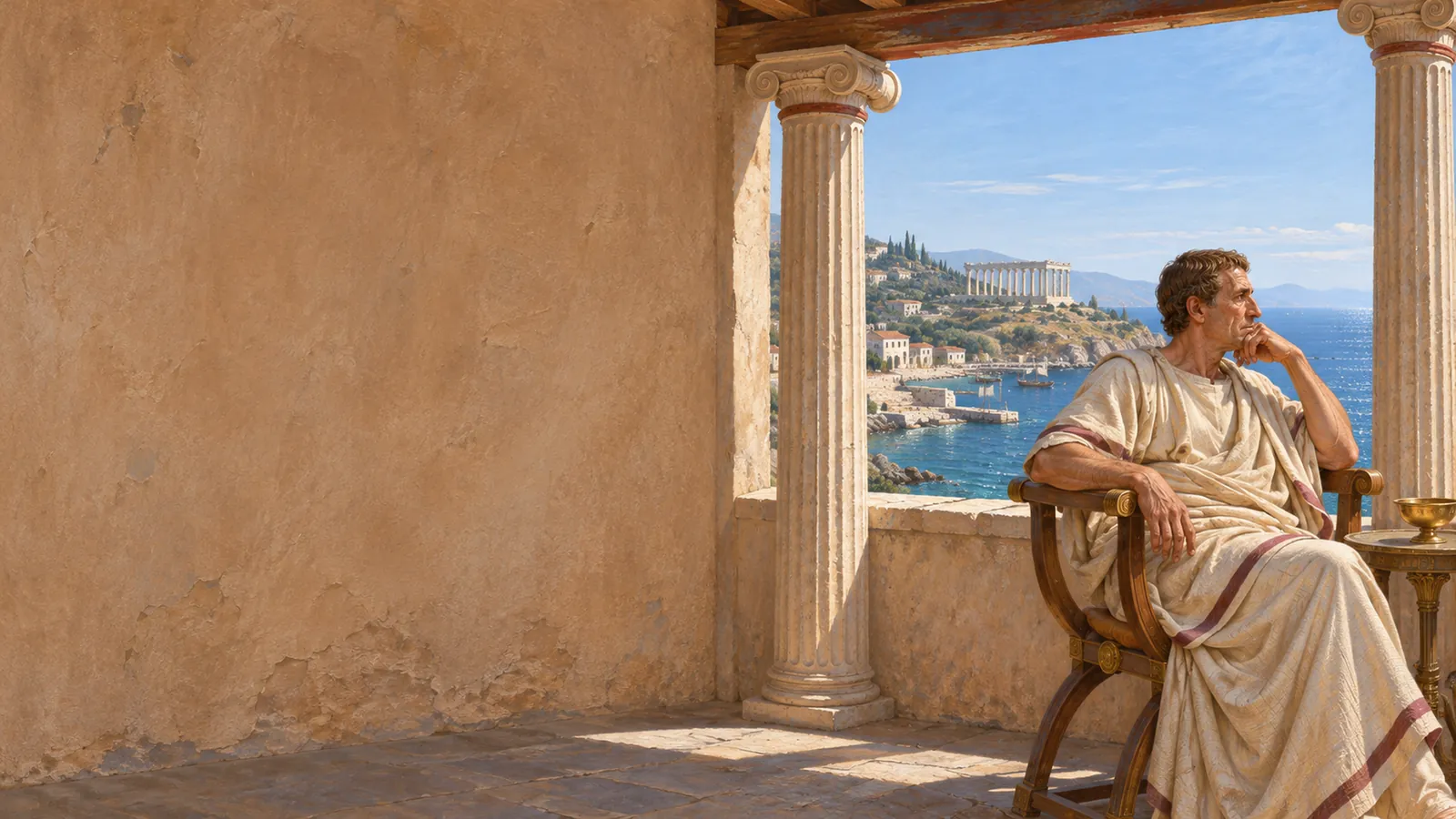
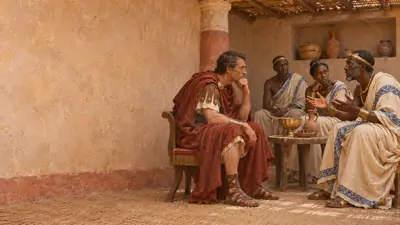
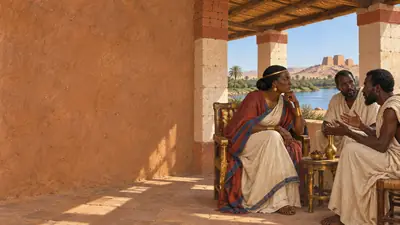
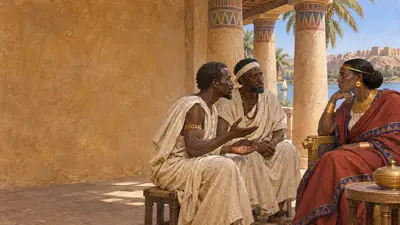
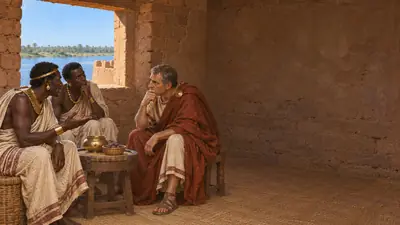
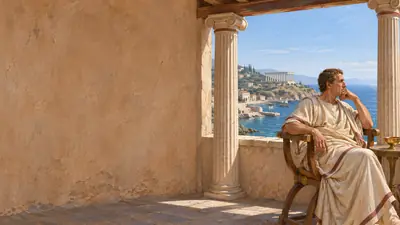
The decision could be made here, across the sea from Egypt. Strabo places the emperor and the embassy on the same island. The room in which the envoys spoke has left no trace in his account.
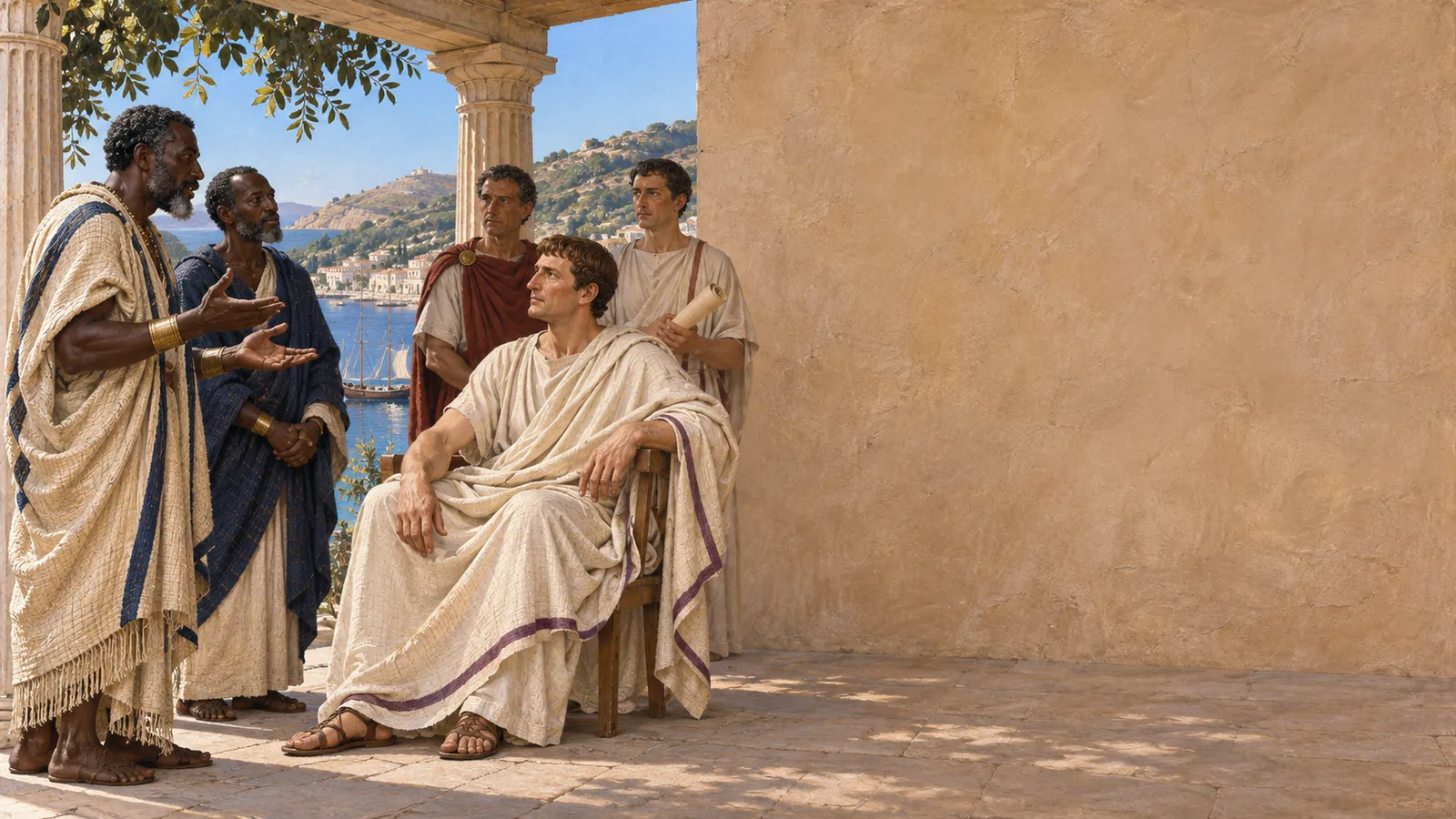
Kush had sent people able to speak on its behalf. Strabo says the envoys secured the things they asked for. He records the outcome of the meeting, while their own words have not survived.
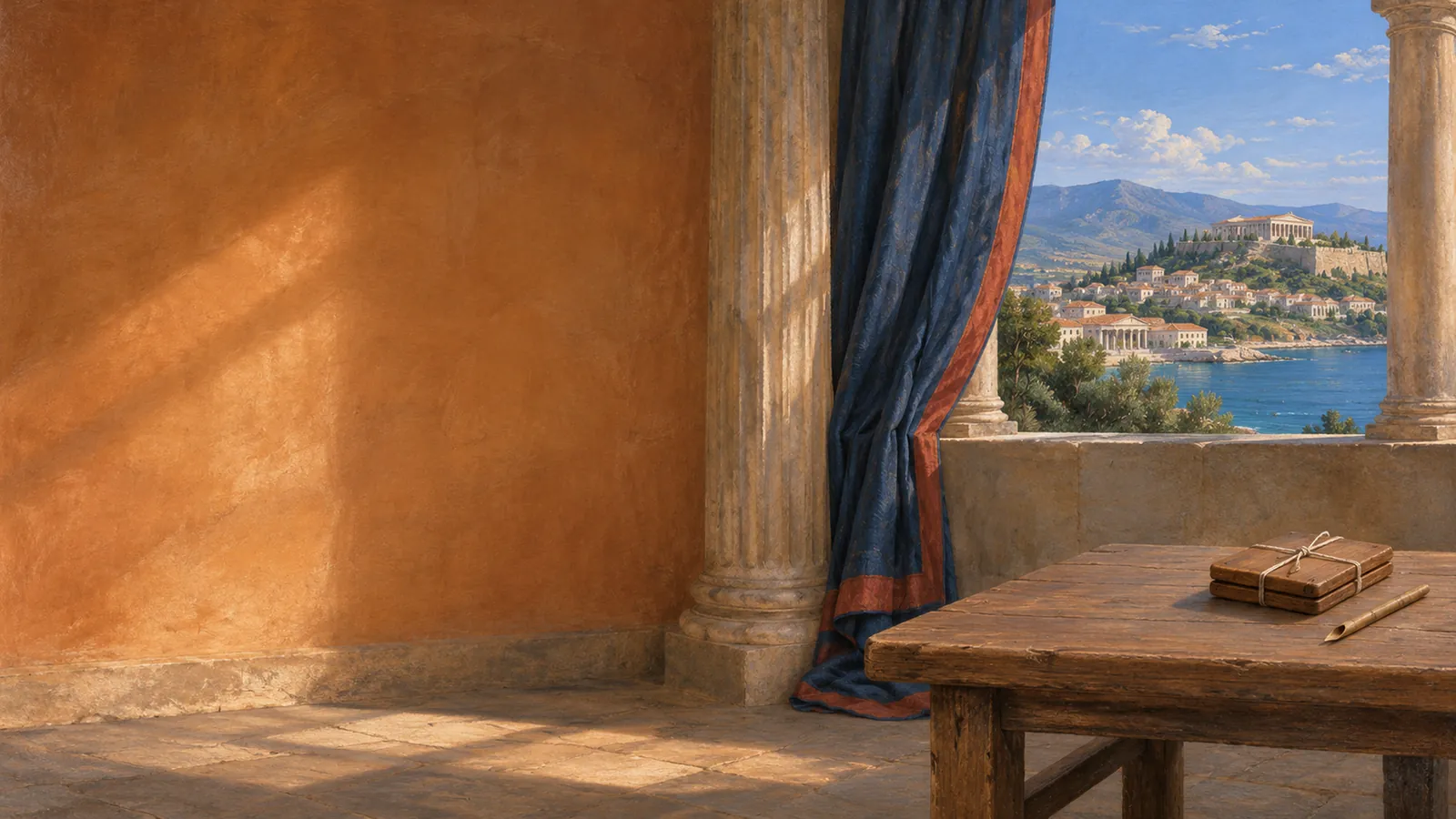
Augustus canceled the tribute he had imposed, according to Strabo. A Roman demand was withdrawn after the queen’s envoys put their case to the emperor.
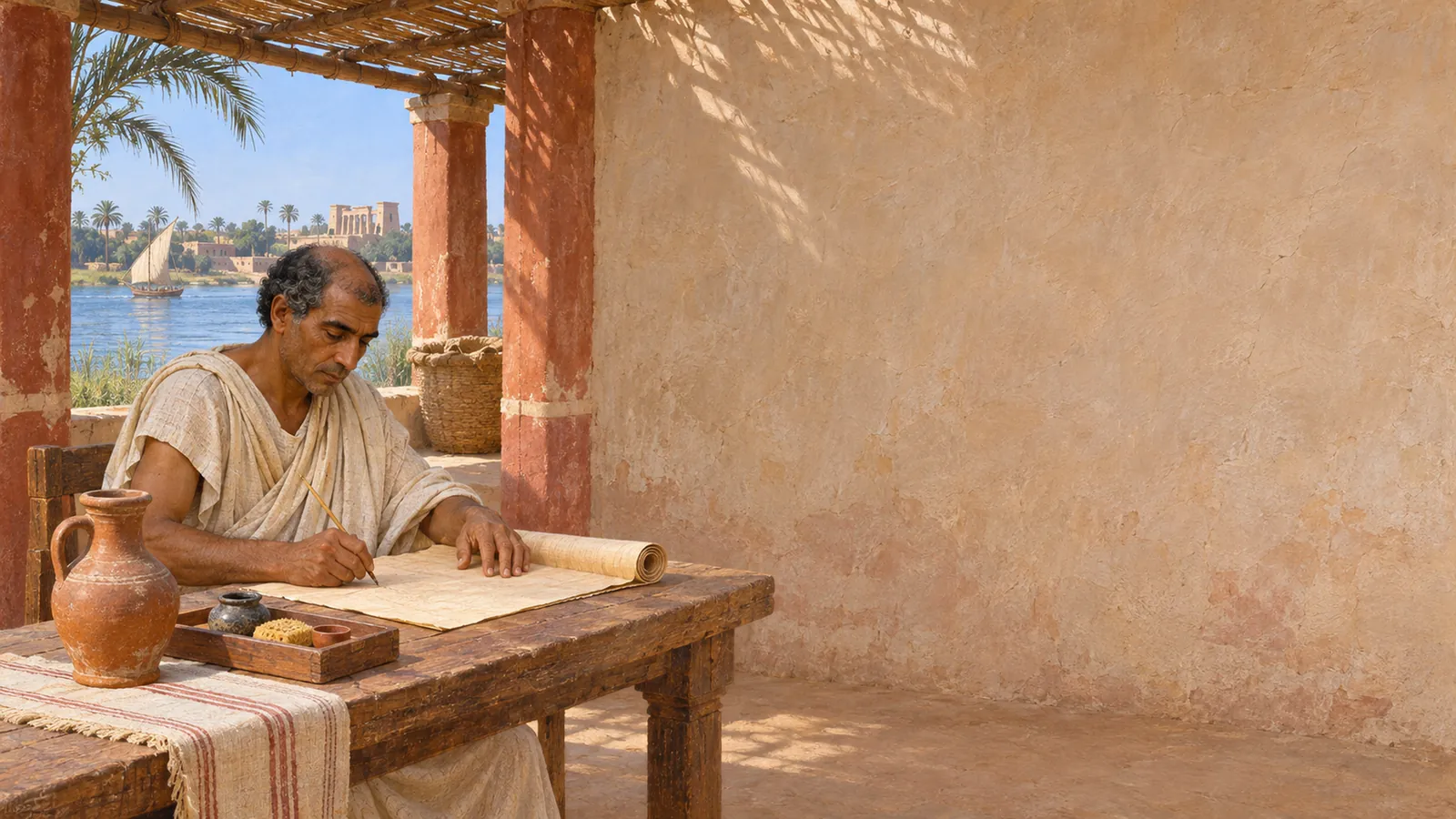
The terms of the agreement do not survive in a treaty text. Later evidence helps locate Roman and Kushite authority along the Nile. Some details remain uncertain.
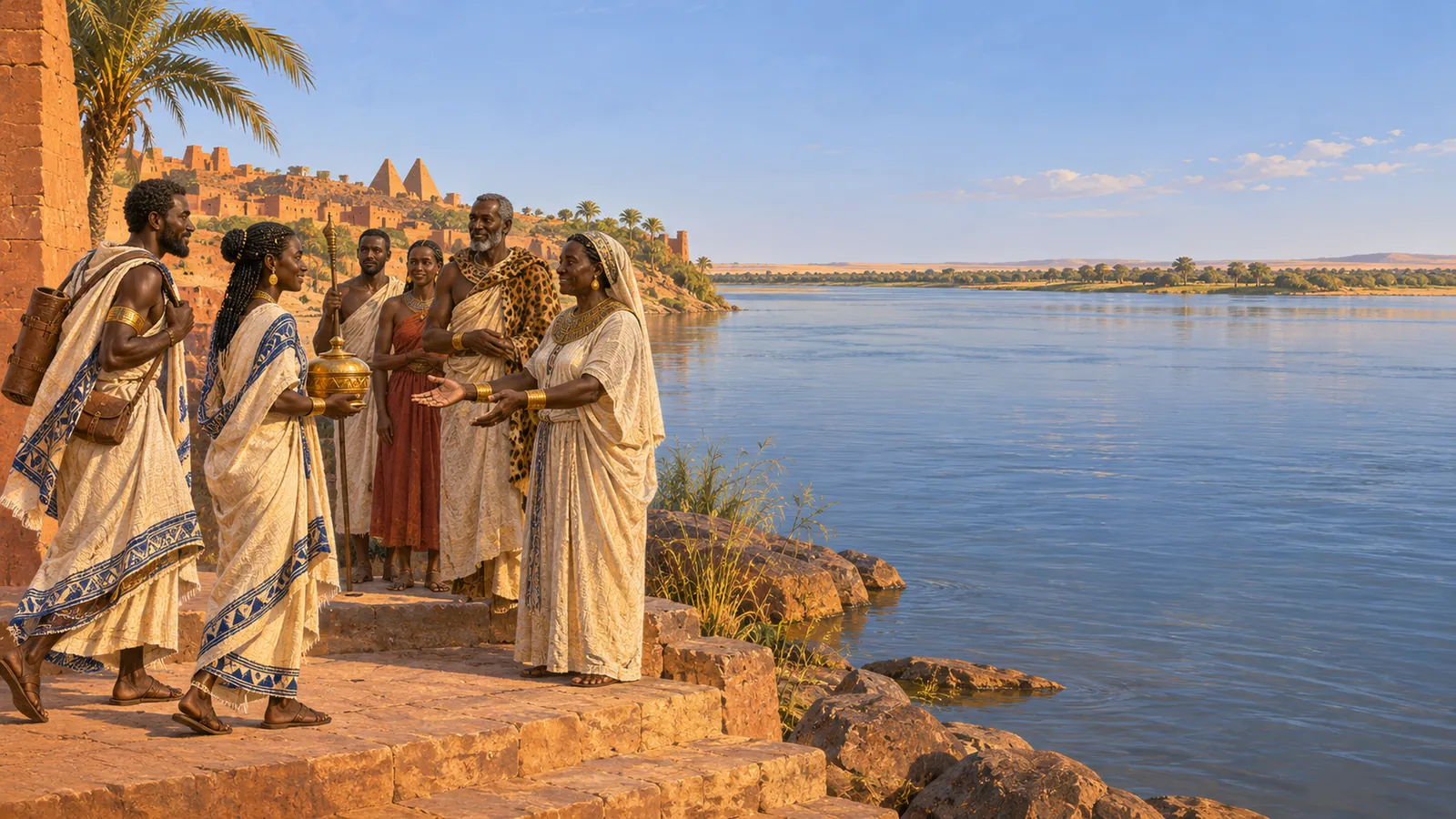
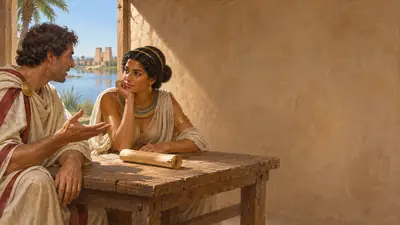
The return of the embassy is easy to picture and hard to document. The settlement did leave Kush governing its own kingdom to the south. Meroë continued as a royal city long after the conflict.
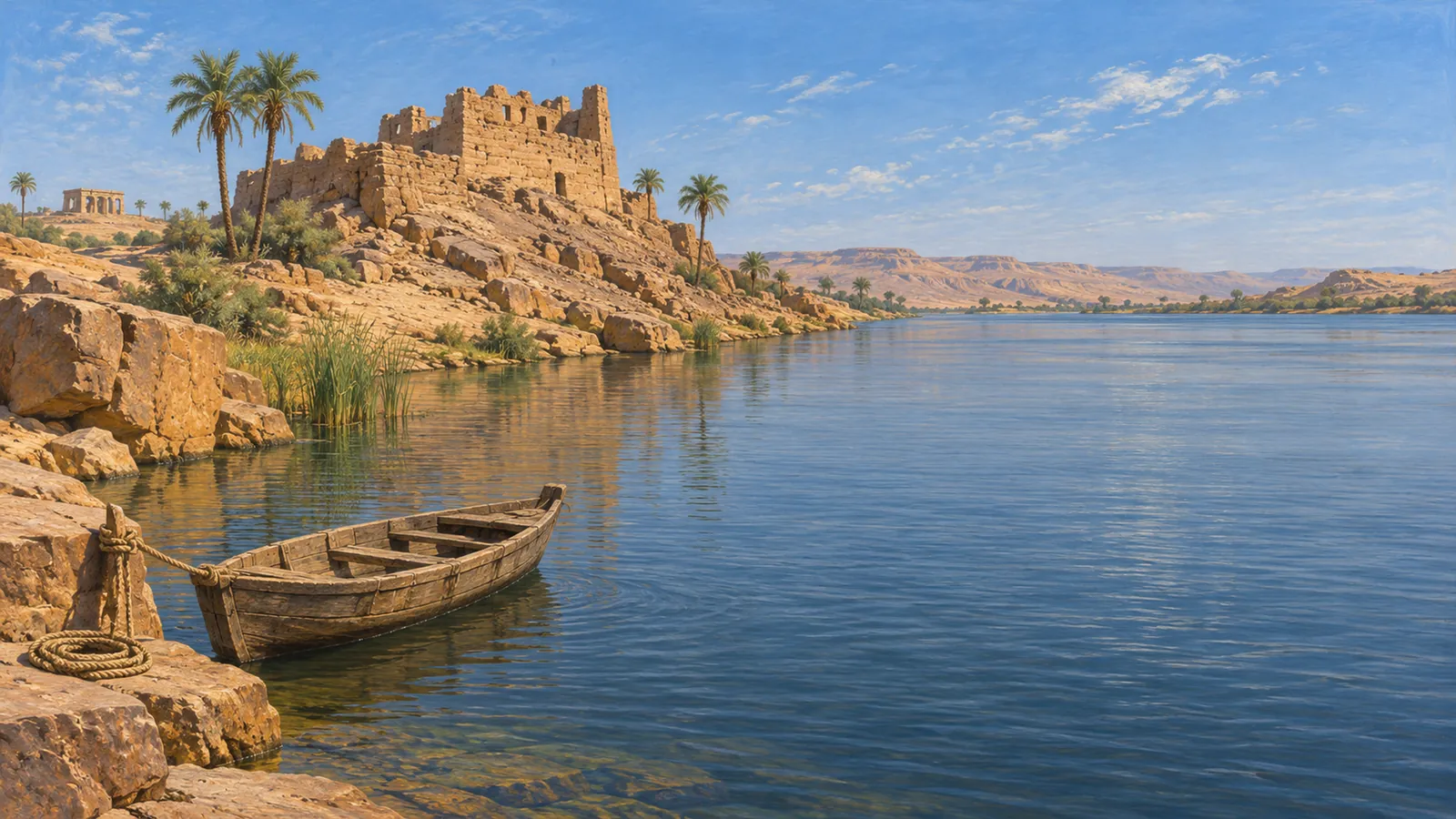
Qasr Ibrim returned to Kush after a short Roman occupation. Farther north, temples, travelers and trade still connected both sides. Boats kept using the same river.
BENEATH THE GROUND
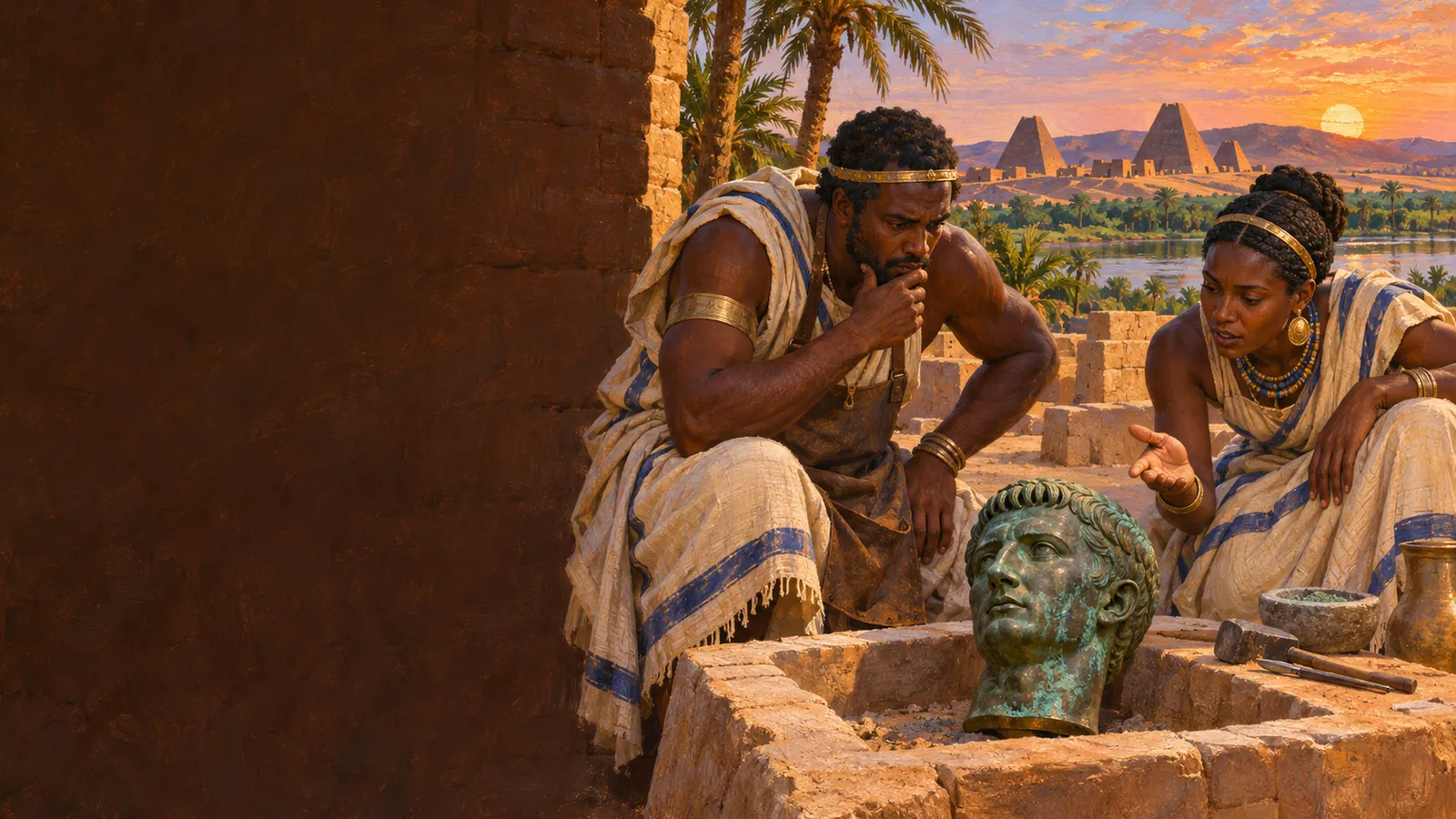
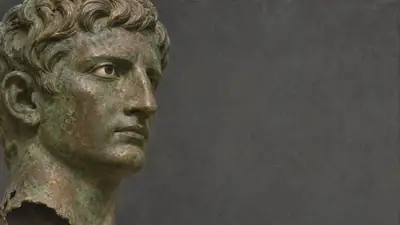
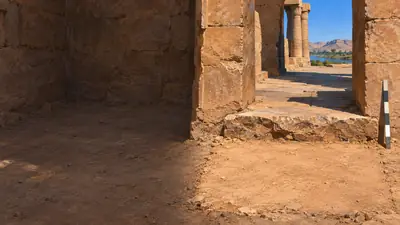
Excavators found the bronze beneath a small temple doorway at Meroë. Burying it there may have been an act of defiance. Who put it there remains unknown.
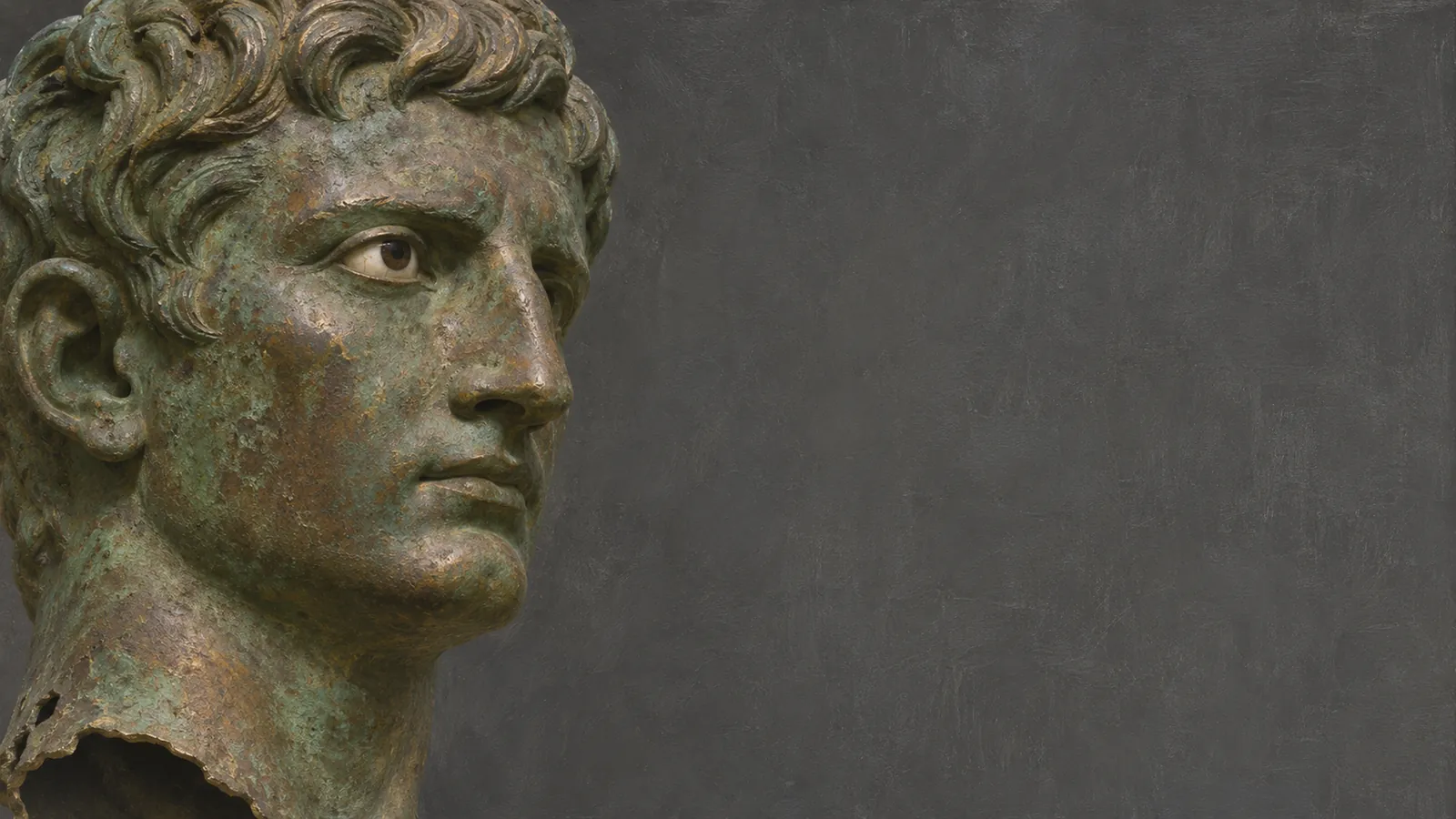
The face is made of bronze, with inlaid eyes. Its materials and careful finish belong to a Roman portrait made to be seen. The place where it was found tells of a later life in Kush.
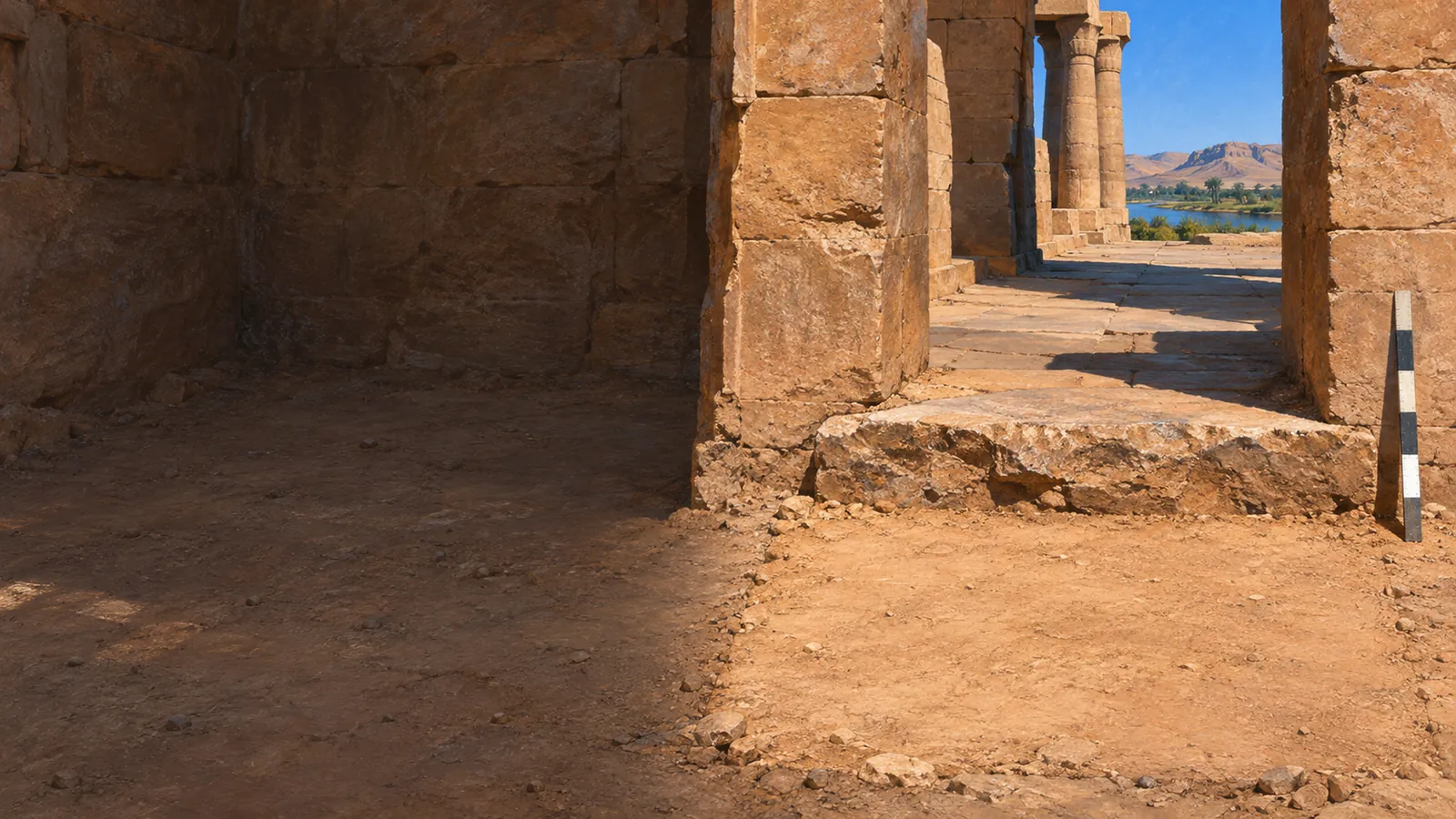
The position of the head mattered as much as the object. A temple threshold was a place that worshippers crossed. Excavation gave the buried bronze a location that could be read alongside Strabo’s account.
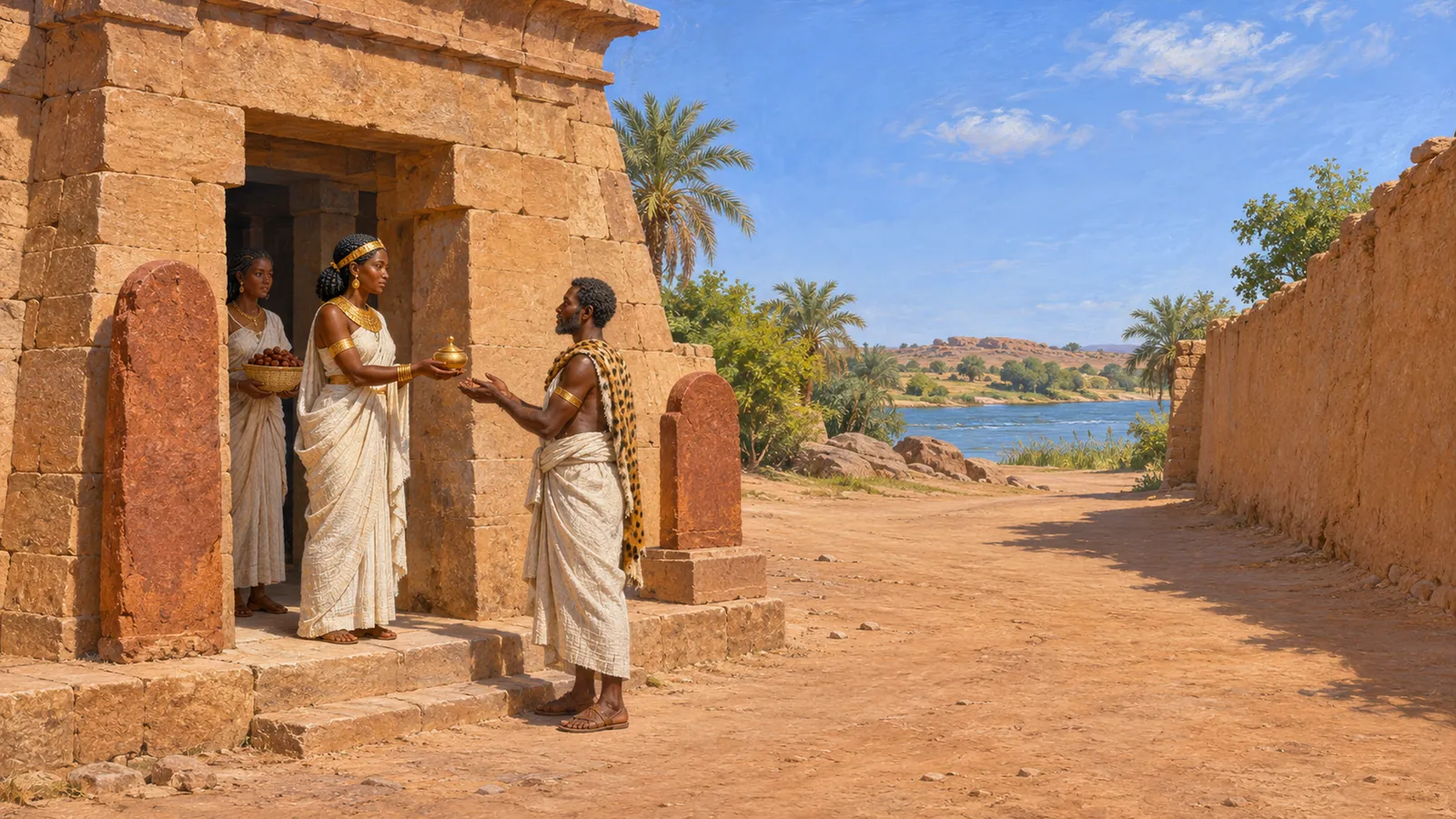
At a temple just south of Meroë, two inscribed stones stood on either side of the entrance. The smaller was set up higher. Archaeologists could identify that arrangement from evidence left by the early excavation.
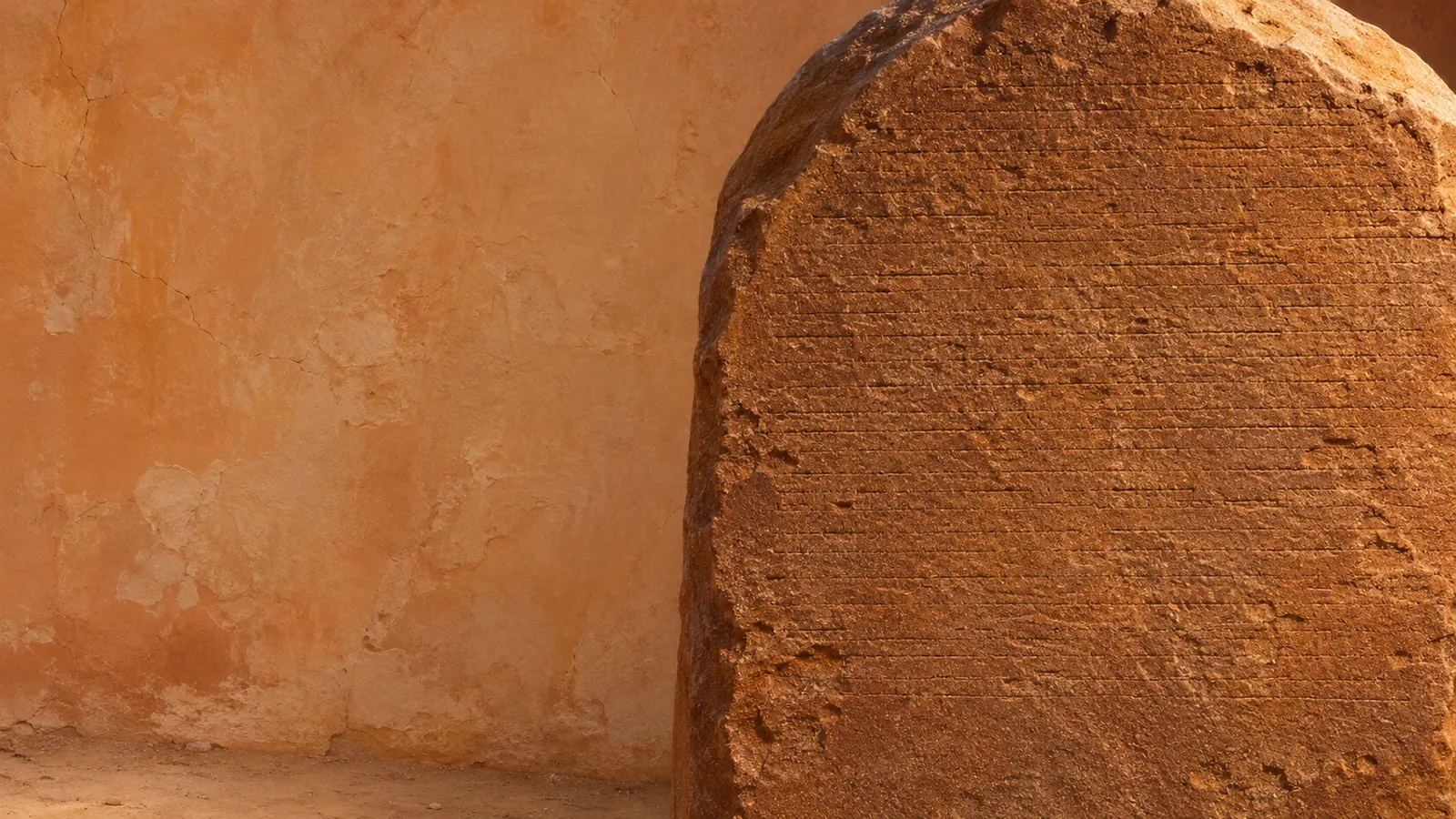
Most lines use the cursive Meroitic script. Scholars recognize both royal names and suggest a link to the conflict. Particular words and the inscription’s purpose remain debated.
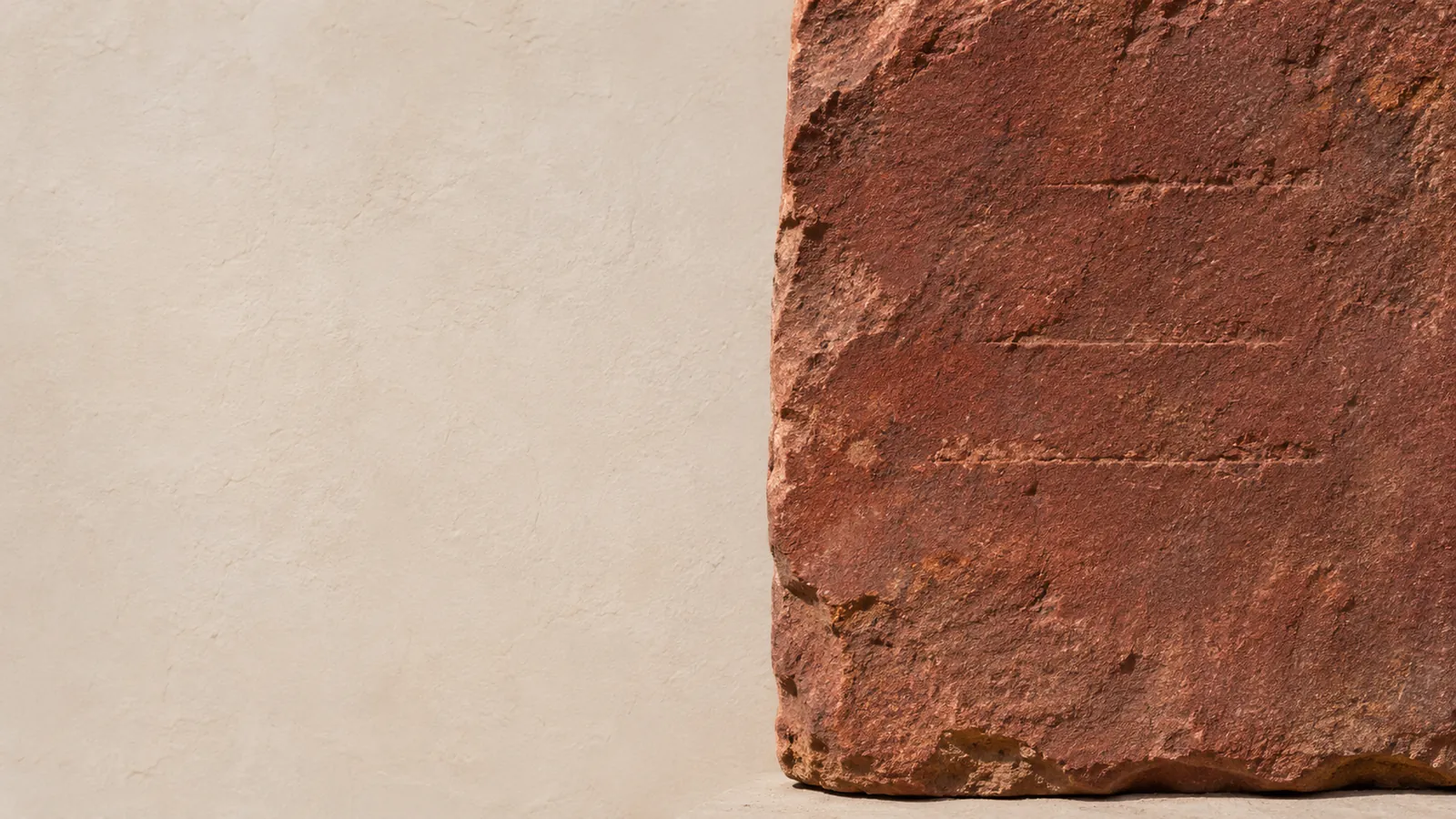
The stone was set up in Kush for people who passed through that temple doorway. Its names come from the place itself. What those readers understood from its lines remains partly beyond our reach.
Rome lost a statue. The envoys took their request across the sea. The objects that survive in Kush preserve the queen’s name and the place where the fallen bronze came to rest.
End of chapter 1
All pages
Sources
Editions consulted
- Strabo, Geography 17.1.53–54, Loeb translation
- Cassius Dio, Roman History 54.7, Loeb translation
- British Museum, Meroë head of Augustus, 1911,0901.1
- British Museum, Egypt and Sudan Newsletter 2020–2021, the Meroë find
- British Museum, Hamadab Stela, EA1650
- Wolf, Wolf, Onasch, Hof and Nowotnick, excavation report on Meroë and Hamadab, pp. 205–211
- Derda, Łajtar and Płóciennik, Three lists of soldiers on papyrus found at Qasr Ibrim
- Griffith Institute, Qasr Ibrim excavation register
- UCL Digital Egypt, Qasr Ibrim and the brief Roman garrison
- Metropolitan Museum of Art, Nubia and the frontier at the time of Augustus
- Metropolitan Museum of Art, the Meroitic period and its material culture
Ancient lines behind each page
- Page 1: British Museum; German Archaeological Institute
See source notes for which details are attested. - Page 2: Metropolitan Museum, Sudan chronology
See source notes for which details are attested. - Page 3: Strabo 17.1.54; Hamadab Stela
See source notes for which details are attested. - Page 4: Hamadab Stela; Griffith; Wolf et al.
See source notes for which details are attested. - Page 5: Strabo 17.1.53–54; Metropolitan Museum
See source notes for which details are attested. - Page 6: Strabo 17.1.54
See source notes for which details are attested. - Page 7: Strabo 17.1.54; interpretive setting
See source notes for which details are attested. - Page 8: Metropolitan Museum, The Land of Nubia
See source notes for which details are attested. - Page 9: Strabo 17.1.54; Wolf et al.
See source notes for which details are attested. - Page 10: Strabo 17.1.54; British Museum collection
See source notes for which details are attested. - Page 11: British Museum, bronze Augustus
See source notes for which details are attested. - Page 12: Strabo 17.1.54
See source notes for which details are attested. - Page 13: Strabo 17.1.54
See source notes for which details are attested. - Page 14: Strabo 17.1.54
See source notes for which details are attested. - Page 15: Strabo 17.1.54
See source notes for which details are attested. - Page 16: Strabo 17.1.54; Griffith Institute; UCL
See source notes for which details are attested. - Page 17: Strabo 17.1.54; Metropolitan Museum
See source notes for which details are attested. - Page 18: Strabo 17.1.54
See source notes for which details are attested. - Page 19: Strabo 17.1.54
See source notes for which details are attested. - Page 20: Strabo 17.1.54; Qasr Ibrim excavations
See source notes for which details are attested. - Page 21: Derda, Łajtar and Płóciennik, Qasr Ibrim papyri
See source notes for which details are attested. - Page 22: Strabo 17.1.54
See source notes for which details are attested. - Page 23: Strabo 17.1.54
See source notes for which details are attested. - Page 24: Strabo 17.1.54
See source notes for which details are attested. - Page 25: Strabo 17.1.54; Cassius Dio 54.7
See source notes for which details are attested. - Page 26: Strabo 17.1.54
See source notes for which details are attested. - Page 27: Strabo 17.1.54
See source notes for which details are attested. - Page 28: Strabo 17.1.54
See source notes for which details are attested. - Page 29: Strabo 17.1.54; Metropolitan Museum; Wolf et al.
See source notes for which details are attested. - Page 30: Strabo 17.1.54; Wolf et al.; Metropolitan Museum
See source notes for which details are attested. - Page 31: Qasr Ibrim excavations; Metropolitan Museum
See source notes for which details are attested. - Page 32: British Museum, Egypt and Sudan Newsletter
See source notes for which details are attested. - Page 33: British Museum, bronze Augustus
See source notes for which details are attested. - Page 34: British Museum, Egypt and Sudan Newsletter
See source notes for which details are attested. - Page 35: Wolf et al., fig. 62 and pp. 205–211
See source notes for which details are attested. - Page 36: Griffith; Wolf et al.; Hamadab Stela
See source notes for which details are attested. - Page 37: Wolf et al.; Hamadab Stela
See source notes for which details are attested. - Page 38: Strabo 17.1.54; British Museum; Wolf et al.
See source notes for which details are attested.
Illustrations made with AI tools by IL Archive; the text is based on the ancient sources (see the sources at the end of each chapter).