Person · Figure
Amanirenas
- Names
- Amanirena · Amanirenas · Amanirenase
- Region
- النوبة
Amanirenas ruled Kush in the late first century BCE. The Hamadab inscriptions preserve her name, and historians commonly identify her with the Kandake who led Kush during the war with Roman Egypt.
Estimated reading time: 5 min Published Last reviewed:
Share article
Text
Introduction
A sandstone stele from Hamadab names Amanirenas, a ruler of Kush, alongside a royal figure called Akinidad. Around the same time, the Greek geographer Strabo describes a Kushite ruler whom he calls Candacê leading opposition to Rome. Historians commonly identify her as Amanirenas. The identification brings together a named ruler in a Kushite text and a queen known by her title in a Greek account. The two sources preserve different parts of her story. [1] [2] [3]
The queen’s name in Kush
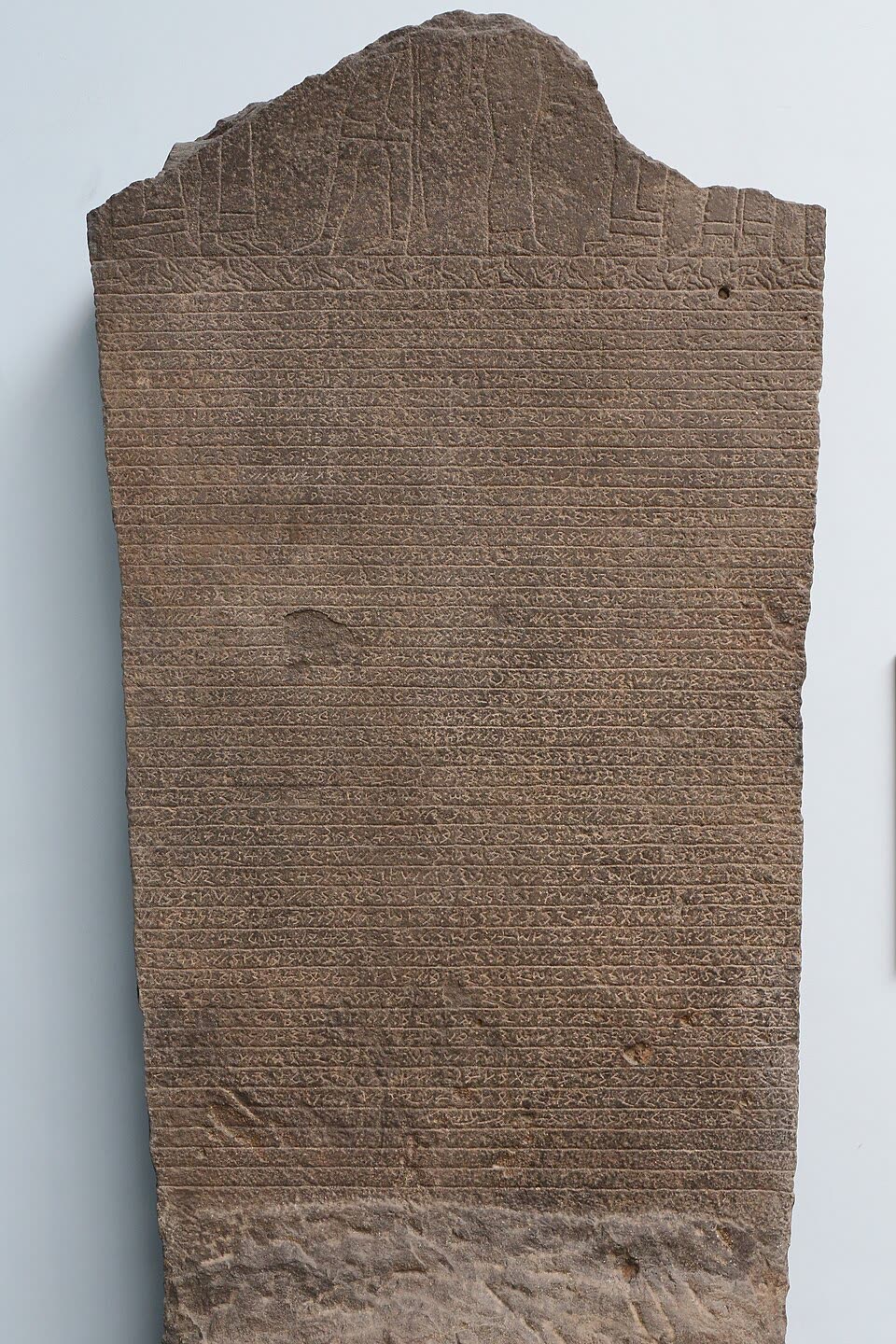
The larger Hamadab stele stood on the north side of a temple entrance at the settlement, a few kilometres south of Meroe in present-day Sudan. A smaller stele stood on the other side and was raised so that it corresponded with the larger one. Both are made of hard, iron-rich sandstone and carry writing on the front only. The excavation report counts forty-two lines on the larger monument and thirty-five on the smaller one. This was a public placement at the approach to the temple, with the two inscriptions presented side by side to people entering the building. A strip of carved bound captives survives beneath the larger stele’s damaged upper scene. The excavators interpret the figures above as the queen and Akinidad approaching deities, probably Amun and Mut. [2] [4]
The inscription on the larger stone names Amanirenas with the titles qore and kdke, the latter conventionally written kandake. The text also names Akinidad and gives him titles of his own. In other inscriptions Akinidad appears in association with King Teriteqas and with Amanishakheto, the queen who succeeded Amanirenas. Strabo mentions a son of the Kandake, but equating him with Akinidad remains a proposal. The royal inscriptions put Akinidad close to several rulers and leave the precise family relationship uncertain. [1] [3] [5]
From the cataract to Premnis
Strabo places the beginning of the war after part of the Roman force in EgyptEgyptEgypt lies mainly in northeastern Africa and includes the Sinai Peninsula in AsiaGlossary · Click to read the explanation had left on Aelius Gallus’s Arabian expedition. He writes that Kushite forces seized Syene, modern Aswan, and the nearby places of ElephantineElephantine / YebElephantine / Yeb, near Aswan at the Nile’s First Cataract, preserves a long-lived Egyptian town, temples of Khnum and Satet, and Persian-period garrisons. Aramaic papyri document several communities, including Judeans and Yaho’s temple, whose rebuilding was sought in 407 BCE; claims and archaeological interpretations must be distinguished.Glossary · Click to read the explanation and Philae. They took captives and pulled down statues of Augustus. When the Roman prefect Petronius demanded an explanation, the Kushites, in Strabo’s account, said they had been wronged by local officials. The exchange gives one indication of grievances on the Egyptian frontier, filtered through the author who reports it. [1] [3]
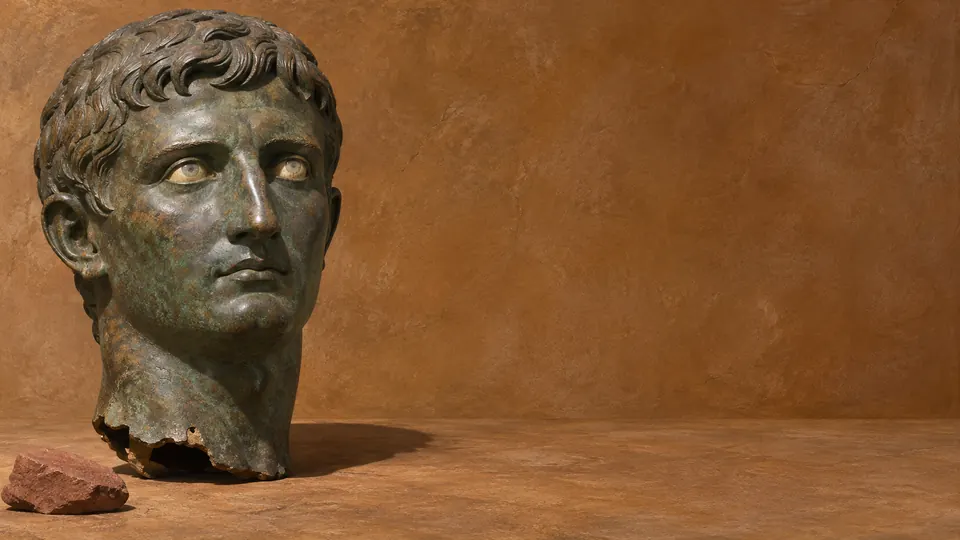
Strabo describes Petronius pursuing the Kushites through Pselchis and seizing the fortress of Premnis, identified with Qasr Ibrim. He says that the Kandake sought terms and offered to return the captives and statues before the Romans attacked Napata. Cassius Dio also describes Petronius taking and destroying Napata. Some modern scholars question whether he reached the city, given its distance from Premnis and conditions on the route. A bronze head of Augustus was found buried near the entrance to a building at Meroe. Its association with the statues taken in the frontier raids is plausible, and the precise chain of events that brought it to Meroe remains unrecorded. [1] [3] [6] [7]
The negotiations at Samos
In Strabo’s account the Kandake put pressure on the Roman garrison at Premnis after Petronius had withdrawn. Petronius returned to the fortress. When Kushite ambassadors approached him, he directed them to Augustus, whom they reached on Samos. Strabo says the emperor granted what they asked and remitted the tribute he had imposed. Dio compresses the outcome into a claim that Petronius compelled the queen to make terms. Modern chronologies place the settlement around 21–20 BCE. Rome retained control of the northern stretch of Lower Nubia, while its reach fell short of the areas the campaign had penetrated. The Roman zone was commonly called the Dodekaschoinos, a name for the stretch south of the First Cataract as far as Maharraqa. The Greek historian’s account of the envoys preserves part of how a settlement with territorial and financial consequences was secured. [1] [3] [6] [8]
What the steles can tell us
Scholars can read the signs of the Meroitic script and identify many names, titles and words. The meaning and grammar of much of the text still resist continuous translation. The larger Hamadab stele has long been associated with the war, but its possible references to Rome are disputed and the carved captives carry no secure identification. A different proposal gives greater weight to the smaller monument, now in the Sudan National Museum. It mentions Akinidad and includes names read as Napata and Qasr Ibrim. Both places occur in Strabo’s account. This overlap makes a connection with the war plausible, although the exact role of the smaller text and the relation between the two inscriptions remain debated. [2] [4] [5]
Close examination has also shown that the larger stele underwent a change. Michael Zach identified an area on line 26 where the stone was cut back to erase and alter a numeral. The arithmetic of an ancient inscription can seem more accessible than the surrounding words, yet even here the sequence has a history that a reader must reconstruct. The stele securely records Amanirenas’s name and royal titles. What she and Akinidad chose to record in the rest of it is harder to recover. The gaps matter because the rest of the surviving account, including how the queen looked and what her opponents say she intended, comes largely from writers outside Kush. [1] [5] [6]
References and notes (8)
- Strabo, Geography, translated by H. L. Jones 17.1.54, the raids, campaign, envoys and tribute Return to the text ↑
- Simone Wolf, Pawel Wolf, Hans-Ulrich Onasch, Catharine Hof and Ulrike Nowotnick, Meroë und Hamadab pp. 210–211, placement, reliefs and interpretations of REM 1003 and 1039 Return to the text ↑
- Josefine Kuckertz, Meroe and Egypt pp. 12–15, Roman frontier, Amanirenas, Akinidad and the settlement Return to the text ↑
- Marco Baldi, Amun in Merotic Nubia, The Case of the Hamadab Stela Opening discussion and figures, sanctuary context, dating and names Return to the text ↑
- Michael H. Zach, A Remark on the ‘Akinidad’ Stela REM 1003 pp. 148–149, titles, textual interpretations and revision on line 26 Return to the text ↑
- Cassius Dio, Roman History, translated by Earnest Cary 54.5.4–6, account of Petronius’s campaign Return to the text ↑
- Marc Bundi, Display and Displacement, The Bronze Head of Augustus from Meroe pp. 22–24, findspot, identification and transfer Return to the text ↑
- Janice W. Yellin, Meroitic Royal Chronology, The Conflict with Rome and Its Aftermath pp. 2–3, conflict dates and limits of the royal chronology Return to the text ↑
Suggest a correction · Suggest a source for this record
Cite this record
IL Archive, «Amanirenas», https://ilarchive.com/en/people/amanirenas
Continue reading