Site
The Kingdom of Kush
- Names
- Kingdom of Kush · Kush · Kushite kingdom
- Region
- النوبة
Kush was a Middle Nile kingdom whose rulers built at Napata and Meroe. Its temples, royal burials, inscriptions and workshops trace a history that lasted long after Kushite rule in Egypt.
Estimated reading time: 5 min Published Last reviewed:
Share article
Text
Introduction
The kingdom of Kush rose in the Middle Nile Valley and ruled from centers in what is now Sudan. Its kings governed Egypt during the Twenty-Fifth Dynasty, then continued to rule in the south for centuries. Napata and Meroe preserved different parts of that history. The temples, cemeteries and inscriptions at these sites show where the royal family worshipped, where it buried its dead and how it presented its authority. Those activities did not always take place in the same city. [1]
Napata and the conquest of Egypt
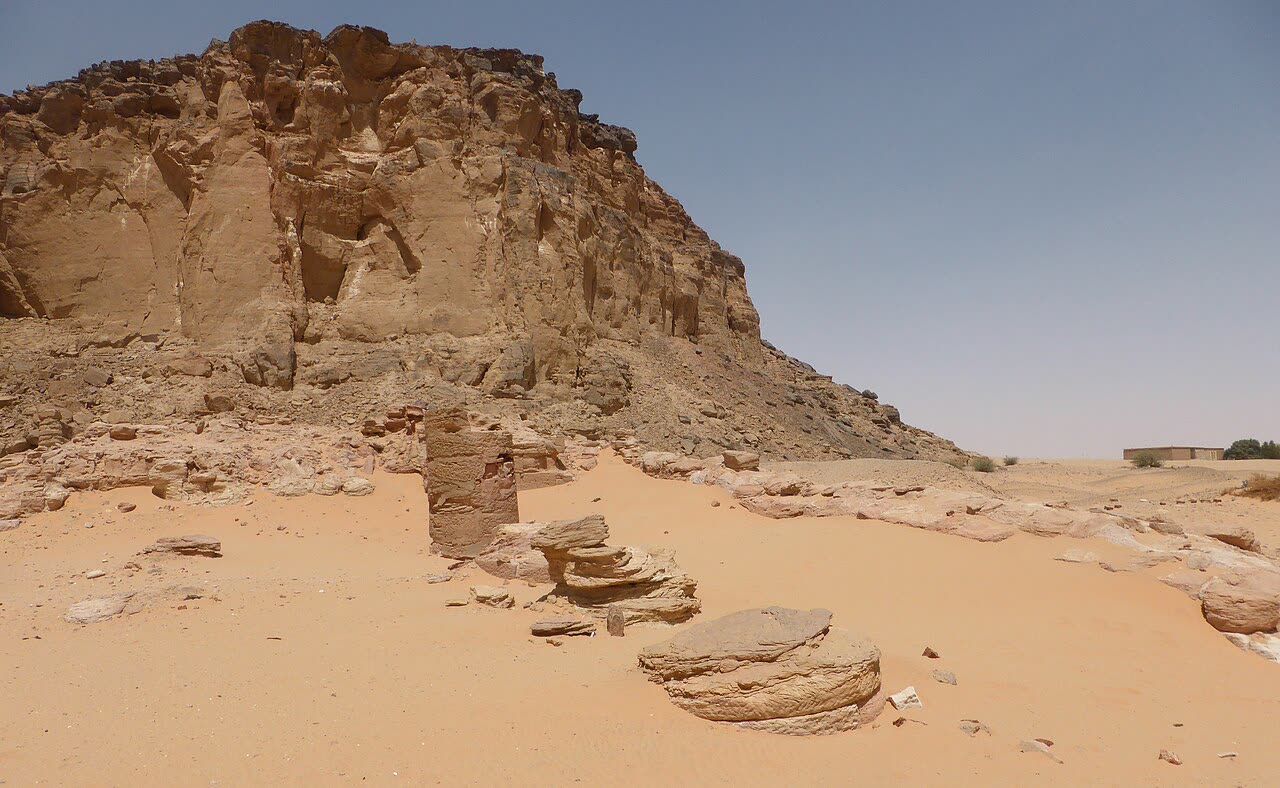
The name Kush appears in sources for more than one period. Egyptian texts also apply it to the earlier Bronze Age kingdom centered at Kerma. At Jebel Barkal, pottery points to settlement during the Kerma period. After the Egyptian New Kingdom conquered the area, Napata became an outpost, and the Egyptians established a temple to Amun at the foot of the mountain. The later rulers of Kush inherited that sacred site. They built a palace and enlarged the temple precinct, making the complex part of a kingdom governed from the Middle Nile. [1][2]
Piye, one of those rulers, left an account of his campaign north into Egypt. His granite Victory Stela opens in the twenty-first year of his reign. It describes opposition from a coalition led by Tefnakht, fighting along the river and the submission of rulers who had previously resisted him. The text gives the ceremonies at Thebes their own place in the campaign. Piye's soldiers were to purify themselves before entering the city and making offerings, and the king describes taking part in Amun's festival. The account ends with his return south. Excavators found the stela in the ruins of Amun's temple at Jebel Barkal, the sanctuary that Piye himself enlarged. [3]
The stela presents events as the king wished them to be remembered. On its upper panel Piye stands before Amun, while the ruler of HermopolisHermopolis, KhemenuHermopolis is an ancient Egyptian city at Ashmunein, called Khemenu in EgyptianGlossary · Click to read the explanation brings forward a horse. The inscription gives long speeches to kings and commanders and lists defeated rulers by name. The lists preserve details about political divisions in Egypt. The speeches, the relief and the choice of temple also set out Piye's claims to legitimate rule. The monument tells us how that claim was made in a Kushite sanctuary as well as which towns and rivals mattered to the campaign. [3]
From the Napatan cemeteries to Meroe
Kush's rulers lost Egypt in the seventh century BCE. They continued to build royal pyramid tombs near Napata, at El-Kurru and Nuri. At Jebel Barkal a deposit of smashed royal statues marks another disruption, likely associated with a raid ordered by the Egyptian king Psamtek II in the early sixth century BCE. Kushite kings increasingly built at Meroe. By about 270 BCE most royal burials had moved there. That change can be traced in the cemeteries, while new palaces and renovations at Jebel Barkal show that Napata remained important during the Meroitic period. [1]
The Meroe World Heritage property includes the royal city and cemeteries as well as the separate complexes of Naqa and Musawwarat es-Sufra. Temples, reservoirs and traces of manufacturing show how much of the kingdom's built landscape lies outside its pyramid fields. The lion god Apedemak had temples during the Meroitic period. The language of many Kushite inscriptions also changed. Where Napatan royal inscriptions generally used Egyptian, later texts record Meroitic in a script whose signs scholars can read. Names, titles and recurrent funerary formulas can often be recognized. Much of the vocabulary remains uncertain, leaving some otherwise legible inscriptions difficult to translate. [2][4]
What the slag heaps can date
The industrial remains at Meroe make it possible to investigate questions that neither royal inscriptions nor tombs address. Slag accumulates where ironworkers discard the waste from smelting. Researchers surveyed the mounds, then excavated deposits and radiocarbon dated charcoal from them. Their results indicate that many of the conspicuous heaps grew early or late in the city's occupation, with less visible accumulation in the sampled deposits across much of the intervening Meroitic period. The deposits establish when particular areas received waste. They leave open whether production continued at another location or waste disposal changed. A workshop and deposits near the southern part of the city help document one late phase alongside findings from nearby Hamadab. [5][6]
A frontier and a late horizon
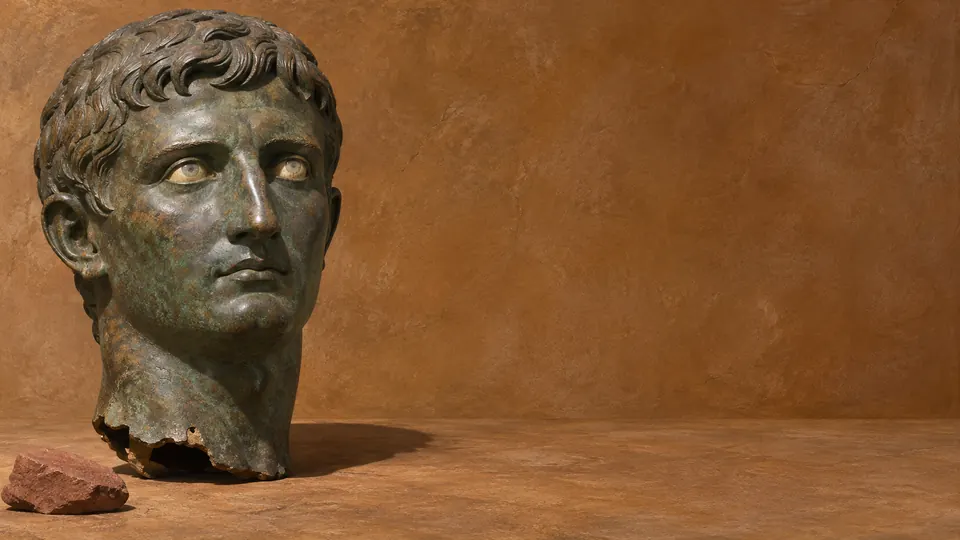
After Rome took Egypt, Kush and Rome fought along the frontier. Strabo reports that the forces of a Kushite queen he calls Candace attacked Roman-held towns and that the Roman commander Petronius marched as far as Napata. His account ends with Kushite envoys reaching Augustus at Samos and securing a settlement. Evidence at Jebel Barkal has so far revealed little sign of the destruction that Strabo ascribes to the Roman expedition. The text records a Roman account of the campaign and its outcome. Archaeology at Napata gives a separate basis for assessing what befell the city. [1][7]
By the fourth century CE the political kingdom centered at Meroe was drawing to an end. The timing and causes are harder to reconstruct than Piye's campaign. Meroitic royal inscriptions and the archaeology of particular sites mark different ends to local sequences. Napata's long use and the industrial evidence around Meroe also show why the date assigned to a king, capital or kingdom can only tell one part of the region's history. [1][2][5][6]
References and notes (7)
- Jebel Barkal Archaeological Project, University of Michigan Historical Summary, Kerma settlement through Meroitic occupation Return to the text ↑
- Claude Rilly and Alex de Voogt, The Meroitic Language and Writing System Chapter 1, outline of Meroitic history and history of decipherment Return to the text ↑
- Miriam Lichtheim, Ancient Egyptian Literature, Volume III The Victory Stela of Piye, pp. 66–84 Return to the text ↑
- UNESCO World Heritage Centre Archaeological Sites of the Island of Meroe, Outstanding Universal Value Return to the text ↑
- Chris Carey, Frank Stremke and Jane Humphris, The Ironworking Remains in the Royal City of Meroe Abstract and results summary on chronology of the slag mounds Return to the text ↑
- Jane Humphris and Thomas Scheibner, A New Radiocarbon Chronology for Ancient Iron Production in the Meroe Region of Sudan Radiocarbon results and discussion of Meroe and Hamadab Return to the text ↑
- Strabo, Geography 17.1.54, translated by H. L. Jones Kushite campaign, Roman response and envoys to Augustus Return to the text ↑
Suggest a correction · Suggest a source for this record
Cite this record
IL Archive, «The Kingdom of Kush», https://ilarchive.com/en/sites/kingdom-of-kush