The Letters from Elephantine Chapter 1
The Request to Rebuild
Three excerpts from the priests’ draft request describe mourning and ask Bagohi to support the rebuilding of the temple at Elephantine. A separate memorandum gives instructions for rebuilding on the former site and for the customary offerings.
SourcesTurn the pages with the arrows, the arrow keys or a swipe.
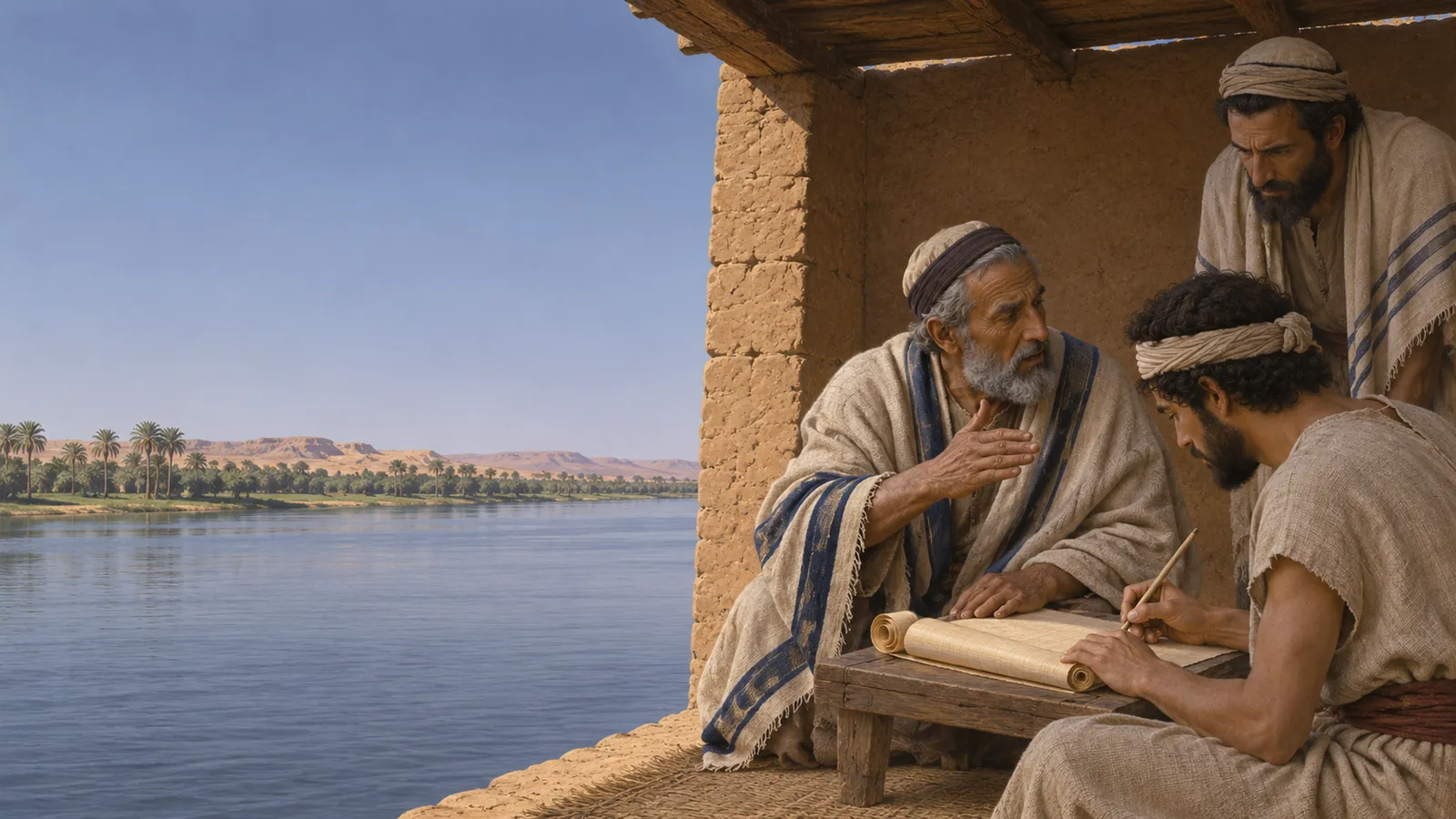
ELEPHANTINE
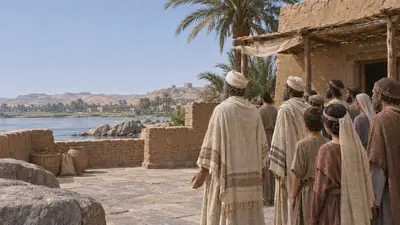
Collin Cornell dates the draft to 407 BCE, three years after the temple’s destruction. He identifies Yedoniah and his fellow priests as the senders and Bagohi, governor of Yehud, as the addressee.
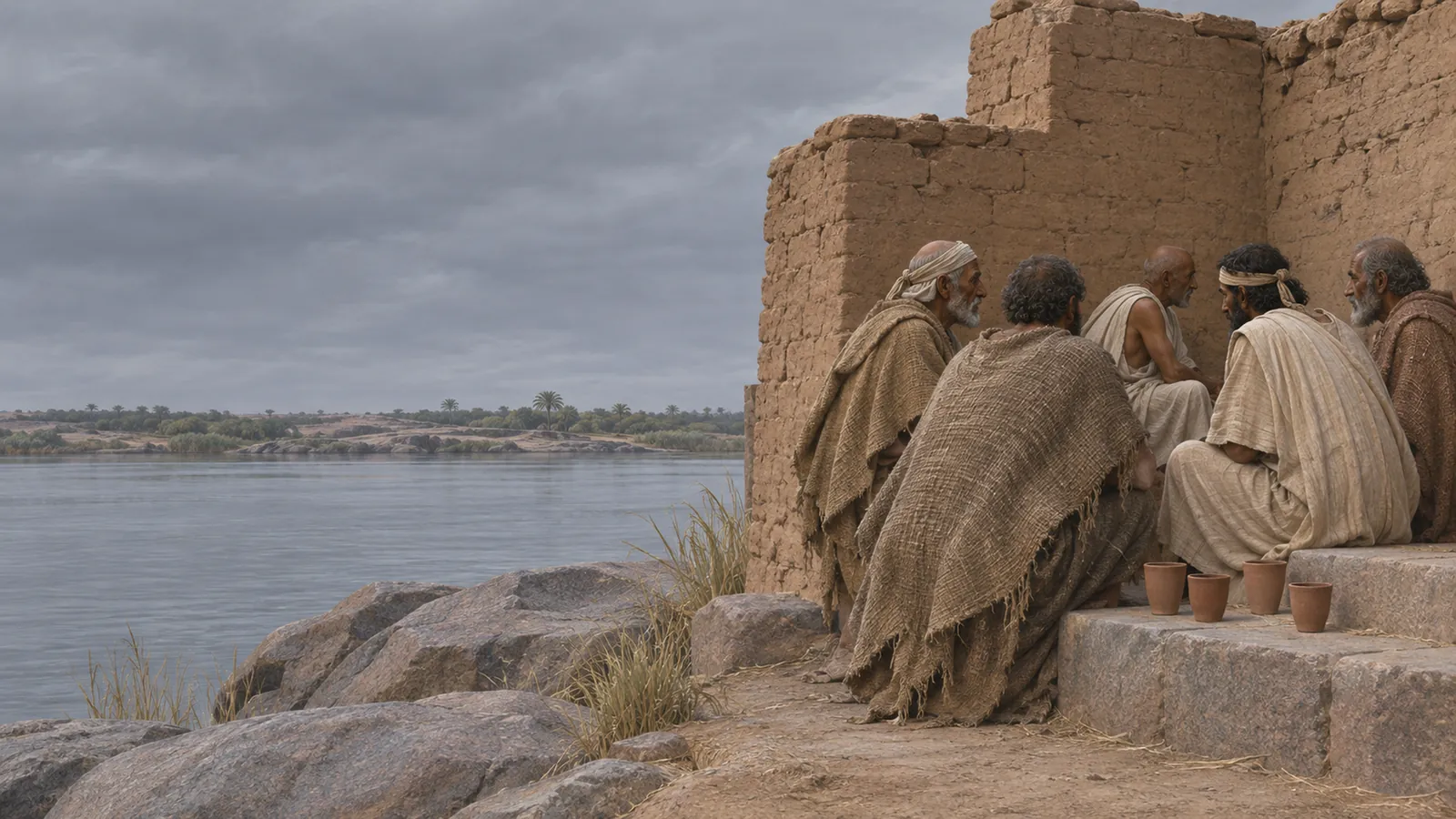
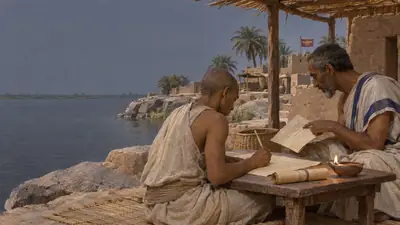
The writers say they have worn sackcloth and fasted from the time of the temple’s loss until the day they write.
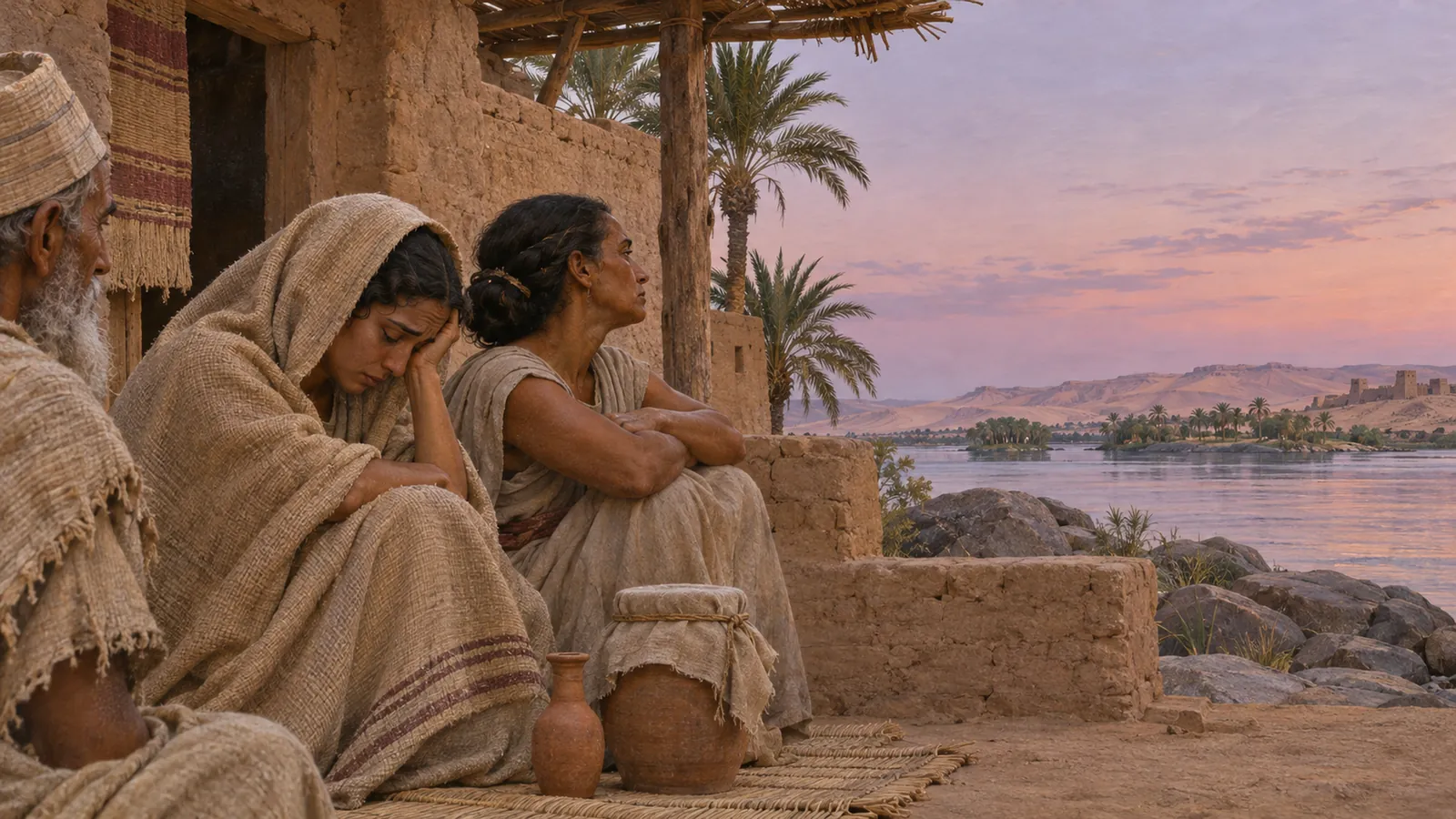
In the same passage, they describe making their wives live like widows. They say they have used no oil to anoint themselves and have drunk no wine.
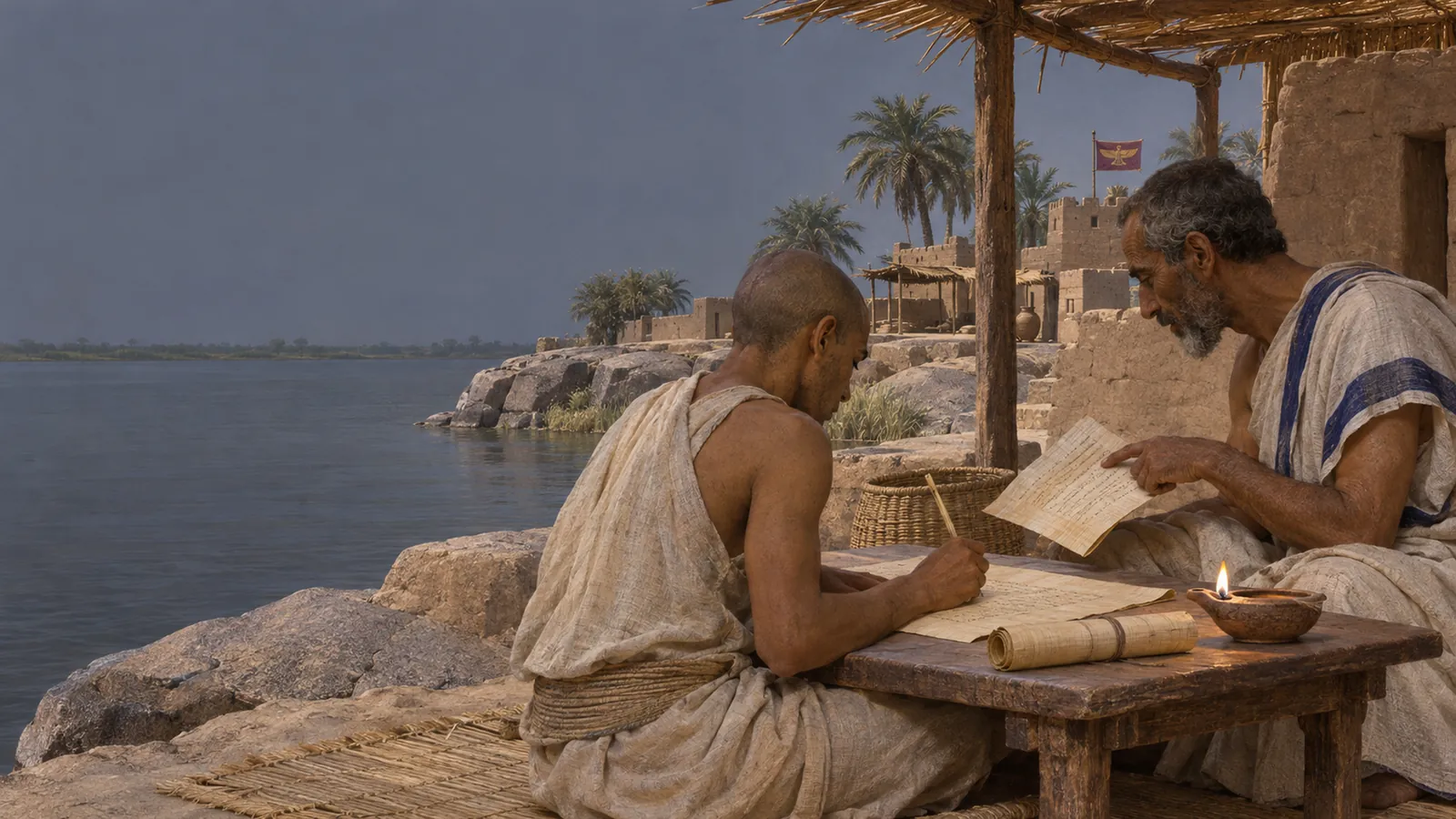
THE REQUEST
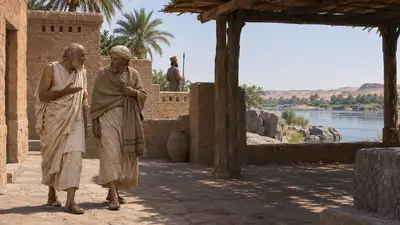
The writers ask Bagohi to send a letter urging that the temple of Yhw be rebuilt in the fortress of Elephantine, just as it had stood before.
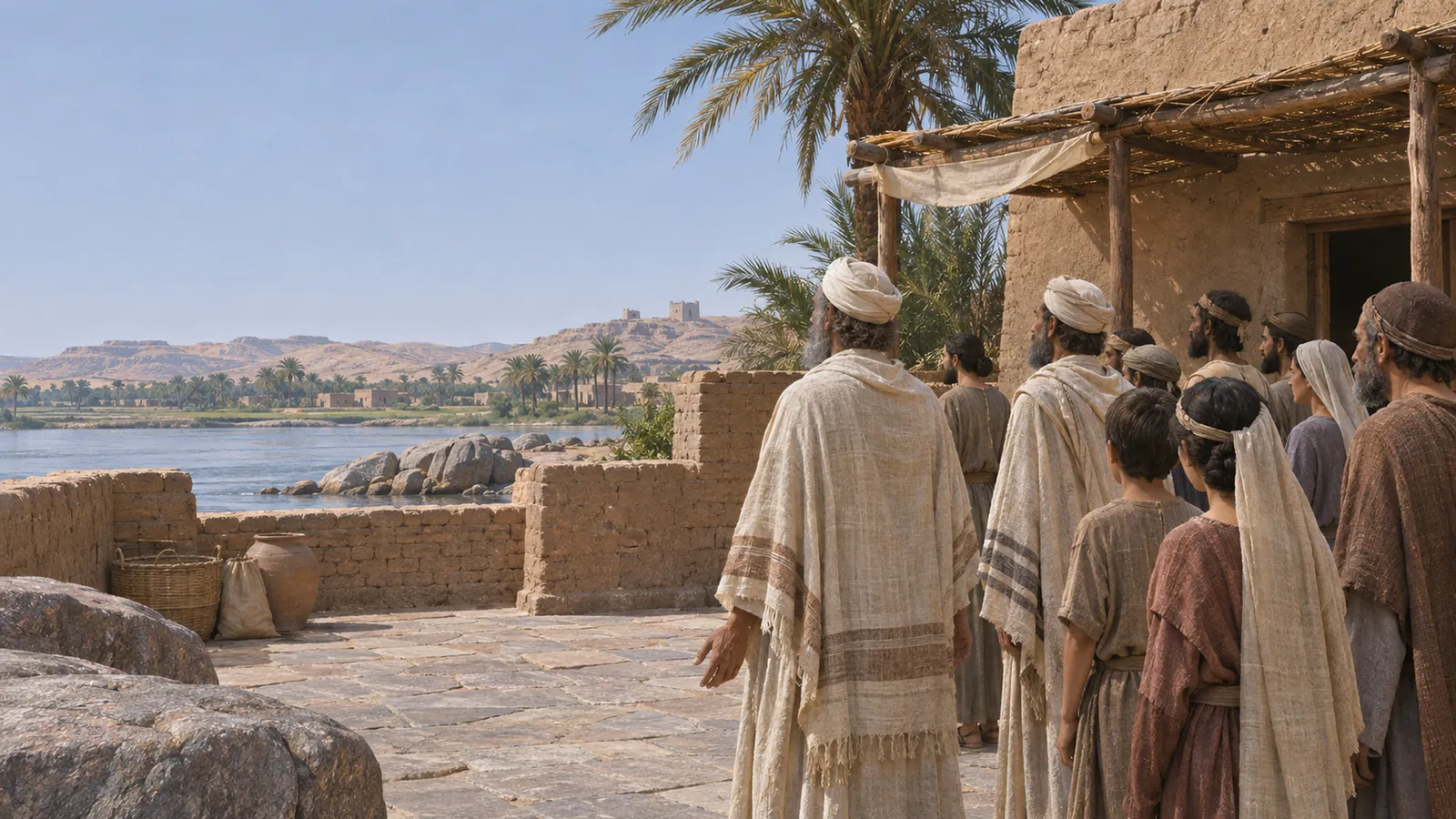
The priests tell Bagohi that they will pray for him continually. Cornell supplies the pronoun identifying him in the translation.
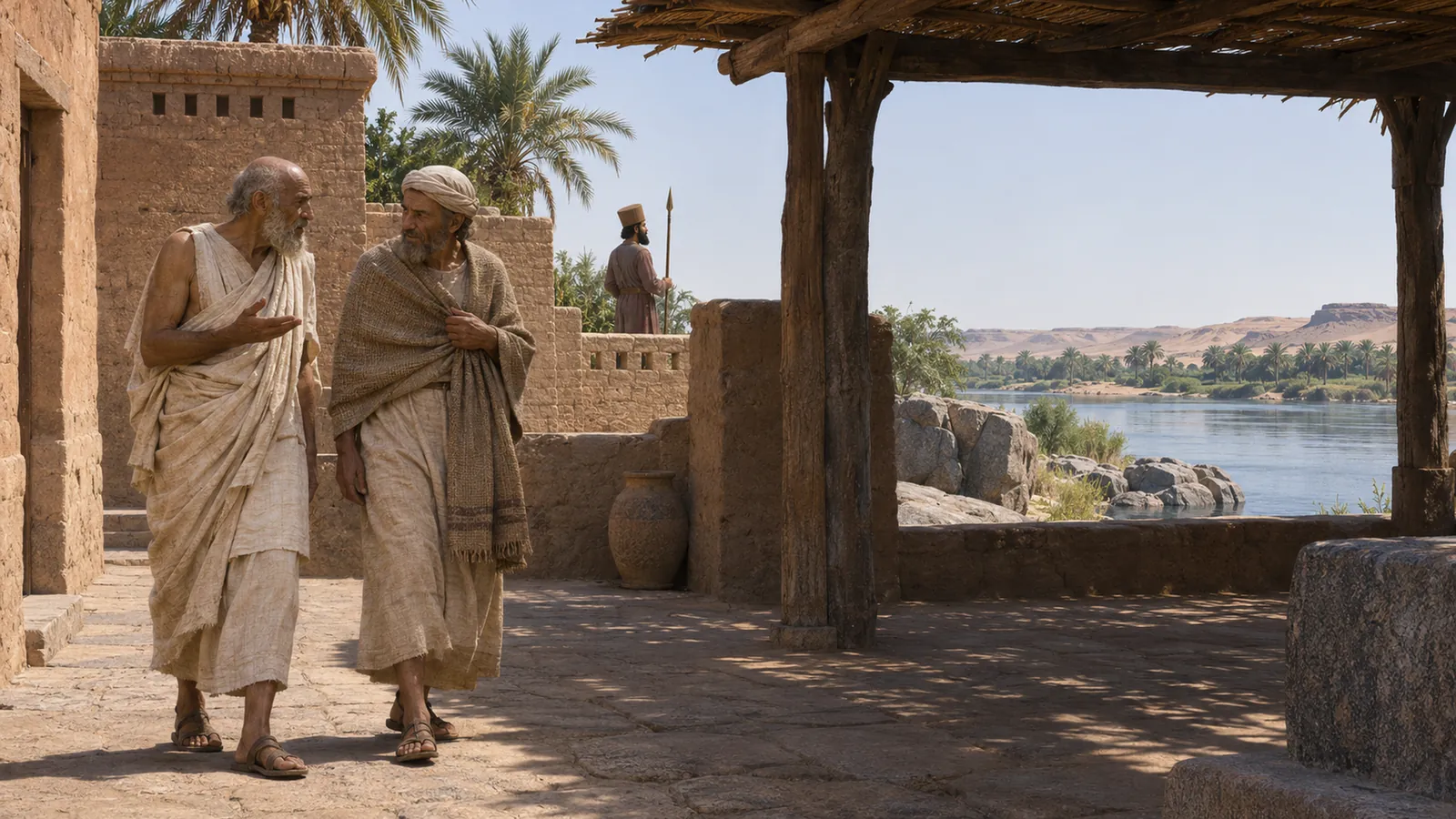
They say this will give Bagohi greater honor before Yhw than a man who brings burnt offerings and sacrifices worth a thousand talents of silver and gold.
THE MEMORANDUM
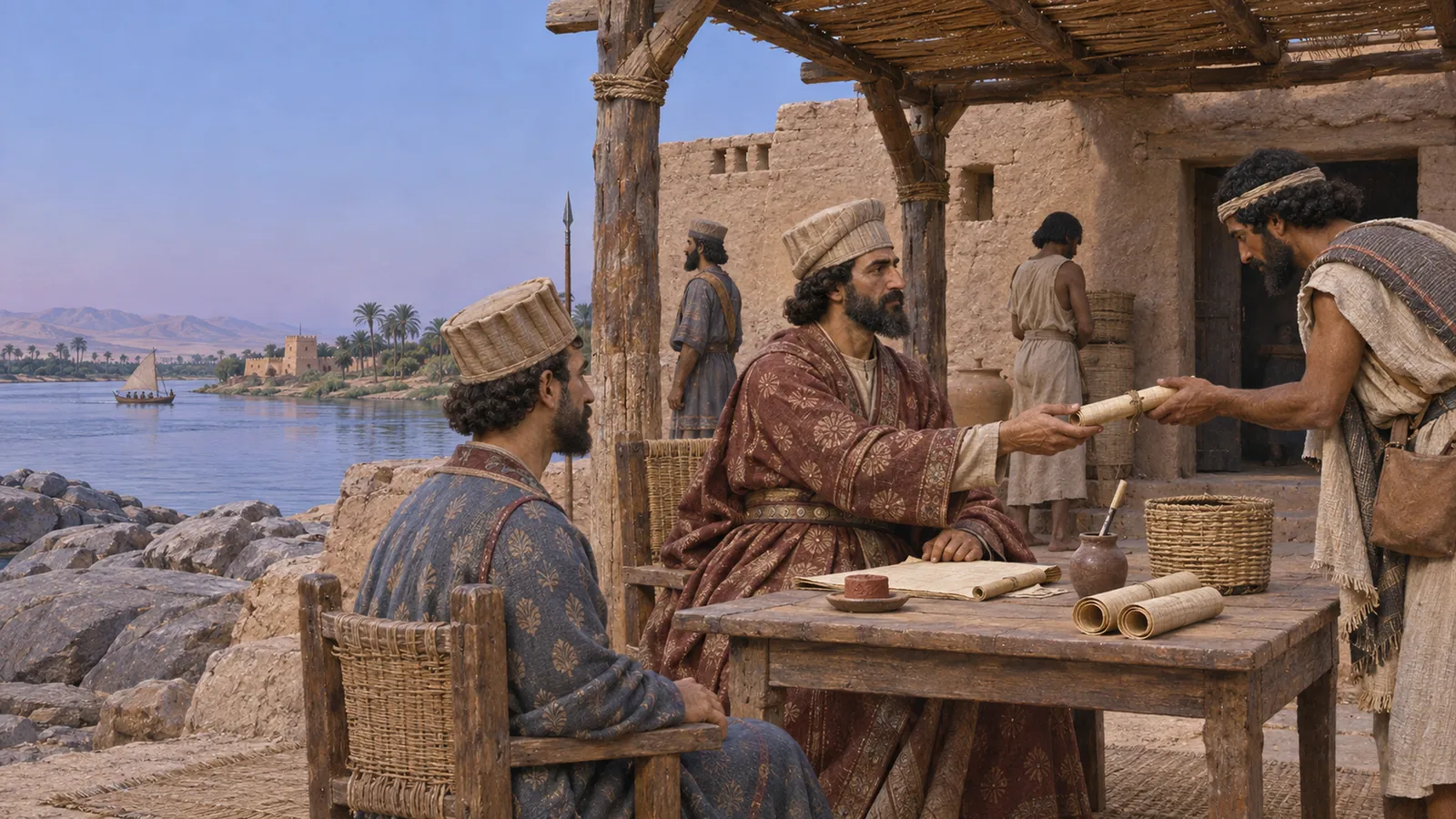
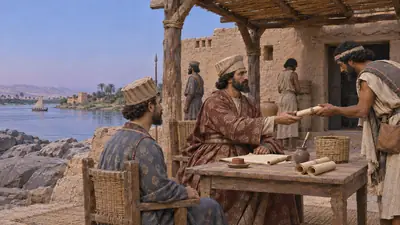
Cornell introduces a separate memorandum from Bagohi. It calls for speaking before Arsames concerning the house of Yhw, the God of Heaven.
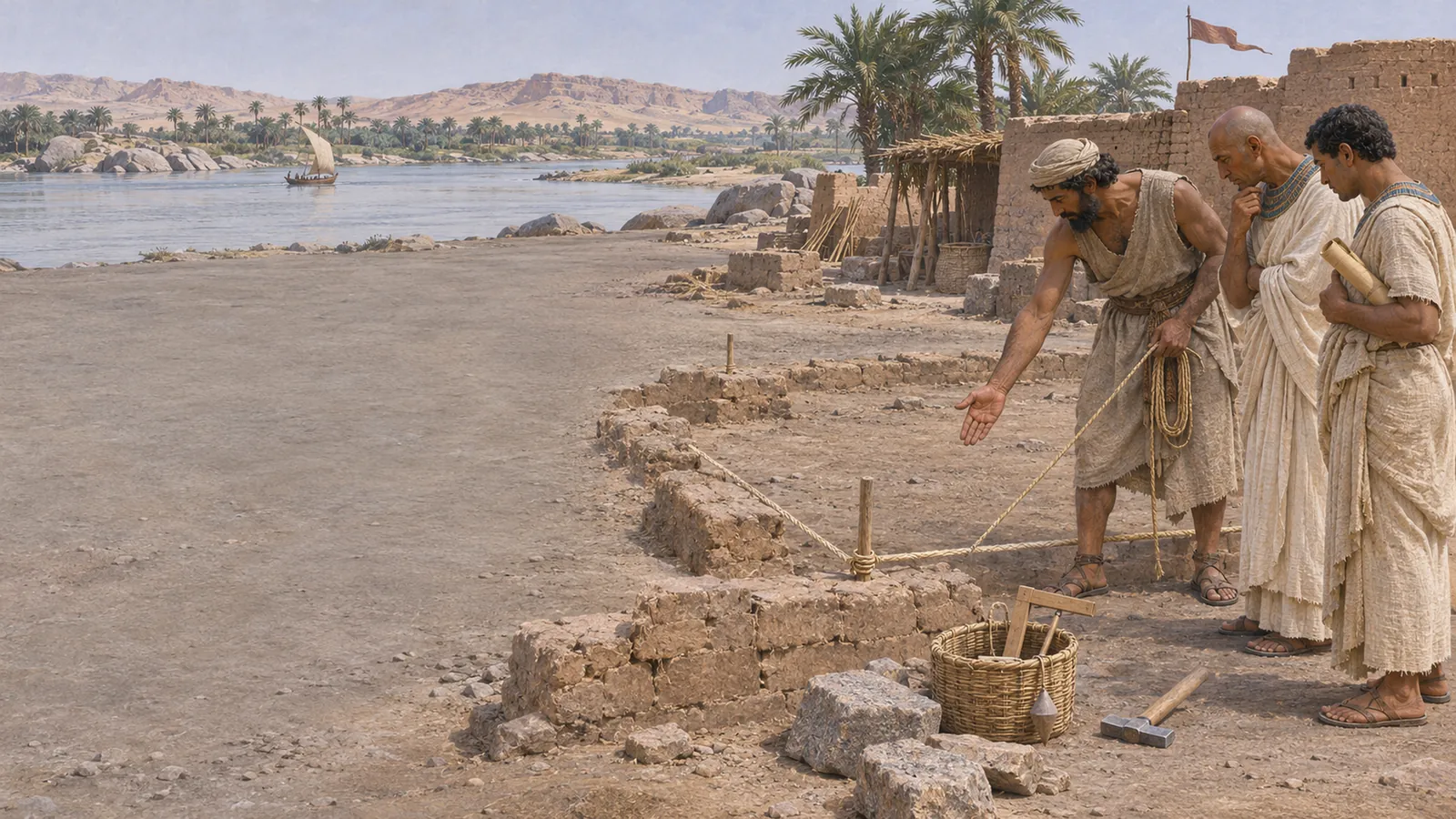
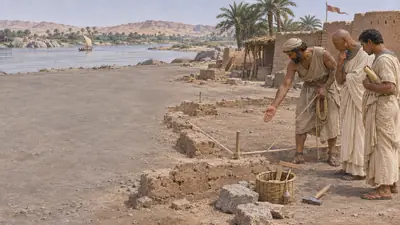
The memorandum’s next instruction calls for the house of Yhw to be rebuilt on the site where it stood before.
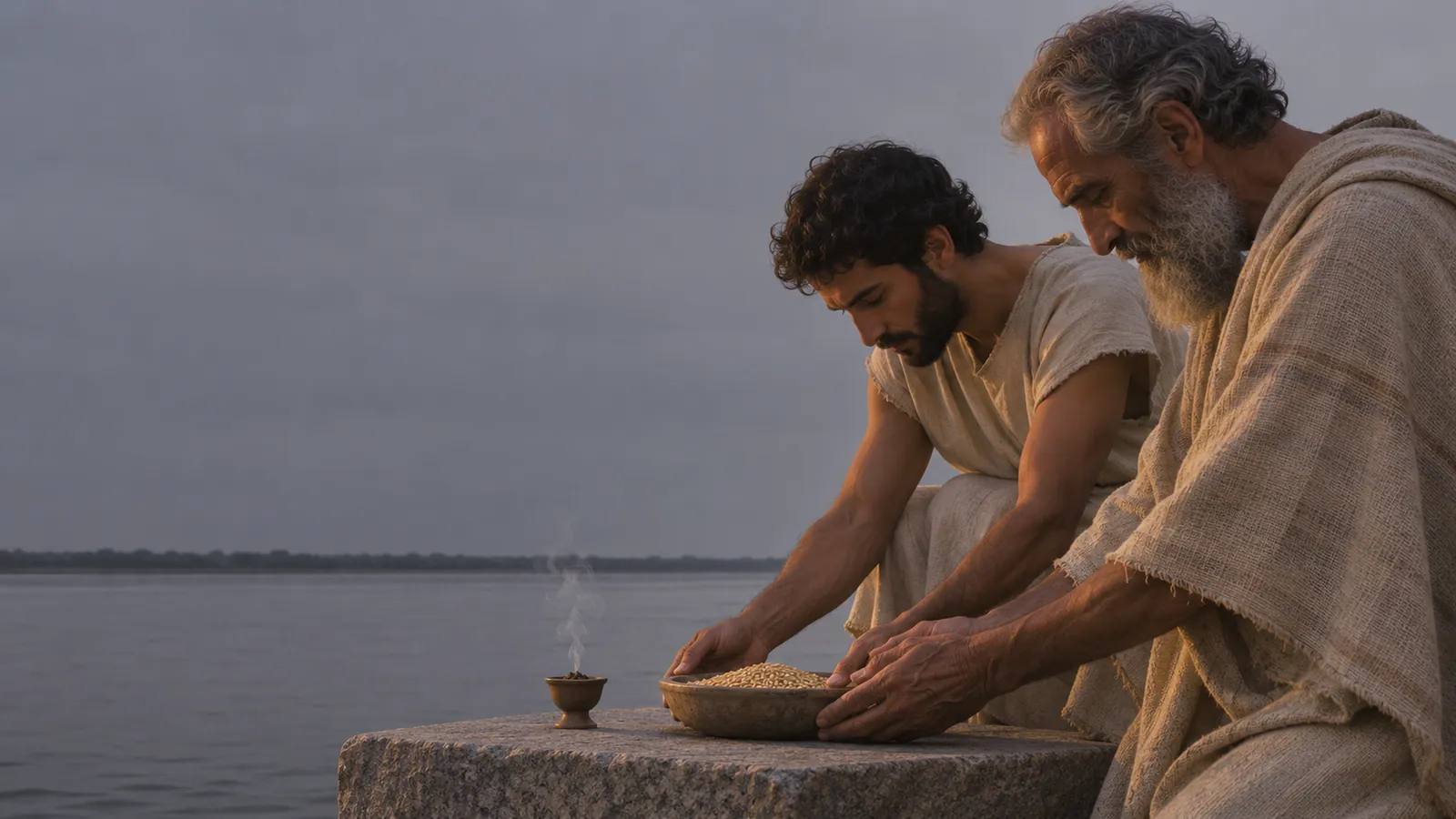
The memorandum says to present the meal offering and incense on that altar as before. The selected words end with those instructions.
End of chapter 1
All pages

Sources
Cornell dates the draft letter to 407 BCE. Its paired line numbers are for A4.7 and A4.8, two versions of the request. The rebuilding is requested and then instructed. The words of the two documents are identified as they appear.
Editions consulted
- Collin Cornell, The Value of Egyptian Aramaic for Biblical Studies, Journal of Biblical and Theological Studies 7.1 (2022)
- Cornell, printed p. 10, draft letter A4.7 and A4.8
- Cornell, printed p. 11, separate memorandum A4.9
Notes on this retelling
Page 1, modern context. Collin Cornell dates the draft petition to 407 BCE, three years after the temple’s destruction. On printed p. 10 he identifies the senders as Yedoniah and his priestly colleagues and the addressee as Bagohi, governor of Yehud, referring to line 1 of each draft. Note 27 explains that there are two versions of the draft.
Pages 2–3, TAD A4.7/8, line 20/19. The writers say that they wore sackcloth and fasted from the loss until the day of writing. Cornell supplies “that time” in brackets. They compare their wives to widows and say that they refrained from anointing themselves with oil and from drinking wine. The comparison is preserved as speech from the letters.
Page 4, TAD A4.7/8, line 24/23. The writers ask for a letter about rebuilding the temple of Yhw in the fortress of Elephantine as formerly. Cornell’s prose identifies the intended recipients as Bagohi’s clients and friends in Egypt. His article discusses this request after the honor clause.
Pages 5–6, TAD A4.7/8, lines 27–28/26–27. The continuing prayer and promise of honor are the quoted clauses. The translator supplies “him” in the first.
Page 7, TAD A4.9, lines 8–10 in Cornell’s presentation. A separate memorandum follows on printed p. 11. Cornell presents it as from Bagohi and identifies the intended recipient as probably Yedoniah. The quoted introduction mentions speaking before Arsames about the house of Yhw, called the God of Heaven.
Pages 8–9, TAD A4.9, lines 8–10. The instructions place rebuilding on the previous site and specify the meal offering and incense on that altar in the former manner. Cornell gives the Aramaic wording for “formerly” in brackets in both clauses. The excerpt ends with the instructions, which express what the document asks for.
The final page imagines the offering and incense described in the memorandum.
Ancient lines behind each page
- Page 1: Cornell, JBTS 7.1 (2022), p. 10, modern framing before the A4.7/8 excerpts
- Page 2: Cornell, JBTS 7.1 (2022), p. 10, TAD A4.7/8, line 20/19, first part
- Page 3: Cornell, JBTS 7.1 (2022), p. 10, TAD A4.7/8, line 20/19, remainder
- Page 4: Cornell, JBTS 7.1 (2022), p. 10, TAD A4.7/8, line 24/23
- Page 5: Cornell, JBTS 7.1 (2022), p. 10, TAD A4.7/8, lines 27–28/26–27, prayer clause
- Page 6: Cornell, JBTS 7.1 (2022), p. 10, TAD A4.7/8, lines 27–28/26–27, honor clause
- Page 7: Cornell, JBTS 7.1 (2022), p. 11, TAD A4.9, lines 8–10, introduction and address
- Page 8: Cornell, JBTS 7.1 (2022), p. 11, TAD A4.9, lines 8–10, rebuilding clause
- Page 9: Cornell, JBTS 7.1 (2022), p. 11, TAD A4.9, lines 8–10, closing offering clause
Illustrations made with AI tools by IL Archive; the text is based on the ancient sources (see the sources at the end of each chapter).