Period
Achaemenid Persia and the Near East (c. 550–330 BCE)
- Timeline
- From 550 BCE to 330 BCE
- Region
- The Near East
Persian kings ruled from the Aegean and Egypt to Central Asia. Inscriptions and clay archives show how governors, scribes and couriers served the empire. The records preserve several languages, scripts and local traditions.
Estimated reading time: 7 min Published Last reviewed:
Share article
Text
Introduction
Between about 550 and 330 BCE, the Achaemenid kings extended Persian rule across much of the Near East. Cyrus took Media, Lydia and Babylonia, and his successor Cambyses conquered Egypt. Persian royal inscriptions, records from regional administrations and accounts such as Herodotus offer different kinds of evidence about the empire and the communities it governed. [10][11][12]
Dates and kings
The conventional starting point is Cyrus’s victory over the Median king Astyages around 550 BCE, recorded in the Nabonidus Chronicle. The period ends around 330 BCE, when Alexander of Macedon defeated Darius III and took the Persian royal centres. Cyrus had ruled before defeating Astyages. The dates below follow the reigns conventionally assigned to the principal kings. [10][11][13]
- Cyrus IICyrus IIFounder of the Achaemenid Empire; conquered Babylon in 539 BCE and died in 530 BCE.Glossary · Click to read the explanation ("the Great"), 559–530 BCE, founder.
- Cambyses II, 530–522 BCE. He was followed by a short reign in 522 BCE. Darius calls the ruler Gaumata and says that he claimed to be Bardiya. [13][20]
- Darius IDarius IPersian king of the late sixth and early fifth centuries BCE, responsible for the Behistun inscription.Glossary · Click to read the explanation, 522–486 BCE, who reorganised the empire.
- Xerxes IXerxes I and AhasuerusAchaemenid king, 486–465 BCE, usually identified by name with Ahasuerus in Hebrew Esther.Glossary · Click to read the explanation, 486–465 BCE, the king of the Greek invasion; he is usually identified with the Ahasuerus of the book of Esther.
- Artaxerxes I, 465–424 BCE.
- Darius II, 423–405 BCE (after two short reigns in 424–423 BCE).
- Artaxerxes II, about 405/404–359/358 BCE. The exact boundary between his reign and that of his successor varies among chronologies. [35][47]
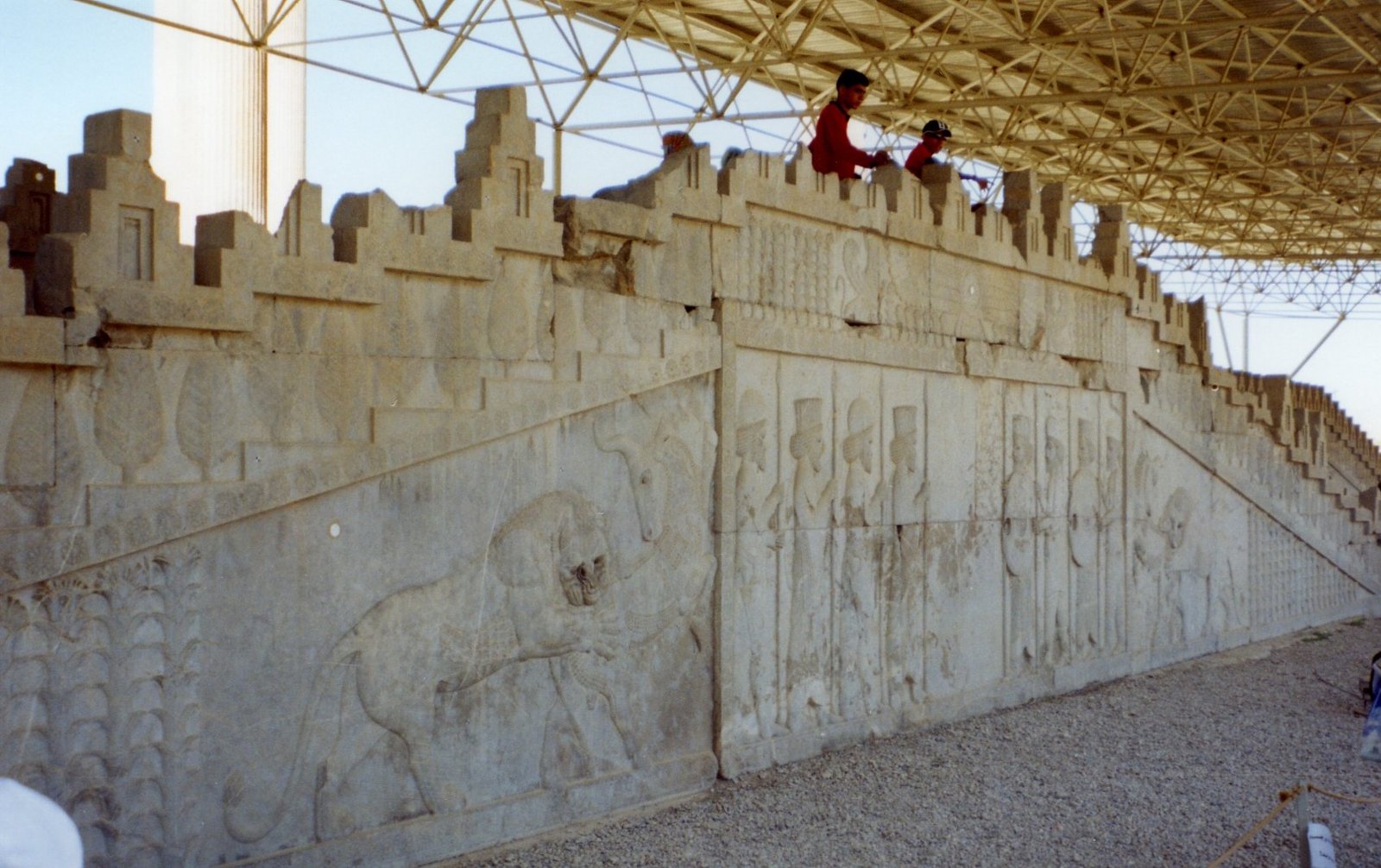
- Artaxerxes IIIArtaxerxes IIIFourth-century BCE Achaemenid king, more than a century after Xerxes I; the museum assigns the servants relief to his reign.Glossary · Click to read the explanation, 358–338 BCE.
- Artaxerxes IV (Arses), 338–336 BCE, and Darius III, 336–330 BCE. [35]
Cyrus and the conquests
The Nabonidus Chronicle records that the troops of Astyages turned against him and handed him over to Cyrus, who then took Ecbatana. Cyrus also defeated Croesus of LydiaLydiaAncient kingdom in western Anatolia with its capital at Sardis; neither a modern state nor a synonym for Magog.Glossary · Click to read the explanation and took Sardis in the mid-sixth century BCE. The surviving evidence leaves the exact year uncertain. In 539 BCE, the chronicle records fighting at Opis, the capture of Sippar without battle, and the entry of Ugbaru and Cyrus’s army into BabylonBabylonBabylon is an ancient city in central present-day Iraq, south of BaghdadGlossary · Click to read the explanation on the sixteenth day of Tashritu. Nabonidus was captured. Cyrus himself entered Babylon later, on the third day of Arahsamna. [10][11][14]
The Cyrus Cylinder, a Babylonian royal inscription, presents MardukMardukBabylon’s leading god, worshipped at Esagil and elevated in the Akkadian Enūma eliš. His symbols include a spade and mušḫuššu dragon. His earliest origins remain obscure; Nibiru is no evidence of a planetary homeland.Glossary · Click to read the explanation as choosing Cyrus and describes the return of divine images and inhabitants to several places. Ezra 1 separately presents a decree permitting the return to JerusalemJerusalemJerusalem is a city of religious importance in Judaism, Christianity and IslamGlossary · Click to read the explanation and the rebuilding of its temple. The cylinder names neither Judah nor Jerusalem. These sources describe different places and frame the king’s actions in different terms. [15][16]
Cambyses and Egypt
Cambyses II defeated Egyptian forces in the eastern Nile Delta in 525 BCE and took Memphis. Herodotus describes him as impious in the story of the Apis bull. A stele from the Serapeum at Saqqara records the burial of an Apis bull in the sixth year of Cambyses and depicts the king before the bull. The surviving Aramaic records from ElephantineElephantine / YebElephantine / Yeb, near Aswan at the Nile’s First Cataract, preserves a long-lived Egyptian town, temples of Khnum and Satet, and Persian-period garrisons. Aramaic papyri document several communities, including Judeans and Yaho’s temple, whose rebuilding was sought in 407 BCE; claims and archaeological interpretations must be distinguished.Glossary · Click to read the explanation attest a Jewish community in Persian-period Egypt. [10][17][18][19]
Darius I takes the throne
Cambyses died in 522 BCE during his return from Egypt. In the Behistun inscription, Darius says that Gaumata claimed to be Bardiya, the son of Cyrus, and that Darius killed him before putting down a series of revolts. Darius also says that he fought nineteen battles and took nine kings captive within a year. This is Darius’s account of his accession. The identity of the man he overthrew remains disputed. [10][20][21][31]
The inscription at BehistunBehistun and Darius I’s inscriptionIranian site preserving a royal inscription in three languages from the late sixth century BCE.Glossary · Click to read the explanation is cut into a cliff above an ancient route between the Iranian plateau and MesopotamiaMesopotamiaHistorical region associated with the Tigris and Euphrates: Uruk, Ur, Eridu, cuneiform, Sumer, Akkad, Babylon and Assyria, their languages and cults, and the limits of archaeological evidence.Glossary · Click to read the explanation. The relief depicts Darius standing with one foot on a fallen figure and facing a procession of bound men. Versions of the inscription were cut in Old Persian, Elamite and Babylonian AkkadianAkkadianAn ancient East Semitic language written in cuneiform from the third millennium BCE; its varieties include Babylonian and Assyrian, and it served in international diplomacy.Glossary · Click to read the explanation. In the nineteenth century, Henry Rawlinson copied and published parts of the monument. His copies and the work of several scholars, including Edwin Norris on the Elamite version, helped to decipher cuneiformCuneiformWriting with wedge-shaped signs, developed from Mesopotamian recording traditions and used for several languages from the third millennium BCE.Glossary · Click to read the explanation. [22][23]
How the empire was run
Darius governed through appointed officials, including satraps, who supervised territories and revenue. Herodotus lists twenty groups that paid tribute. The lists of lands in Persian royal inscriptions serve a different purpose and do not map directly onto his groups. The number and boundaries of the provinces vary across the sources and over time. [24][25]
- Money. The gold daric and silver siglos were introduced under Darius I toward the end of the sixth century BCE. Coins of these types carry a royal figure with a bow. [26]
- Roads. Herodotus counts 111 stages between Sardis and Susa and estimates ninety days’ travel for the itinerary he describes. In a separate passage he describes royal couriers passing messages along through successive riders and horses. [28][29]
- Canal. Darius’s stele from Chalouf in Egypt commemorates the opening of a canal from the Nile to the Red Sea. The Persian account credits Darius with ordering the excavation. The stela had inscriptions in Old Persian, Elamite and Babylonian on one face and in Egyptian hieroglyphs on the other. [30]
- Law. According to Demotic papyrus 215, Darius ordered his governor in Egypt to bring together people versed in local law and compile it. The document calls for Demotic and Aramaic versions. [31]
Language. Persian royal monuments use Old Persian and often have versions in Elamite and Babylonian. The materials used for administration varied across the empire. Records at Persepolis were written in Elamite cuneiform and alphabetic AramaicAramaicNorthwest Semitic language varieties documented since the early first millennium BCE, including Old and Imperial Aramaic, Syriac, Jewish dialects, and living Neo-Aramaic forms.Glossary · Click to read the explanation, while many other tablets bore only seal impressions. The Aramaic correspondence at Elephantine documents its use in imperial Egypt. [12][19][23]
The Persepolis archives
Persepolis, in south-west IranIranIran is the modern country containing Shush, ancient SusaGlossary · Click to read the explanation, became a royal centre under Darius, who also built at SusaSusa, ancient ShushSusa is an archaeological city at Shush in southwestern present-day IranGlossary · Click to read the explanation. Excavators found two distinct groups of tablets at Persepolis in the 1930s. The University of Southern California project dates the Fortification Archive to about 509–494 BCE and estimates 15,000–30,000 tablets and fragments. These include Elamite records of provisions, Aramaic texts and tablets with seal impressions alone. The dated Elamite texts of the separate Treasury Archive span 492–457 BCE and mostly record silver paid to workers and craftsmen in place of rations. See also PersepolisPersepolisAchaemenid royal center in southwestern Iran, begun by Darius I around 518 BCE.Glossary · Click to read the explanation. [10][12][32][33][34]
Greece and the later kings
The Ionian Revolt preceded Darius’s expedition against mainland Greece, which ended in defeat at Marathon in 490 BCE. In 480 BCE, Xerxes led a new invasion. The Persians took the pass at Thermopylae, and the Greek fleet defeated the Persian fleet at Salamis that year. In 479 BCE the Greeks won at Plataea. The narrative survives chiefly in Greek accounts such as that of HerodotusHerodotusFifth-century BCE Greek historian whose account of the Persian Wars includes reports on peoples, court and empire.Glossary · Click to read the explanation. [35][36][37]
Artaxerxes II defeated his brother Cyrus the Younger at Cunaxa in 401 BCE. Xenophon, who served with the Greek contingent recruited by Cyrus, describes the battle. Egypt was ruled by its own kings for part of the fourth century until Artaxerxes III reconquered it. Alexander of Macedon crossed into Asia in 334 BCE, and Achaemenid rule ended by about 330 BCE. [35][38][47]
Judah, Elephantine and the Persian province
Under Persian rule, Judah was administered as Yehud. Ezra 2:64 gives 42,360 people for the congregation in its list of returnees, while Ezra 6:15 dates the completion of the temple to the sixth year of Darius, conventionally 515 BCE. Excavated remains are the basis for estimates of the extent and population of Persian-period Jerusalem, and scholars differ in their interpretations. Coins carry the name Yehud in ancient HebrewHebrewA Northwest Semitic language of the Canaanite group, encompassing Iron Age epigraphy, Biblical, Rabbinic, medieval and Modern Hebrew; its scripts and pronunciations changed over time.Glossary · Click to read the explanation letters. See also YehudYehud in the Persian periodYehud names the region around Jerusalem under Achaemenid Persian rule, from the sixth to the fourth century BCE.Glossary · Click to read the explanation and the Babylonian exileBabylonian exileJudean deportations to Babylonia and the kingdom’s collapse in the early sixth century BCE; several phases, not everyone removed or returned at once.Glossary · Click to read the explanation. [39][40][41][42][48]
The Aramaic papyri of ElephantineElephantine / YebElephantine / Yeb, near Aswan at the Nile’s First Cataract, preserves a long-lived Egyptian town, temples of Khnum and Satet, and Persian-period garrisons. Aramaic papyri document several communities, including Judeans and Yaho’s temple, whose rebuilding was sought in 407 BCE; claims and archaeological interpretations must be distinguished.Glossary · Click to read the explanation document a Jewish community with a temple to Yahu. The Berlin museum dates a fragmentary letter to 419 BCE and associates it with Passover. The surviving text mentions leaven. A petition dated 25 November 407 BCE asks BagohiBagohi, governor of YehudGovernor of Persian-period Yehud, addressed by the Elephantine priests in 407 BCE.Glossary · Click to read the explanation, governor of Judah, for help rebuilding the temple after its destruction. A separate memorandum records the position attributed to Bagohi and Delaiah in favour of rebuilding and mentions offerings of grain and incense. [19][43][44][50]
Religion
The Behistun inscription credits Ahura MazdaAhura MazdaWise Lord in Iranian traditions, associated with truth, goodness and creation; not a Persian name for Yahweh.Glossary · Click to read the explanation with granting Darius kingship and giving him victory. Scholars debate how to relate Achaemenid royal worship to ZoroastrianismZoroastrianism: Hymns, Rituals and the Changing TraditionA living Iranian religious tradition examined through Avestan hymns, Middle Persian writings and royal inscriptions, separating textual evidence, later interpretation and hypotheses of influence.Glossary · Click to read the explanation. Persian-period sources also document local worship. The Cyrus Cylinder, for example, describes a restoration in Mesopotamian terms, and the Persepolis tablets record provisions for religious purposes. [12][15][20][45]
Reading the evidence with care
Persian royal inscriptions present the claims of the kings who commissioned them. Administrative texts, such as the tablets from Persepolis, record the affairs of a particular region. Babylonian chronicles, Greek histories and biblical texts describe some of the same rulers and events from other perspectives. [11][12][16][20][36]
Why it matters
The Achaemenid empire brought the Nile, the Tigris and Euphrates and the eastern Mediterranean under one rule. Its records show how regional officials managed tribute and provisions, how communities petitioned their governors and how scribes used different languages within the same administration. [12][19][24][30]
References and notes
- Wikipedia, 'Achaemenid Empire' (secondary summary) First 100,000 of 292,810 characters: kings and reign dates, conquests of Media, Lydia, Babylon and Egypt, Darius I, Greek wars, later kings, languages, religion, Alexander; the last part was not read Return to the text ↑
- Wikipedia, 'Behistun Inscription' (secondary summary) First 100,000 of 103,436 characters: location, size, three languages, content, Rawlinson, rebels; the last 3,436 characters were not read Return to the text ↑
- Wikipedia, 'Cyrus Cylinder' (secondary summary), read for the Neo-Babylonian empire entry (G35) and not re-read in this run; plus the Achaemenid Empire article for the Marduk presentation of Cyrus and the Ezra edict Cylinder: first 100,000 of 233,195 characters (content, BM 90920, debates on Ezra); Achaemenid article: Babylon section Return to the text ↑
- Wikipedia, 'Elephantine papyri' (secondary summary) First 100,000 of 137,173 characters: dates 495-399 BCE, Jewish garrison, Passover letter of 419 BCE, 407 BCE petition, Bagohi's reply, archive finds; the last part was not read Return to the text ↑
- Wikipedia, 'Darius the Great' (secondary summary) First 100,000 of 232,613 characters: accession 522 BCE, satrapies, tribute, daric, Royal Road, Nile-Red Sea canal, Egyptian law, Susa and Persepolis, Marathon; the last part was not read Return to the text ↑
- Wikipedia, 'Royal Road' (secondary summary) Whole article as returned: Sardis-Susa route, about 2,699 km, 111 stations, nine days for couriers, Herodotus on the couriers Return to the text ↑
- Wikipedia, 'Imperial Aramaic' (secondary summary) Whole article as returned: Aramaic as imperial standard after 539 BCE, lingua franca debate, Persepolis tablets, Egypt and Bactria Return to the text ↑
- Wikipedia, 'Persepolis Fortification Archive' (secondary summary) Whole article as returned: discovery in 1933 and 1934-1939, tablet counts, languages, dates 509-493 and 492-457 BCE, contents, seals Return to the text ↑
- Wikipedia, 'Yehud Medinata' (secondary summary) and Wikimedia Commons file page 'Persepolis Apadana Eastern Stairway.jpg' (public domain release by the uploader) Yehud: first 100,000 of 164,951 characters: dates, Second Temple, governors, coins, population, Elephantine; Commons file page: description, date April 2006, public domain, 1698 x 1068 Return to the text ↑
- Metropolitan Museum of Art, “The Achaemenid Persian Empire (550–330 B.C.)”, Heilbrunn Timeline of Art History. Imperial chronology, conquests, rulers, and royal centres. Return to the text ↑
- Babylonian Chronicle 7, “Nabonidus Chronicle”, BM 35382, translation adapted from A. K. Grayson by Jona Lendering. Columns ii.1–4, ii.15–18 and iii.12–19, including the defeat of Astyages and the separate entries into Babylon. Return to the text ↑
- University of Southern California, West Semitic Research Project, “Persepolis Fortification Archive”. Date range, regional administration, estimated tablet and fragment count, Elamite and Aramaic records, and seal impressions. Return to the text ↑
- Rüdiger Schmitt, “Achaemenid Dynasty”, Encyclopaedia Iranica, hosted by the University of Göttingen. General survey, from Cyrus’s defeat of Astyages through Cambyses and Darius. Return to the text ↑
- Jona Lendering, “The End of Lydia: 547?”, Livius. The disputed reading of the place name in the Nabonidus Chronicle and the uncertainty of the date of Sardis’s fall. Return to the text ↑
- Cyrus Cylinder, BM 90920, English translation, Livius. Lines 11–19 and 30–35, Marduk and the restoration of cult images and inhabitants. Return to the text ↑
- Ezra 1:1–4, New International Version. The biblical account of the decree concerning Jerusalem and its temple. Return to the text ↑
- Herodotus, Histories, Book 3, translation by A. D. Godley, University of Chicago host. Sections 27–33, the account of Cambyses and the Apis bull. Return to the text ↑
- Musée du Louvre, “Stèle cintrée”, N 407 and IM 4133, from the Serapeum at Saqqara. Regnal year six of Cambyses, the Apis burial and the figure before the bull. Return to the text ↑
- Staatliche Museen zu Berlin, Elephantine Temple Petition, P. 13495. Aramaic petition, address to Bagohi and date of 25 November 407 BCE. Return to the text ↑
- Darius I, Behistun Inscription, English edition hosted by Livius. Column I, paragraphs 10–14, and column IV, paragraphs 52–53, including the succession, Ahura Mazda and the retrospective count of battles and captives. Return to the text ↑
- Encyclopaedia Iranica, “Gaumāta”. The identification of the ruler overthrown by Darius and the debate over the royal account. Return to the text ↑
- UNESCO World Heritage Centre, “Bisotun”. Cliff, ancient road, relief and accompanying inscriptions. Return to the text ↑
- Rüdiger Schmitt, “Bisotun iii. Darius’s Inscriptions”, Encyclopaedia Iranica. Inscription languages and the work of Henry Rawlinson and Edwin Norris. Return to the text ↑
- Bruno Jacobs, “Achaemenid Satrapies”, Encyclopaedia Iranica. Provincial administration and the relationship between satrapies, royal lists and Greek accounts. Return to the text ↑
- Herodotus, Histories, Book 3, translation by George Rawlinson. Sections 89–97, the tribute districts and their assessments. Return to the text ↑
- Encyclopaedia Iranica, “Daric”. Date and types of Darius’s gold and silver coinage and the image of the royal archer. Return to the text ↑
- Institute for the Study of Ancient Cultures Museum, University of Chicago, “Persepolis”, online exhibition. The Apadana’s east stairway and its reliefs, including the delegations. Return to the text ↑
- Herodotus, Histories, Book 5, translation by A. D. Godley, University of Chicago host. Sections 52–54, the stages and travel estimate between Sardis and Susa. Return to the text ↑
- Herodotus, Histories 8.98, translation by G. C. Macaulay. The successive riders and horses used by the Persian royal post. Return to the text ↑
- Musée du Louvre, “Stèle de Chalouf”. Royal commemoration of the canal between the Nile and Red Sea and the inscriptions in four languages. Return to the text ↑
- Encyclopaedia Iranica, “Egypt i. Persians in Egypt in the Achaemenid Period”. Cambyses’s death on his way back to Persia in 522 BCE, and Demotic Papyrus 215 on the commission to compile Egyptian law in Demotic and Aramaic. Return to the text ↑
- Richard T. Hallock, Persepolis Fortification Tablets, Oriental Institute Publications 92. Primary edition of Elamite administrative tablets from the Fortification Archive. Return to the text ↑
- George G. Cameron, Persepolis Treasury Tablets, Oriental Institute Publications 65. Primary edition of administrative texts from the distinct Treasury Archive. Return to the text ↑
- Encyclopaedia Iranica, “Persepolis Administrative Archives ii. Persepolis Treasury Archive”. Excavation date, range 492–457 BCE for dated Elamite texts, and payments in silver in place of rations. Return to the text ↑
- Encyclopaedia Iranica, “Chronology of Iranian History, Part 1”. Marathon in 490 BCE, Thermopylae and Salamis in 480 BCE, Plataea in 479 BCE and Alexander’s Asian campaign. Return to the text ↑
- Herodotus, Histories, translation by George Rawlinson. Sections 6.102–117, 7.201–233, 8.83–96 and 9.59–70, covering the principal battles. Return to the text ↑
- Herodotus, Histories, Book 8, translation by George Rawlinson. Sections 83–96, the account of the battle at Salamis. Return to the text ↑
- Xenophon, Anabasis, Book 1, chapters 8–10, translation by H. G. Dakyns. The fighting at Cunaxa and the death of Cyrus the Younger. Return to the text ↑
- Ezra 2:64, New American Bible, Revised Edition, USCCB. The figure of 42,360 in the list of returnees. Return to the text ↑
- Ezra 6:15, New American Bible, Revised Edition, USCCB. Completion of the temple in the sixth regnal year of Darius. Return to the text ↑
- Oded Lipschits, “Persian Period Finds from Jerusalem: Facts and Interpretations”, Journal of Hebrew Scriptures. Archaeological evidence and differing estimates of the extent and population of Persian-period Jerusalem. Return to the text ↑
- University of Vienna, Coinage and Power, “The Beginning of Jewish Coinage”. Early coins with the legend Yehud in ancient Hebrew script. Return to the text ↑
- Staatliche Museen zu Berlin, “Aramäisches Dokument, Sendschreiben betreffend das Passah-Fest”, P. 13464. The catalogued date of 419 BCE and the museum’s identification of the letter with Passover. Return to the text ↑
- James D. Moore, “Pap. Ber. P. 13497”, Database of Early Aramaic Papyri, Ostraca, and Inscriptions, Ohio State University. TAD A.4.9, lines 1–11. The text attributes the proposal to Bagohi and Delaiah and names the grain and incense offerings. Return to the text ↑
- Encyclopaedia Iranica, “Achaemenid Religion”. Royal devotion to Ahura Mazda and the scholarly debate over Achaemenid worship and Zoroastrianism. Return to the text ↑
- Pentocelo, “Persepolis Apadana Eastern Stairway.jpg”, Wikimedia Commons. Original photograph from April 2006 and its author’s worldwide public domain release. Return to the text ↑
- Encyclopaedia Iranica, “Artaxerxes II”. Accession in 405/404 BCE, death in 359/358 BCE and the conflict with Cyrus the Younger at Cunaxa in 401 BCE. Return to the text ↑
- Encyclopaedia Iranica, “ʿEzrā, Book of”. The conventional start of the Second Temple period in 515 BCE and the use of Yehud as the province’s name. Return to the text ↑
- Encyclopaedia Iranica, “Persepolis”. The section on the Apadana, the construction recorded by inscriptions and the motifs of the stairway reliefs. Return to the text ↑
- Database of Early Aramaic Papyri, Ostraca, and Inscriptions, Ohio State University, “Pap. Ber. P. 13464”. TAD A.4.1, text and translation, especially the fragmentary passage referring to leaven. Return to the text ↑
Suggest a correction · Suggest a source for this record
Cite this record
IL Archive, «Achaemenid Persia and the Near East (c. 550–330 BCE)», https://ilarchive.com/en/periods/achaemenid-persia