Entity · religious_tradition
Zoroastrianism
A reference page linking a name, group, or concept to the materials that discuss it.
Iranian religious tradition associated with Zoroaster, with changing texts and conceptions of goodness, evil and endings.
Text
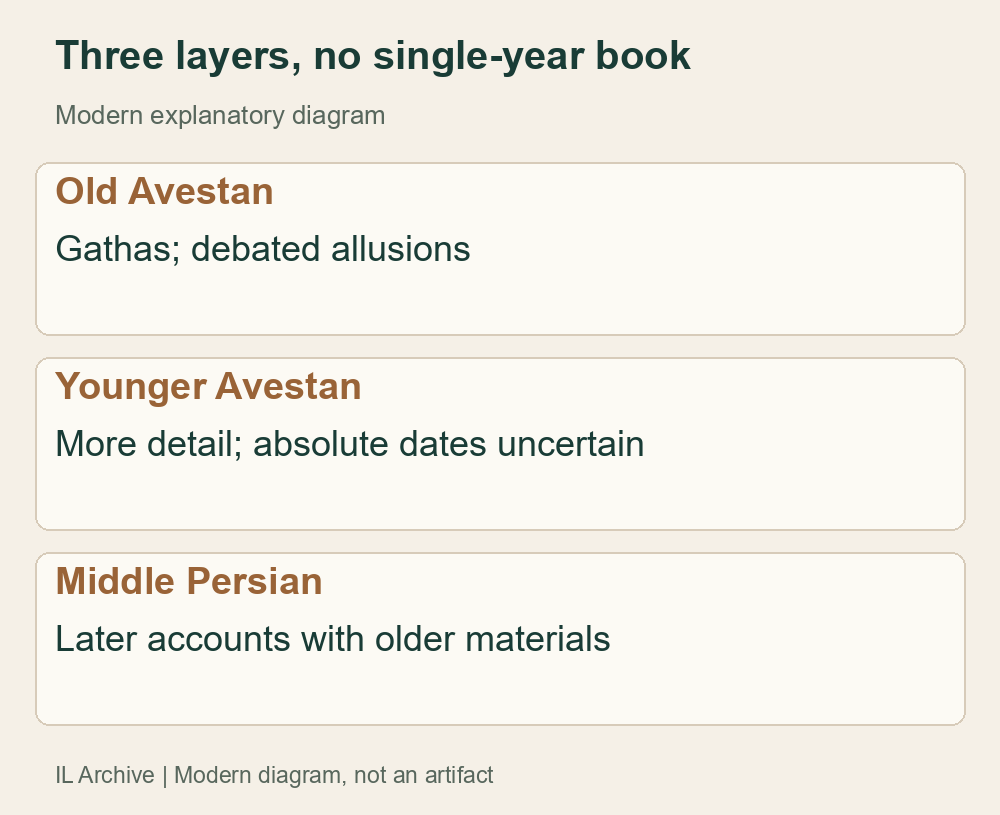
The term does not mean one unchanging creed from Gathas to Pahlavi books. Early language and later layers, royal religion and popular practice are distinguished. [1][2]
The diagram concerns evidence layers, not a Zoroastrian statue or temple. Proposed influence on Judaism requires supported priority, contact, structure and route rather than resemblance alone. [3]
References and notes
- William W. Malandra (2009). “Zoroaster ii. General Survey.” Encyclopaedia Iranica. Date and place; broad estimates, no fixed year. Return to the text ↑
- Jean Kellens (1987). “Avesta i. Survey of the History and Contents of the Book.” Encyclopaedia Iranica. Avestan texts distinguished from Zand; layers and oral transmission, no single composition date. Return to the text ↑
- Morton Smith (1989). “Bible ii. Persian Elements in the Bible.” Encyclopaedia Iranica. Caution about inferring angelic/eschatological transfer from parallels; contrasts with Shaked. Return to the text ↑
Research history
Substantive changes are retained here. Minor copy edits remain in the internal operational log.
-
Substantive record update
Suggest a correction · Suggest a source for this record
Cite this record
IL Archive, «Zoroastrianism», Edition 2, https://ilarchive.com/en/entities/zoroastrianism