Artifact · Inscription
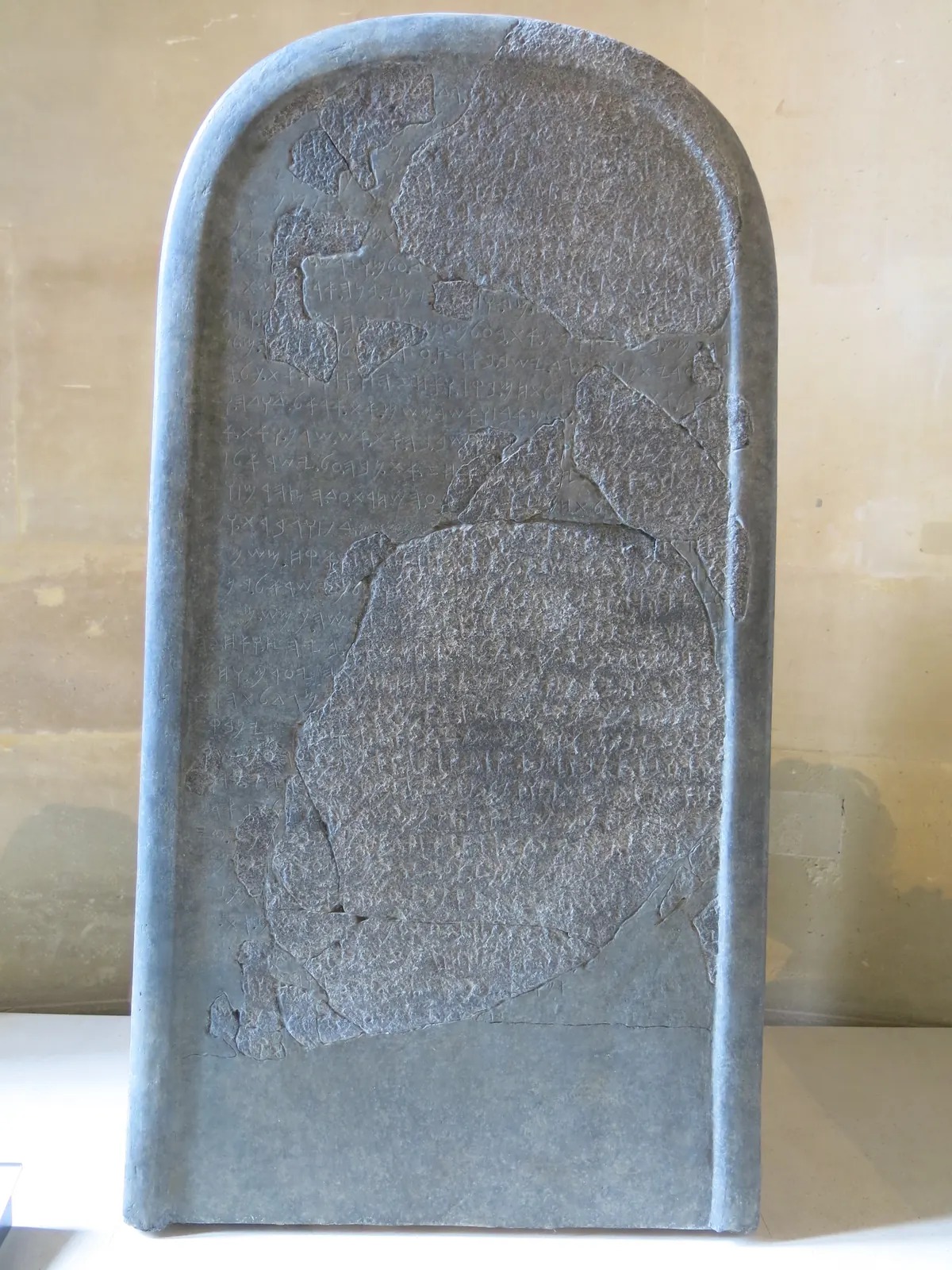
Mesha Stele
An object record bringing together its image, metadata, rights, and context.
- Timeline
- From 900 BCE to 801 BCE
Ninth-century BCE inscription of King Mesha of Moab; line 18 mentions Yahweh’s vessels, clear external evidence for the deity associated with Israel.
Original photograph
Public domain · Tangopaso · Public domain
Mesha Stele, basalt, from Dhiban in Jordan, ninth century BCE; Louvre AO 5066 / KAI 181. Broken, reassembled and supplemented. Yahweh occurs in line 18 according to the published reading; no reading from the photograph is claimed
Image sourceObject details
- Title
- Mesha Stele
- Rights
- Public domain
Metadata
These are descriptive fields, not conclusions.
- Edition
- 2
Dates
Dates have distinct roles. The timeline uses creation, composition or historical coverage, rather than publication or discovery dates.
- Historical coverage
- Approximately From 900 BCE to 801 BCE
Text
Object and text
Basalt stele found at Dhiban, Jordan; Louvre AO 5066 / KAI 181. Broken, reassembled and supplemented. Museum metadata gives 830–805 BCE, while its description also says after 842; this entry uses the ninth century without fixing one year.
YHWHYahwehThe divine proper name written YHWH in the Hebrew Bible.Glossary · Click to read the explanation occurs in line 18 according to Dewrell’s published discussion. This is clearer than Yhw in the Egyptian ShasuShasuEgyptian designation for mobile pastoral groups; Yhw occurs in their lists without automatically identifying a deity or Israel.Glossary · Click to read the explanation list, which does not explicitly name a god. Tangopaso’s photograph was released into the public domain; a documented web copy is preserved. The inscription was not read from the image. [1][2]
References and notes
- Musée du Louvre. Stèle de Mesha, AO 5066 / MNB 752 / KAI 181. Original object record: Dhiban, basalt, reassembled/supplemented; museum range 830–805 BCE, description also says after 842. Article uses ninth century without fixing a year. Tangopaso rights separately checked on Commons; received web copy documented. Return to the text ↑
- Heath D. Dewrell (2022). Yahweh the Destroyer: On the Meaning of יהוה. In Biblical and Ancient Near Eastern Studies in Honor of P. Kyle McCarter Jr., eds. Christopher Rollston, Susanna Garfein & Neal H. Walls. SBL Press. Selected pp. 5–10: debated etymologies, yhwh/yhw/yh/yw forms and caution about deriving divine character from a name; p. 7, Mesha KAI 181.18. P. 5 visually checked. The chapter title is not treated as consensus on “destroyer.” Whole book not read. Return to the text ↑
Research history
Substantive changes are retained here. Minor copy edits remain in the internal operational log.
-
Substantive record update
Archive records may be reviewed and refined as better evidence or sources become available. Suggest a correction
Suggest a correction · Suggest a source for this record
Cite this record
IL Archive, «Mesha Stele», Edition 2, https://ilarchive.com/en/artifacts/mesha-stele