Entity · Contextual definition
Second Temple Judaism
A reference page linking a name, group, or concept to the materials that discuss it.
Diverse Jewish traditions between the rebuilding of Jerusalem’s temple around 515 BCE and its destruction in 70 CE: institutions, diaspora, groups and texts, with distinctions between events, composition, manuscripts and the limits of evidence.
Estimated reading time: 9 min Published Last reviewed:
Share article
Text
Introduction
Second Temple Judaism names a changing historical field, not a single creed or an organization with one leadership. Its usual boundaries are the rebuilding of JerusalemJerusalemJerusalem is a city of religious importance in Judaism, Christianity and IslamGlossary · Click to read the explanation’s temple around 515 BCE and its destruction in 70 CE. Across those centuries, Jews lived under Persian, Hellenistic and Roman powers, in Judea and far beyond it. Temple worship, ancestral law and memories of Israel provided points of connection; their interpretation, institutional authority and expectations of the future remained contested. This entry asks what held these communities together, where they differed, and what our surviving evidence can actually establish. [1][2][4][7]
A period, not a uniform stage
The name refers to the second temple, rebuilt after the Babylonian destruction of the earlier sanctuary. Herod’s much later enlargement belongs to this same Second Temple history; it was not a third temple. The period is also studied with wider boundaries, including the exile before the rebuilding and developments after 70. Calling it merely “intertestamental” makes Jewish history an interval between Christian scriptural collections and obscures the formation of some biblical books within the period itself. [1][2]
A short political chronology keeps unlike settings apart:
- Around 586 BCE: Babylonian destruction of Jerusalem and its earlier temple; exile provides the immediate background.
- Sixth–fifth centuries BCE: Persian rule and the return of some exiles; the rebuilt temple is conventionally dated around 516/515 BCE.
- From the late fourth century BCE: Alexander’s conquests and subsequent Hellenistic kingdoms change the region’s political and cultural setting.
- 167–164 BCE: suppression of Jewish worship under Antiochus IV, the Maccabean revolt and the temple’s rededication. Hasmonean rule develops afterward; the revolt did not instantly produce a settled independent kingdom.
- 63 BCE: Pompey takes Jerusalem; Roman intervention inaugurates a different political order.
- 37–4 BCE: Herod rules as a Roman client king and extensively rebuilds the temple complex.
- 66–70 CE: revolt against Rome culminates in the destruction of the Jerusalem temple. The end of its sacrificial service is not the end of Jewish life. [2][3]
These are political landmarks, not a ladder of religious progress. A Persian-period Judean community and a Greek-speaking community in Roman Alexandria cannot simply be treated as successive versions of one institution.
Temple, Torah and ordinary life
The Jerusalem temple was a place of sacrifice, priestly service and pilgrimage, and a focus for contributions from communities elsewhere. The Alexandrian Jewish writer PhiloPhilo of AlexandriaGreek-writing Jewish interpreter in Roman Alexandria (roughly first century CE), who read the Torah philosophically while defending its practices; his works survive through Greek copying and Armenian translation.Glossary · Click to read the explanation describes pilgrims arriving by land and sea and sacred offerings collected in other cities (Special Laws 1.66–78). His celebration of their harmony is an interested, idealizing account, not a count of all visitors or proof that every Jew approved the temple’s administrators. It nevertheless directly connects diaspora life with the sanctuary rather than opposing the two. [4]
The TorahTorah / PentateuchThe first five books of the Jewish and Christian Bible: Genesis, Exodus, Leviticus, Numbers and Deuteronomy. They combine narrative and law from creation to Moses’ death; in Jewish usage, “Torah” can also encompass a wider body of authoritative teaching.Glossary · Click to read the explanation, here meaning the five books of narrative and law attributed to MosesMosesCentral figure in Exodus, Torah traditions and the Qur’an; childhood accounts differ in detail.Glossary · Click to read the explanation, provided another shared reference. Sabbath, circumcision, food rules and purity practices marked Jewish life, but their application and interpretation varied. Rules in a literary source describe what an author requires; they do not by themselves measure compliance across every household or century. Philo supplies a concrete disagreement: in On the Migration of Abraham 89–93 he criticizes interpreters who neglect actual observance in favor of symbolic meanings, insisting on both Sabbath and circumcision. This is evidence of a debate, not proof that symbolic interpretation necessarily abolished practice. Studying religion therefore means examining family and community practices as well as priestly or learned disputes. [3][14]
Synagogues did not simply appear to replace the temple after its destruction. A Greek inscription from JerusalemJerusalemJerusalem is a city of religious importance in Judaism, Christianity and IslamGlossary · Click to read the explanation names Theodotos, a priest and synagogue leader, as a builder of a synagogue. Usually dated to the late first century BCE or early first century CE, it states its purpose in lines 4–5. Square brackets below mark letters restored in Reinach’s edition; the word divided between the ancient lines has been joined here. [5][6]
The inscription also mentions lodging and water facilities for visitors from abroad. A priest supporting a synagogue within Jerusalem is strong evidence that instruction and hospitality could coexist with temple worship. It does not establish that every synagogue had the same functions. Nor does its silence about prayer prove that prayer never took place there. [5][6]
Diaspora and cultural plurality
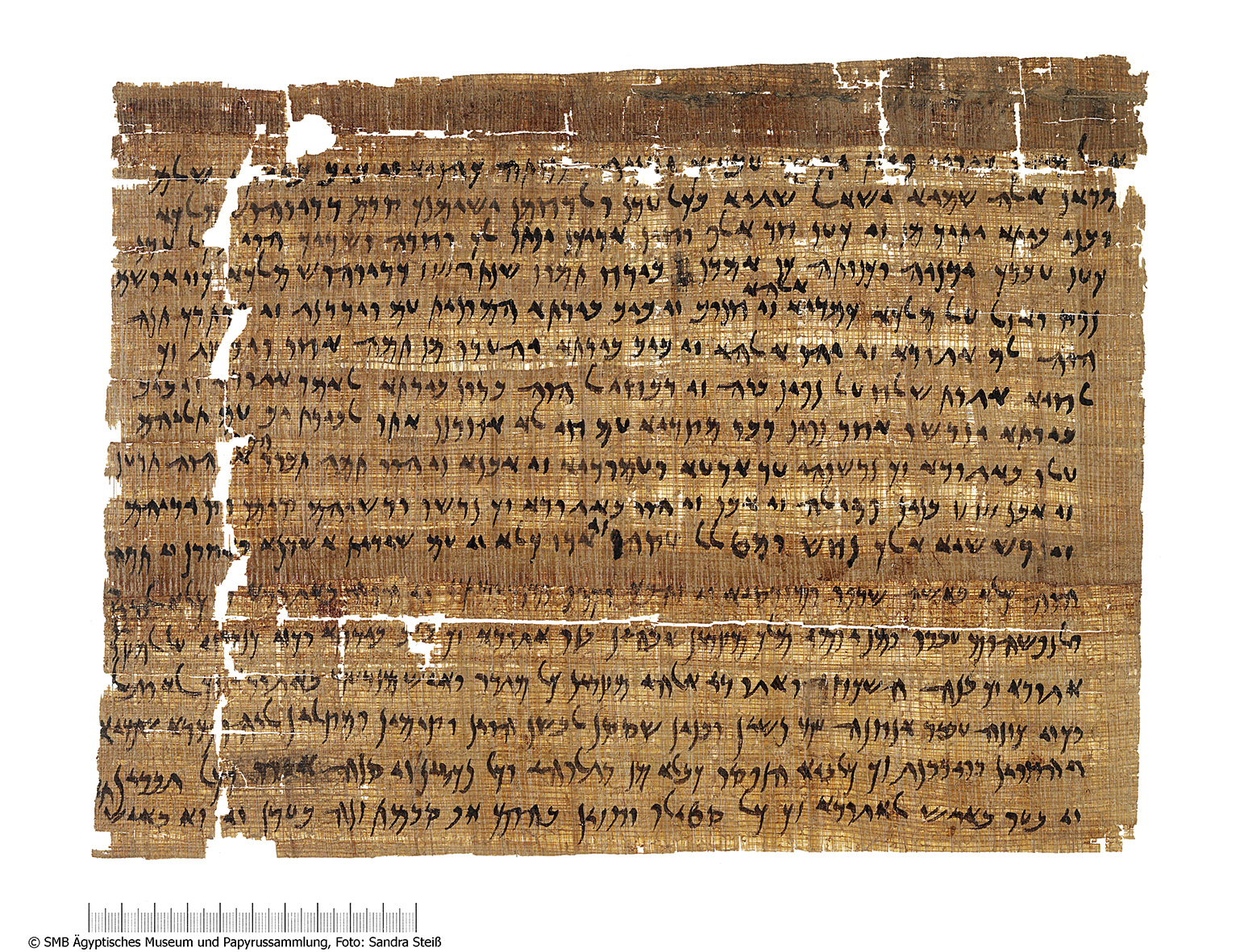
An earlier material witness makes the diversity especially clear. Berlin papyrus P 13495, dated 407 BCE, petitions for the rebuilding of a temple of Yahu at ElephantineElephantine / YebElephantine / Yeb, near Aswan at the Nile’s First Cataract, preserves a long-lived Egyptian town, temples of Khnum and Satet, and Persian-period garrisons. Aramaic papyri document several communities, including Judeans and Yaho’s temple, whose rebuilding was sought in 407 BCE; claims and archaeological interpretations must be distinguished.Glossary · Click to read the explanation in Egypt. It documents a local sanctuary outside Jerusalem, not unchanged practice continuing down to Philo’s time. [15]
Jewish communities outside Judea were not merely a post-70 phenomenon. Philo’s account presupposes their connections with Jerusalem; the Theodotos inscription shows how travelers could be accommodated there. Greek was not intrinsically the language of abandonment of Jewish tradition: both witnesses use it to articulate Jewish institutions. Philo even describes the universe as God’s highest temple before defending the human-built sanctuary. Philosophical interpretation and attachment to sacrifice could thus appear together in one author. [4][5]
The SeptuagintSeptuagintA name for the varied ancient Greek translations and writings associated with Jewish scripture; beginning with the Torah, the texts differ across books and manuscripts.Glossary · Click to read the explanation—the developing corpus of Jewish Greek scriptural translations—likewise belongs to this multilingual world. HebrewHebrewA Northwest Semitic language of the Canaanite group, encompassing Iron Age epigraphy, Biblical, Rabbinic, medieval and Modern Hebrew; its scripts and pronunciations changed over time.Glossary · Click to read the explanation and Aramaic also remained important. It is consequently misleading to contrast a wholly “pure” Judean Judaism with an entirely “Hellenized” diaspora. Cultural participation, local circumstances and disputes about ancestral obligations crossed that geographical division. Nor should one highly educated Alexandrian writer stand for all diaspora Jews. [3][9]
Groups: what Josephus’s classification explains
The Jewish historian Flavius JosephusFlavius JosephusFirst-century Jewish historian who retold older narratives, including Abraham’s test, in Jewish Antiquities.Glossary · Click to read the explanation introduces three groups in Jewish War 2.119 with a Greek formulation:
He names PhariseesPhariseesA Second Temple Jewish movement: its influence, ancestral traditions and hopes beyond death, examined through Josephus and the Mishnah’s purity debates.Glossary · Click to read the explanation, SadduceesSadduceesThe Sadducees were a Second Temple Jewish current, known mainly from external or rival accounts such as Josephus, the Mishnah and the New Testament rather than any surviving doctrinal writings of their own.Glossary · Click to read the explanation and EssenesEssenesA Second Temple Jewish movement known especially through Josephus and Philo; evidence supports a Qumran connection without identifying every Essene or manuscript with one uniform community.Glossary · Click to read the explanation. Presenting them as philosophical schools makes them intelligible within his Greek literary framework; it is not a census dividing every Jewish household into three parties. His evidence must also be read as a postwar representation, rather than a transparent transcript of what each group said about itself. [7][8]
- Pharisees: Josephus attributes to them inherited practices not written in the Mosaic laws and expectations of recompense beyond death. Their disagreements concerned how to interpret and live by ancestral law, not a rejection of it (Antiquities 13.297–298; 18.12–15).
- Sadducees: in his account they reject the authority of those unwritten ancestral traditions and deny the soul’s continued existence and punishments or rewards in the underworld (Jewish War 2.164–166). This does not license treating every priest as a Sadducee or every Sadducee as morally corrupt.
- Essenes: ancient accounts describe distinctive communal discipline and concern for purity. Their relationship to the manuscripts found near Qumran is a significant historical hypothesis, not a name printed on every scroll. [3][7][8]
Josephus’s description is indispensable because it preserves specific contrasts; its limitations do not make it worthless. But it cannot alone establish the groups’ exact social proportions, all their internal differences or the beliefs of people outside them. Prophetic movements and the earliest followers of Jesus also belong within the period’s Jewish setting; they do not fit neatly into that threefold scheme. [8][13]
Texts, visions and different kinds of date
The surviving literature includes law, wisdom, scriptural interpretation, hymns, prayers and apocalyptic visions. “Apocalyptic” here describes writings that disclose heavenly purposes and a decisive transformation of the world, often through a visionary and an interpreting angel. Such texts address suffering and justice; they are not a single program shared by all Jews. [9][12]
DanielBook of DanielA book combining court tales of wisdom and deliverance with visions of kingdoms and the future, formed in stages.Glossary · Click to read the explanation supplies a clear example. Its stories place Daniel in the Babylonian and Persian courts of the sixth century BCE. Critical scholarship distinguishes that narrative setting from the formation of the book: older court talesCourt TaleAn analytical category for stories in which a sage or outsider faces tests of skill, loyalty, or survival at a royal court, through contest, accusation, or reversal; it does not establish one textual origin.Glossary · Click to read the explanation were combined with visions whose final shaping is usually placed in the crisis under Antiochus IV, around 167–164 BCE. The close fit with that crisis, followed by expectations not matching Antiochus’s actual end, is a principal argument for this dating, not merely a refusal to accept the book’s traditional attribution. [11][12]
Daniel 12:2 provides a specific witness to hope beyond death. The following is the Hebrew of the received Masoretic textMasoretic TextThe Hebrew Bible’s transmission tradition combining its consonantal text, transmitted vocalization and accentuation, and Masorah notes. The consonantal text has ancient roots; surviving codices that bring these layers together in their Masoretic form are medieval.Glossary · Click to read the explanation in a modern presentation, not a transcription of a particular Qumran fragment:
The verse continues by distinguishing everlasting life from lasting disgrace. This is evidence for an expressed resurrection hope within this literary tradition, not evidence that every Jewish group accepted it. Josephus’s contrasting account of the Sadducees prevents that generalization. It also matters that “many” is the wording of the passage; the excerpt does not by itself settle later arguments about a universal resurrection. [7][10]
Three chronological levels must therefore remain separate: the sixth-century setting of Daniel’s stories; the second-century BCE formation of its visions; and the date of any surviving manuscript. The Qumran cave manuscripts as a collection range approximately from the third century BCE to the first century CE, according to the Israel Antiquities Authority’s overview. That range dates copies of many different works, not the composition of every work and not every verse of Daniel. [9][11]
Qumran: an exceptional archive, not all Judaism
The Dead Sea ScrollsDead Sea ScrollsManuscript collections from the Judaean Desert, best known through Qumran: diverse works, languages and textual forms, with copying distinguished from composition.Glossary · Click to read the explanation include scriptural copies alongside other religious writings. Only part of the Qumran collection is conventionally called “sectarian,” meaning that it expresses the rules or distinctive claims of particular groups. Textual plurality and different collections of authoritative works warn against projecting one fully fixed modern biblical canon back across the whole period. [9]
An Essene connection remains widely supported. Similarities between ancient descriptions of Essene discipline and some community texts make it a stronger hypothesis than a mere guess based on geographical proximity. Yet identifying a movement, the inhabitants of one settlement, the users of a manuscript collection and the authors of all its works are four different propositions. The evidence does not establish them all together. Our preferred description is therefore a probable Essene connection for part of this milieu, while keeping the collection’s wider literary diversity in view. [3][8][9]
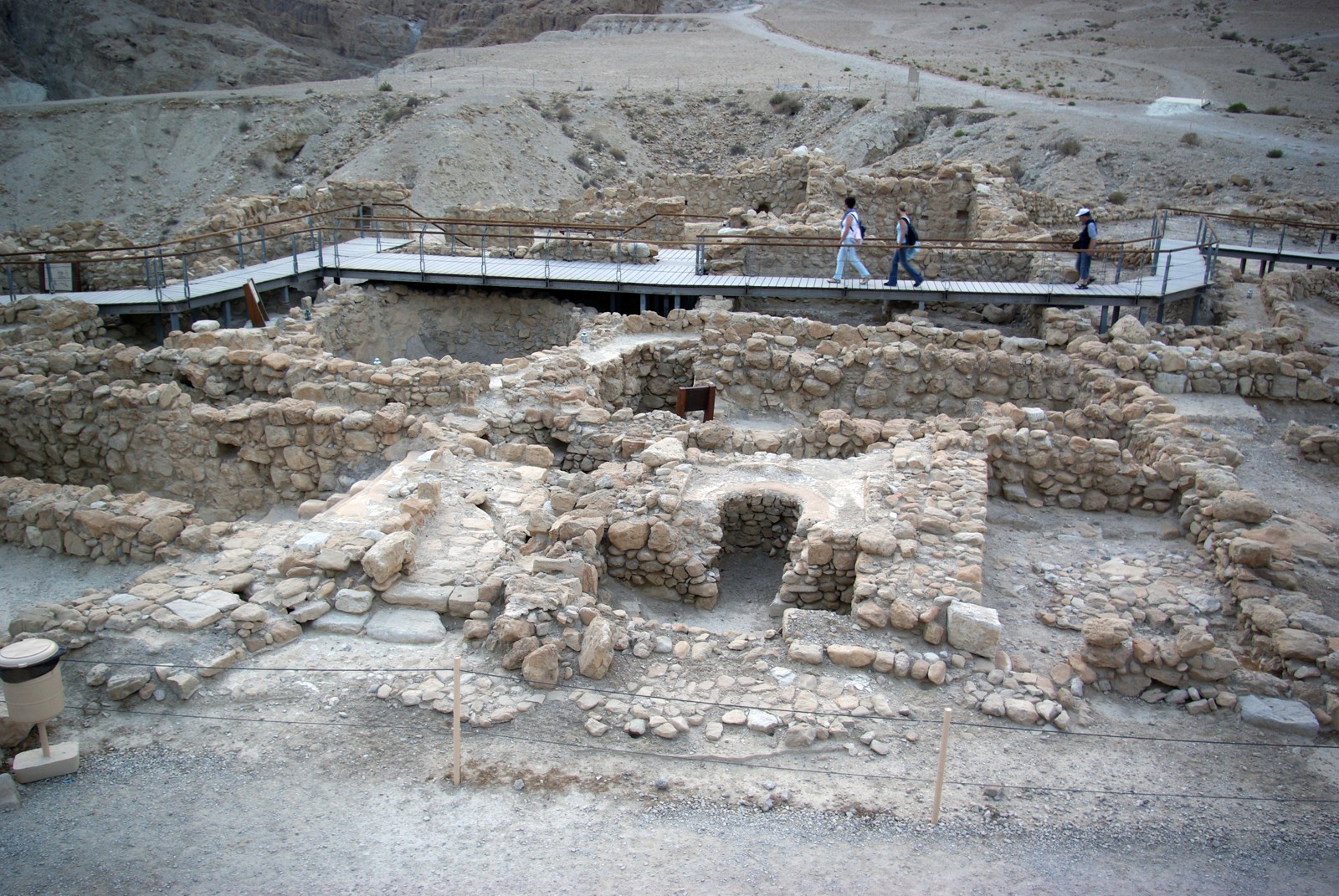
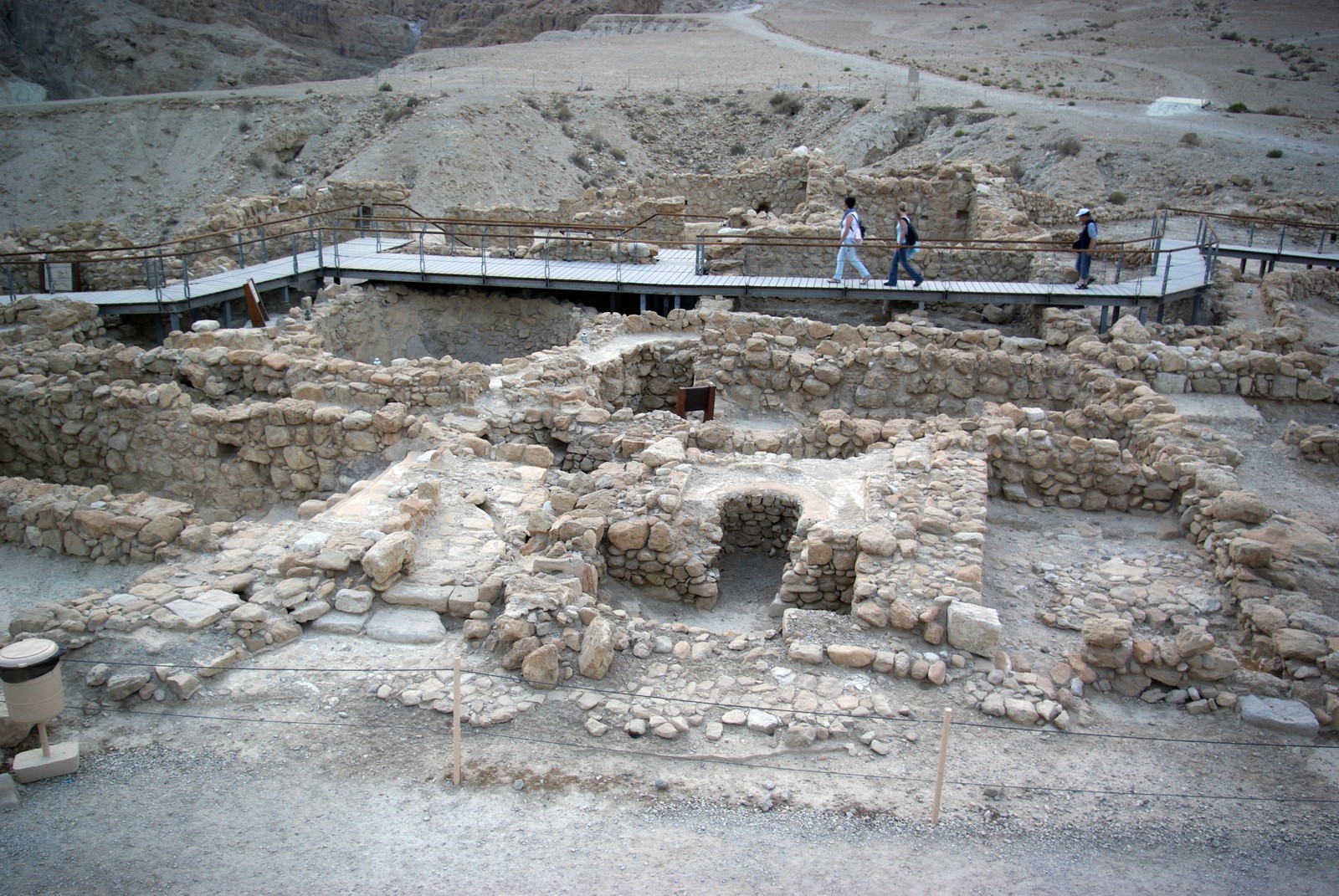
The cover photograph shows the excavated remains at QumranQumranArchaeological site northwest of the Dead Sea near manuscript caves; its settlement and the groups who deposited the scrolls are studied together but not assumed identical. It is not synonymous with all Dead Sea Scrolls.Glossary · Click to read the explanation in 2008. It is a modern view of one archaeological setting, not a reconstruction of ancient worship or a representative image of every Jewish community.
What changed after 70?
The temple’s destruction removed the central Jerusalem sacrificial institution and altered the conditions under which inherited practices could continue. It did not instantly create a complete rabbinic system, abolish diaspora communities, or separate Christianity and Judaism everywhere on one date. Rabbinic traditions and different Christian movements developed through later processes whose boundaries and local histories require their own evidence. [2][13]
The most useful overall picture combines shared institutions and inherited texts with real disagreements over authority, practice and destiny. Neither “one creed” nor “unrelated religions” adequately captures the evidence. This is a history worth studying in its own right, not simply a waiting room for later religions. [4][5][7][9]
References and notes (15)
- Annette Yoshiko Reed (2012), “Second Temple Judaism,” Oxford Bibliographies in Biblical Studies. Accessible introduction: period boundaries, diversity and the problem with “intertestamental.” The gated full entry was not read. Return to the text ↑
- Dan Pioske (2019), “Jerusalem,” Oxford Bibliographies in Biblical Studies. Accessible introduction: 586 BCE; temple c.515; Pompey in 63; Herod’s reign 37–4 BCE; destruction in 70 CE. Full entry not read. Return to the text ↑
- Heikki Räisänen (2010), “Second Temple Judaism,” chapter 1 of The Rise of Christian Beliefs: The Thought World of Early Christians, Fortress Press. Historical, institutional and group sections within printed pp.19–35 of the publisher’s chapter excerpt, especially pp.21–23 and 29–35; not the whole book. His cautions on Qumran identification are retained, without adopting every reconstruction presented. Return to the text ↑
- Philo of Alexandria, Special Laws, book 1; C. D. Yonge’s English translation, reproduced by Early Jewish Writings. §§66–78: cosmos and temple, pilgrimage and contributions. This passage was read in translation, not the whole treatise or its Greek original. Philo’s account is an interested witness, not a comprehensive census. Return to the text ↑
- Théodore Reinach (1920), “L’inscription de Théodotos,” Revue des études juives 71/141, pp.46–56. Greek edition on p.46 visually checked, especially inscription lines 4–5, with the translation at the beginning of p.47. Brackets reproduce that edition’s restorations. Not the full article or an autopsy of the stone. The short translations here are the Archive’s own. Return to the text ↑
- The Posen Library of Jewish Culture and Civilization, “Early Synagogue Inscriptions.” Complete short accessible guide, especially the two Theodotos paragraphs: usual dating, building functions and limits of the silence about prayer. Return to the text ↑
- Flavius Josephus, Jewish War and Antiquities; Greek extracts in Mahlon H. Smith’s Into His Own collection. War 2.119 and 2.164–166; Antiquities 13.297–298 and 18.12–15. These extracts, not both complete works, were read. The quoted Greek is translated here by the Archive; no marked restorations in that excerpt. Return to the text ↑
- Eyal Regev (2014), “Jewish Sects,” Oxford Bibliographies in Biblical Studies. Accessible introduction only: sources for the three groups, use of “sect” and the proposed Essene connection; not the full entry. Return to the text ↑
- Israel Antiquities Authority, Leon Levy Dead Sea Scrolls Digital Library, “Introduction.” Qumran Caves Scrolls, Biblical, Non-Biblical and Sectarian Manuscripts sections: manuscript date range, linguistic/literary diversity and limits of Essene attribution. This is not an examination or dating of every manuscript. Return to the text ↑
- Daniel 12, Masoretic Hebrew text in Mechon Mamre’s electronic presentation. 12:1–4, especially 12:2. Opening of the verse quoted with typographical punctuation normalized; no restorations in the excerpt. Translation by the Archive, not a quotation from a Qumran fragment or a full critical edition. Return to the text ↑
- Carol Newsom (2010), “Daniel,” Oxford Bibliographies in Biblical Studies. Accessible introduction only: court tales versus visions, staged formation and Maccabean dating of the visions; not the full entry. Return to the text ↑
- Dale B. Martin, “Judaism in the First Century,” lecture 4, Open Yale Courses, RLST 152. Transcript passage interpreting Daniel 11–12 and the argument for dating the visions c.167–164 BCE; selected transcript reading, not a full lecture viewing. Newsom also controls the distinction from older tales. Return to the text ↑
- Dale B. Martin, “The ‘Afterlife’ of the New Testament and Postmodern Interpretation,” lecture 26, Open Yale Courses, RLST 152. Opening of chapter 1, from the early Jesus movement to discussion of later and uneven separation from Judaism; selected transcript passage, not the whole lecture. Return to the text ↑
- Philo of Alexandria, On the Migration of Abraham; C. D. Yonge’s English translation in Early Jewish Writings. §§89–93: symbolic meaning and actual observance, especially Sabbath and circumcision. Passage read in translation, not the whole work or its Greek original. Return to the text ↑
- Staatliche Museen zu Berlin, Ägyptisches Museum und Papyrussammlung, catalogue record for P 13495; description by V. Lepper and St. Wimmer. Object record and description: Aramaic petition to rebuild Yahu’s temple at Elephantine, dated 25 November 407 BCE; displayed update 4 August 2026. Its photograph was not reused and no full-papyrus reading is claimed. Return to the text ↑
Suggest a correction · Suggest a source for this record
Cite this record
IL Archive, «Second Temple Judaism», https://ilarchive.com/en/entities/second-temple-judaism
Continue reading