Entity
The Noahic Covenant in Genesis
A reference page linking a name, group, or concept to the materials that discuss it.
- Names
- Noahic covenant · The Noahic Covenant in Genesis
Genesis’s covenant with Noah, descendants and other living beings: the earlier promise in 6:18, rules on blood, the bow of 9:8–17, and disputed readings.
Estimated reading time: 7 min Published Last reviewed:
Share article

Text
Introduction
What does the covenant announced with NoahNoahNoah is the flood-story figure in Genesis and a prophet in the Qur’anGlossary · Click to read the explanation after the flood mean in the Book of GenesisBook of GenesisHebrew book of the Torah containing Noah’s flood, survival offering and covenant with living creatures.Glossary · Click to read the explanation? This article reads Genesis 6, 8 and 9, from the prior promise of deliverance to the bow in the clouds. It asks how the covenant combines protection for life with rules about blood, and why animals are included alongside human beings. The HebrewHebrewA Northwest Semitic language of the Canaanite group, encompassing Iron Age epigraphy, Biblical, Rabbinic, medieval and Modern Hebrew; its scripts and pronunciations changed over time.Glossary · Click to read the explanation term berit denotes a formally expressed bond in the narrative; it is not a surviving historical document from Noah’s lifetime.
The story is approached as a literary text within the Torah’s traditions, with its actual wording distinguished from modern interpretation, and compared cautiously with older Mesopotamian flood traditions. Narrative time, the formation of the writings, and the dates of surviving manuscript witnesses are different questions.
Contents
- From promised survival to the covenant proclamation
- Renewed life and the limits imposed on bloodshed
- Partners in the covenant: people, animals and earth
- The bow in the clouds and remembrance
- Is the promise conditional?
- Composition, literary layers and dating
- Genesis in comparison with Mesopotamian flood traditions
- Later readings and conclusion
From promised survival to the covenant proclamation
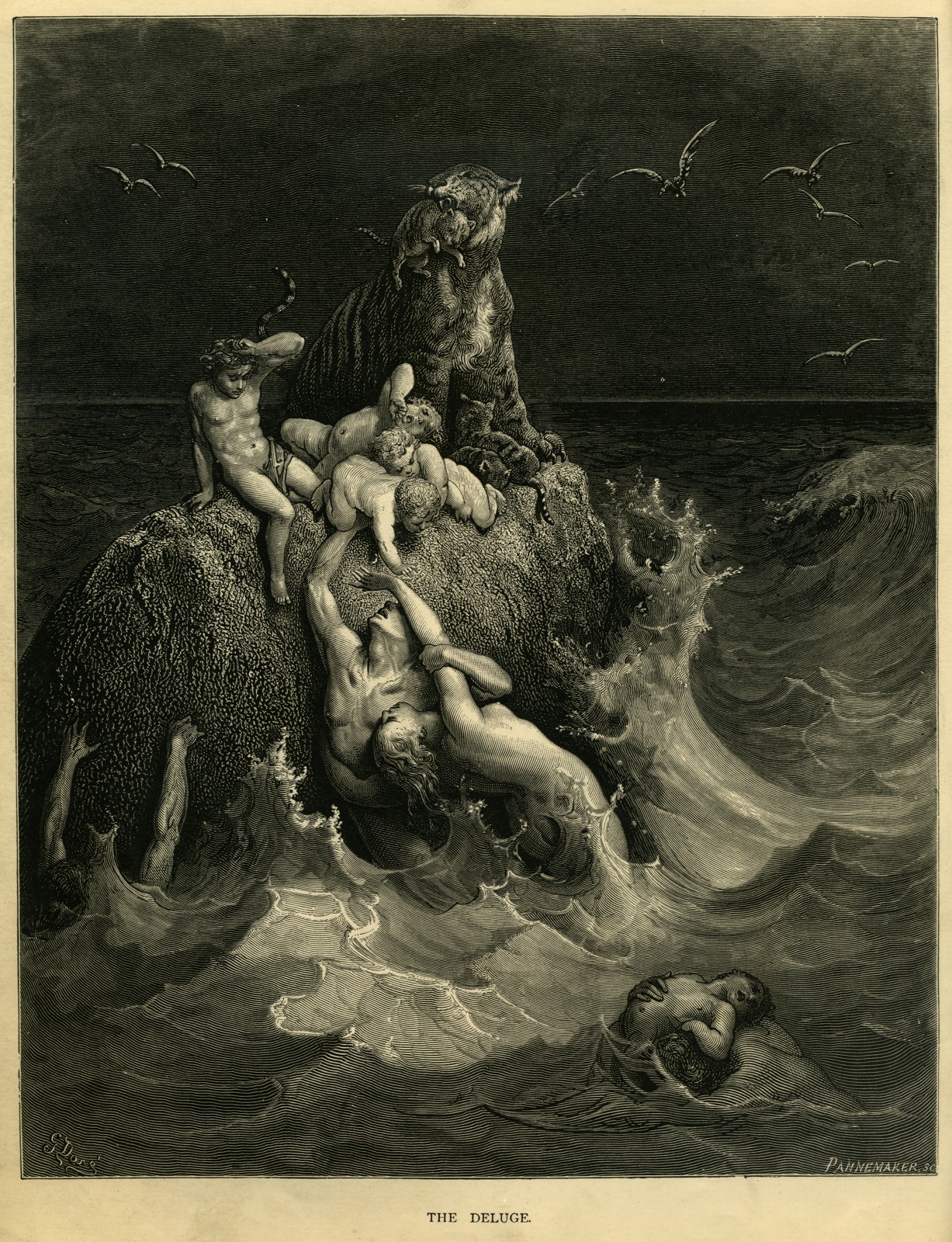
NoahNoahNoah is the flood-story figure in Genesis and a prophet in the Qur’anGlossary · Click to read the explanation is the survivor in the Genesis flood narrative, not a figure whose life has been independently dated by historical evidence. Before the flood, God says in Genesis 6:18 that he will establish his covenant with Noah, who is instructed to enter the ark with his family. The term “covenant” therefore does not first appear after the flood. Its fuller proclamation and sign occur in 9:8–17, after the survivors leave the ark. [1]
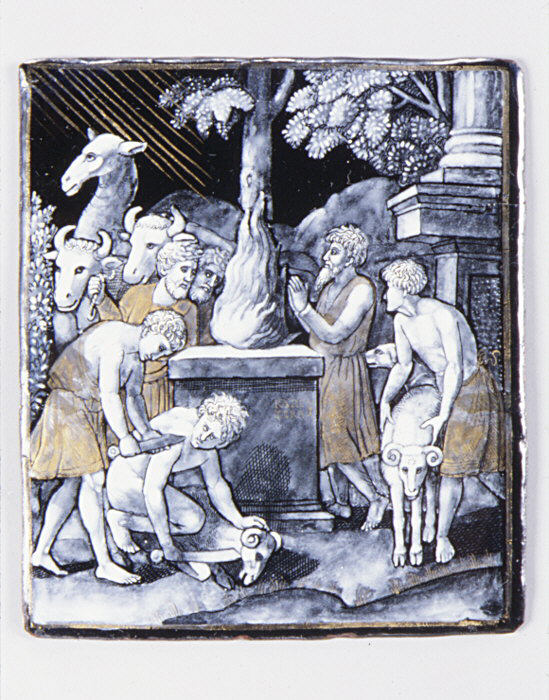
Chapter 8 forms the bridge. Genesis 8:1 says that God “remembers” Noah and the animals with him before the waters subside. In 8:20 Noah offers burnt offerings from clean animals and birds. In 8:21–22, the narrative then attributes to YHWHYahwehThe proper name of Israel’s deity, written יהוה (YHWH), the Tetragrammaton. Its exact ancient pronunciation is not directly preserved; texts and inscriptions witness its history.Glossary · Click to read the explanation an inward resolution not to strike down every living thing again as before, while seedtime and harvest, heat and cold, night and day continue for as long as the earth lasts. This narrated decision precedes the direct covenant speech of chapter 9; it is not itself a separately signed agreement. [3][4]
Renewed life and the limits imposed on bloodshed
Genesis 9 opens with a blessing to multiply and fill the earth, echoing Genesis 1:28. Food, however, is treated differently: Genesis 1:29 assigns plant food to humans; 9:3 permits the consumption of animals, yet 9:4 excludes flesh with its blood, since blood is linked to life. This arrangement belongs to the story’s post-flood world, not to an archaeologically established chronology for the beginning of meat-eating. [2]
Genesis 9:5–6 demands an accounting for human blood from both animals and humans and grounds its severe language about the shedding of human blood in humanity’s creation in God’s image. The passage should neither be flattened into a modern criminal statute nor detached from its concern for human life. Interpretations also differ: Stephen M. Wilson’s 2017 abstract argues that the image-of-God rationale here can authorize retributive violence, in tension with exclusively nonviolent interpretations of that image. [2][14]
Partners in the covenant: people, animals and earth
In 9:8–10 God addresses Noah, his sons and their descendants, then expressly includes the birds, domestic animals and wild creatures leaving the ark. Phrases such as “every living creature” and “all flesh” recur in 9:12 and 9:15–17, while verse 13 names the earth itself in describing the covenantal relationship. The covenant cannot be restricted to Noah’s household or made into a promise to one later nation alone. [4]
The inclusion of animals does not describe them negotiating terms or swearing an oath. It means that they fall within the scope of the promise. In his article abstract, Robert Gnuse draws an ethical reading that treats animals as fellow beneficiaries of covenantal protection; Saul M. Olyan goes further in a book-chapter abstract by construing them as participants with interests that can be discussed in legal terms. These are substantive modern interpretations, not legal vocabulary stated by Genesis itself. [5][6]
The bow in the clouds and remembrance
Genesis 9:11 specifies the promise: all flesh is not to be destroyed again by floodwaters that devastate the earth. This does not say that no local flood or heavy rain will ever occur. In 9:13–16 the divine speaker sets his bow in the clouds as a sign between himself, the earth and living creatures. Its appearance repeatedly prompts divine remembrance of the covenant; within the passage it is explicitly God who looks and remembers, although human readers can remember it as well. [4]
The Hebrew qešet means “bow,” including a weapon. Its placement in the clouds naturally yields the familiar reading “rainbow.” Yet Ellen van Wolde’s 2013 article abstract advocates an interpretation foregrounding a warrior’s bow and divine power rather than reducing the image to an optical phenomenon. That is a scholarly interpretation of the image, not proof that every translator or specialist rejects the rainbow reading. [11]
Is the promise conditional?
The directions about food and blood in 9:1–7 precede the covenant proclamation in 9:8–17. The latter presents a divine initiative and contains no explicit clause saying that the worldwide flood will be withheld only if humanity first meets a specified condition. Hence the promise is often described as broadly unconditional. Yet this does not resolve how ethical commands relate to life after the flood. [2][4]
Steven D. Mason, as his 2007 article abstract states, instead argues for a more bilateral and conditional reading, linking it with the “everlasting covenant” in Isaiah 24:5. Katharine J. Dell’s 2024 open-access article reads God’s self-imposed commitment to creation alongside obligations concerning lifeblood. Neither position is an explicit quotation from Genesis: they are scholarly accounts of the relation between promise and command. [8][9]
Composition, literary layers and dating
In literary-critical analysis, Genesis 9:8–17, with its use of ElohimElohimA Hebrew word with plural morphology, used for “gods” or for a singular deity according to context.Glossary · Click to read the explanation, repetitive structure and covenant terminology, is commonly assigned to a Priestly strand (P). The sacrifice and YHWH’s inward resolution in 8:20–22 are often grouped with non-Priestly material (non-P). These are proposed analytic divisions of the received narrative, not two complete surviving manuscripts independently preserving each original version. [10][7]
John Day works with Priestly and Yahwistic source designations and favours an important role for the Atrahasis tradition. David M. Carr’s 2020 chapter abstract points to a once-separate non-Priestly flood narrative and a Priestly composition drawing on earlier traditions. The sequence of compositional layers and exact dates remain disputed. Neither the story’s setting nor the age of a later manuscript establishes the year in which the Noahic covenant passage was composed. [10][7]
Genesis in comparison with Mesopotamian flood traditions
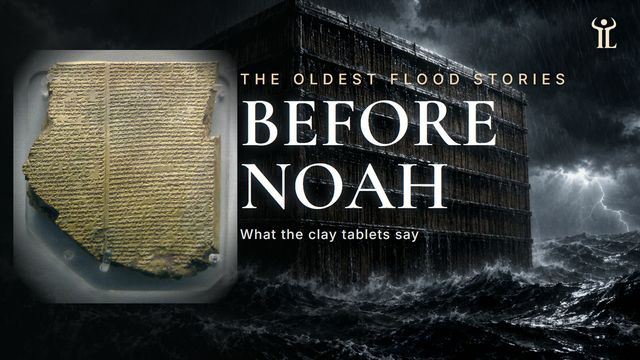
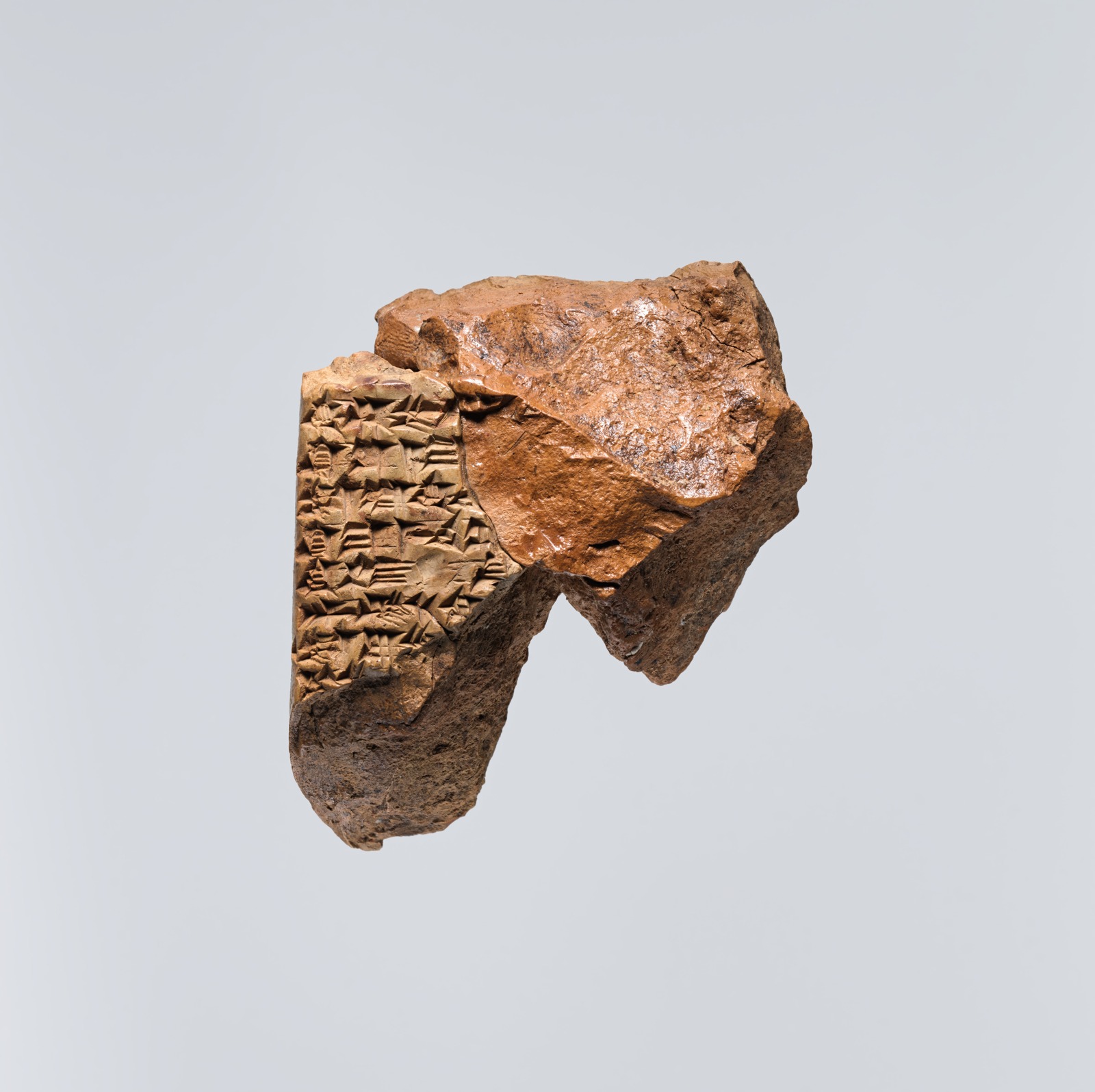
The AkkadianAkkadianAn ancient East Semitic language written in cuneiform from the third millennium BCE; its varieties include Babylonian and Assyrian, and it served in international diplomacy.Glossary · Click to read the explanation Epic of AtrahasisAtrahasis: Epic and HeroAkkadian narrative on human creation, relations with the gods and the flood, named for its survivor warned by Enki. Its surviving manuscripts differ in date and preservation; its hero must not be equated uncritically with every Utnapishtim version.Glossary · Click to read the explanation, attested in witnesses older than surviving Genesis manuscripts, recounts a disastrous flood, a survivor and a post-flood offering. Tablet XI of the Epic of GilgameshEpic of GilgameshA Babylonian literary work with multiple recensions, preceded by separate Sumerian poems on Uruk’s king and Enkidu. Its standard form explores friendship, death, the flood and the limits of seeking eternal life.Glossary · Click to read the explanation presents UtnapishtimUtnapishtimThe flood hero of Standard Babylonian Gilgamesh, granted exceptional life with his wife by the gods. He tells Gilgamesh how he survived; his name overlaps with Atrahasis and Ziusudra traditions without making their narratives identical.Glossary · Click to read the explanation’s account of a boat, birds and sacrifice. Scholars compare these inherited literary traditions and their transformations; they are not independent archaeological proof of one worldwide historical deluge. [12]
John Day notes a late Atrahasis fragment containing a call for no further flood, so it would be misleading to claim that the very idea of “no more flood” lacks Mesopotamian parallels. Genesis, however, gives the bow a distinctive function as a sign of covenant with all flesh. Shalom E. Holtz contrasts the overcrowding and noise followed by birth restrictions in Atrahasis with human wrongdoing and renewed multiplication in Genesis. This difference helps explain the stories’ aims without demonstrating one uniquely recoverable path of borrowing. [7][12]
Later readings and conclusion
Isaiah 54:9–10 recalls the “waters of Noah” as an analogy for the reliability of a divine assurance, now in a new discourse about compassion and peace. A later rabbinic passage, Sanhedrin 56a, discusses seven laws for Noah’s descendants: that developed legal list is not a seven-item code explicitly enumerated by Genesis 9 itself. The history of reception must distinguish Genesis from its subsequent interpretation. [13][15]
The heart of Genesis 9 is the continuation of living creation after destruction, expressed through the cloud-bow and concern for limits on violence. Literary reading reveals the promise’s ethical tensions; Mesopotamian comparison supplies important background without turning the narrative into a geological report or a demonstrable single chain of transmission.
References and notes (15)
- Genesis, Hebrew text with Jewish Publication Society (JPS 1917) English translation, chapter 6. Genesis 6:17–22, especially 6:18; Hebrew text checked against the published English translation. Return to the text ↑
- Genesis, Hebrew and JPS 1917: creation blessing and post-flood instructions on food and blood. Genesis 1:26–30 and 9:1–7; link points to chapter 9; chapter 1 checked at https://mechon-mamre.org/p/pt/pt0101.htm. Return to the text ↑
- Genesis 8, Hebrew text and JPS 1917: remembrance, emergence from the ark and Noah’s offering. Genesis 8:1 and 8:15–22. Return to the text ↑
- Genesis 8:20–22 and 9:1–17, Hebrew and JPS 1917 (original note 4 retained; locators clarified). Genesis 8:20–22 and 9:1–17; link is chapter 8, chapter 9 at https://mechon-mamre.org/p/pt/pt0109.htm. Return to the text ↑
- Robert Gnuse, “The Covenant with Noah in Genesis 9,” Biblical Theology Bulletin 52, no. 2; publisher abstract only. Publisher abstract read; first online 9 August 2021; full article not accessed. Return to the text ↑
- Saul M. Olyan, “Animals as Covenant Partners in Genesis 9:8–17 and Hosea 2:20,” in Animal Rights and the Hebrew Bible (Oxford University Press, 2023); abstract only. Chapter pp. 40–59: publisher abstract alone; chapter pages not read. Return to the text ↑
- John Day, “The Mesopotamian Origin of the Biblical Flood Story,” TheTorah.com (2020, updated 2026); original source retained. Online article: sections “The Gilgamesh Epic,” “The Atrahasis Epic,” “Dependent on the Atrahasis Epic,” “Counting Parallels,” “Noah and Atrahasis”; selected notes. Return to the text ↑
- Steven D. Mason, “Another Flood? Genesis 9 and Isaiah’s Broken Eternal Covenant,” Journal for the Study of the Old Testament 32/2 (2007): 177–198; abstract only. Publisher abstract; article pages not read. Return to the text ↑
- Katharine J. Dell, “Covenant and Wisdom: Arguing with a Premiss from Absence,” Journal of Theological Studies 75/2 (2024): 303–311; selected passages read. Abstract and the online passage on Genesis 9:8–17; not a complete reading of printed pp. 303–311. Return to the text ↑
- David M. Carr, The Formation of Genesis 1–11: Biblical and Other Precursors (OUP, 2020), ch. 6, “Precursors to the Flood Narrative,” pp. 141–177; abstract only (original note 10 retained). Oxford Academic chapter abstract only; pp. 141–177 not read. Return to the text ↑
- Ellen van Wolde, “One Bow or Another? A Study of the Bow in Genesis 9:8–17,” Vetus Testamentum 63 (2013): 124–149; abstract only. Published abstract only; article pp. 124–149 not read. Return to the text ↑
- Shalom E. Holtz, “The Flood Story in Its Ancient Near Eastern Context,” TheTorah.com (2014), comparative sections. Sections “Noah and Utnapishtim,” “Noah and Atrahasis,” “Why a Flood?”; not all its endnotes. Return to the text ↑
- Isaiah 54:9–10, Hebrew and JPS 1917. Isaiah 54:9–10 only. Return to the text ↑
- Stephen M. Wilson, “Blood Vengeance and the Imago Dei in the Flood Narrative (Genesis 9:6),” Interpretation 71/3 (2017): 263–273; abstract only. Publisher abstract only; article pages not read. Return to the text ↑
- Babylonian Talmud, Sanhedrin 56a, baraita on seven laws for Noah’s descendants; Hebrew and English as displayed at Sefaria. Sanhedrin 56a:24 in Sefaria’s segmentation, with later divergent opinions on the page. Return to the text ↑
Suggest a correction · Suggest a source for this record
Cite this record
IL Archive, «The Noahic Covenant in Genesis», https://ilarchive.com/en/entities/noahic-covenant-genesis
Continue reading