Site
Tell Fekheriyeh, bilingual inscription site
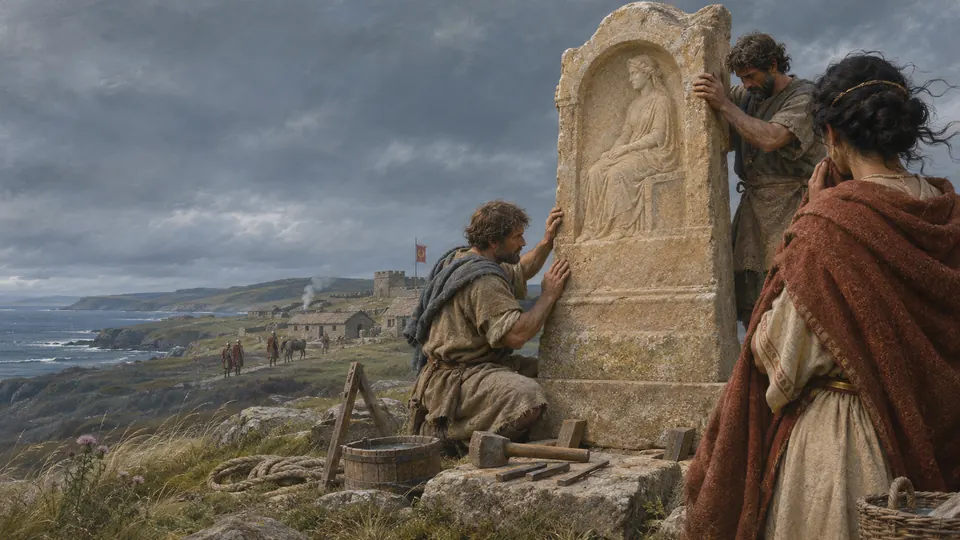
Syrian site where a statue with Akkadian and Aramaic inscriptions, usually dated to the ninth century BCE, was found in 1979.
Last reviewed:
Text
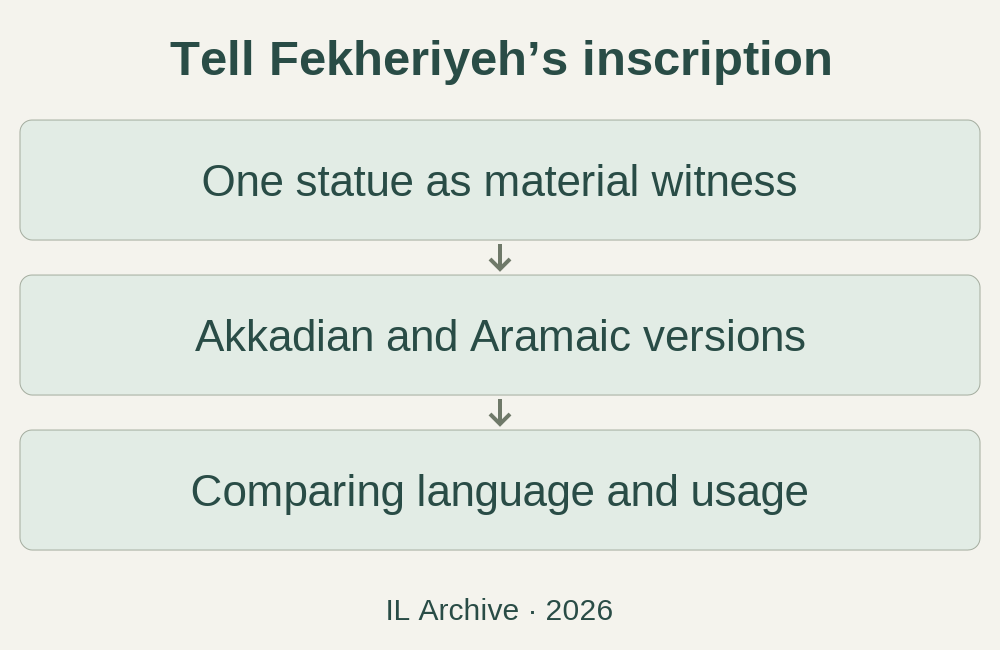
Tell Fekheriyeh is a Syrian site known for a statue found in 1979 bearing Aramaic and Assyrian AkkadianAkkadianAn ancient East Semitic language written in cuneiform from the third millennium BCE; its varieties include Babylonian and Assyrian, and it served in international diplomacy.Glossary · Click to read the explanation inscriptions. Laura Quick’s study places the Aramaic witness in the ninth century BCE in discussing literary expressions. [1][2]
For EdenEden: The Setting of Genesis’s GardenThe place in which the garden of Genesis 2–3 is planted; the story describes rivers, trees and a human test, while its archaeological location and name’s derivation remain unsettled.Glossary · Click to read the explanation’s etymology, Millard uses an Aramaic expression in the inscription to support a West Semitic origin involving abundance. That linguistic argument does not identify the site as Eden. [3]
References and notes
- Dušek and Mynářová, 2016: Charles University abstract on the 1979 statue discovery and two texts, not full chapter. Dušek and Mynářová, 2016: Charles University abstract on the 1979 statue discovery and two texts, not full chapter. Return to the text ↑
- Laura Quick, To Hear and to Accept, 2016, pp. 413–429: publisher abstract only. Laura Quick, To Hear and to Accept, 2016, pp. 413–429: publisher abstract only. Return to the text ↑
- Millard, 1984: accessible pp. 103–104 reread, with earlier selective reading log; hosting-site automated summary not used. Millard, 1984: accessible pp. 103–104 reread, with earlier selective reading log; hosting-site automated summary not used. Return to the text ↑
Suggest a correction · Suggest a source for this record
Cite this record
IL Archive, «Tell Fekheriyeh, bilingual inscription site», https://ilarchive.com/en/sites/tell-fekheriyeh-inscription-site