Regina and Barates Chapter 1
Two Inscriptions for Regina
A memorial from South Shields preserves details about Regina and Barates in Latin and Palmyrene Aramaic. The episode follows each inscription in turn, from the Latin dedication to the Aramaic word of mourning.
SourcesTurn the pages with the arrows, the arrow keys or a swipe.
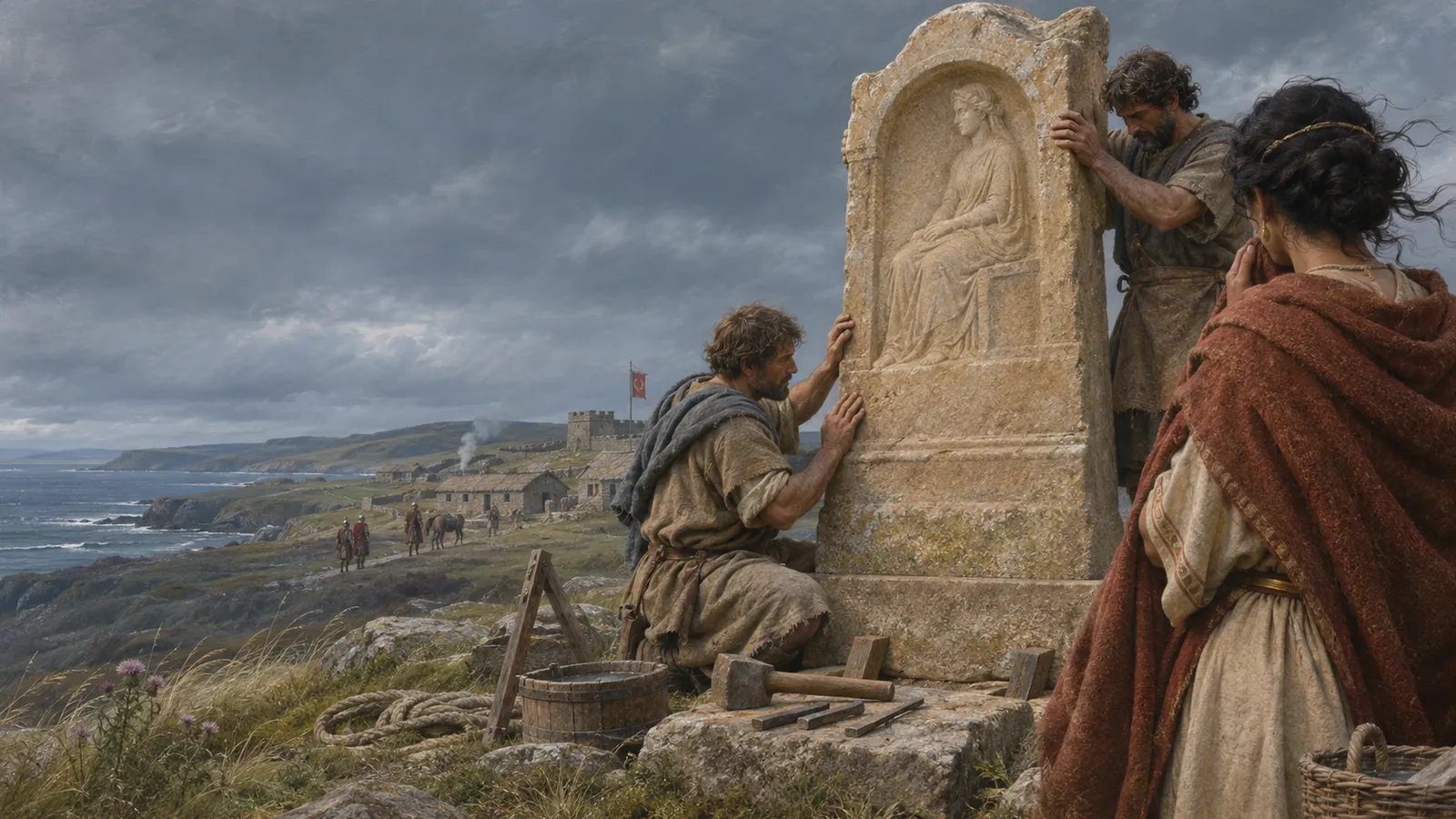
ONE MEMORIAL
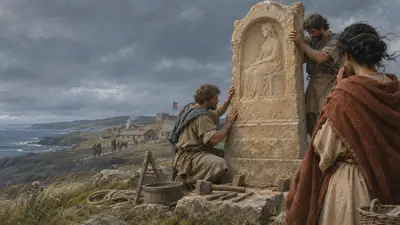
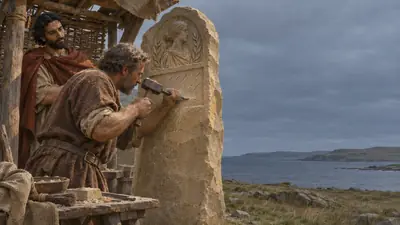
A stone memorial found at South Shields in 1878 carries Latin above a line of Palmyrene Aramaic. Jeremy Hutton and Catherine Bonesho publish and translate both inscriptions.
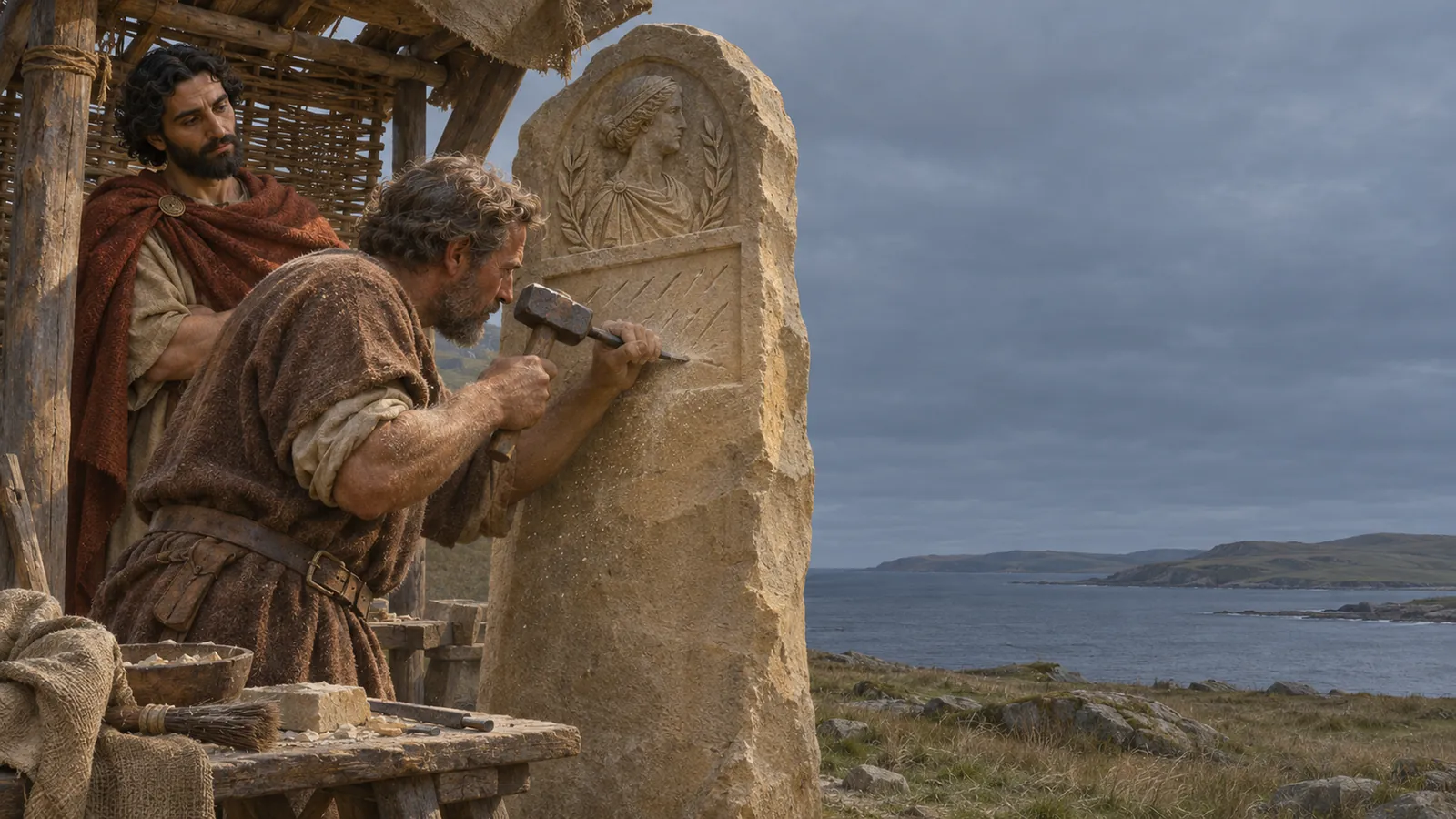
The Latin opens with a dedication to the spirits of the dead. It names Regina and identifies her as a freedwoman.

THE LATIN INSCRIPTION
The Latin inscription calls Regina the wife of Barates. It identifies Barates as a Palmyrene.
The Latin inscription identifies Regina as Catuallaunian and gives her age as thirty years. The translators supply the verb for living that long.
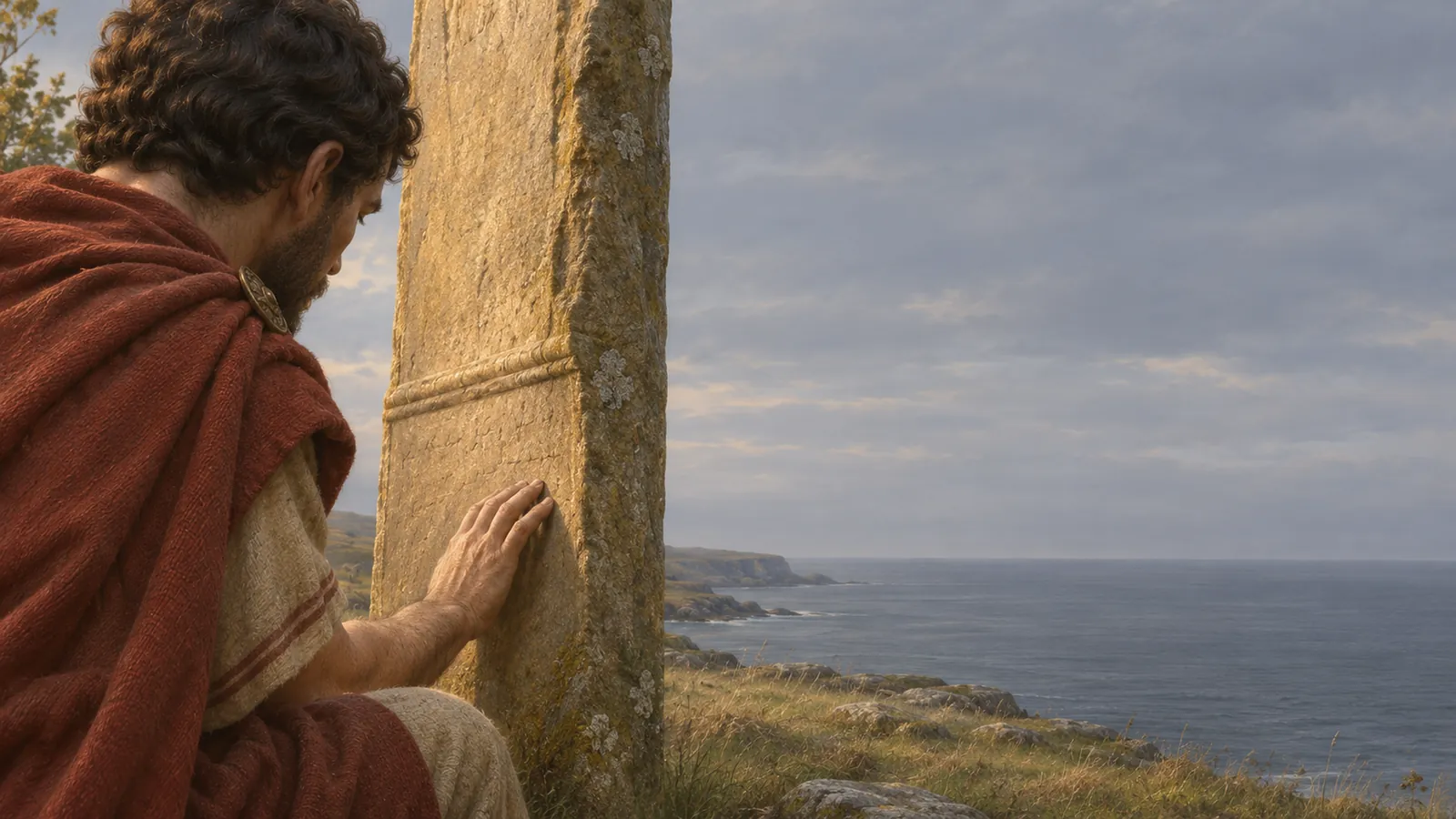
The Palmyrene Aramaic line identifies Regina as Barates’s freedwoman in the published translation. His name appears in its Palmyrene form.

THE LAMENT
The Palmyrene Aramaic line ends with a single word of mourning, which Hutton and Bonesho render as “Alas”.
End of chapter 1
All pages




Sources
The complete Latin and Palmyrene Aramaic inscriptions on the South Shields memorial have the respective references RIB 1065 and PAT 0246. This reading follows the texts and translations on pp. 271–272 in Jeremy M. Hutton and Catherine E. Bonesho’s contribution to Epigraphy, Philology, and the Hebrew Bible, SBL Press, 2015.
Editions consulted
- SBL Press, Epigraphy, Philology, and the Hebrew Bible, publisher’s edition
- Hutton and Bonesho, pp. 271–272, inscriptions and translations
- Hutton and Bonesho, pp. 275–277, the names and freed status
Notes on this retelling
Page 1, the bilingual memorial. Hutton and Bonesho introduce RIB 1065 and PAT 0246 on p. 271. Page 272 gives their English translations. The discovery year refers to the find.
Page 2, Latin line 1, dedication and status. The standard formula to the spirits of the dead opens the Latin text. The published translation supplies the verb of dedicating in square brackets. It renders the status term as “free-woman,” and the authors use the conventional “freedwoman” in their later discussion.
Page 3, Latin lines 1–2, marriage and Barates. The Latin calls Regina the wife of Barates and identifies him as a Palmyrene. The edition prints the word for wife on line 1 and the name and origin on line 2.
Page 4, Latin line 3, people and age. The authors’ translation gives “Catuallaunian” based on the reading noted at p. 271, note 66. The number is thirty.
Page 5, Palmyrene Aramaic line 1, names and status. The published translation on p. 272 names Regina and calls her the freedwoman of the person named Barates in the Latin. Hutton and Bonesho align the Palmyrene spelling with Barates on p. 275. On pp. 276–277 they discuss the literal status phrase and consider whether its context could carry a marital connotation.
Page 6, Palmyrene Aramaic line 1, lament. The line ends in the word the translators render as “Alas!” The reading ends there. The neighboring example in the article concerns a separate memorial.
The published readings provide the text of both inscriptions.
Ancient lines behind each page
- Page 1: Hutton and Bonesho (2015), Regina memorial, p. 271, description of RIB 1065 and PAT 0246
- Page 2: Hutton and Bonesho (2015), Regina memorial, p. 272, Latin line 1, dedication and status
- Page 3: Hutton and Bonesho (2015), Regina memorial, p. 272, Latin lines 1–2, relationship and origin of Barates
- Page 4: Hutton and Bonesho (2015), Regina memorial, p. 272, Latin line 3 and note 66
- Page 5: Hutton and Bonesho (2015), Regina memorial, p. 272, Aramaic line 1, names and status; 275–277, discussion
- Page 6: Hutton and Bonesho (2015), Regina memorial, p. 272, Aramaic line 1, final expression
Illustrations made with AI tools by IL Archive; the text is based on the ancient sources (see the sources at the end of each chapter).