Entity
Ninti, rib and life in Sumerian wordplay
A reference page linking a name, group, or concept to the materials that discuss it.
Goddess appearing in the healing of Enki’s ribs, whose name permits wordplay involving rib and life.
Last reviewed:
Text
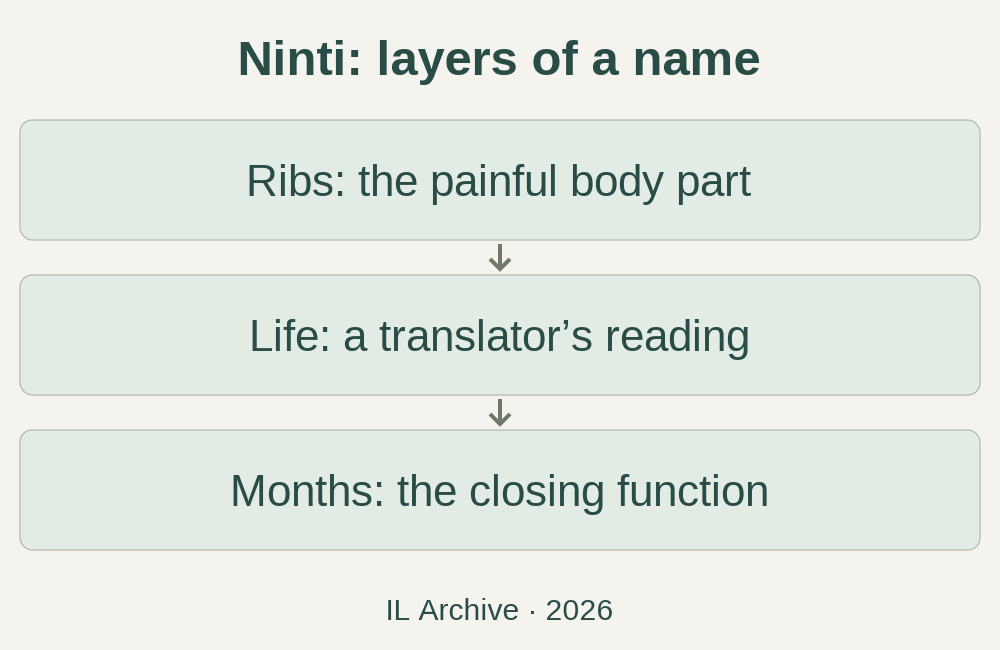
Ninti is one of the deities born at the close of EnkiEnkiMesopotamian deity also known as Ea, linked with Eridu and the Abzu (deep fresh waters), wisdom, incantations, and narratives of creation and cosmic order. Later written attestations do not identify the deity of Eridu’s earliest layers.Glossary · Click to read the explanation’s healing. Her appearance corresponds to his painful ribs. Attinger explains readings of the name involving ribs and giving life, followed by months in the allocation of functions. [1][2]
These linguistic layers explain comparison with Eve in Genesis. They do not turn the goddess into a human woman or by themselves establish borrowing; HebrewHebrewA Northwest Semitic language of the Canaanite group, encompassing Iron Age epigraphy, Biblical, Rabbinic, medieval and Modern Hebrew; its scripts and pronunciations changed over time.Glossary · Click to read the explanation does not reproduce the same Sumerian wordplay.
References and notes
- Oxford, ETCSL 1.1.1, Enki and Ninhursaga: composite English translation, lines 1–281 and manuscript additions. Oxford, ETCSL 1.1.1, Enki and Ninhursaga: composite English translation, lines 1–281 and manuscript additions. Return to the text ↑
- Pascal Attinger, Enki et Ninhursaga, 2011, updated 2015: pp. 1–3, 5 and 9–12 visually read, not every page. Pascal Attinger, Enki et Ninhursaga, 2011, updated 2015: pp. 1–3, 5 and 9–12 visually read, not every page. Return to the text ↑
Suggest a correction · Suggest a source for this record
Cite this record
IL Archive, «Ninti, rib and life in Sumerian wordplay», https://ilarchive.com/en/entities/ninti-rib-life-wordplay