Site
Nippur / Nuffar
- Names
- Nibru · Nippur · Nuffar
- Region
- Al-Qadisiyah, Iraq
Nippur (Nuffar) is a long-lived Mesopotamian site and major centre of Enlil’s cult at Ekur. Temples, royal inscriptions and school tablets reveal its importance and the limits of calling it a “religious capital”.
Estimated reading time: 6 min Published Last reviewed:
Share article
Text
Introduction
Nippur, whose ruins are now known as Nuffar in IraqIraqIraq is a modern country encompassing much of ancient MesopotamiaGlossary · Click to read the explanation, was celebrated for the cult of EnlilEnlilEnlil/Ellil: a major Mesopotamian god associated with destinies, kingship, and Ekur at Nippur, already prominent in third-millennium god lists. His name’s origin and cult beginnings remain debated.Glossary · Click to read the explanation and its place in royal inscriptions and hymns. Yet it was also a city of households, work and scribal training. Why did it matter to rulers beyond its own territory, and what do excavations actually reveal about the city and its sanctuary? This entry distinguishes architectural remains, royal statements and religious poetry because each offers a different kind of evidence.
Names, location and landscape
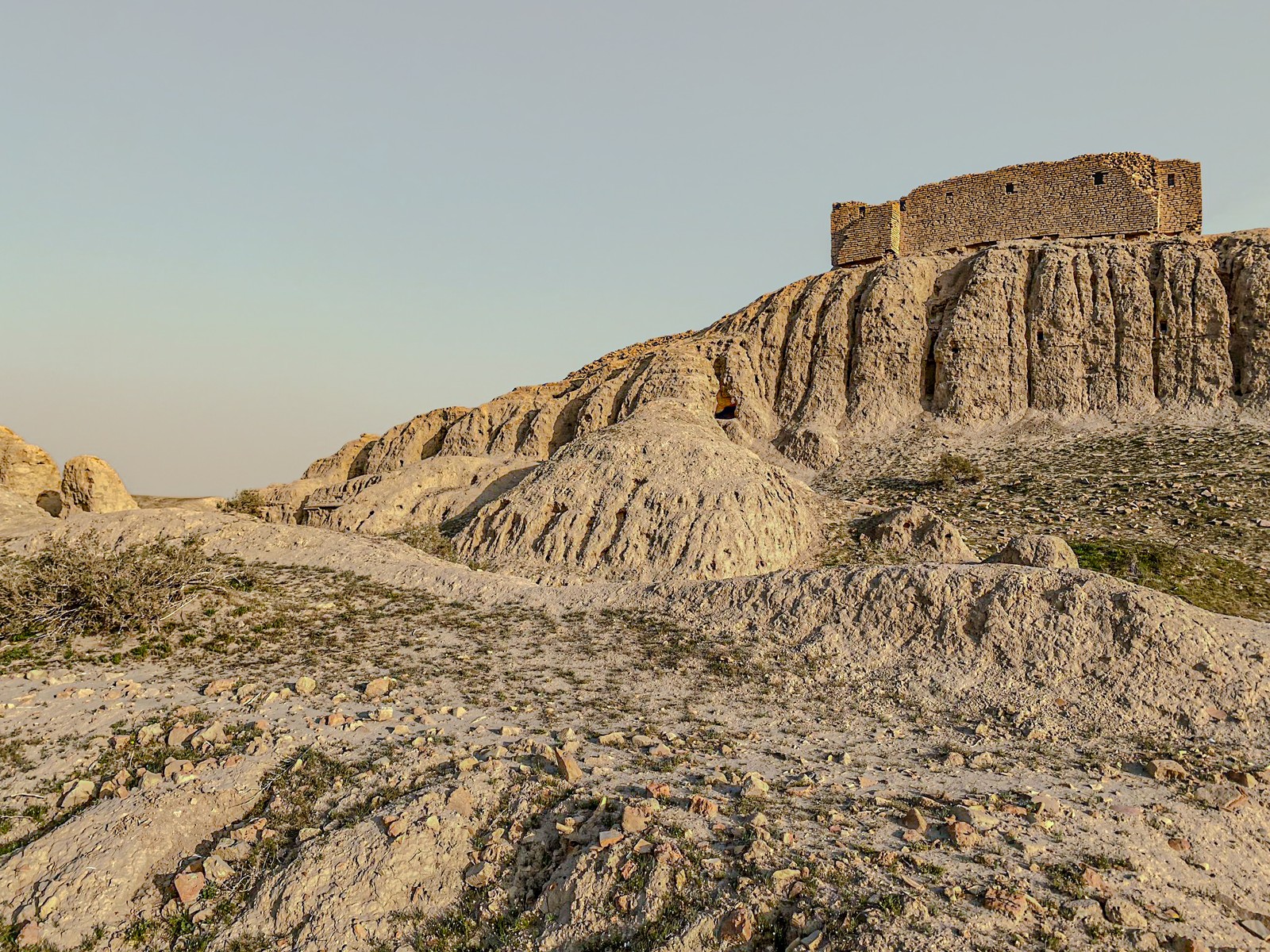
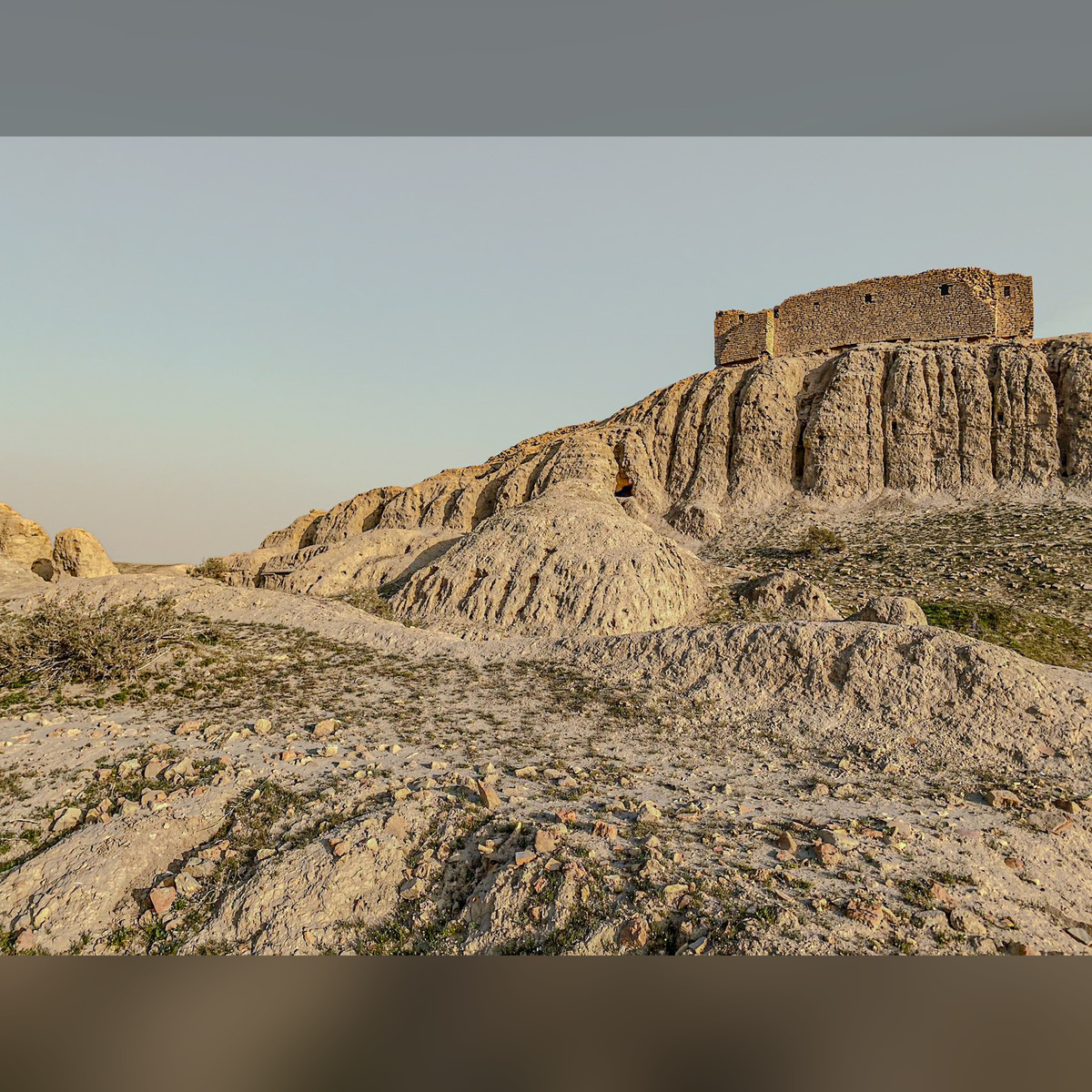
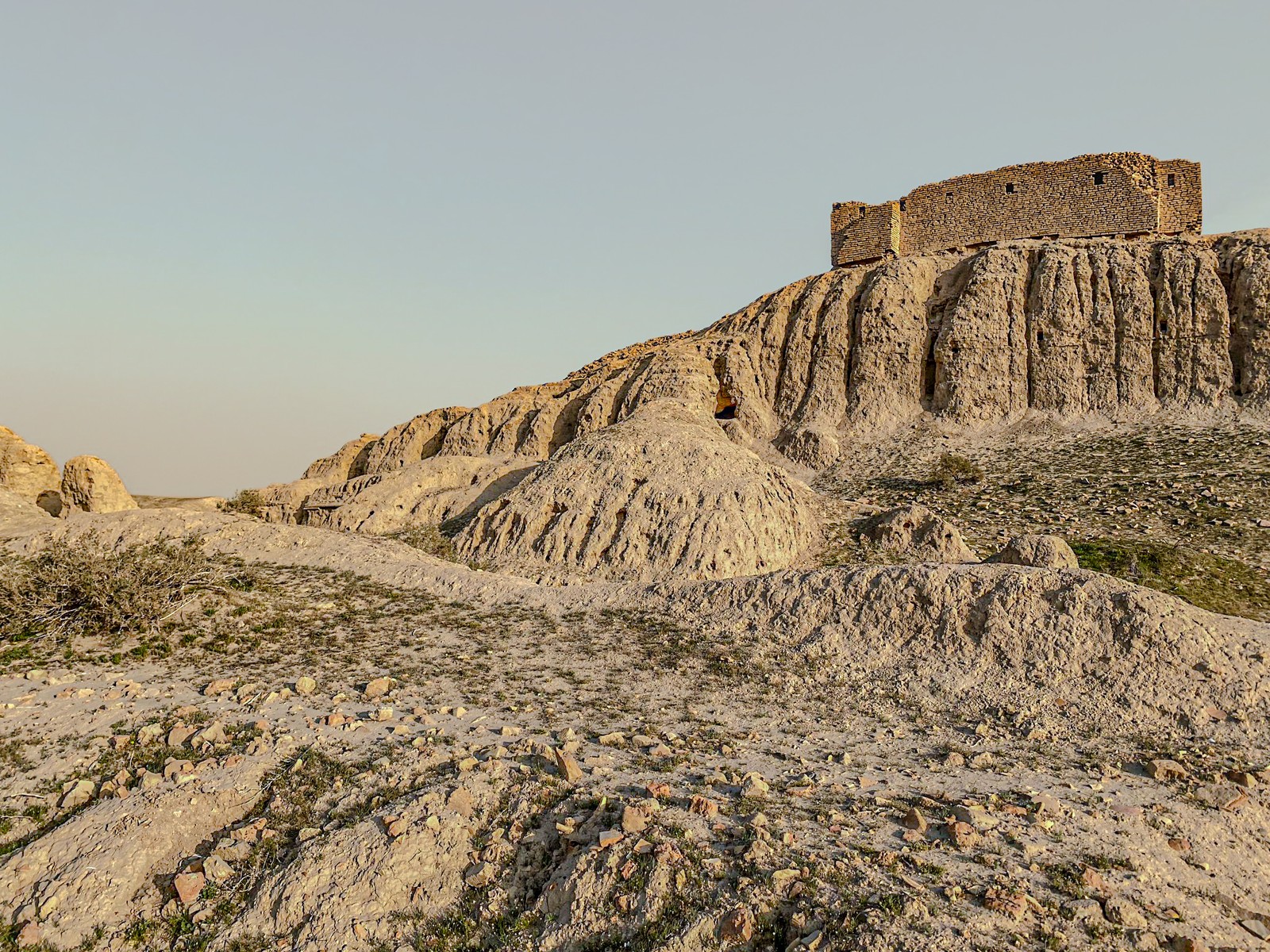
The ancient city is commonly called Nippur; Sumerian texts use the name Nibru, and its ruins are known as Nuffar. The site lies in Iraq's Al-Qadisiyah governorate, on the Mesopotamian alluvial plain. A group of archaeological mounds is divided by the course of an ancient waterway called Shatt al-Nil. A photograph of the temple mound therefore cannot stand for the full area of the city. Iraq's submission to UNESCO's Tentative List gives the archaeological site an area of approximately 168.4 hectares: this describes the recorded mounds, not the population or urban footprint at one particular date.[3]
A long sequence, not one unchanging city
The remains at Nuffar belong to widely separated periods. The Iraqi Tentative List description traces the archaeological record from the Ubaid period, around the fifth millennium BCE, to early Islamic remains around the eighth century CE. This is the chronological span of attested material, not proof of uninterrupted occupation at the same scale or of identical ritualsRitualAn organised or distinguished practice meaningful to a community; it may leave traces, but its form alone does not reveal an associated doctrine.Glossary · Click to read the explanation throughout those millennia. Buildings, deposits, pottery sequences and texts must be assigned to their own periods.[3]
Augusta McMahon's Nippur V shows why excavation stratigraphy matters. Work in Area WF, near the middle of the city, exposed a long succession of residential buildings from the later Early Dynastic period into subsequent periods. This report examines domestic architecture, pottery and objects within that sounding. It is not, by itself, a plan of the EkurEkur: Enlil’s Temple at NippurEkur (“Mountain House”) was Enlil’s chief sanctuary at Nippur, present-day Iraq; the name may extend to its precinct. Hymns and royal inscriptions attest to its prestige and rebuilding across periods; it is not simply the ziggurat.Glossary · Click to read the explanation sanctuary or a comprehensive account of Nippur's rites.[1]
Enlil and Ekur: a complex rather than a single building
Nippur was particularly associated with EnlilEnlilEnlil/Ellil: a major Mesopotamian god associated with destinies, kingship, and Ekur at Nippur, already prominent in third-millennium god lists. His name’s origin and cult beginnings remain debated.Glossary · Click to read the explanation, a major Mesopotamian god whose authority over destinies and kingship is emphasized in several textual traditions. EkurEkur: Enlil’s Temple at NippurEkur (“Mountain House”) was Enlil’s chief sanctuary at Nippur, present-day Iraq; the name may extend to its precinct. Hymns and royal inscriptions attest to its prestige and rebuilding across periods; it is not simply the ziggurat.Glossary · Click to read the explanation, the “Mountain House,” was the name of his temple and sacred complex. The temple, its courts and the raised zigguratZigguratZiggurat: a monumental stepped or terraced cult structure of ancient Mesopotamia. Not every raised temple platform was a ziggurat, and the form and specific use of lost upper stages often remain uncertain.Glossary · Click to read the explanation platform must be distinguished: visible remains on the mound do not all belong to one structure or construction phase.[4]
The publication description for Nippur I suggests that the excavated temple northeast of the ziggurat, in its preserved architectural form, was built under Ur-Namma of the Third Dynasty of Ur and maintained its overall plan through later repairs. This concerns a particular architectural phase as presented by the publisher, not the original establishment of Enlil's cult. Moreover, the structure still visible above the ziggurat mound was erected during late-nineteenth-century excavations. It is not a surviving Sumerian temple.[4]
Kings seeking recognition at Nippur
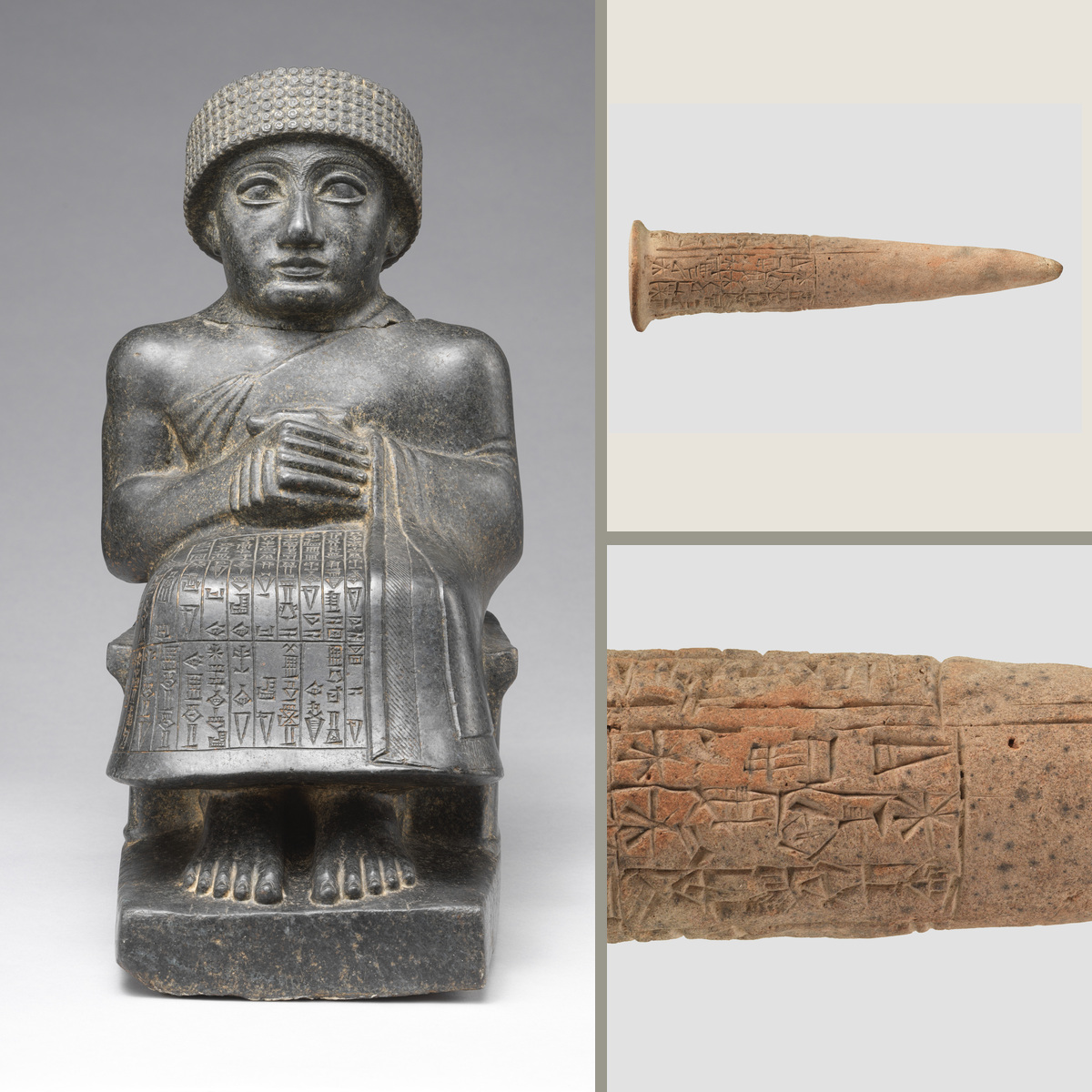
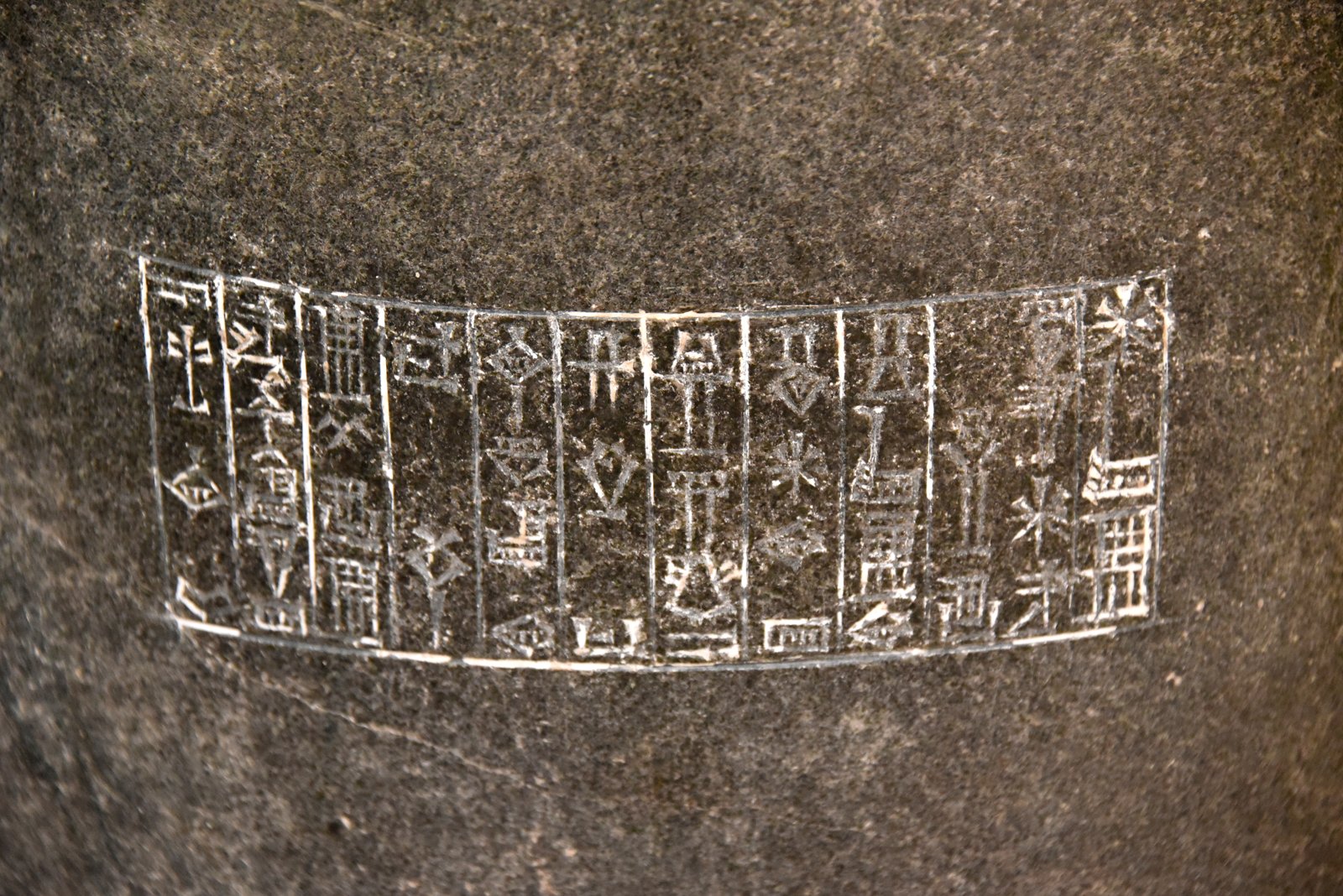
An inscription attributed to Lugalzagesi, king of UrukUrukAncient city at Warka in southern Iraq, a major urban centre around 3200 BCE that preserved early writing and accounting tablets.Glossary · Click to read the explanation near the end of the Early Dynastic period, presents his rule as a gift of Enlil. Towards its conclusion the king records lavish offerings and the pouring of sweet water for Enlil at Nippur; he asks the god to intercede with An for the endurance of his rule. These are statements within a celebratory royal inscription, not a neutral chronicle of the behaviour of every ruler.[2]
The inscription matters because a king who identifies himself with Uruk also makes Nippur central to his relationship with Enlil. It does not follow that Nippur lacked political or administrative authority in every period: the city had inhabitants, institutions and changing roles of its own.[2]
Nippur in religious poetry
The hymn Enlil in the E-kur calls Nippur Enlil's holy settlement, pictures Ekur as a lofty mountain, and connects divine favour with rulers' status and offerings. In the English translation published by the Electronic Text Corpus of Sumerian Literature (ETCSL), lines 35–55 describe the sanctuary, while lines 65–92 evoke the city, gifts and a ruler's dependence on the god. This is ritual and poetic language: references to foundations of lapis lazuli or a temple reaching the heavens are not archaeological measurements.[6]
Other shrines and an inhabited city
Enlil's sanctuary did not exhaust the religious life of Nippur. The Iraqi Tentative List description also records a temple of InannaInanna / IshtarA prominent Mesopotamian goddess whose Sumerian name Inanna became associated with Akkadian Ishtar across diverse traditions. She was associated with desire, war, royal authority and Venus, while local forms and genealogies varied among texts.Glossary · Click to read the explanation, a North Temple and a temple of Gula, together with city walls and residential areas.[3] The publication page for Nippur II describes investigation of the North Temple in the religious quarter, including Early Dynastic and later levels. Consequently, the loose phrase “the temple at Nippur” does not identify a unique building without a location and stratigraphic context.[5]
Houses and their associated finds reveal a setting for ordinary life, not merely a stage for royal ceremonies. Residential soundings and administrative records therefore matter for social history even if the cult of Enlil dominates the city's literary reputation.[1]
Tablets and education in houses
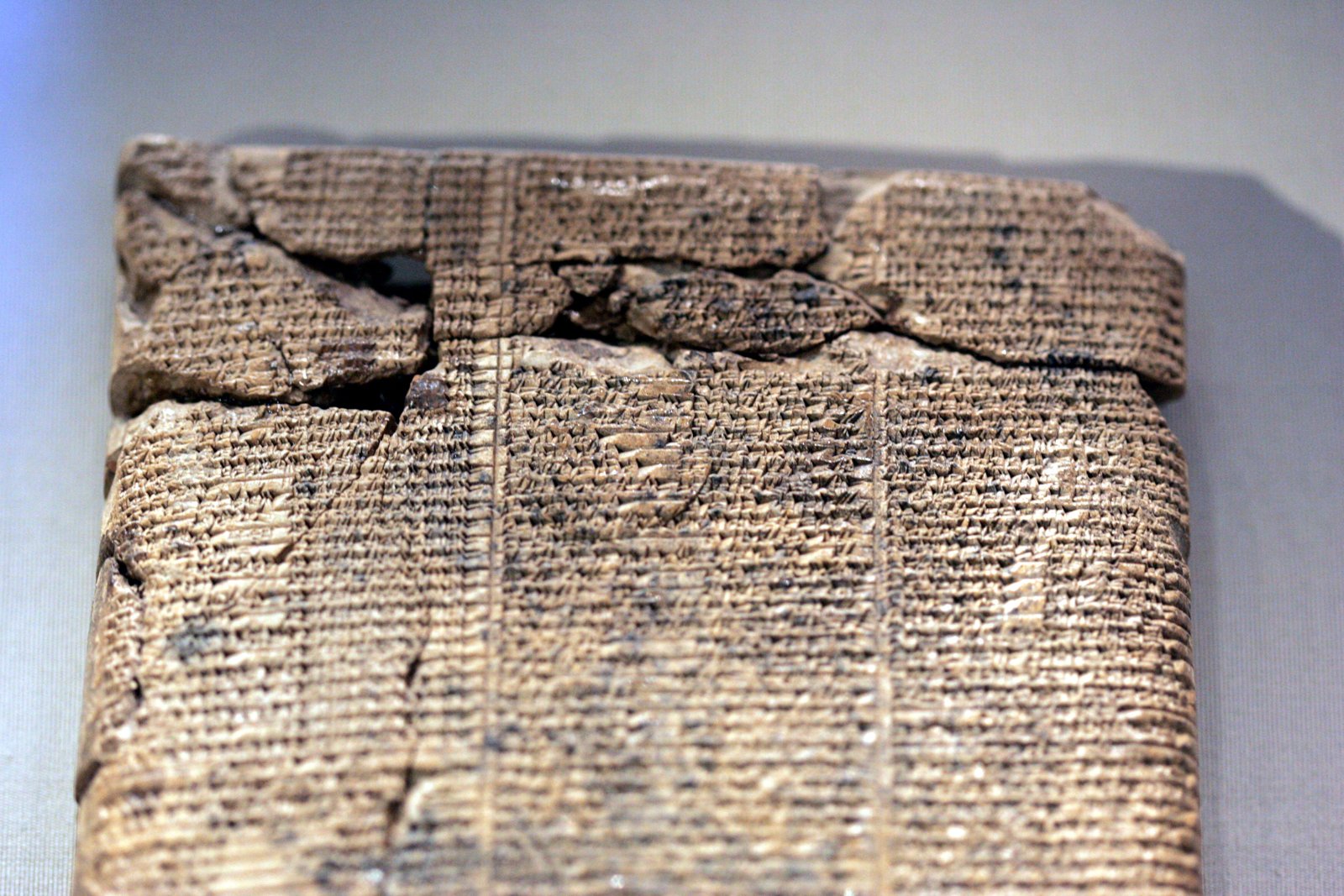
Thousands of cuneiformCuneiformWriting with wedge-shaped signs, developed from Mesopotamian recording traditions and used for several languages from the third millennium BCE.Glossary · Click to read the explanation tablets from Nippur preserve accounts, lexical lists, writing exercises and literary or religious compositions. In his study of scribal instruction at Nippur and Ur, Steve Tinney explains how some school tablets juxtapose a teacher's model with a pupil's repeated attempts, and how substantial groups were found in private houses. The older idea of a single “temple library and school” should therefore not be generalized to every findspot.[7]
Student copies helped transmit a major part of literature in the Sumerian languageSumerian languageAncient language of southern Mesopotamia, clearly attested in third-millennium BCE texts and maintained in learning and ritual after its spoken use declined.Glossary · Click to read the explanation during the Old Babylonian period, including hymns, narratives and vocabulary lists. But the discovery of a tablet at Nippur demonstrates the existence of that copy or scribal activity in a particular context; it does not, on its own, establish that the author lived there or that all residents were literate.[7]
Later transformations and the history of excavation
Nippur experienced rebuilding and changes of use under Babylonian, Assyrian and later administrations. Its remains include a Parthian fortress established above the ziggurat area, as well as later deposits. A modern view of the summit cannot simply be projected backwards to reconstruct the Sumerian city: subsequent construction reshaped the place.[8]
University of Pennsylvania teams began excavating at Nippur in the late nineteenth century. Joint work with the Oriental Institute of the University of Chicago resumed in the mid-twentieth century, followed by further campaigns. These investigations uncovered sanctuaries, dwellings and tablets; their history also reminds us that what survives in scholarship reflects which parts of the site received concentrated excavation.[8]
What can the evidence establish?
Nippur's standing as an important religious centre emerges from the convergence of three sorts of evidence: Ekur and other excavated religious buildings; a royal inscription making offerings to Enlil part of a claim to rule; and literary and school manuscripts copied in the city. But these sources cannot substitute for one another. An inscription conveys a king's claim, a hymn constructs a sacred image, and a domestic archaeological layer documents people's lives in a particular period. Reading them together while preserving those distinctions conveys more than calling Nippur an unchanging “religious capital” across its entire history.[2][6][1]
References and notes (8)
- Augusta McMahon, Nippur V: The Early Dynastic to Akkadian Transition: The Area WF Sounding at Nippur, Oriental Institute Publications 129, Chicago, 2006. Publisher’s page. Publisher’s descriptive paragraphs and table of contents only: Area WF, domestic stratigraphy and chronological aims. The book’s PDF pages were not read. Return to the text ↑
- Cuneiform Digital Library Initiative (CDLI), composite inscription of Lugalzagesi, RIME 1.14.20.01, P431232 / Q001379; based on Douglas Frayne’s 2008 publication. CDLI English translation alongside its published Sumerian transliteration read: lines 1–16 (royal titles), 36–62 (grant of kingship), 95–132 (offerings at Nippur and prayer). Composite record, not a photographed single object. Return to the text ↑
- Permanent Delegation of Iraq to UNESCO, “Nippur”, World Heritage Tentative List submission no. 6173, submitted 20 February 2017; hosted by the World Heritage Centre. Read “Introduction” and “Description of main monuments and structures”: area, canal, architecture and span of remains. This is a state-submitted Tentative List entry, not World Heritage inscription. Return to the text ↑
- Donald E. McCown and Richard C. Haines, Nippur I: Temple of Enlil, Scribal Quarter, and Soundings, Oriental Institute Publications 78, Chicago, 1967. Publisher’s summary and contents. Read publisher synopsis and contents (Enlil’s temple, private houses, soundings): tentative attribution of preserved temple plan to Ur-Namma. Full PDF chapters not read. Return to the text ↑
- Donald E. McCown, Richard C. Haines and Robert D. Biggs, Nippur II: The North Temple and Sounding E, Oriental Institute Publications 97, Chicago, 1978. Publisher’s description and excerpt from preface. Read publisher’s description quoting McCown’s preface (p. ix), plus chapter list. The complete report and plans were not read. Return to the text ↑
- Electronic Text Corpus of Sumerian Literature (ETCSL), University of Oxford, “Enlil in the E-kur (Enlil A)”, composition 4.05.1, published composite English translation. Published English translation read, especially lines 35–55 and 65–92, including manuscript-variant markings. No independent critical edition from Sumerian was produced. Return to the text ↑
- Steve Tinney, “Texts, Tablets, and Teaching: Scribal Education in Nippur and Ur”, Expedition, Penn Museum, 1998, online article. Read HTML sections on lexical and literary texts, tablet types, curriculum and schooling in private houses in the Old Babylonian period; not the PDF pagination. Return to the text ↑
- Penn Museum, “The Thrill of Discovery”, section “Nippur, Iraq 1889–1952”, Expedition online article. Read the “Nippur, Iraq 1889–1952” section on Penn/Chicago campaigns, finds and Parthian fortress; not a full excavation diary for every season. Return to the text ↑
Suggest a correction · Suggest a source for this record
Cite this record
IL Archive, «Nippur / Nuffar», https://ilarchive.com/en/sites/nippur
Continue reading
Related readings