Entity · Concept
Ekur: Enlil’s Temple at Nippur
A reference page linking a name, group, or concept to the materials that discuss it.
- Region
- Nippur (Nuffar), present-day Iraq
Ekur, the Sumerian “Mountain House,” was Enlil’s sanctuary at Nippur. This entry compares hymns, royal building inscriptions and archaeology, distinguishing temple from ziggurat and sacred imagery from architectural evidence.
Estimated reading time: 5 min Published Last reviewed:
Share article
Text
Introduction
What was Ekur, a name encountered in Sumerian poetry and royal inscriptions: a single building or a sanctuary with a long history at the centre of a city? This entry examines EnlilEnlilEnlil/Ellil: a major Mesopotamian god associated with destinies, kingship, and Ekur at Nippur, already prominent in third-millennium god lists. His name’s origin and cult beginnings remain debated.Glossary · Click to read the explanation’s temple at Nippur (Nuffar)Nippur / NuffarAncient Nippur (modern Nuffar, Iraq), major cult centre of Enlil and Ekur; excavations revealed sanctuaries, houses and thousands of cuneiform tablets across many periods.Glossary · Click to read the explanation through hymns, inscribed building objects and archaeological accounts. The aim is to read praise poetry as evidence for the sanctuary’s meaning while using material evidence to identify particular phases of its use.
Name and location
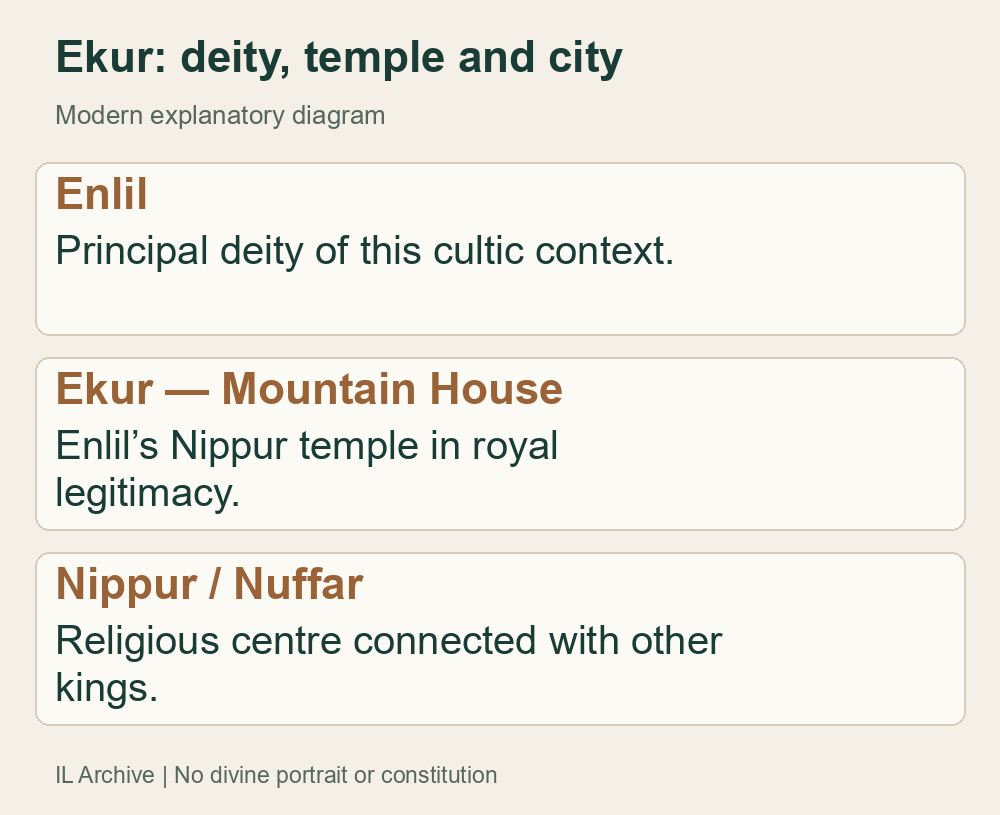
Ekur (Sumerian é-kur or E₂-kur) means “Mountain House” in this context. It names the chief sanctuary of Enlil, a major deity of MesopotamiaMesopotamiaHistorical region associated with the Tigris and Euphrates: Uruk, Ur, Eridu, cuneiform, Sumer, Akkad, Babylon and Assyria, their languages and cults, and the limits of archaeological evidence.Glossary · Click to read the explanation, at Nippur, whose ruins lie in present-day IraqIraqIraq is a modern country encompassing much of ancient MesopotamiaGlossary · Click to read the explanation. The sanctuary mattered beyond the political reach of one city: rulers based elsewhere advertised their relationship with its cult. Ekur is the name of a place of worship, neither a separate deity nor another name for the whole of Nippur.[1][2]
Temple, ziggurat and precinct
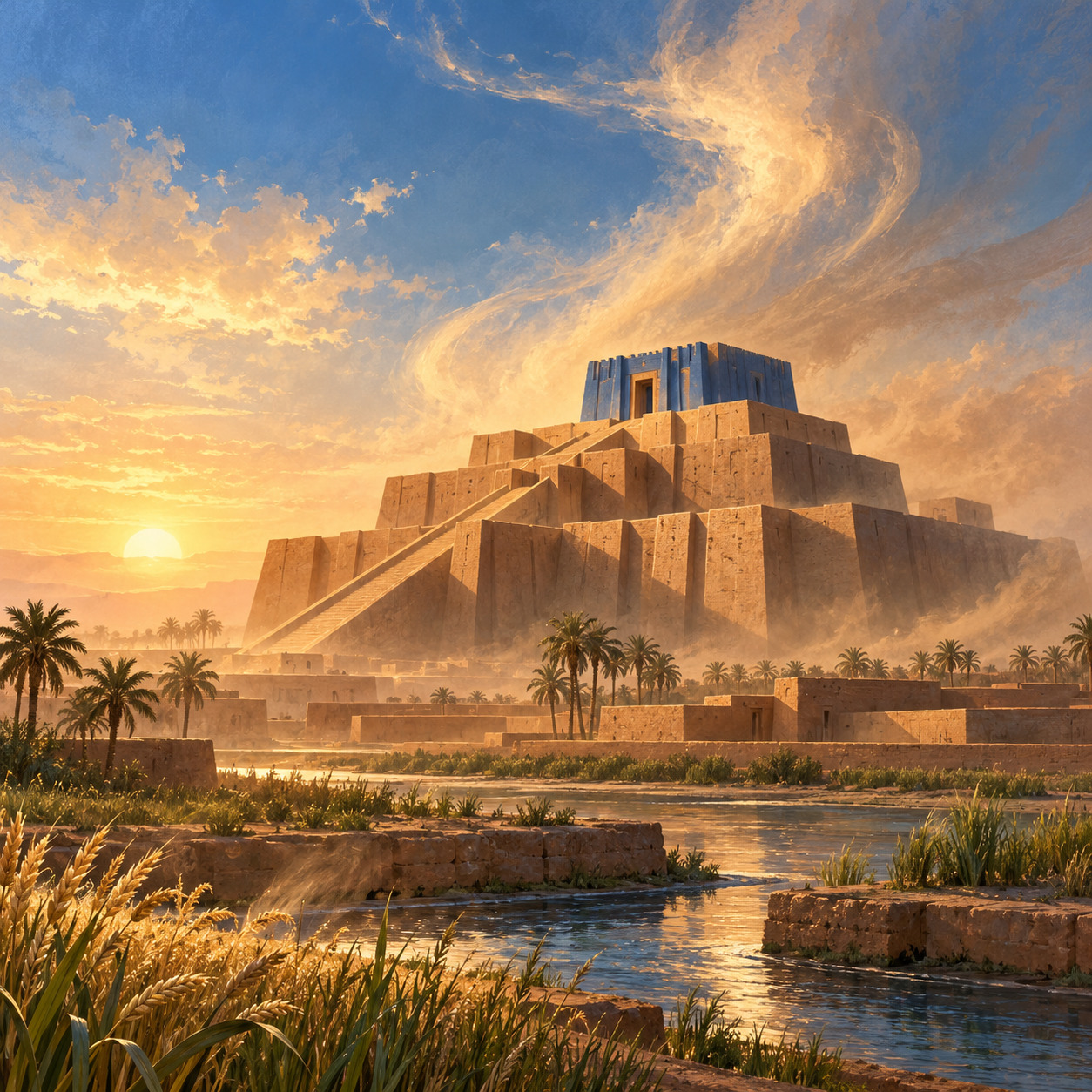
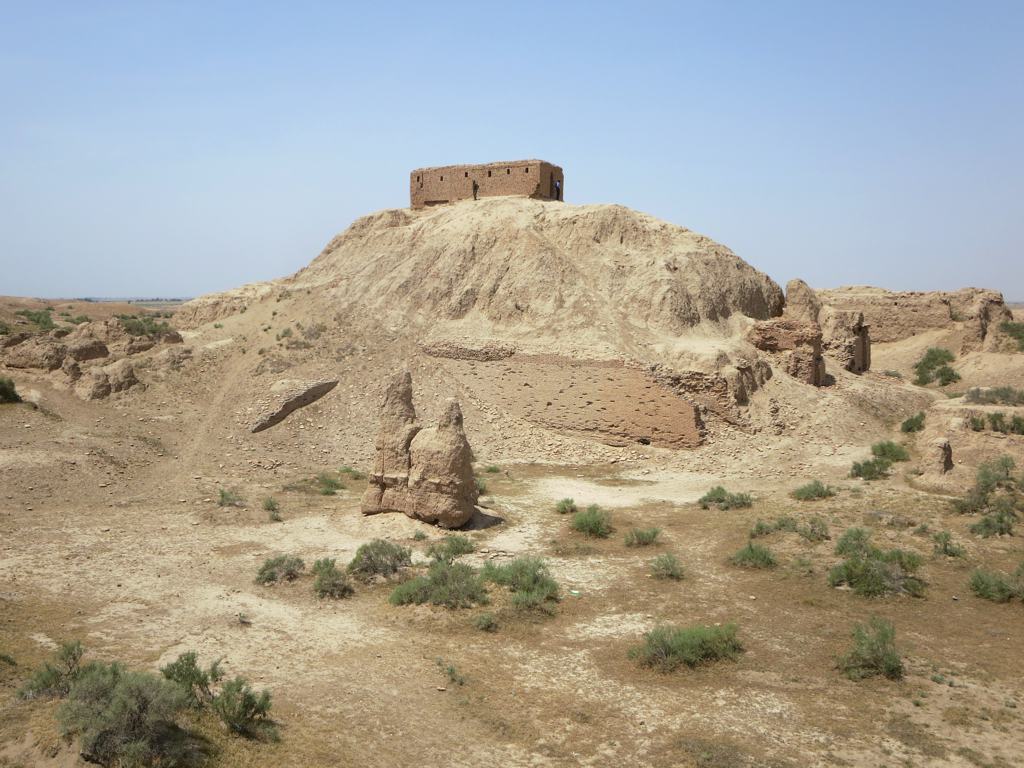
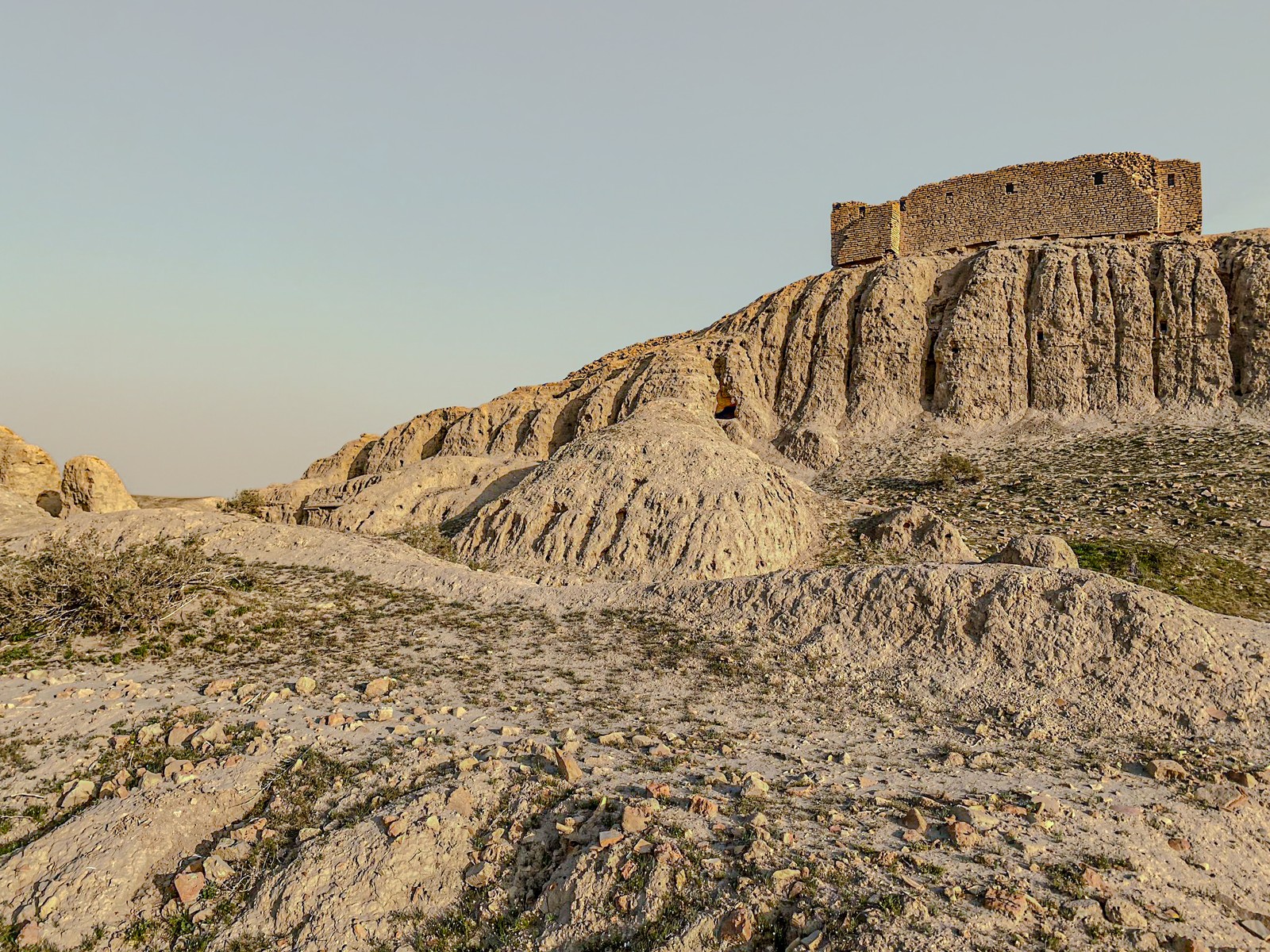
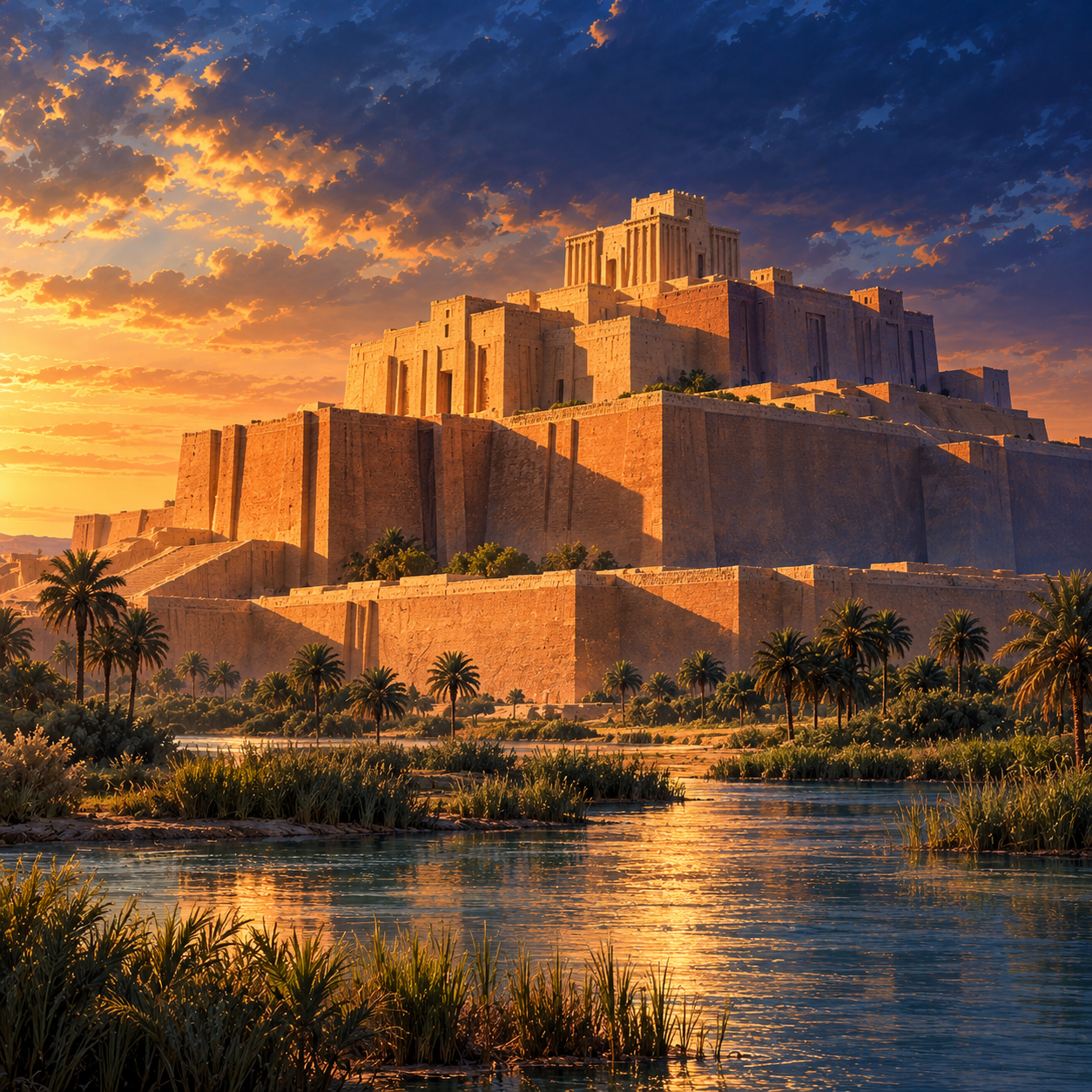
Enlil’s cult area contained structures and building phases that included his temple and an adjacent zigguratZigguratZiggurat: a monumental stepped or terraced cult structure of ancient Mesopotamia. Not every raised temple platform was a ziggurat, and the form and specific use of lost upper stages often remain uncertain.Glossary · Click to read the explanation. Some descriptions extend “Ekur” to the larger precinct, so every occurrence cannot be reduced to a single stepped tower. Iraq’s description of Nippur on UNESCO’s Tentative Lists identifies the temple and its ziggurat among the city’s remains; it is a tentative nomination description, not a comprehensive excavation report or proof that the site has been inscribed on the World Heritage List.[3]
The mountain as sacred image
“Enlil in the E-kur” (Enlil A in the ETCSL catalogue) pictures the temple rising like a mountain, its interior resembling a boundless sea, and associates it with purification, offerings and abundance. These images convey sacred standing, not building measurements or a floor plan. The poem moves between describing the city, the deity’s seat and the shrine; each passage needs to be read with its own referent in view.[4]
A separate work, “A hymn to the E-kur” (ETCSL 4.80.4), repeatedly compares the house, its gates and its courtyards to a mountain. It supplies names of spaces in the sanctuary, but it is a composite ritualRitualAn organised or distinguished practice meaningful to a community; it may leave traces, but its form alone does not reveal an associated doctrine.Glossary · Click to read the explanation poem with refrains and textual gaps. Its names cannot simply be assembled into a conjectural map of archaeologically excavated rooms.[5]
Ritual and divine order
Enlil A mentions priests, lustrations and prayer before presenting Enlil as a decider of destinies who receives rulers’ petitions and offerings. Toward its conclusion, NinlilNinlilMesopotamian goddess and consort of Enlil, associated with Nippur, Tummal, destinies and royal ritual. Identified with Sud in literary tradition and known as Mulliltu/Mullissu in Akkadian and Assyrian contexts; her genealogies and roles vary by text and period.Glossary · Click to read the explanation, his divine consort, participates in counsel in the hymn’s praise-filled narrative. These passages illuminate the functions and ideas emphasized by the composition, rather than providing a priest’s daily log or independent proof that every ceremony occurred exactly as described.[6]
Kingship and building
“A tigi to Enlil for Ur-Namma” (Ur-Namma B) connects maintenance of the temple with the elevation of Ur-Namma, founder of the Third Dynasty of Ur in the late third millennium BCE. Enlil first chooses the king; the poem then describes bricks, foundations, gates and feasts, culminating in an exceptional royal destiny. Possible construction details sit alongside idealizing royal rhetoric: reference to silver ornament, for example, cannot establish the dimensions or survival of a particular gate.[7]
An independent material witness supports an aspect of Ur-Namma’s building activity. A brick excavated at Nippur, now in the Metropolitan Museum of Art, bears a Sumerian inscription naming the king as builder of Enlil’s temple. The museum dates it to approximately 2112–2095 BCE, in his reign. It does not make him the founder of the cult or the first builder at the site.[8]
Repairs across successive periods
A Kassite inscribed stone dedication in the Metropolitan Museum names Ekur and Enlil. The museum dates it to the sixteenth–fifteenth centuries BCE and describes its Nippur provenance as probable, not certain: the words on an object and the confidence of its findspot attribution are different kinds of evidence.[9]
Another Kassite brick, naming Adad-shuma-usur and dated to about 1216–1187 BCE, records concern for Ekur. Part of the building statement in the museum’s transcription is restored in brackets, rather than preserved without damage. An Assyrian brick associated with AshurbanipalAshurbanipalAshurbanipal was an Assyrian king of the seventh century BCE, reigning about 668–631 BCEGlossary · Click to read the explanation, dated to the seventh century BCE, attests continued royal building claims. These objects document different phases of patronage, not a single unchanging structure.[10][11]
What archaeology can establish
Excavations at Nippur began in the late nineteenth century and exposed architectural remains in Enlil’s temple area and around the ziggurat, as well as later Parthian construction above earlier structures. Evidence from a dated layer or inscribed brick differs in kind from the ideal building portrayed in a hymn. Neither a single object nor poetic description recovers the full appearance of an “original Ekur”; equally, not everything visible among the ruins belongs to one Sumerian phase.[12]
Dates of texts and limits of inference
The poems cited here appear in ETCSL with English translations and Sumerian composite texts made from witnesses containing gaps and variants. The specified translated passages were checked alongside selected lines of the romanized composite Enlil A; this is not a new critical edition of all tablets or a claim that every copy had the same date. A contextually dated inscription can support a particular building or restoration claim, whereas praise poetry illuminates the ideals of religious and political authority promoted by its makers and transmitters.[13]
Together these forms of evidence reveal Ekur as both a real temple with a changing history and a religious and political symbol elaborated in literature, without converting cosmic imagery into architectural fact or flattening the site’s succession of building phases.
References and notes (13)
- Electronic Text Corpus of Sumerian Literature, Oxford. Enlil in the E-kur (Enlil A), 4.05.1. Especially lines 1–17, 35–55, 74–123, 139–171: command, Anunna, Nippur, temple, rulers and Ninlil’s counsel. Praise text with witnesses and variants; not an administrative minute or a claim of one date for all manuscripts. Return to the text ↑
- ETCSL, Oxford. A tigi to Enlil for Ur-Namma (Ur-Namma B), 2.4.1.2. Lines 1–19, 31–51, 66–71: choosing Ur-Namma, building Ekur, destiny and kingship. The subject king’s period does not automatically date a manuscript or initial composition. Not all Ur-Namma inscriptions read. Return to the text ↑
- Iraq’s Permanent Delegation to UNESCO, “Nippur,” Tentative List no. 6173 (2017). Description, “Main monuments and structures”: temple and ziggurat; state-submitted account. Return to the text ↑
- Electronic Text Corpus of Sumerian Literature (ETCSL), Oxford, “Enlil in the E-kur” (Enlil A), English translation, composition 4.05.1. Lines 10–17, 35–55 and 65–83; sacred topography, abundance and ritual. An Oxford translation of a composite text. Return to the text ↑
- ETCSL, Oxford, “A hymn to the E-kur,” English translation of composite composition 4.80.4. Lines 1–27 and 31–52, including gates, courts, recurring mountain similes and refrains. A hymn, not an excavated plan. Return to the text ↑
- ETCSL, “Enlil in the E-kur” (Enlil A), composite translation 4.05.1. Lines 56–64, 74–92, 100–108 and 139–166: cult personnel, offerings, decisions and Ninlil; literary praise. Return to the text ↑
- ETCSL, “A tigi to Enlil for Ur-Namma” (Ur-Namma B), English translation of composite composition 2.4.1.2. Lines 1–38 and 40–51: royal choice, brickwork, foundations, gates, banquet and Enlil’s speech; manuscript dates are distinct. Return to the text ↑
- The Metropolitan Museum of Art, “Inscribed brick,” Nippur, Ur III, accession 59.41.86. Object record: description, translated stamped inscription and object information; ca. 2112–2095 BCE. Return to the text ↑
- The Metropolitan Museum of Art, “Cuneiform tablet: Sumerian dedicatory(?) inscription from Ekur,” limestone, Kassite period, accession 41.160.187. Object description, inscription and metadata; sixteenth–fifteenth centuries BCE; Nippur provenance stated as probable. Return to the text ↑
- The Metropolitan Museum of Art, “Inscribed brick: dedicatory inscription of Adad-shuma-usur,” Kassite, accession 59.41.82. Description, translation and metadata; ca. 1216–1187 BCE; part of the building formula is restored in square brackets. Return to the text ↑
- The Metropolitan Museum of Art, “Brick with inscription of Ashurbanipal describing building work on Ekur,” Neo-Assyrian, accession 59.41.85. Object title, catalog metadata and date ca. 668–631 BCE; full cuneiform edition not consulted. Return to the text ↑
- William B. Hafford and Richard L. Zettler, “The Thrill of Discovery: Penn Museum Excavations in Iraq and Iran,” Expedition, Penn Museum (2018). HTML section “Nippur, Iraq 1889–1952,” passages on the ziggurat, temple remains and later Parthian fortress; PDF not read. Return to the text ↑
- ETCSL, “Enlil in the E-kur” (Enlil A), romanized Sumerian composite text 4.05.1. Selected composite lines, especially 35–55 and 65–92, compared with the displayed ETCSL translation; no complete individual tablet or new critical edition examined. Return to the text ↑
Suggest a correction · Suggest a source for this record
Cite this record
IL Archive, «Ekur: Enlil’s Temple at Nippur», https://ilarchive.com/en/entities/ekur
Continue reading
Related readings