Ancient text
The Lament for Ur: When the Gods Abandon a City and Ningal Pleads for It
A text for line-by-line reading, with transliteration, translation, and resources.
- Names
- Lament for Ur · Lament for Urim · Lamentation over the Destruction of Ur
- Timeline
- From 2000 BCE to 1600 BCE
- Region
- Mesopotamia
A Sumerian poem mourning the fall of Ur through the voice of its goddess Ningal. In Oxford’s edition it runs to 438 lines and shows how ancient writers explained the catastrophe.
Estimated reading time: 5 min Published Last reviewed:
Share article
Text
Introduction
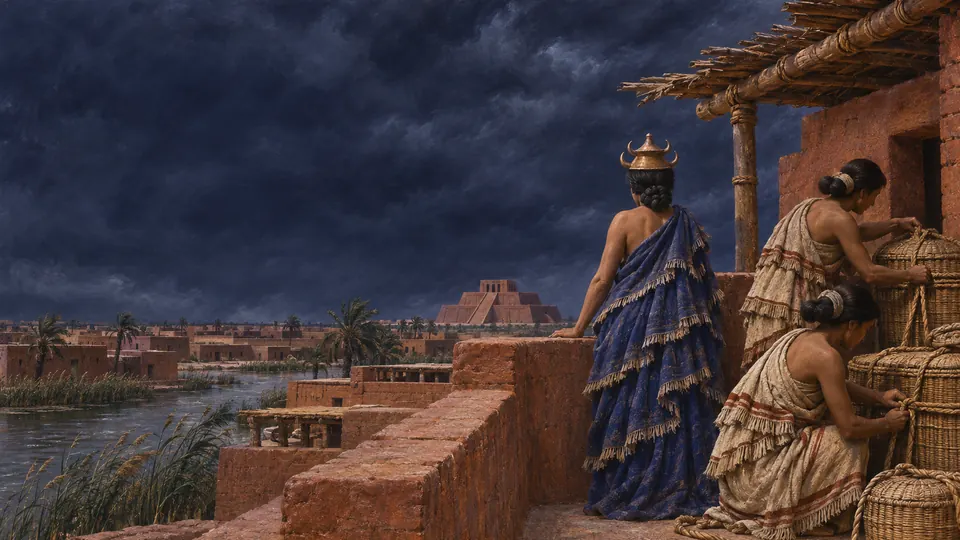
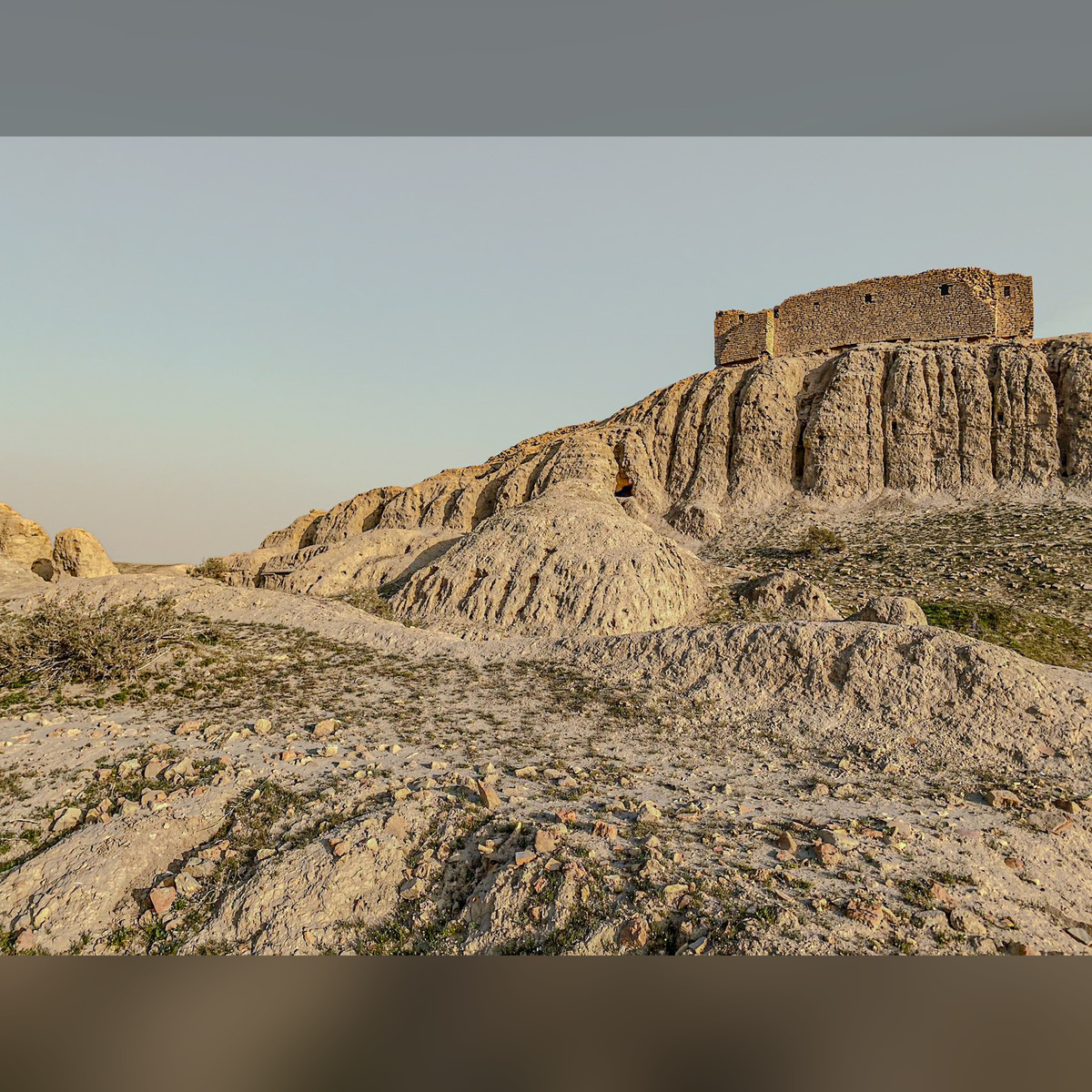
Around 2000 BCE, Ur, the capital of a kingdom in southern MesopotamiaMesopotamiaHistorical region associated with the Tigris and Euphrates: Uruk, Ur, Eridu, cuneiform, Sumer, Akkad, Babylon and Assyria, their languages and cults, and the limits of archaeological evidence.Glossary · Click to read the explanation, fell to enemies from the east. The Sumerian poem that mourns the city gives the catastrophe several agents. The gods decree its destruction, EnlilEnlilEnlil/Ellil: a major Mesopotamian god associated with destinies, kingship, and Ekur at Nippur, already prominent in third-millennium god lists. His name’s origin and cult beginnings remain debated.Glossary · Click to read the explanation sends a storm, and people from Šimaški and Elam tear down the temple. [1][8]
This card describes the text: what it says, how it is built, who the weeping goddess is, which copies survive, and what we can and cannot say about the events behind it.
The poem and its name
The text is known as the Lament for Ur, or, in the transliteration of the Electronic Text Corpus of Sumerian Literature (ETCSL), the Lament for Urim, because Urim is the Sumerian name of the city. [1] The ETCSL composite text has 438 lines, divided into eleven sections, and each section ends with a short closing formula, followed in most cases by a response line. [1] It was written in SumerianSumerian languageAncient language of southern Mesopotamia, clearly attested in third-millennium BCE texts and maintained in learning and ritual after its spoken use declined.Glossary · Click to read the explanation, and it belongs to a group of Sumerian poems called city laments. [3]
What the poem says
The text moves in steps, and the steps are the story. [1]
- The gods leave (lines 1–35). The poem opens with divine figures abandoning their shrines and cities, among them EnlilEnlilEnlil/Ellil: a major Mesopotamian god associated with destinies, kingship, and Ekur at Nippur, already prominent in third-millennium god lists. His name’s origin and cult beginnings remain debated.Glossary · Click to read the explanation, NinlilNinlilMesopotamian goddess and consort of Enlil, associated with Nippur, Tummal, destinies and royal ritual. Identified with Sud in literary tradition and known as Mulliltu/Mullissu in Akkadian and Assyrian contexts; her genealogies and roles vary by text and period.Glossary · Click to read the explanation, NannaNanna / Su’en / SinMesopotamian moon god known as Nanna, Su’en and Sîn/Sin. Worshipped especially at Ur and Harran, he is associated with the crescent and lunar cycle; names and myths have different histories.Glossary · Click to read the explanation, InannaInanna / IshtarA prominent Mesopotamian goddess whose Sumerian name Inanna became associated with Akkadian Ishtar across diverse traditions. She was associated with desire, war, royal authority and Venus, while local forms and genealogies varied among texts.Glossary · Click to read the explanation and EnkiEnkiMesopotamian deity also known as Ea, linked with Eridu and the Abzu (deep fresh waters), wisdom, incantations, and narratives of creation and cosmic order. Later written attestations do not identify the deity of Eridu’s earliest layers.Glossary · Click to read the explanation. Their homes are left to the wind. A line from the first section says that the god "has abandoned his cow-pen and has let the breezes haunt his sheepfold." [1]
- Ningal speaks (lines 76–168). Ningal is the wife of Nanna, the moon god, and the goddess of Ur. She says that she begged the great gods to spare her city. In the ETCSL translation she reports: "Let not my city be destroyed," I implored them. But An would not change his word and Enlil did not agree, and they "gave instructions that my city should be utterly destroyed." [1]
- The storm (lines 172–203). Enlil calls the storm. It is the instrument of the decision, and the poem names Gibil, the fire god, as Enlil's helper. The storm sweeps over Sumer and over the city. [1]
- The aftermath (lines 207–249). The city becomes a field of ruin mounds, the dead lie in the streets, and the order of society breaks down: "The Land's judgment disappeared." The temple of Nanna and Ningal in Ur, called E-kiš-nu-ĝal in the ETCSL spelling, is torn down by "the people of Šimaški and Elam," whom the poem calls the destroyers and who, it says, counted its worth as only thirty shekels. [1]
- Ningal’s departure and lament. The poem describes Ningal leaving her city in fright (lines 230–240). Later she mourns the loss of the city and its inhabitants (lines 254–328). In a later address she is asked why she stands apart from Ur (lines 369–377). [1][5]
- The return to hope (lines 331–438). The last sections address Ningal and ask her to come back, ask An and Enlil to say "Enough!", curse the storm so that it may never return, and end with a prayer to Nanna to restore the city. [1]
So the poem does not end with the destruction. It ends with a request that the gods who destroyed the city should rebuild it.
Who is Ningal?
Ningal is a goddess of Ur and the wife of Nanna. She speaks as the city’s protector, first pleading before the great gods and later mourning what has been lost. When the poem addresses her as a mother, it compares Ur to a child lost in a street. [1]
The copies
The text is known from many manuscripts. The ETCSL bibliography lists witnesses by museum or excavation number, including pieces from NippurNippur / NuffarAncient Nippur (modern Nuffar, Iraq), major cult centre of Enlil and Ekur; excavations revealed sanctuaries, houses and thousands of cuneiform tablets across many periods.Glossary · Click to read the explanation and Ur. Some entries group fragments that belong to the same tablet. [2] Samuel NoahNoahNoah is the flood-story figure in Genesis and a prophet in the Qur’anGlossary · Click to read the explanation Kramer published his edition in 1940 after examining further material from Nippur in Istanbul. [7]
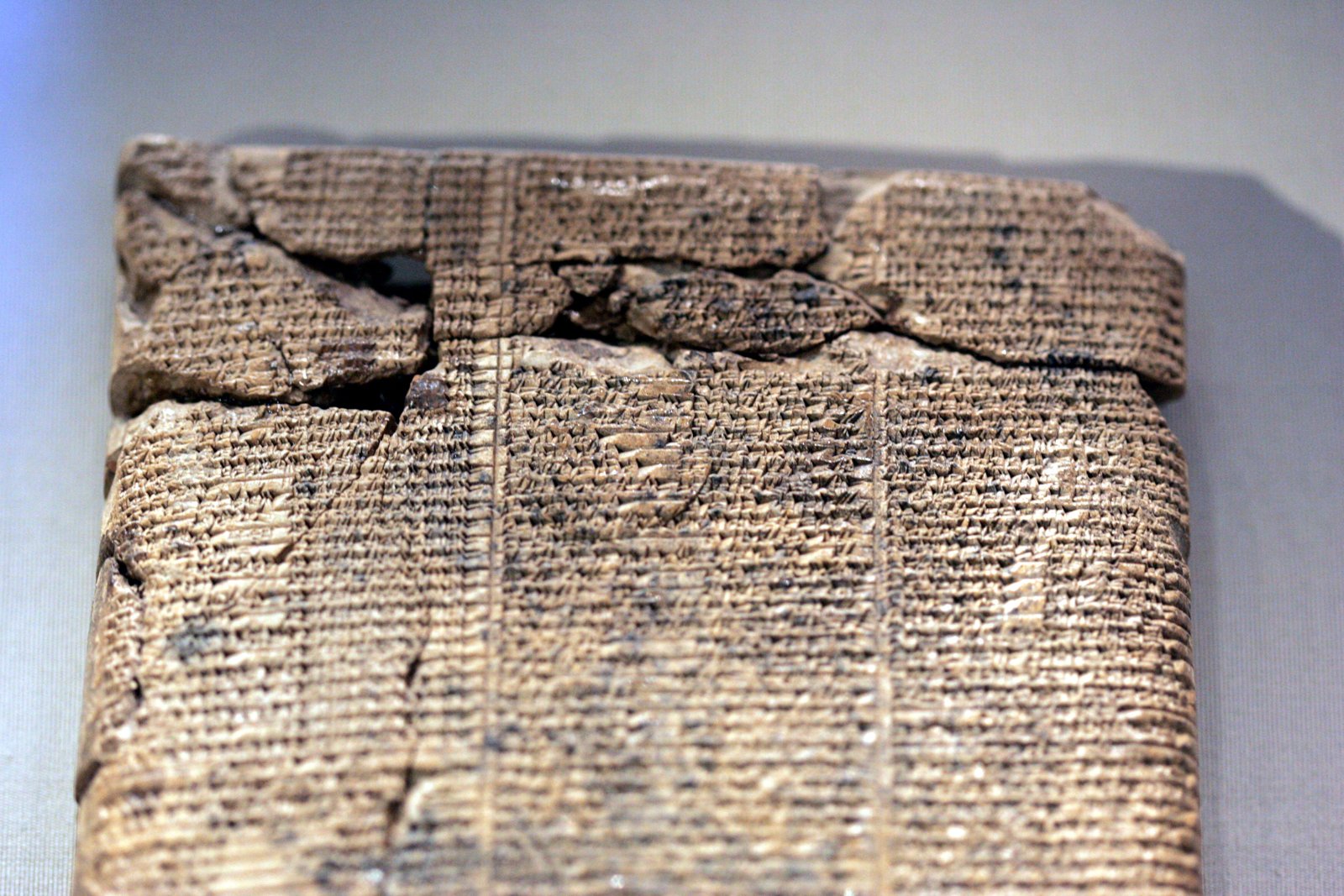
The photograph shows Louvre tablet AO 6446 (TCL 16,40), a clay witness to the lament. The Louvre dates the tablet to about 1800 BCE. [6]
What was the historical event?
Nili Samet identifies the subject as the fall of the Third Dynasty of Ur, conventionally dated to 2004 BCE. [8] The poem names Šimaški and Elam as the destroyers of the temple. The thirty shekels express the small value that the poem says the destroyers assigned to the temple. That detail belongs to the literary account of the city’s ruin. [1]
Why it matters
First, the text shows a way of thinking in which a defeat is explained by the will of the gods, not by their weakness. The destroyed city is not proof that its gods lost to other gods; it is the effect of a decision at the highest level, which the city's own goddess could not turn back. Second, laments for ruined cities are an old form, and a comparison with the biblical Book of Lamentations on the fall of JerusalemJerusalemJerusalem is a city of religious importance in Judaism, Christianity and IslamGlossary · Click to read the explanation is often made. The Wikipedia summary notes the similarity in style and theme, and a scholar's comparison of lines 17–18 with Lamentations 2:17. [3] A shared form, though, does not show that one text came from the other, and the two traditions are separated by well over a thousand years.
The Lament for Ur gives voice to the grief of a city and ends with a prayer that Nanna’s restored city may shine before him. [1]
References and notes
- Electronic Text Corpus of Sumerian Literature (ETCSL), c.2.2.2, 'The lament for Urim', translation Whole translation (lines 1-438): section structure; quoted lines 1-8, 144-150, 161-168, 230-240, 241-249, 254-264, 378-386 Return to the text ↑
- ETCSL, 'The lament for Urim': bibliography and source list Whole page: print sources, composite texts, list of manuscript numbers Return to the text ↑
- Wikipedia, 'Lament for Ur' (secondary summary) Whole article: date, historical context, manuscripts and editions, structure, interpretations, comparison with Lamentations Return to the text ↑
- Wikimedia Commons, file 'Laments on the ruin of Ur AO6446 mp3h9139.jpg' (Rama) File page: title, author, licence, wikitext Return to the text ↑
- Pascal Attinger, “La lamentation sur Ur (2.2.2),” 2014. Annotated translation, the departure of Ningal and her lament, and the closing prayer in Attinger’s numbering. Return to the text ↑
- Musée du Louvre, “Tablette : lamentations sur la ruine d’Ur,” AO 6446, TCL 16,40. Inventory number, material, Sumerian inscription and object chronology. Return to the text ↑
- Samuel Noah Kramer, Lamentation Over the Destruction of Ur, Assyriological Studies 12 (Oriental Institute, Chicago, 1940). Institutional publication record and Kramer’s account of examining further Nippur material in Istanbul. Return to the text ↑
- Nili Samet, The Lamentation over the Destruction of Ur (Eisenbrauns, 2014). Publisher’s synopsis, identifying the poem with the fall of the Third Dynasty of Ur and giving 2004 BCE. Return to the text ↑
Archive records may be reviewed and refined as better evidence or sources become available. Suggest a correction
Suggest a correction · Suggest a source for this record
Cite this record
IL Archive, «The Lament for Ur: When the Gods Abandon a City and Ningal Pleads for It», https://ilarchive.com/en/texts/lament-for-ur
Continue reading