Ancient text
The Instructions of Shuruppak: A Father's Advice to Ziusudra, in One of the Oldest Books We Can Read
A text for line-by-line reading, with transliteration, translation, and resources.
- Names
- Instructions of Shuruppak · Instructions of Suruppak · Shuruppak's Instructions
- Timeline
- From 2600 BCE to 1100 BCE
- Region
- Mesopotamia
In this Sumerian collection, Shuruppak advises his son Ziusudra, the hero of a separate flood story. Copied for over a thousand years, the sayings offer counsel on debts, quarrels and life among neighbours.
Estimated reading time: 5 min Published Last reviewed:
Share article
Text
Introduction
"Do not buy a donkey that brays." "Do not pass judgment when you drink beer." These are lines of a Sumerian text in which a father speaks to his son. It is among the oldest literary compositions we can read, with copies from about 4,500 years ago.
This card describes the text: who speaks, how it is built, which copies survive, what the sayings say, and why one famous name in it, the son's, makes it matter to readers of flood stories.
Who speaks, and to whom
The Old Babylonian version opens with a short prologue. In the translation of the Electronic Text Corpus of Sumerian Literature (ETCSL), a man named Shuruppak, son of Ubara-Tutu, gives instructions to his son ZiusudraZiusudraA literary king-priest in the fragmentary Sumerian Flood Story (ETCSL 1.7.4). He survives by boat, sacrifices, and receives divine life from An and Enlil in Dilmun. The surviving copy is Old Babylonian; his historicity is unproven.Glossary · Click to read the explanation. The opening lines urge him to heed his father’s words. [1] The ETCSL spells the father's name Curuppag, which is the same name in a different system of transliteration; readers also meet it as Šuruppak. It is the name of a city too, and our entry on ŠuruppakŠuruppakSumerian city at Tell Fara, Iraq, associated with Sud; distinct from Ereš in Enlil and Sud.Glossary · Click to read the explanation describes the place. In the earlier Abu Salabikh version, the speaker is introduced as a man from Shuruppak. [5]
The son's name matters. ZiusudraZiusudraA literary king-priest in the fragmentary Sumerian Flood Story (ETCSL 1.7.4). He survives by boat, sacrifices, and receives divine life from An and Enlil in Dilmun. The surviving copy is Old Babylonian; his historicity is unproven.Glossary · Click to read the explanation survives the flood in the Sumerian flood story. [9] In Tablet XI of the AkkadianAkkadianAn ancient East Semitic language written in cuneiform from the third millennium BCE; its varieties include Babylonian and Assyrian, and it served in international diplomacy.Glossary · Click to read the explanation Epic of GilgameshEpic of GilgameshA Babylonian literary work with multiple recensions, preceded by separate Sumerian poems on Uruk’s king and Enkidu. Its standard form explores friendship, death, the flood and the limits of seeking eternal life.Glossary · Click to read the explanation, the flood survivor UtnapishtimUtnapishtimThe flood hero of Standard Babylonian Gilgamesh, granted exceptional life with his wife by the gods. He tells Gilgamesh how he survived; his name overlaps with Atrahasis and Ziusudra traditions without making their narratives identical.Glossary · Click to read the explanation is addressed as a man of Shuruppak and son of Ubara-Tutu. [10] In the opening of the Sumerian King List as presented in the Oxford edition, Ubara-Tutu is the last king named before the flood. [11] The names in the Old Babylonian prologue place the father’s advice in the world before the flood, which is narrated in other works. [5][9][10]
How the book is built
In the Oxford composite, based largely on Old Babylonian manuscripts, the prologue occupies lines 1–13 and the main part runs from line 14 to line 276. [1][5] It is a series of sayings, mostly one to three lines long. Many are prohibitions that add a reason, telling the listener what may go wrong. The address to the son recurs at lines 76–82 and 146–152, marking the opening of the second and third parts. [1][5] The text ends by naming the work as Shuruppak's instructions and praising NisabaNisabaMesopotamian goddess of grain and writing, associated with Ereš and scribes; also called Nidaba.Glossary · Click to read the explanation, the goddess of writing and scribes. [1]
What the sayings say
The advice is practical first and moral second. A few examples, in the ETCSL translation:
- On goods: "You should not buy a donkey which brays; it will split (?) your midriff (?)." The question marks are the translators', who are unsure of the exact words. [1]
- On debts and promises: "You should not vouch for someone: that man will have a hold on you." And: "You should not drive away a debtor: he will be hostile towards you." [1]
- On speech: "You should not curse strongly: it rebounds on you." [1]
- On judging: "You should not pass judgment when you drink beer." [1]
- On work and neighbours: "You should not beat a farmer's son: he has constructed (?) your embankments and ditches." [1]
- On effort: "You should not work using only your eyes; you will not multiply your possessions using only your mouth." [1]
- On family: "You should not speak arrogantly to your mother; that causes hatred for you." [1]
- On the city: "Without suburbs a city has no centre either." [1]
The text also forbids stealing (lines 28–31) and warns that misconduct can lead to slander (lines 32–34). [1] The Adab version includes advice against answering back to one’s father. [4][6] Much of the advice concerns avoiding trouble among farmers, debtors, neighbours and relatives. The Old Babylonian version also contains sayings about prayer. [1]
The copies
Walther Sallaberger dates the oldest surviving copy, from Abu Salabikh, to around the 26th century BCE. He places the more fragmentary Adab version around the 24th century BCE, close to the University of Chicago museum’s date of about 2400 BCE for fragment A645. The CuneiformCuneiformWriting with wedge-shaped signs, developed from Mesopotamian recording traditions and used for several languages from the third millennium BCE.Glossary · Click to read the explanation Digital Library Initiative assigns the Adab fragments to Early Dynastic IIIa, about 2600–2500 BCE. [5][6][7] Bendt Alster published additional lines of the Early Dynastic version in 1990. [2] Later Sumerian manuscripts survive from Nippur, Ur, Kish and Susa. The Oxford source list includes tablets published in Ur Excavations Texts 6 and Mémoires de la Délégation en Perse 27. [2][5] Maurizio Viano records a Middle Babylonian AkkadianAkkadianAn ancient East Semitic language written in cuneiform from the third millennium BCE; its varieties include Babylonian and Assyrian, and it served in international diplomacy.Glossary · Click to read the explanation copy from Sippar, a Middle Assyrian copy in Akkadian from Assur, and an Akkadian–Hurrian bilingual fragment from an unidentified Syrian site. These finds document the text’s transmission across the third and second millennia BCE. [8]
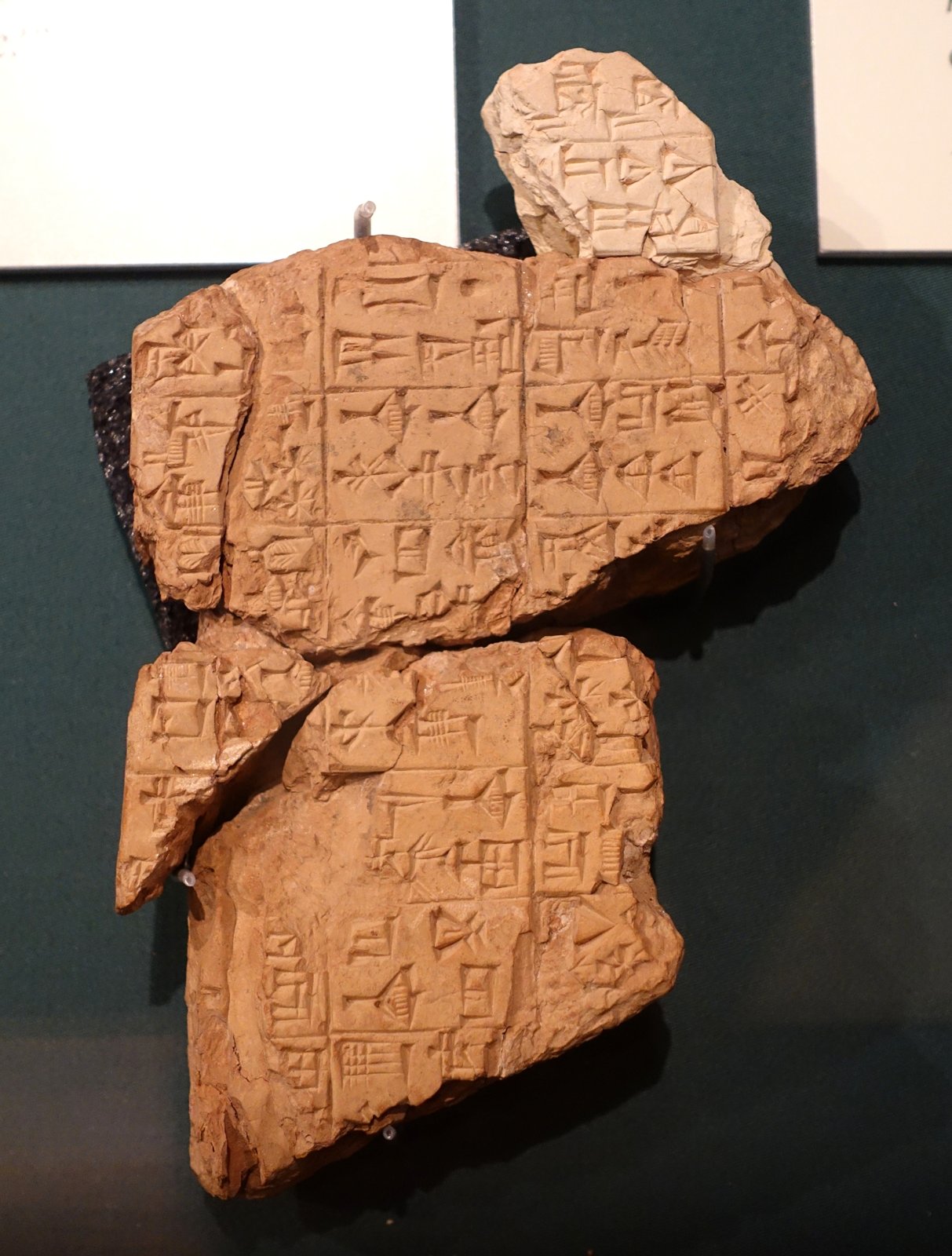
The photograph shows fragments exhibited at the University of Chicago, with cuneiform signs arranged in small boxes. [4] The Chicago museum catalogues a Sumerian copy excavated at Adab, now Bismaya, as a school text and records that A645 is physically attached to fragment A649i. [7]
Why scholars care, and where care is needed
Bendt Alster edited the work in 1974 and published a new edition in Wisdom of Ancient Sumer (2005). The Oxford bibliography also lists philological studies by Claus Wilcke (1978) and Miguel Civil (1984). [2][5][12]
Later wisdom books, such as the biblical Book of ProverbsBook of ProverbsThe Book of Proverbs collects wisdom texts in the Hebrew Bible on learning, conduct and social relationships.Glossary · Click to read the explanation or the Egyptian Instruction of AmenemopeInstruction of AmenemopeAn Egyptian thirty-chapter instruction on speech, justice, and professional ethics, preserved in papyrus EA 10474 and later scribal exercises; examines specific Proverbs 22:17–23:11 parallels and their limits.Glossary · Click to read the explanation, offer points of comparison for a widespread literary form in which an elder addresses a younger person. [13] The Sumerian work presents its prohibitions as a father’s advice within that form. [5]
For a reader of the flood stories, the point is simpler. The Old Babylonian version imagines a father teaching his son how to live among neighbours in the world before the flood. [5]
References and notes
- Electronic Text Corpus of Sumerian Literature (ETCSL), c.5.6.1, 'The instructions of Shuruppag', translation Whole translation: prologue (lines 1-13), instructions (lines 14-275), ending (lines 277-280); quoted lines 14, 19-20, 28-31, 50, 53, 126, 153, 175-176, 255, 261 Return to the text ↑
- ETCSL, 'The instructions of Shuruppag': bibliography and source list Whole page: printed editions (Alster 1974, 1987, 1990, 1992; Civil 1984; Wilcke 1978) and list of manuscripts Return to the text ↑
- Wikipedia, 'Instructions of Shuruppak' (secondary summary citing Alster 1974, Beaulieu, Lambert 1996, Wilcke 1978, Biggs 1974) Whole article: manuscripts, Akkadian versions, content, Ubara-Tutu and Ziusudra, comparisons Return to the text ↑
- Wikimedia Commons, file 'Instructions of Shurrupak, Sumerian proverb collection, c. 2400 BC - Oriental Institute Museum, University of Chicago - DSC07114.JPG' (Daderot, CC0) File page: description, author, licence, dimensions Return to the text ↑
- Walther Sallaberger, “Updating Primeval Wisdom: The Instructions of Šuruppak in Its Early Dynastic and Old Babylonian Contexts,” in Mordechai Cogan, ed., In the Lands of Sumer and Akkad: New Studies (Jerusalem: Israel Academy of Sciences and Humanities, 2018), pp. vii–xxviii. Pp. viii–x on dates and early manuscripts, §§2.2–2.5 on the social advice, and §§3.1–3.2 on the later prologue, refrains and structure. Return to the text ↑
- Cuneiform Digital Library Initiative, “CDLI Literary 000782, ex. 003 (P222243),” OIM A00645 and A00649a–i. Provenience, Chronology and Collections fields; transliteration, obverse column 3, lines 9–10. Return to the text ↑
- Institute for the Study of Ancient Cultures, University of Chicago, collection record “Tablet,” A645. Description, place/site, date, registration number and provenance. The museum calls it a school text, dates it to about 2400 BCE and identifies the attached fragment as A649i. Return to the text ↑
- Maurizio Viano, The Reception of Sumerian Literature in the Western Periphery, Antichistica 9, Studi orientali 4 (Venice: Edizioni Ca’ Foscari, 2016). §1.1.6.1, pp. 57–58, especially nn. 287–290 on the Middle Babylonian, Middle Assyrian and Akkadian–Hurrian witnesses. Return to the text ↑
- Electronic Text Corpus of Sumerian Literature, University of Oxford, “The Flood story: translation,” c.1.7.4. Segment D, lines 1–11, and segment E, lines 3–11, on Ziusudra’s survival and later settlement in Dilmun. Return to the text ↑
- Andrew George, “The Flood Story in the Gilgamesh Epic,” in The Epic of Gilgamesh (Harmondsworth: Penguin, 2000), pp. 88–99, online at ETANA. Standard Babylonian Tablet XI, lines 20–27, especially line 23, identifying Utnapishtim as a man of Shuruppak and son of Ubar-Tutu. Return to the text ↑
- Electronic Text Corpus of Sumerian Literature, University of Oxford, “The Sumerian king list,” c.2.1.1, composite translation. Lines 1–39, from the first kings to the flood, including Ubara-Tutu at Shuruppak. Return to the text ↑
- Bendt Alster, Wisdom of Ancient Sumer (CDL Press, 2005), Eisenbrauns / Pennsylvania State University Press catalogue. Description and publication entry for the volume, which contains Alster’s complete edition of the Instructions. Return to the text ↑
- New American Bible, Revised Edition, Proverbs 22, United States Conference of Catholic Bishops. Note on Proverbs 22:17–24:22, on the Egyptian advice tradition and its address to a young person. Return to the text ↑
Archive records may be reviewed and refined as better evidence or sources become available. Suggest a correction
Suggest a correction · Suggest a source for this record
Cite this record
IL Archive, «The Instructions of Shuruppak: A Father's Advice to Ziusudra, in One of the Oldest Books We Can Read», https://ilarchive.com/en/texts/instructions-of-shuruppak
Continue reading